Antiques Know How
Anchor Hocking Glass Value
Our research at Antiques Know How, based on in-depth analysis of more than 100 sold eBay listings and several auction results, shows that vintage Anchor Hocking glass values range from $5 for common patterns up to $1,000 for rare patterns and pieces. The most collectible Anchor Hocking patterns and pieces include Cameo, Kimberly, Hobnail (Moonstone), Miss America, and Jadeite milk glassware!
Antiques Know How
One of the most popular American glassmakers, Anchor Hocking, produced some of the most iconic American glassware from the 1930s through the 1980s, and certain patterns now sell for hundreds of dollars.
If you still have some old Anchor Hocking glassware at home, this guide is for you! Let’s break down what makes certain Anchor Hocking pieces worth money and which patterns are worth keeping!
About Anchor Hocking Glass Company!
Understanding the company’s history can help you a lot while spotting real Anchor Hocking glass. Why? Because each design is tied to a specific era, helping you date your pieces, spot reproductions, and judge their value.
- 1905: The company was founded in Lancaster, Ohio.
- 1937: Anchor Glass merges with Hocking Glass Company, giving it the company’s memorable brand name, Anchor Hocking.
- 1930s to 1940s: It was the time of the Great Depression and World War II. This led the company to produce stylish yet affordable Depression glassware, which is highly sought after for its historical significance.
- 1940s to 1950s: The company released popular iconic mid-century patterns like Bubble (or Boopie), Swirl, Star of David, etc. Plus, the company’s popular “Restaurant Ware” line was released!
- 1960s to 1970s: The company introduced colourful, heat-resistant, and modern designs like Wexford, while continuing long-running Prescut designs.
Identifying Valuable Anchor Hocking Glassware (Check These Things)
Knowing the history is just the start! The actual process involves assessing subtle clues to differentiate genuine Anchor Hocking glass from fake or reproduced items.
Stamps and Labels
As Anchor Hocking evolved over the years, its logos and stamps changed as well, becoming a reliable clue to date their pieces.
- No logo or stamp: Most glassware from the earliest days of the company lacked stamps or logos. So, never overlook a piece just because it has no logo. (Other signs mentioned below will help you)
- Thin and minimal anchor symbol: The famous “Anchor” symbol was introduced in the 1930s. But since it was wartime, many pieces manufactured then remained unmarked.
- Anchor logo with an ‘H’: The logo of a minimal anchor featuring a capital ‘H’ inside was widely used during the 1940s to 1960s. Pieces with this logo now fall under the highly collectible category of mid-century classics.
- ‘ANCHOR HOCKING’ in block letters: The company again rebranded to include its full name in capital letters as its logo. You can find this in the 1960s-1970s glassware. Sometimes ‘ANCHOR HOCKING’ was paired with the anchor symbol.
- Country labels: The pieces manufactured during the 1970s-1980s feature the ‘Made in USA’ label along with the company name in capital letters. Some pieces also had markings of the model number or the mold numbers.
- Foil stickers and paper labels: Over time, the embossed stamps were replaced by foil stickers and paper labels that would easily fall off. Thus, pieces with intact labels are considered valuable.
- Modern label: The printed logo with dishwasher-safe labels from the early 2000s can help you distinguish vintage pieces from modern ones.
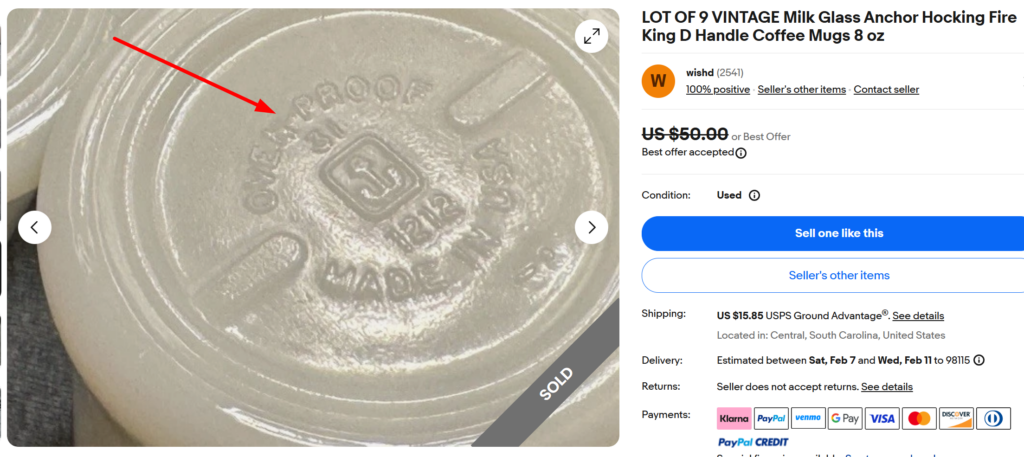
Glass Quality and Manufacturing Clues
In case you don’t see any marks, you can look for physical signs.
Authentic vintage Anchor Hocking glass is relatively heavier than the modern glass. But since this trait appears in other glass makers of that era as well, weight alone isn’t enough, and you’ll need to look for a few manufacturing clues.
A pontil mark, a slightly rough scar on the base, signals early hand-blown production. Similarly, soft mold seams, shear marks, or lightly textured bases are normal signs of vintage manufacturing. These details can help separate older pieces from reproductions.
Patterns and Shapes
Knowing the patterns can help you both identify and value Anchor Hocking glass. Generally, rarer patterns made for short periods or specific lines are rarer and hence more valuable!
Anchor Hocking primarily produced Prescut glass, in which the patterns were molded into the glass. Miss America, Boopie, Cameo, Swirl, Wexford, and Star of David are a few of the many Prescut patterns that are highly collectible today.
While Prescut designs get a lot of attention, the company also made plenty of plain pieces. The shape becomes a key identifier in such glassware.
For instance, Fire-King Jade-ite mixing bowls are known for their rounded form, thick walls, and wide lips. Gondola-shaped trays are yet another example of valuable glassware.
Decoration and Colors
The decorations on Anchor Hocking glassware act as clues to when a piece was made and how rare it is today. In many cases, the design can increase the value of an otherwise common shape.
For example, hand-painted florals, crisp decals, gold trim, and advertising designs with intact paint are especially desirable.
Color plays an equally important role in determining collectibility and value. Certain Anchor Hocking colors were produced for shorter periods or tied to specific eras, making them harder to find today.
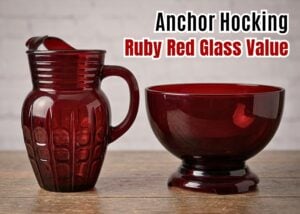
Jade-ite green from the Fire-King line, sapphire blue and forest green in Bubble (Boopie) pieces, and royal ruby found in Prescut designs are valuable examples. Collectors also highly prize iridescent pieces in the swirl pattern and opalescent Moonstone line.
Condition of Glassware
Once you’ve identified the pattern, shape, and color, the next thing to look at is the condition of the glassware. And this is where prices can rise or fall quickly. Small chips, rim wear, or hairline stress cracks can greatly reduce value, especially on vintage glasses and serving pieces.
Cloudiness or permanent haze from dishwasher damage can also significantly lower prices, even for rare items. But original manufacturing signs, like straw marks or air bubbles, are normal and don’t usually affect collectibility.
8 Highly Collectible Anchor Hocking Glass Patterns and Pieces
1. Swirl Pattern
Anchor Hocking’s Swirl pattern is best known for its soft, flowing raised lines that wrap around the glass. Unlike bold Prescut patterns from the Depression era, Swirl pieces were meant to feel smooth in the hand and easy to use every day.
| Average Price Range | $2 to $200 (Single pieces & small sets) $200 to $400 (Large sets) |
| Manufacturing Period | 1940s to 1960s |
| Status | Discontinued |
| Pattern Details | Raised rounded bubbles arranged in repeating rows |
| Collectible Pieces | Mixing bowls, milk glasses, casserole dishes, candy dishes |
Pink Swirl Dinnerware Set
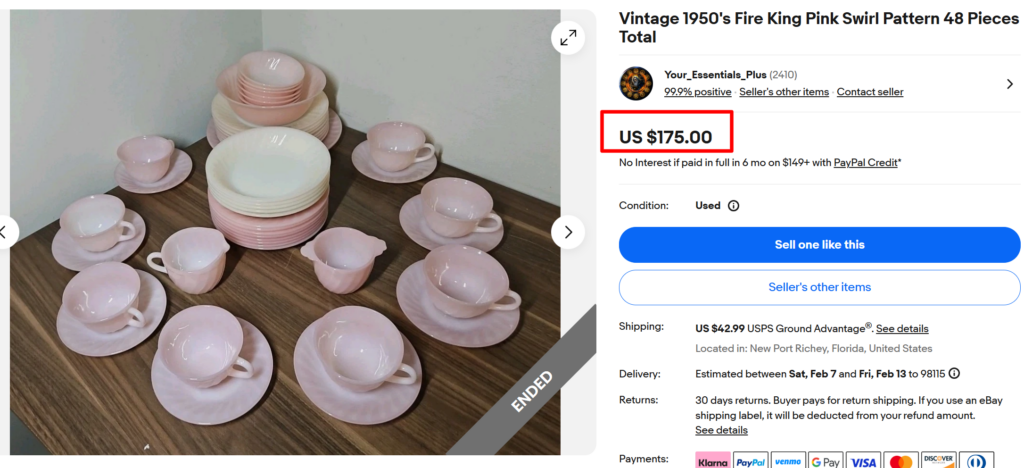
Large Swirl sets like this were designed for everyday family meals and entertaining. Further, Pink Swirl was produced in smaller quantities than white, making complete sets especially desirable today.
2. Bubble or Boopie Pattern
The raised, rounded dots of the Bubble pattern give the glass a textured surface and bring a lively feel to the table. Collectors are drawn towards the multiple colors this pattern was produced in, of which green and ruby red are most desirable!
| Average Price Range | $2 to $8 (Single, small pieces) $8 to $200 (Large glasses, bowls, set) |
| Manufacturing Period | 1934 to 1965 (as “Bubble”) 1950 to 1970 (as “Berwick”) |
| Status | Discontinued |
| Pattern Details | Raised spiral or wave-like ridges circling the glass |
| Collectible Pieces | Butter dishes, candle holders, dinnerware sets, stemware sets |
Boopie Royal Ruby Wine Glasses Set
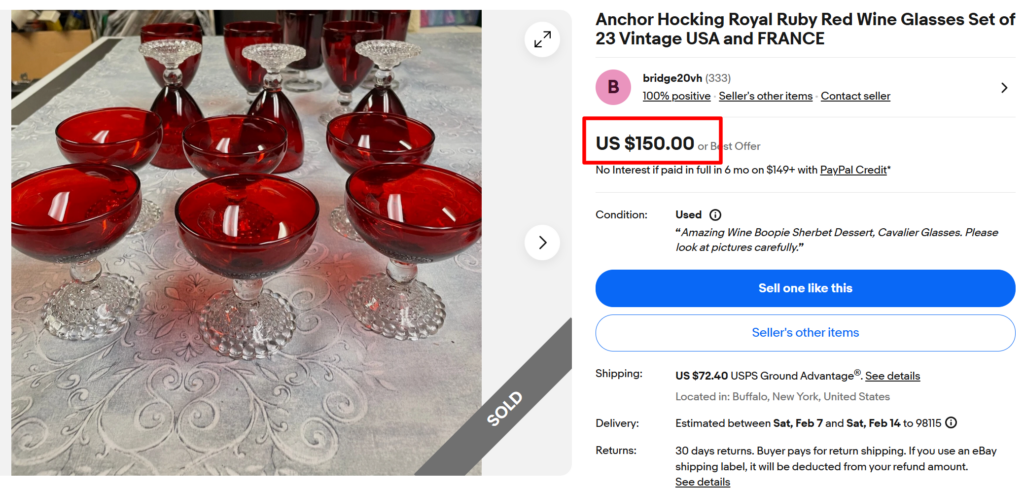
Royal ruby color is one of the most collectible shades in the Bubble pattern. Such pieces were often sold separately, and people would purchase matching glassware to form a set over time. This makes large Boopie sets like this more valuable!
3. Cameo Pattern
“Unlike purely geometric patterns, Cameo stands out for its unique figurative design of a Ballerina or Dancing girl in decorative oval cameos! Mainly released in green glass and rarely in yellow or pink, Cameo pieces are valued for both their artistic detail and historical context.”
| Average Price Range | $4 to $100 (Single pieces, small sets) $100 to $200 (Large sets & pieces) |
| Manufacturing Period | 1930 to 1934 |
| Status | Discontinued |
| Pattern Details | Central figure framed by scrolls and florals |
| Collectible Pieces | Pitchers, butter dishes, decanters, cake stands, large dishes & sets |
Cameo Green Salt and Pepper Shaker
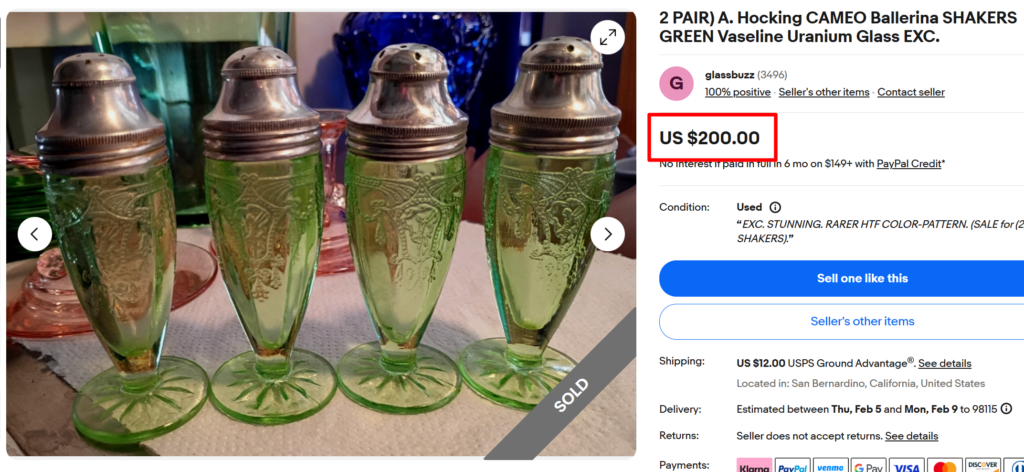
These Cameo-patterned salt and pepper shakers with a Ballerina figure are a standout example of true Depression-era Anchor Hocking uranium (or Vaseline) glass. Since they are hand-blown, such pieces often have slight variations in their height and etching details.
4. Kimberley Pattern
Made under the Fire-King brand, Anchor Hocking’s Kimberley pattern features deeply molded textured diamond cuts around the surface. It comes mainly in colored milk glass (mostly ombre), but also in clear glass like amber and aquamarine!
| Average Price Range | $3 to $40 (Single pieces) $40 $135 (Sets & single pitchers) $500 to $1,000 (Rare pieces) |
| Manufacturing Period | 1950s to 1960s |
| Status | Discontinued (1960s) |
| Pattern Details | Repeating, bumpy-textured diamond cuts |
| Collectible Pieces | Bowls, cups, pitchers |
Kimberley Opalescent Milk Glass
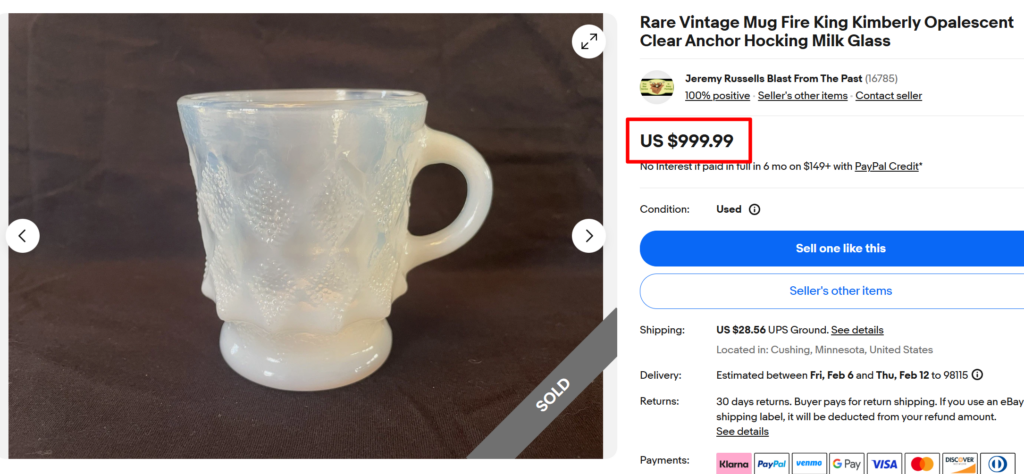
This Kimberley-pattern mug comes with a rare story. It was made by an Anchor Hocking employee using leftover glass for personal use. Pieces like this were never sold to the public, making them uncommon and a true collector’s piece.
5. Hobnail Pattern
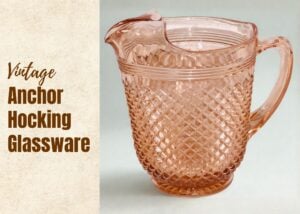
Resembling Fenton’s Hobnail, this pattern by Anchor Hocking is known for its raised, rounded ‘dot’ texture that gives the glass a soft look. It was especially popular for everyday tableware and serveware.
Collector’s Note: Anchor Hocking’s Hobnail pattern has softer and less shaper hobs than Fenton’s Hobnail!
| Average Price Range | $3 to $5 (Single pieces) $5 to $125 (Sets, large pieces) |
| Manufacturing Period | 1934–1936 (Clear Glass) (1942–1946) (Opalescent White) |
| Status | Discontinued (1960s) |
| Pattern Details | Evenly spaced raised dots resembling fabric hobnails |
| Collectible Pieces | Opalescent goblets, jugs, cake stands, ice buckets, decanters, pitchers, etc. |
Hobnail Moonstone Opalescent Cake Stand
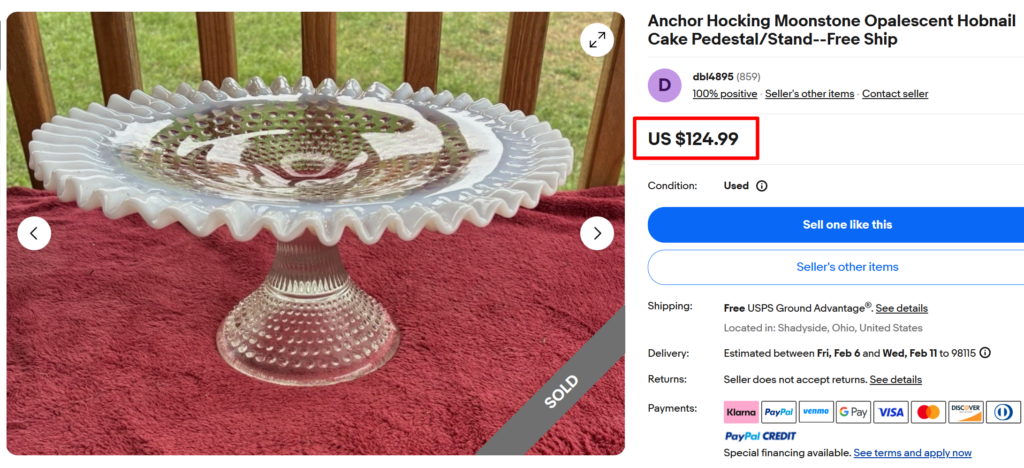
In the 1940s, Anchor Hocking also released the Hobnail pattern in a unique opalescent glass (white opalescent on the rims and hobnail tips), popular as “Moonstone!” These pieces are most collectible, especially in uncommon shapes like this cake stand!
6. Fire-King Restaurant Ware
The Fire-King line was introduced in the 1940s as heat-resistant ovenware. Among the large number of products in this line, the restaurantware is among the most valuable.
Made of opaque milk glass, mainly Jadeite green or white, these pieces were made thicker and heavier than the household ones for commercial use, and released in various colors.
| Average Price Range | $4 to $20 (Single pieces) $20 to $400 (sets & advertising pieces) |
| Manufacturing Period | Mid 1940s to 1970s |
| Status | Discontinued (1970s) |
| Pattern Details | Usually plain, advertising pieces have restaurants’ logo and/or tagline |
| Collectible Pieces | Coasters, cups, curry bowls, trays, plates, bowls, dishes |
Fire-King Advertising Mug for Burger King
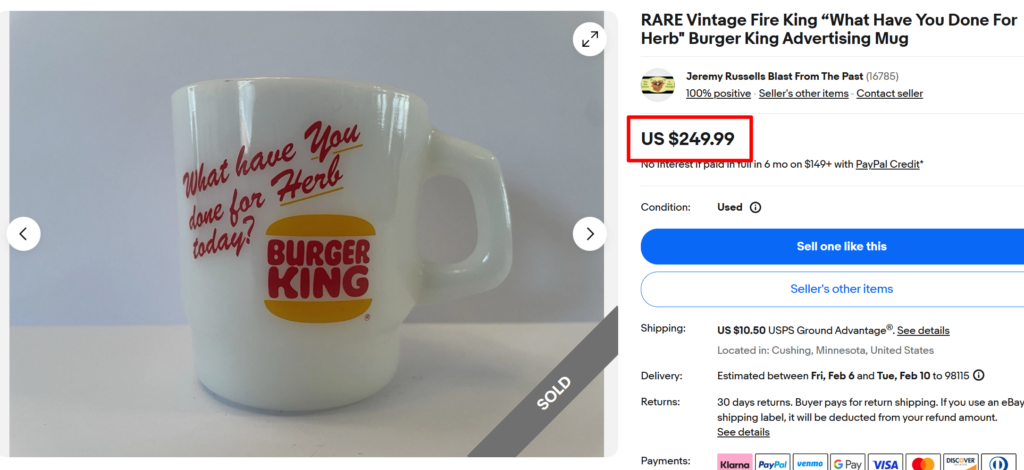
This Fire-King milk glass advertising mug was made for Burger King. The brand’s logo and the tagline ‘What have you done for Herb today?’ on the mug make it a classic brand collectible. And, the impressed Fire-King mark at the bottom of this mug confirms its authenticity.
7. Miss America Pattern
This 1930s pattern features raised star-like designs that catch the light beautifully, giving clear or colored glass a sparkling effect. Collectors often prize Miss America pieces in rare colors, especially the Jade-ite or cranberry variations.
| Average Price Range | $3 to $50 (Single pieces) $50 to $195 (Sets, large pieces) |
| Manufacturing Period | 1935 to 1938 |
| Status | Discontinued |
| Pattern Details | Radiating fan shapes and diamond grids |
| Collectible Pieces | Tumblers, jugs, cake stands, pitchers, ice buckets, decanters, & sets |
Miss America Pink Glass Set
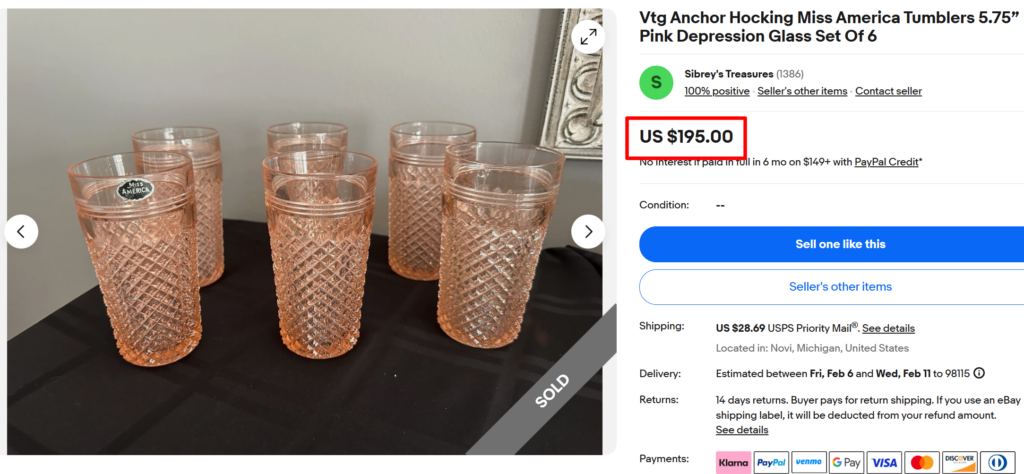
This Anchor Hocking Miss America pink tumbler set includes six vintage water glasses, each standing approximately 5.75″ tall. Since original factory stickers are generally lost, finding pieces with one is rare and can add value and authenticity.
8. Jade-ite Plain Glass or No Pattern
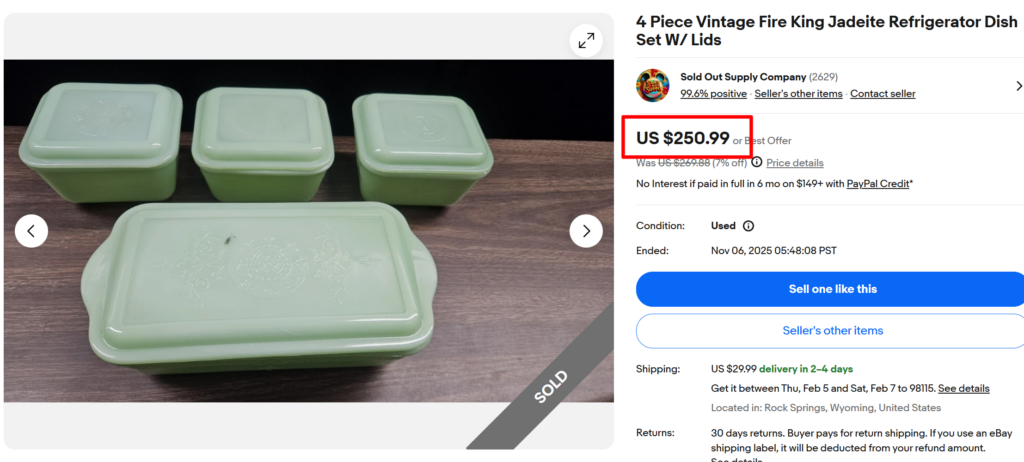
Anchor Hocking’s plain glassware is no less valuable than the patterned ones. Even though plain pieces seem simple, certain forms and colors can be surprisingly collectible.
For example, Jade-ite versions of refrigerator sets are highly sought after today.
| Average Price Range | $3 to $50 (Single pieces) $50 to $195 (Sets, large pieces) |
| Manufacturing Period | 1935 to 1938 |
| Status | Discontinued |
| Pattern Details | Radiating fan shapes and diamond grids |
| Collectible Pieces | Coasters, cups, curry bowls, trays, plates, bowls, dishes |
Note: This article is intended for informational, educational, and entertainment purposes only. Some images are illustrative and may not represent actual brands, products, or related entities. All trademarks, product names, brand logos, packaging, and other intellectual property referenced remain the exclusive property of their respective owners. Any brand mentions or references are provided solely for descriptive and educational context and do not imply any formal or commercial association.