Antiques Know How Research
Victorian Mourning Brooches Value
Our in-depth review at Antiques Know How, analyzing eBay sold listings and auction records, shows Victorian mourning brooches valued from $100–$500 for common pieces to $2,000+ for rare pieces. Highly collectible styles include Greek key enamel hair panels, bullseye banded agate, “In Memory Of” engraved brooches, black enamel flower pins, photo frame designs, jet & pearl ovals, and Whitby jet cameos. Check the key materials (jet, enamel, onyx, agate), gold settings, hairwork compartments, engravings, and clasps to verify authenticity.
Antiques Know How
What Are Mourning Brooches?
A mourning brooch is a commemorative piece of jewelry worn to honor a loved one who has passed away. The tradition was popularized by Queen Victoria during the Victorian era (1837–1901), who wore mourning jewelry for decades after the passing of her husband, Prince Albert, in 1861.
Mourning brooches are extremely collectible today because of their historical value, commemorating the loss of a loved one, and the time and effort put into making these pieces of jewelry.
The most valuable pieces are those made of high-karat gold, precious gems, black enamel, vulcanite, banded agate, seed pearls, and hair work. In good condition, these brooches are extremely collectible today, selling at auction for thousands.
Valuable Victorian Mourning Brooches to Know
Let’s take a look at some high-value mourning brooch styles from the Victorian era that are highly sought after by collectors today.
1. Greek Key Gold & Enamel Hair Panel Brooch
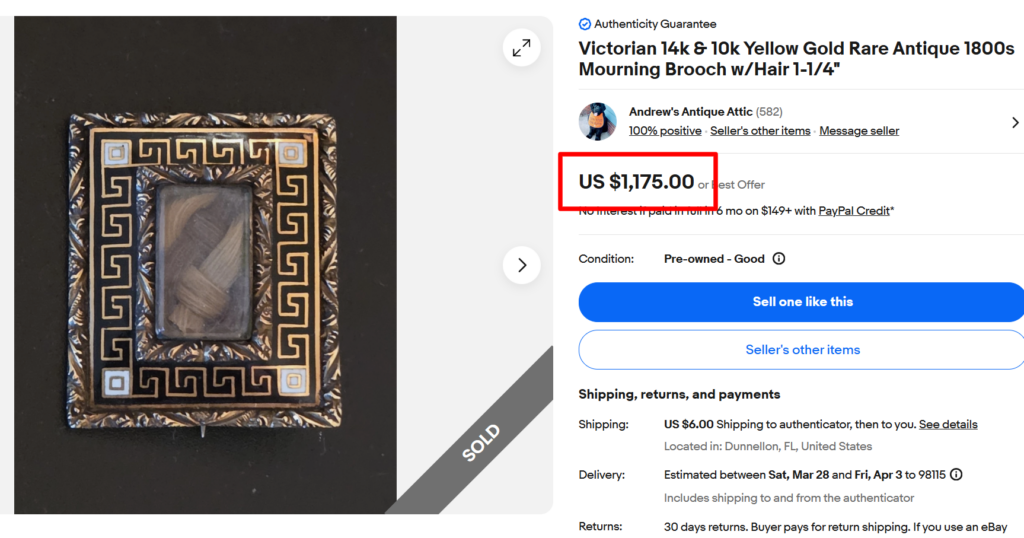
| Average Value | $800 – $2,000 |
| Production Period | 1850s – 1880s |
| Collectibility | Very High |
| Collector Notes | Intact enamel hair panel and inscriptions add value |
Rectangular mourning brooches with a Greek Key border and a hairwork centerpiece are among the most distinctly American forms in this category. The design features a repeating geometric border of interlocking right angles, often with black and white enamel inlays.
The rectangular design is less common than oval mourning examples, which makes these pieces highly desirable. The value also depends on the gold quality and the condition of the enamel.
2. 14K Gold Bullseye Banded Agate Mourning Brooch
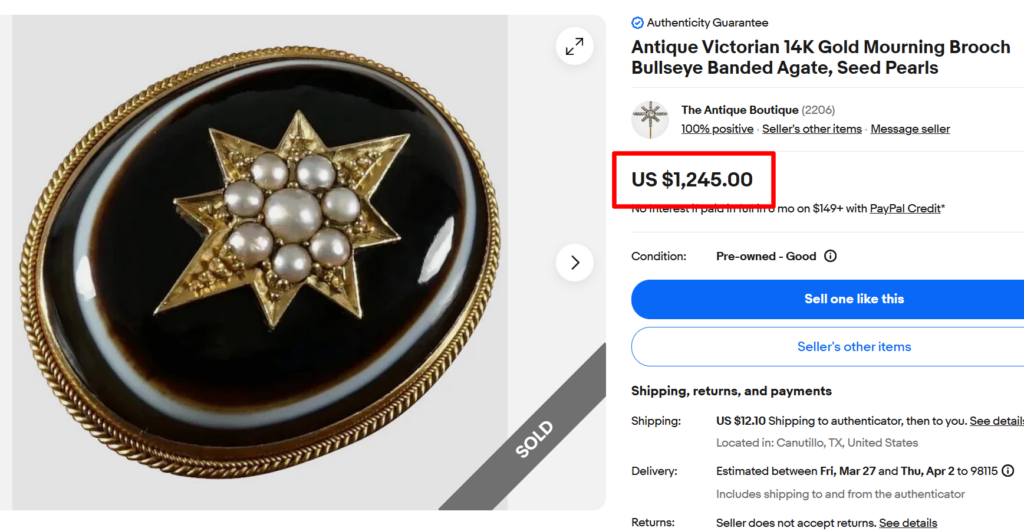
| Average Value | $900 – $2,000+ |
| Production Period | 1850s – 1880s |
| Collectibility | High |
| Collector Notes | Solid gold pieces are worth more. |
Bullseye banded agate brooch features a black or dark brown agate with a concentric white ring. The finest examples pair it with a 14K gold frame and a central star motif, hinting at the soul’s journey to the heavens, set with seed pearls.
The combination of 14k gold and high-grade banded agate makes this a luxury mourning piece. But remember, the condition of the stone is critical; even small chips drop value considerably.
3. “In Memory Of” Gold Mourning Brooch
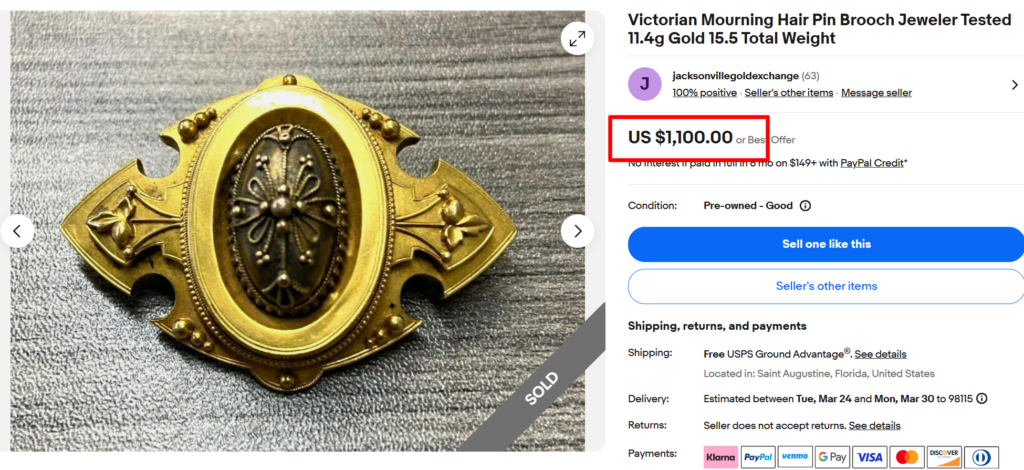
| Average Value | $600 – $2,000+ |
| Production Period | 1840s – 1890s |
| Collectibility | Very High |
| Collector Notes | The hair compartment must be intact and original. |
Hairwork, woven human hair displayed under glass, is one of the most distinctive features of Victorian mourning jewelry. It was made by professional hairworkers or assembled by the grieving family as a personal tribute.
Brooches with Etruscan-style gold frames (granulated detailing and beaded borders) and a central hairwork panel were popular from the 1860s to the 1880s. Large, solid-gold examples with intact hair panels and hand-engraved inscriptions are the most collectible examples.
A name, date, or “In Memory Of” engraving on the back confirms authenticity — and directly affects price.
4. Black Enamel Gold Flower Pin
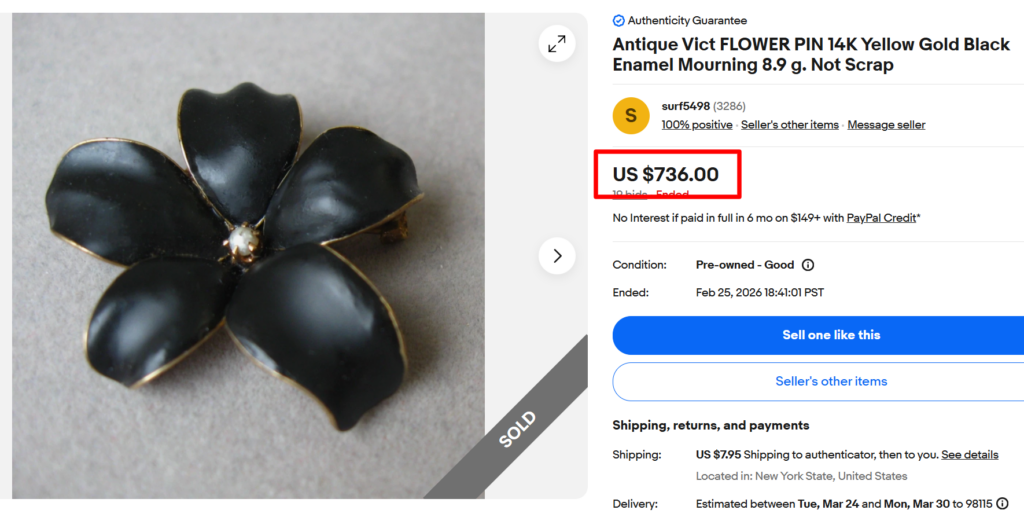
| Average Value | $200 – $850 |
| Production Period | 1850s – 1880s |
| Collectibility | Moderate to High |
| Collector Notes | Solid gold examples are valuable. |
Black Enamel Flower Pins made of 14K Gold are one of the most well-known types of Victorian mourning jewelry. The five-petal flower with black enamel petals surrounded by gold trim was produced from the 1850s until the 1880s. These usually have seed pearl decoration.
The value of these pins lies in their 14K gold composition. The value of the brooch is much lower if it is made of gold-filled or rolled-gold frames. The condition of the enamel is another factor that impacts the value.
5. Solid Gold Photo Frame Mourning Brooch
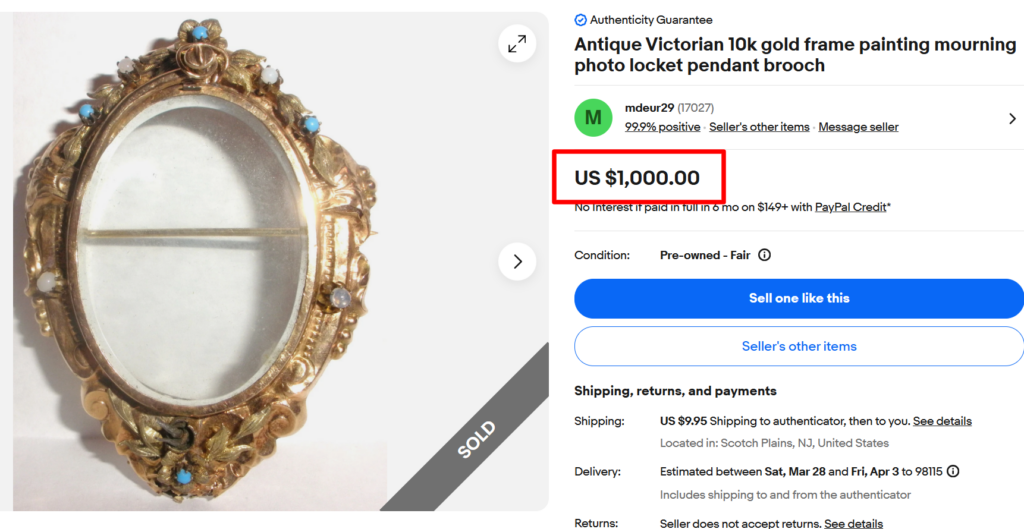
| Average Value | $600 – $1,200 |
| Production Period | 1870s – 1900s |
| Collectibility | Moderate to High |
| Collector Notes | Intact glass, gold decoation adds value. |
Photo frame mourning brooches emerged in the 1870s as photography became widely available. These oval gold frames were made to hold a small portrait photo of the deceased, displayed behind glass.
The finest examples came in 10K or 14K gold, with elaborate repoussé decoration of flowers, leaves, scrollwork, and valuable stones.
While the gold frame itself is the main value factor for these brooches. An original photo inside can further add historical interest, though it doesn’t affect the value. Other things to check are intact glass, working hardware, and the quality of the repoussé goldwork.
6. Jet & Pearl Victorian Mourning Hair Brooch
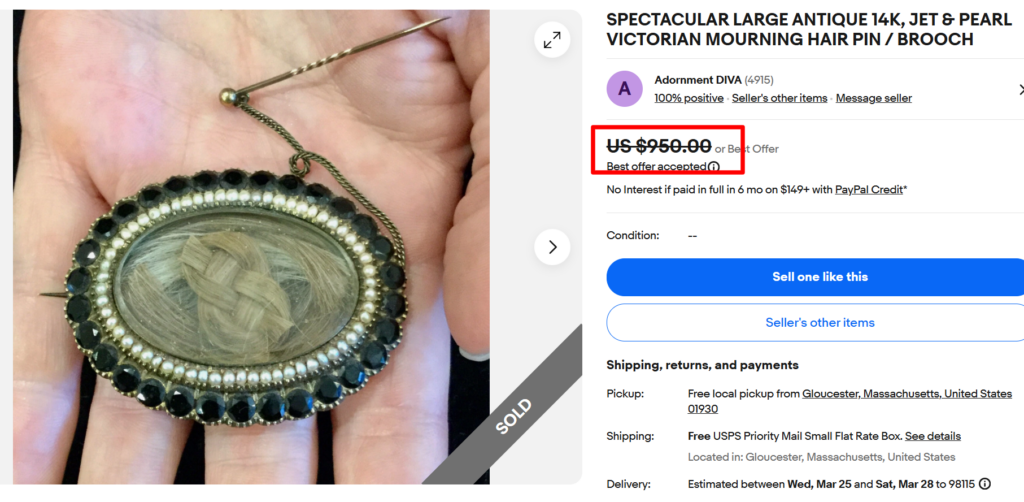
| Average Value | $650 – $1,500+ |
| Production Period | 1860s – 1890s |
| Collectibility | Very High |
| Collector Notes | Verify stones are genuine jet, not glass. |
Large oval mourning brooches combining jet, seed pearls, and a central hairwork panel in a 14K gold frame are one of the most valuable pieces. The braided hair of the deceased was displayed under glass as a personal memorial.
The jet and pearls were not just for decoration. They had meaning: black for mourning, and the white pearls for tears or purity. On pieces like this, you’ll most likely see the chain-suspended bar pin (a separate bar from which the oval hangs).
7. Victorian Yellow Gold Black Onyx Brooch
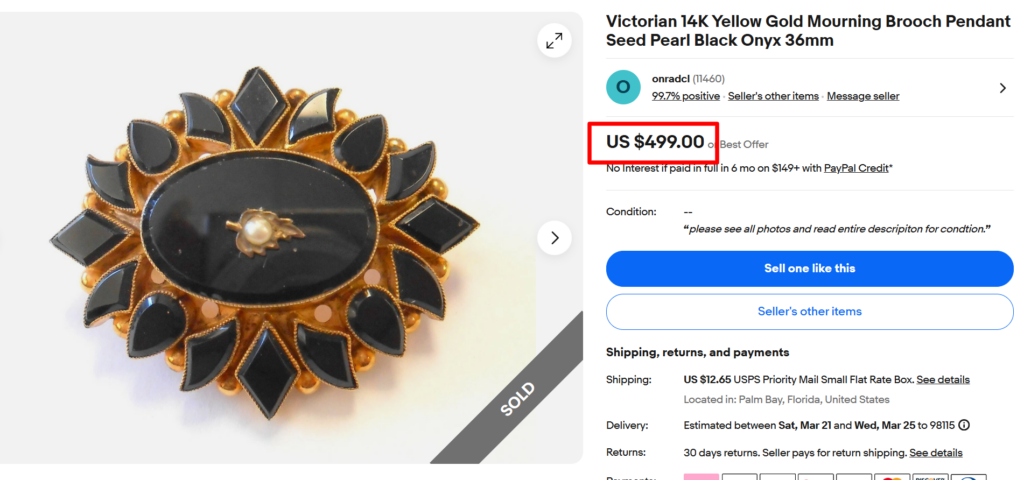
| Average Value | $350 – $800 |
| Production Period | 1860s – 1880s |
| Collectibility | Moderate to High |
| Collector Notes | Confirm 14K gold, check onyx condition. |
The sunburst or starburst design, with a central oval stone and surrounding points and accents, was popular from the 1860s to the 1880s. This piece is an example of this style, with Black Onyx and a Seed Pearl.
The onyx was said to symbolize grief, much as the jet did, but was easier to set in gold. What makes this style unique is the use of faceted onyx for the rays and a large cabochon, all set in 14K gold.
These pieces are harder to find than plain onyx brooches, and 14K pieces in good condition can be quite valuable.
8. Whitby Jet Cameo Brooches
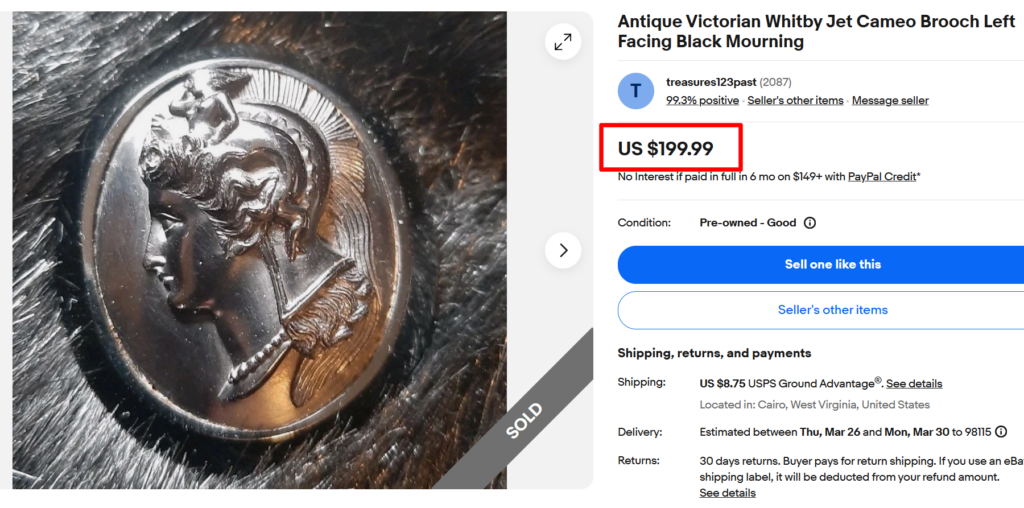
| Average Value | $150 – $400 |
| Production Period | 1860s – 1880s |
| Collectibility | High (genuine Whitby jet) |
| Collector Notes | Check the authenticity of the jet. |
This is a Whitby cameo brooch. Whitby jet is fossilized wood found along the North Yorkshire coast of England. It was the premier mourning material of the era.
Authentic Jet cameos were hand-carved and featured a wide range of themes, from busts to landscapes. Plain-profile cameos (a female face in classical style, as seen here) are the most common subjects and have moderate value.
More complex subjects, like Whitby Abbey, angels, narrative scenes, as well as signed pieces by known makers, are worth significantly more.
The most important thing while dealing with a Whitby brooch is to confirm its authenticity. Real jet is warm to the touch, lightweight, and polished on the reverse.
9. Late Victorian Vulcanite Brooches
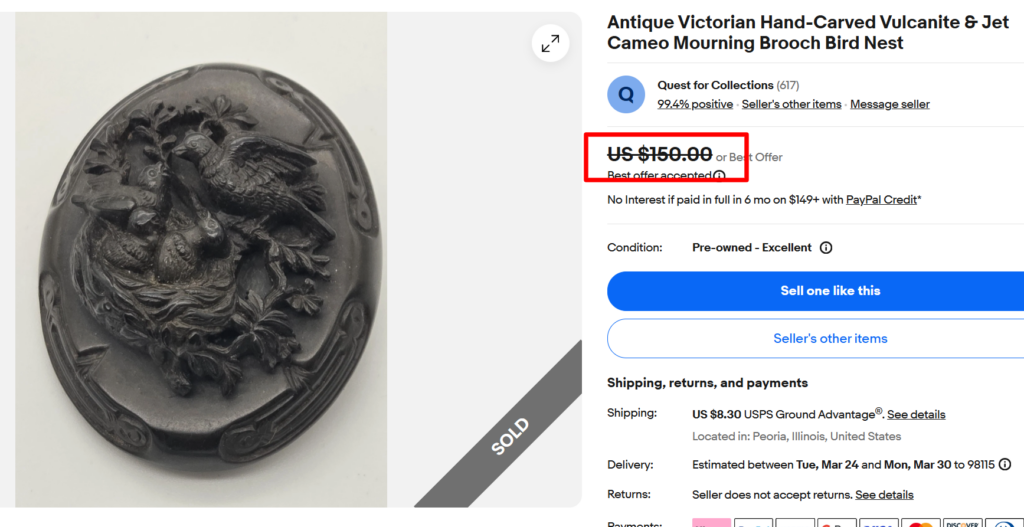
| Average Value | $100 – $500 |
| Production Period | 1860s – 1890s |
| Collectibility | Moderate |
| Collector Notes | High-relief carving can raise value. |
| Smell Test | Whitby smells of coal, vulcanite of sulfur |
Vulcanite is a hardened rubber (aka ebonite) patented in the 1840s, which became the most common budget alternative to Whitby jet by the 1860s. It could be molded and carved, making mourning jewelry accessible to working-class people.
The bird nest motif, such as the mother bird tending chicks in this piece, was popular because it represented family and the bereavement of losing someone.
The value of these brooches is based on the high-relief carving and distinct, defined detail. They are collectible but are much less valuable than genuine Whitby jet items.
How to Know If a Brooch Is a Mourning Piece?
Not all black brooches are for mourning, and not all mourning brooches are black. Here are the main things you can look for to determine whether or not your brooch is really a Victorian mourning brooch:
- Black Materials & Setting: Whitby jet, black enamel, vulcanite, black onyx, and banded agate were all mourning staples. Pearls or seed pearls (symbolizing tears) are also a common element. But black color and pearls alone don’t confirm mourning intent; the rest of the details matter too.
- Metal and Construction: The presence of yellow gold (especially 9K or 14K) indicates a high-end Victorian piece. Gold-filled and rolled gold items were also common in this period, but they fall in the middle value range.
- Mourning Motifs: Most mourning brooches feature motifs such as weeping willows, urns, anchors, forget-me-nots, clasped hands, skulls, and doves. They appear in enamel, carved jet, and gold work.
- Hairwork Under Glass: A compartment with braided or woven human hair under a glass panel is the most obvious indicator of the mourning theme. It is designed to display the deceased’s hair.
- Inscriptions and Engravings: The presence of engravings such as “In Memory Of,” name, and date on the reverse is most likely to indicate that it is a mourning brooch.
- Clasp Style: Brooches made before 1890 generally have a C-clasp without a rollover safety, while post-1890 pieces often have a trombone or rollover clasp. Clasps were sometimes replaced, so checking them is important for authenticity and originality.
Note: This article is intended for informational, educational, and entertainment purposes only. Some images are illustrative and may not represent actual brands, products, or related entities. All trademarks, product names, brand logos, packaging, and other intellectual property referenced remain the exclusive property of their respective owners. Any brand mentions or references are provided solely for descriptive and educational context and do not imply any formal or commercial association.