Antiques Know How Research
Vintage Glass Marbles Value
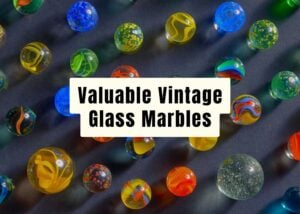
Our detailed research of several eBay sales at Antiques Know How suggests that most old glass marbles sell for under $50, but antique or rare pieces can reach $5,000 to $8,000 or more. The rarest types include sulphide (“figure‑in‑glass”) marbles, latticino and solid‑core swirls, onionskin, Akro Agate corkscrews, CAC Guineas and flame marbles, Alley Agate swirls, Joseph’s Coat marbles, and Akro oxblood shooters. The value depends on construction (machine vs. hand), size, distinctive type and maker, color combinations, and overall condition.
Antiques Know How
Old glass marbles are a common item found in old trunks in cellars, as well as at estate sales. But as common as these items are, they hardly get a second glance.
That’s because only a few people know that some rare glass marbles could, in fact, be worth hundreds to several thousand dollars today. Let’s explore these rare types in this guide and understand what really makes an old marble so valuable.
A Brief of Glass Marbles
Glass marbles date back to the mid-19th century, with Germany being the core of handmade production. Skilled artisans used glass rods to create breathtaking designs, such as swirls and lattices. These early handmade marbles are the most desirable pieces.
In the early 20th century, machine-made marbles revolutionized the market in the United States. Companies like Akro Agate and Christensen Agate introduced bold colors and consistent patterns. The rarity of patterns, unique colors, and the size make these glass pieces popular collectibles today.
The Rarest Types of Vintage Glass Marbles to Find
The following are the rarest and most valuable types of glass marbles currently available. Some of these have sold for whopping four figures or even more at auction.
1. Sulphide Marbles (Embedded Figurine)
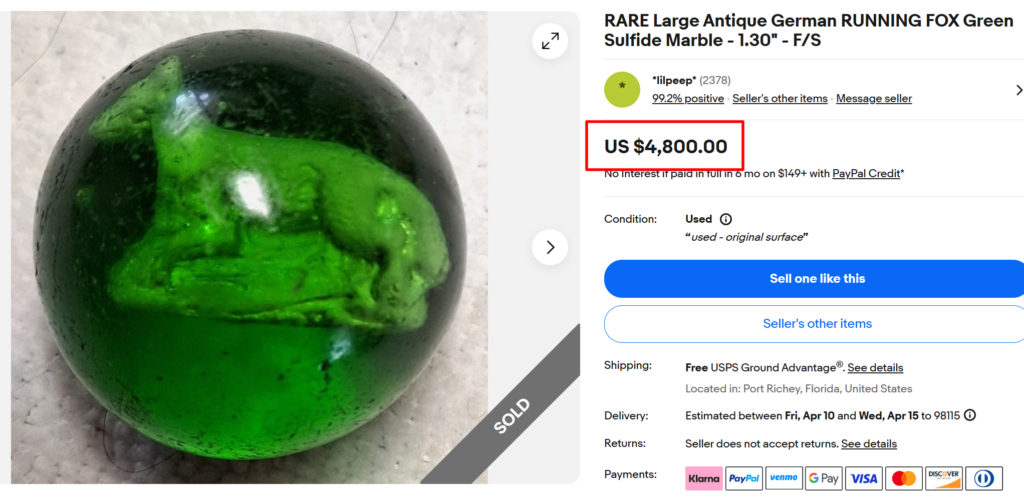
| Average Value | $75 – $500+ $1,500 – $5,000+ (rare pieces) |
| Production period | 1860s – 1910s |
| Key Features | Figure encased in glass |
| Collector Notes | Colored glass, rare subjects add value. |
Sulphide marbles are quite unique because they have a small, silvery-white ceramic figurine encased in clear (or colored) glass. The Running Fox in this green marble is a classic animal design sought after by collectors.
These were handmade, often with a single pontil mark where the glass was snapped off the rod. The value of these marbles depends on the color and clarity of the surrounding glass, the detail of the figure, and whether it’s well-centered.
2. Latticino Core Swirl Marbles
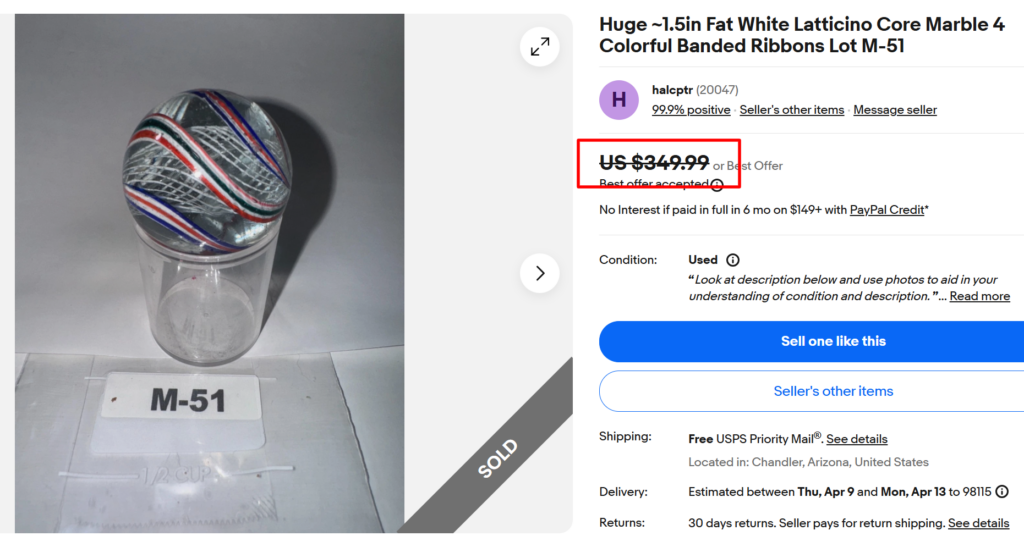
| Average Value | $10 – $350+ |
| Production Period | c. 1850 – 1915 |
| Key Features | Inner lattice, outer ribbons, clear case |
| Collector Notes | End-of-cane single pontil examples are rare. |
Latticino core swirls are the most common type of German handmade marble. They have a cage-like core arrangement of thin colored threads twisted into a lattice pattern.
The most common white-core examples in standard size have modest value, but premium large-size examples in rare colors (red or blue) with four or five swirl layers can be worth more. Likewise, End-of-cane single-pontil examples are also highly desirable in this category.
3. End-of-Day Marbles
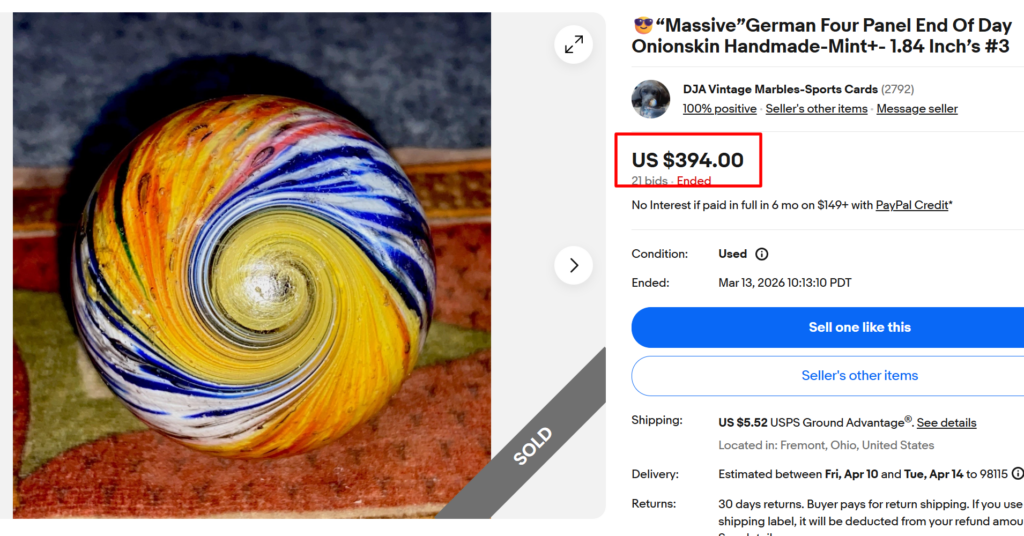
| Average Value | $50 – $1,000+ |
| Production Period | c. 1850 – 1915 |
| Key Features | Multicolor panels, onionskin body, handmade |
| Collector Notes | Panel count and color count both affect value |
“End of Day” marbles were traditionally handmade from leftover glass scraps at the end of a glassworker’s shift. So, they feature a random mix of colors, and no two marbles will look identical.
This example is a rare “four-panel” variation of end-of-day type. You can spot it by quadrant-like sections of color, rather than the random all-over speckle of standard end-of-day types.
While common end-of-day marbles sit in the lower value range, rare and large variants like this can fetch a few hundred dollars in good condition.
4. Onion Skin Marbles
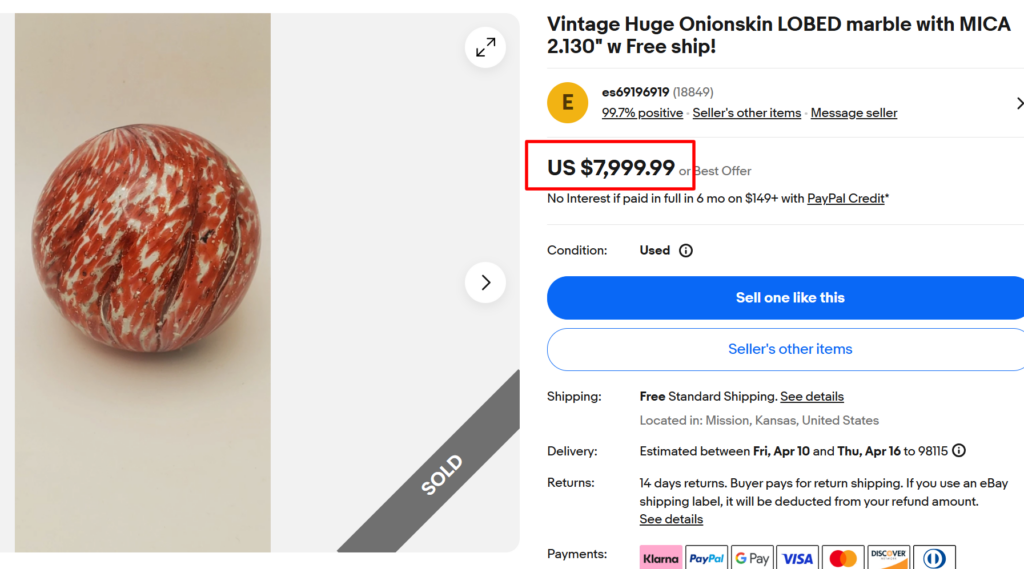
| Average Value | $150 – $10,000+ |
| Production Period | c. 1850 – 1915 |
| Key Features | Lobed core, clear casing, red-white speckled skin |
| Collector Notes | 2+ inches size and lobing are rare. |
Onionskin marbles feature a colored core covered by a transparent layer, often decorated with flakes of mica or “lobes” of glass. A “Lobed” version has unique ridges or pressed indentations (lobes) from pole to pole on the core.
These marbles are extremely rare in large sizes (over 1.5 inches) and can sell for a few thousand dollars. Top examples have also reached $10,000+.
5. Akro Agate Popeye Hybrid
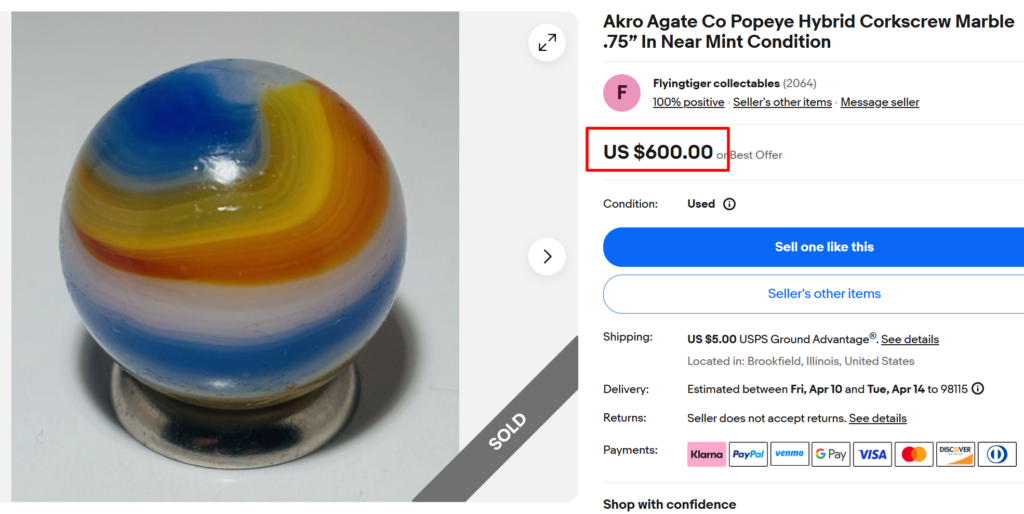
| Average Value | $35 – $600+ |
| Production Period | c. 1914 – 1951 |
| Key Features | Spiral corkscrew with extra colors |
| Collector Notes | Spot floating interior bands to identify. |
Akro Agate’s corkscrew marbles are known for their machine-made glass bodies, characterized by a translucent or transparent base with spiraling bands of two or more colors in a corkscrew pattern.
The “Popeye” is a corkscrew variant where white bands appear to float inside a transparent base glass rather than sitting on the surface. While standard two-color Popeyes in common colors are worth $35–$150, shooter-size or hybrid examples like this can fetch $300-$600, or more, depending on condition.
6. Solid Core Swirl Marbles
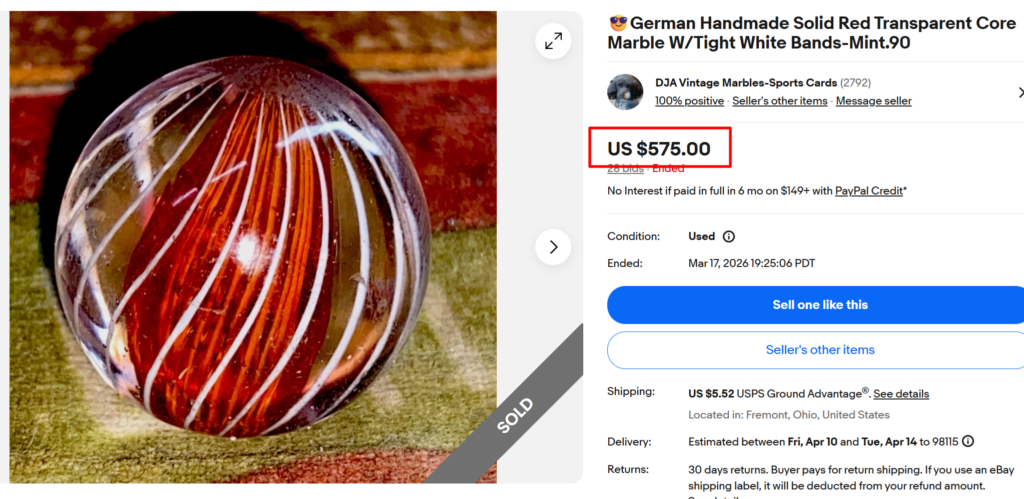
| Average Value | $15 – $600+ |
| Production Period | c. 1850 – 1915 |
| Key Features | Solid colored core, white bands, clear casing |
| Collector Notes | Bright red cores, large size boost value. |
Solid-core marbles are a distinct variety of handmade German swirls, featuring a single solid-colored glass rod (often red, blue, yellow, or white) running through the center, surrounded by outer bands of color, all encased in clear glass.
The tight spacing of the outer bands, the richness of the core color, and the marble’s size all determine the value of these types.
7. Christensen Agate Company Flame Marble
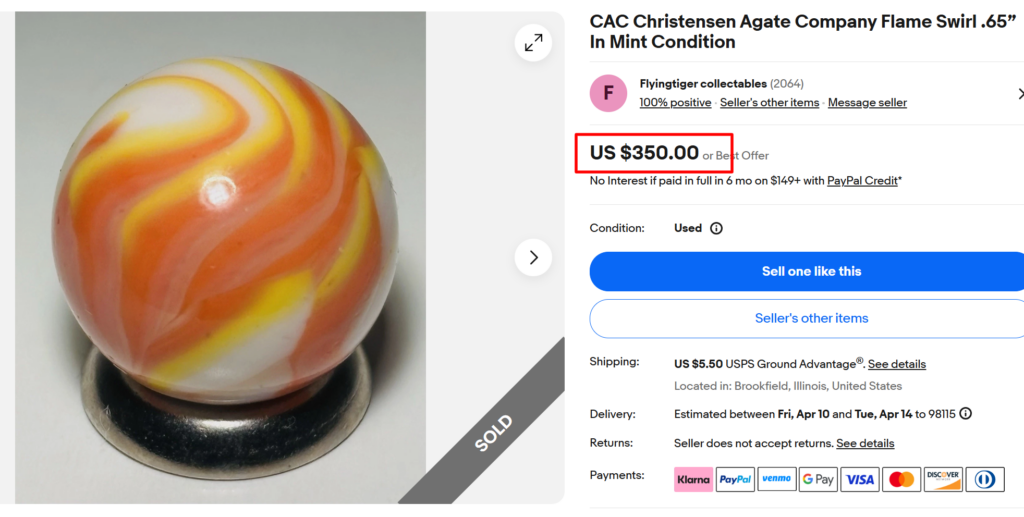
| Average Value | $150 – $800+ |
| Production Period | c. 1927 – the early 1930s |
| Key Features | Stacked flames, CAC electric colors, no seams |
| Collector Notes | Check for 4+ stacks for authenticity |
CAC (Christensen Agate Company) flame marbles are made by strata of differently-colored molten glass, creating actual surface flame patterns on the finished marble.
But not every swirl is a “flame.” Collectors look for at least four stacked flames for a marble to qualify as a CAC flame type formally. Seam-free surfaces are also standard for CAC.
Also, the colors on original CAC marbles tend to be the “electric” shades unique to the company. The saturated oranges, yellows, and whites on these marbles look different from any other maker’s output.
8. Alley Agate Alley Swirl Marbles (Halloween)
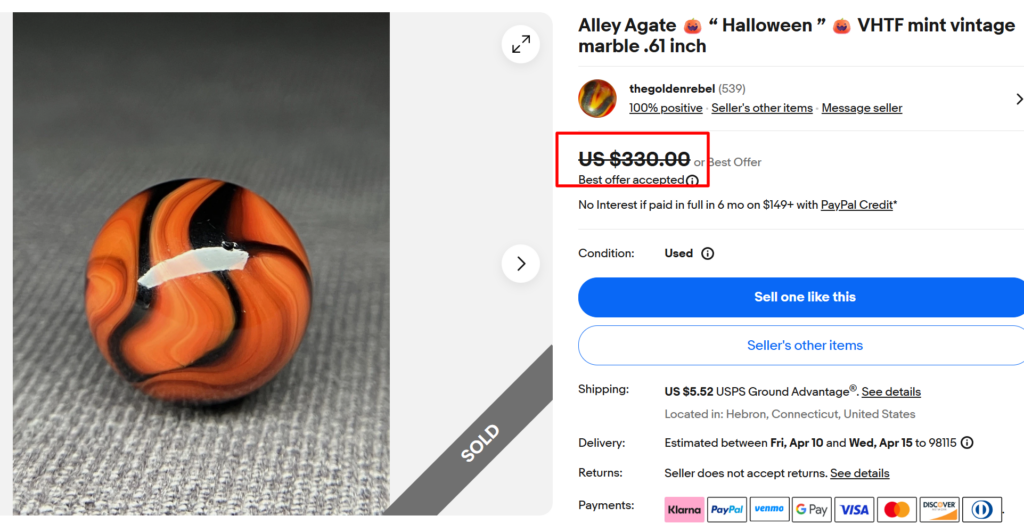
| Average Value | $50 – $150 |
| Production period | c. 1929 – 1949 |
| Key Features | Intense orange and black swirls |
| Collector Notes | Look for sharp, distinct color separation |
Alley Agate marbles are known for their beautiful, flowing, flame-like swirls. This one is a Halloween swirl marble.
Although not officially named by the company, these pieces are called “Halloween” marbles for their striking combination of bright orange and deep black glass. To make sure they’re genuine, check the color contrast; the “swirl” pattern should be sharp and distinct.
9. Christensen Agate “Guinea” Marbles
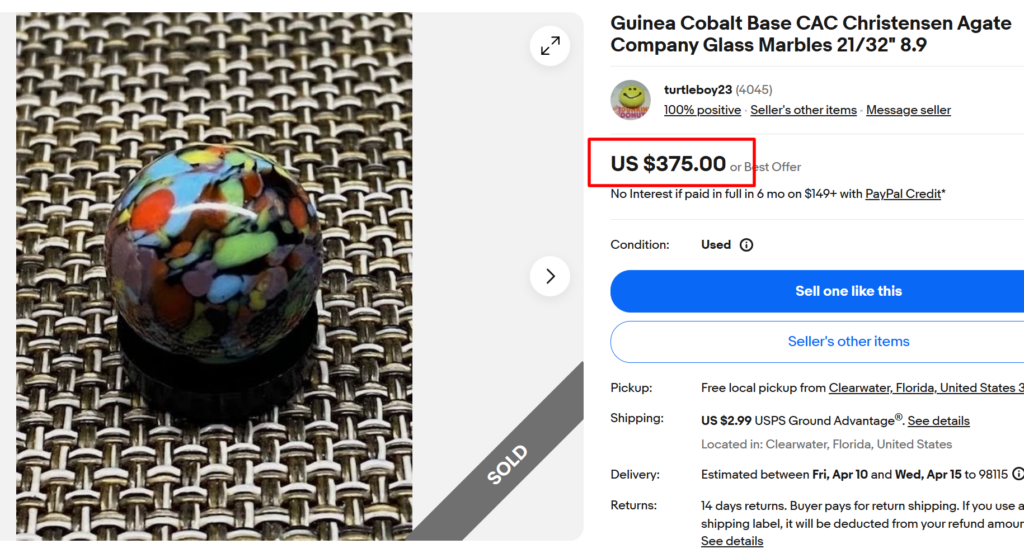
| Average Value | $200 – $1,500+ |
| Production Period | c. 1927 – 1931 |
| Key Features | Cobalt base, multicolor surface flecks |
| Collector Notes | Verify base glass color. |
The Guinea is arguably the most famous machine-made marble, identified by colorful glass “frit” or chips scattered across the surface. While many have a clear base, this cobalt base version is exceptionally rare.
Also, because Christensen Agate had a short production run, these marbles are consistently high in value, with larger pieces selling for over $500.
10. Joseph’s Coat Marbles
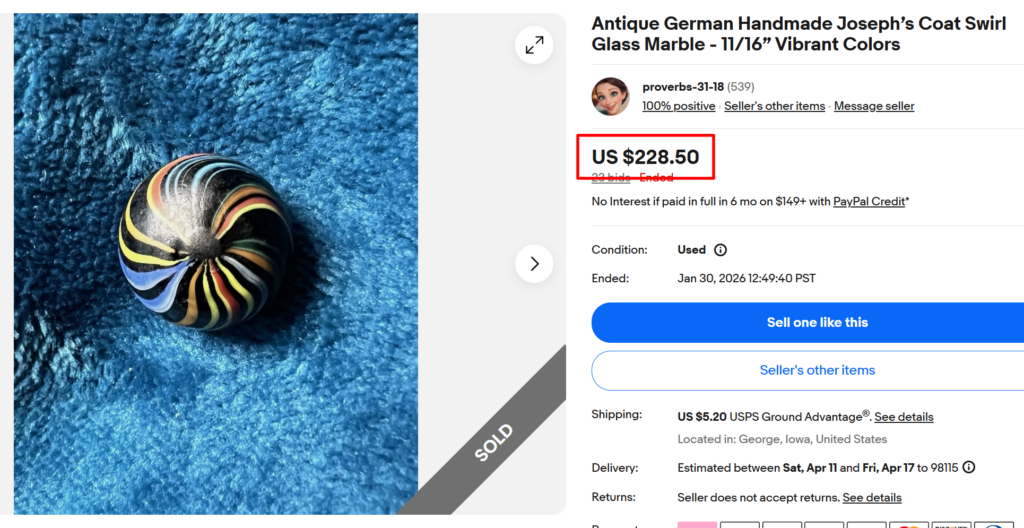
| Average Value | $100 – $500 |
| Production period | 1880s – 1920s |
| Key Features | Closely spaced, colorful vertical bands |
| Collector Notes | Look for rare base glass colors |
These German-made marbles are famous for their vibrant, multicolored bands that wrap around a clear or colored core. This 11/16-inch example features yellow, red, blue, and green stripes on a dark, saturated base glass.
They are named “Joseph’s Coat” after the biblical “coat of many colors” due to their diverse palette.
The value of these marbles lies in the complexity of the swirl, the number of distinct colors, and the color of the base glass.
11. Akro Agate “Oxblood” Marbles
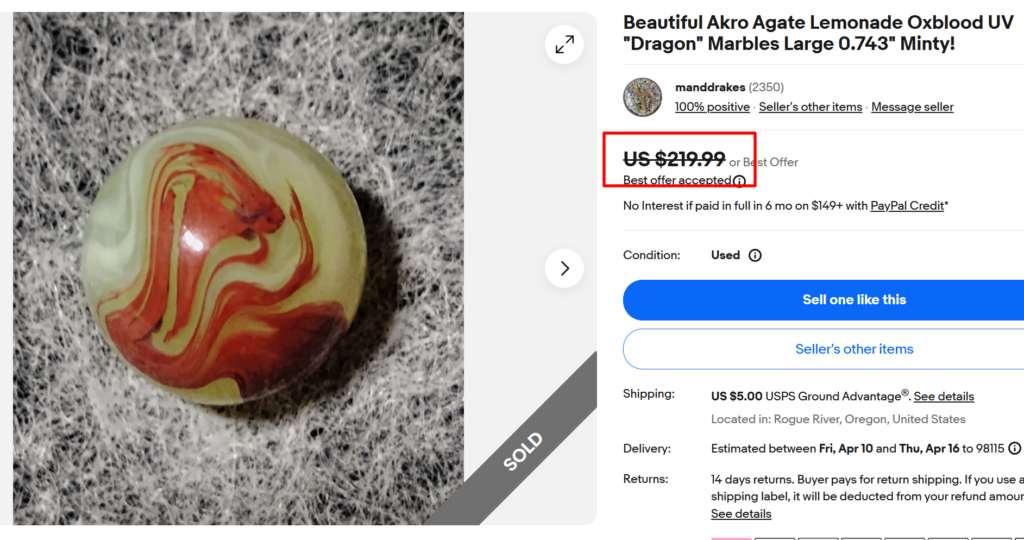
| Average Value | $200 – $800 |
| Production period | 1930s – 1940s |
| Key Features | Red oxblood on green/yellow base |
| Collector Notes | Check for genuine opaque oxblood. |
Akro Agate’s oxblood marbles are one of the most recognized in the category. These are machine-made marbles featuring deep, brownish-red “oxblood” swirls on a bright base.
On a “lemonade oxblood” type like this one, the oxblood appears over a milky yellow slag-type base.
Oxblood is easy to confuse with any regular red swirls. So, remember that true Akro oxblood is a deep rust-red with black filaments. And it must be opaque, not translucent.
Identifying Valuable Old Glass Marbles: 4 Key Signs
Old glass marbles’ value can range from tens of dollars to thousands. To find out if your vintage marble is worth $10 or $1,000 or more, check the following things:
Pontil Marks (Age & Construction)
A pontil mark is the clearest sign that a marble was made by hand, not machine. It’s a small, rough spot where the marble was broken free from the rod once it was completed during handmade production.
Spotting this mark is important to track the estimated age, type, and origin of a marble. For example, pre-1930 marbles are mostly handmade, which means they’re more valuable. German handmades almost always have two pontils, one on each pole. Sulphides have just one.
Apart from pontil marks, handmade marbles may also display bubbles, glass, and swirls.
Machine-made marbles have no pontil marks or bubbles. They do sometimes have a faint seam line around the equator from the manufacturing process. These pieces are usually worth less than handmade ones.
Type, Colors, and Maker
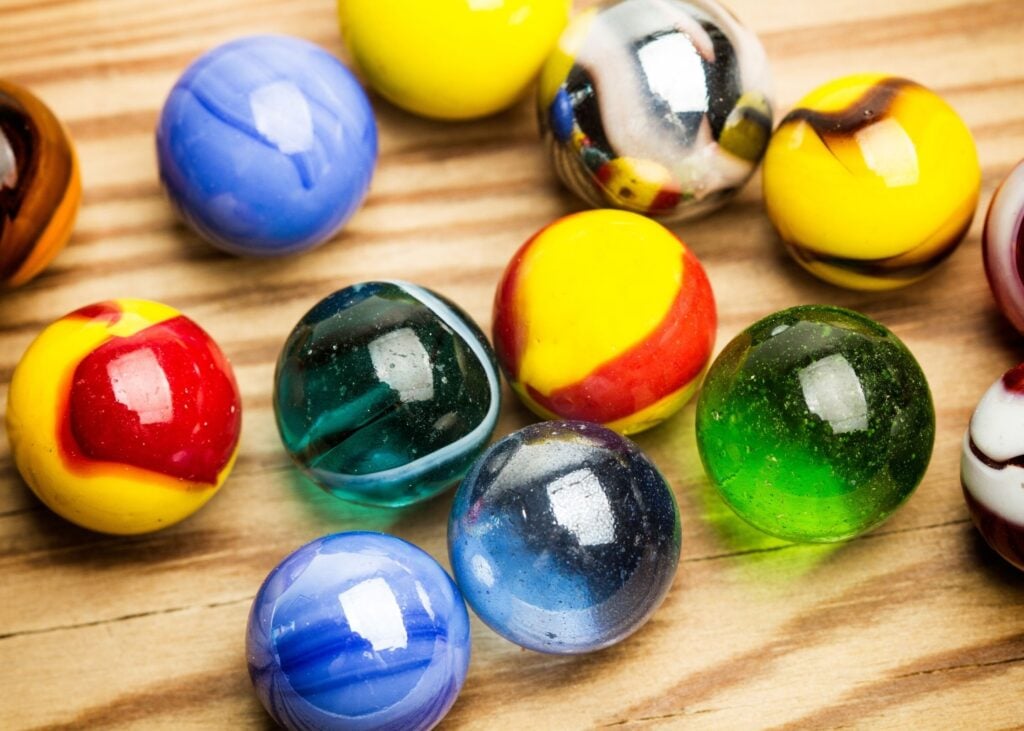
Knowing about certain types of marbles and their makers is essential for valuation. For example, a sulphide, onionskin lobed, or CAC Guinea in any condition is worth knowing about. A plain Akro corkscrew in common colors may not be as special.
For machine-made marbles, the color characteristics can tell a lot about the maker. CAC marbles, for instance, have distinctive “electric” colors that look saturated and slightly artificial compared to those of other makers. Likewise, Akro oxbloods are opaque rust-red, not translucent, with black filaments.
So, it’s important to observe the swirls and patterns on a marble to identify its type. Once identified, you can research online sources to understand their market value.
Collector’s Tip: When researching a marble’s value, always search for the specific color combination, not just the type name. A generic search for “Christensen Agate Guinea” may yield a wide range of values.
Size
In the case of vintage marbles, size matters far more for value than you think. Standard marbles range from 9/16″ to 3/4″. Anything over 1 inch is considered large and commands a premium.
A marble over 1.5 inches is uncommon, but a 2-inch or larger example, especially if it’s a German-made handmade piece, can be worth several times as much as a standard one. So, always measure the marble before dismissing it as ordinary.
Condition
For vintage marbles, collectors generally use four basic condition grades:
- Mint: No surface damage
- Near Mint: Minor hit marks
- Good: Visible chips and abrasion, but the pattern is still clear
- Collectible: Heavy wear, chips, and cracks.
Naturally, mint-grade old glass marbles are worth the most. However, the condition becomes secondary if the marble is quite large and features a rare color combination or pattern.
Note: This article is intended for informational, educational, and entertainment purposes only. Some images are illustrative and may not represent actual brands, products, or related entities. All trademarks, product names, brand logos, packaging, and other intellectual property referenced remain the exclusive property of their respective owners. Any brand mentions or references are provided solely for descriptive and educational context and do not imply any formal or commercial association.