Antiques Know How Research
Milk Glass Covered Dishes Value
Research on hundreds of eBay sales reviewed by Antiques Know How shows that vintage milk glass covered dishes can range from $40 to $400+, with higher prices for rare colors, shapes, and iconic makers. Collectible pieces include L.G. Wright’s turkey and Kemple’s cow‑on‑nest dishes, Vallerysthal’s duck and beehive honey pots, Westmoreland’s Charleston hen and Diamond Point compotes, L.E. Smith’s caramel turkey and Martha‑by‑Mail rooster, and Fenton’s turquoise hobnail candy dish and Silver Crest compote. To evaluate a piece, check the maker’s mark, the original lid, note the color, and assess the condition.
Antiques Know How
From compotes to tureens, covered dishes have been a common kitchenware piece for generations. You’ve probably seen them at your mother’s house or picked one up at an estate sale without giving it much thought.
But what looks like ordinary dishware could actually be a valuable collectible, especially if it’s vintage milk glass. This guide covers some of the rarest and most valuable covered dishes collectors are actively hunting today, along with the key things to check on yours to find its actual worth.
Rare Milk Glass Covered Dishes to Find Now!
From Fenton and Westmoreland to Vallerysthal and L.E. Smith, many manufacturers have made covered milk glass dishes for years. Some of these are highly rare and valuable today, selling for several hundred dollars.
Let’s take a look at the 10 most collectible and rarest dishes in the market:
1. L.G. Wright Glass Turkey Covered Dish
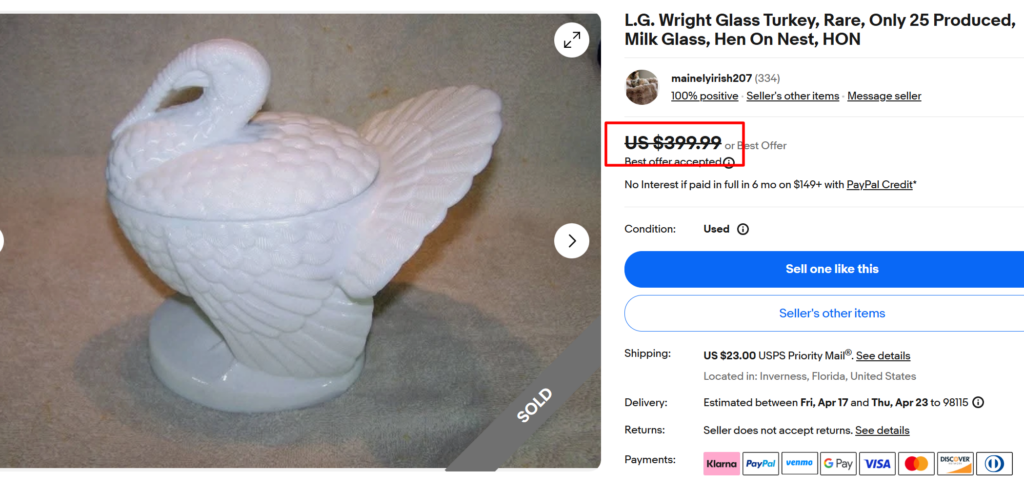
| Average Value | $300–$400 |
| Brand & Pattern | L.G. Wright / Turkey Covered Dish |
| Production Period | 1960s–1980s |
| Status | Discontinued |
| Color & Style | White glass, standing turkey on base |
| Collector Notes | Original Wright stickers rarely survive. |
This Turkey dish (catalog mold #70-17) appeared in L.G. Wright Glass Company’s 1979 supplemental catalog in four colors. This example is a plain white milk glass version, which is a large, heavily detailed dish with a base.
An interesting fact about the L.G. Wright company is that it designed and sold glassware, not manufactured it. They commissioned production from Fenton, Westmoreland, and other factories.
Also, the company didn’t exactly mark its pieces, but some original pieces came with paper stickers that rarely survive.
2. Kemple Milk Glass Cow on Nest Covered Dish
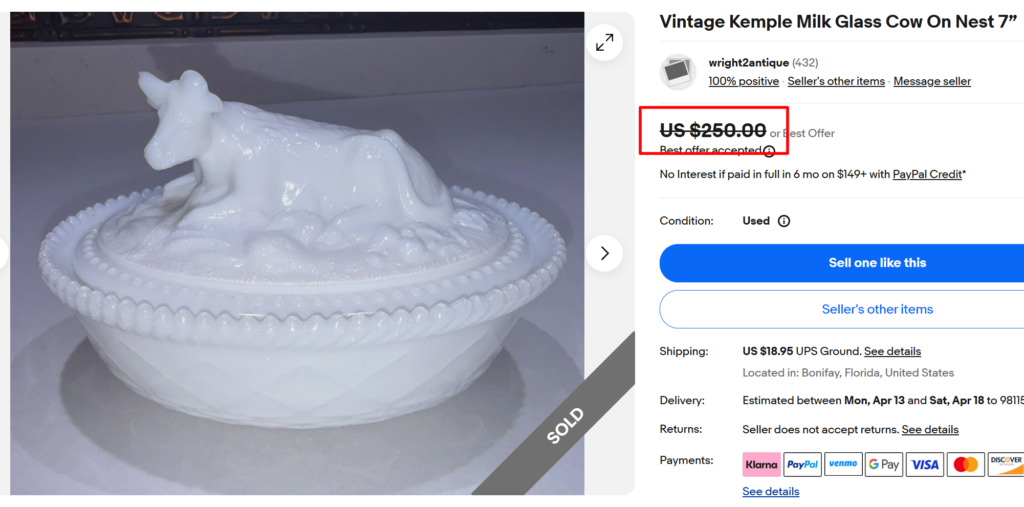
| Average Value | $200–$250 |
| Brand & Pattern | Kemple / Cow on Nest |
| Production Period | 1945–1970 |
| Status | Discontinued |
| Color & Style | White milk glass, cow lid |
| Collector Notes | Look for a “K” mark on the base |
John E. Kemple bought several animal-covered dish molds from McKee Brothers Glass Company. The 7.5-inch animal dishes used a basketweave base and included only five animals: rooster, hen, fox, cow, and lion.
The recumbent cow, shown in this example, is one of the harder ones to find and usually sells for $100 to $400 in good condition. To verify authenticity, look for a “K” on the base.
3. Vallerysthal Duck Dish
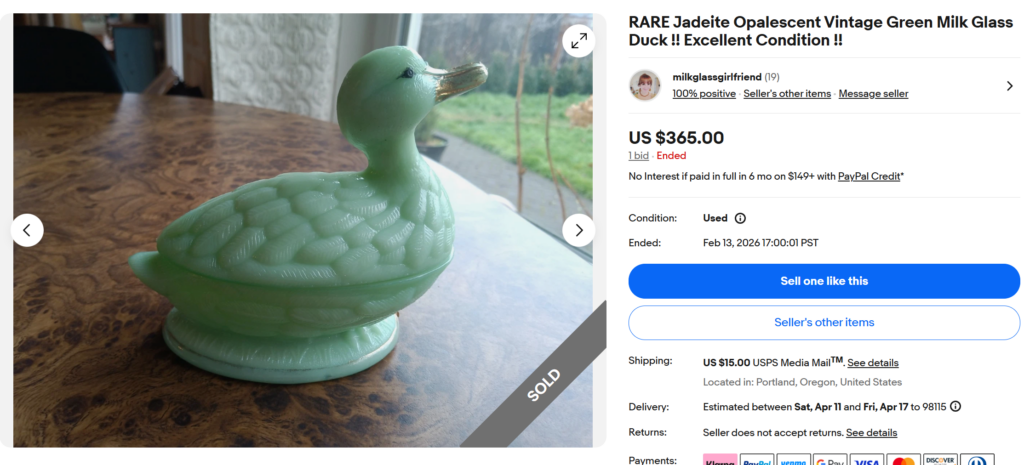
| Average Value | $300–$400 |
| Brand & Pattern | Vallerysthal / Jadeite Duck |
| Production Period | 1890s |
| Status | Discontinued (antique) |
| Color & Style | Jadeite milk glass, duck form |
| Collector Notes | Gold-painted beak detail adds value. |
This example is a Vallerysthal covered dish shaped like a duck. It’s made of jadeite green glass and features detailed features and a gold-accented beak. The basketweave base of the dish also bears a golden band.
Duck-shaped covered dishes are common, as many companies made them back in the day. But the Vallerysthal pieces have a unique feature to spot them: the neck is slightly tilted upwards, unlike most pieces where the head is parallel to the ground.
Also, this one is an antique piece from the late 19th century. So, an intact piece with minimum damage and visible gilt is a valuable find.
4. Vallerysthal Multicolor Bee Hive Honey Pot
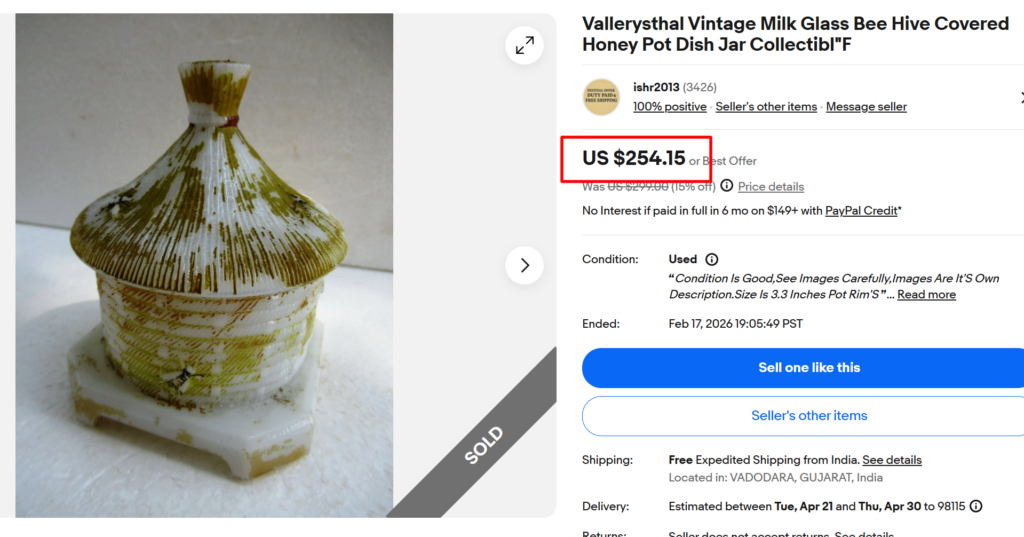
| Average Value | $200–$300 |
| Brand & Pattern | Vallerysthal / Beehive Honey Pot |
| Production Period | Late 1800s–early 1900s |
| Status | Discontinued (antique) |
| Color & Style | White milk glass with painted amber/gold striping |
| Collector Notes | Antique pieces may not have marks. |
French glassmaker Vallerysthal’s antique milk glass covered dishes are among the most sought-after European pieces in the category. This unique dish is shaped exactly like a straw skep beehive sitting on a flat square base.
The amber and gold painted striping on this example is a common Vallerysthal finish and was applied over white milk glass. Many pieces carry a paper label or an impressed “Vallerysthal” mark inside the base, which boosts value.
This shape is also available in other color versions, including blue opaline and plain white. Those are also collectible, but are slightly less valuable than this variant.
5. Westmoreland Charleston Hen on Nest Dish
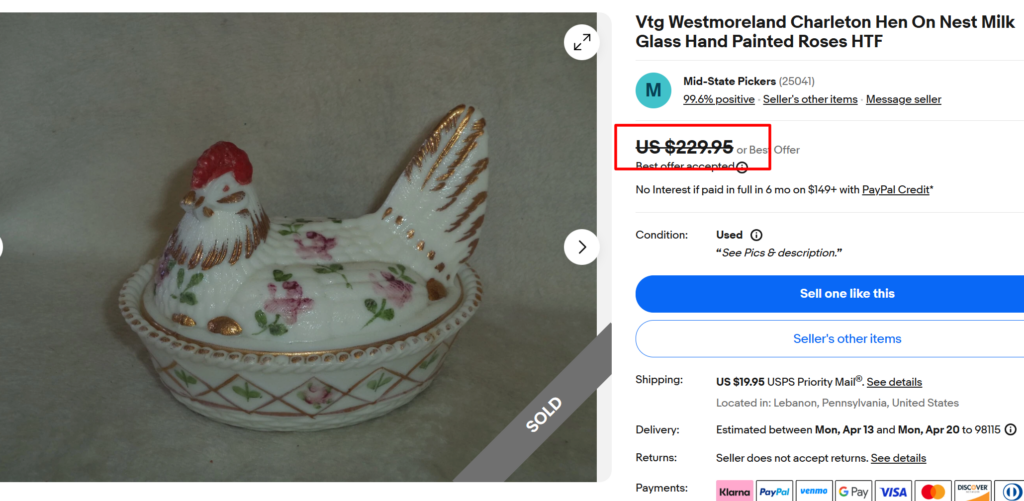
| Average Value | $150–$230 |
| Brand & Pattern | Westmoreland / Charleston Hen |
| Production Period | 1940s–1982 |
| Status | Discontinued |
| Color & Style | Hand-painted milk glass, gold lattice, red comb |
| Collector Notes | Gold gilt condition impacts value. |
Westmoreland’s Hen on Nest dishes were made continuously from the 1930s through closure in 1984. This variation of the iconic design features the “Charleston” pattern, identified by delicate hand-painted pink roses and gold gilt accents.
The artistry involved in painting those tiny flowers makes these pieces much more valuable than the plain white versions. The value of this variant lies in the condition of gold trim and the vibrancy of floral details, apart from overall condition.
6. L.E. Smith Glass Caramel Turkey Candy Dish
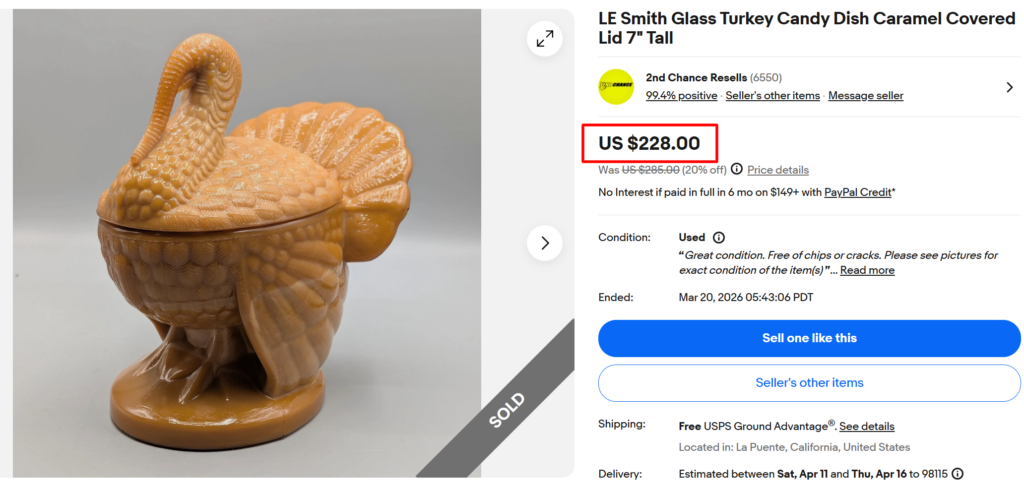
| Average Value | $200–$300+ |
| Brand & Pattern | L.E. Smith / Martha by Mail Turkey |
| Production Period | Late 1990s |
| Status | Discontinued / Limited |
| Color & Style | Caramel glass, standing turkey |
| Collector Notes | Caramel Turkey is rarer than white. |
This rare piece comes from a special 1990s line of caramel-colored glassware that L.E. Smith exclusively made for the Martha by Mail catalog. Since the production of Caramel glass (aka chocolate or slag glass) only lasted a few years, it’s now a rarity.
The example here is a 7-inch-tall turkey dish with detailed feather molding. The turkey shape is harder to find than the rooster or acorn dishes in the same color, which doubles its rarity and boosts its value.
7. Fenton Hobnail Turquoise Candy Dish
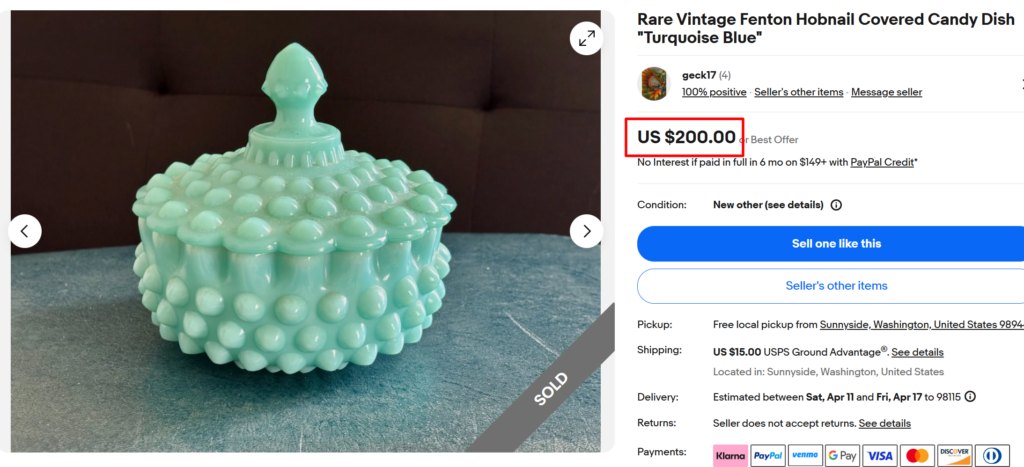
| Average Value | $150–$200 |
| Brand & Pattern | Fenton / Hobnail Covered Candy |
| Production Period | Mid-1950s |
| Status | Discontinued |
| Color & Style | Turquoise glass, finial lid (no pedestal) |
| Collector Notes | No mark seen on the Pre-1970 pieces. |
Fenton’s “Hobnail” is one of the most recognizable patterns in American glass history. What makes this small hobnail-covered dish is the combination of an iconic pattern and a highly rare color.
Turquoise Hobnail pieces were produced in the mid-1950s and had a much shorter run than white versions. That’s why these covered dishes are hard to find now, especially with the lid intact.
Collector’s Tip: Remember that Fenton didn’t add its molded mark until 1970. So genuine turquoise Hobnail candy dishes from the 1950s will be unmarked.
8. Westmoreland Diamond Point Covered Compote
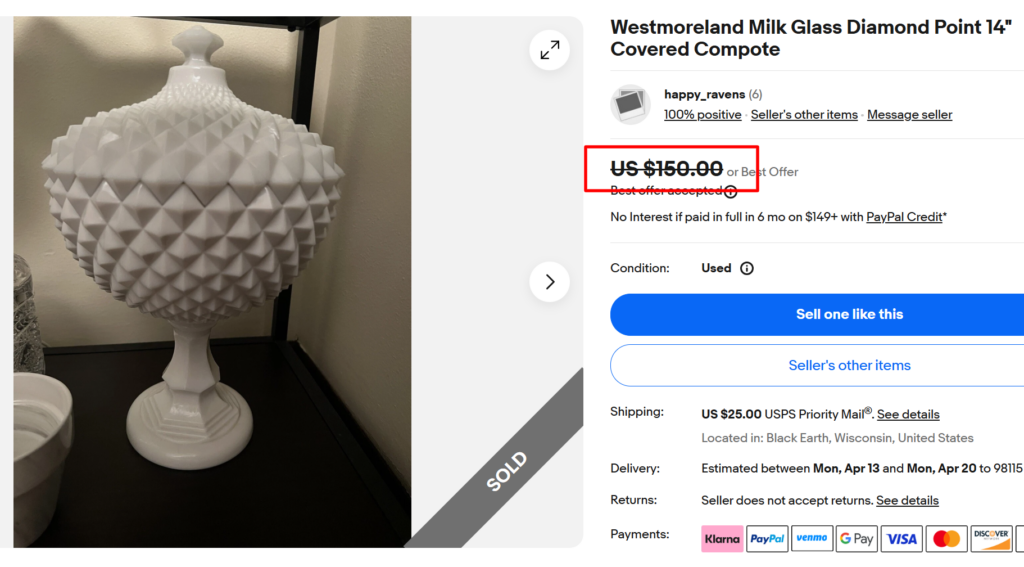
| Average Value | $120–$175 |
| Brand & Pattern | Westmoreland / Diamond Point |
| Production Period | 1950s–1970s |
| Status | Discontinued |
| Color & Style | White glass, raised diamond points |
| Collector Notes | Large pieces are worth more. |
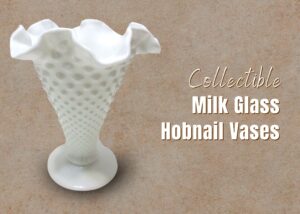
Westmoreland’s Diamond Point pattern (aka Sawtooth) is a unique version of hobnail. Instead of round hobs, this one features sharp, raised diamond-shaped points covering the surface.
Westmoreland produced this pattern through their mid-century milk glass peak, and the covered compote is one of the most substantial forms in their lineup. And, the 14-inch version shown here is rarer and more valuable than the common 9- to 10-inch examples.
9. L.E. Smith Martha Stewart by Mail Rooster Dish
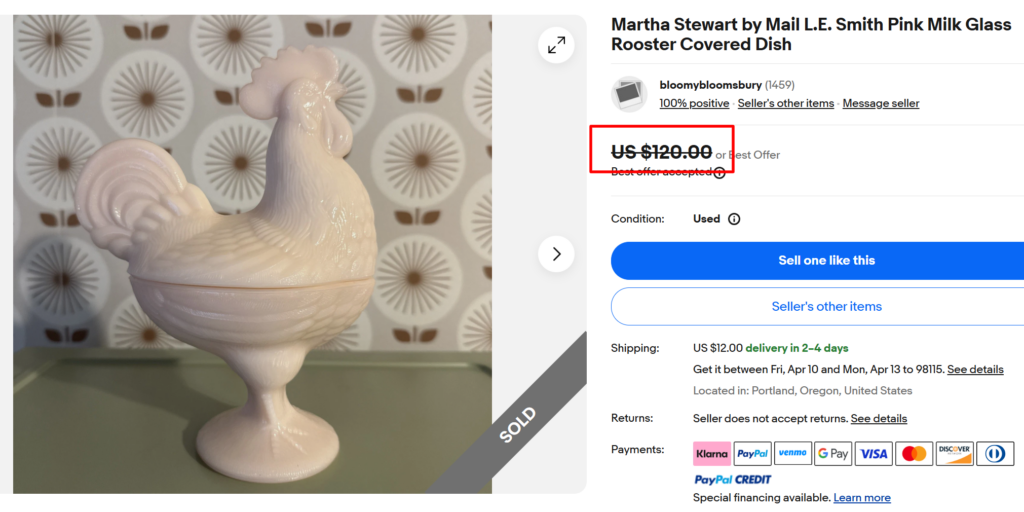
| Average Value | $80–$130 |
| Brand & Pattern | L.E. Smith / Martha by Mail Rooster |
| Production Period | Late 1990s–early 2000s |
| Status | Discontinued |
| Color & Style | Pink glass, rooster on pedestal base |
| Collector Notes | Look for molded “S” mark under base. |
This is a pedestal-style candy dish featuring a soft, pastel-pink milk glass in the shape of a finely detailed, molded rooster. It’s part of a special collaboration between Martha Stewart and L.E. Smith to produce a line of figural-covered dishes in the late 1990s.
The rooster version was made in both milk white and pink glass. Pink is the harder color to find.
The pedestal base is a key identifier; it’s not a nest-style base, but a smooth, footed stand. Also, you may see the “S” mark under the base that confirms its attribution as L.E.
10. Fenton Spanish Lace Silver Crest Covered Dish
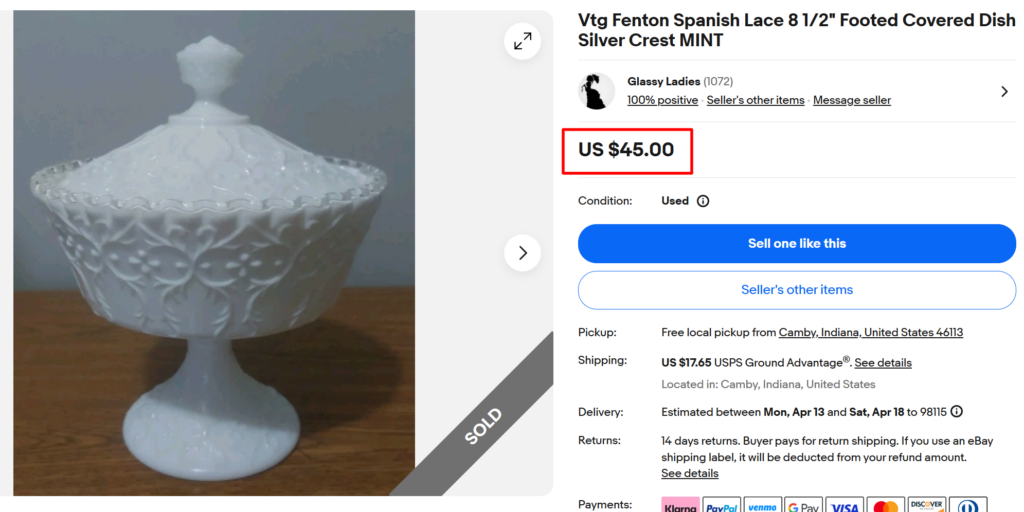
| Average Value | $40–$80 |
| Brand & Pattern | Fenton / Spanish Lace Silver Crest |
| Production Period | 1940s – 1960s |
| Status | Discontinued |
| Color & Style | White milk glass with a clear glass rim |
| Collector Notes | Fenton oval mark on base confirms post-1970 production |
Fenton introduced Silver Crest in 1942, which became their most popular “Crest” line (milk glassware with clear/colored edges).
This example is a covered pedestal compote, standing about 8.5 inches tall. It features the raised, fine, lace-like relief Spanish Lace pattern and a 1/4-inch clear glass ruffled trim around the edge.
This shape is usually harder to find than the common bowls and vases in this pattern, making it relatively more collectible. The value stays moderate.
What to Check on Old Covered Milk Glass Dishes?
If you also own an old milk glass-covered compote or candy dish, here are some things you must check to find if it’s a valuable piece.
- Maker’s Mark: Most, if not all, milk glass-covered dishes were marked. The company that made it can mean the difference between a $5 dish and a $500 find. Always check the base or inside of the lid for an impressed or raised mark. Some pieces have paper labels, but those are usually long gone.
- The Lid: An original lid is a must. It should fit the base snugly with matching glass color and thickness on both pieces. A “married” set, a top from one piece matched with a base from another, is worth significantly less.
- Color: Color is one of the biggest value drivers. White is common; turquoise, pink, caramel slag, blue/orange slag, and jadeite are not. Keep in mind that not every colored glass is milk glass. If a piece is described as “milk glass” but has a strong color, research the specific hue before buying.
- Condition: The most common damage spots are the rim of the lid, the inner ledge, the finial (tails, combs, and beaks break easily), and the foot ring on pedestal-base pieces. Always check these areas. A chipped piece can still be collectible but is worth 30–50% less than a mint example.
- Reproduction: Several popular forms, particularly animal nests, have been heavily reproduced for over 50 years. When buying a piece attributed to a 19th-century maker, look for sharper molding details, heavier weight, and a slightly rougher base texture. Reproductions are smoother and lighter.
Note: This article is intended for informational, educational, and entertainment purposes only. Some images are illustrative and may not represent actual brands, products, or related entities. All trademarks, product names, brand logos, packaging, and other intellectual property referenced remain the exclusive property of their respective owners. Any brand mentions or references are provided solely for descriptive and educational context and do not imply any formal or commercial association.