Antiques Know How Research
Vintage Brass Items
A detailed analysis of several eBay sales by the Antiques Know How team shows that most vintage brass items sell for under $50 at garage sales and thrift stores, while signed pieces from notable makers, like Bradley & Hubbard, Chase, Stiffel, Franz Hagenauer, Walter Bosse, can range from $100–$5,000+. Some highly collectible brass pieces include antique candlesticks, mantel clocks, urns, oil lamps, animal figurines, designer sculptures, bells, incense burners, ashtrays, cooking pots, Bouillotte lamps, bookends, and picture frames. The value depends on clear maker’s marks, pre‑1900 age, original patina, completeness, and designer attribution.
Antiques Know How
Old brass items are usually considered worthless and go for just a few bucks at garage sales and thrift stores. That’s because a pound of brass scraps costs about $1.80 at the local metal yard.
But what many people don’t know yet is that certain antique brass pieces can run into hundreds, sometimes thousands, based on when they were made, who made them, and what mark they carry.
This guide covers specific antique and vintage brass items with high collector value today, plus the identification tips you need to spot a real one.
Is Brass Actually Worth Money?
Honestly, yes, but only the right pieces. Most plain, unmarked brass always goes for scrap, whereas signed brass from a known maker can sell for ten times that, sometimes a hundred times.
What makes a brass item go from $20 to $2,000 is usually a couple of factors working together. A clear maker’s mark. A short production run. An identifiable designer like Walter von Nessen or Franz Hagenauer. Original surface patina instead of a recent polish.
- Maker: The maker’s name matters a lot for value, and the mark is the proof. A signed Hagenauer, Stiffel, or Bradley & Hubbard piece commands ten to fifty times what an identical unsigned piece does.
- Age: Pre-1900 brass differs from later mass-produced stuff because it’s hand-cast with visible seams, irregular thickness, and uneven finishing. Plus, anything from the 18th century is worth more just by virtue of its age.
- Designer Attribution: When Chase Brass hired Walter von Nessen and Russel Wright in the 1930s, those specific designer pieces are worth multiples of standard Chase production from the same year.
- Country of Origin: Antique brassware from Vienna (Hagenauer), Sweden (Skultuna), and Meriden, Connecticut (Bradley & Hubbard, Chase) usually carries more collector value than unmarked imports.
- Condition & Original Patina: Vintage brass must like vintage. Aggressive polishing strips natural aging and drops value by 30 to 50 percent. Collectors usually pay for honest, untouched surfaces.
- Completeness: Original shades on lamps, original tags on Sarna bells, original glass on Tiffany-era pieces, and matching pairs boost the prices. A B&H lamp with the right shade is worth four times the same lamp with a replacement shade.
13 Most Collectible Vintage & Antique Brass items
Let’s take a look at some antique and vintage brass pieces that are highly collectible today, with some fetching thousands of dollars at online sales and auctions, along with what makes them worth the money.
1
Antique Brass Candlesticks
Typically sells for $250 to $3,000+
| Production Period | 15th to 19th centuries |
| Brand & Maker | Gothic European, Georgian English |
| Key Features | Pricket spike, lion feet |
| Collector Notes | Pre-1700 pieces extremely rare |
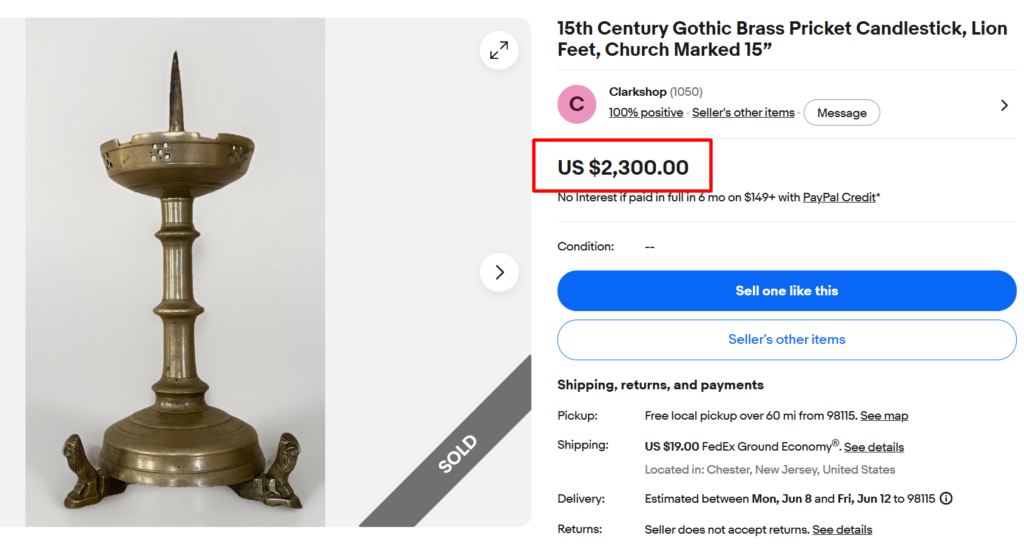
Antique brass candlesticks cover six centuries, from Gothic prickets in churches to Georgian home decor items. This is an example of a 15th-century Gothic pricket with lion feet and a church mark. Marked antique brass candlesticks like this are worth a lot today.
Plus, look for a pointed spike; this identifies medieval candlesticks. Georgian seam examples typically run $250 to $500 per pair.
2
Antique Brass Mantel Clock
Typically sells for $500 to $5,000+
| Production Period | 1850 to 1900 |
| Brand & Maker | French clockmakers, Boulle workshops |
| Key Features | Gilt brass ormolu mounts |
| Collector Notes | Working movement doubles the value |
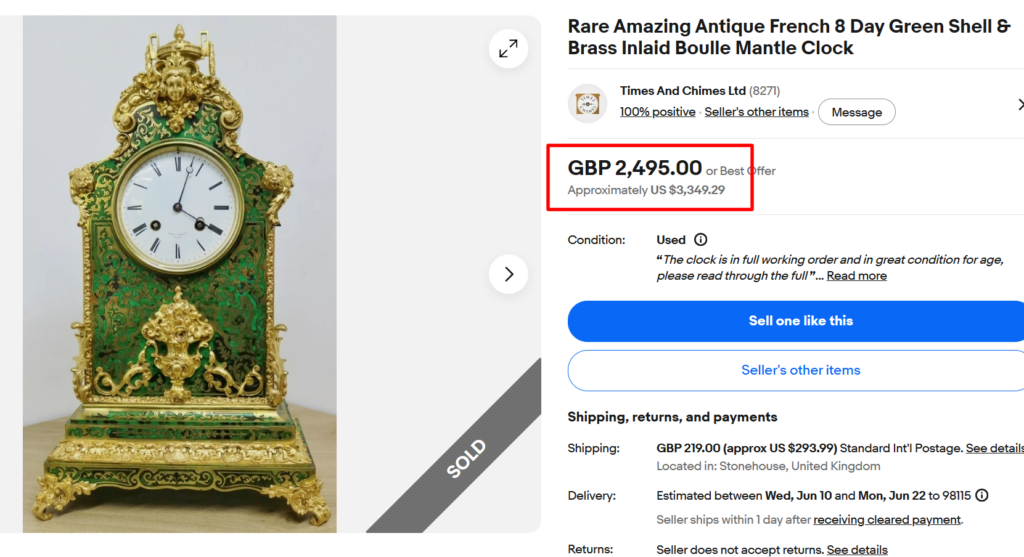
This is a rare French 8-day mantel clock featuring a green shell and brass-inlaid Boulle. Antique brass mantel clocks dominated Victorian and Edwardian parlor decor.
The priciest ones came from French clockmakers following the Boulle tradition. These clocks have gilt-brass ormolu mounts and a cool inlay of tortoiseshell or green-stained shell covering their cases.
Working movements with original keys matter a lot for the top value of antique and vintage brass mantel clocks.
3
Vintage Brass Urns
Typically sells for $400 to $3,000+
| Production Period | 19th century to 1920s |
| Brand & Maker | French foundries, Anglo-Indian workshops |
| Key Features | Figural mounts, gilt accents |
| Collector Notes | Pairs are worth more than singles. |
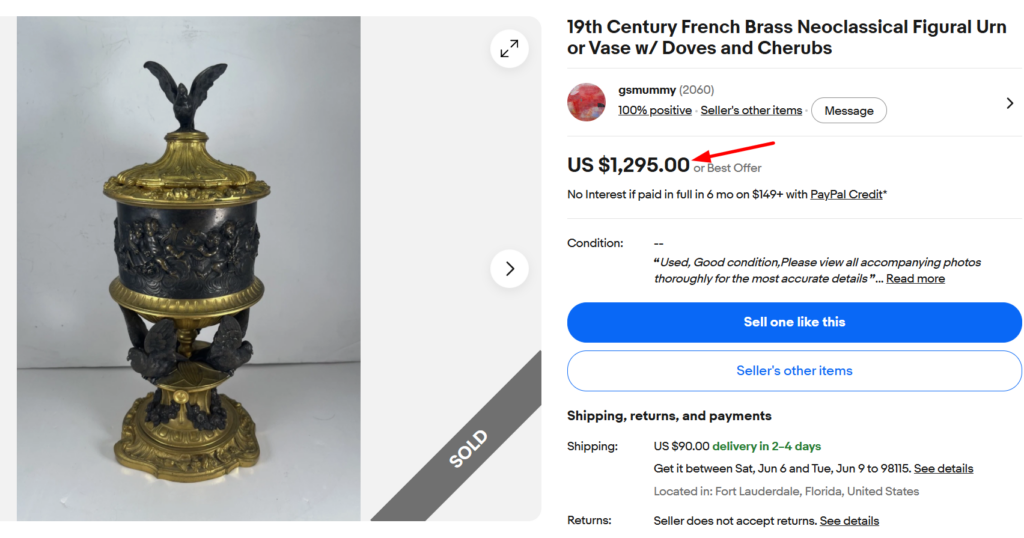
Antique brass urns come in many forms, from Anglo-Indian designs with cobra handles to French neoclassical ones with mythological figures. The most valuable are 19th-century French urns, which mix patinated brass with gilt highlights.
This 19th-century French brass neoclassical figural urn features doves and cherubs, with an eagle finial. The tiered base with seated cherubs is documented as French Empire styling.
Antique brass pieces in original, pristine condition can easily fetch over $1,000 today. Vintage urns usually go around $400-$600. Also, pairs are more valuable.
4
Bradley & Hubbard Victorian Banquet Lamp
Typically sells for $750 to $5,000
| Production Period | 1852 to 1940 |
| Brand & Maker | Bradley & Hubbard, Meriden CT |
| Key Features | Glass shades, brass body, triangle & lantern mark |
| Collector Notes | Original shade significantly boost value |
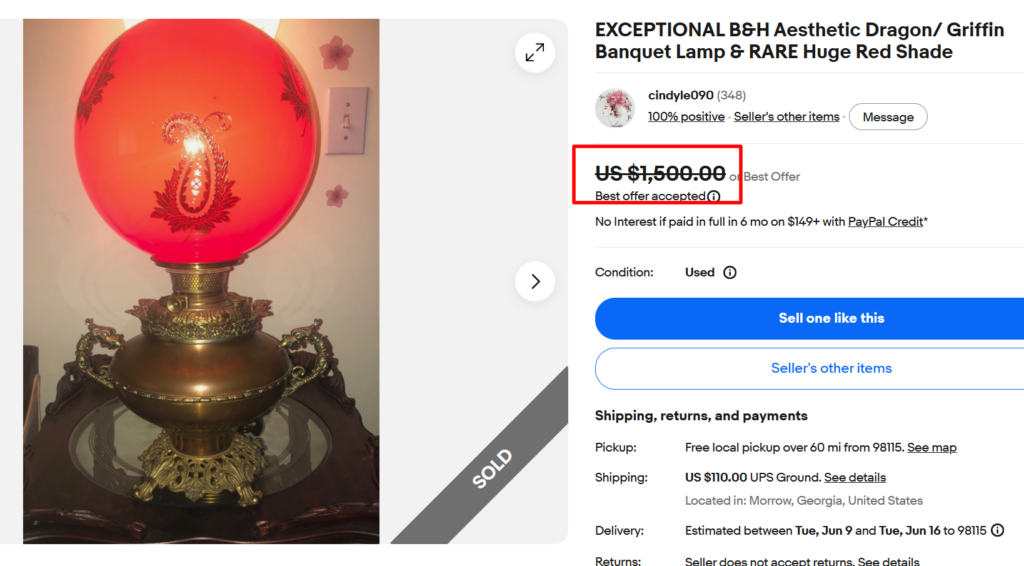
Bradley & Hubbard operated their factory in Meriden, Connecticut, from 1852 to 1940. Their banquet lamps are among the easiest Victorian brass items to spot. You can identify these lamps by the triangle and lantern mark under the base.
Most B&H banquet lamps have a tall brass column rising from an onyx or pierced brass base, topped by a hand-painted or cranberry glass shade. A complete example with the right shade and chimney can hit $4,000 to $5,000 at auction.
5
Dolbi Cashier Owl Brass Figurines
Typically sells for $200 to $1,200 pair
| Production Period | 1940s to 1980s |
| Brand & Maker | Dolbi Cashier, Walter Bosse |
| Key Features | Solid cast brass, large eyes |
| Collector Notes | Signed pieces are worth the most |
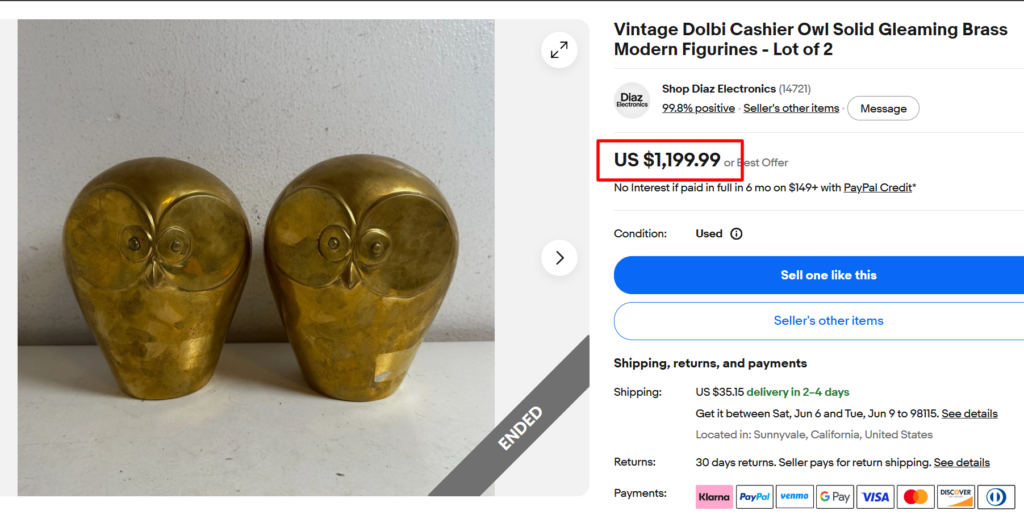
This is a pair of two solid, gleaming brass Dolbi Cashier owl figurines. The stylized form with oversized round eyes is the signature Dolbi Cashier design.
Brass owl figurines and bookends were a popular Mid-Century decorative motif, with California-based Dolbi Cashier and Vienna’s Walter Bosse leading the collectible market.
Always look for the maker’s paper label on the bottom to identify authentic pieces.
6
Designer Mid-Century Brass Sculptures
Typically sells for $400 to $2,000+
| Production Period | 1960s to 1980s |
| Brand/Designer | Alain Chervet, Curtis Jere |
| Key Features | Signed base, large size, sold brass |
| Collector Notes | The saguaro cactus is the most collected. |
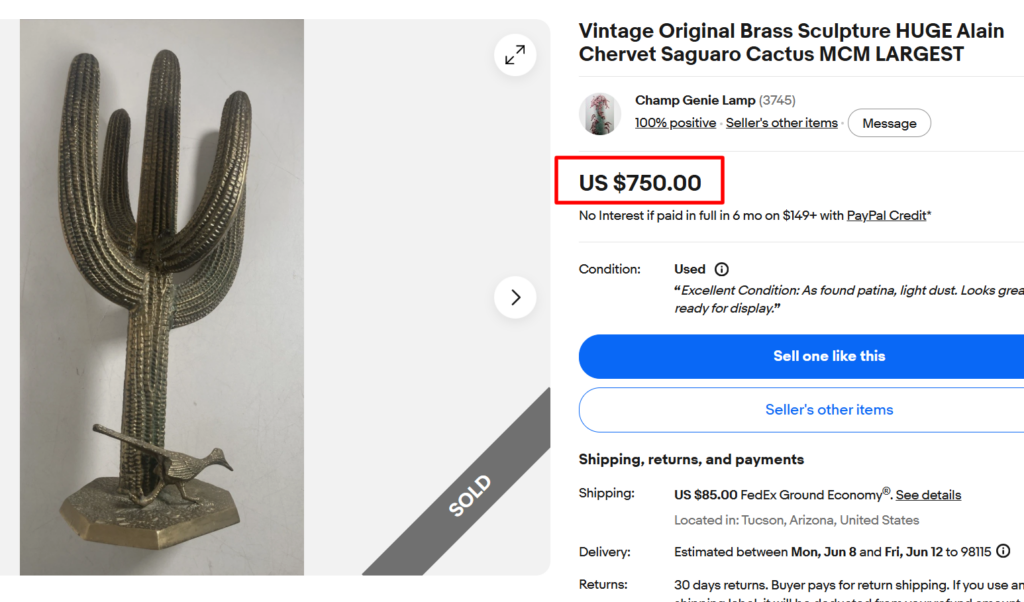
Designer mid-century brass sculptures defined 1970s Hollywood Regency interiors. French sculptor Alain Chervet, based in Tucson, Arizona, made some of the most recognizable pieces from that time. He often focused on Southwestern themes, too.
This is one of his large brass Saguaro cactus sculptures, showing great detail and solid construction. You’ll also see a roadrunner at the base.
Authentic Chervet pieces are mostly signed on the underside of the octagonal base, often dated as well.
7
Antique Brass Bells
Typically sells for $50 to $2,000+
| Production Period | 18th to early 20th century |
| Brand & Maker | Maritime foundries, Sarna India |
| Key Features | Cast brass, engraved provenance |
| Collector Notes | Named ship bells most valuable |
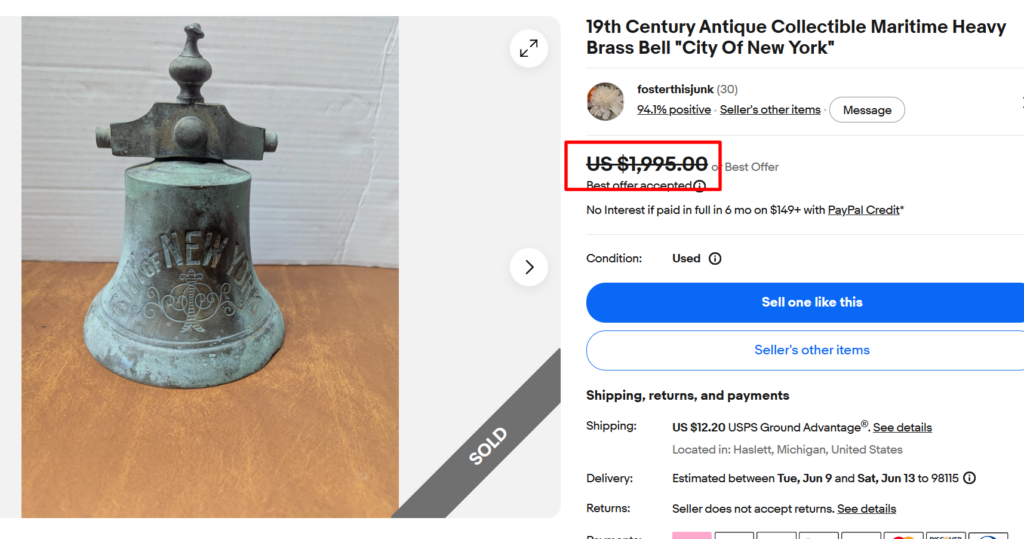
Antique brass bells cover three main collector categories: Indian temple bells like the Bells of Sarna, maritime ship bells from commercial vessels, and Spanish Colonial mission bells.
This one is an example of a 19th-century heavy brass maritime bell engraved “City of New York.” The high value of this brass bell comes from the name; named ship’s bells with verifiable provenance are the most valuable category.
Strung sets of Bells of Sarna with original story tags run $50 to $150 in comparison.
8
Chinese Brass Incense Burners
Typically sells for $300 to $1,500
| Production Period | Qing Dynasty to 1900s |
| Brand & Maker | Chinese Qing workshops |
| Key Features | Foo dog finial, tripod feet |
| Collector Notes | Apocryphal Xuande mark common |
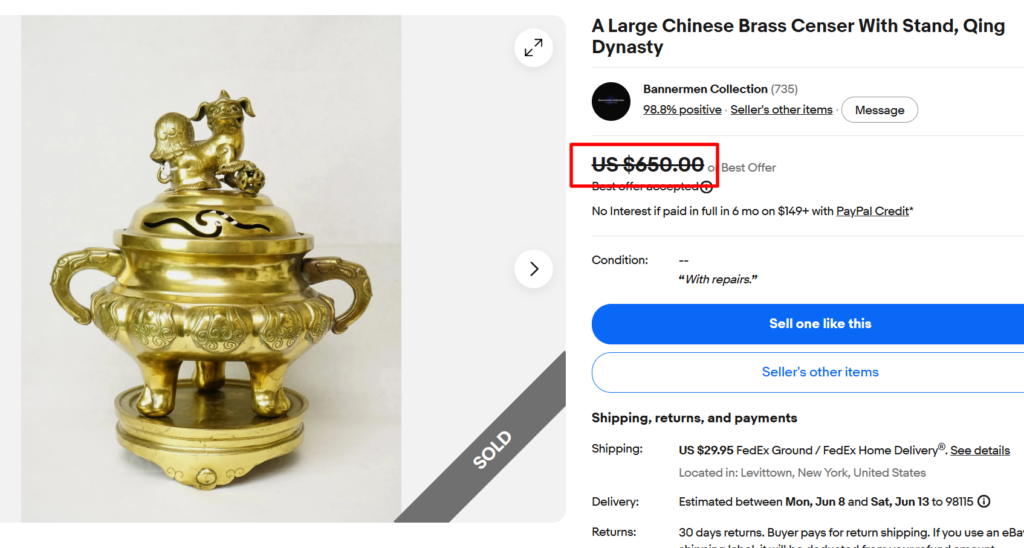
Chinese and Asian brass incense burners, called censers, were ritual objects used in temples and ancestral altars from the Ming dynasty forward. The classic form features a lidded body on tripod feet with twin handles.
This is a large Chinese brass censer from the Qing dynasty, with a foo dog finial holding a brocade ball. You may find a six-character Xuande reign mark on most Chinese pieces, but these are typically apocryphal, not period.
9
Vintage Brass Grid Ashtray
Typically sells for $50 to $500
| Production Period | 1920s to 1970s |
| Brand & Maker | Chase, Walter Bosse, Ultima |
| Key Features | Heavy cast brass, geometric |
| Collector Notes | Signed pieces hold more value. |
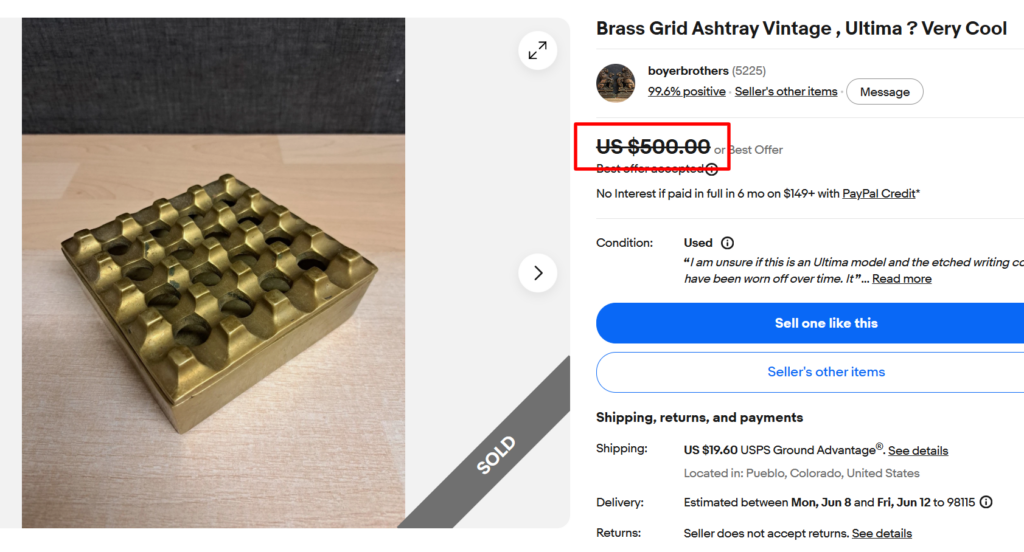
Vintage brass ashtrays span from Art Deco Chase pieces with bakelite handles to Mid-Century modernist designs by Walter Bosse and Ultima. This example is a vintage brass grid ashtray attributed to Ultima.
Brass ashtrays were common, but heavy cast construction and unusual geometry set valuable collector ashtrays apart from the lightweight stamped versions cigarette companies gave away as promos.
10
Antique Brass Cooking Pot Kettle
Typically sells for $200 to $800
| Production Period | 1700s to early 1900s |
| Brand & Maker | Unmarked, blacksmith-forged pieces |
| Key Features | Cast iron bail, tripod feet |
| Collector Notes | Hammered surface confirms age |
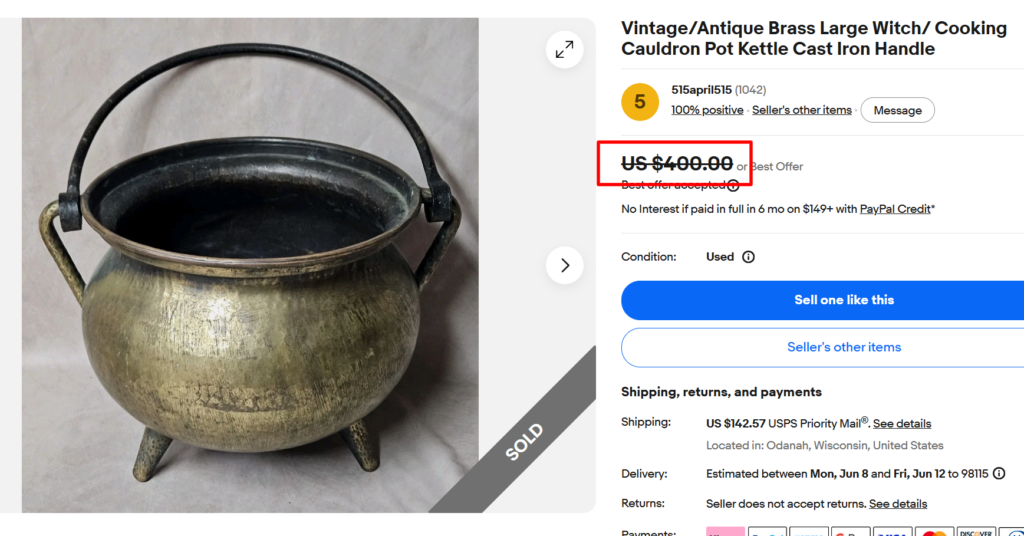
This is a vintage brass cauldron-style cooking pot with a cast-iron bail handle and tripod feet. Brass cooking pots and cauldrons dominated 18th and 19th-century kitchens, crafted by hand with wrought-iron handles.
Most of these were made with the tripod foot design that let them sit directly in the hearth coals over an open fire.
Authentic vintage brass pots are easy to spot because of their genuine hammer marks and dark interior patina; reproductions can’t replicate these signs as they are.
11
Stiffel Brass Bouillotte Candlestick Lamp
Typically sells for $250 to $800
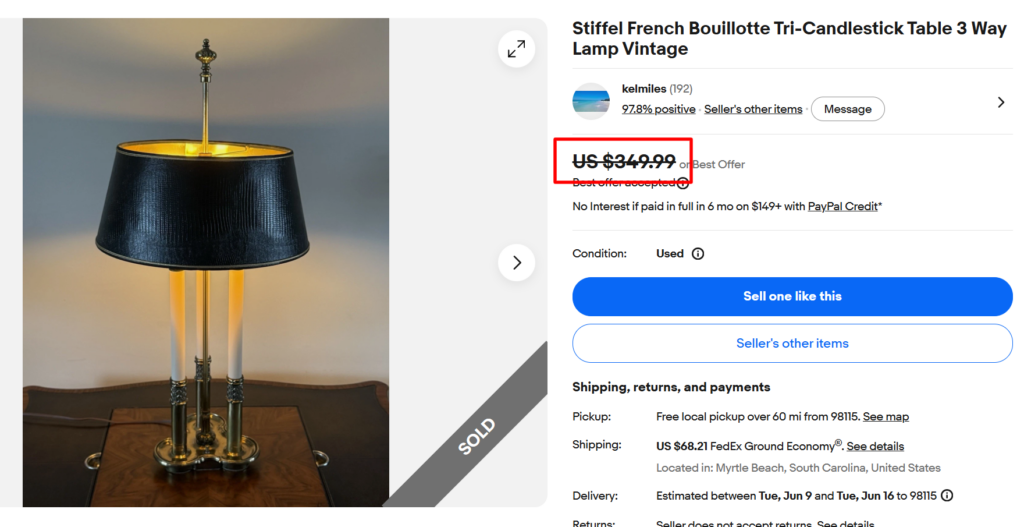
| Production Period | 1932 to the 1980s |
| Brand & Maker | Stiffel Lamp Company, Chicago |
| Key Features | Heavyweight, SLC foil tag |
| Collector Notes | Pairs sell for more |
Stiffel was a Chicago lamp maker that opened in 1932 and built its name on solid brass. The Bouillotte style is the classic find, with a weighted brass base, two or three candle arms, and a green or black tole shade on top.
Authentic ones carry an SLC, Stiffel Lamp Company, or Stiffel foil tag on the base or socket. Don’t forget to check these.
Pairs in clean original condition regularly sell for $400 to $800, and rare designer collaborations can fetch over $2,000.
12
Vintage Brass Bookends
Typically sells for $120 to $2,000
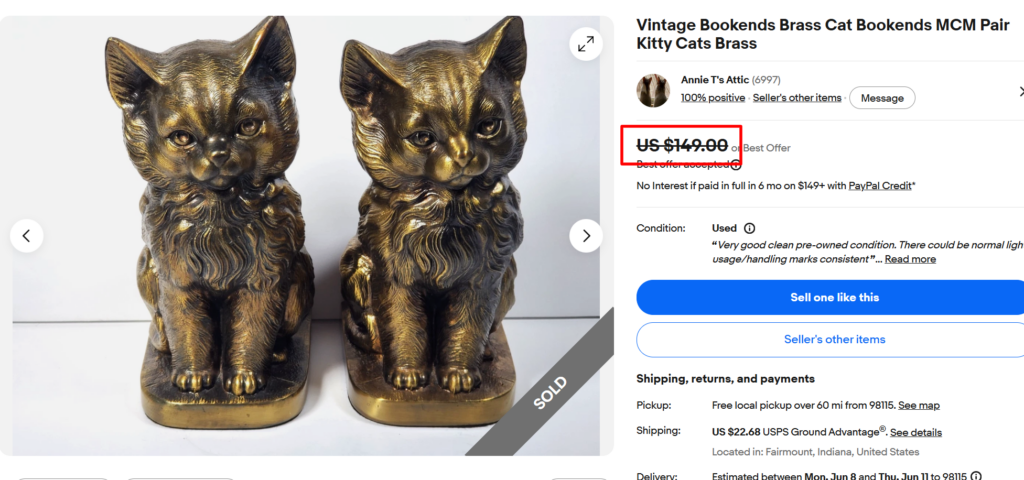
| Production Period | 1920s to 1980s |
| Brand & Maker | Franz Hagenauer, Vienna |
| Key Features | WHW circle, Made in Austria |
| Collector Notes | Hand-finished, every pair varies |
Vintage brass bookends are one of the most collectible pieces in this category, especially pieces from Franz Hagenauer.
He worked in his family’s Vienna workshop from the 1920s to the 1980s. And his brass animal figures are super sought after, with the schnauzer dog bookends being one of his most famous designs.
Look for the “WHW” stamp inside a circle, along with “Made in Austria” and sometimes “Handmade”. Since they are handmade, each pair shows small hand-finishing differences.
13
Italian Florentine Vintage Brass Picture Frame
Typically sells for $30 to $200
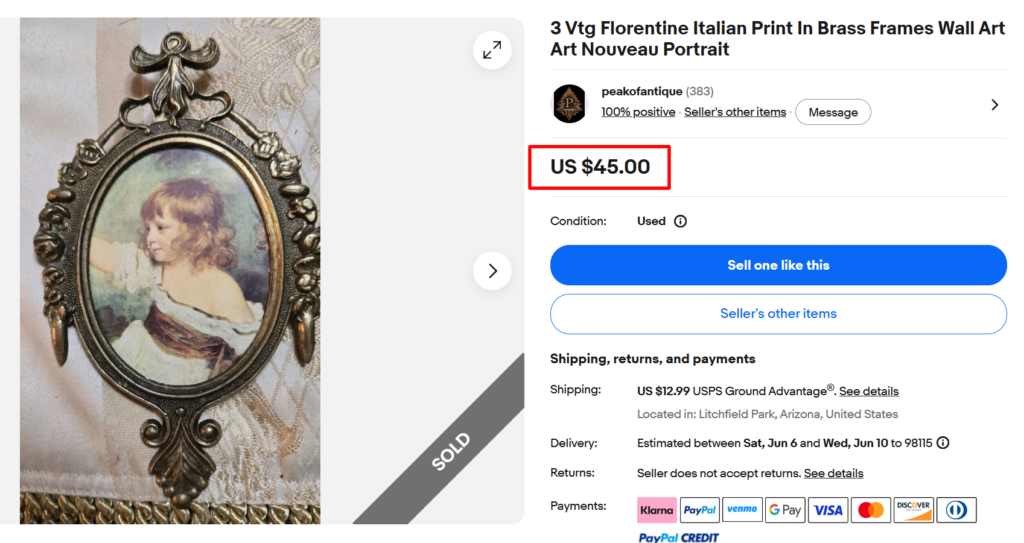
| Production Period | 1950s to 1970s |
| Brand & Maker | Italian Florentine workshops |
| Key Features | Made in Italy stamp, ornate |
| Collector Notes | Pairs and large sizes are worth more. |
Italian Florentine brass picture frames were mass-produced in Florence and Milan through the mid-century period and exported worldwide. The ornate cast brass surrounds, often gilded, are stamped “Made in Italy” on the back, sometimes on a paper label that has since fallen off.
Larger ornate examples and matched pairs go for $100 to $200. Small standard sizes usually sell for $30 to $60. Heavier weight and crisp casting separate originals from later cast-plastic copies.
How to Identify Genuine Brass Antiques?
Now you know that some antique and vintage brass items are genuinely valuable. But how would you know if it’s a genuine antique solid brass, plated, bronze, or just a modern reproduction?
The following easy checkpoints will help you ensure:
The Magnet Test
Hold a refrigerator magnet up to the piece. If it sticks, the piece is brass-plated steel and has almost no collector value. Real brass isn’t magnetic at all. This trick quickly helps you get rid of those ’80s and ’90s reproduction and decor items.
The Patina & Color Test
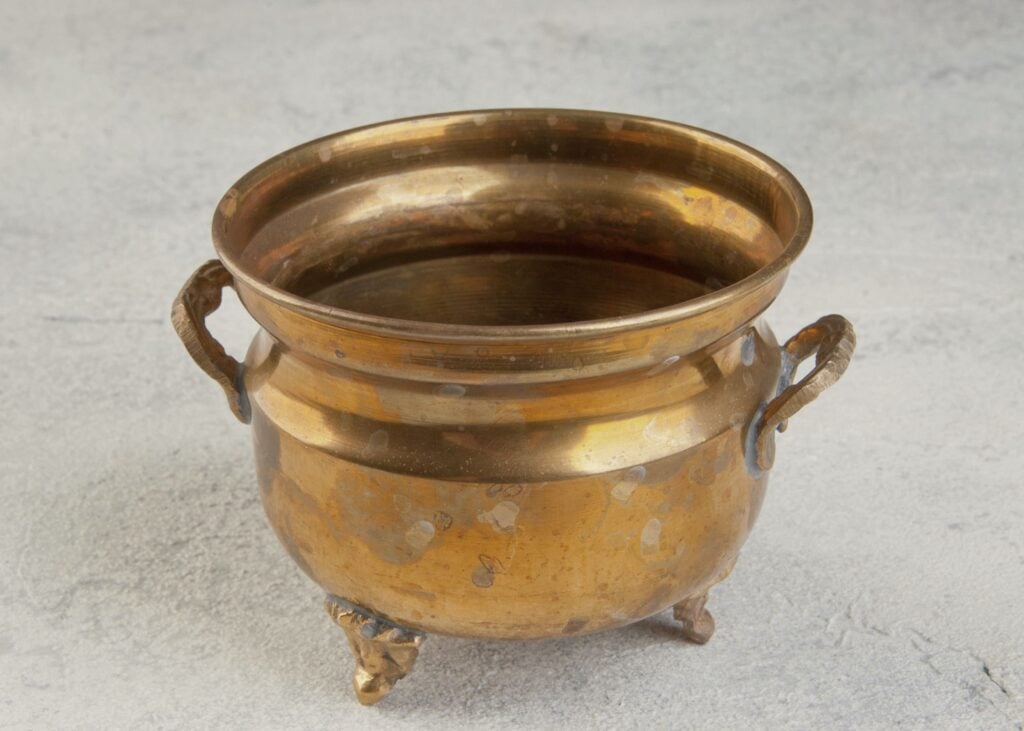
Genuine antique brass turns greenish-yellow with darker spots where the polish didn’t stick around long enough. It’s different from new brass, which is uniformly bright yellow-gold.
So, if a piece looks too perfect and shiny, it’s likely not an antique. Over-polishing can hurt its value to collectors, too.
On the other hand, brass-plated items usually show their base metal where the plating chips off, that’s mostly on the edges and high points.
Brass Vs. Bronze
The two metals actually have a clear distinction. Brass is yellow, and bronze is reddish-brown. Although both are copper alloys, brass has zinc in it, while bronze has tin.
That’s why both materials sound different when tapped with a fingernail. Brass thuds, bronze rings longer and lower. This matters because many “brass” items from estate sales are actually bronze, and bronze typically sells for more.
Brass Maker’s Marks & Country Stamps
The most valuable brass carries a mark somewhere. Usually, the marks are found on the bottom side, sometimes hidden under a felt pad that you need to remove. They can be stamped, pressed into the brass, or were foil labels that often fall off anyway.
But, no marks doesn’t always mean it’s a reproduction or cheap. In such cases, use other factors to identify genuine, valuable brass items.
Common country and origin stamps and what they mean:
- Made in England: Used after 1891 to comply with US tariff law. A brass piece marked this way is post-1891 and almost always English.
- Made in India: Most pieces are post-1940. Hand-engraved scratch marks and “India” inside the rim are typical of Bells of Sarna imports.
- Made in Austria: A strong sign of Vienna workshop production. Combined with a “WHW” circle, you’re looking at Hagenauer.
- CW with crown: Colonial Williamsburg reproduction mark, used by Virginia Metalcrafters from 1936 to 2006.
- Centaur with bow: Chase Brass & Copper Company, Waterbury, Connecticut.
- Triangle with lantern: Bradley & Hubbard, Meriden, Connecticut.
Note: This article is intended for informational, educational, and entertainment purposes only. Some images are illustrative and may not represent actual brands, products, or related entities. All trademarks, product names, brand logos, packaging, and other intellectual property referenced remain the exclusive property of their respective owners. Any brand mentions or references are provided solely for descriptive and educational context and do not imply any formal or commercial association.