Antiques Know How Research
Rare Plates for Antique Dishes Display
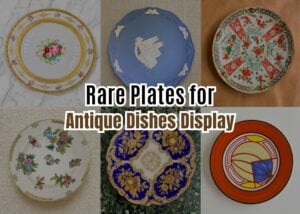
Antiques Know How’s review of several eBay sales and auctions shows that old plates usually sell for $50–$500 each, while rare examples and complete sets can bring $1,000–$3,500+. The most collectible plates for an antique dishes display are Meissen, Royal Copenhagen Flora Danica, Chinese Famille Verte, Limoges, Minton, Royal Crown Derby Old Imari, Herend Rothschild Bird, Ginori Oriente Italiano, Jasperware, Fornasetti, and Clarice Cliff Bizarre plates. Plate values depend on maker prestige, rarity, age, condition, marks, limited production, and completeness of sets.
Antiques Know How
While most people set up an antique dishes display just for the look, it can be more than that. A good display does two things: it looks great on a hutch, plate wall, or china cabinet, and it quietly holds real money, if you’ve chosen the right plates.
Below are some of the rarest antique and vintage plates that will draw instant attention to your plate wall or glass cabinet. But more than that, these dishes are actually worth hundreds to thousands of dollars today.
13 Rare Plates That Are Worth Adding to Your Plate Wall
1
Meissen Plates
Typically sells for $300 to $2,500+ per plate
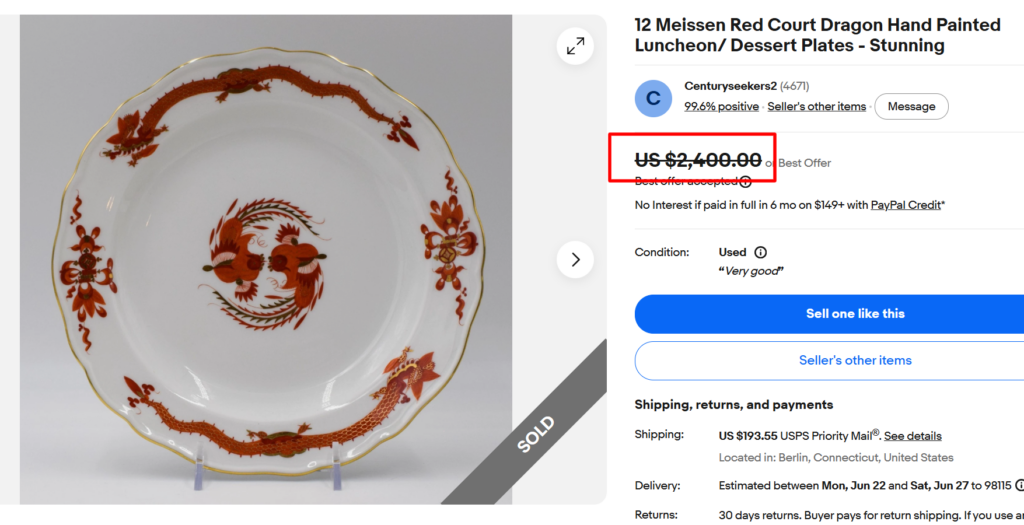
The Meissen porcelain company is the oldest porcelain factory in Europe, founded in 1710 in Saxony. The world-renowned crossed swords logo was introduced in 1722, which has been employed in different designs ever since; so, the shape of the swords is a helpful dating and identifying clue.
The Red Court Dragon above is among the most distinctive Meissen designs, originally produced exclusively for the Royal court of Saxony.
Blue Onion is another highly collectible pattern that ranges from $80 to $200 per plate, but court designs and 18th-century pieces fetch at least $1,000.
1
Royal Copenhagen Flora Danica Plates
Typically sells for $400 to $2,500+ (per plate)
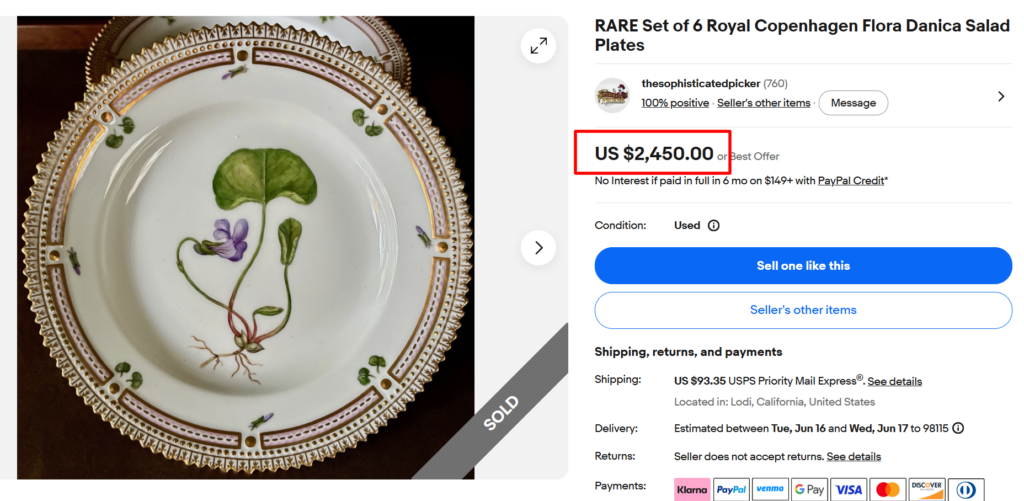
Flora Danica is the most prestigious dinner service Royal Copenhagen makes. It was originally commissioned by King Christian VII in 1790 as a gift for Catherine the Great of Russia.
Every piece is hand-painted, showing a different Danish plant copied from the Flora Danica botanical encyclopedia, and the Latin name of that plant is written in script on the back.
A rare set of 6 salad plates, pictured above, sold for $2,450. Single plates from Flora Danica generally sell for $400 to $1,200, depending on the motif. The three wavy lines, plus the painted Latin name underneath, are your authentication clue.
2
Chinese Famille verte Plates
Typically sells for $800 to $3,500+ (per plate)
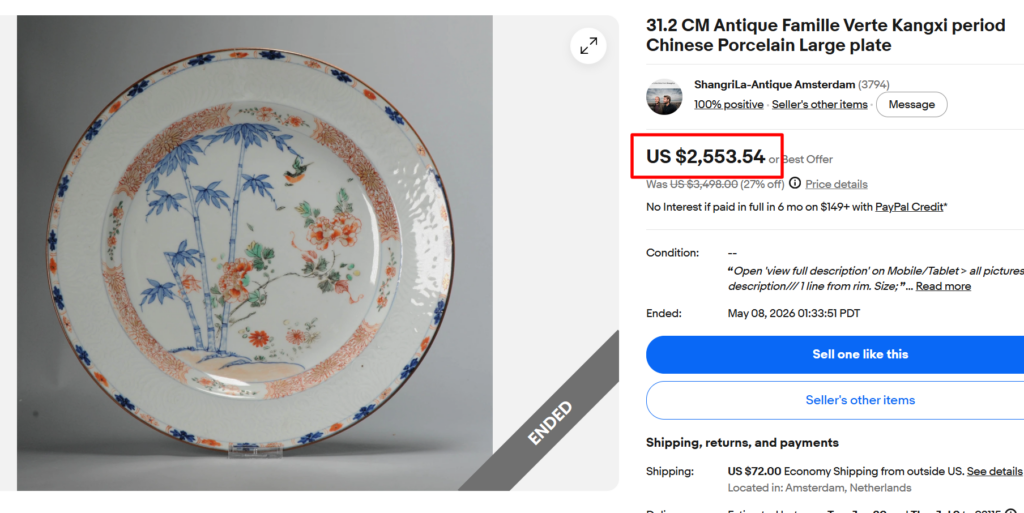
Famille Verte literally means “green family.” It simply refers to a palette of enamels on Chinese porcelain that includes translucent greens along with iron reds, yellows, blues, and aubergines.
The popularity of Famille Verte reached its peak during the Kangxi period of the Qing dynasty (1662–1722).
Authentic Kangxi famille verte wares generally do not have marks, but they can be distinguished by the paste itself, the accumulation of glaze at the foot ring, and the particular form of the painting. The reproductions are common, so provenance becomes especially important.
3
Limoges Plates (Charles Ahrenfeldt)
Typically sells for $80 to $250 (per plate)
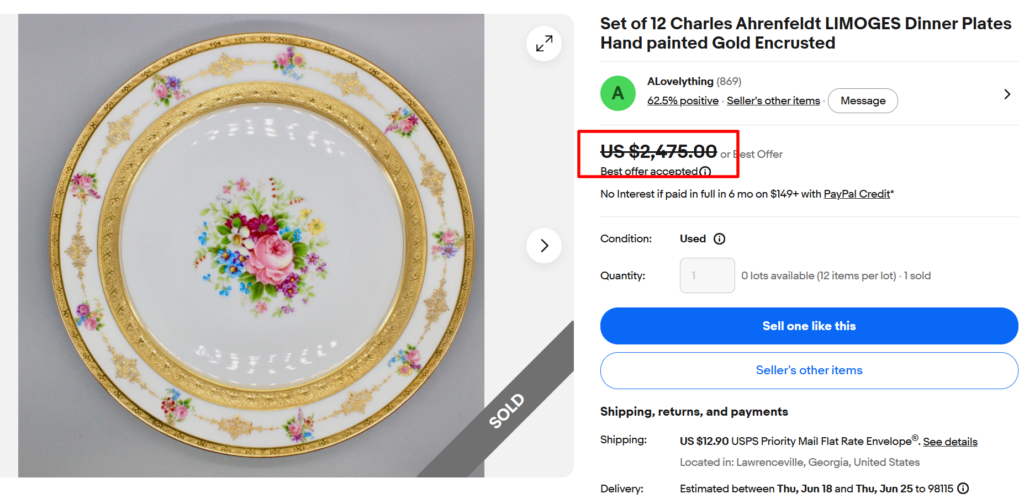
The Limoges plate did not come from just one manufacturer. It is an area in France that has many porcelain makers creating china. One of the most prestigious makers was Charles Ahrenfeldt, who exported to America from 1859 until the factory stopped production in 1969.
Hand-painted floral patterns with the raised gold border are common on early 20th-century Limoges pieces.
Single plates in this quality usually fetch $80 to $250, but complete sets of 8 or 12 can fetch up to $2,000 today. Look for the “CA” mark with “France” and “Limoges” on the underside to confirm Ahrenfeldt specifically, since the region has dozens of marks that get confused.
4
Minton Gilded Plates
Typically sells for $1,500+ (sets)
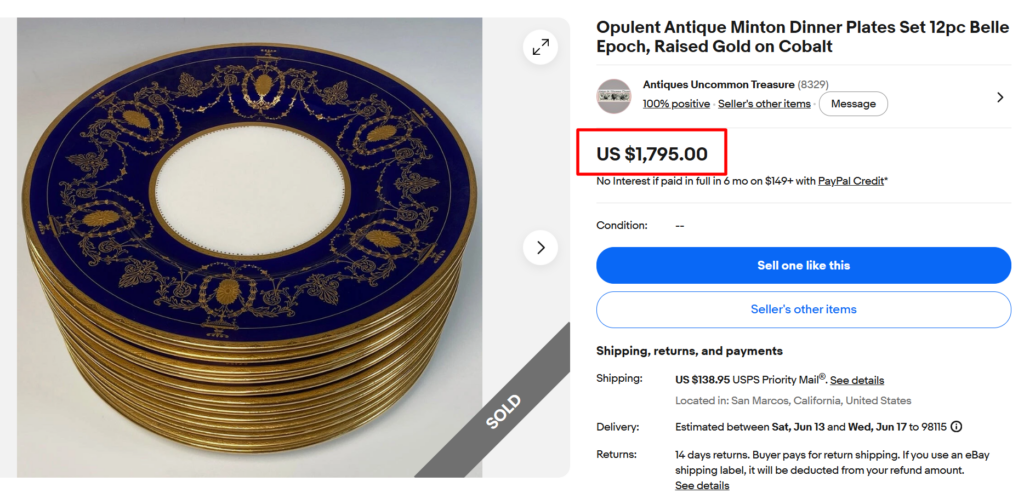
Established by Thomas Minton in 1793, Minton created, during the years 1890 to 1914, some of the most intricate gilded dinner plates seen in England.
Collectors love these plates for their iconic raised paste gilding, which is basically the gold that rises from the surface. The Belle Époque set above, with raised gold work on cobalt blue, is one of the most valuable styles.
The Minton backstamp evolved over time: a printed crown above “Mintons” with date codes is typical of the period this set comes from. Date codes are tiny impressed marks near the main backstamp, and they nail down the exact year of production.
5
Tiffany & Co. Holiday China Plates
Typically sells for $900+ (sets)
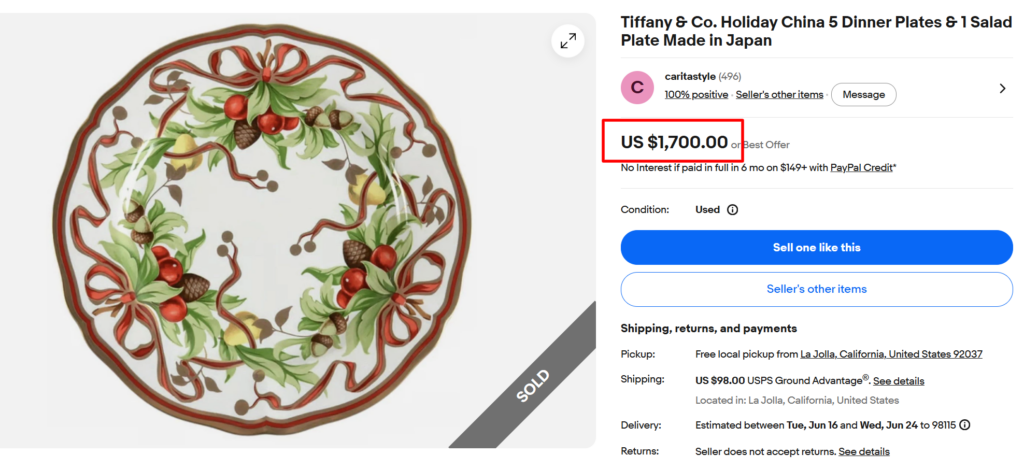
This one surprises people. Though the Tiffany & Co. Holiday plates are relatively new compared to the rest of the items listed here, they immediately became collectibles once Tiffany stopped making this pattern.
They were manufactured in Japan for Tiffany and have a Christmas wreath motif that is hand-decorated with holly, acorns, ribbon, and fruit. Authenticity comes from the “Tiffany & Co.” backstamp with “Made in Japan” underneath on the back.
Individual Holiday dinner plates run $200 to $400, but partial or full sets can reach $1,700 or even more, especially in the holiday season.
6
Royal Crown Derby Old Imari Plates
Typically sells for $80 to $200 (per plate)
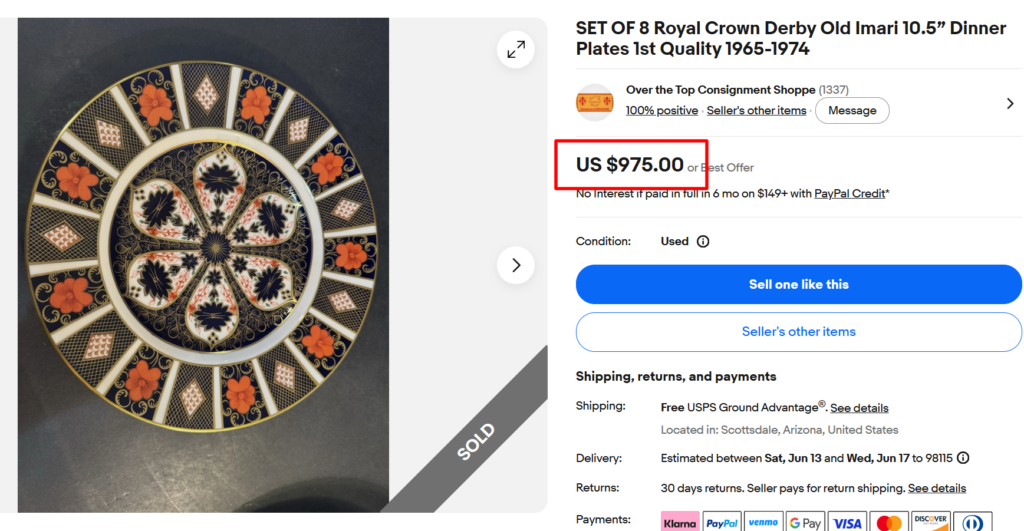
“Old Imari” is one of the oldest patterns produced by Royal Crown Derby. The pattern has been inspired by the Japanese porcelain of the same name. The most collectible version, 1128, features symmetrical floral elements using cobalt blue, iron red, and gilding.
Derby’s date cipher system (a series of dots and shapes near the crown mark) lets you date the plate to the exact year.
Derby also sold “2nds” (pieces with minor flaws that passed inspection) at a discount, and these are worth roughly 30 to 40 percent less. Always check for that 1st Quality mark and the painted pattern number 1128.
7
Herend Rothschild Bird Plates
Typically sells for $150 to $300 (per plate)
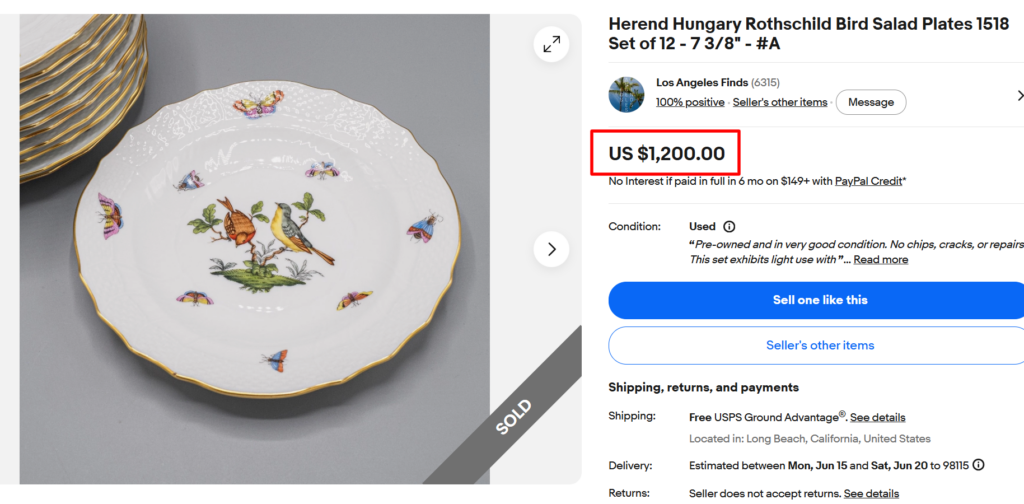
The Rothschild Bird pattern is based on a story about Baroness Rothschild losing a pearl necklace in her garden, only to find that birds had taken it into their nest. Herend created the pattern in her honor, and it became one of their most famous designs.
Each plate shows a different pair of birds with scattered butterflies and insects, all hand-painted, with a gilded border. Authentic Herend will have a blue mark of a shield with “Herend Hungary” and the pattern number painted by hand.
Each painter also adds their personal number, which is a nice provenance detail that helps verify authenticity.
8
Ginori Oriente Italiano Plates
Typically sells for $150 to $400 (per plate)
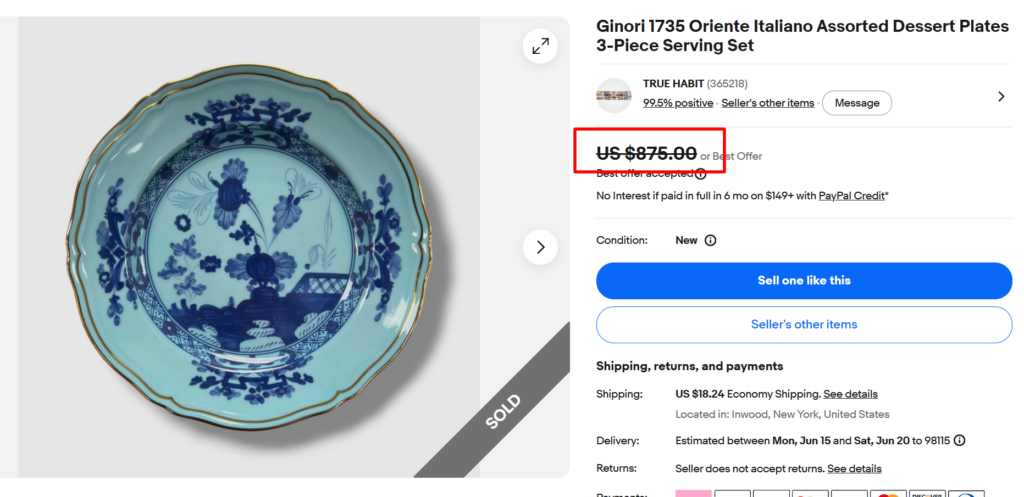
Richard Ginori, founded in 1735 near Florence, is one of the oldest porcelain manufacturers in continental Europe. The Oriente Italiano pattern is one of their famous patterns, based on Italian renditions of Chinese porcelain from the 18th century.
The modern revival comes in dozens of pastel ground colors, with Aquamarine, Iris, and Albus among the most popular. Per plate, you’re looking at $150 to $400, depending on color and condition.
The mark on the back must read “Richard Ginori 1735” with a crown on top, “Made in Italy,” and the pattern name. Note that older pre-2013 Ginori pieces use slightly different marks and are dated separately.
9
Franklin Mint Norman Rockwell Plates
Typically sells for $250 to $500 (per plate)
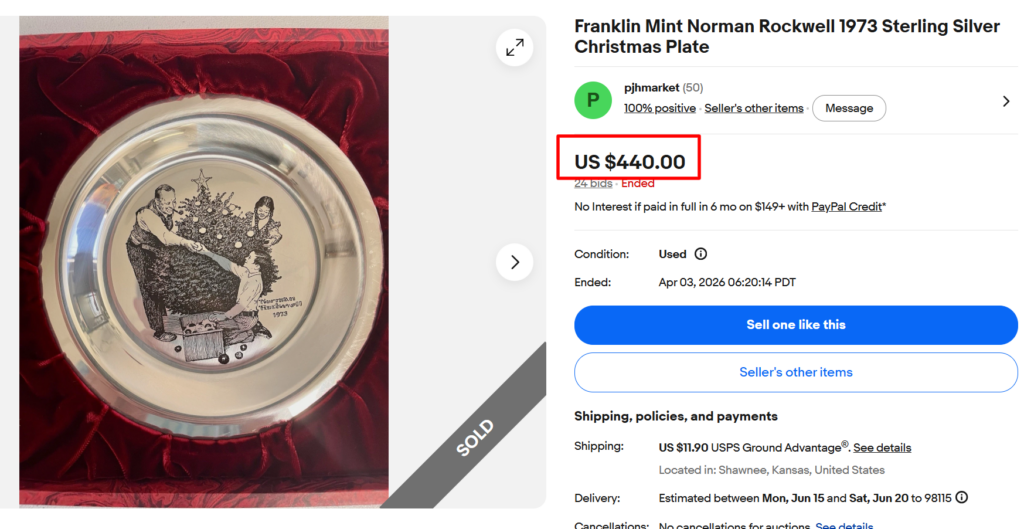
Franklin Mint issued a collection of annual Christmas plates made of pure sterling silver between 1970 and 1981, which depicted designs engraved from Norman Rockwell illustrations. The Christmas plate illustrated below was issued in 1973, showing a family decorating their Christmas tree.
Unlike most collector plates from the time period, which have very little value nowadays, the Franklin Mint Rockwell series remains valuable because each plate contains real sterling silver, which generally amounts to 6 to 8 troy ounces per plate. The melt value alone of the silver would amount to between $150 and $250. With the box, the price goes up by 30 percent or more.
10
Jasperware Plates
Typically sells for $80 to $500 (per plate)
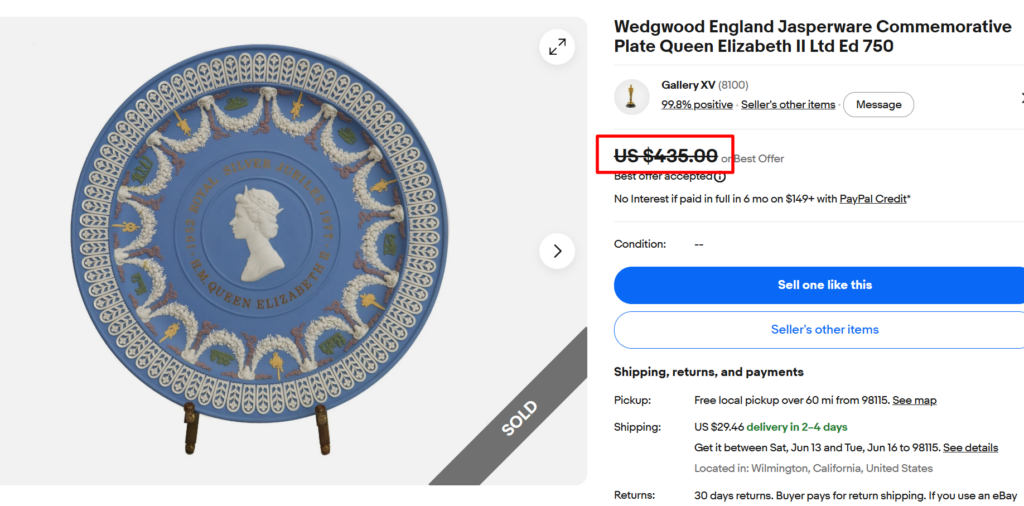
The plate above is a Queen Elizabeth II Silver Jubilee plate, a Jasperware plate by Wedgwood, dating back to 1977, which was limited to only 750 plates.
Jasperware was introduced by Josiah Wedgwood in 1774, and it’s still made. It’s known for its unique matte glazed finish with the figures painted in white relief. continues to be made continuously.
Pale blue is the original color used for Jasperware, although other colors used include green, lilac, black, yellow, and crimson.
Common pale blue Jasperware plates are priced between $40 and $100. Limited editions, royal commemoratives, and unusual colors (yellow and crimson especially) can reach $300. Always check the “WEDGWOOD” impressed into the unglazed back, plus a date code or edition number for the limited pieces.
11
Piero Fornasetti Eva Eve Plates
Typically sells for $50 to $500 (full sets)
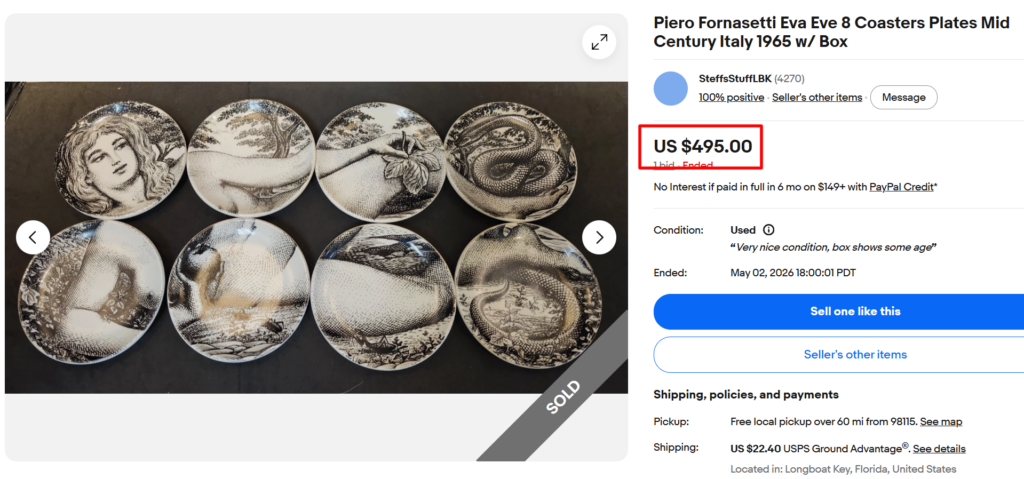
Piero Fornasetti was an Italian artist and designer working in Milan from the 1940s through the 1980s. His black and white plate series is one of the most recognizable mid-century design pieces ever made.
The Eva (Eve) series from 1965 tells the Adam and Eve story across 8 small coaster-sized plates, each with a different surrealist scene. A complete set of 8 Eva coasters with the original presentation box can sell for up to $500.
A single plate from other Fornasetti collections, such as the Tema e Variazioni face plates collection, will cost anywhere between $100 and $300. The signature found on the back of the plate is “Fornasetti Milano,” followed by the pattern’s name and number. Plates from the reproductions of the ’90s have a different signature.
12
Clarice Cliff Bizarre Plates
Typically sells for $100 to $400 (per plate)
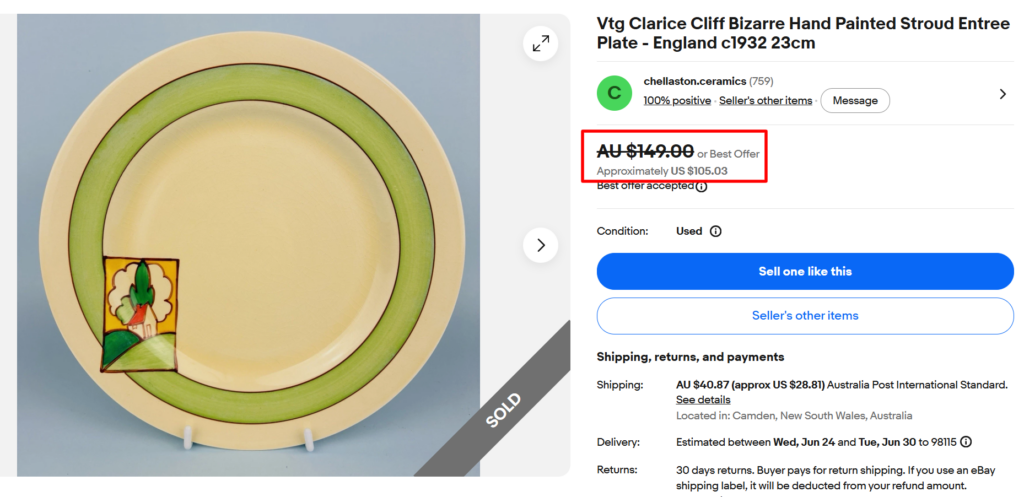
Clarice Cliff was the British designer who turned Art Deco pottery into a phenomenon. Her “Bizarre” range was launched in 1928 and featured hand-painted geometric and landscape designs on earthenware.
The “Stroud” pattern shown above (a tree and cottage scene in green and yellow) is from around 1932 and is among the most collectible ones. Common Bizarre patterns run $100 to $200, but rare patterns like “May Avenue,” “Sunburst,” or “Tennis” can reach $500 to $1,000+ per plate.
Identifying these plates is easy; the backstamp reads “Hand Painted Bizarre by Clarice Cliff Newport Pottery” or similar, with the pattern name often written by hand alongside the printed mark.
Note: This article is intended for informational, educational, and entertainment purposes only. Some images are illustrative and may not represent actual brands, products, or related entities. All trademarks, product names, brand logos, packaging, and other intellectual property referenced remain the exclusive property of their respective owners. Any brand mentions or references are provided solely for descriptive and educational context and do not imply any formal or commercial association.