Antiques Know How Research
Vintage Tea Cups Display Finds
AKH’s detailed review of eBay sales shows that some of the most vintage tea cups sell for under $50 at thrift stores and estate sales, while hand‑painted, signed, or rare examples sell for $100-$800+. The rarest pieces to have on a vintage tea cups display are Wedgwood Jasperware, Royal Worcester fruit cups, Herend Rothschild Bird, Haviland Prestige, Meissen Blue Onion, Minton Gilded Cabinet, Shelley Art Deco, Noritake Nippon, Aynsley Orchard Gold, Lomonosov Cobalt Net, vintage Royal Albert Old Country Roses, and Rosenthal Maria cups.
Antiques Know How
A shelf full of pretty tea cups is one thing. A shelf with a hand-painted Royal Worcester signed by Richard Sebright, sitting next to an 1860s Meissen Blue Onion, is a sight that will get people staring at your vintage tea cups display.
If you are building your cup display or shelf, this is a must-have list for you. It covers 12 rare antique and vintage tea cups worth hunting for. You’ll learn the makers, the patterns, the marks on the base that confirm authenticity, and the small details that separate a casual find from a genuine collector’s piece!
12 Antique & Vintage Cups You Must Have on Your Display Shelf
1
Wedgwood Jasperware Cups
Typically sells for $60 to $80 (per cup)
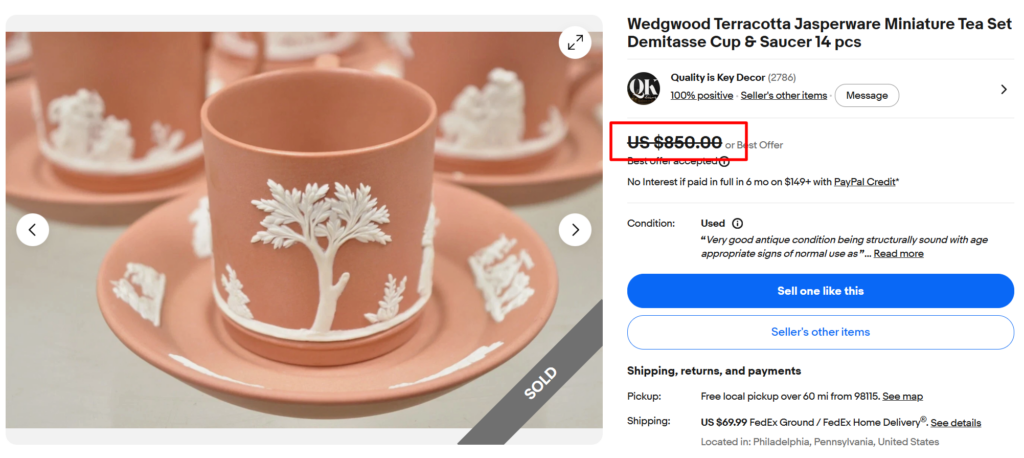
This is one of Wedgwood’s rarest tea cup sets; terracotta jasperware. The introduction of Wedgwood Jasperware dates back to 1775. It’s unpainted stoneware that’s dyed using metallic oxides before decorating it using white relief images from classical mythology.
The commonly known “Wedgwood Blue” is one of the several colors available. Green, lilac, black, yellow, and terracotta are other grounds that are available but are very rare.
A three-letter impressed date code, used from 1860 onwards, gives the exact production year and is the easiest way to date a piece without extensive research.
2
Royal Worcester Hand-Painted Fruit Cup
Typically sells for $200 to $800+
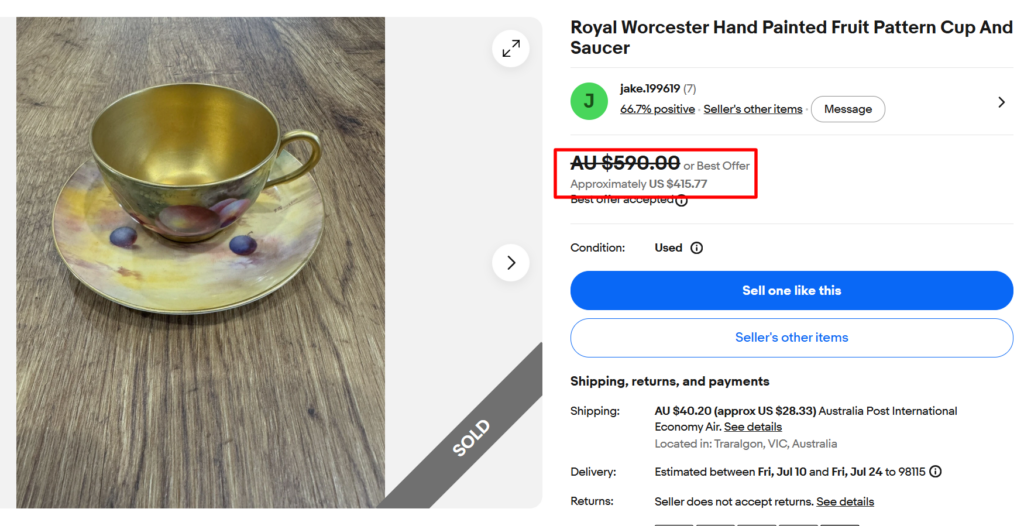
Some of the finest examples of English porcelain painting from the 20th century are the hand-painted fruit tea cups by Royal Worcester. They feature peaches, grapes, gooseberries, or plums, hand-painted on porcelain and signed by the painter.
The signature is everything. Richard Sebright is widely considered the finest fruit painter Worcester ever employed, with pieces signed by Frank Roberts, William Ricketts, and H. Martin also highly collected.
The factory’s puce crown mark with year dots dates each piece precisely.
3
Herend Rothschild Bird Tea Cup
Typically sells for $150 to $500
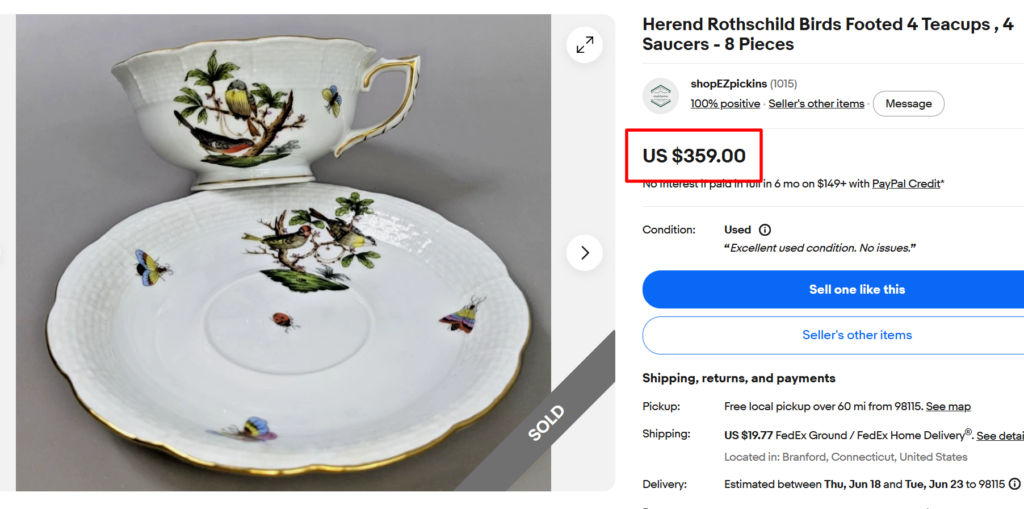
Herend’s Rothschild Bird is based on a family story about a pearl necklace stolen by birds in the garden. The set includes twelve hand-painted images featuring pairs of birds on the cups and saucers together with butterflies and insects, surrounded by an embossed basketweave pattern.
Princess Diana selected this pattern for her wedding china service in 1981, securing its position among the most popular products in the Hungarian porcelain industry.
4
Haviland Limoges Tea Cups
Typically sells for $25 to $200; $500+ (Prestige)
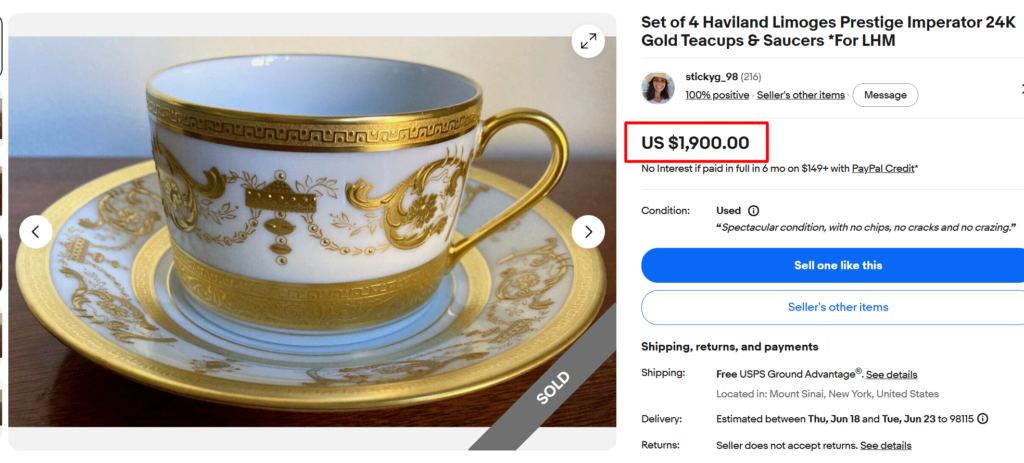
Over 60,000 varieties of Limoges china were designed by the Haviland Company, all having delicate flowers with gold trimming. This set of cups is from their “Collection Prestige” line, known for exceptional, hand-encrusted 24-karat gold detailing.
Authentic pieces from 1870 onwards carry two backstamps: a green or grey factory mark where the blank was made, plus a red or brown decorating mark where it was painted. One mark alone often means a smaller decorator and less collector value.
5
Meissen Blue Onion Cups
Typically sells for $150 to $450
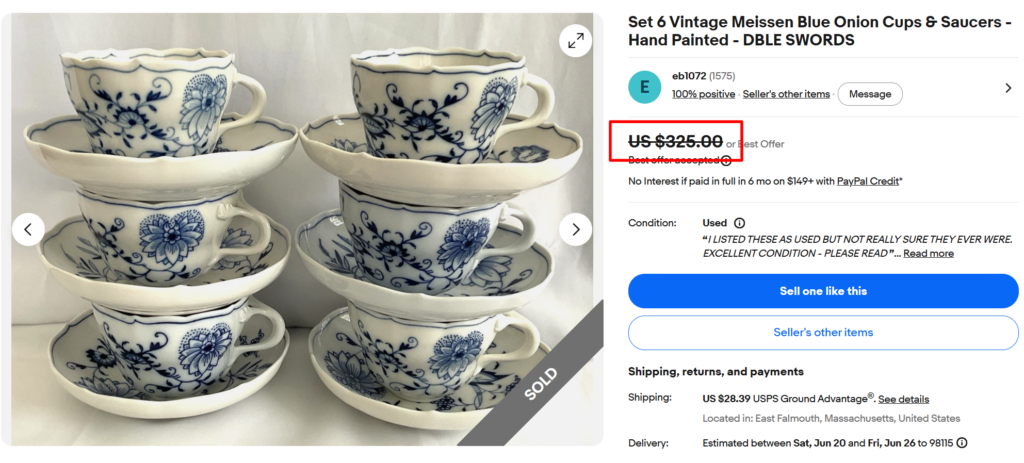
The Meissen Blue Onion pattern, which is also known in Germany as Zwiebelmuster, dates back to about 1739 and later became widely imitated by many other European potteries.
Contrary to popular belief, the “onions” are actually pomegranate, peach, and chrysanthemum flowers that have been imported from Chinese porcelain products.
The 18th and 19th-century pieces are considered the most valuable by collectors. Genuine Meissen cups will have the distinctive crossed-swords stamp in blue underneath the glaze, dating from 1722, and these are unreplicable.
6
Minton Gilded Cabinet Tea Cup
Typically sells for $150 to $700
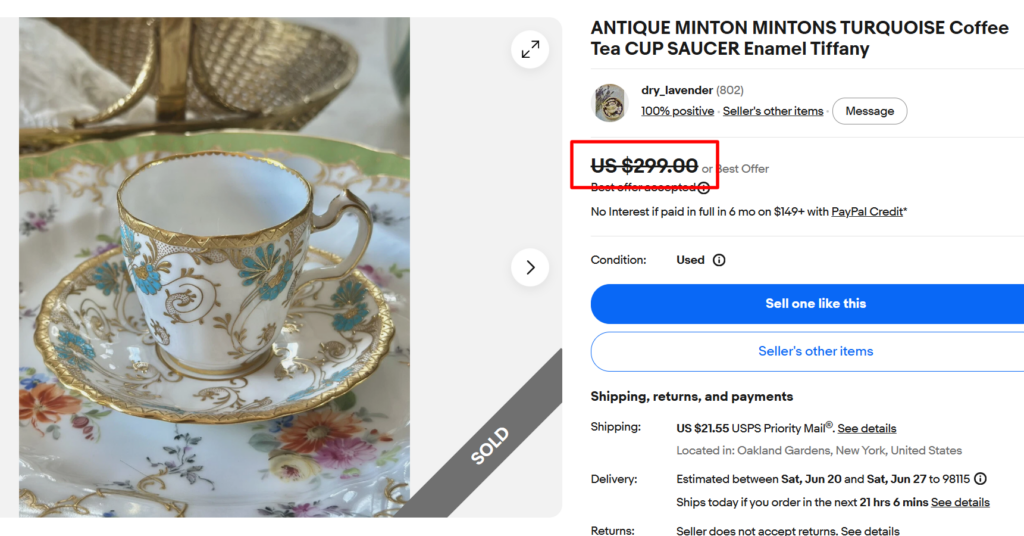
Minton cabinet cups are actually meant for display rather than everyday use. The cups are usually made between the 1830s and early 1900s and feature luxurious gilded designs, painted flowers, and enamel paintings that resemble jewel inlays.
Vintage Minton bone china tea cups, made during the period of 1850 through 1880, featuring dentil gilded rims (small gold designs resembling teeth near the edge of the cup), rose swags painted by hand, and salmon/cobalt grounds usually sell for $200-$500 per piece.
7
Shelley Queen Anne Art Deco Cups
Typically sells for $100 to $400
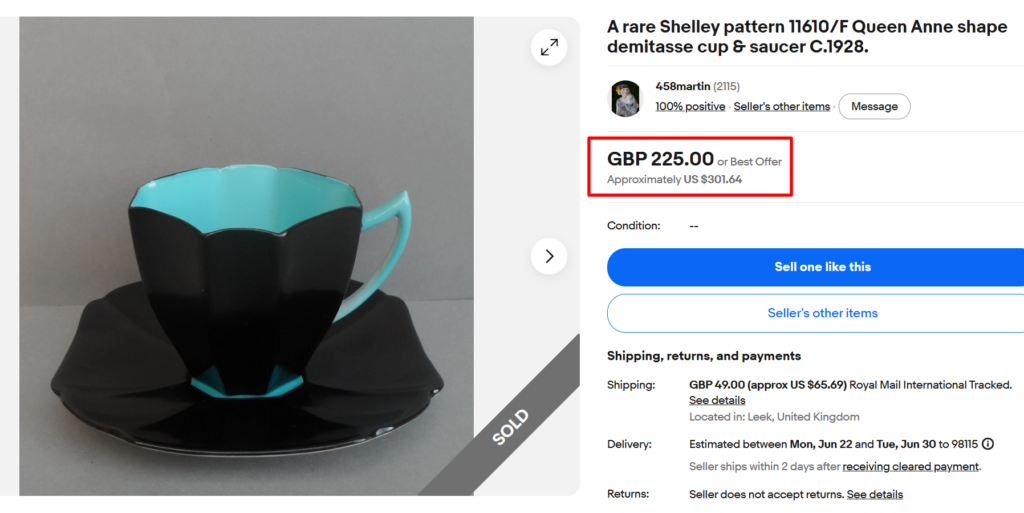
The Queen Anne design was created by Shelley in 1926 and became the benchmark for defining Art Deco tea sets. This set features a hexagonal shape with paneled cups, a square saucer, and a square side plate with cut corners.
The designs, such as Daisy, Sunrise, and Oriental Water Garden, are extremely popular, with hand-painted enameling always being more valuable than printed designs.
It was last made in 1940; therefore, this cup is over 85 years old. Always check the registration number 723404 to ensure it’s a genuine Queen Anne piece.
8
Noritake Hand-Painted Nippon Tea Cup
Typically sells for $50 to $500
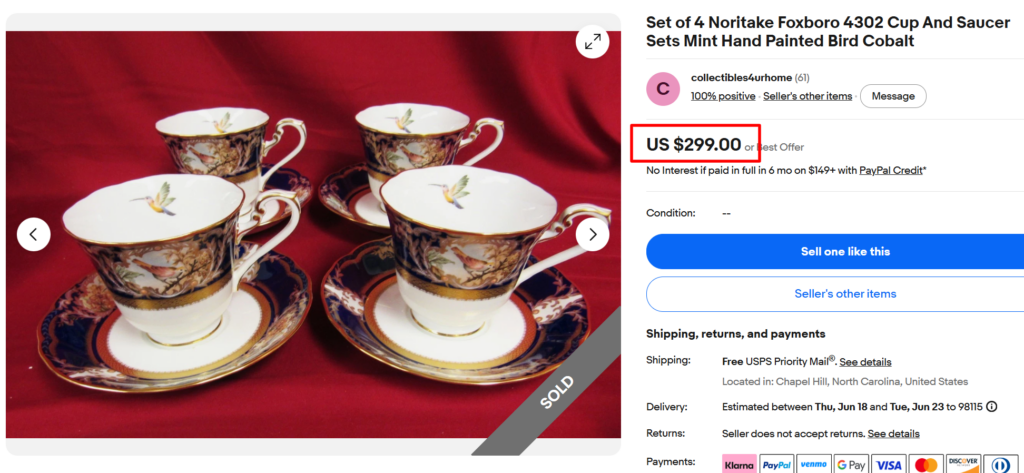
The hand-painted tea cups produced by Noritake prior to 1921 are some of the most underappreciated antiques. The best pieces are those that have a heavy layer of gilding and moriage, which is a type of raised glaze decoration that results in beads on the surface.
Check for the Maple Leaf mark (1891-1911), as well as the green or magenta M in Wreath mark (1911-1921). Also, American customs required that imports have the marking “Nippon” from 1891 to 1921, and so any cup with that stamping would be dated exactly within that time period.
9
Aynsley Orchard Gold Tea Cups
Typically sells for $80 to $350+
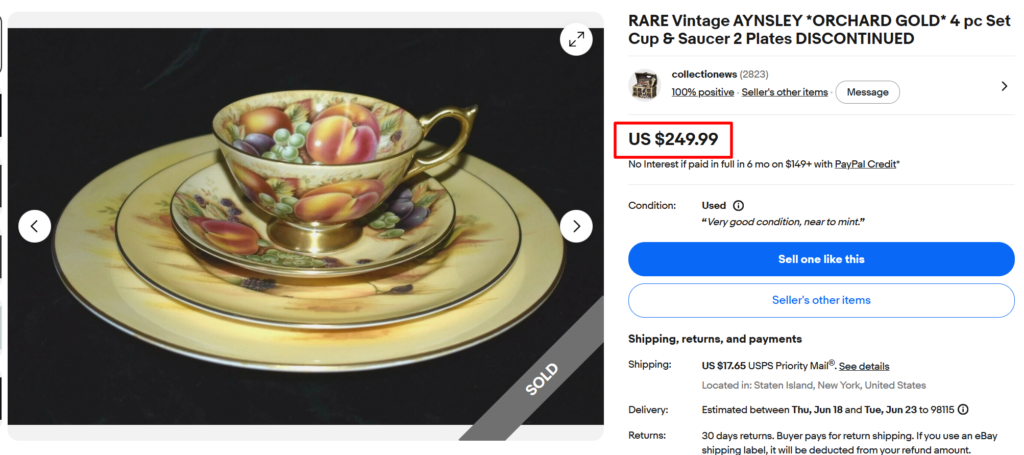
Aynsley’s Orchard Gold or Orchard Fruit pattern came out in the 1930s and is worldwide regarded as the best of their designs. The pattern consists of a base transfer print of peaches, grapes, plums, and other fruits, hand-painted, with the interior completely gilded.
The signature on the saucer or cup matters a lot on these cups; examples that bear signatures of N. Brunt (1935-1975) or D. Jones (1938-1969) rank among the most highly priced.
10
Lomonosov Cobalt Net Tea Cup
Typically sells for $30 to $270
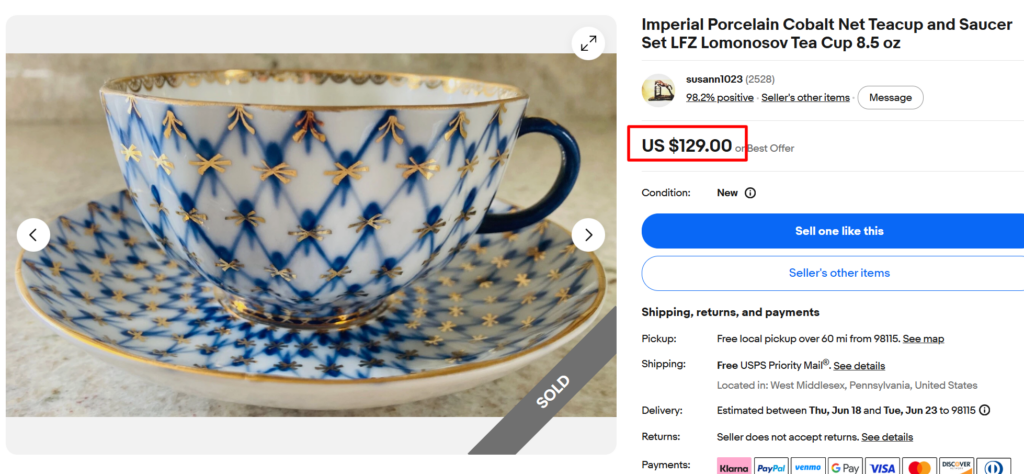
The Cobalt Net pattern was designed by painter Anna Yatskevich in 1945 at the Imperial Porcelain Factory of St. Petersburg. This design consists of a cobalt blue line crossing the diamond pattern with 22 karat gold accents at every intersection.
Yatskevich created the motif inspired by the design of one of Catherine the Great’s favorite tea sets. Each genuine piece bears the double-headed imperial eagle mark, dated 1744, the year when the factory was established under Empress Elizabeth. The most collectible Soviet-era items feature “Made in USSR” labels.
11
Royal Albert Old Country Roses Cups
Typically sells for $15 to $80
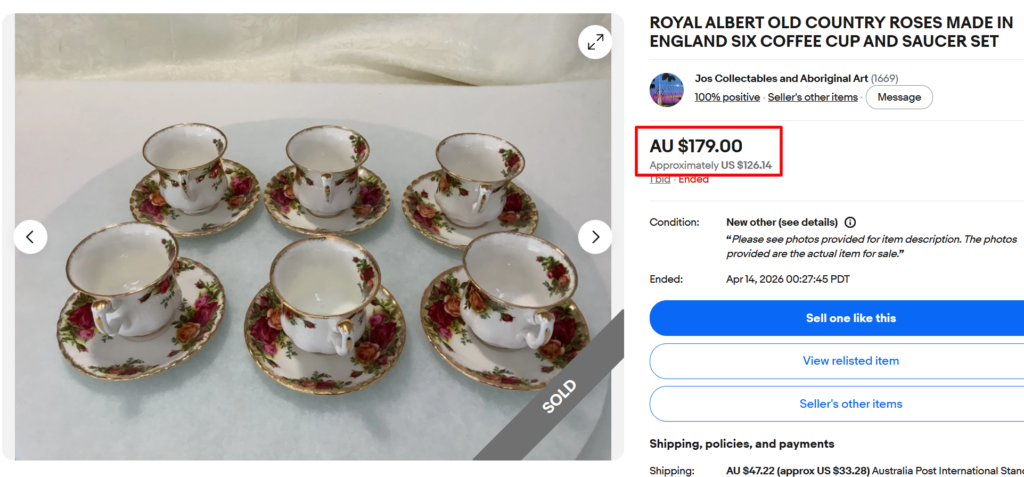
Old Country Roses was designed by Harold Holdcroft in 1962, during a period when the British pottery industry was struggling to survive post-war. Its immediate popularity not only helped save Royal Albert but also established it as the most popular fine china pattern ever, selling more than 100 million items.
For your display, look for the original backstamped pattern manufactured in England between 1962 and 1974. The newer version made after 2002 in Indonesia, China, and Taiwan lacks collector appeal.
12
Rosenthal Maria Tea Cups
Typically sells for $35 to $180
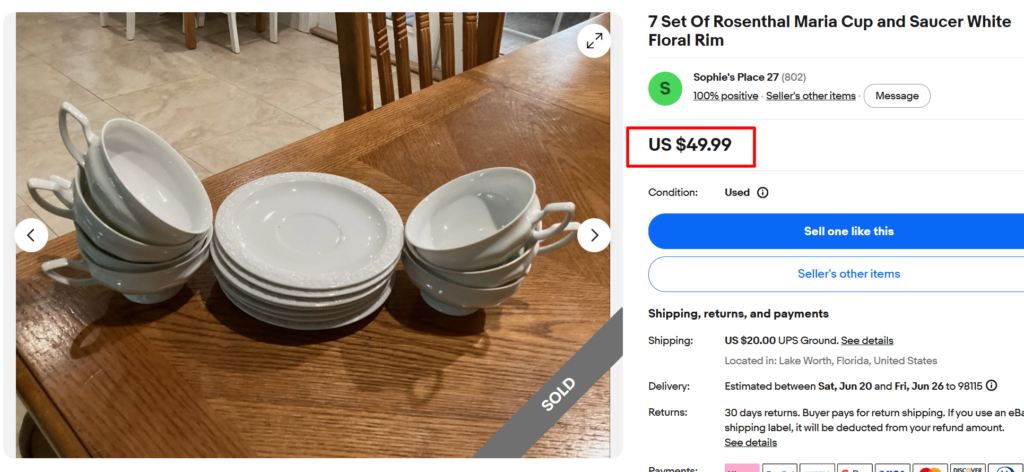
Rosenthal Porcelain was started in 1879 by Philipp Rosenthal in Selb, Bavaria. The “Maria” series, named after his wife and designed by Philipp himself, was created in 1916 and remains one of the most distinctive examples of European tea cups ever produced.
The Maria cups are white porcelain cups with scalloping and embossing. They can be either plain or with blue bands, gold, or Rococo paintings. Look for the “Rosenthal Selb-Bavaria” under a crown and two rods marks for authenticity.
Note: This article is intended for informational, educational, and entertainment purposes only. Some images are illustrative and may not represent actual brands, products, or related entities. All trademarks, product names, brand logos, packaging, and other intellectual property referenced remain the exclusive property of their respective owners. Any brand mentions or references are provided solely for descriptive and educational context and do not imply any formal or commercial association.