Antique and vintage hand tools at garage sales usually sit in a cardboard box with a “$5 each” tag. Most of them are actually worth that, but they may be hidden, a rare $200 Stanley plane, a $150 Disston saw, or a Winchester wrench from the 1920s.
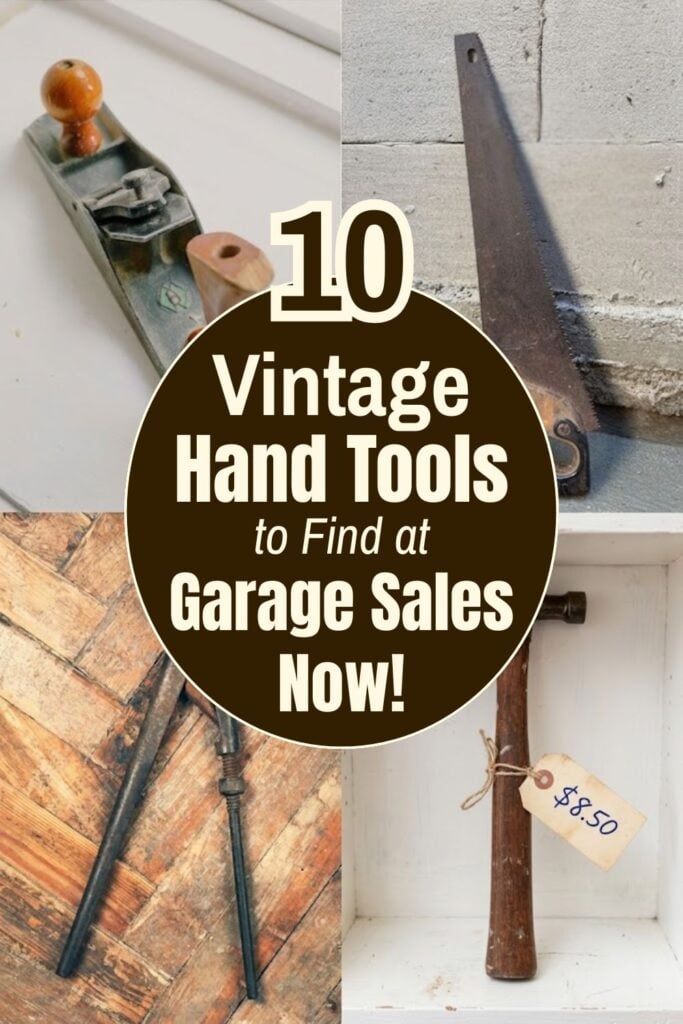
The difference is almost always the brand and the specific model, not how old the tool looks or how much rust it wears. This guide tells you which vintage hand tools to grab on sight, what makes each one collectible, and what they can resell for!
Brand Names You Need to Be Looking for
You do not have to memorize a catalog to hunt vintage hand tools well. You just need to recognize seven names on a stamp, medallion, or etch.
- Stanley leads for planes, especially anything pre-1970.
- Disston rules for hand saws.
- Winchester made tools only briefly, which is why they carry a brand premium.
- Keen Kutter, North Bros. Yankee, Millers Falls, and Starrett are American collector favorites.
- Snap-on covers the mid-century mechanic side.
If you spot any of these in a $5 bin, slow down and look closer. Everything below sits inside those seven brand names.
Antique & Vintage Hand Tools That Are Worth a Lot Today
1
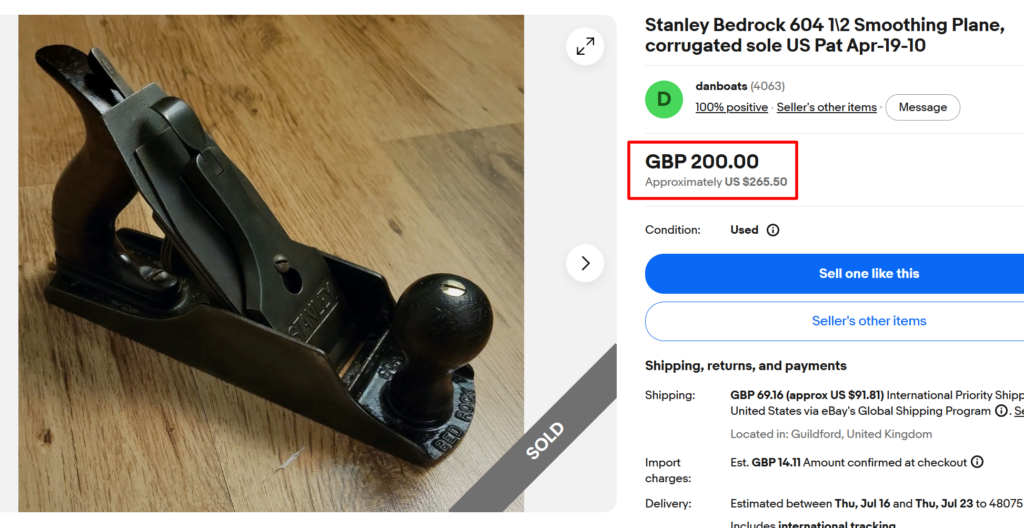
Stanley Bedrock Plane (No. 604, 605, 606)
Typically sells for $150 to $325
| Production Period | 1898 to early 1940s |
| Material | Cast iron body, rosewood handle |
| Key Features | Flat frog seat, single Bedrock lever cap |
| Collector Notes | 602 and 605 1/4 are the rare ones |
Bedrock planes are Stanley’s premium bench plane line, and they are the single most reliable garage sale grab in this category. You can identify these by the raised “Stanley / Bed Rock” markings on the tool. There will also be a type number, like 604, 605, and 607, on authentic pieces.
Type 4 through Type 6 examples of the No. 605, 606, and 607 can easily resell for $150 and $325 in “Good+” condition, with clean corrugated bottoms and rosewood totes.
2
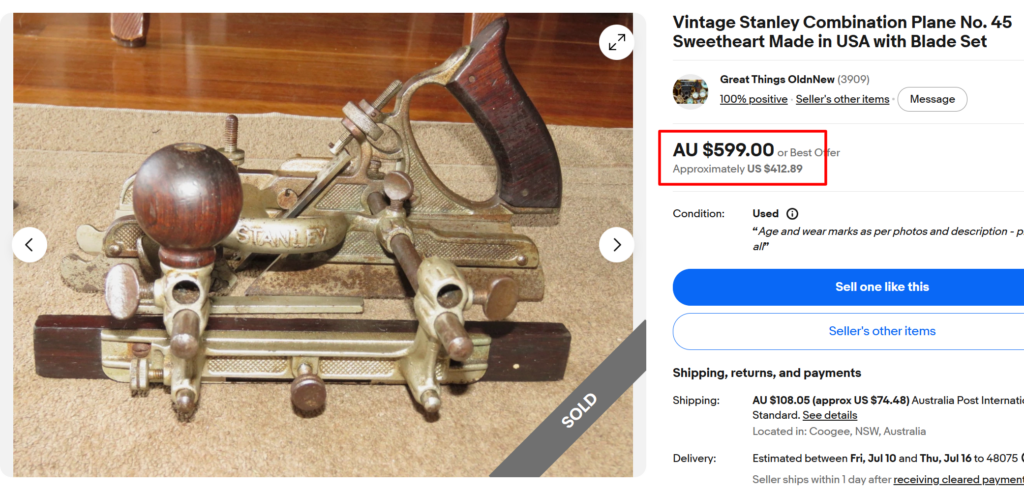
Stanley Combination Planes (No. 45 and No. 55)
Typically sells for $200 (partial) to $900+ (complete)
| Production Period | 1884 to 1962 |
| Material | Nickel-plated cast iron |
| Key Features | Interchangeable cutters, adjustable fences |
| Collector Notes | Value depends on complete cutter sets |
These are the fussy multi-tool planes with interchangeable cutters, and collectors want them complete.
A No. 45 with the full cutter set and original wood box regularly clears $500. The No. 55 goes higher, especially with all four cutter boxes and the original paperwork. A pair of both can touch $1,000 or more.
Missing cutters kill the value fast, so before you pay anything, count the blades. Even a partial set with the box is worth grabbing at any low price.
3
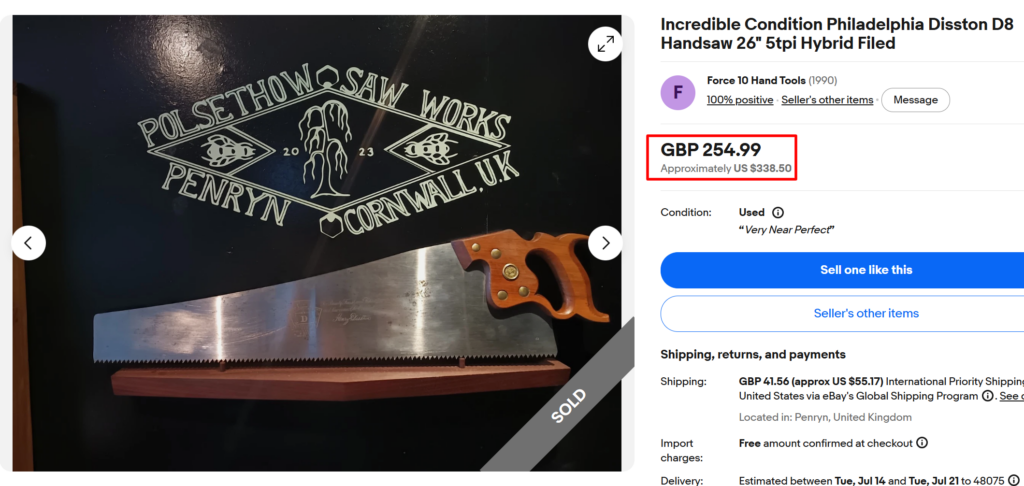
Disston Pre-1928 Hand Saws (D-8, D-12, and No. 7)
Typically sells for $60 to $350
| Production Period | 1840 to 1955 |
| Material | Steel blade, applewood or rosewood handle |
| Key Features | Visible blade etch, brass medallion |
| Collector Notes | Wood handle only. Plastic means post-1928 |
Disston is to American hand saws what Stanley is to planes. The most valuable ones are pre-1928 saws that still show the etched logo on the blade and keep their original applewood or rosewood handle.
The D-8 with a visible etch and matching medallion and the D-12, Disston’s premium London Spring model, are among the most collectible models to look for. The resale value depends on the point count and etch condition.
4
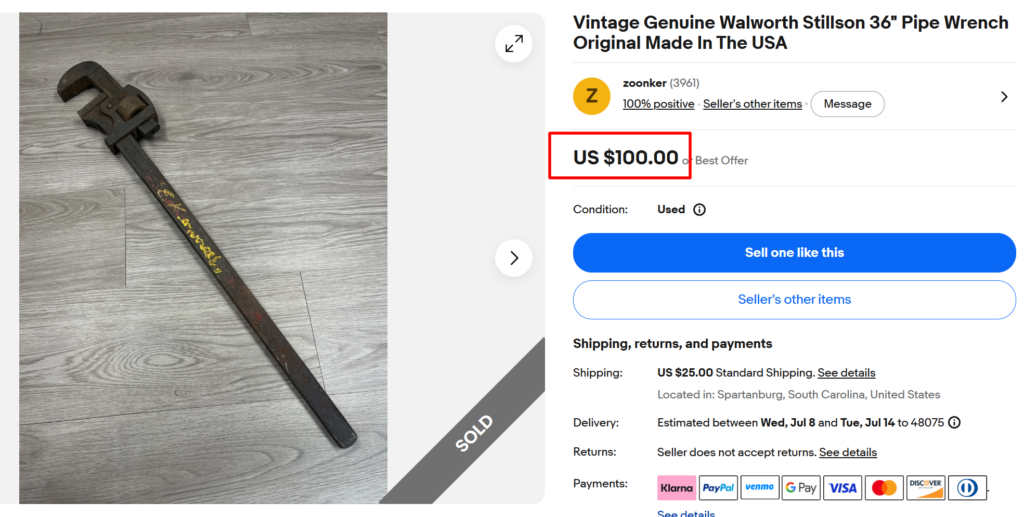
Stillson Pattern Pipe Wrenches (Pre-1950)
Typically sells for $80 to $250
| Production Period | 1869 to 1950 |
| Material | Forged steel, iron handle |
| Key Features | Patent date stamp, adjustable jaw |
| Collector Notes | Readable patent stamp doubles the value |
The Stillson pipe wrench has been in continuous production since 1869. So, it’s early ones with clear patent dates on the handle you need to spot.
Look for “Walworth,” “Trimo,” or the early Ridgid markings. A late 19th-century Stillson-marked wrench with a readable patent date holds higher resale value. Pre-1940 Ridgid heavy-pattern wrenches in solid condition also sell well.
5
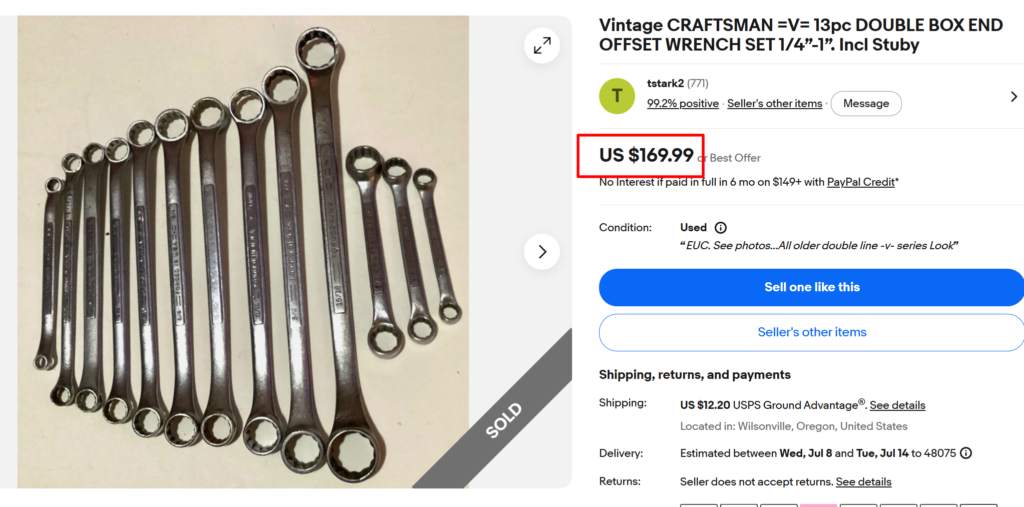
Vintage Craftsman “V” and “BE” Series Wrenches
Typically sells for $15 to $200+ (sets)
| Production Period | 1932 to 1968 |
| Material | Chrome-vanadium steel |
| Key Features | “V” or “BE” code, Craftsman logo |
| Collector Notes | Post-1968 examples have minimal collector value |
Craftsman gets dismissed because Sears sold so many of them. Still, the pre-1968 “V” (Vanadium) and “BE” series wrenches and ratchets are surprisingly collectible in the vintage hand tool market.
Clean pre-1968 combination wrenches move at $15 to $60 each, and full boxed socket sets with the ratchet handle regularly clear $200.
ID Tip: If the wrench shows the underline logo or the round Craftsman stamp with no vanadium marking, it is likely too new to matter.
6
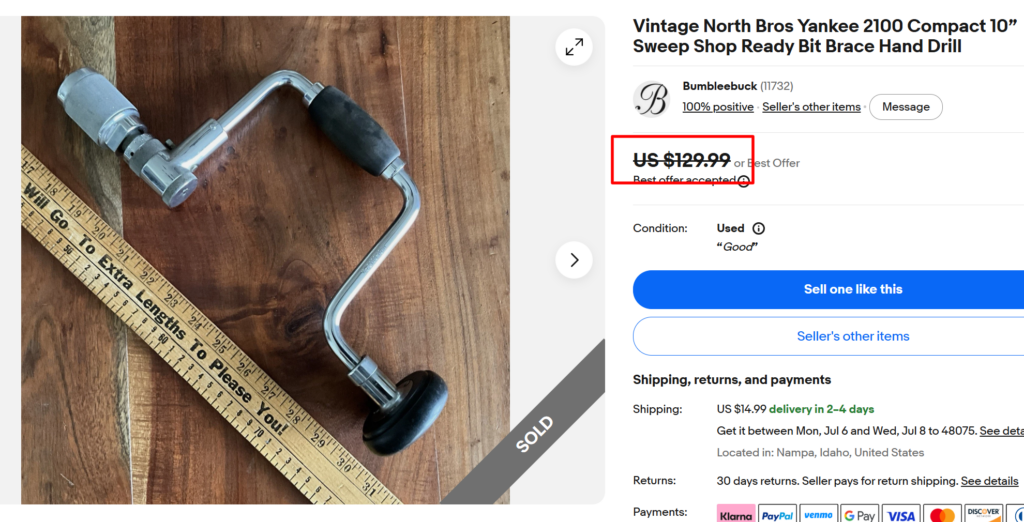
Millers Falls and North Bros. “Yankee” Hand Drills
Typically sells for $40 to $200
| Production Period | 1868 to 1960 |
| Material | Iron, brass, hardwood |
| Key Features | Working ratchet, original chuck |
| Collector Notes | Complete boxed sets bring the premium |
Before power drills, every workshop had a brace and bit or a spiral push drill. Two brands are more collectible: Millers Falls (Massachusetts, 1868 to 1982) and North Bros., who made the Yankee push drill line before Stanley bought them out in 1929.
The most valuable models are those with original wood pad, chuck jaws intact, and, for the Yankees, the original wooden bit case.
7
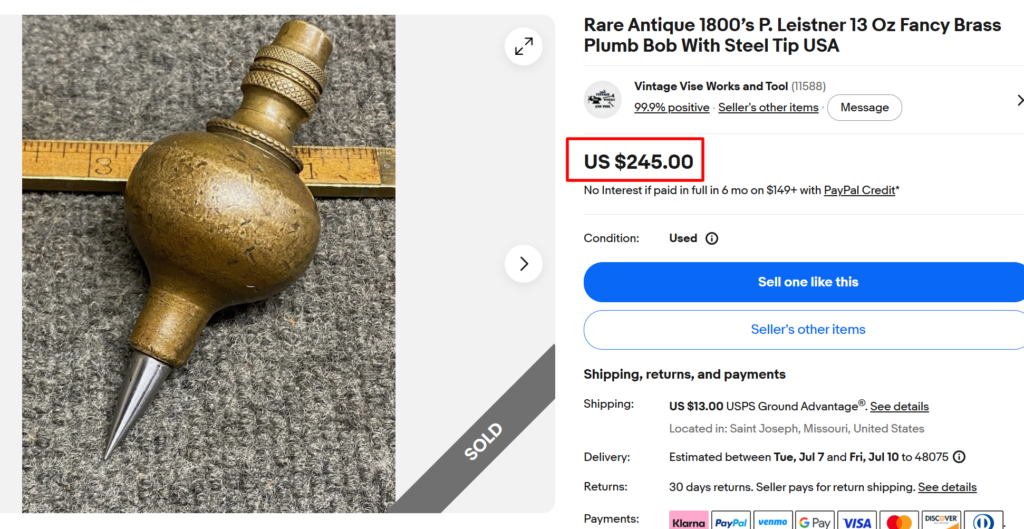
Antique Brass Plumb Bobs
Typically sells for $30 to $300
| Production Period | 1850 to 1950 |
| Material | Solid brass, steel tip |
| Key Features | Maker’s stamp, replaceable tip |
| Collector Notes | Even unmarked examples sell to decorators |
The tools are small, hard to notice, and always undervalued at garage sales. Even an unnamed maker brass plumb bob with its original steel or iron point could sell for up to $60-$300 on eBay.
Turned Victorian examples with unusual shapes can go even higher. The unnamed brass plumb bobs in excellent condition, even without markings, will sell for $50, as interior decorators love using them as decorations.
8
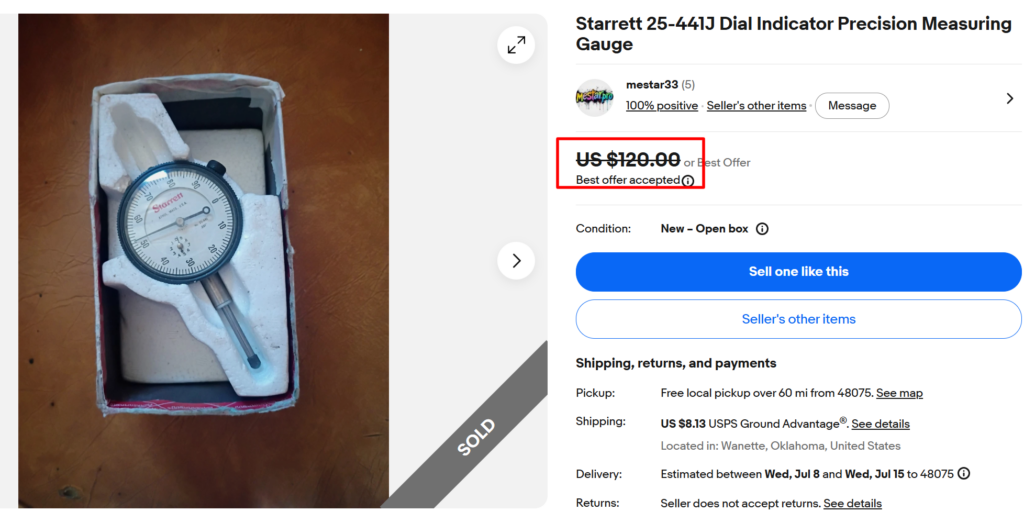
Starrett Precision Measuring Tools
Typically sells for $40 to $180
| Production Period | 1880 to 1960 |
| Material | Hardened steel, brass |
| Key Features | Athol Mass. stamp, sharp graduations |
| Collector Notes | Pitted or rusted scales cut the value in half |
Starrett has been the American benchmark for precision measurement since 1880, and the pre-1960 tools are highly collectible. Look for micrometers, combination squares, and dividers with the Athol, Mass. stamp or the early “L.S. Starrett Co.” markings.
Rust is the biggest problem with these tools, because pitted graduations kill the reading. Clean, readable tools are what you should look for.
9
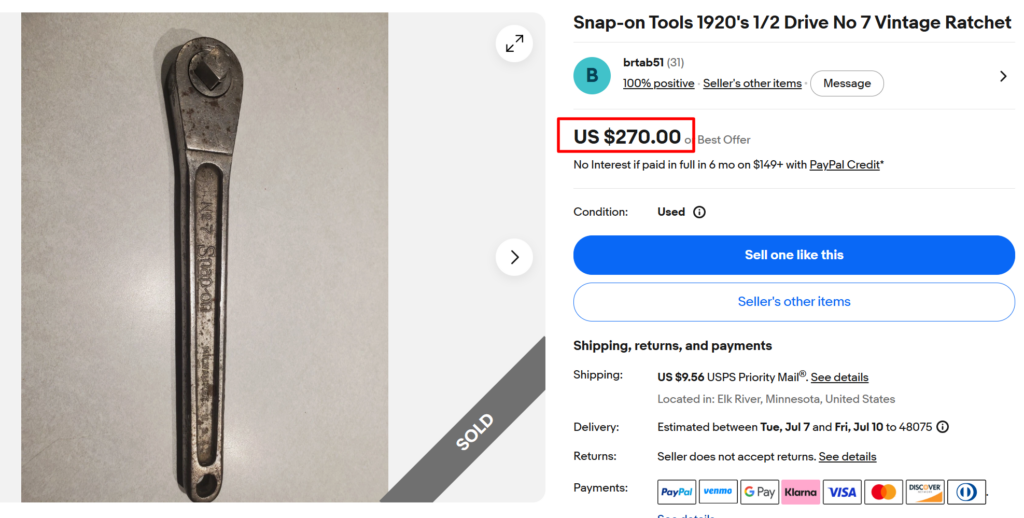
Pre-1930s Snap-on Ratchet Sets
Typically sells for $80 to $500
| Production Period | 1923 to 1935 |
| Material | Chrome-vanadium, cadmium plate |
| Key Features | Knurled base, Ferret patent stamp |
| Collector Notes | Original metal case doubles the value |
The Snap-on tools are the most collected mid-century tools. The oldest Snap-on tools, which date back to the 1920s and 1930s, are what collectors seek and not the common chrome sockets from the 1970s onwards.
The knurled base sockets, dating back to the 1920s, and the original “Ferret” ratchet handles, patented in 1923, are the coveted items. An early Snap-on socket set packed in its original metal box from the late 1920s or 1930s can sell for about $600.
ID Tip: Look for date codes stamped into the socket itself. Anything with a knurled base rather than a smooth, machined finish is early production.
10
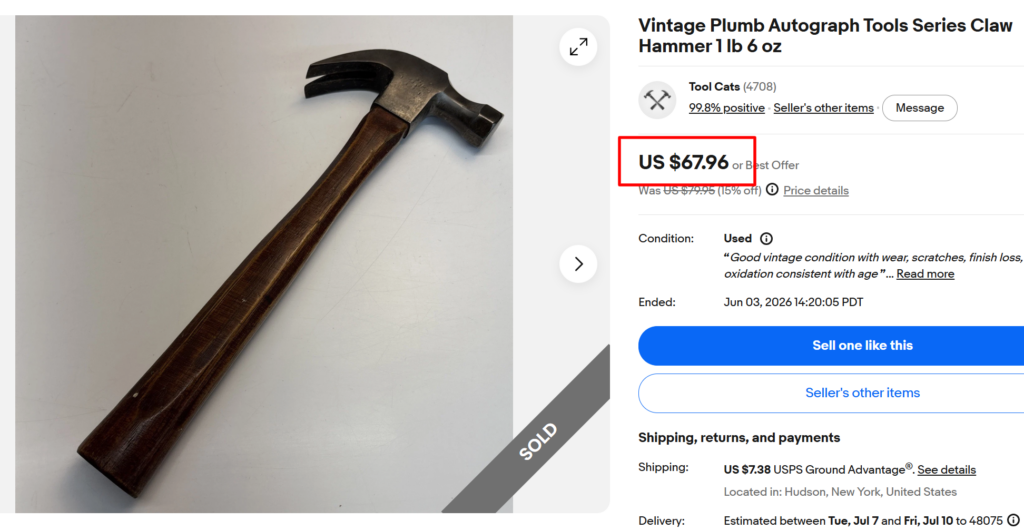
Plumb Pre-War Hammers
Typically sells for $40 to $170
| Production Period | 1900 to 1945 |
| Material | Forged steel, hickory handle |
| Key Features | Plumb decal or stamp, original wedge |
| Collector Notes | Original handle is critical to value |
While most antique hammers have very little collector value, Plumb hammers made between 1900 and World War II are exceptions. A Plumb Autograph claw hammer with its original hickory handle and a visible Plumb decal can easily fetch $40-$100.
Presentation hatchets and figured-head examples with intact original heads climb into the low hundreds.
The decal is fragile and often faded, so hold the hammer to the light and look for the outline even if the color is gone. That ghost decal still counts.
Remember, you do not need to know every type, patent date, or production variation to spot valuable vintage hand tools at garage sales. Just know the brand names that matter and their estimated age. That’s a good start!
Note: This article is intended for informational, educational, and entertainment purposes only. Some images are illustrative and may not represent actual brands, products, or related entities. All trademarks, product names, brand logos, packaging, and other intellectual property referenced remain the exclusive property of their respective owners. Any brand mentions or references are provided solely for descriptive and educational context and do not imply any formal or commercial association.