We all know that some antique and vintage bottles can be worth hundreds of dollars today. And when people see dirty old bottles, their first instinct is to clean them before selling. But the wrong cleaning approach can kill the whole value.
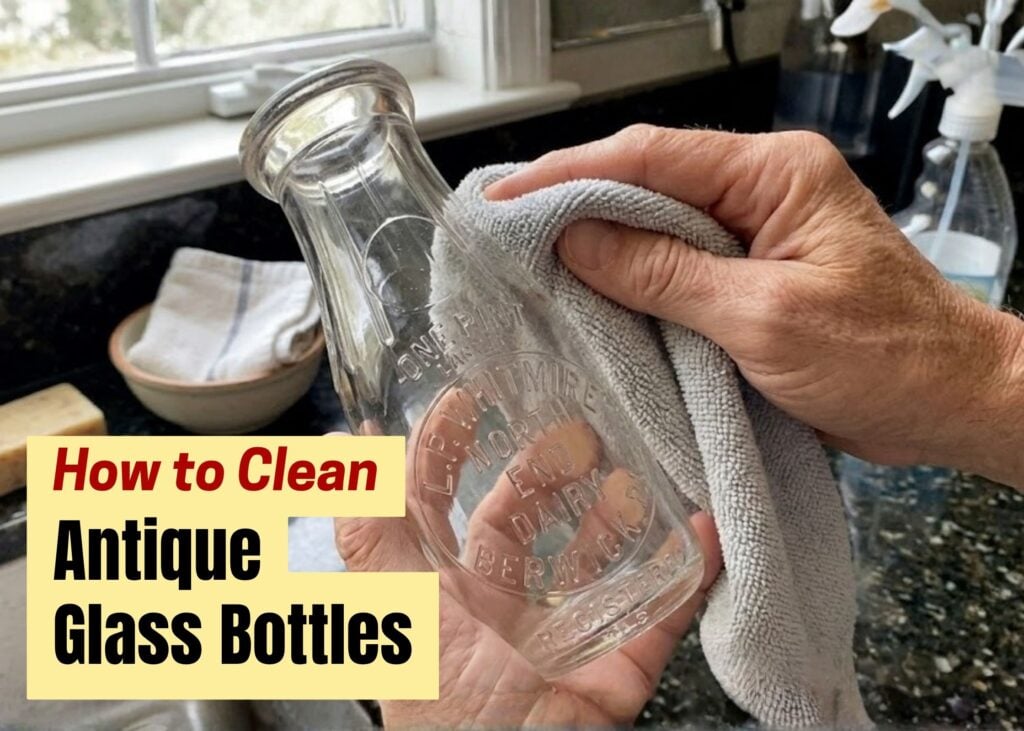
Why? Because the grime you want gone and the patina collectors pay extra for are usually difficult to separate. And while trying to get rid of the grime, you may accidently remove the patina.
So, this guide will help you clean your antique glass bottles safely, inside and out, using simple stuff you already have at home.
Should You Clean Your Antique Bottles?
The right answer is that not every old bottle needs a cleaning session. Some of them are worth more dirt. Before you even start with water, take a good look at the bottle in daylight.
Look for an original paper label, any embossed lettering, painted logos, or that iridescent rainbow sheen on the surface. They can add to its value, but these things can easily be destroyed through vigorous cleaning.
So, go by this rule: clean the dirt, keep the patina.
Surface mud, dust, and cobwebs? Fine to remove. But that soft, hazy film that catches the light like an oil slick is not dirt. Collectors call it sick glass, and it is a real chemical change in the surface of the glass itself from decades in damp soil.
Trying to scrub it off does not work. It only leaves scratches behind. On many dug bottles, iridescence actually adds to the price rather than reducing it, so removing it is a bad choice.
Quick Tip: If your bottle has an original paper label, a maker’s mark on the base, or an unusual color, photograph it from every angle before you clean. If it turns out to be a rare medicine, poison, or perfume bottle, you’ll want that “before” record.
Items You Need for Cleaning Old Bottles
Cleaning vintage bottles isn’t that complicated. You already have most of the items you’ll need here in the kitchen.
- Room-temperature water (never hot)
- A few drops of mild dish soap, like Dawn
- White vinegar
- Baking soda
- Uncooked rice or a handful of small aquarium gravel
- A soft-bristle bottle brush
- Denture cleaning tablets (optional but useful)
- A microfiber cloth
- A plastic tub or bucket to soak in (safer than a hard sink basin)
It is important to avoid any bleaches, ammonia, or anything that will be too harsh since it will etch the glass. Wire brushes and scrub pads will create permanent scratches on the glass. Muriatic acid is suggested in some older forum posts, but it is very dangerous.
And lastly, never put an antique bottle in the dishwasher. The heat, jets, and detergent can crack it or leave a permanent haze.
How to Clean the Outside of an Antique Bottle?
Clean from the outside inwards. Wipe the entire bottle with a dry, soft microfiber cloth first. This will remove any loose dust that may get ground into the glass while washing. In case of dug bottles, brush the base and neck area gently using a soft brush to remove any caked-on dirt.
Now fill a plastic tub with lukewarm water and add a few drops of Dawn. Place the bottle in gently and let it soak for about 20 to 30 minutes for light grime, or overnight if the crud is thicker.
After soaking, wipe the outside with a soft cloth. Work around embossing and any paper label carefully, not over them.
For hard water spots or white mineral haze on the outside, dab a cotton ball in white vinegar and press it against the spot for a minute or two. Then rinse with distilled water. Don’t scrub embossed areas.
Warning: If the bottle has an original paper label, keep it dry from start to finish. A damaged label can drop the value by 25 to 50 percent, especially on rare and antique examples.
Cleaning the Inside of Old Glass Bottles
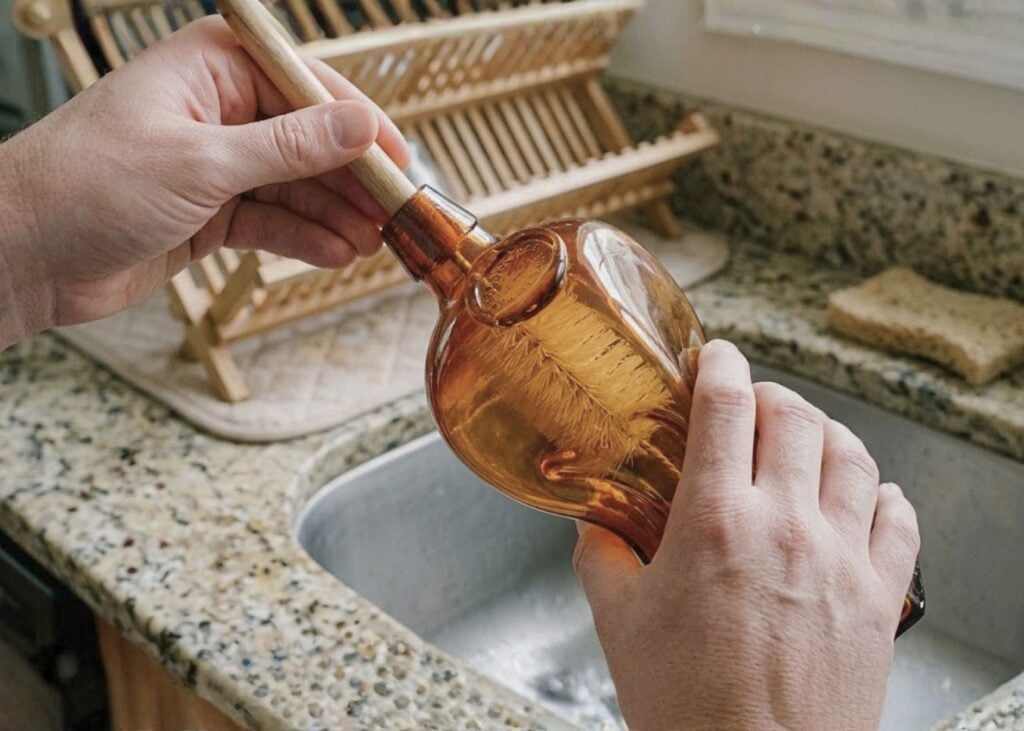
The outside is just the start; cleaning the inside of a bottle is trickier. You can’t reach in with a rag, the neck is often too narrow for a brush, and years of gunk have had a long time to settle in.
Here are four methods you can use to clean about everything you’ll run into.
- The Rice and Soap Swirl: Fill the bottle approximately one-third full of warm water and pour some soap and a spoonful of rice into it. Close it with your thumb and swirl it for 1 to 2 minutes. Rice works like tiny scrubbers without scratching. This method is suitable for removing sediment from narrow-necked bottles.
- The Denture Tablet Soak: Drop one or two tablets into the bottle, fill with warm water, and let it fizz overnight. The mild effervescent action lifts light staining and organic residue without any risk to the glass. It’s collectors’ go-to for old medicine and perfume bottles.
- Vinegar Soak: To eliminate any stubborn cloudy appearance due to the accumulation of minerals, mix one part white vinegar and four parts warm water. Pour the solution into the bottle and leave it for 24 hours before cleaning with distilled water.
- The Gentle Bottle Brush: For wide-mouth bottles like old milk bottles, ink bottles, and seltzer bottles, a soft-bristled bottle brush works well. Just make sure the bristles are soft. Wire brushes will leave permanent scratches.
If, after all this, the bottle still looks hazy, it’s probably sick glass. That is permanent. No amount of soaking will fix it. However, on a dug bottle, that iridescence is often a selling point, not a flaw.
Special Cases: Labels, Dug Bottles, and Painted Lettering
A few types of bottles need extra care because a normal wash can destroy exactly what makes them valuable.
- Paper-labeled Bottles: Do not put them in the water. The outside is to be cleaned using a slightly damp cloth, making sure that the label is not wet. The inside is to be washed without getting the label wet, since even one drop may damage the label.
- Dug bottles: Give them a long, plain water soak first. A few days is fine. This softens the caked soil so it drifts off on its own. Never chip encrusted minerals off with a tool. They can bring flakes of glass with them.
- Milk, soda, and ACL bottles: Look at the applied paint letters, known as Applied Color Label or ACL. This is applied on top of the glass and not baked into it, so it will peel off with the use of bleach, ammonia, and hot water.
- Perfume, medicine, and poison bottles: They are typically small and have thin walls. Try the most delicate approach first. A rare poison bottle in a color like cobalt or amber can be worth hundreds, and thin walls chip easily during rough handling.
How to Preserve Value After Cleaning
Once your old bottle is clean, you must also store it properly to preserve it from damage and getting dirtier. Here are a few simple storage tips you can always follow:
- Air dry each bottle upside-down on a cloth towel. Don’t put a rag or paper towel in, as fibers get stuck inside, and you will need to clean them out.
- Do not store directly in sunlight, as UV rays will fade any paint and affect the colors of some old glass. Keep bottles standing up and do not keep them next to anything that vibrates.
- Don’t use polishing sprays. Silicone and oil-based products add a film that experienced buyers notice easily, and it can hurt the value.
- If your bottle has an unusual color, a pontil scar (the rough, round mark on the base), or an embossed maker’s mark, get it identified before you sell.
Note: This article is intended for informational, educational, and entertainment purposes only. Some images are illustrative and may not represent actual brands, products, or related entities. All trademarks, product names, brand logos, packaging, and other intellectual property referenced remain the exclusive property of their respective owners. Any brand mentions or references are provided solely for descriptive and educational context and do not imply any formal or commercial association.