If you grew up during the 1930s to the 1980s, chances are that there was at least one Fisher-Price toy at your place. It is surprising to know that many of these old toys made of wood and plastic are fetching prices of hundreds, and sometimes even thousands, of dollars.
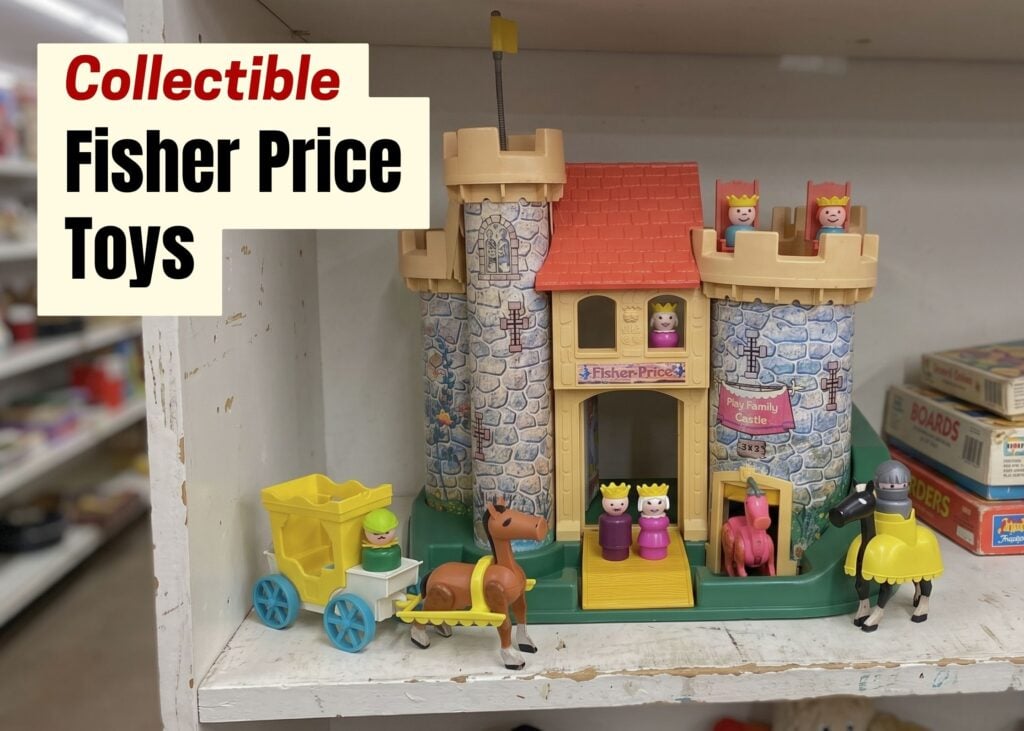
Here, you will learn about the types of Fisher Price collectible vintage toys that are sought after by collectors, why each one is valuable, and how much it can sell for. In case you have an attic full of Fisher Price toys, this is where to start looking.
Fisher Price Toys That Actually Sell for Real Money
1
Doc & Dopey Dwarfs
Typically sells for $1,200 to $2,000
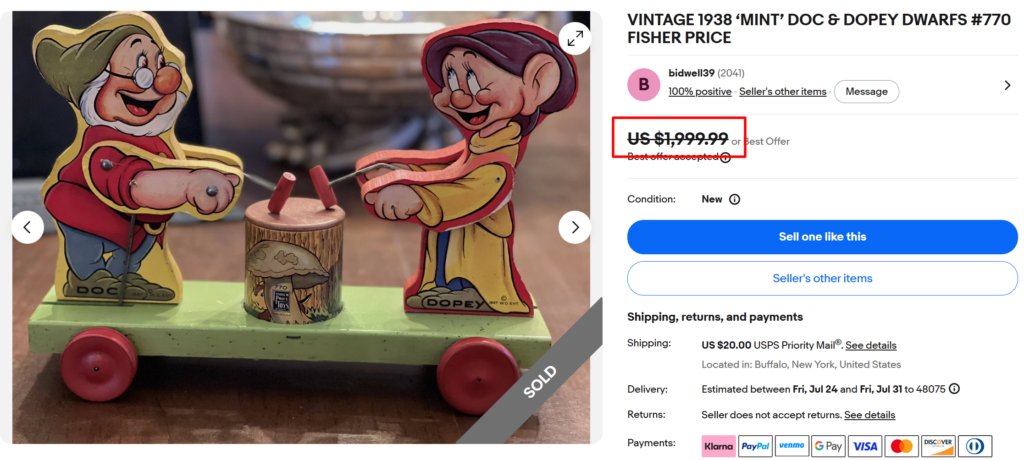
Disney-licensed Fisher-Price toys from the 1930s sit at the top of the collector’s list. This Doc and Dopey pull toy is one of the most wanted of this line. Released in 1938, right after the Snow White film hit theaters, it features two flat wooden cutout dwarves that beat a drum as the toy rolls forward.
The paper lithograph work on these is what drives the value; mint examples can fetch up to $2,000, and even played with survivors can clear four figures when the figures are intact.
| Production period | 1938 to early 1940s |
| Material | Wood body, paper lithograph |
| Key features | Drum-beating action when pulled |
2
Performing Circus Wagon
Typically sells for $150 to $800
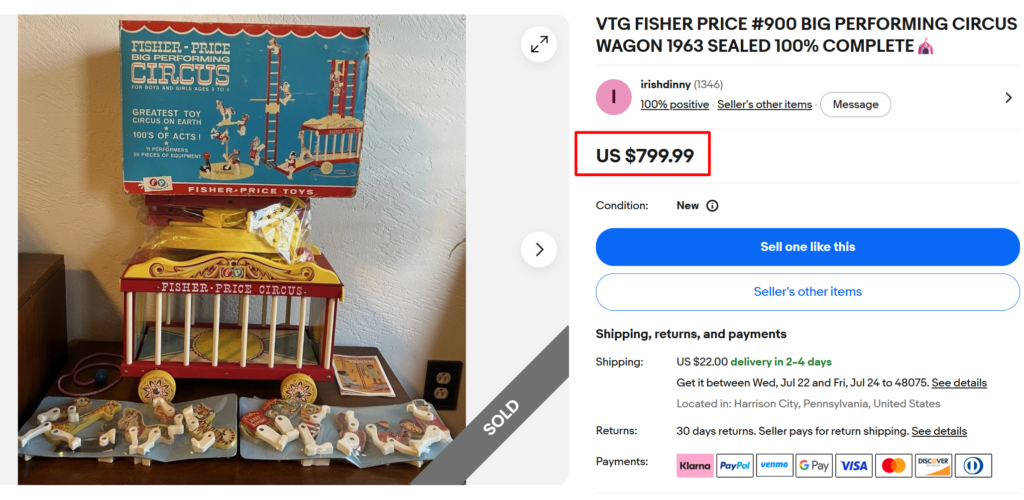
The Big Performing Circus is one of the most photographed Fisher-Price pieces from the 1960s. It comes with eleven performers and twenty pieces of equipment; complete boxed sets with every ladder, trapeze, and ring section are worth the most.
The wagon itself is common enough at $50 to $150 loose. Sealed complete examples with the original box have cleared $800.
| Production period | 1962 to 1969 |
| Material | Wood, paper litho, plastic figures |
| Key features | 11 performers, ladders, trapeze |
3
Little People Amusement Park
Typically sells for $200 to $500+
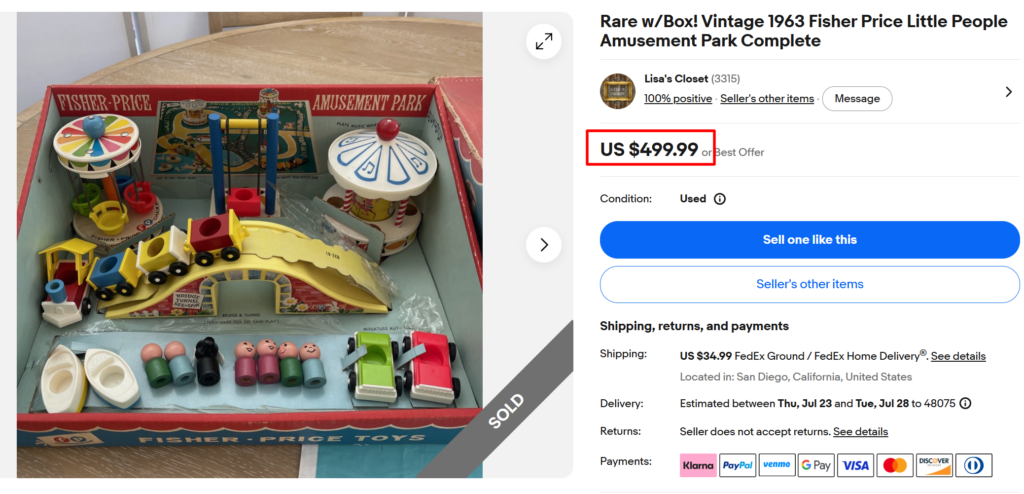
This is the vintage Fisher-Price Little People toy that made the line super popular. The 1963 Amusement Park included a Ferris wheel, a merry-go-round with music, a bridge and tunnel piece, boats, cars, and the small wooden peg figures.
Boxed complete examples are genuinely uncommon today, and can easily fetch up to $500 to $700; loose partial sets still move for $75 to $150.
| Production period | 1963 to 1965 |
| Material | Wood base, plastic accessories |
| Key features | Ferris wheel, musical carousel |
4
Safety School Bus
Typically sells for $150 to $400+
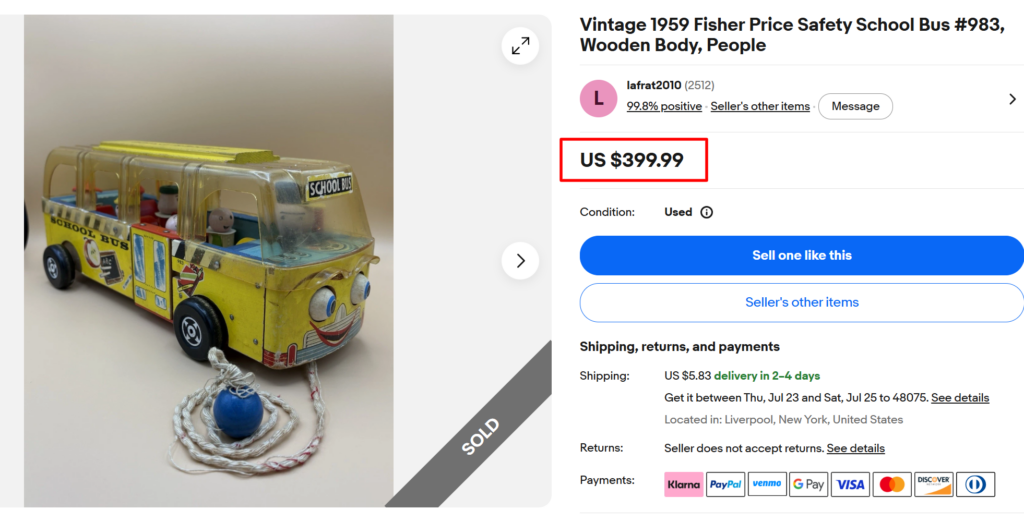
The Safety School Bus is one of the most recognizable early Little People vehicles. The 1959 version has a wooden body with a clear plastic top and comes with the small wooden peg passengers that started the whole Little People line.
The face on the front with the rolling eyes is the key feature. Working eye mechanism, intact wooden body, and a full set of original passengers make this a top-tier Fisher Price toy.
| Production period | 1959 to 1961 (original) |
| Material | Wood body, clear plastic top |
| Key features | Rolling eyes, wooden peg riders |
5
Sesame Street Clubhouse (#937)
Typically sells for $30 to $155
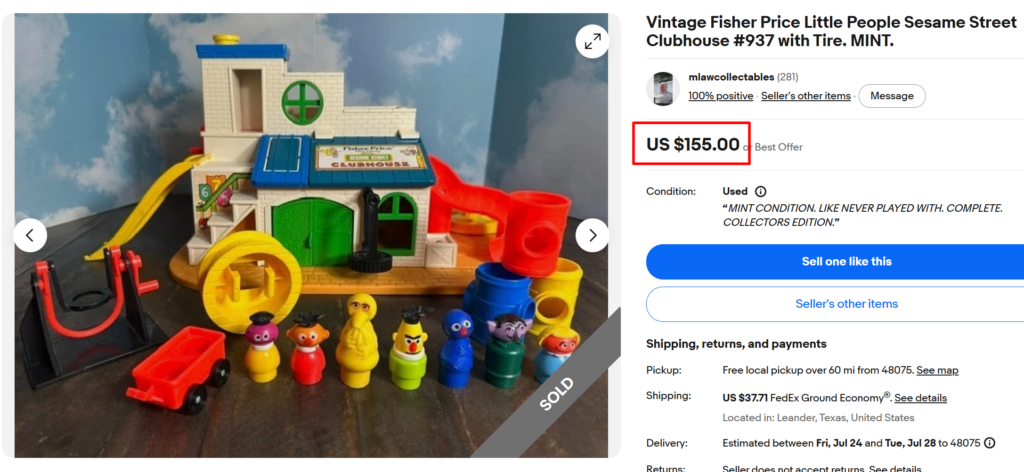
The Sesame Street Clubhouse ran from 1977 to 1979 and originally came with Big Bird, Grover, Bert, Ernie, The Count, and Roosevelt Franklin figures.
Roosevelt Franklin is a critical factor here. He was pulled from the line early, and complete mint sets with him included are quite rare now.
The tire swing on the front is often broken or missing, and the paper lithograph tends to peel at the edges, so intact examples earn a real premium.
| Production period | 1977 to 1979 |
| Material | Polyethylene plastic, paper litho |
| Key features | Tire swing, slide, wagon, ramps |
| Collector notes | Roosevelt Franklin figure adds value |
6
Snoopy Sniffer (#180 and #181)
Typically sells for $30 to $150
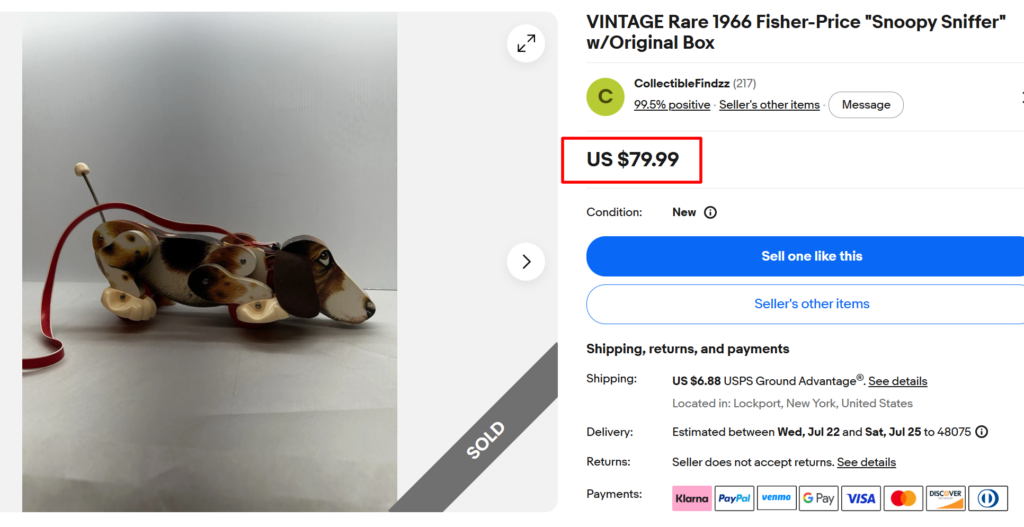
The wooden Snoopy Sniffer arrived in 1938 and stayed in production in one form or another for decades, which is why it’s common. The name itself predates the Peanuts character by more than ten years.
Most loose examples move between $30 and $100, but the earliest 1938–1939 versions have no patent number below the Fisher Price logo, and those are the ones the serious collectors want.
| Production period | 1938 through the late 1950s (wood) |
| Material | Hardwood, paper lithograph, cloth ears |
| Key features | Legs walk, tail wags when pulled |
| Collector notes | No patent number means 1938 or 1939 |
7
Chatter Telephone (#747)
Typically sells for $15 to $150
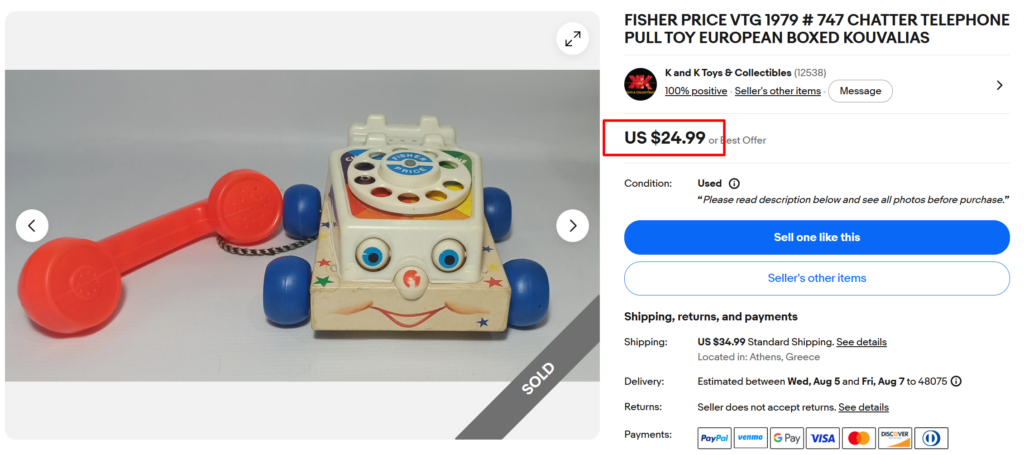
The Chatter Telephone is an iconic toy that most people know because it was featured in the Toy Story movies. Introduced in 1961, it comes with a wooden base and cotton pull string; later examples had plastic wheels.
The version to look out for would be the early 1960s variant with the wooden base and the black and white twisted cotton cord. Examples that are boxed from 1961 to 1966 usually sell for between $80 and $150.
| Production period | 1961 through the 1980s |
| Material | Wood base, plastic phone body |
| Key features | Rotary dial, moving eyes when pulled |
| Collector notes | Wooden wheels signal a pre-1967 build |
8
Play Family Farm (#915)
Typically sells for $40 loose, $150 to $250 (packed)
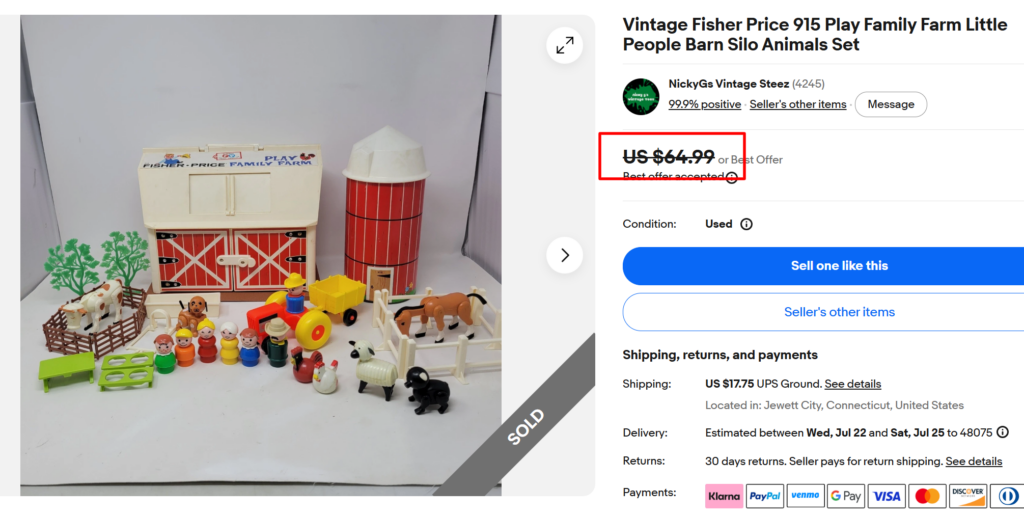
This is the toy that made Fisher Price Little People so popular. The Play Family Farm came in 1967 with a mooing left door and the classic red barn litho with the little boy on top. It became the best-selling Fisher-Price toy for years running.
A loose barn with a few animals typically fetches $20 to $30, while the full 1967 set with all ten animals, the tractor, cart, harness, silo, fences, figures, and the original box is what pushes the number up.
| Production period | 1967 through the early 1990s |
| Material | Wood or Masonite base, plastic figures |
| Key features | Mooing door mechanism |
| Collector notes | 1967 versions have a wood base. |
9
Music Box Record Player
Typically sells for $30 to $150
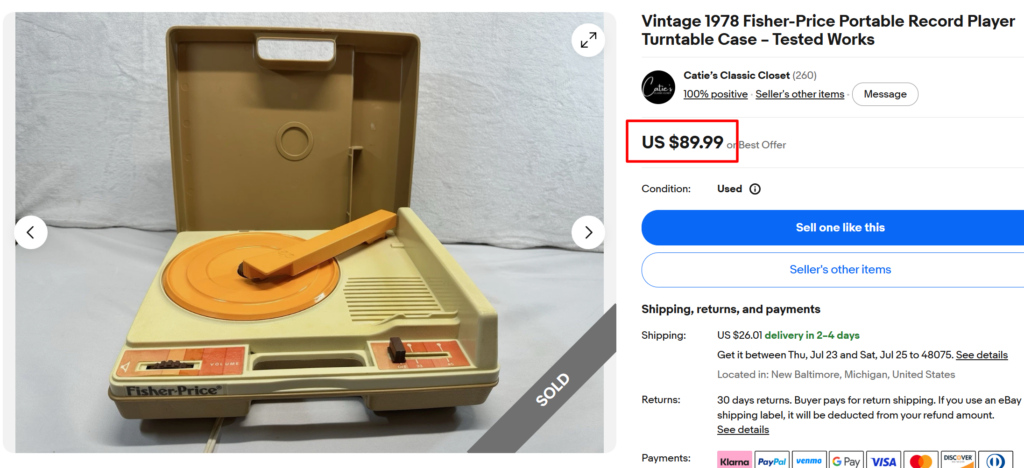
The wind-up record player from 1971 came with five double-sided plastic records that each played a different classic song when cranked. Working examples with all five records typically clear $50 to $80, and boxed sets can hit $100 or more.
The spring mechanism is the key value driver. A broken or weak spring drops the value by more than half. Missing records also hurt value.
| Production period | 1971 onward |
| Material | Plastic with metal wind mechanism |
| Key features | Plays 10 tunes on 5 records |
What Actually Drives the Value?
Age is one of the most crucial factors for the value of vintage Fisher-Price toys. Pre-1962 wooden pieces are worth the most today because they were made in smaller runs, and few survived play in decent shape.
After that, the pattern or theme is a major value driver. Sesame Street, Snoopy, and Disney tie-ins add a licensing premium on top.
Next, original boxes can easily multiply prices. Complete sets with every figure and accessory can sell for three to five times what a loose barn or house brings.
For toys that quack, moo, or play music, working features, like sound and moving mechanisms, matter a lot for top value.
What to Do If You Have One?
The first step is to always confirm the authenticity. So, start with the base. Almost every vintage Fisher Price toy has a stamp with the model number, the Fisher Price logo, and often a year.
Cross-reference that number on the This Old Toy database, which lists production years, variations, and original box art for every set. The following signs can tell you whether you have something special:
- Logo shape: the black oval logo was used from 1962 to 1984; the awning style logo came in 1985. Pre-1962 pieces often just say “Fisher Price Toys” in a simple stamp with no oval.
- Base material: solid wood bases mean pre-1962 for pull toys and pre-1978 for Little People sets. Masonite came next, then all plastic.
- Little People figures: wooden bodies with plastic hats or hair are from 1959 to 1990. Chunky all-plastic figures are from 1991 and later, worth a fraction of the wooden versions.
- Made in USA marking: most valuable vintage pieces carry this. Hong Kong and China markings signal later production.
- Wheels: wooden wheels on pull toys are usually pre-1967. Plastic wheels came in after that.
Once you have the number and rough date, you can further search for recently sold examples, filter for the same variant, same era, and similar condition to your piece, to see what collectors are paying for it.
Note: This article is intended for informational, educational, and entertainment purposes only. Some images are illustrative and may not represent actual brands, products, or related entities. All trademarks, product names, brand logos, packaging, and other intellectual property referenced remain the exclusive property of their respective owners. Any brand mentions or references are provided solely for descriptive and educational context and do not imply any formal or commercial association.