That dark, glassy sheen on your grandmother’s old Griswold skillet is called patina. It’s not just dirt. It’s decades of oil bonded to the iron, and it’s the single biggest factor in what an antique cast iron piece is worth.
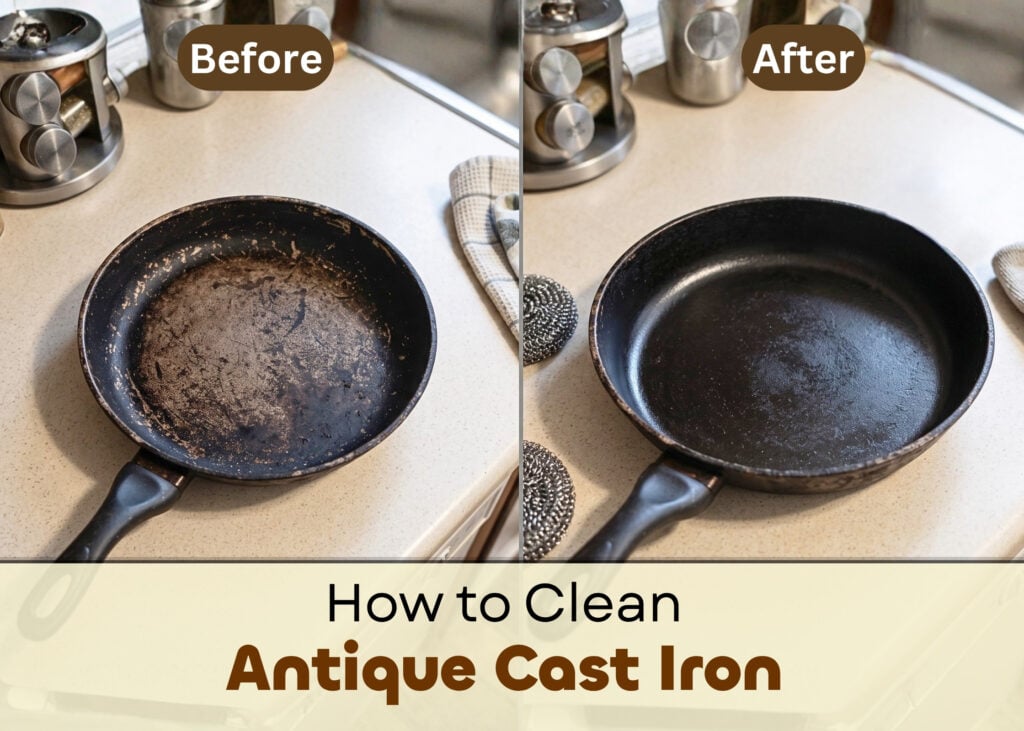
Strip it off with the cleaner, and a $200 collectible becomes a $20 pan, in seconds. This guide shows you the right way to clean antique cast iron without ruining the patina, the piece, or its value.
Why Patina Matters on Antique Cast Iron?
Cast iron patina is a matrix of polymerized oil and carbon that builds up layer by layer over years of use. Collectors call it the seasoning, and on a genuine antique, it’s proof of age and honest use.
Serious collectors pay a premium for pieces with intact original patina. A pristine, untouched Wagner or Griswold skillet holds more value than the same pan sanded down and refinished. Restoration erases history, and the market notices.
There’s a simple rule to remember. Cleaning is not the same as stripping. The goal is to lift food residue and light grime off the surface. The seasoning underneath stays put.
Before You Clean, Look at the Piece
Not every antique cast iron item needs the same treatment. Take two minutes to inspect what you actually have and what it needs before you begin with anything.
Do this quick check first:
- Flip it over and read the marks: Foundry names like Griswold, Wagner, Erie, Favorite, Wapak, and Lodge tell you the maker. Gate marks and heat rings help date the piece.
- Check for damage: Look for cracks, warping, or pitting. These affect both how you clean it and what it’s worth.
- Judge the condition: Is it dusty but healthy? Sticky with old grease? Lightly rusted? Or covered in flaking red rust? Your cleaning method should match the problem, not be the most aggressive option available.
- Decide the level of cleaning: And ask yourself what you want from the piece. If you plan to cook with it, you have a bit more flexibility. A dusty display piece needs a wipe. A rusty barn find needs a plan. If it’s going on a shelf or back into the market, gentle is the only approach.
Cleaning Note: If the piece looks rare or bears an early maker’s mark, photograph it before cleaning. And when you’re unsure, do it slow and less. You can always clean further tomorrow, but you can’t put patina back.
The Right Cleaning Methods, in Order of Intensity
Start with the gentlest option that will actually do the job, and only work up if you need to. More force is not more care. It’s more risk to the patina.
1. Dry Brush and Wipe
For display pieces with intact patina that just need surface dust removed, skip water entirely. A stiff natural-bristle brush and a dry cloth are enough.
This is the right first move for anything you’re not planning to cook with. If the piece looks good, leave the seasoning alone.
2. Warm Water and a Stiff Brush
Light cooking residue or grime comes off with warm water and a nylon or natural-bristle brush. No soap needed at this stage.
Speed matters here. Rinse the piece quickly, dry it on a stovetop burner over low heat for a minute or two, and get a thin coat of oil on the surface right away. Cast iron rusts faster than most people expect, sometimes within an hour of a rinse.
3. Coarse Salt Scrub
Where water is not enough for removal of the dirt, kosher salt will do the job. Just sprinkle some in the pan, add some drops of neutral oil, and scrub the item using a paper towel or fabric in small circular motions.
Salt is abrasive enough to remove the residue, but it is still softer than the iron and thus won’t scratch the seasoning beneath it. Throw the contaminated salt away from the sink, rinse the item in hot water, dry it thoroughly on heat, and finish it with an extra thin coating of oil.
Skip the soap on this method. The salt and oil are doing the cleaning together.
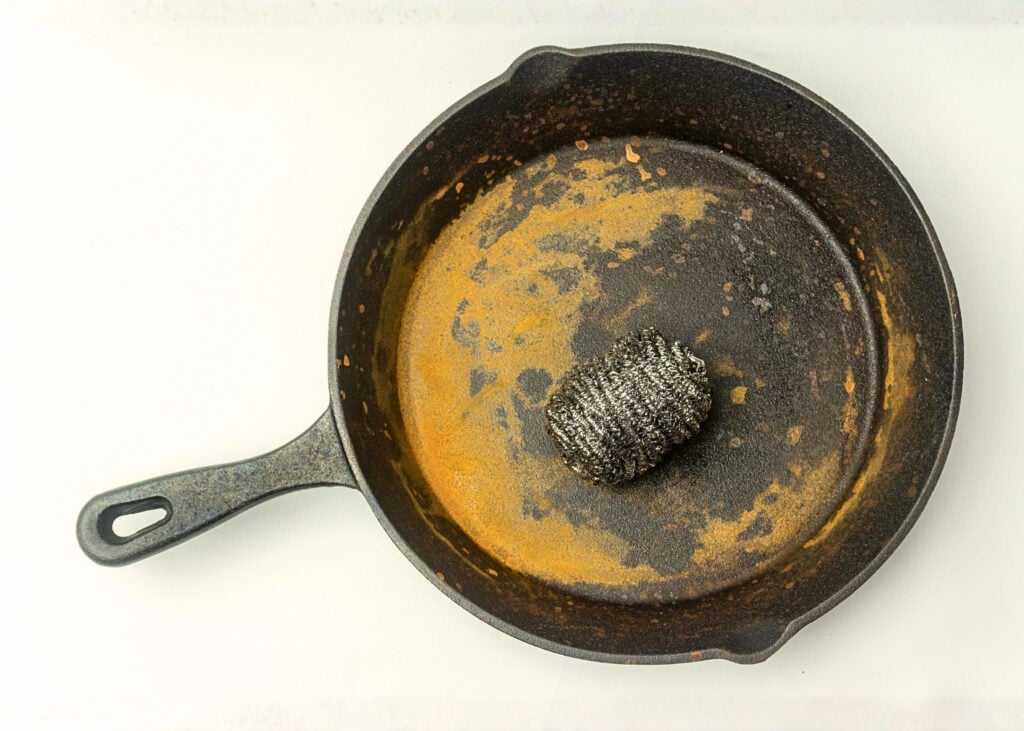
4. Vinegar Soak for Surface Rust
Mix equal parts white vinegar and warm water in a container large enough to hold the piece. Submerge it and set a timer for 30 minutes. Not longer.
Vinegar is acidic, and the ratio 50-50 is what makes it work gently with metal. Once it sits longer than 30 minutes, it ceases to eat rust and begins to eat healthy iron, leaving pitting that cannot be fixed by seasoning. So, check the piece out once every 10 or 15 minutes if it starts lifting rust.
After soaking, rinse it well with warm water, then dry it immediately over heat from the stove and oil it while it is still hot. Never leave it wet even for a few minutes.
Cleaning Tip: Never vinegar-soak your rare or valuable collectible without an appraisal beforehand. The value of your original patina outweighs that of a clean pot, and risking the possibility of pitting your Griswold or early Wagner isn’t worth it.
Common Cleaning Mistakes That Kill Value
Save this list. These are the shortcuts that turn valuable antique cast iron into scrap or near-scrap:
- Dishwasher. Detergent plus long hot water exposure strips seasoning and rusts the surface.
- Wire brushes or sandblasting. Both remove patina and leave the metal scored.
- Oven self-clean cycle. The temperatures hit 900°F or higher and burn everything off, including original seasoning.
- Long vinegar or water soaks. Anything over an hour risks pitting.
- Painting or refinishing. Once paint touches an antique piece, its collector value drops sharply.
- Skipping the dry step. Even a few minutes of standing water can start surface rust.
How to Handle Rust Without Losing the Patina?
Rust is the most prevalent problem with aged cast iron, and it depends on how far the problem has advanced as to how to proceed. The objective is to remove the rust without killing off the seasoning.
When dealing with surface rust, all you need is some coarse salt and a dash of oil. Apply it in small circles with a cloth. A chainmail scrubber works too if you use a light hand. Stop the moment you see clean metal or clean seasoning.
Moderate rust calls for a vinegar soak, which is tricky. For the best results, use a mixture of equal parts water and white vinegar. Submerge the pan in the solution and set a timer.
The rule of thumb for a 50/50 vinegar and water soak is 30 minutes per session. Check the pan every 15 minutes. Once the rust wipes off easily with a soft brush, pull it out, rinse it thoroughly, and dry it right away.
Warning: Leaving cast iron in vinegar too long causes real damage, as vinegar starts eating the iron once all the rust is gone. This causes permanent pitting. Also, never use vinegar on enameled cast iron, like a Le Creuset piece. The acid will damage the enamel coating.
Heavy rust is a bigger issue. Serious collectors use methods like electrolysis or a lye bath, but both strip patina completely. Reserve those approaches for pieces that are already too far gone to preserve.
Re-Seasoning After a Deep Clean
Any cleaning, de-rusting, or immersion in vinegar removes some seasoning. Re-seasoning replaces that protective coating on the pan for continued usage.
It is an easy process and worth doing:
- Wash the pan with a solution of warm water and dish soap, and dry it completely.
- Rub a very thin coat of high-smoke-point oil over every surface, inside and out. Flaxseed, grapeseed, or refined vegetable oil all work. Avocado oil is another solid choice.
- Wipe the pan down again until it looks like there’s no oil left. This step matters more than people think. Too much oil creates a sticky, gummy finish that never cures right.
- Bake the pan upside down at 450 to 500°F for one hour, with foil on the rack below to catch drips. Let it cool inside the oven.
Repeat the whole cycle two or three times to build a solid base layer. Regular cooking will do the rest over time.
Reminder: A re-seasoned pan is not the same as one with original patina to a serious collector. If you plan to keep the piece as an investment, get an appraisal before you re-season. If you plan to cook with it, re-season away.
Tips to Store Antique Cast Iron the Right Way
Storage is the part most people ignore, and it’s where a lot of value gets lost quietly over the years.
Keep your cast iron pieces in a dry area where there is controlled moisture content. Avoid storing it in places like basements and garages that you cannot control since moisture will build up in them. Do not seal the cast iron in plastic containers since they hold condensation.
When you stack pieces, always put paper towels or felt between them. Metal on metal scratches seasoning and causes chips. For heavier items like Dutch ovens and skillets, hanging them on a rack is better than stacking because it lets air circulate freely.
Display pieces need a small monthly ritual. Dry wiping with microfiber helps prevent grime buildup, while oiling every four to six weeks keeps your surface well-seasoned. Avoid exposing them to sunlight, as this will eventually dry out the seasoning.
Cleaning antique cast iron comes down to two ideas. Protect the patina, and prevent the rust. Use gentle methods first. Save the deep restoration for pieces that truly need it. And when a piece feels rare or valuable, get a second opinion before you touch it.
Note: This article is intended for informational, educational, and entertainment purposes only. Some images are illustrative and may not represent actual brands, products, or related entities. All trademarks, product names, brand logos, packaging, and other intellectual property referenced remain the exclusive property of their respective owners. Any brand mentions or references are provided solely for descriptive and educational context and do not imply any formal or commercial association.