Most of the old tins were never meant to survive. They held things like tobacco, biscuits, coffee, gunpowder, and spices, and after the items were used up, they were either thrown away or recycled for use around the shed.
That’s precisely why they are collectible today. Antique advertising tins fetch hundreds, even thousands, of dollars as collectors’ items, with a few among them topping every serious want list. Let’s discover which ones are worth seeking now.
What Makes Advertising Tins Different?
Standard tins were plain metal containers, either purchased empty or used in homes for storage. Advertising tins were completely different.
The manufacturer used them as branded packaging to sell their product by printing the company name, logo, and even the full illustration on the metal. The idea was to attract the attention of a customer while buying and then leave a good impression every time they would use the tin, even after the tobacco or cocoa was finished.
Antique and Vintage Advertising Tins That Are Worth Collecting
1
Mayo’s Cut Plug “Roly Poly” Tobacco Tin
Typically sells for $150 to $2,500+
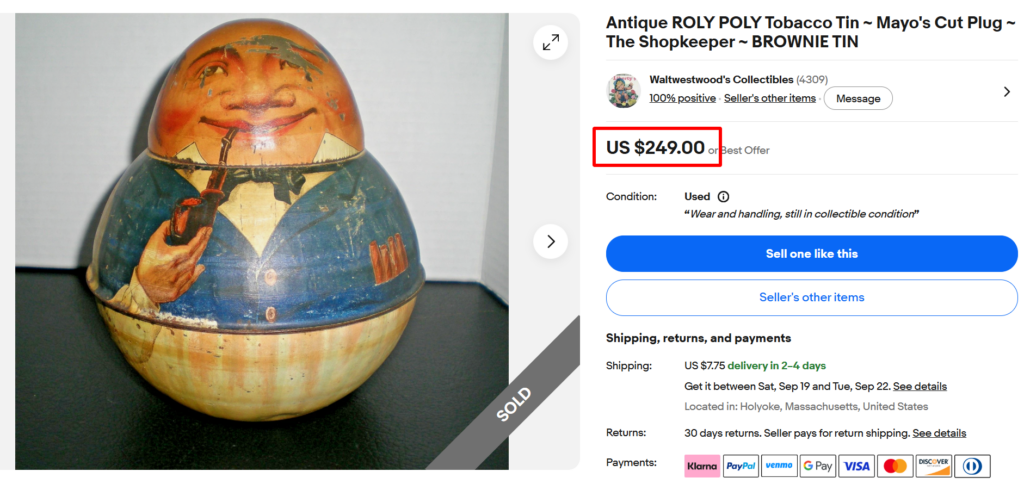
| Manufacturing Years | 1912 to 1915 |
| Key Features | Figural body, lift-off head, six characters |
| Collectors’ Notes | Watch for 1970s Cheinco repros |
These figure tobacco tins were produced in 1912 by the Tin Decorating Company in Baltimore for the American Tobacco Company. They measure about 7″ high and 6″ wide, depicting figures of a rotund man wearing a lift-off head.
Mayo’s released six different figures in the series. Mammy is the most difficult one to find in good condition, while Cheinco reproductions of the 1970s always catch out the beginners.
2
Tiger Chewing Tobacco Tin
Typically sells for $40 to $250
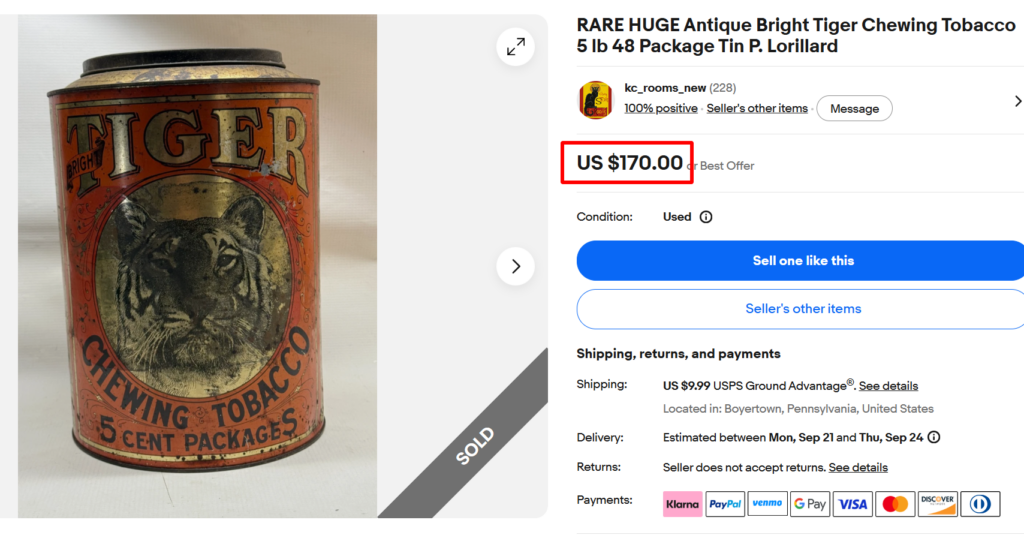
| Manufacturing Years | Early 1900s to 1920s |
| Key Features | Tiger head graphic, red and yellow palette |
| Collectors’ Notes | Intact bail handles boost value |
Tiger tin is a tobacco can with a graphic picture of a tiger head on a red-and-yellow background. The majority of existing tins were produced in the early 1900s and came as round pails and slip-lid tins.
Paper-labeled tins were produced before the lithographed ones and sell for more money if the label is still intact.
3
Huntley & Palmers Novelty Biscuit Tin
Typically sells for $75 to $1,000
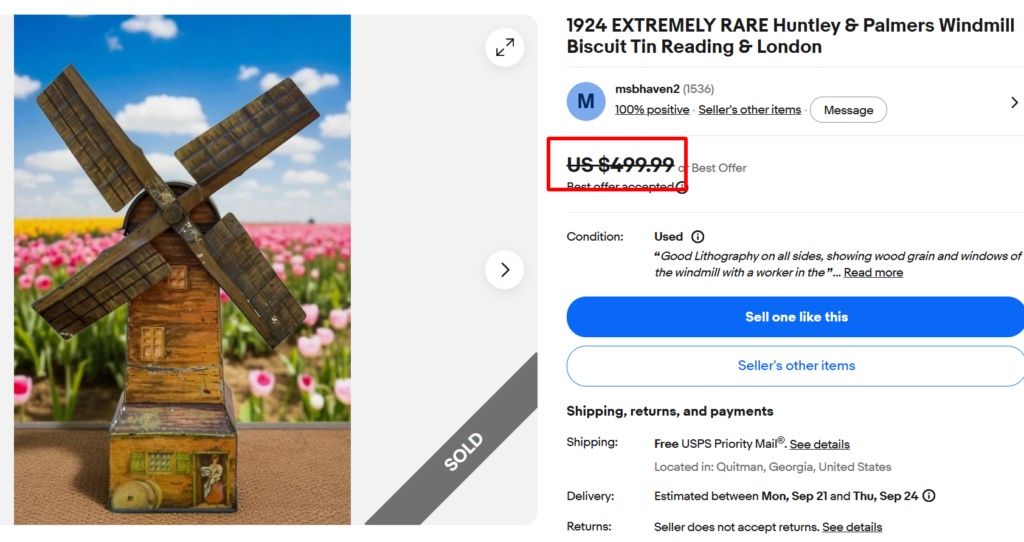
| Manufacturing Years | 1868 through 1970s |
| Key Features | Object-shaped tins, offset lithography |
| Collectors’ Notes | Kate Greenaway variant is a cult piece |
Huntley and Palmers of Reading, England, have been making decorated biscuit tins since 1868 and object-shaped tins since the 1890s. The most collectible object tins include the books, sentry box, garden roller, grandfather clock, windmill, and creel basket.
The notorious “Kate Greenaway” tin of the 1970s, which was tampered with by an irate employee adding hidden erotic scenes in the flower beds, stands alone as a contemporary collector’s item.
4
Luzianne Coffee Tin
Typically sells for $20 to $150
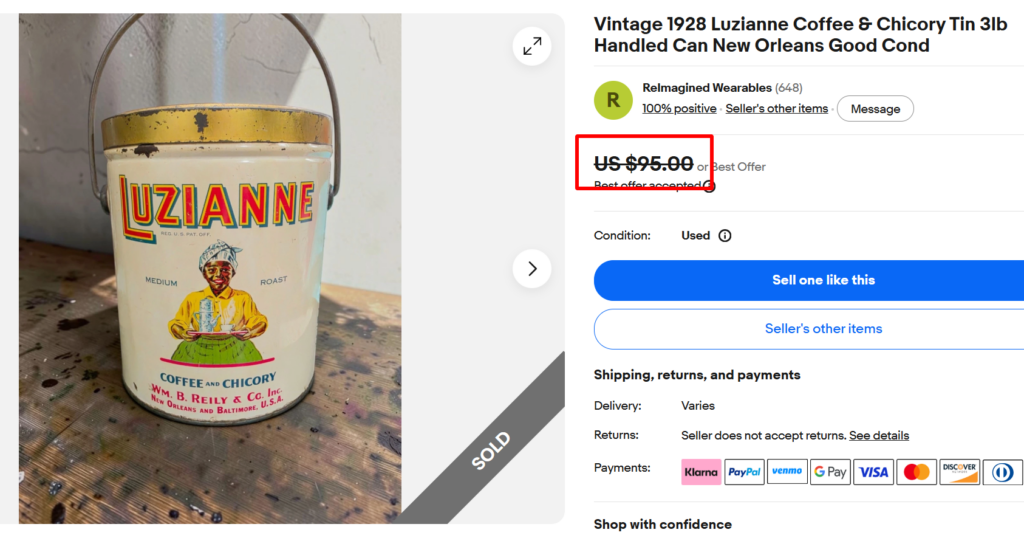
| Manufacturing Years | 1900s to 1950s |
| Key Features | White/yellow tin, serving-woman graphic |
| Collectors’ Notes | Pre-1930 key-wind tins bring more |
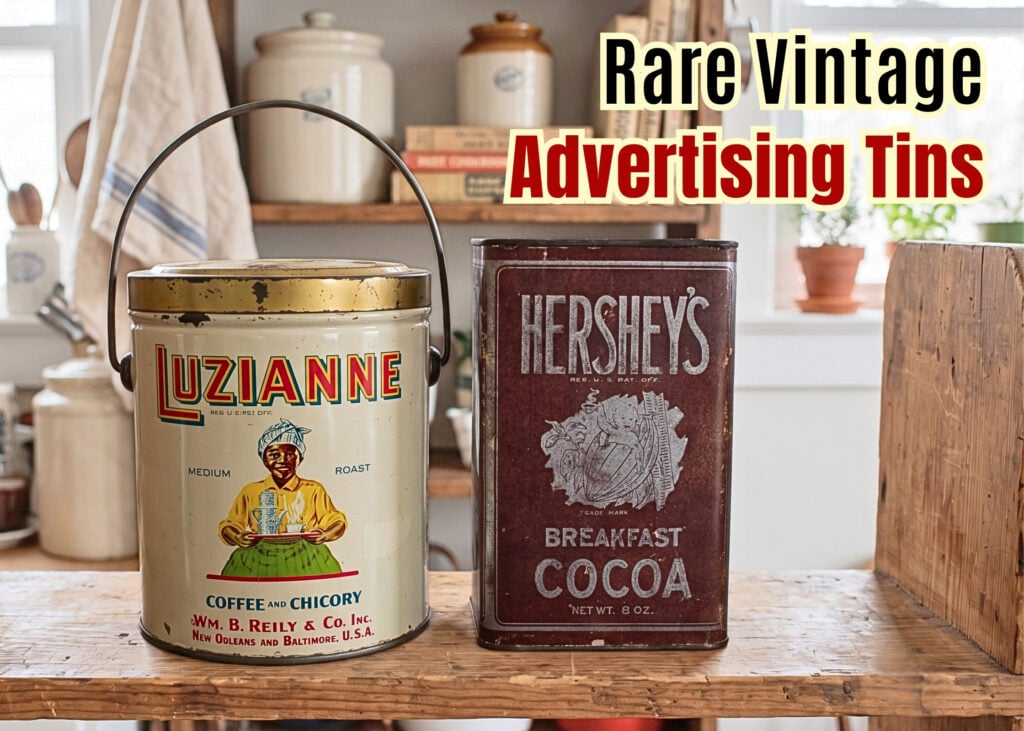
Luzianne brand was produced by Reily Foods of New Orleans and came in a red or yellow tin that shows a Black woman wearing a headscarf pouring out some coffee.
This packaging is quite controversial but is one of the reasons why these tins are considered historically valuable today. The earliest key-wind tins manufactured before 1930 are worth the most money.
5
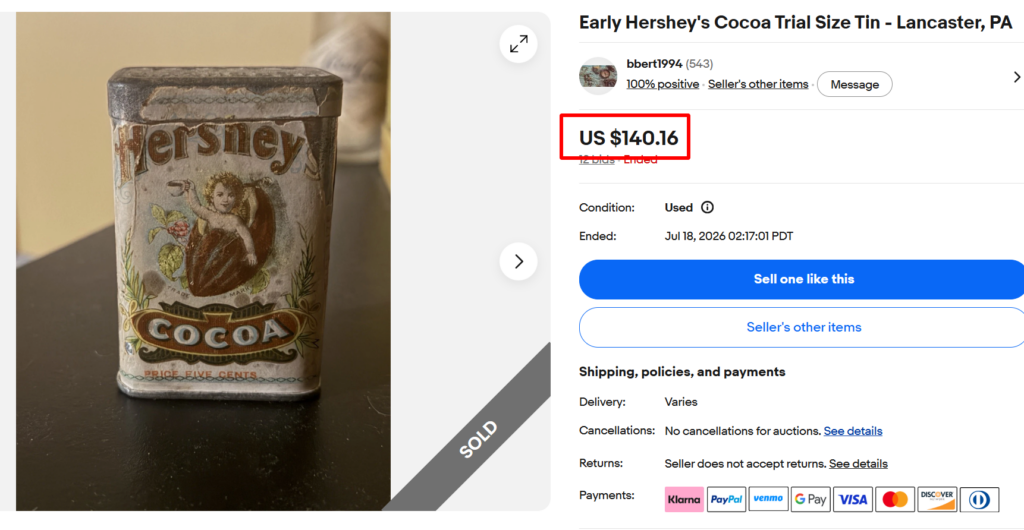
Hershey’s Cocoa Tin
Typically sells for $15 to $200
| Manufacturing Years | 1915 to 1940s |
| Key Features | Maroon and silver palette, stag logo |
| Value Drivers | Breakfast cocoa wording, trial size |
Hershey introduced its most famous cocoa around 1915 in the classic maroon and silver tin. The tin’s graphics changed subtly through the 1940s. Early examples with the “Hershey’s Breakfast Cocoa” wording and small stag logo bring the strongest bids.
Trial sizes and shapes, like this Cocoa tin, can also fetch premiums for their rarity.
6
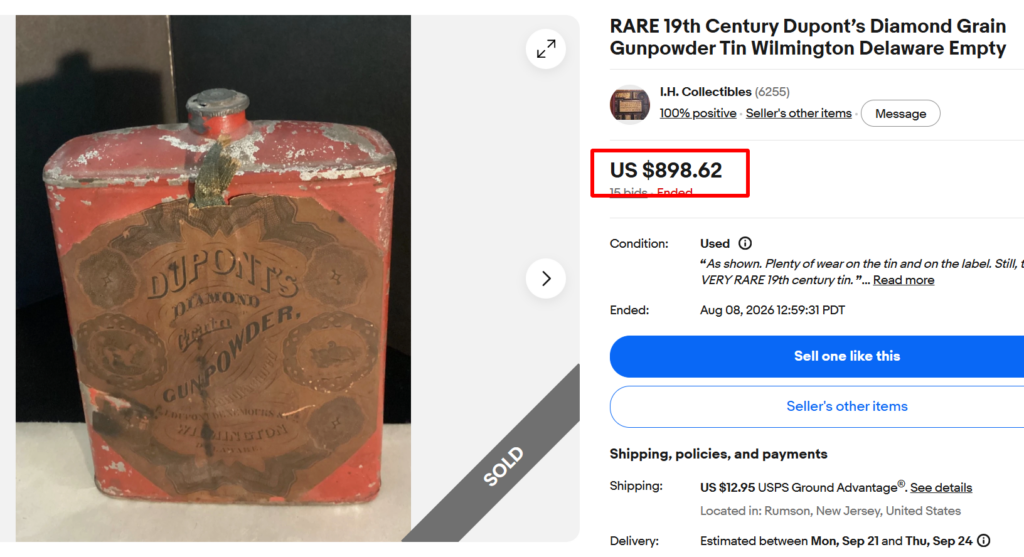
DuPont Superfine Gunpowder Tin
Typically sells for $30 to $900+
| Manufacturing Years | 1880s to 1940s |
| Key Features | Hunting scene lithography, keg or can shape |
| Collectors’ Notes | Empty tins only; never ship live powder |
DuPont made gunpowder tins in Wilmington, Delaware, for more than a hundred years. The early litho tins of the 1890s have detailed hunting scenes including dead bucks and dogs and forest backgrounds. One of the rarest tins is that of the Smokeless Rifle Powder, which dates to 1893.
The later smokeless powder tins of the 1930s are more available and much cheaper compared to the earlier ones.
7
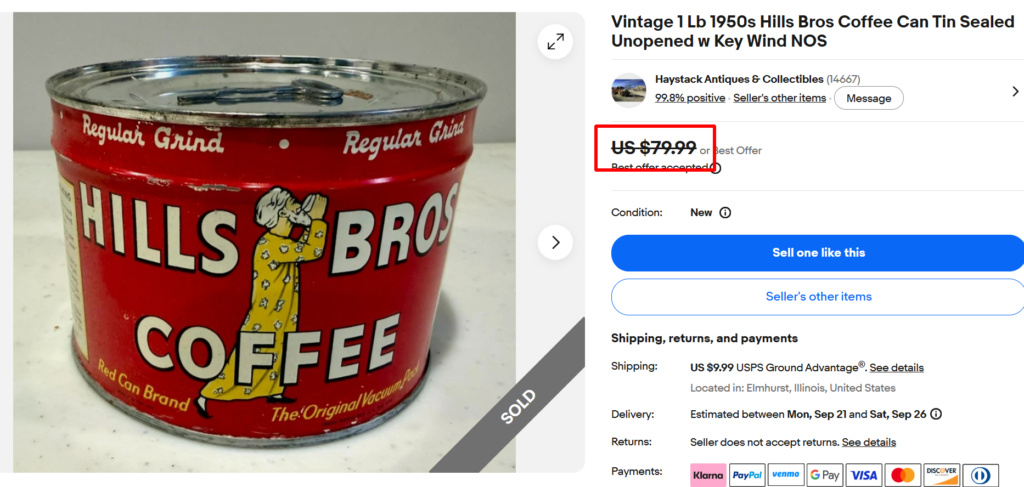
Hills Bros. Coffee Tin
Typically sells for $20 to $150
| Manufacturing Years | 1900s to 1950s |
| Key Features | Turbaned figure, red and yellow tin |
| Collectors’ Notes | Paper-label versions rarer than litho |
The 1-pound Hill Bros. can featuring the turbaned “Arab” man enjoying a cup of coffee is one of the most popular vintage coffee cans in the U.S. market.
This illustration appeared first in 1897 and stayed on the packaging for many years. However, the paper-label tins are rarer and more valuable than lithographed ones.
8
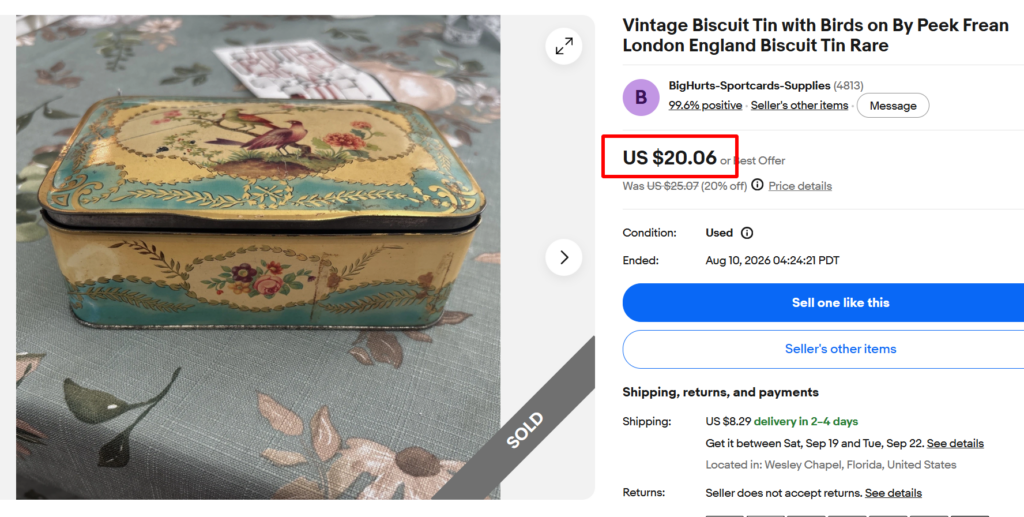
Peek Frean – Early Biscuit Tins
Typically sells for $20 to $250
| Manufacturing Years | 1860s to 1970s |
| Key Features | Lithographed lid, embossed borders |
| Collectors’ Notes | Pre-1900 tins bring the most |
Another British biscuit brand worth looking for would be Peek Frean, especially in its early decorative boxes. Eventually, this brand became linked with Huntley & Palmers and Jacobs under Associated Biscuits, and its boxes are now a significant part of the collection at Reading Museum.
Lithographed designs of the 1880s and 1890s featuring exotic birds, flowers, or fairy tales are also highly sought after by collectors.
9
Player’s Navy Cut – Tobacco Tins
Typically sells for $20 to $150
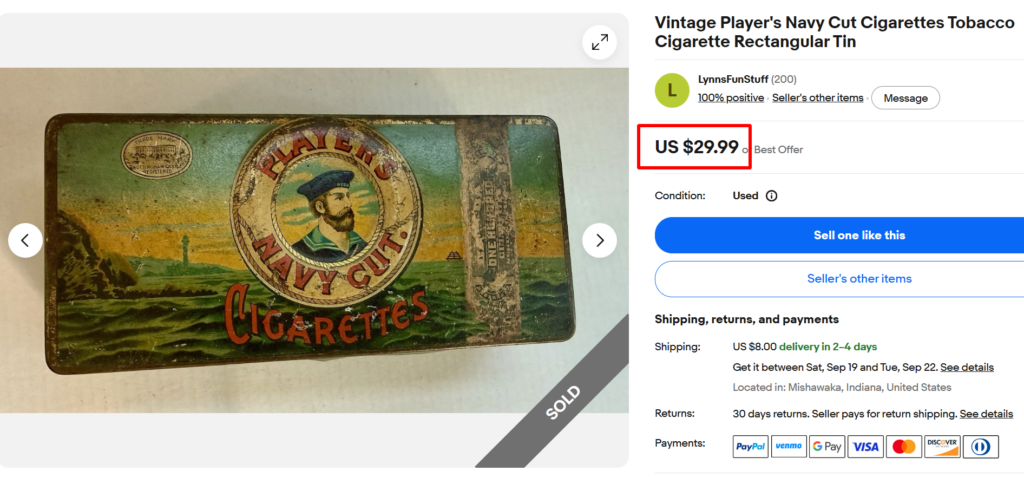
| Manufacturing Years | 1893 to 1950s |
| Key Features | Sailor Hero lifebuoy, flat rectangular |
| Collectors’ Notes | Sealed tins bring a premium |
The Player’s Navy Cut cigarettes were made by John Player & Sons Ltd. in Nottingham, England, between 1883 and 2016. The flat, rectangle-shaped tin with the “Hero” logo, a bearded sailor in the shape of a life buoy, first appeared in 1893.
Another interesting detail is that pre-1927 tins show variations in the sailor’s beard and cap.
10
Coca-Cola Advertising Tins
Typically sells for $20 to $80
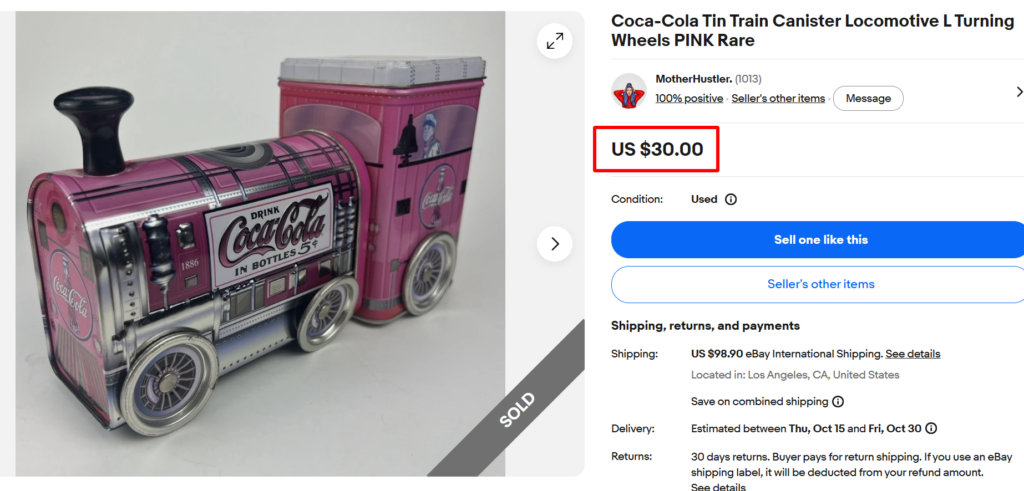
| Manufacturing Years | 1990s to 2000s |
| Key Features | Locomotive shape, turning wheels |
| Collectors’ Notes | Modern novelty, not vintage |
This is a pink Coke locomotive canister toy with wheels; it is a modern collectible gift tin. This item is not a vintage Coke advertising tin, as Coke licensed shaped candy and cookie tins until the 1990s and early 2000s. Pre-1960 Coca-Cola tins are a much more valuable category.
11
Droste – Dutch Cocoa Tins
Typically sells for $40 to $200
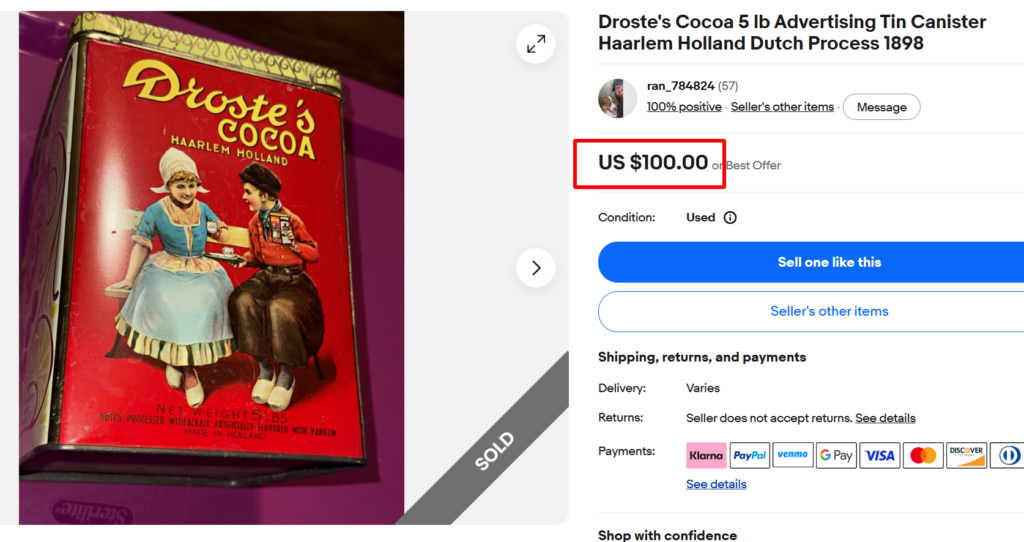
| Manufacturing Years | 1890s to 1970s |
| Key Features | Red tin, Dutch children graphic |
| Collectors’ Notes | Large 5-lb size scarcest |
Droste Cocoa was manufactured in Haarlem, Holland. It has a red tin featuring two little Dutch children sitting on a bench. The Droste nurse, dating back to 1904, is another collectible tin design. Large 5-pound tins are far rarer than smaller export sizes.
Identification of Antique Advertising Tins
The first thing to identify is the type of design print. Lithographing on tin replaced paper labeling in the 1880s and 1890s; therefore, paper-labeled cans must be from before 1900.
Next, inspect the seams. If the seams are soldered, then the tin must have been made earlier than those with crimped seams, which came into use after the 1920s.
Finally, the bottom of a tin can may reveal the maker’s identity through its stamp mark. Manufacturers who used this method were Somers Bros., American Can Co., Ginna and Co., and Tindeco. The country-of-origin mark became compulsory in the United States after 1891.
British-made cans of Huntley, Boorne and Stevens and Barringer, Wallis and Manners could also have stamps on their bottoms.
Note: This article is intended for informational, educational, and entertainment purposes only. Some images are illustrative and may not represent actual brands, products, or related entities. All trademarks, product names, brand logos, packaging, and other intellectual property referenced remain the exclusive property of their respective owners. Any brand mentions or references are provided solely for descriptive and educational context and do not imply any formal or commercial association.