Almost every family that trimmed and decorated their own Christmas tree in the 1950s also had a box of Shiny Brite ornaments. You’ll remember these by their bulbous bodies and silvered surfaces in bold colors.
Many of those boxes appear at estate and garage sales even today, often with a dime store price sticker on the lid. Some are worth a lot more than people think.
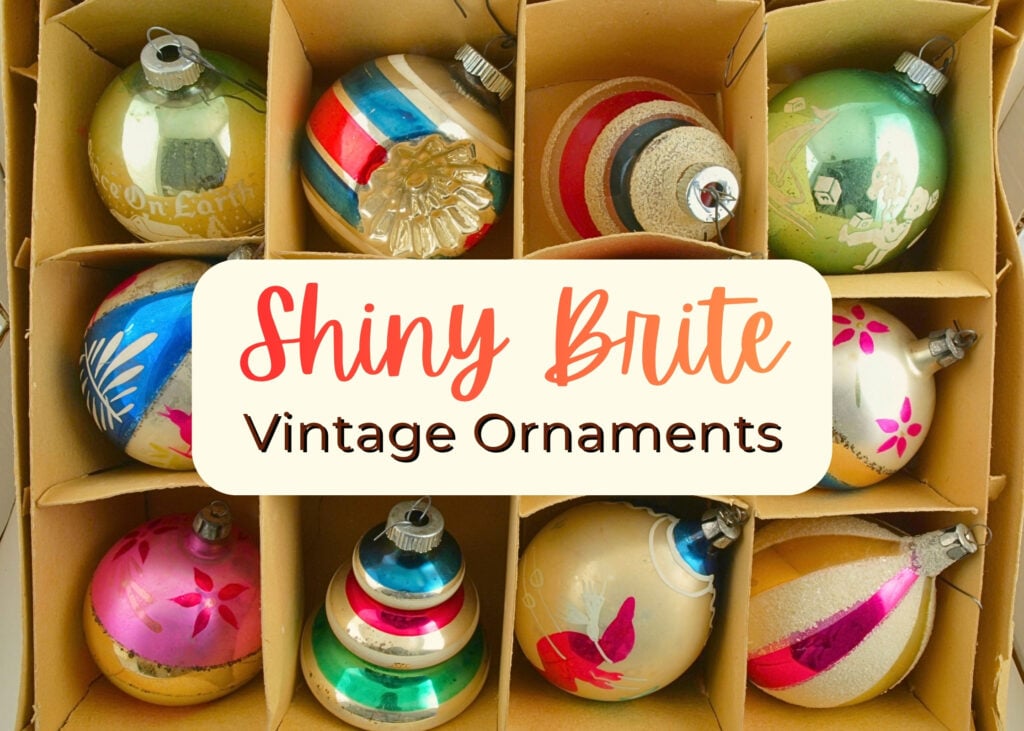
Here are the most collectible vintage Shiny Brite ornaments, a quick idea of what drives their value, and how to spot originals.
What Are Shiny Brite Ornaments Worth Today?
Most single Shiny Brite balls sell for $3 to $15. A box of a dozen common rounds in good shape can reach $25 to $60, while wartime unsilvered sets, figurals like lanterns and saucers, and full boxes in clean condition regularly sell for $75 to $300.
What Adds Value:
- Original box with intact cellophane and graphics
- Wartime production (unsilvered glass, cardboard caps)
- Uncommon shapes, sizes, and colors
- Crisp stenciling and mica with little paint loss
What Reduces Value:
- Faded paint or flaking silvering
- Replaced or missing caps
- Crushed or water-stained boxes
Most Sought-After Shiny Brite Ornaments Worth Knowing
1
Sugared Mica Flying Saucer “UFO” Ornaments
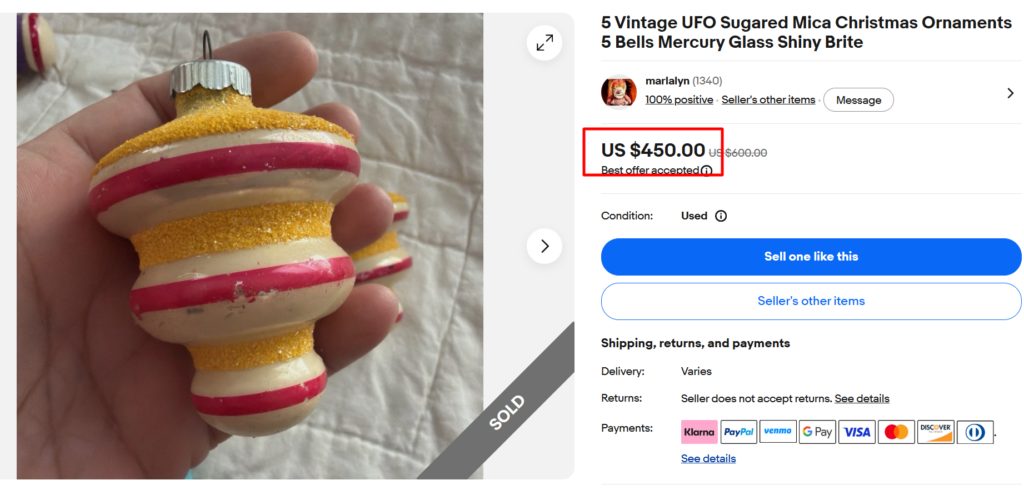
Typically sells for $15 to $45 each (rare sugared ones worth more)
| Use | Hanging tree ornament |
| Key Features | Flattened disc, pointed ends, mica center band |
| Collectors’ Notes | Late 1950s space age design |
The flying saucer or UFO ornaments were inspired by the space race trend of the late 1950s. Each piece is a flattened glass disc with a pointed top and bottom. Many have a center band of mica or a contrasting color.
Collectors tend to pay more for matched pairs or inside mixed figural boxes.
2
Hand-Stenciled Ornament
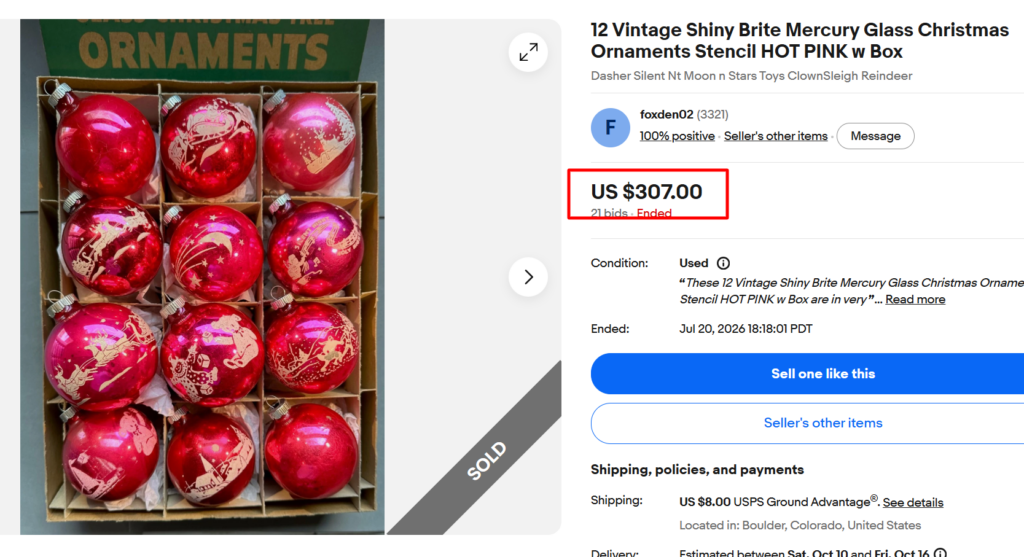
Typically sells for $5 to $25 each ($40 to $350+ for boxed sets)
| Use | Christmas tree ornament |
| Key Features | Snowflakes, stars, holly, “Noel” lettering |
| Collectors’ Notes | Figural and lettered stencils are scarcer |
Just like the name suggests, stenciled Shiny Brites have painted designs like snowflakes, stars, teddies, Santas, bells, holly, and “Noel” lettering. The designs are made by manually spraying paint through stencils, so imperfections are normal on originals.
Patterns with lettering or figures, such as Santa or candles, are rarer and more collectible; they turn up less often than plain stars.
3
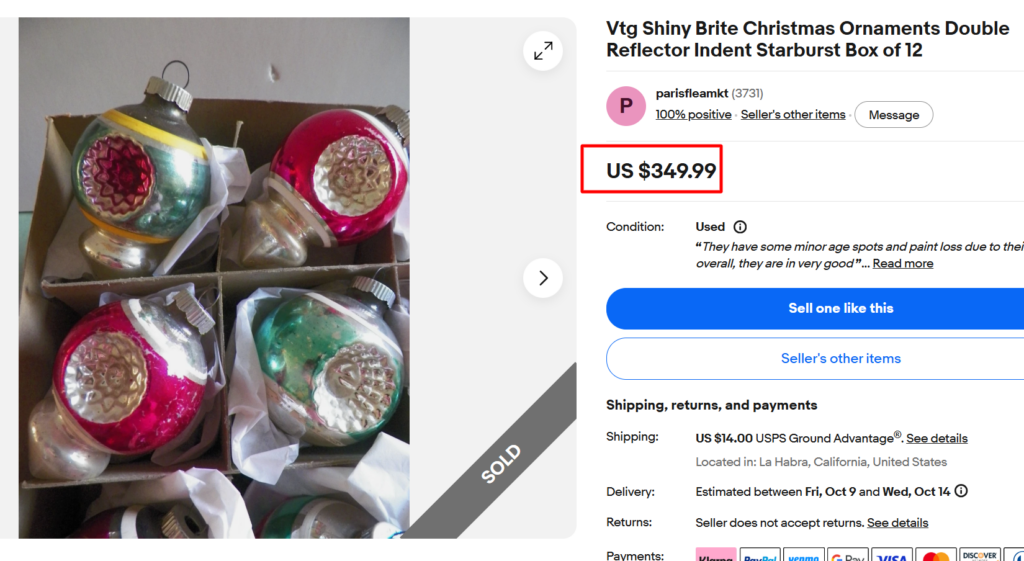
Indent (Reflector) Ornaments
Typically sells for $8 to $30 each ($100 to $400 for boxed sets)
| Use | Hanging tree ornament |
| Key Features | Pressed-in hollows in contrasting colors |
| Collectors’ Notes | Mica or floral stenciling adds value |
The indents have a pressed-in hollow shape on one or more sides, usually in a contrasting color. Some have a single deep reflector, while others carry four or more small dimples. Indents decorated with mica or stenciled flowers are the most wanted.
4
Jumbo Ornaments
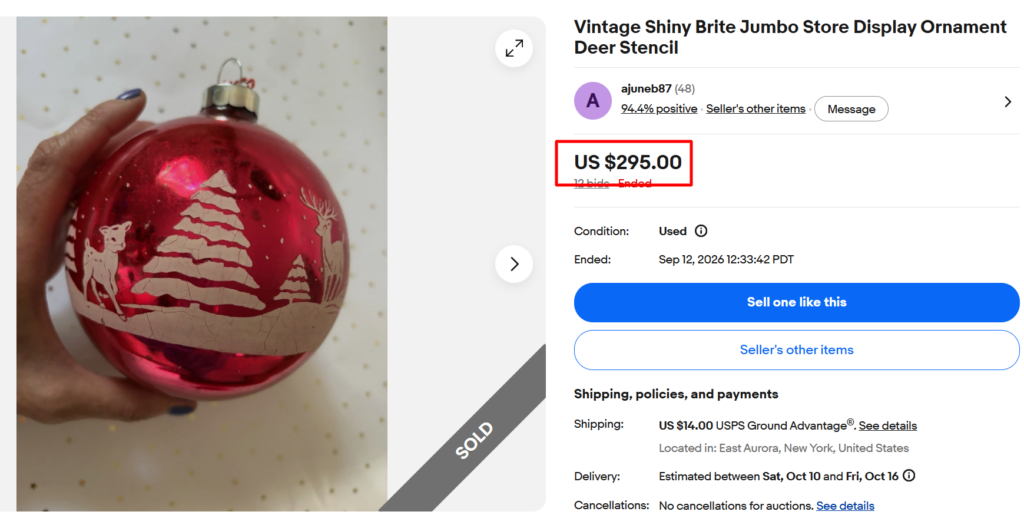
Typically sells for $20 to $60 each ($80 to $300 each for mica & stencil)
| Use | Tree centerpiece, window/bowl display |
| Key Features | 3 inches or larger, thin silvered glass |
| Collectors’ Notes | Mica bands or stenciling add value |
Jumbo Shiny Brites are large pieces, measuring 3 inches or more across. Stores often hung them in windows or used them as the centerpiece of a tree.
Mica bands or stenciling push their value higher. Single, red hand-stenciled jumbos in clean condition can fetch around $200 today.
5
WWII Unsilvered Striped Ornaments
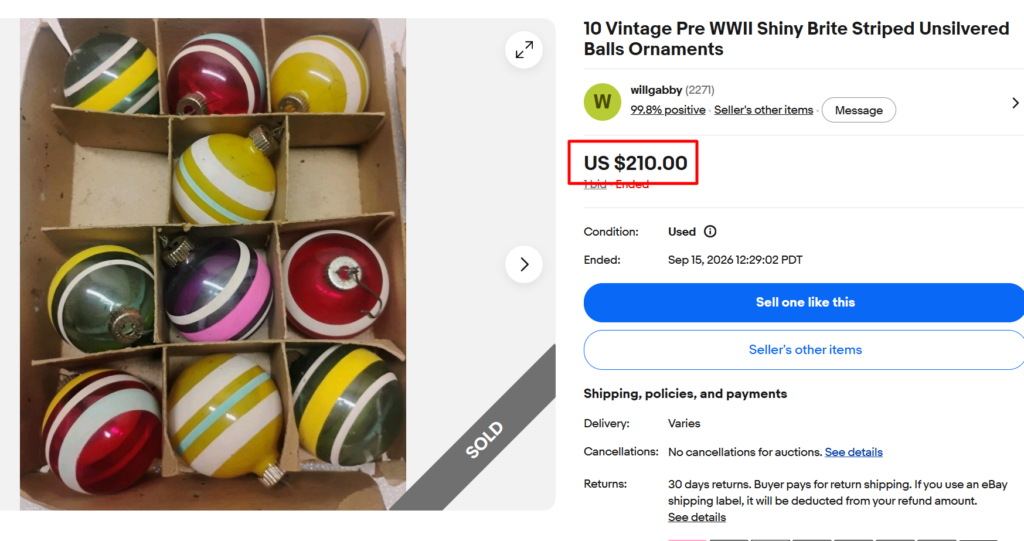
Typically sells for $15 to $40 each; $100 to $250 per boxed dozen
| Use | Christmas tree ornament |
| Key Features | Clear glass, painted stripes, cardboard or paper cap |
| Collectors’ Notes | Original paper caps add value |
Shiny Brite ran out of silver nitrate because of rationing in 1942. So, the factories made clear glass ornaments decorated with thin painted stripes in pink, green, and blue. Some sets were given a dusting of mica.
Production lasted only a few years, and the thin paint rubbed off easily, which makes bright, unworn pieces rare and collectible.
6
Shiny Brite Tree Toppers
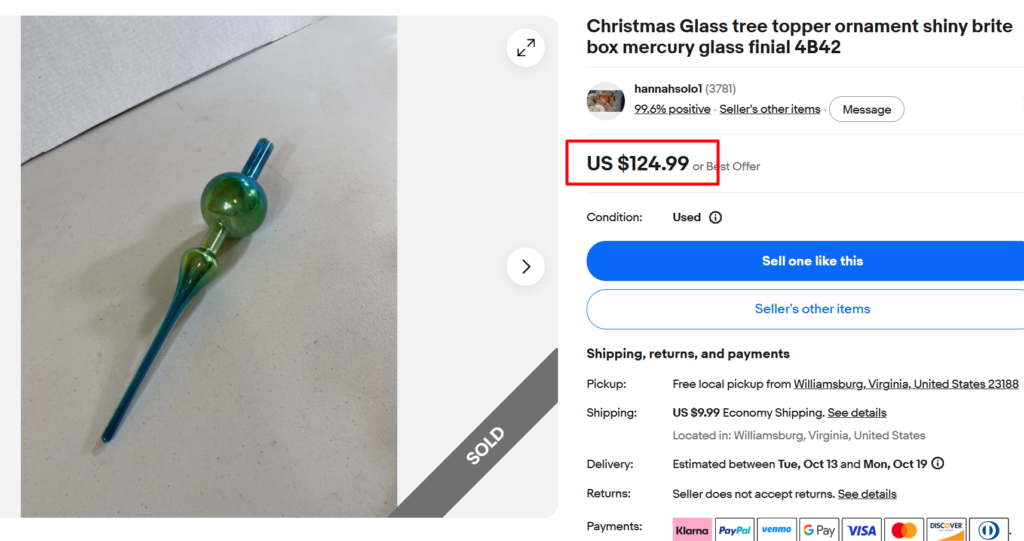
Typically sells for $20 to $140 (singles)
| Use | Christmas tree topper |
| Key Features | Multi-tier spire, indents, glitter, long hollow neck |
| Collectors’ Notes | Boxed toppers sell at the top of the range |
These are tall, pointed spires with one or more round tiers, often trimmed with indents, stenciled stars, or glitter. The glass is very thin, which is why the survival rate is the biggest value factor. Chips and cracks on the tip sharply reduce the value.
7
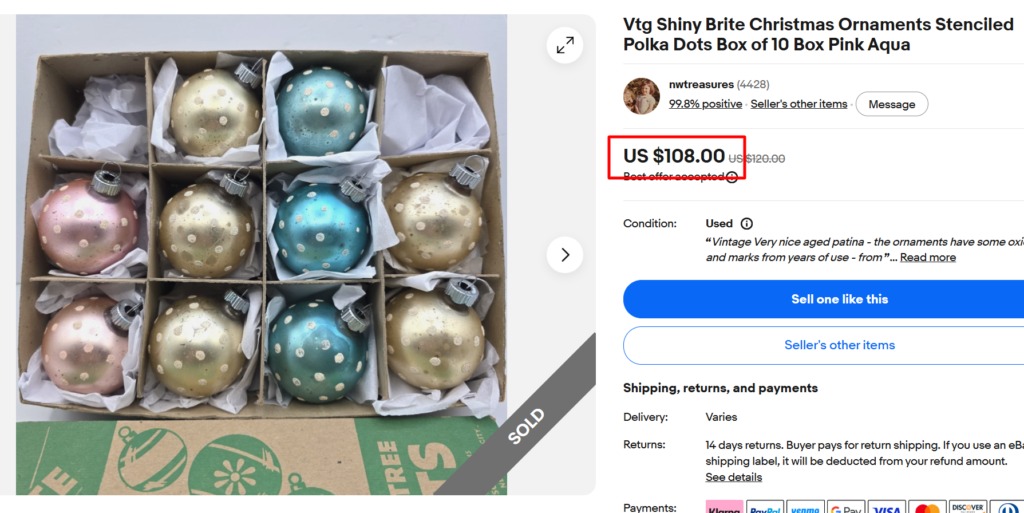
Pastel Ornaments (Pink, Aqua, and Lilac)
Typically sells for $8 to $25 each; ($50 to $150 boxed)
| Use | Hanging tree ornament (tinsel tree) |
| Key Features | Pastel silvered glass, mica bands |
| Collectors’ Notes | Pink is the most wanted color |
The most popular Christmas ornament colors were red, green, gold, and silver. That’s why the rarer pink, aqua, and lilac Shiny Brites stand out. These pieces took off in the late 1950s, the same time aluminum tinsel trees became a trend.
Boxed sets in one or two shades sell far better than mixed singles.
8
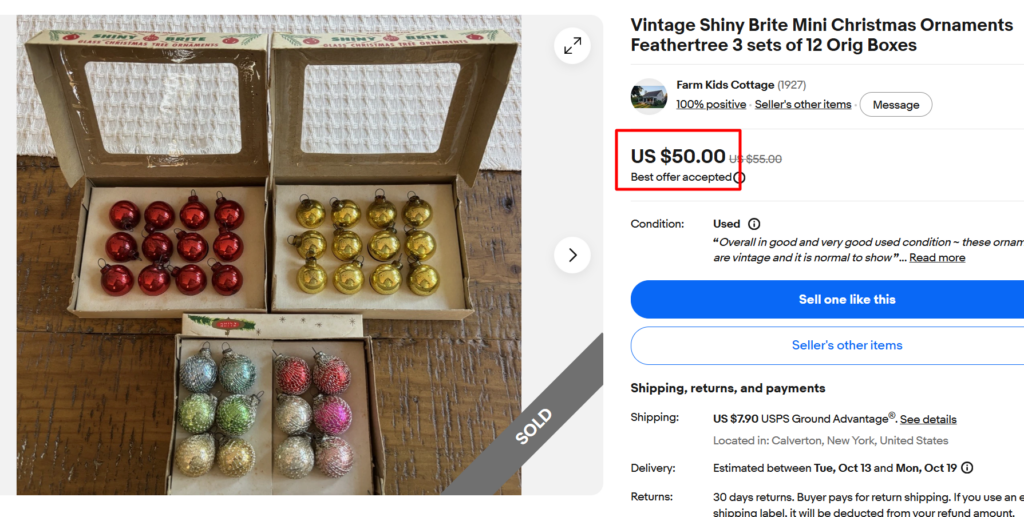
Mini Shiny Brite Sets
Typically sells for $20 to $50 per boxed set
| Use | Tabletop tree, wreath |
| Key Features | About 1 inch across |
| Collectors’ Notes | Only sell best for complete boxes |
Contrasting Jumbo ornaments, mini Shiny Brites are about an inch across. These usually came packed in boxes of a dozen or more, and were used on tabletop trees, in wreaths, and in feather trees. Completeness drives their value.
9
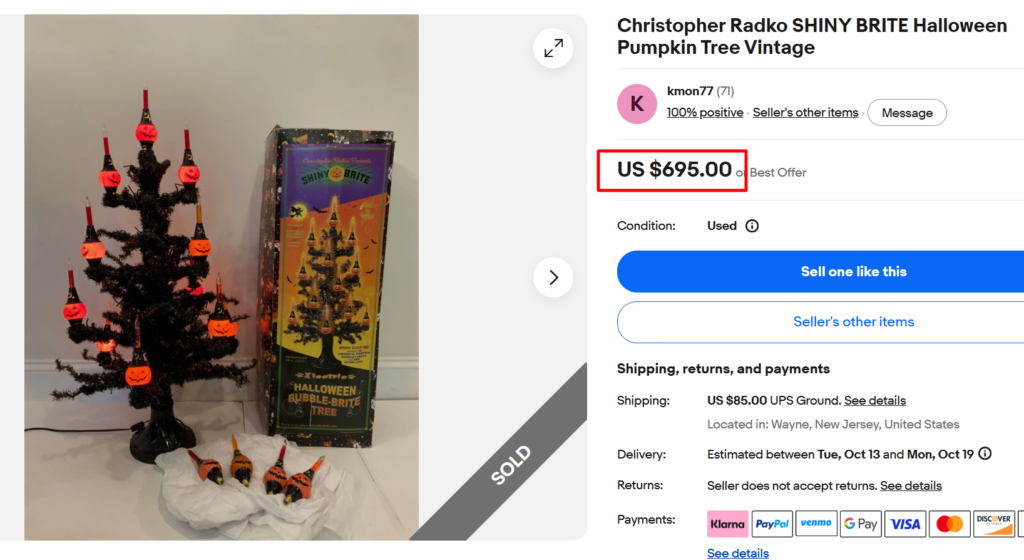
Christopher Radko Shiny Brite Halloween Pumpkin Tree
Typically sells for $300 to $700
| Use | Halloween tabletop tree, display |
| Key Features | Black brush tree, jack-o’-lantern bubble lights |
| Collector’s Notes | Working bulbs and box add value. |
Christopher Radko released this Halloween Bubble-Brite Tree as part of the Shiny Brite revival line. It’s a black brush tree with orange jack-o’-lantern bulbs on the branch tips.
This is a modern piece, not a 1950s original. But collectors pay well for a complete set with the box, working bulbs, and spare lights.
How to Spot Original Vintage Shiny Brite Ornaments?
- Check the Cap: Any post-WWII ornament has a fluted metal cap stamp-marked “SHINY BRITE, MADE IN U.S.A.” On the other hand, ornaments stamped “West Germany” are the later imports.
- Spot Wartime Features: Silver nitrate and metal were rare from 1942 to 1945. So, ornaments from this time have clear glass bodies with tinted or painted banding and cardboard caps and a string or paper hook.
- Read the Box: Wartime boxes often show patriotic art (Uncle Sam with Santa). Postwar boxes usually feature cellophane windows and bold red-green prints.
- Spot Reproductions: Radko started a Shiny Brite revival line in 2001. These will have thick, even paint, bright modern caps, and boxes with barcodes and copyright dates.
If you own an old, dusty box of Shiny Brite ornaments, you now know what to check and whether to keep them, discard them, or put them up for sale at a garage sale.
Note: This article is intended for informational, educational, and entertainment purposes only. Some images are illustrative and may not represent actual brands, products, or related entities. All trademarks, product names, brand logos, packaging, and other intellectual property referenced remain the exclusive property of their respective owners. Any brand mentions or references are provided solely for descriptive and educational context and do not imply any formal or commercial association.