Most Christmas table decor ends up in the donation box come springtime. But some antique and vintage Christmas centerpieces, like a rare cranberry epergne or a 1960s ceramic tree centerpiece, can adorn your table during holidays and maintain their value for many years to come.
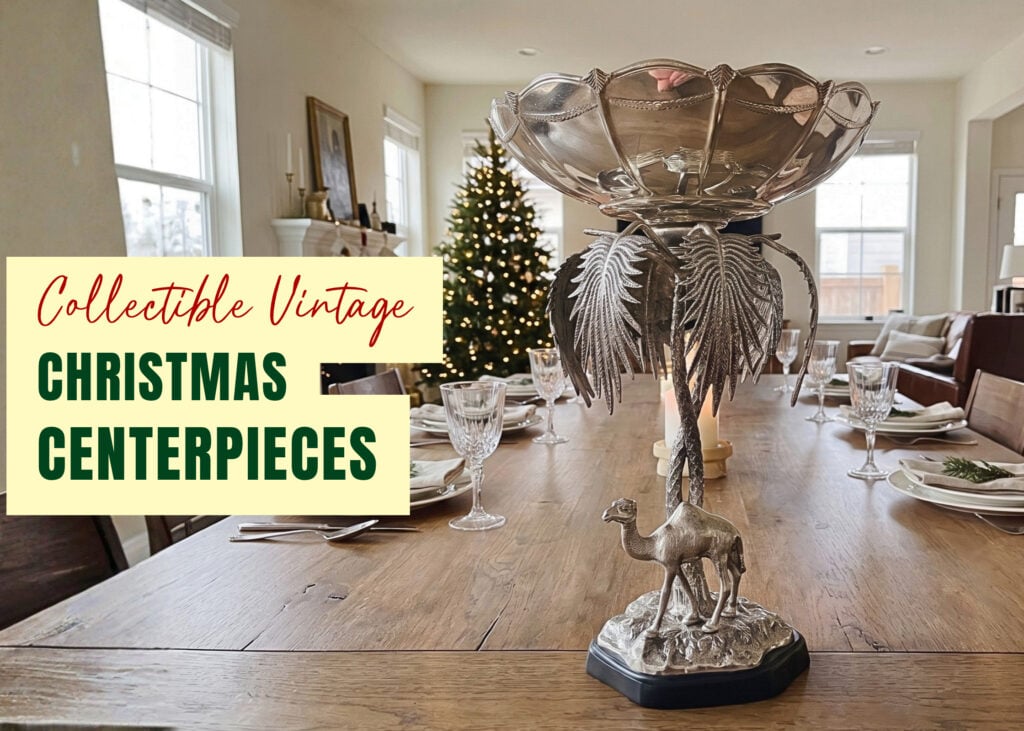
Here are 10 pieces collectors still look out for at estate sales and thrift stores.
Antique & Vintage Christmas Table Centerpieces to Find Now
1
Vintage Ceramic Christmas Tree
Typically sells for $75 to $400
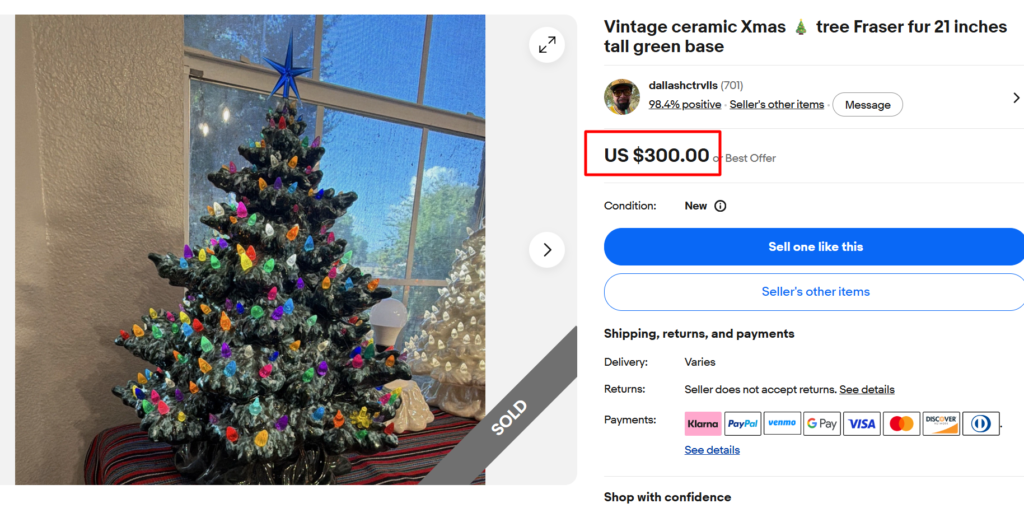
| Manufacturing Years | 1960s to 1980s |
| Shapes | Tabletop trees, 7 to 24 inches |
| Key Features | Green or white glaze, plastic light pegs, snow-tipped branches |
| Collectors’ Notes | Large trees with every original peg sell best |
Ceramic trees are one of the hobbies from the 1960s and 1970s. These were molded from forms in community ceramic classes. The best-known design comes from Atlantic Mold (the “1958” date on the bottom is a copyright date, not an age).
Look for the maker’s signature and date underneath the base. Lightweight pegs and a working musical base are a plus.
2
Vintage Putz Houses (with Bottle Brush Trees)
Typically sells for $10 to $60 each
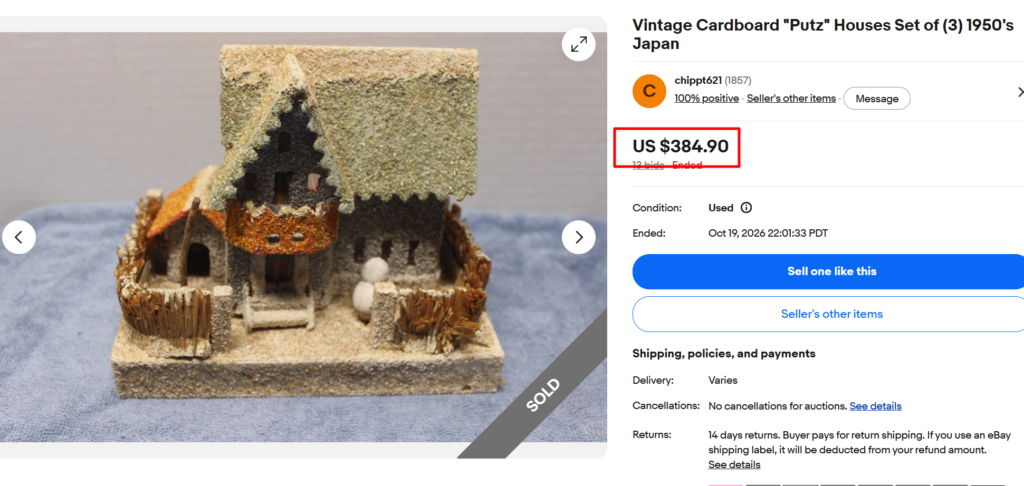
| Manufacturing Years | Early 1900s to early 1970s |
| Shapes | Cottages, churches, village sets |
| Key Features | Light hole in back, “Japan” mark |
| Collectors’ Notes | “Occupied Japan” marks date a house to 1947 to 1952 |
Putz villages were popular as Christmas tree and mantel decor long before ceramic villages arrived. The name comes from the German putzen, meaning to decorate, but Japan made most of the cardboard houses.
Older houses have mica glitter, coconut-fiber roofs, and red cellophane windows. Add a few flocked bottle brush trees, and the scene looks complete.
3
Antique German Feather Tree
Typically sells for $150 to $1,200
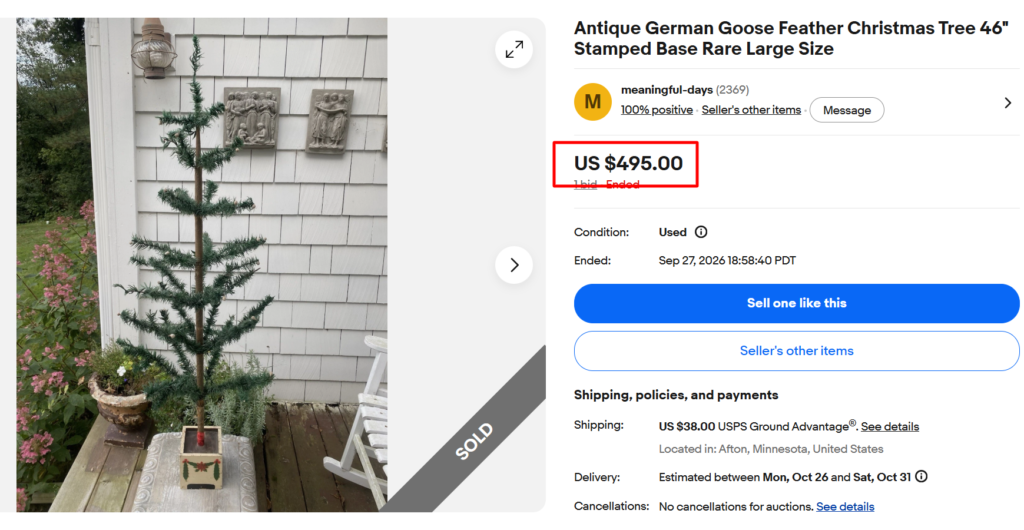
| Manufacturing Years | 1880s to 1930s |
| Shapes | Tabletop trees, 1 to 3 feet; store models |
| Key Features | Green-dyed goose feathers, wire branches, berry tips |
| Collectors’ Notes | Feather loss, replaced bases drop value |
German makers started making feather trees in the 1880s, concerned about forests cut for Christmas. Workers split dyed goose feathers, wired them onto branches, and wrapped those around a wooden dowel. The branches are spaced out to save candles from burning the branch.
Red berry tips and an original base add to their value.
4
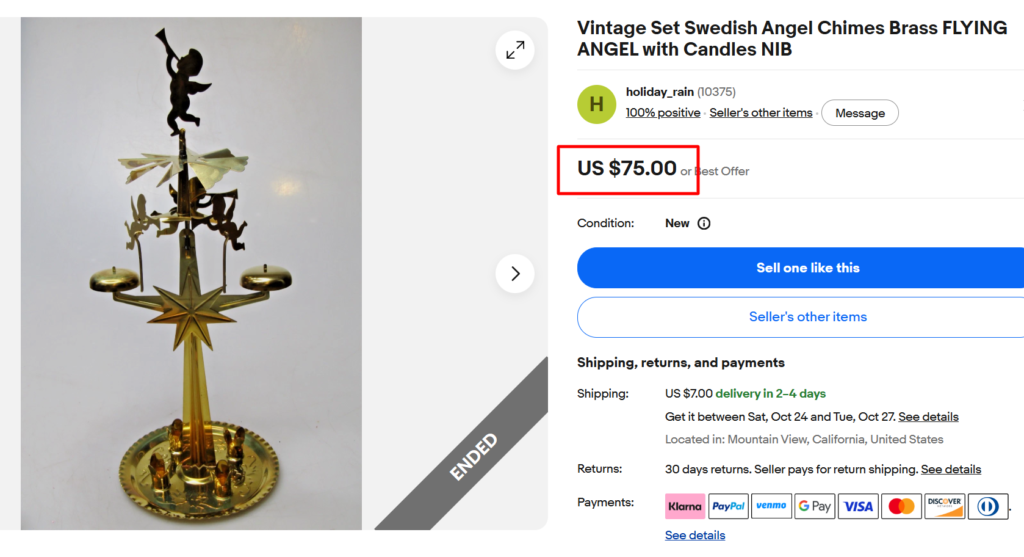
Swedish Angel Chimes
Typically sells for $20 to $130 (high for a boxed set)
| Manufacturing Years | Post-WWII to 2013 in Scandinavia |
| Shapes | Three- and four-angel carousels |
| Key Features | Brass parts, candle-powered fan, bells, strikers |
| Collectors’ Notes | Complete boxed sets fetch the highest. |
This was an ahead-of-time chime. The base holds four small candles that spin a fan on top, which turns a ring of brass angels. Small strikers hit the bells as each angel passes.
Germany patented the design in 1905, but the brass version gained fame in Sweden after WWII. Boxed versions marked “Made in Sweden” are worth more than later Asian copies.
5
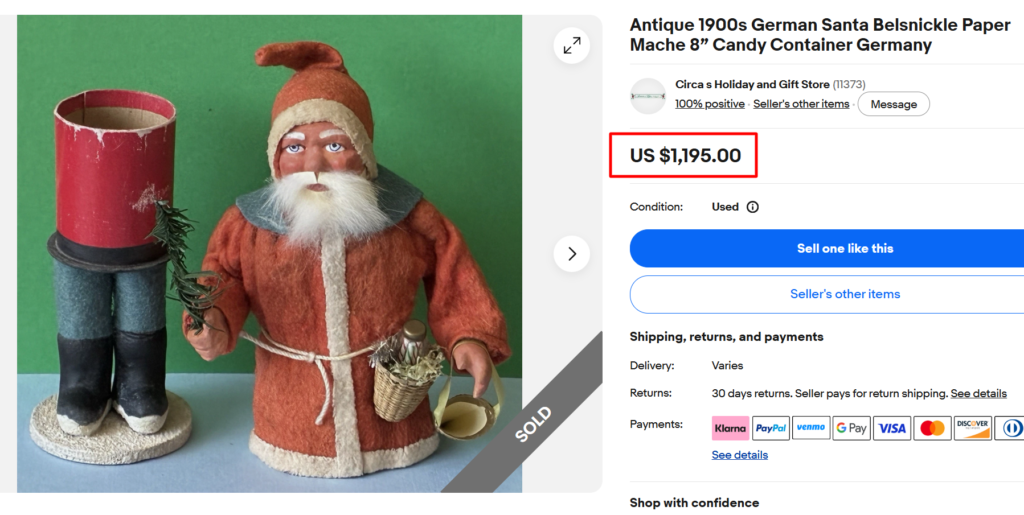
German Belsnickel Candy Containers
Typically sells for $300 to $3,000+
| Manufacturing Years | 1870s to 1914 |
| Shapes | Standing figures, candy containers |
| Key Features | Mica-dusted robe, feather tree sprig, fur or mohair beard |
| Collectors’ Notes | Glass-icicle beards are rare |
Belsnickles are the fur-coated gift bearers of German mythology. Most figures from the 1870s to World War I are used as candy dispensers; you can lift off the top. Red-robe versions are most common, while pastels are more sought after, and purple is the rarest robe color.
6
Victorian Cranberry Glass Epergne
Typically sells for $200 to $1,500+
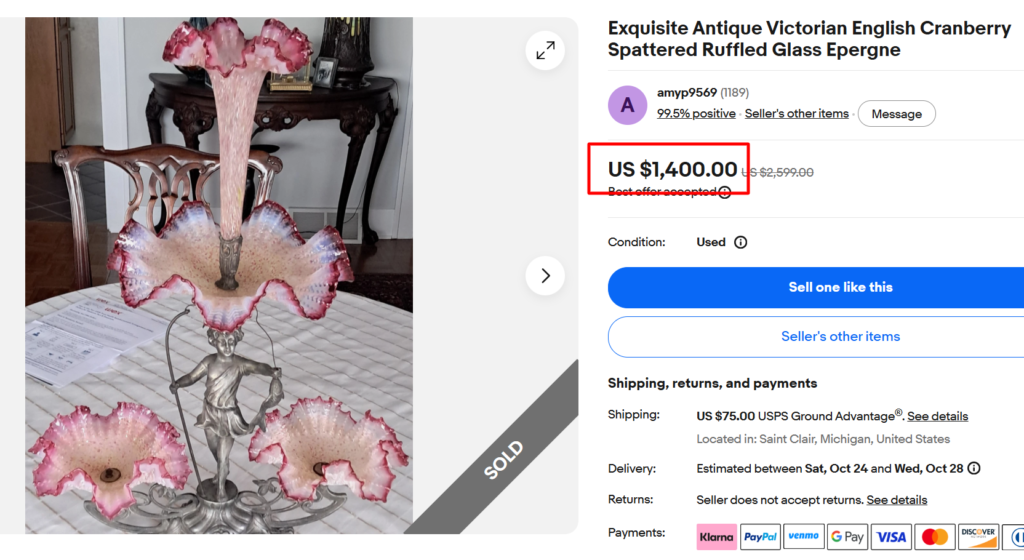
Epergnes have one large trumpet surrounded by smaller trumpets or baskets. Victorian craftsmen would add gold to the molten glass to create cranberry glass and then shape the edges by hand.
There are usually three to five trumpets in an epergne that sits on a glass, brass, or silver plate base. All trumpets intact is a great value addition.
| Manufacturing Years | c. 1870s to 1910 |
| Shapes | 3- to 5-trumpet epergnes/baskets |
| Key Features | Crimped rims, clear applied glass trim, pontil marks |
7
Figural Silver Tree-and-Animal Centerpiece
Typically sells for $800 to $5,000 (plate); sterling sells far higher
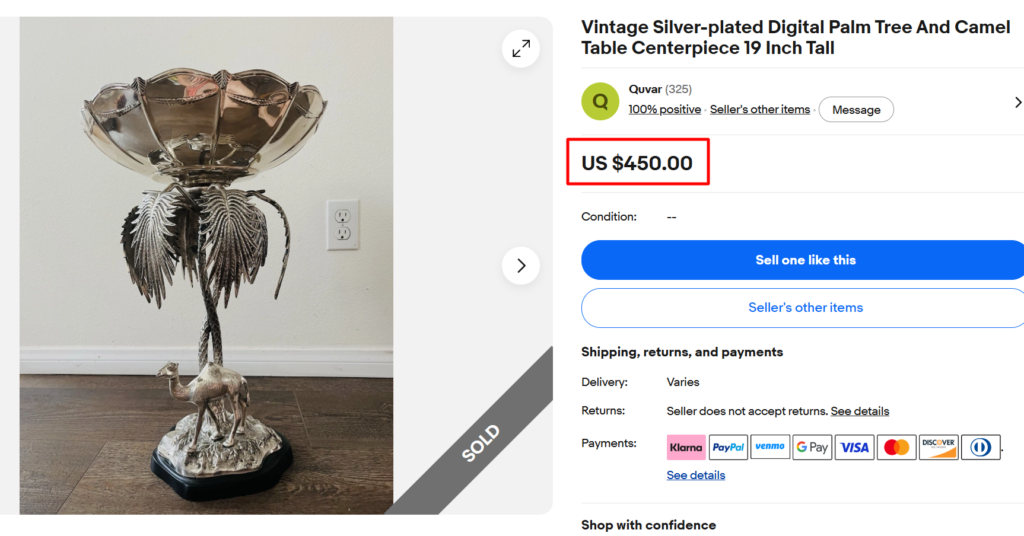
Victorian silversmiths were fond of realistic designs on the dining table. Elkington & Co. produced palm tree centerpieces that had camels or giraffes resting on the trunk of the palm tree while holding glass bowls in its branches.
Most pieces you’ll find at sales today are electroplated; hallmarked sterling silver and silver gilt (silver coated with gold) examples are rarer and way more valuable.
| Manufacturing Years | c. 1850s to 1900 |
| Shapes | Palm-tree epergnes, figural stands with bowls |
| Key Features | Camels, deer or giraffes at the base; cut glass bowls |
| Collectors’ Notes | Missing bowls and replating lower value |
8
Antique Silver Candelabra Centerpiece
Typically sells for $250 to $3,000
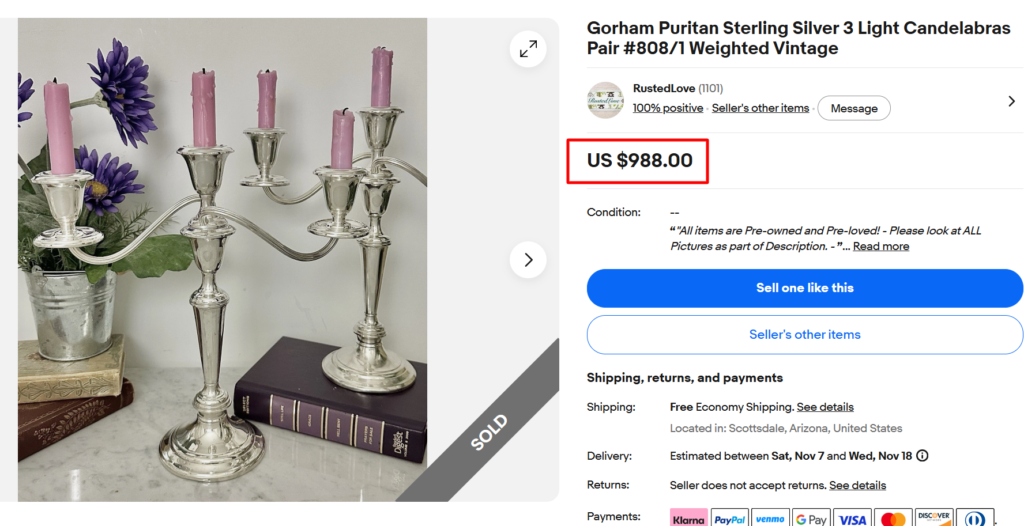
A three- or five-light candelabrum will add height to a long table without blocking anyone’s view. But before buying, check what metal it is.
Sterling silver has hallmarks such as the British Lion Passant or, for American pieces, Sterling. Old Sheffield Plate, dating from around 1742 to 1850, is silver-plated copper and has only maker’s punches.
| Manufacturing Years | 1740s to early 1900s |
| Shapes | Two-, three-, and five-light candelabra |
| Key Features | Weighted bases, hallmarks or maker’s punches |
| Collectors’ Notes | Matched pairs bring more. |
9
American Brilliant Cut Crystal Pedestal Bowl
Typically sells for $150 to $1,200
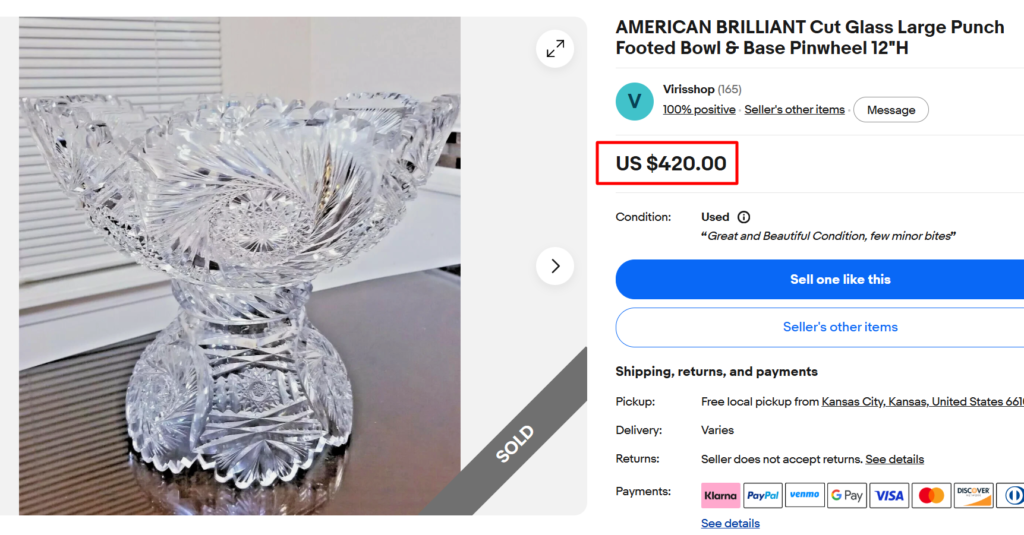
| Manufacturing Years | 1876 to about 1914 |
| Shapes | Large footed bowls, pedestal compotes |
| Key Features | Hobstars, deep miter cuts, sawtooth rims |
| Collectors’ Notes | Colored cut-to-clear pieces are rare |
The American Brilliant Period cut glass, made between 1876 and 1914, is known for its heavy glass with deep cuts. A footed pedestal bowl with ornaments or fruits makes a perfect Christmas table centerpiece.
You can identify these pieces through faint acid-etched signatures (visible under light) of Hawkes, Hoare, or Libbey.
10
Spode Christmas Tree Candle Holders
Typically sells for $25 to $150
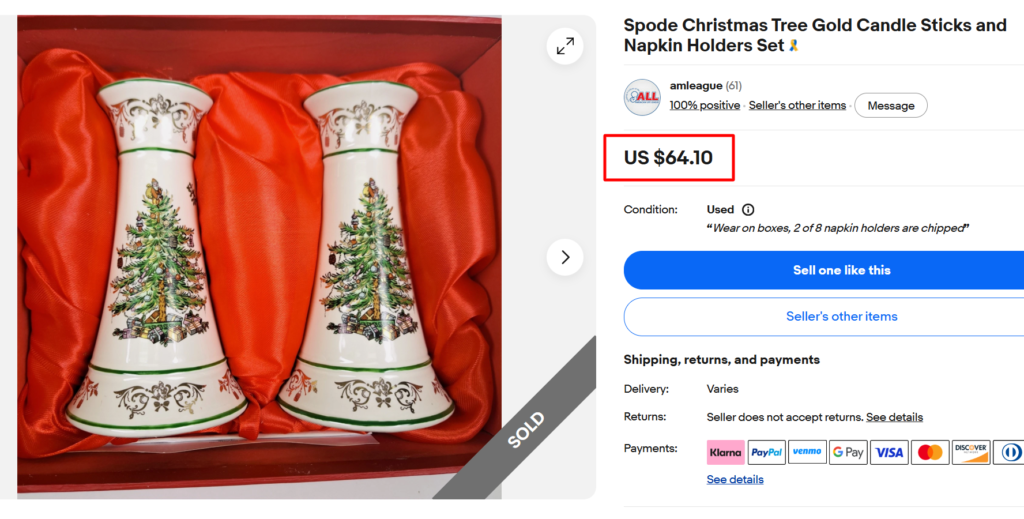
| Manufacturing Years | 1938 to present |
| Shapes | Candle holders, votives, footed bowls, lidded bowls, tiered servers |
| Key Features | Santa tree topper, red-bowed gifts, green rim band |
| Collectors’ Notes | Gold-rim versions came later. |
Spode released the Christmas Tree pattern, created by Harold Holdway, in 1938. It shows a Christmas tree adorned with decorations and Santa, surrounded by gifts and a green rim.
For the centerpieces, look for the candlesticks, footed bowls, and tiered servers. The older pieces will have the backstamp “Made in England” and pattern number S3324.
What Makes an Old Christmas Centerpiece Collectible?
For most of the pieces, four things determine value.
- Age comes first. Pre-1970 pieces draw the most interest.
- Then look for a maker’s mark, backstamp, or hallmark. Marked or attributed pieces are usually more valuable.
- Originality matters too, since original paint, parts, and boxes all add value.
- Lastly, the condition sets the final price. The more damage or wear, the less value.
Note: This article is intended for informational, educational, and entertainment purposes only. Some images are illustrative and may not represent actual brands, products, or related entities. All trademarks, product names, brand logos, packaging, and other intellectual property referenced remain the exclusive property of their respective owners. Any brand mentions or references are provided solely for descriptive and educational context and do not imply any formal or commercial association.