So you have some dirty coins in an old jar or your relatives’ dresser drawer. One of the first things you’d want to do is to clean them up to make them shiny. But this is precisely how some valuable coins lose their value.
To know how to properly clean old coins is basically to learn when to stop cleaning them. This article will show you which coins can be safely cleaned at home and how this is done.
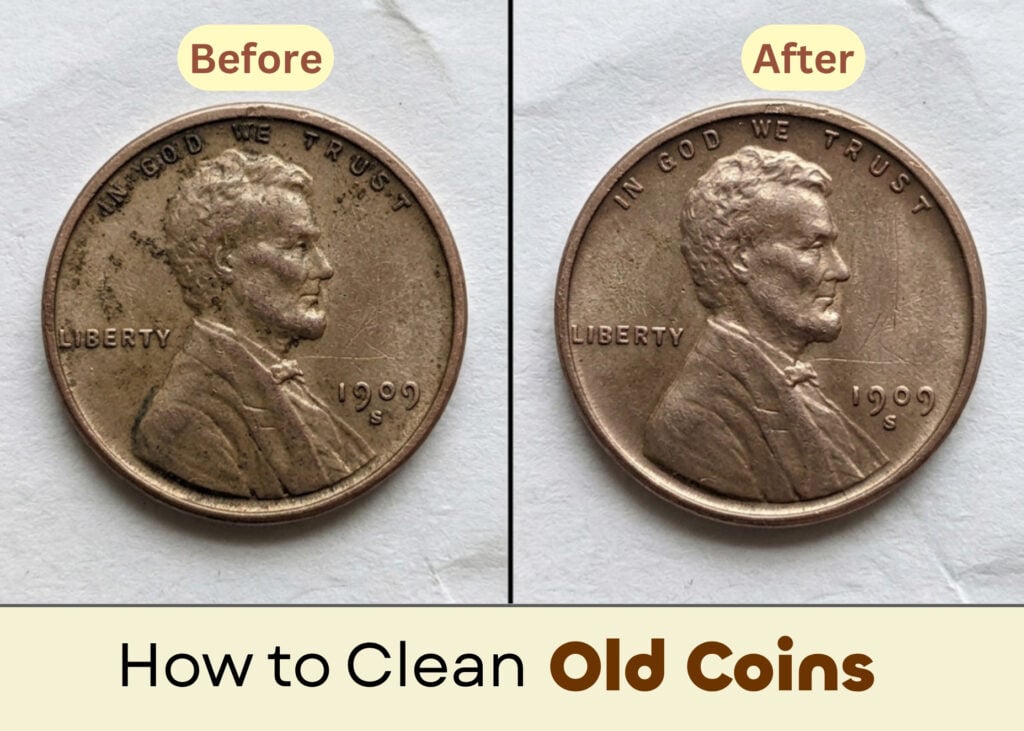
Quick Answer: Most old coins should never be cleaned. If your coin is simply dirty, clean it using distilled water or mild soap and water, then gently dry it. Never scrub, polish, or apply any acids to the coin.
Should You Clean Old Coins? Ask These 3 Questions First
First things first, it is necessary to know the nature of the coins you are dealing with. Here are three questions that will help you decide if the cleaning is possible at all.
1. Is it valuable?
Check the year, the mint mark, and the type of metal. American dimes, quarters, and half dollars issued before 1964 contain 90% silver.
2. Is it dirty or toned?
Dirt covers the surface of the coin. Toning is the natural coloring (gold, brown, even rainbow hues) of the coin itself developed over many years. This can add value to the coin, and once lost, it cannot be recovered.
3. Do you plan to sell or grade it?
If selling, leave it alone. Dealers prefer original surfaces and will recognize a cleaned coin from across the table.
If any of these questions make you pause, then do nothing.
Why Cleaning Coins Reduces Their Value
A coin’s value depends heavily on its surface. Freshly struck coins have mint luster, the frosty shine created when metal flows into the die during striking. Even a light rub wipes away part of that layer.
Cleaning also causes small parallel scratches, called hairlines, from cloths, brushes, or abrasive pastes. You can see these on the coin when viewed at an angle to the light. Color is also off, being either too vivid or chalky.
Professional graders spot all this. Rather than assign a numerical grade to these coins, NGC and PCGS assign them a detailed grade along with a “cleaned” designation. The market value of these coins is often reduced by as much as half.
And there’s no undo button. Once a coin has been cleaned, no one can restore its original surface.
Coins You Should Never Clean
Some coins are simply too risky to experiment on. Leave these exactly as you found them:
- Dates, varieties, and errors
- Proof and uncirculated coins with original luster
- Silver coins with even natural toning
- Ancient coins with stable and smooth patina
- Any coin that you intend to grade and sell to a dealer
Not sure if your coin is part of this list? Then simply assume that it is.
How to Clean Old Coins Safely at Home?
So, what about the dirty coins? Common circulated coins and low-value coins with loose dirt or sticky residue may be cleaned.
The ideal cleaning process for old coins without compromising their originality is to use the gentlest process possible and stop there. This will remove what sits on the coin, never the metal.
What You’ll Need
- Distilled water (tap water contains chlorine and minerals)
- Plain dish soap with no dyes or additives
- Glass containers
- A soft, lint-free towel
- Pure 100% acetone for sticky residue
Step 1: Rinse with Distilled Water
Hold the coin by its edges and soak it in a container of distilled water. For mild dirt, this is enough.
Step 2: Soak in Soapy Warm Water
For tough dirt, add some dish soap to the warm distilled water. While some coins need just a couple of hours, others may take a few days. Change the water daily. But don’t scrub, not even with a soft toothbrush. If the dirt stays, it stays.
Step 3: Rinsing and Drying
The last step is to rinse the coin in clean distilled water and then gently pat it dry using a soft cloth.
Acetone for Removing Tough Stains
Soap cannot remove adhesive tape, adhesive, and the green stain left by soft vinyl coin flips. This is where acetone comes into play; it’s a solvent and not an abrasive material.
Soak the coin in acetone for a few minutes, then rinse and pat dry. Also, work near an open window and keep the acetone away from flames.
Quick Tip: Practice every method on a common coin first, like a worn wheat penny, before you risk one that matters.
Cleaning Tips by Metal Type
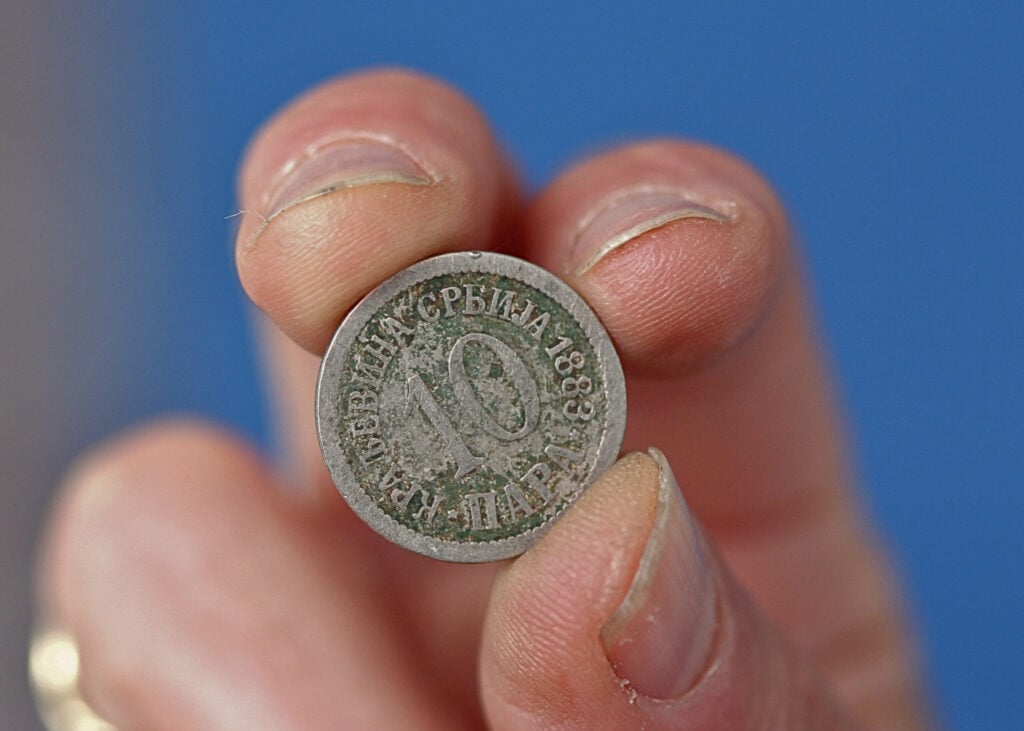
Different metals react to cleaning in different ways, so adjust your approach based on what you have:
- Silver: Soaking is okay, but expect some toning. No silver dip or jewelry polish!
- Copper and Bronze: These are the most delicate. So, make sure the soaking period is short and then dry the coins thoroughly; moisture can cause spots. Acetone is usually the safer option for copper.
- Green spots on copper: A smooth, dark green layer called verdigris is usually stable and best left alone. But light green, powdery spots that spread are bronze disease, a form of active corrosion that needs a professional.
Cleaning Methods That Ruin Old Coins
All those “easy” coin cleaning tricks you see on the internet may be great for cleaning pocket money for a science project. For collectible coins, they will ruin the value.
| Method | What It Does to the Coin |
| Vinegar, lemon juice, or vinegar and salt | Acid eats into the surface and turns copper an unnatural pink |
| Coca-Cola or ketchup | Acids etch the metal |
| Baking soda or toothpaste | Abrasives leave hairline scratches |
| Silver dip or metal polish | Strips toning and dulls luster |
| Hydrogen peroxide | Reacts with copper and changes its color |
| Wire brushes, erasers, rock tumblers | Scratch and wear down the design |
| Ultrasonic cleaners | Vibration can damage fragile surfaces |
If a method makes a coin look brand new in seconds, it’s removing metal along with the dirt.
When to Get Professional Help: Conservation vs. Grading
Some coins need more than soap and water or other home-cleaning methods. They need professional conservation, which isn’t the same as cleaning. Here, specialists remove harmful dirt, stop active corrosion, and protect the original surface.
The two main options are the conservation service offered by NGC (known as NCS for many years) and PCGS Restoration. Both services evaluate the coin first and then send it straight to grading.
Professional help makes sense when:
- The value of the coin can be hundreds of dollars
- There are traces of PVC or bronze disease
- You are going to have the coin graded anyway
The cost of conservation depends on the coin. For instance, PCGS conserves and grades modern coins at around $28 per coin for coins valued at up to $300.
Grading through a third party is another option. Grading economy coins through NGC and PCGS costs about $20-$25 per coin (excluding shipping and membership). So, it’s more appropriate to grade coins with a significantly higher value than the grading cost.
How to Store Coins So They Stay Clean
Proper storage will solve most of the cleaning issues. Here are some methods and habits:
- Keep coins in PVC-free holders like Mylar flips, archival cardboard 2x2s, or hard plastic capsules.
- Store them somewhere cool and dry.
- Handle the coins by the edges, since fingerprints leave oils that can etch the surface.
Cleaning of old coins requires great care. You should clean common coins, not touch valuable coins, and have an expert clean rare and corroded coins. The value of an old coin lies in its dirtiness rather than cleanliness.
Note: This article is intended for informational, educational, and entertainment purposes only. Some images are illustrative and may not represent actual brands, products, or related entities. All trademarks, product names, brand logos, packaging, and other intellectual property referenced remain the exclusive property of their respective owners. Any brand mentions or references are provided solely for descriptive and educational context and do not imply any formal or commercial association.