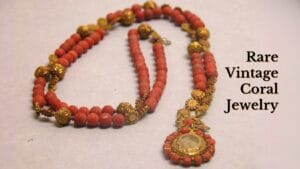
Coral jewelry looks striking on its own, but a piece pairing coral with a complementary stone is even more interesting. Since the beginning, jewelers have paired coral with many other gems, each reflecting a unique style of the era.
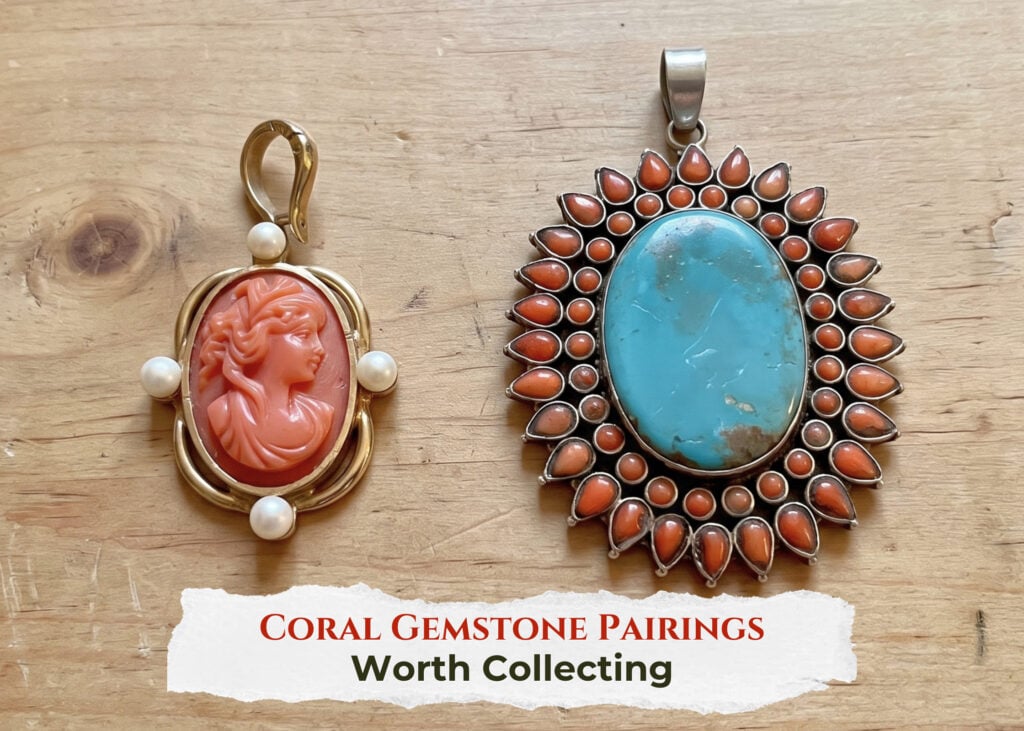
That secondary stone isn’t always just decoration; it indicates the era your piece belonged to, which in turn decides the value of vintage coral jewelry. Let’s see the five coral pairings collectors look for today.
Why Coral Pairings Matter to Collectors?
Since Coral jewelry became popular in the 1840s, each era has had a favorite coral + gemstone pairing.
For example, during the Georgian and Victorian eras, most coral pieces featured seed pearls. Coral in the Art Deco period favored onyx gemstones, while southwestern Native Americans paired their coral with turquoise.
So, the combination of coral with other gemstones not only tells you about its estimated value, but it can also help you date the piece if you know which companion stone belongs to which era.
First, Know Your Vintage Coral
Before you move on to the secondary stone in your vintage jewelry piece, focus on the coral. The most valuable, aka “Precious coral,” comes from the Coralliidae family, including the three color types:
- Mediterranean red (Corallium rubrum): This is the classic, deep red coral mostly found in the Mediterranean and along the neighboring Atlantic coast.
- Oxblood, also called aka (Corallium japonicum): This one is dark and saturated red, and was traditionally considered the costliest variety of corals. It’s primarily sourced from Japan and Taiwan.
- Angel skin (Pleurocorallium elatius): After Oxblood (in value) is the Angel Skin coral. It’s a specific soft pink color variety of the species Pleurocorallium elatius.
Most old coral pieces you’ll see in thrift stores or garage sales are common coral: sponge, bamboo, and blue types. These are mostly bleached and dyed red or pink to look like genuine precious coral.
The 5 Most Valuable Vintage Coral Gemstone Combinations
| Pairing | Era | Key Features |
| Coral + Turquoise | 1930s–1970s | Southwestern silver, artist hallmark, deep red coral |
| Coral + Pearl | 1800s–1900s | Seed pearls, closed-back gold, cameos |
| Coral + Diamond | 1940s–1970s | Large coral cabochon, diamond halo, 18k gold |
| Coral + Jade | 1800s–1930s | Carved stones, Chinese silver filigree or Deco platinum |
| Coral + Onyx | 1920s–1930s | Calibré-cut stones, platinum, French marks |
1
Coral and Turquoise
Era: the late 1930s to the 1970s (Southwest)
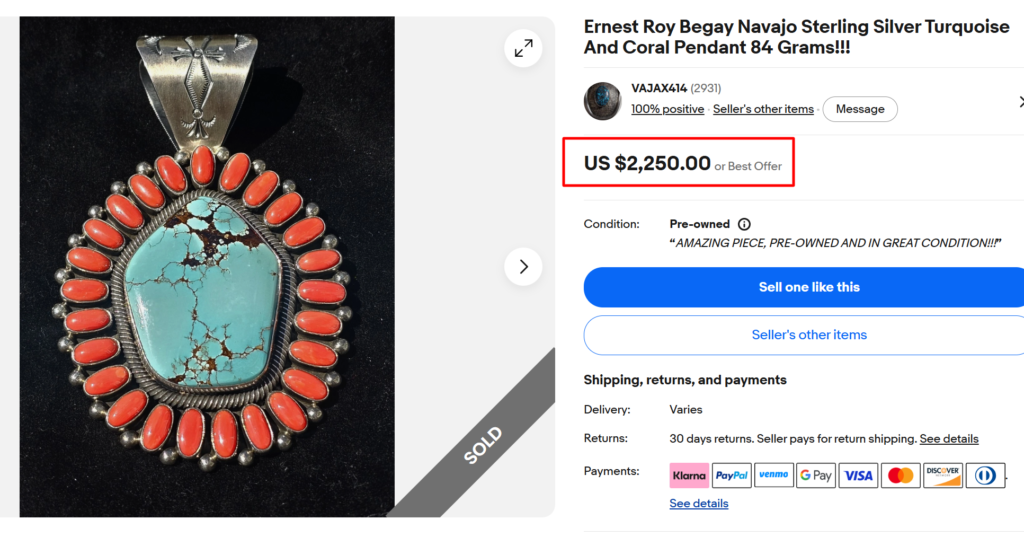
Common Forms: Squash blossom necklaces, cluster pendants and bracelets, Zuni inlay, bead strands
Both Coral and Turquoise are among the oldest gems, with turquoise beads dating back 5,000 years in Mesopotamia and 4000 BC in Egypt. Plus, both gems have emotional connections and beliefs tied to them; ancient Romans believed coral warded off illness, and the Navajo named coral one of 18 sacred objects.
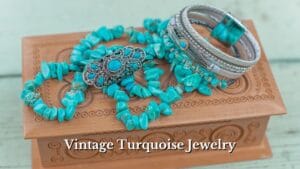
The combination of coral and turquoise is most commonly seen on the Southwest pieces. But Victorian-era jewelry also features turquoise with blush or red coral, thanks to Queen Victoria’s love for turquoise.
The most desirable pieces are those that show clear signs of known Zuni or Navajo silversmiths and feature heavy, handmade silver and show deep contrast, like vibrant robin’s-egg blue turquoise and deep oxblood or pale angel-skin.
2
Coral and Pearl
Era: Georgian and Victorian (c. 1800–1900), revived in the 1950s–60s
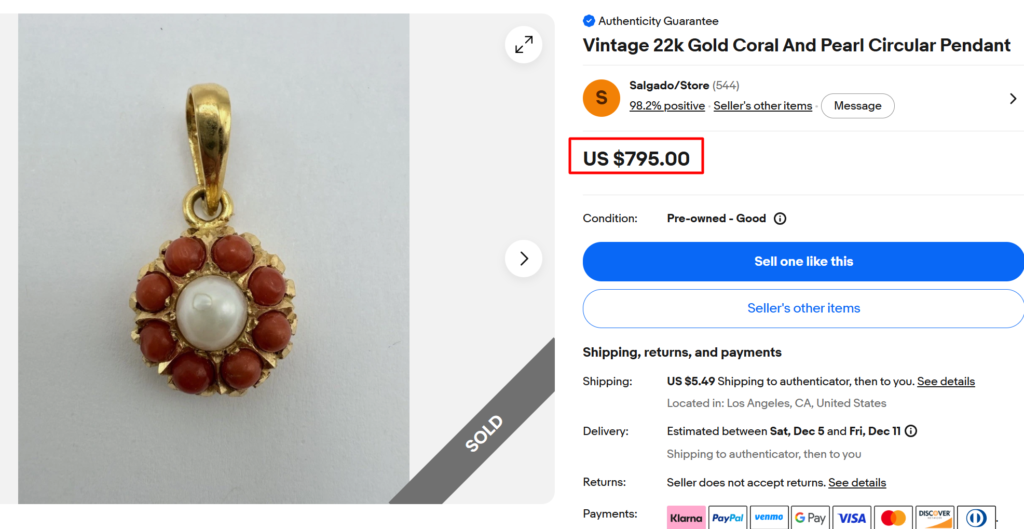
- Estimated Values: $300 (Victorian pins) to $10,080 (necklaces)
- Common Forms: Seed pearl rings, cameo brooches, cluster pendants, demi-parures
The combination of these two organic marine gems was highly popular in the Georgian and Victorian eras. You’d see rings, cameo brooches, cluster pendants, demi-parures, mostly with carved coral cameos, floral sprays, and graduated beads paired with seed pearls or natural drop pearls (< 2mm natural pearls).
This pairing was popular for négligée necklaces, bridal gifts, and family heirlooms, offering purity and sentimentality (pearl) and protection (coral) in Victorian symbolism.
Both coral and pearl have synthetic versions and replicas, so the authenticity of both gems plays a crucial role in a piece’s value.
3
Coral and Diamond
Era: 1940s Retro to 1970s
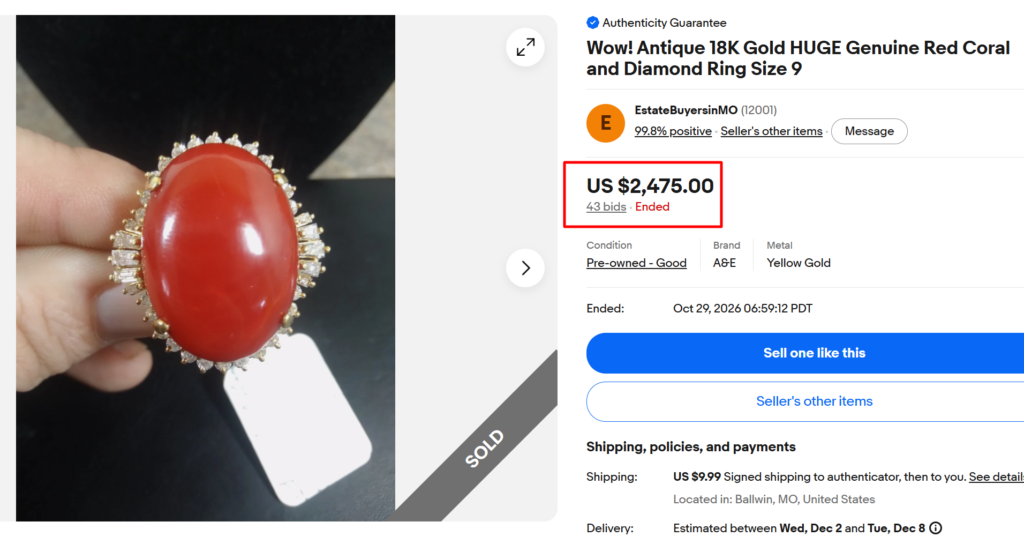
- Common Forms: Cocktail rings, bead necklaces with diamond clasps
- Key Makers: Van Cleef & Arpels, David Webb
Although many Victorian pieces feature accented coral clusters with old-cut diamonds, this combination peaked in the 20th century, especially the Retro era. In the Art Deco era (1920s–1930s) and the 1950s–1970s revival era, many big names took it up, including Van Cleef & Arpels, David Webb, Cartier, and Bulgari.
Coral-and-diamond pieces signed by these major names are most desirable.
The value also lies in condition and setting; crack-free angel-skin pink or oxblood red coral with high-clarity diamonds in an 18k gold or platinum setting is what the top-tier pieces look like.
4
Coral and Onyx
Era: Art Deco (1920s–30s)
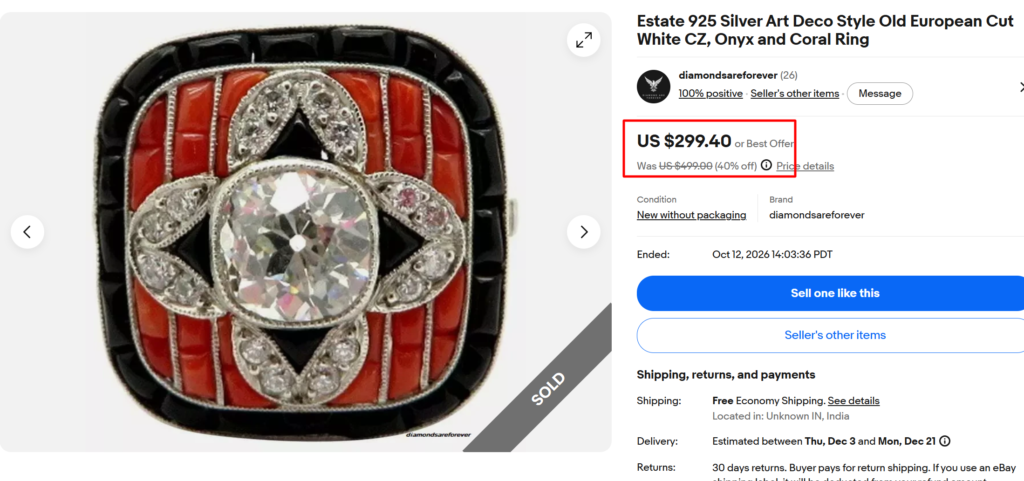
- Common Forms: Brooches, rings, cufflinks, bracelets
Recent Sales: $5,000 to $56,700; $100 to $500 (modern “Deco” rings
The Coral-and-black onyx combination was a defining characteristic of Art Deco jewelry. The signature style was bold red or salmon coral combined with black onyx and diamond accents in a platinum or white gold setting. Sometimes, other gems like emeralds and rubies are there, too.
With this combination, Parisian jewelers (Cartier and Asprey) started shifting toward bold color contrasts from the Edwardian era’s pastels.
This bold gemstone palette came back again in the 1970s, often seen on cocktail rings and gold bands from Cartier.
5
Coral and Jade
Era: Ming dynasty (1368–1644); Qing (1644–1912); Art Deco (1920s–30s)
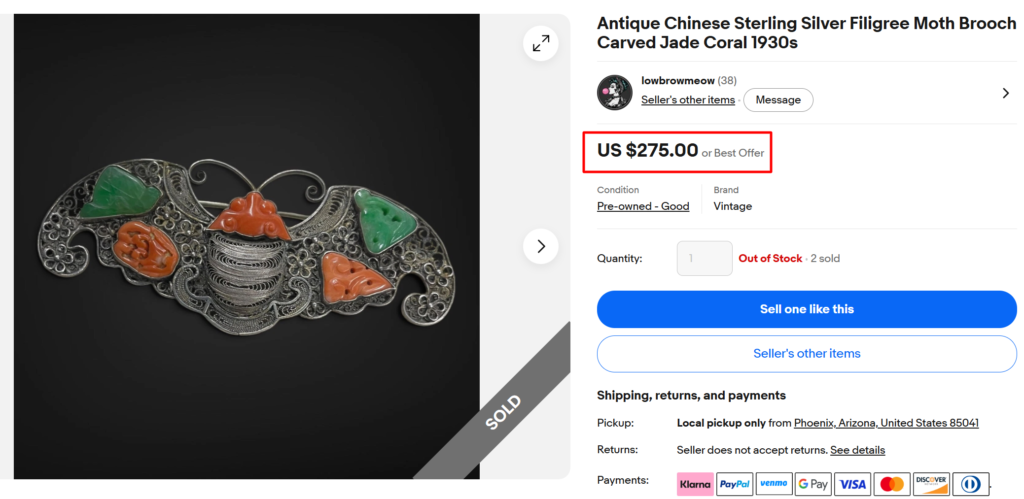
- Common Forms: Court bead necklaces, chinoiserie brooches, silver filigree brooches, sautoirs (long bead necklaces)
- Collector’s Note: 35th anniversary pairings are common
Coral-jade pairing has existed since the Ming dynasty, in both decorative art and jewelry. Pieces like silver-filigree amulets, court beads, and carved plaques featured green jadeite or nephrite with red coral.
This combination then started a Western fashion trend in the 20th century. The most popular example is the Cartier Art Deco sautoir of Chinese motif, jade, coral, and onyx beads with platinum and diamonds. Van Cleef & Arpels and other houses followed the trend, too.
Silver filigree pieces are affordable, while signed platinum Deco pieces with diamonds are the most sought-after.
What Affects the Value of Vintage Coral Jewelry
Most plain coral bead necklaces sell for a few hundred dollars. An angel skin coral bead necklace with a 14K gold clasp realized $375 at Hindman. Prices climb when several value factors line up:
- Coral Type and Color: Although Oxblood red has historically been the most expensive, the darker, the better doesn’t work, because Angel skin pink ranks second. Real saturated coral is typically worth more than faded and dyed ones.
- The Companion Stone: If the coral piece has other gems, they impact the value, too. Natural turquoise from a known mine, real diamonds, and fine-quality jade add value.
- Maker and marks: A piece signed by a renowned name can simply multiply the price. Even a worn signed VCA pendant can sell for a few thousand dollars. Along with the maker, serial numbers, registration numbers, province code, and metal purity marks are all proof of authenticity and add value.
- Natural vs. dyed: A lab report confirming natural color helps a piece sell above estimate, as the oxblood necklace above showed.
- Stone Size: Large precious coral stones are rare, so the bigger the stone size, the more desirable and valuable it will be.
- Condition: Coral is a soft gem, so it’s worn and chipped easily. Chips, cracks, and worn stringing all lower value. Always check the bead edges, high points on a cameo, and cabochon rims for chips. On pieces with multiple stones (coral or pearl, etc.), count the number; missing gems hurt value.
Note: This article is intended for informational, educational, and entertainment purposes only. Some images are illustrative and may not represent actual brands, products, or related entities. All trademarks, product names, brand logos, packaging, and other intellectual property referenced remain the exclusive property of their respective owners. Any brand mentions or references are provided solely for descriptive and educational context and do not imply any formal or commercial association.