Antiques Know How Research
Anchor Hocking Ruby Red Glass
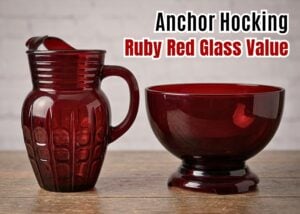
Antiques Know How’s detailed eBay review shows most Anchor Hocking Royal Ruby Red pieces are worth $5–$15 individually, while rare figural novelties, large sizes and sets can fetch $55–$500+. The rarest Royal Ruby red pieces include “Be Wise” owl coin bank, large ashtrays, Boopie goblets, 16 oz Bubble tumblers, 64 oz Whirly Twirly pitcher, and full punch bowl sets. The value depends on form and size, set completeness, original paper labels, and condition.
Antiques Know How
Speaking of Anchor Hocking glassware, the Royal Ruby Red is considered one of the rarest colors. Honestly, most Anchor Hocking in ruby red sells for $5 to $15 a piece at thrift stores and estate sales.
But some forms, designs, and figures created in this color can exceed $500 in value. This guide walks you through how to identify genuine Royal Ruby, the specific pieces collectors look for, and what determines their values.
What’s Anchor Hocking’s Royal Ruby Red Glass?
Royal Ruby Red is one of the several colors in which the Anchor Hocking Glass Company made its glassware. The company launched Royal Ruby glass in 1938, after the Hocking Glass Company merged with Anchor Cap and Closure Corporation.
The primary production of Ruby Red glass ran from 1938 to 1967, then revived briefly from 1973 to 1977 before stopping permanently.
Over those decades, Anchor Hocking pressed Royal Ruby into more than 22 documented lines, plus countless one-off promotional pieces, novelty items, and Schlitz beer bottles, which are quite collectible today.
How to Identify Genuine Anchor Hocking Ruby Red Glass
Most royal ruby red depression glass sold today has no maker’s mark. Anchor Hocking used paper labels that fell off decades ago. So identification of ruby red glassware comes down to three things you can check by hand.
- Transparency: Hold the piece up to a strong light. Genuine Royal Ruby is fully transparent and dark red. Flashed glass (a clear piece coated with red) shows clear edges around the rim or worn patches.
- The Copper Test: Royal Ruby glass gets its color from copper oxide, not gold chloride, like most other red glass of the era. Under strong direct light, it looks slightly more orange-leaning than the cooler, almost magenta tone of Imperial or Westmoreland reds.
- Pattern Match. Cross-check the shape and surface design against documented Anchor Hocking patterns at the Anchor Hocking Glass Museum or in Philip Hopper’s Royal Ruby reference book (Schiffer, 1998). This is the easiest way to identify.
Quick tip: A surviving paper label can nearly double the value of a common Anchor Hocking glass piece. Don’t wash it off.
Rare Valuable Royal Ruby Red Anchor Hocking Glass Pieces
1
“Be Wise” Royal Ruby Owl Coin Bank
Typically sells for ($1 – $2)
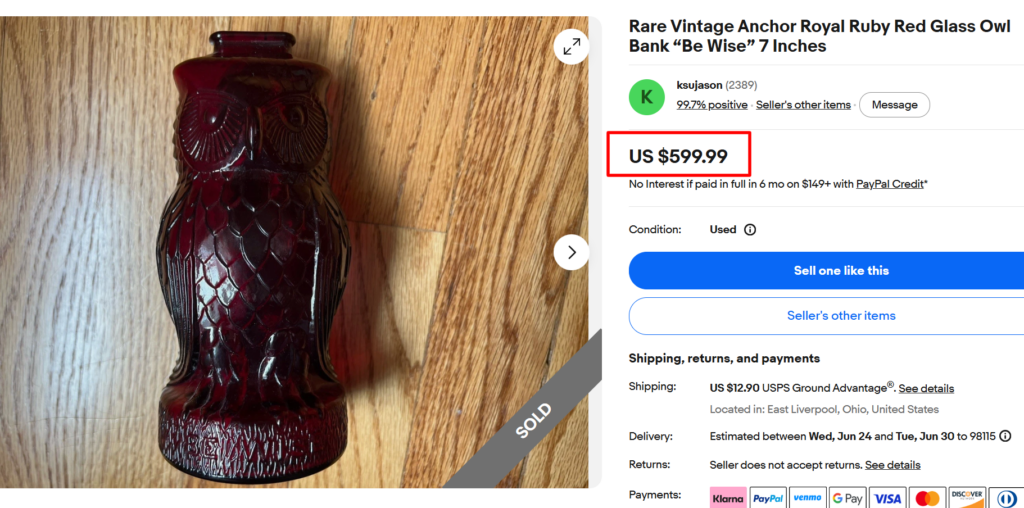
This is one of the rarest and most valuable Anchor Hocking Royal Ruby Red glassware finds. The owl is a novelty figural with “BE WISE” embossed across the lower front and a coin slot cut into the top of the head.
This form was made in marigold carnival glass and amber, too, but the ruby version is the scarcest by a wide margin. Figural Royal Ruby commands the highest premiums in the entire color line.
2
“Boopie” Ruby Red Goblets
Typically sells for $70 to $160 (set of 8)
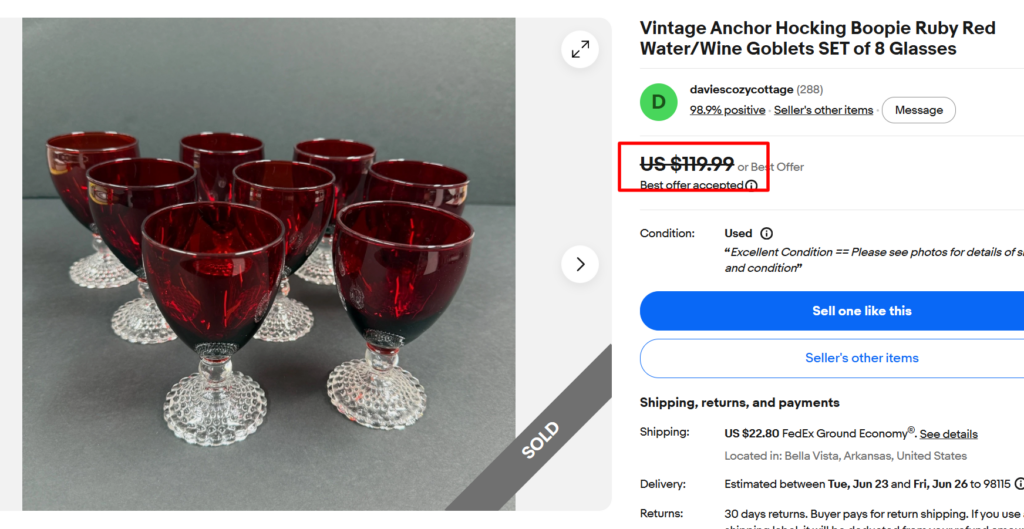
The beaded ring around the clear foot is the Boopie signature. The ruby red Boopie stemware with a clear stem and base, and a red bowl, is the more collected version.
Don’t confuse this with Imperial’s “Candlewick,” which has separated beads instead of the connected row on Boopie. Anchor Hocking also added a rolled “safe edge” at the rim, which Imperial doesn’t have.
3
Ruby Red Ashtray
Typically sells for $70 to $150 (large size)
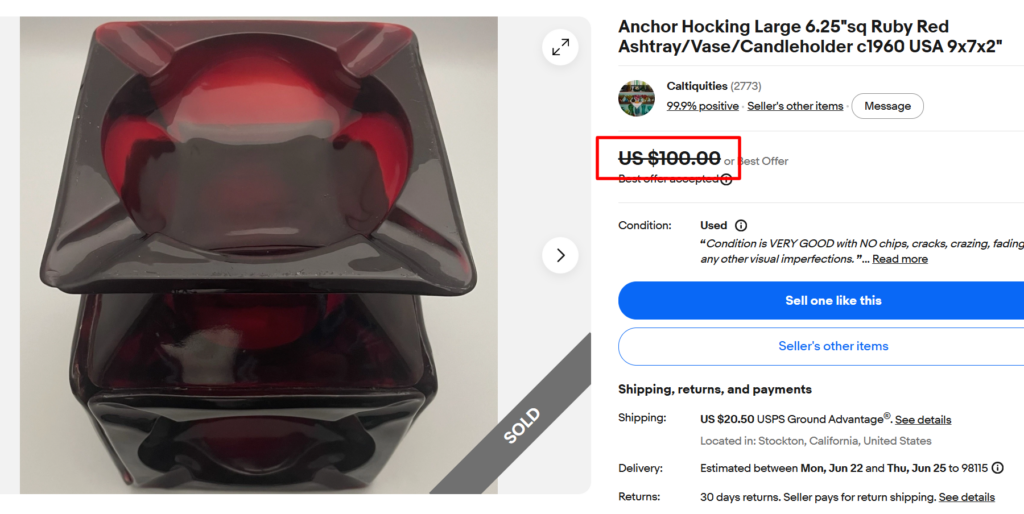
Mid-century heavy square ashtrays from Anchor Hocking have become MCM decor objects more than smoking accessories, which has pushed prices up.
This 6.25-inch size is the largest of the production run and is harder to find than the smaller version. Watch for chips at the corners and rim notches, which are the first places to break, and drop the value significantly.
4
Ruby Red “Bubble” Tumblers
Typically sells for $60 to $120 (matched set)
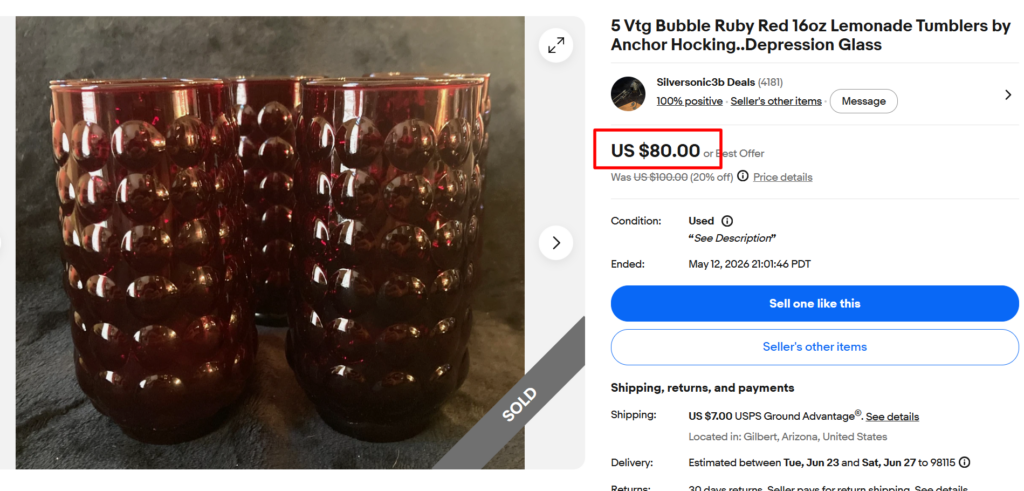
Bubble is the most recognized Royal Ruby pattern, with large, raised, round dots covering the body. Size tumblers are a common form; the value sits in matched sets where every glass shows the same dot size and spacing. Single tumblers sell low.
Also, the 16 oz lemonade size and the 12 oz iced tea size are rarer than the standard 9 oz tumbler.
5
“Poly” Royal Ruby Tumblers
Typically sells for ($1 – $2)
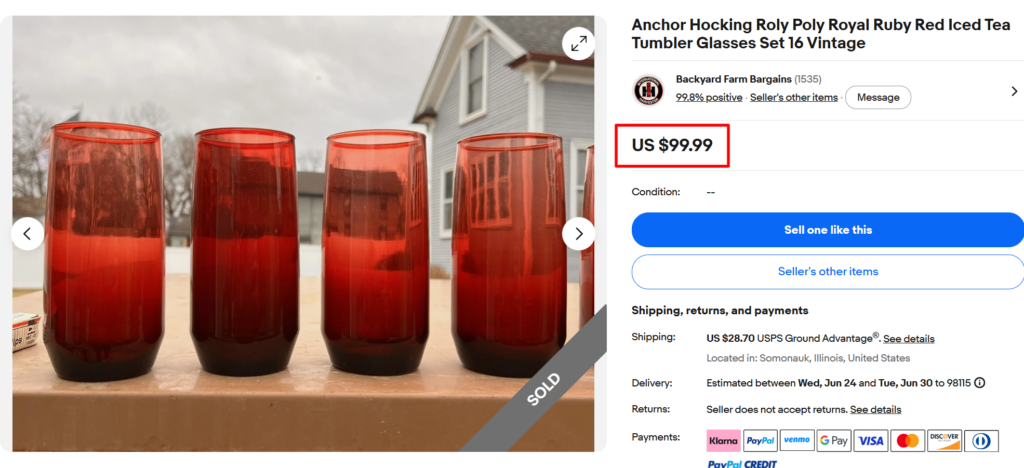
Roly Poly is the thin-walled flat-bottom Royal Ruby tumbler shape, and the iced tea size is the tallest in the line. The thin walls broke easily, which is why matched sets are getting harder to find each year.
Look at the rim under light for tiny chips and at the base for scratches, both of which can knock value down significantly.
6
Ruby Red “Whirly Twirly” Pitcher
Typically sells for $55 to $150 (64 oz size)
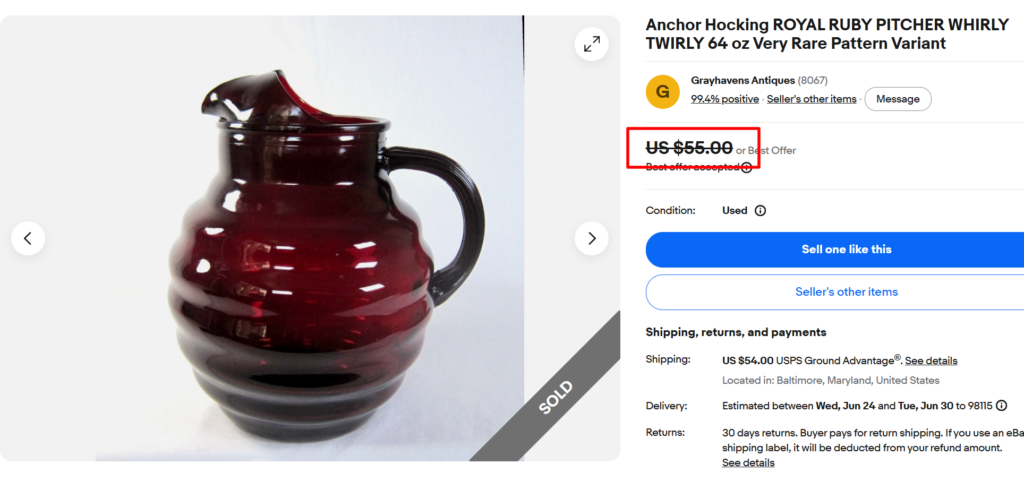
The Whirly Twirly pattern features the horizontal ribbed swirls that wrap the body in uneven bands. It’s one of the harder Royal Ruby forms to find in larger sizes. Smaller Whirly Twirly tumblers turn up regularly, but the matched pitcher is what collectors chase, and the 64 oz size is the rarest of the three.
7
Ruby Red Punch Bowl Set
Typically sells for $40 to $200 (complete sets)
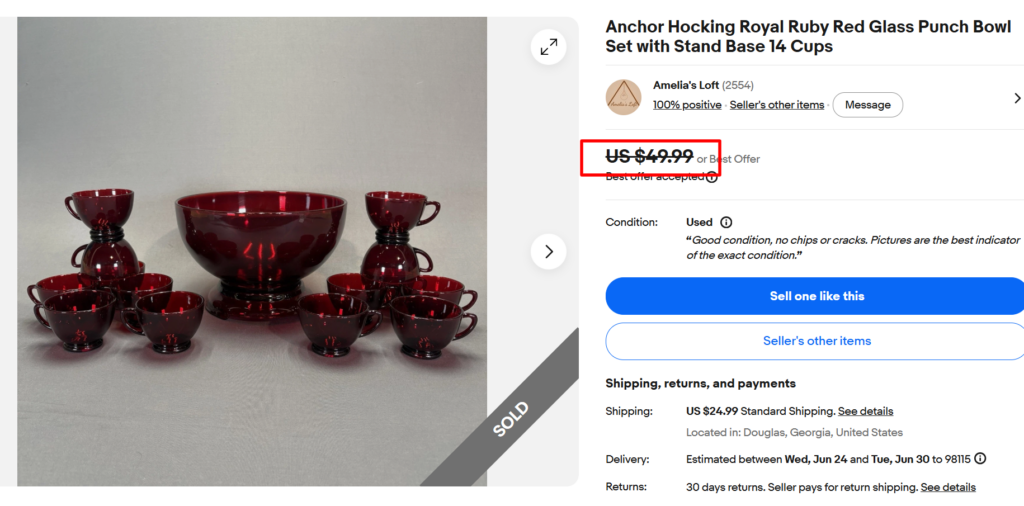
Complete punch sets are a rarity here, not the bowl alone. The bowl itself often shows up at estate sales, but the matching pedestal base rarely survives because it cracks easily under its own weight.
A full count of 12 cups is also uncommon. The punch bowl, the stand, and the cups are worth only $10-$15 separately, depending on condition. A set with all pieces can reach up to $50 to $80.
8
Royal Ruby Ball Ice Lip Pitcher
Typically sells for ($1 – $2)
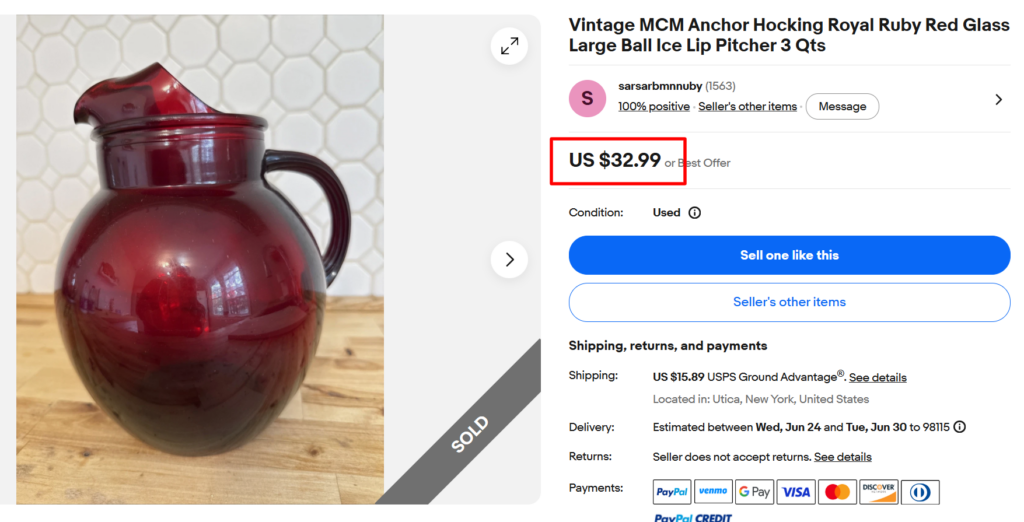
The round ball form with the curved ice lip is one of the most produced Royal Ruby silhouettes. It’s popular, but the standard 80-oz version is very common and cheap.
The 3-quart size is less common and worth more, given that the condition is pristine and clean. Check the ice lip carefully because the thin curve chips easily, and that cuts the value in half.
9
Ruby Red “Mayfair Open Rose” Cookie Jar
Typically sells for $30 to $50 (reproduction)
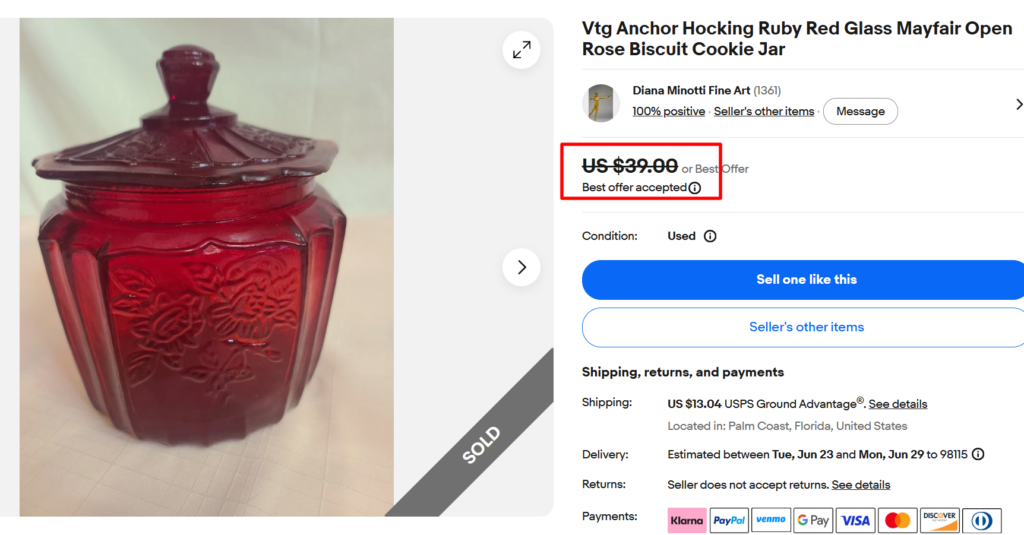
This is a distinction. The original “Mayfair Open Rose” pattern was never made in red. So, any ruby red Mayfair piece is a post-1977 reproduction. These replicas still have collector demand for the rose motif, but they only fetch $30 to $50, not the three- or four-figure prices an original pink Mayfair gets.
The lid knob is the easiest identification clue; original Mayfair Open Rose lid knobs have eight sides, reproductions usually have six.
What Drives Value in Anchor Hocking Ruby Glass?
Across all nine pieces above, you’ll notice different key features. Some pieces come in sets, some have a rare pattern, and some have a unique shape. This means that the value of Anchor Hocking Ruby Red glass depends on the following factors:
- Completeness of Sets: Sets matter more than individual pieces. A lone punch cup, tumbler, or goblet is worth a dollar or two. A full set with the base is worth hundreds.
- Figural and Novelty Forms: Unique shapes like the owl bank and ashtray pull the highest prices because they were never made in volume. Common forms like plates, cups, bowls, and glasses are common and valuable only in large sets.
- Scarcer Sizes within Common Patterns: Unusual sizes outperform standard size for a certain shape. The 64 oz Whirly Twirly, the 6.25 inch ashtray, and the 16 oz Bubble tumblers all outprice their smaller versions.
- Original Paper Labels: Labels help with authentication, so collectors love and pay more for them. Original labels with minimum wear can roughly double the price of common pieces.
- Condition: Chips on rims, severe cracks, cloudiness, and dishwasher etching can cut value by half or more.
Note: This article is intended for informational, educational, and entertainment purposes only. Some images are illustrative and may not represent actual brands, products, or related entities. All trademarks, product names, brand logos, packaging, and other intellectual property referenced remain the exclusive property of their respective owners. Any brand mentions or references are provided solely for descriptive and educational context and do not imply any formal or commercial association.