Antiques Know How Research
Antique Candlesticks Value
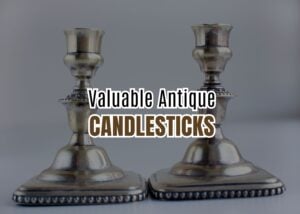
An in‑depth analysis of eBay sales and auction results by Antiques Know How shows that most antique candlesticks sell for $20-$50, while high-end pieces from notable makers can reach $150 to $5,000. Some valuable makers and styles are Louis XV silver pairs, Salkind sterling column holders, Tiffany jeweled tripods, Zodiac gold‑doré sticks, Boulton Old Sheffield plate, Baccarat cherub frosted crystal, Roycroft Arts & Crafts copper, Steuben Aurene glass, and porcelain‑bronze pairs. The value depends on the maker and their signature, material, originality, condition, and completeness (pair vs. single).
Antiques Know How
Antique candlesticks are among the most common items to be found in attics and cellars. But most are either donated or sold for just a few dollars at garage sales, since people can’t tell the difference between a $20 find or a $2,000 gem.
Candlesticks were made by the millions over the last three centuries, in every material from tin to sterling silver. But certain pieces command serious money today. In this guide, you’ll discover valuable candlesticks and what really adds value.
5 Things That Make Antique Candlesticks Valuable
Antique candlesticks can be worth as little as $20 or as much as $5,000. There are several factors that decide if one is really valuable or just an old item, such as who made it, what it is made of, what style it is, and what kind of condition it is in.
Maker or Signature
If an antique candlestick bears the maker’s name, it is usually more valuable than one without a name. This is especially true if the maker is well known.
You can look for the maker’s mark on the bottom, on a tab that you push up on the stem, on the socket, or on the rim of the base.
Some names that can add value include:
- English silversmiths: Especially fully hallmarked sterling silver
- Tiffany Studios: Favrile glass, bronze, Zodiac pattern, Art Nouveau forms
- Steuben: Aurene art glass, especially signed pieces
- Roycroft: Arts and Crafts hammered copper
- Baccarat: 19th-century molded or crystal glass forms
- Matthew Boulton: Old Sheffield Plate and Georgian metalwork
Age and Production Period
An older candlestick is not necessarily worth more; however, age makes sense when it pertains to a certain era.
Pieces made out of Georgian silver, iron from the early 19th century, Baccarat from the late 19th century, or Tiffany and Steuben from the early 20th century have more worth and collectibility compared to mass-produced items in the 20th century.
For instance, the Art Nouveau and Arts and Crafts pieces dating back to the early 1900s are highly coveted, while Victorian era figural items are highly valued.
Material
The material directly impacts value, and certain materials carry more weight with collectors. For example, Sterling silver, especially hallmarked English or Continental pieces, is the most valuable.
Tiffany’s gold doré and fine “Favrile” glass are other top-tier materials that fetch premiums.
However, even “lowly” materials like iron can be valuable if they are early “primitive” styles with unique mechanical features.
Condition and Originality
The patina or finish on metal candlesticks is more important than polishing. In the case of Tiffany bronze, for instance, a piece will fetch a higher price if it still carries its original gold doré patina, rather than being restored.
When it comes to glass, chips and cracks lower the value of a piece considerably. Silver is devalued by damage and repairs, although hallmarks and weight do count.
Pairs vs. Singles
Candlestick pairs almost always bring a higher premium than a single piece. If you have a single stick from a notable maker, it’s still worth something, but pairs can actually be worth more than double, as collectors often want pairs for tables and mantels.
Valuable Antique Candlesticks & Styles to Know
The following are some examples of collectible antique candlestick styles that are genuinely valuable today.
1. Louis XV 18th-Century Silver Candlesticks
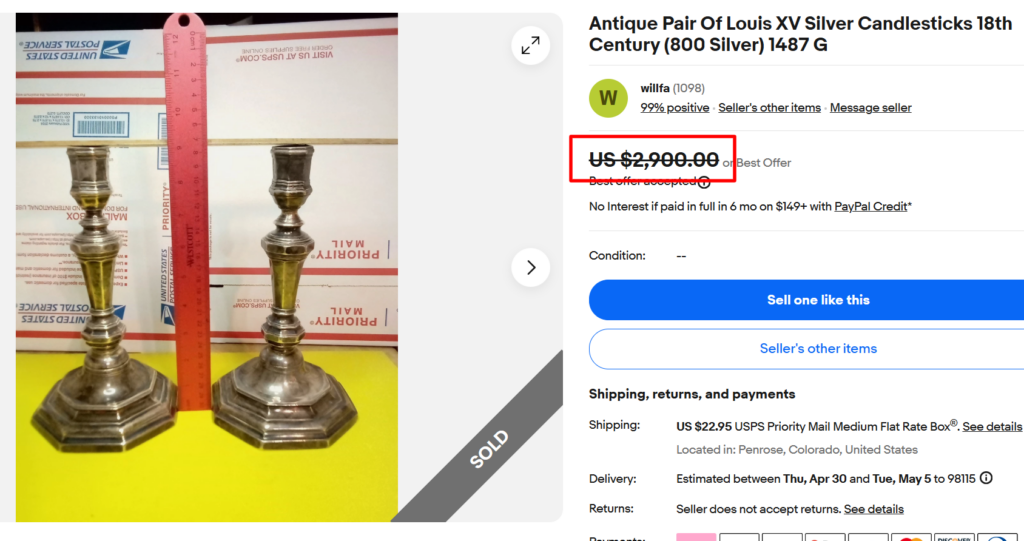
| Average Value | $2,000 to $5,000+ (pair) |
| Production Period | 18th century |
| Maker | Continental European silversmith |
| Key Features | 800 silver, octagonal base, baluster stem |
| Collector Notes | Highly rare today. |
They are authentic silver candlesticks of the 18th-century in Louis XV style. The baluster-form stems sit on octagonal stepped bases, a typical form from the mid-1700s. They’re made of 800 silver (80% silver content), which means they must have a significant weight.
Authentic 18th-century silver candlesticks are getting harder to find today, making the pairs especially valuable. The 800 silver mark, the style, and construction details all point to Continental origin.
2. Salkind Neoclassical Column Silver Candlesticks
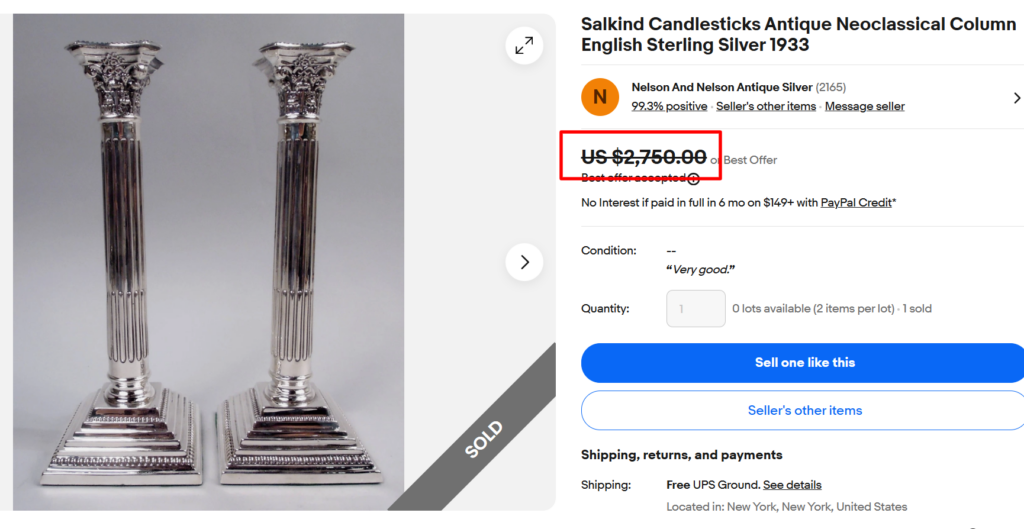
| Average Value | $1,500 to $3,000 (pair) |
| Production Period | 1933 |
| Maker | Moses Salkind, London |
| Key Features | Sterling silver, Corinthian column design |
| Collector Notes | Full London hallmarks present |
These English sterling silver holders are inspired by ancient Greek architecture. The design of the candlestick has a shaft with lines that go up part of the way, and sits on a square base with steps. On top of this base is a capital and a bobeche that can be taken off.
This kind of candlestick has been around since the 1700s, but silversmiths were still making them in the 1900s.
Moses Salkind was a silversmith in London in the 1900s. So if a candlestick is real, it has to have London hallmarks on it, including the letter for the year 1933, the symbol of a lion walking, and Moses Salkind’s stamp.
3. Tiffany Studios Jeweled Tripod Candlestick
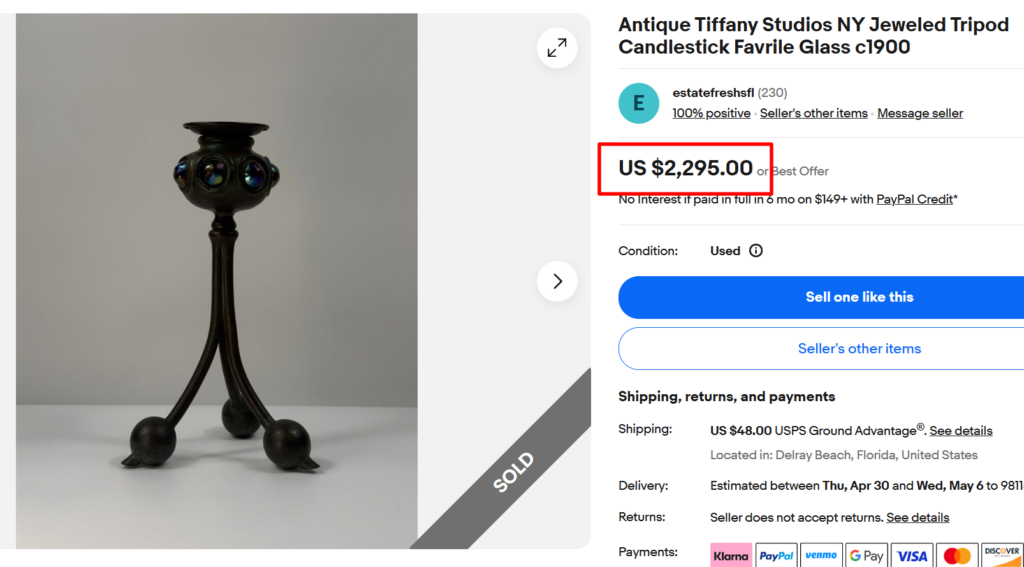
| Average Value | $2,000 – $2,500 |
| Production Period | Circa 1900 |
| Maker | Tiffany Studios, New York |
| Key Features | Bronze, iridescent glass jewels |
| Collector Notes | Look for the “TS” mark |
This tripod design is a classic example of Tiffany’s bronze work. While the tripod base with three ball feet is a well-known form, this version is unusual for its inset Favrile glass cabochons (the “jewels”) in iridescent purple, blue, green, and amber.
Most tripod candlesticks were made entirely in bronze, so the glass elements make this rarer. All glass inserts need to be original and undamaged for the price to hold.
Because these were handmade, the color of the Favrile glass inserts can vary, making some more desirable than others.
4. Tiffany Studios Zodiac Gold Dore Candlesticks
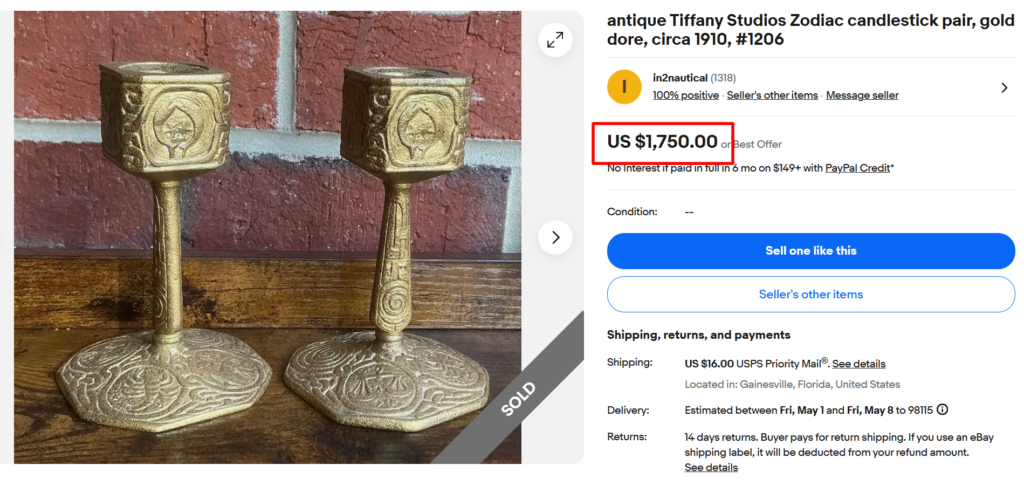
| Average Value | $1,200 to $2,500 (pair) |
| Production Period | ca. 1900–1928 |
| Maker | Tiffany Studios, New York |
| Key Features | Gold doré bronze, Zodiac pattern |
| Collector Notes | Original doré finish is critical |
The Zodiac pattern was one of Tiffany Studios’ most popular desk accessory designs. The design features zodiac symbol medallions in geometric borders, finished in gold doré (an acid-etched gold patina on bronze).
This design was produced across a full range of items, including inkwells, pen trays, bookends, letter holders, and candlesticks.
Original and intact gold doré finish is a crucial value factor for these candlesticks; they can fetch up to $800-$900 per stick. Stripped or re-gilded pieces lose a lot of value.
5. Matthew Boulton Sheffield Plate Candlesticks
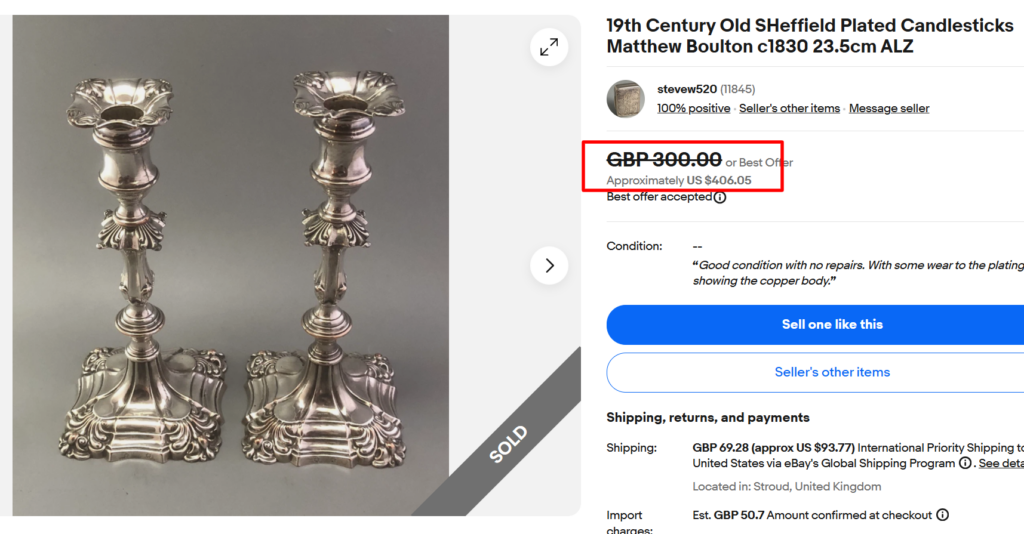
Matthew Boulton (1728–1809) spent over 50 years perfecting Old Sheffield plate. It’s silver fused onto copper with heat, before electroplating existed. His Old Sheffield plate candlesticks are quite collectible.
If you notice copper in some spots (like in this image), it’s not always concerning. Collectors actually look for that copper peeking through, as it proves the piece isn’t just a modern electroplated copy. Too much wear, however, can hurt the value.
Besides, these sticks are sturdy, heavy, and represent the best of early
industrial silver production. And don’t miss the maker mark, a single or double sunburst on the base.
6. Parrot Porcelain & Bronze Candlesticks
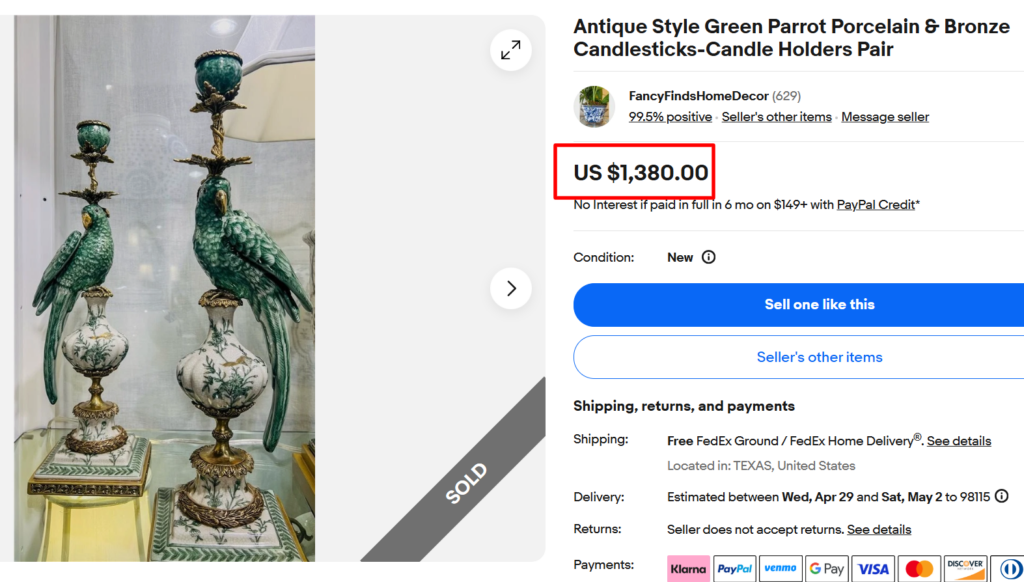
| Average Value | $800 to $1,500 (pair) |
| Production Period | 19th to early 20th century |
| Maker | European decorative arts tradition |
| Key Features | Porcelain parrots, bronze/ormolu mounts |
| Collector Notes | Porcelain condition drives value |
Porcelain-and-bronze figural candlesticks like these come from a long European decorative tradition, especially French and German workshops. Their style is based on the 18th-century theme of chinoiserie with exotic bird and animal figures in hand-painted porcelain mounted on ornate ormolu bases.
The value of such porcelain candlesticks will depend largely on their state of repair and their hand-painted decoration. Any damage to the porcelain will seriously reduce its value.
On the other hand, the value can escalate if the pieces are attributed to a notable maker. So, always check for marks and signatures.
7. Steuben Aurene Gold Candlestick
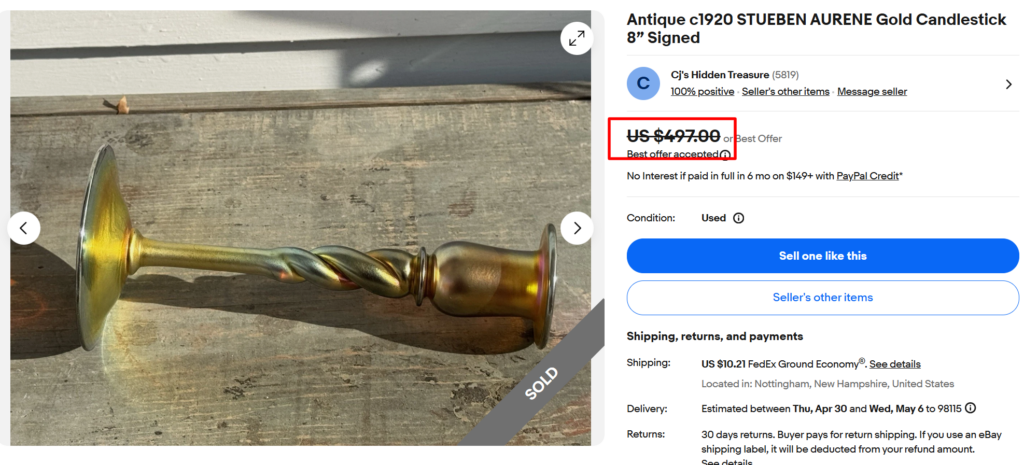
| Average Value | $300 to $600 |
| Production Period | Early 1900s–1920s |
| Maker | Steuben Glass |
| Key Features | Gold Aurene glass |
| Collector Notes | “Aurene” signed pieces are valuable |
This unique candlestick from the Early 1900s–1920s features the Gold Aurene. Frederick Carder patented Gold Aurene in 1904 at Steuben Glass Works in Corning, New York.
The name blends the Latin aurum (gold) with the Middle English schene (sheen), and the iridescent surface comes from spraying metallic compounds onto hot glass and reheating it.
This 8-inch candlestick is a signed piece. Early pieces (pre-1917) are signed just “Aurene” with a shape number (“AURENE,” “989” in this example). After Corning acquired Steuben in 1918, the mark became “Steuben Aurene.” Also, blue Aurene typically sells for more than gold.
8. Baccarat Cherub Frosted Molded Candlesticks
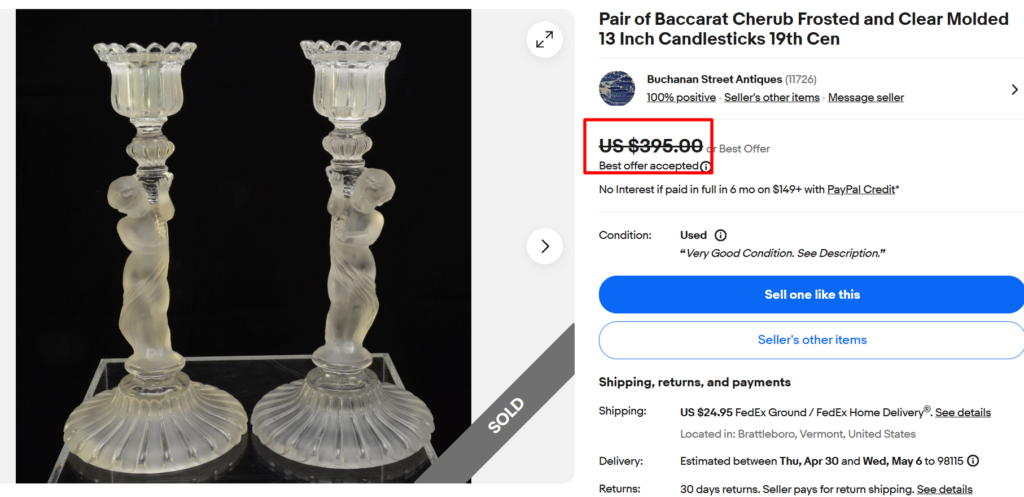
| Average Value | $300 to $800 (pair) |
| Production Period | Late 19th century |
| Maker | Baccarat |
| Key Features | Frosted cherub, molded crystal |
| Collector Notes | Acid-etched Baccarat mark on base |
Baccarat has been making crystalware since 1816 and got its first royal commission in 1823. These frosted cherub candlesticks were popular during the Napoleon III period (1852–1870). The frosted sections are acid-etched, creating a matte surface that contrasts with the polished clear crystal.
Check the base for the acid-etched “Baccarat” stamp to confirm authenticity. The substantial weight is another sign to check, as reproductions often feel noticeably lighter.
9. Roycroft Hammered Copper Candlesticks
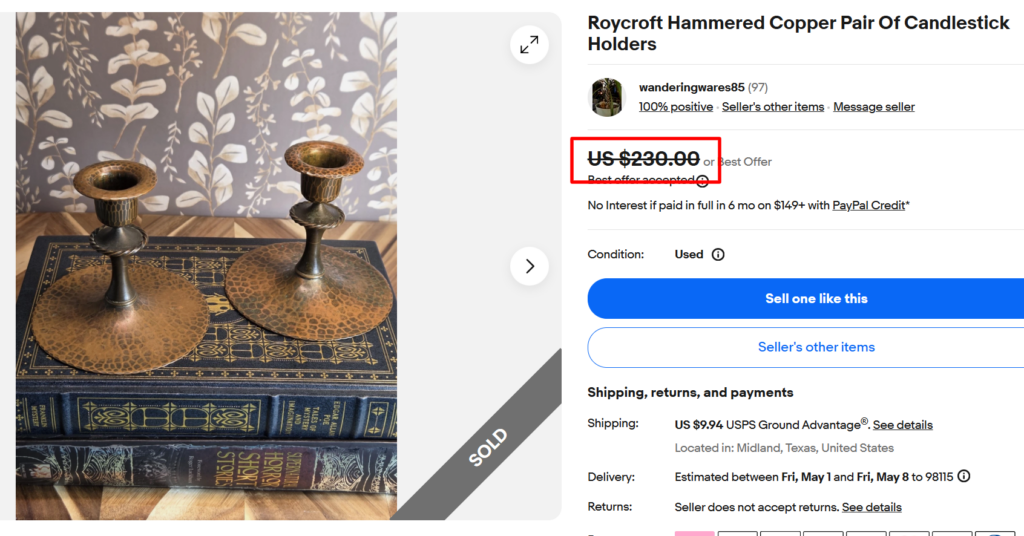
| Average Value | $150 to $500 (pair) |
| Production Period | ca. 1906–1938 |
| Maker | Roycroft Copper Shop |
| Key Features | Hand-hammered, orb-and-cross mark |
| Collector Notes | Original dark patina adds value |
Roycroft candlesticks belong to the American Arts and Crafts movement. This example features a pair of original hand-hammered copper candlesticks with a textured appearance.
The value of these pieces lies in the impressed orb-and-cross mark on the base, visible hammer marks from hand-finishing, and their original dark patina. Cleaned or polished pieces generally lose value.
10. Heise Hog Scraper Push Up Candlestick
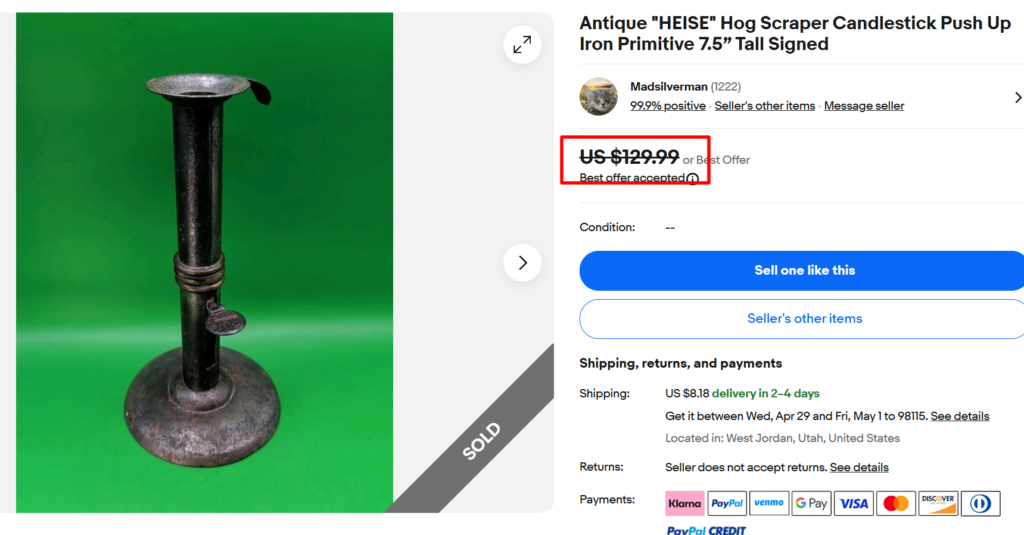
| Average Value | $60 to $175 |
| Production Period | 1780 to 1860 |
| Maker | Heise / similar makers |
| Key Features | Push-up iron shaft |
| Collector Notes | Signed tabs matter |
Hog scraper candlesticks are icons of early American lighting, but almost all of them were actually made in Birmingham, England.
These are called so because the sharp base was reportedly used to scrape bristles off pigs after slaughter. They feature a unique thumb lever that pushes the candle up as it burns down.
Most hog scrapers are unmarked, so a maker’s name on the pusher tab bumps the price. Also, note that the earliest versions (1700s) have tabs cleated through the base. Later ones, like this example, use a screw-and-nut assembly, dating them to the mid-1800s.
Note: This article is intended for informational, educational, and entertainment purposes only. Some images are illustrative and may not represent actual brands, products, or related entities. All trademarks, product names, brand logos, packaging, and other intellectual property referenced remain the exclusive property of their respective owners. Any brand mentions or references are provided solely for descriptive and educational context and do not imply any formal or commercial association.