Antiques Know How Research
Lucky Cat Figurines
After reviewing several eBay sales and auctions, Antiques Know How suggests that most mass-produced lucky cat figurines sell for under $20, while rare antique maneki neko from Japanese kilns like Imado, Seto, Tokoname, Kutani, and Bizen commonly range from $400–$3,000+. The most valuable pieces are the Wooden Meiji, antique Kutani with gold gilt, Taisho Seto ware, and rare black antique cats. The price is determined by the kiln location, period (the best being Edo/Meiji), hand-painted ceramics or wooden pieces, and condition.
Antiques Know How
The lucky cat figurine, also known in Japan as the maneki neko (“beckoning cat”), is one of the best-known good luck symbols worldwide. One can come across these figures at sushi bars, shops, and in one’s own home.
Generally, such cat figurines do not go for more than $20 if they are mass-produced items, but rare and vintage pieces that come from certain Japanese potteries may sell for as much as $500 to $2,000.
Let’s understand what drives the value of antique maneki neko, how to identify genuine Japanese pieces, and which ones are worth the most today.
The Beginning of Lucky Cat or Maneki Neko
Maneki-neko is a ceramic cat figurine shaped like a calico Japanese Bobtail cat with one paw (left or right) raised. The history of maneki-neko is relatively short and began some 170 years ago. Some of the earliest known maneki-nekos originated in Japan during the late Edo period (1603-1868).
The first figurines were crafted in the Imado kilns in Tokyo out of low-fired clay. Another type, named the marushime-neko, was found in documents dated back to 1852, and sold in Tokyo’s Sensō-ji Temple.
Production spread during the Meiji period (1868 to 1912), when Japanese factories began exporting them to the West. Three regions became the major production centers. Imado, Seto, and Tokoname. The Kutani in Ishikawa Prefecture was the fourth main source, using bold five-color porcelain.
A Tokoname piece from 1985 looks similar to a Seto piece from 1915, but the value gap can be 50 times. Region and era drive value more than appearance.
What do the Colors Actually Mean?
The color of a Lucky Cat figurine tells you about symbolism. The kiln region and era tell you about value. Both matter, but for different reasons. Here are the key colors you should know about:
- White (often tricolor calico): happiness and satisfaction. The original color is modeled after the Japanese bobtail cat.
- Black: protection, wards off evil and illness. Rarer in antique form, often more valuable than white when authentic.
- Gold: wealth and money. Common in modern production, less valuable unless it’s a marked antique kiln piece.
- Red: health, originally believed to ward off smallpox.
- Pink: love and romance. A modern addition, almost never antique.
- Green: academic success. Modern.
- Blue: career success and traffic safety. Modern.
Among collectors, antique white tricolor and antique black pieces command the highest interest and value. A black antique Bizen maneki neko from the Meiji period can outsell a modern gold Tokoname, even though the gold cat looks more eye-catching at first glance.
Left Paw vs Right Paw
The position of the raised paw on a Lucky Cat changes the wish, but it doesn’t directly drive value.
A left paw raised attracts customers, which is why you see this version in shops and restaurants. A right paw raised attracts money and good fortune, which makes it the home version.
The paw matters for value only when it’s still intact. The raised paw is almost always the first thing to chip or break on an old maneki neko, and a complete antique piece with both paws and ears undamaged carries a 30 to 40 percent premium over one with restoration or a damaged body.
Collector’s Note: Both paws raised is a modern addition, considered greedy by traditional standards and rarely seen on antique pieces.
4 Things That Decide a Lucky Cat Figurine’s Value
To know the value of your vintage Lucky Cat figurine, go through each of the following factors:
1. The Kiln Region of Origin: Imado, Seto, Tokoname, Kutani, and Bizen are the five names that drive the value. A piece from one of these regions, with a kiln stamp or clear regional attribution, is worth the most. Unmarked mass-produced pieces from anywhere else are cheaper.
2. The Era: Lucky Cats from the Edo period (pre-1868) and Meiji period (1868 to 1912) are the most valuable, often selling for thousands. Taisho (1912 to 1926) and early Showa (1926 to 1989) pieces fetch $200 to $800, while Post-1980 pieces rarely sell over $50.
3. The Material and Construction: Collectors prefer hand-painted porcelain and stoneware Lucky Cats from named kilns. Hand-carved wooden pieces from the Meiji period can also hit $500+. Plastic, papier-mâché, and resin pieces aren’t worth much or collectible.
4. The Condition: A complete antique example with both paws and ears intact, plus the original bib, bell, and coin if it had them, carries a 50 percent premium over a damaged piece from the same era.
Most Valuable Antique Lucky Cat Figurines from Top Kilns
1
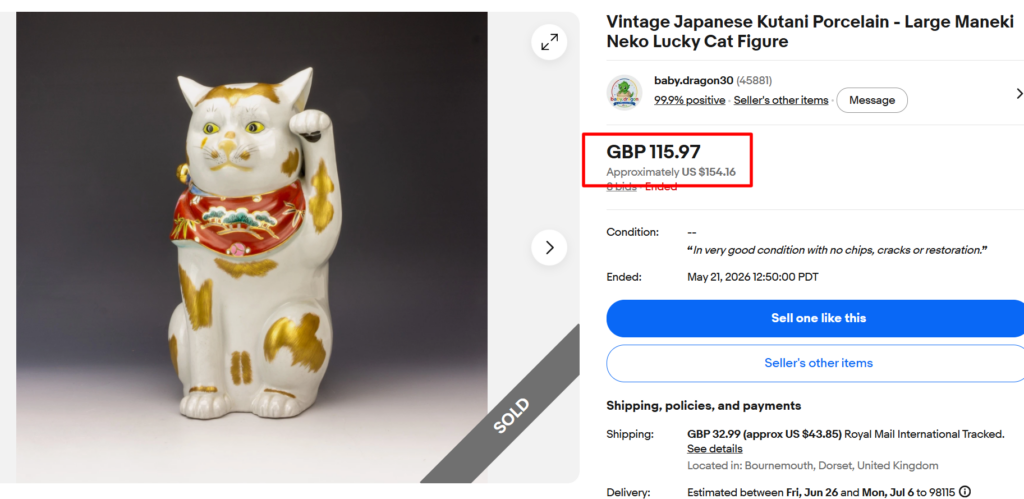
Antique Kutani Maneki-neko
Typically sells for $400 to $1,500 (antiques with gilt)
- Era: Late Meiji through early Showa periods
- Identifying Features: Bold five-color porcelain (red, blue, yellow, green, purple) with hand-painted floral patterns and gold gilt details
- Collectibility: Antique examples with gold gilt
Kutani porcelain is known for its detailed multi-colored hand painting and extensive use of gilding. In an antique Kutani maneki neko, you’ll find all these features together: ornate body designs, meticulously painted faces, and gold strokes for the effect of a fur coat.
Look for the brushwork on the gold. Authentic Kutani gilt has tiny irregularities and a slightly raised feel. Modern reproductions use printed gold that lies flat and uniform.
2
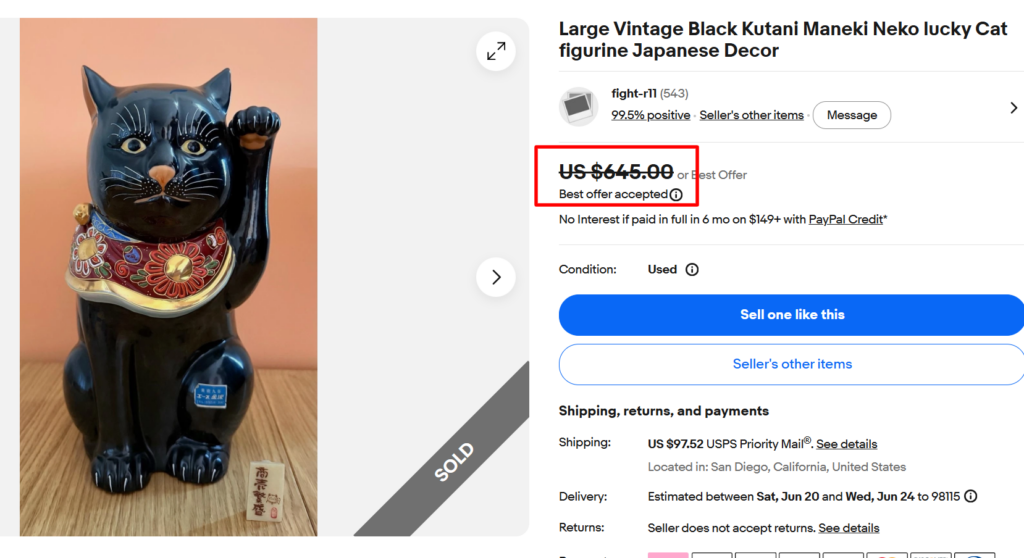
Black Kutani Maneki-neko
Typically sells for $500 to $2,500 (antique pieces with gilt)
- Era: Late Meiji through early Showa periods
- Identifying Features: Black body with bright and golden eyes and accents, like a scarf
- Collectibility: Antique examples with gold accents
Black Lucky Cat figurines usually symbolize protection, and are believed to ward off evil and illness. This color is rarer to find in antique examples, and hence, is more valuable than white examples.
Black pieces from notable ancient kilns, like Kutani, Tokoname, and Bizen, are among the most valuable cat figurines and command premium prices in sales and auctions.
3
Kirin Ichiban Beer Fortune Cat
Typically sells for $200 to $500+ (vintage Ad pieces)
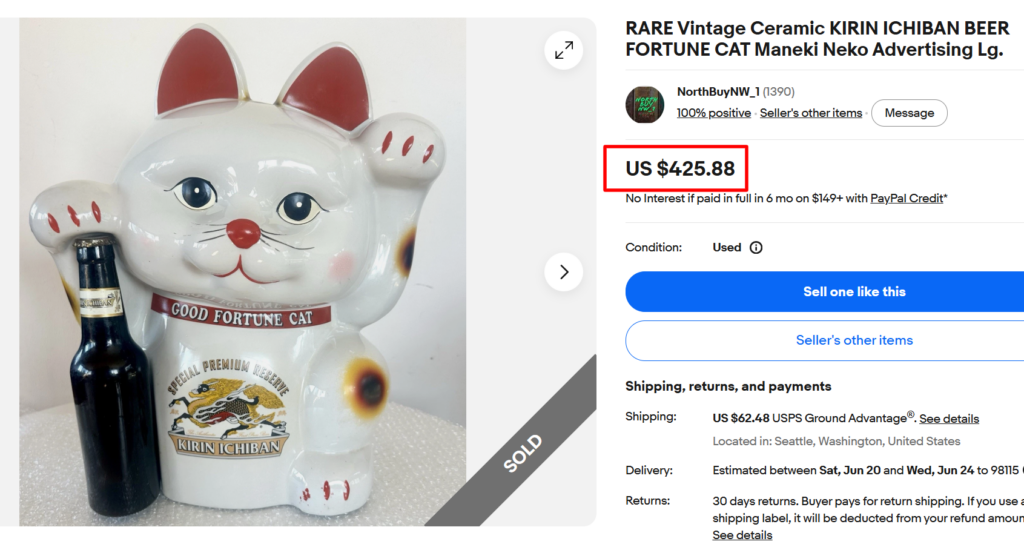
- Average Value: $200 to $500+ for genuine vintage advertising pieces
Identifying Features: A branded bib, label, or logo painted onto the body; often functions as a coin bank
Era: Mid-20th century through the 1980s for collectible examples
This example is a Kirin Ichiban Beer “Good Fortune Cat” with the brewery’s qilin crest hand-painted on a “Special Premium Reserve” label across the body. Japanese breweries, restaurants, and shops commissioned custom maneki neko as promotional pieces, and these have become a small but active collecting category of their own.
Brand recognition drives most of the value here, with Kirin, Asahi, and Sapporo advertising pieces sitting at the top. You identify a genuine vintage advertising maneki neko by the integration of the brand.
The logo or product image is hand-painted directly into the bib or body, not applied as a sticker. The base usually shows wear consistent with decades of use in a counter or shelf display.
4
Carved Wooden Maneki Neko
Typically sells for $1,500 to $3,000+ (documented examples)
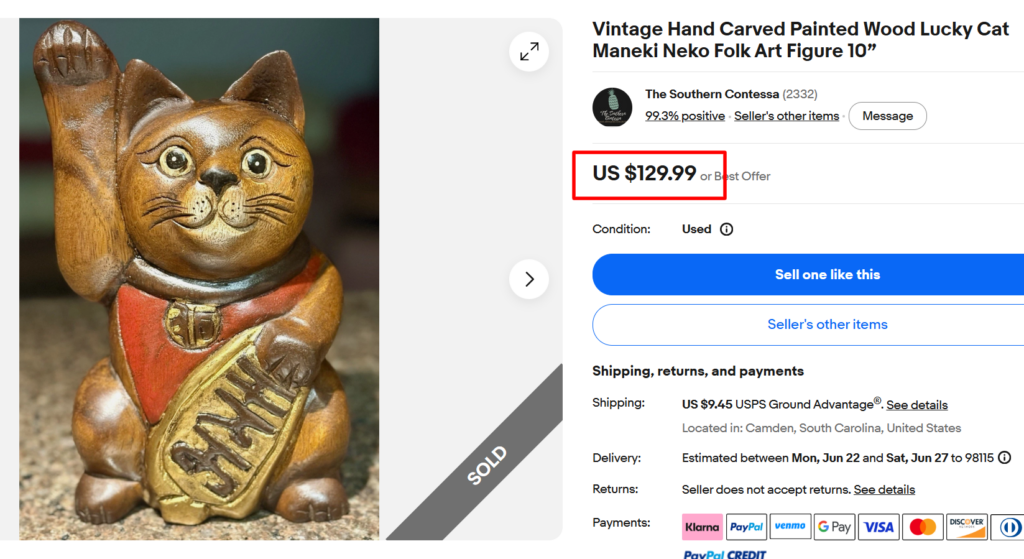
- Era: Meiji period: 1868 to 1912 (most valuable era)
- Identifying Features: Hand-carved and hand-painted wood, often signed and dated on the base
- Collectibility: Highest for documented Meiji-era examples
The wooden maneki nekos are the rarest antique versions. Pay attention to excellent knife carving, hand painting, and a carved or brush signature on the bottom. The modern wooden lucky cats are turned on a lathe; hence, they have a much smoother texture compared to Meiji carved wooden lucky cats.
Antique wooden Japanese Lucky Cats from the Meiji era can easily sell for $1,000-$3,000 in pristine condition today. But finding one is extremely hard, and most wooden examples are modern reproductions.
5
Seto Ware Maneki Neko
Typically sells for $400 to $1,200 (Taisho-period examples)
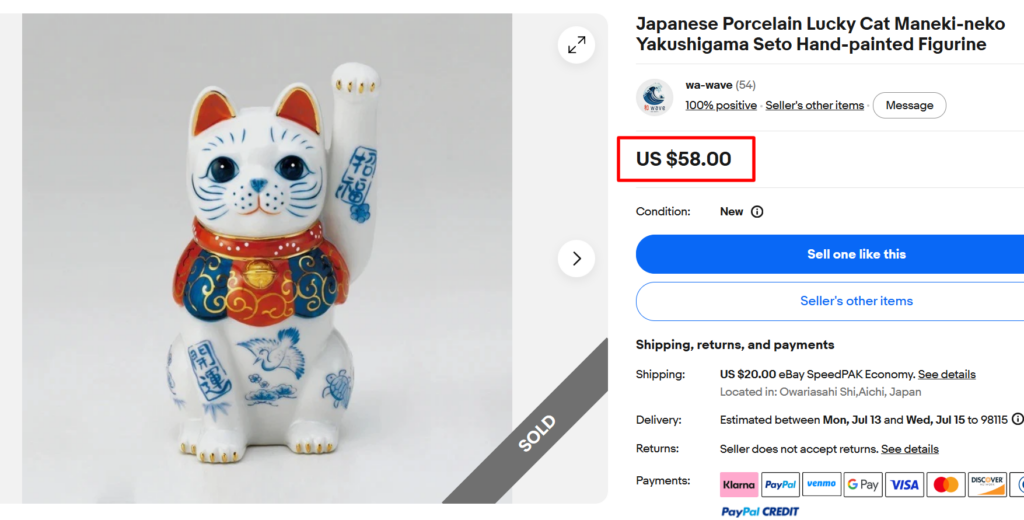
- Era: Meiji and Taisho periods, with continued production today
- Identifying Features: Luminous glazes, detailed faces modeled after Japanese bobtail cats, and elaborate painted bibs
- Collectibility: High for Taisho-period pieces
Seto is one of the “Six Ancient Kilns” in Japan and has a rich history of making ceramics for over 1,000 years. The potteries at Seto began crafting decorated maneki nekos with detailed painted faces and fancy collars in the Taisho Era from 1912 to 1926.
The key features of the Seto pieces include the smoothness of the glazing, the detailed bib painting, and the expression in the feline’s face. Antique Seto pieces belong to the high-value category, while the newer ones are less expensive.
Note: This article is intended for informational, educational, and entertainment purposes only. Some images are illustrative and may not represent actual brands, products, or related entities. All trademarks, product names, brand logos, packaging, and other intellectual property referenced remain the exclusive property of their respective owners. Any brand mentions or references are provided solely for descriptive and educational context and do not imply any formal or commercial association.