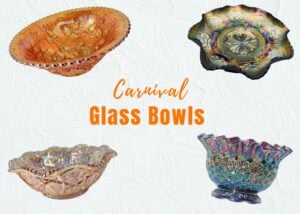
When we talk about vintage bowls, they sound pretty common. But carnival glass bowls aren’t just ordinary bowls; they’re known for their mind-blowing rainbowy shine, colors, and intricate designs that you don’t see today.
While once everyday items sold for pennies at fairs, these glass bowls are now worth hundreds to thousands, especially for rare patterns and colors. In this list, I’m going to show you 13 collectible carnival glass bowls worth checking!
About Carnival Glass: The Poor Man’s Tiffany
You might have come across carnival glass bowls at antique shops, malls, garage sales, or even online auctions. But how old are they really?
The Fenton Glass Company discovered the Carnival glass in 1908 through the spraying of metallic salts on melted glass to give it that distinctive metallic and iridescent shimmer.
Soon, suppliers began distributing these bowls for free at carnivals and fairs as prizes, hence the “Carnival Glass.” However, these are not just made by Fenton; a number of manufacturers, like Northwood, Imperial, and Millersburg, mass-produce these as well.
How to Spot a Real, Valuable Carnival Glass Bowl?
Knowing how to identify original carnival glassware, specifically a bowl, is not only important for authenticating, but for finding its value as well. Here are some methods to try:
- Maker’s Marks (Rare): This is the most reliable way to identify Carnival glass, only a few makers included specific marks. For example, some Northwood pieces have an underline N in a circle, and some bowls may show “Fenton” or the cursive “F.”
- Mold Lines: Look for mold lines. Companies made carnival glass bowls by pressing molten glass into a mold. This produced a mark on the items that can be observed on the surface.
- The Base Color: Always check the bottom or unglazed part to identify the bowl’s actual color. This is important because some reproductions may have a shiny colored coat sprayed on clear glass.
- Irridescence Test: Real carnival glass shine. So, hold your bowl under a light source (preferably white light). You should see a rainbow-like color reflection. If not, it’s not carnival glass.
- Pattern: Different makers made carnival glass bowls with various patterns. Observe the embossed design and motifs to check the pattern, and tally them using the company’s catalogs or guides to verify. This is also important as certain patterns are more valuable.
- Unique Edges: Bowls with distinctive patterns like ruffled, pie crust, or sawtooth are considered valuable.
- Production Signs: Check for flaws, like straw marks, bubbles inside the bowl, and other imperfections. These are not damages but flaws caused during the making. Only reproduced pieces look too perfect.
Collectible Carnival Glass Bowls with Rare Patterns & Colors
When it comes to vintage carnival glass bowls, over 3,000 patterns have been found as of now. To help you pick the best, here’s a curated list of the 13 rarest pieces you should know!
1. Persian Blue “Peacock and Urn” Ruffled Bowl by Fenton
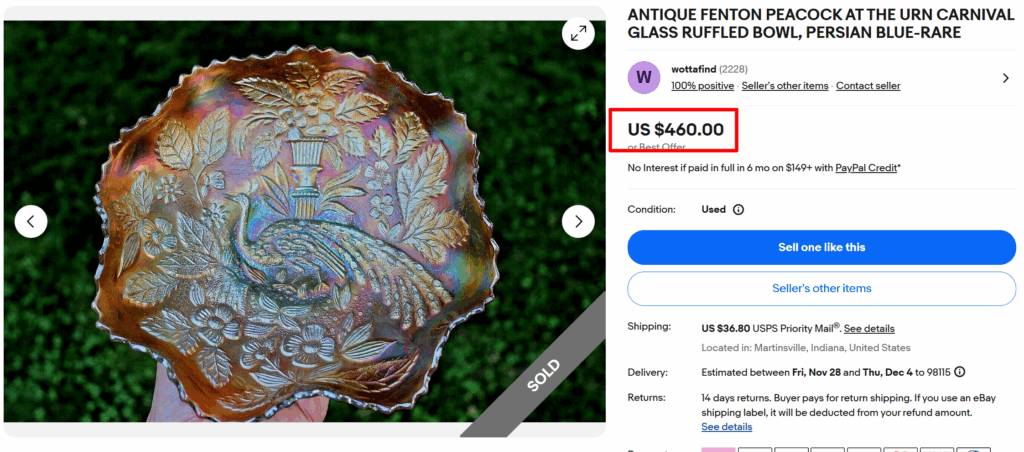
This is a Fenton’s serving bowl featuring the “Peacock at the Urn” pattern in a rare Persian blue color. One of the most notable from Fenton, Northwood, and Millersberg, it shows a peacock standing in front of an urn with flowers and leaves.
This bowl has rimmed edges, a standard feature, but it’s still quite collectible. Peacock-and-urn bowls usually sell for $200 to $500. It’s also available in other color options, including ice blue and white.
Note: Bowls with this pattern may have tiny variations to differentiate the maker. For example, Fenton bowls have a large bee motif near the peacock’s beak.
| Average Price | $200 to $500 |
| Manufacturer | Fenton Glass Company |
| Pattern | Peacock & Urn |
| Production Year | Early 1900s |
| Popular Colors | Persian Blue, Amethyst Purple, Ice Blue |
2. Vaseline “Dragon and Lotus” Ruffled Bowl By Fenton
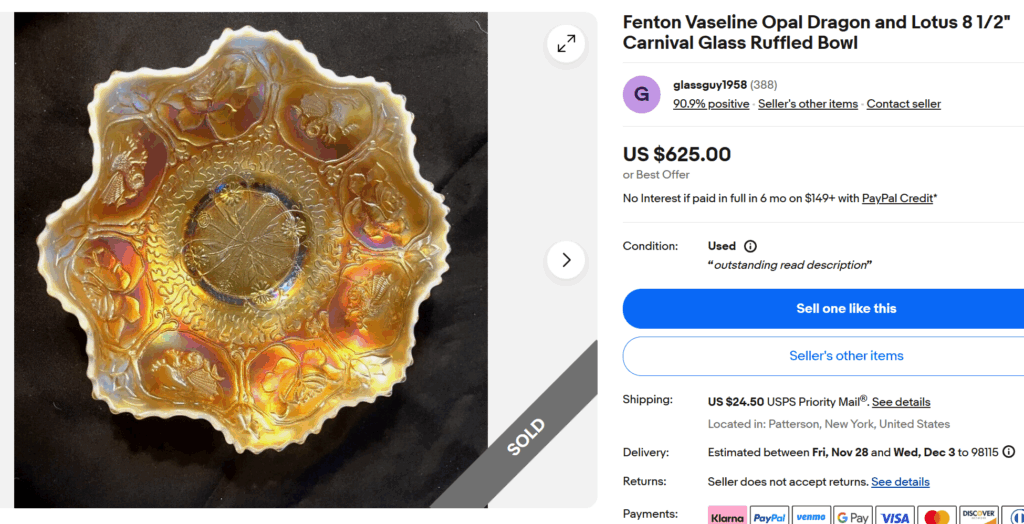
This is an amazing ruffled-edge bowl featuring Fenton’s popular “Dragon And Lotus” pattern in Vaseline color. Inspired by Asian design, this design features a dragon and a blossoming lotus as a spin on a central floral design that reflected people’s mania for Oriental designs during the early 20th century.
Because of its popular design coupled with the limited Vaseline color, these bowls can be highly valued by collectors today.
| Average Price | $200 to $700 |
| Manufacturer | Fenton Glass Company |
| Pattern | Dragon & Lotus |
| Production Year | 1915–1920 |
| Popular Colors | Marigold, Blue, Amethyst & Green |
3. Marigold “Grape and Cable” Punch Bowl Set by Northwood
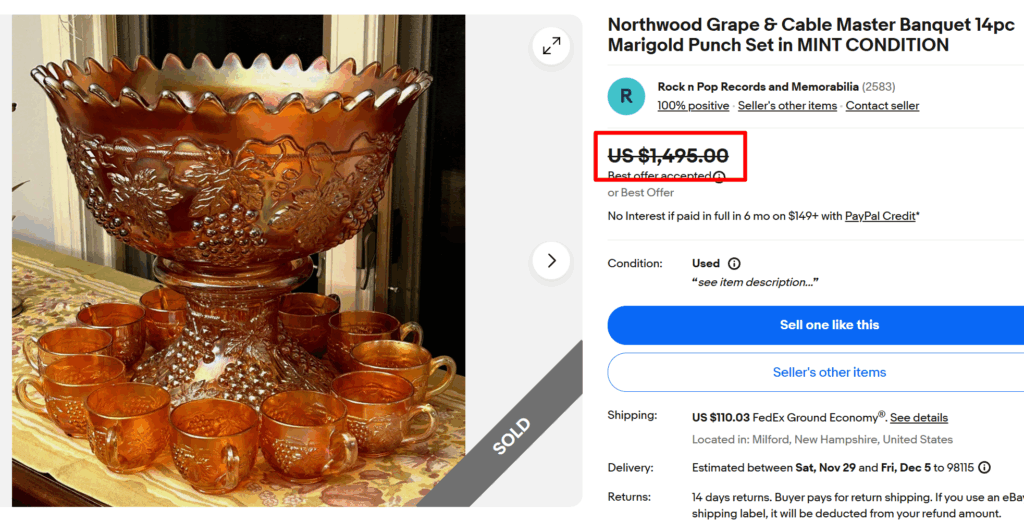
Marigold “Grape and Cable” bowls are common, but finding a complete punch bowl set like this is super rare. That’s why this bowl sold for almost $1,500!
You can spot this set by embossed motifs of a bunch of grapes and leaves hanging from a thick, rope-like cable.
The massive master punch bowl measures 14-16 inches tall by 16-17 inches wide with unusual, saw-tooth edges, while the cups are simple. You may also find Northwood’s trademark (an underlined N inside a circle) on the bowl’s base.
Collector’s Note: Although Northwest released this pattern, other companies, like Fenton, adapted the design and launched their own variations. You can differentiate them by distinct features like grape arrangement, edges, and more.
| Average Value | $1,000 to $1,500 (full set) |
| Manufacturer | Northwood |
| Pattern | Grape and Cable |
| Production Year | 1909/10 – 1919 |
| Popular Colors | Ice blue, Aqua Opal, Amethyst Purple, Marigold, Green |
4. Red “Orange Tree” Shallow Bowl by Fenton
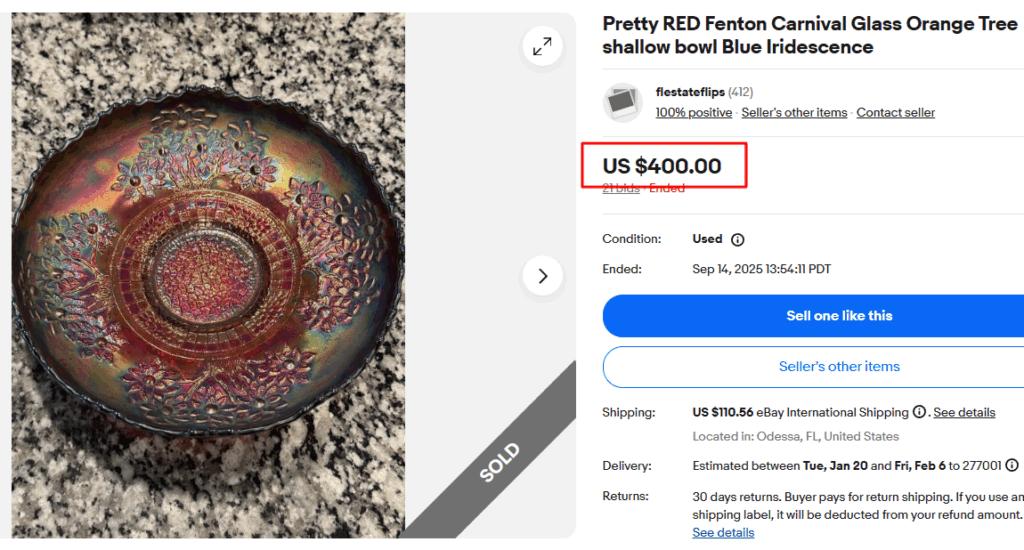
This bowl shows one of Fenton’s most iconic patterns, “Orange Tree,” released in 1912. It shows large, leafy trees interspersed with round fruits and stippling, flowers, and a scale pattern towards the center. The exterior shows bearded berries.
But what makes this bowl worth hundreds is its super-rare color, red. Since it was difficult to make, only limited red carnival glass pieces were made, making them rare today!
| Average Value | $200 to $700 |
| Manufacturer | Fenton |
| Pattern Motifs | Orange Tree |
| Production Year | 1911 to 1929 |
| Popular Colors | Marigold, Blue, Amethyst, Ice Green, Red |
5. “Good Luck” Bowl by Northwood – Electric Oxblood
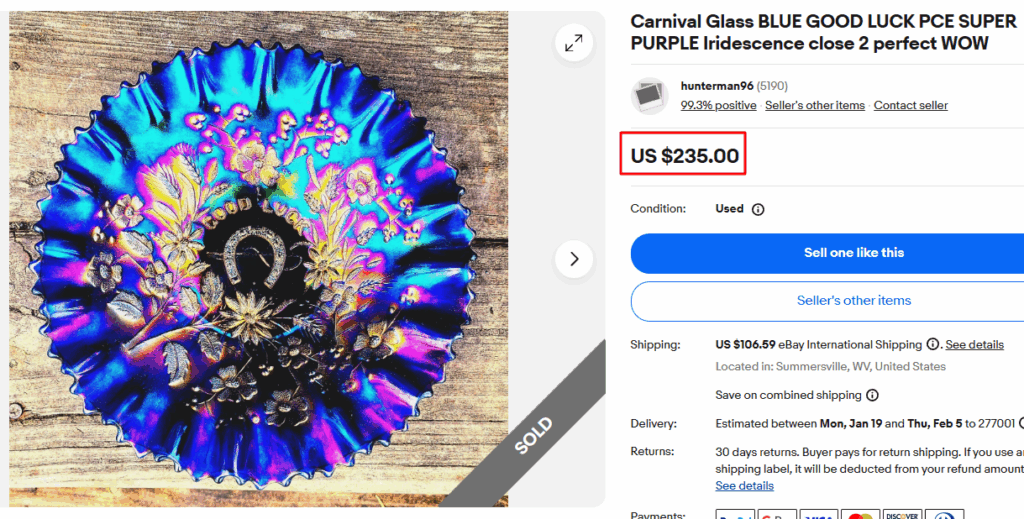
This ruffled Northwood serving bowl shows a very collectible design, “Good Luck,” with an oxblood base color and an intense iridescence of electric blue and purple. The color itself makes this bowl rare and worth the $235 price tag!
You can spot this rare pattern by a central horseshoe with a riding crop passing through it, and a detailed arrangement of flowers and leaves. There are also the words ‘GOOD LUCK’ pressed right above the horseshoe.
| Average Value | $75 to $450 (single bowls) |
| Manufacturer | Northwood |
| Pattern Motifs | Good Luck (Horseshoe) |
| Production Year | 1909 to 1917 |
| Popular Colors | Marigold (Common), Amethyst, Blue, Green, White, Ice Blue, Ice Green |
6. Amethyst “Poppy Show” Ruffled Bowl – Northwood
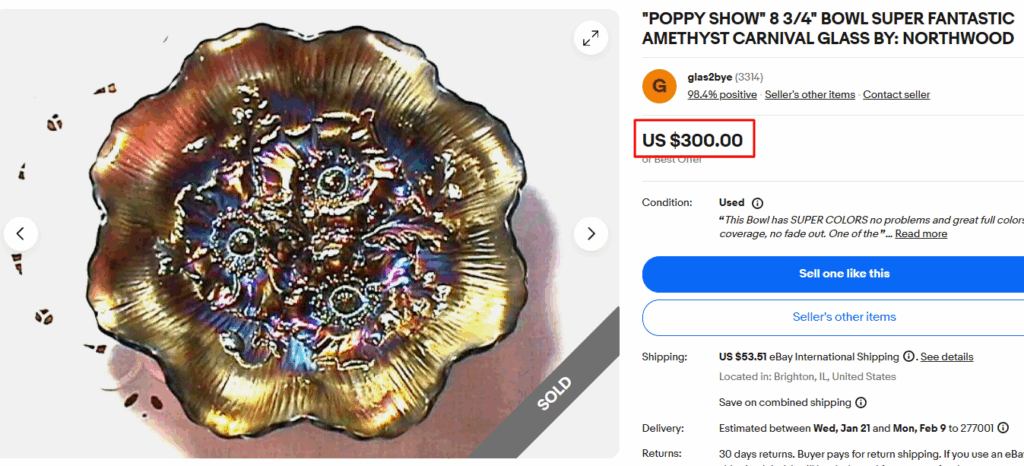
You can spot a Northwood’s “Poppy Show” bowl by its ruffled edges and an elaborate design with intricate poppy flowers on a stippled or textured background.
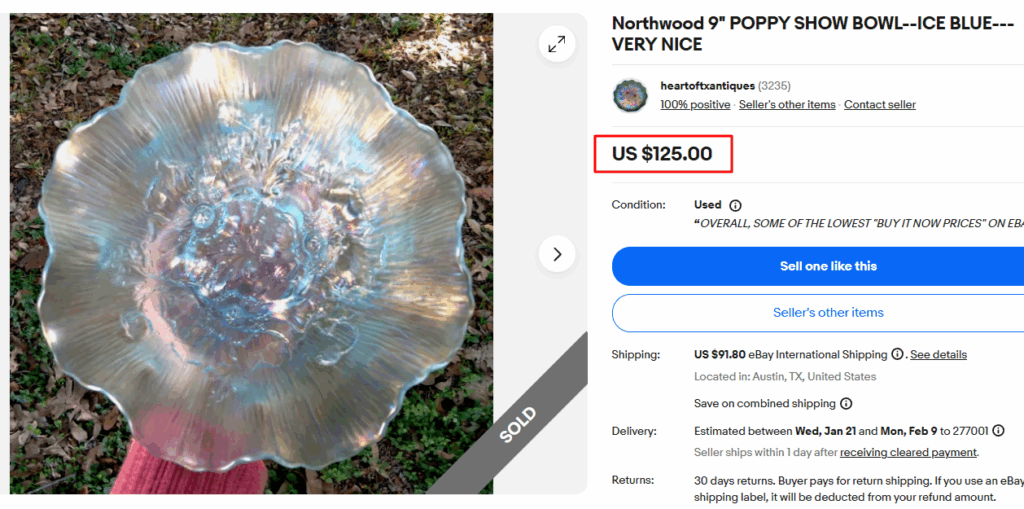
Since it’s an antique pattern from 1909, it is already quite rare. But this bowl is in a scarce Amethyst color, adding more to its value. Other collectible colors include White, Emerald Green, Ice Blue, and Cobalt Blue.
Here’s an example of an ice blue “Poppy Show” bowl:
| Average Value | $50 to $350 |
| Manufacturer | Northwood |
| Pattern Motifs | Poppy Show |
| Production Year | 1909 to 1910 |
| Popular Colors | Marigold, Amethyst, Aqua Opal, White, Ice Blue, Emerald Green, Ice Blue |
7. Purple “Farmyard” Bowl by Dugan
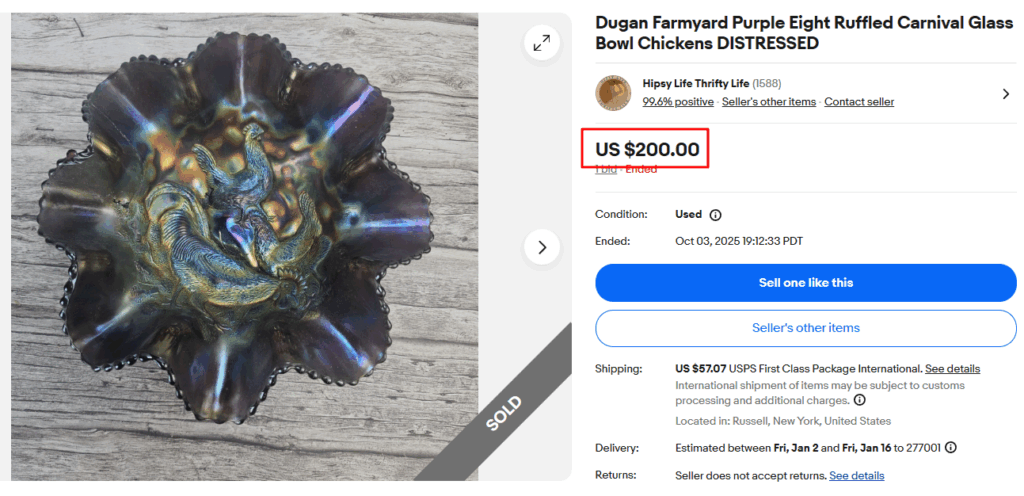
The example shows a purple serving bowl from Dugan, with its popular “Farmyard” pattern. You can spot it by the central design featuring a rooster and hens/chickens.
The exterior of the bowl shows a jewelled heart pattern, exclusive to Dugan. This is a highly collectible carnival glass pattern, especially in unique shapes, like this deep, eight-ruffled bowl.
| Average Value | $80 to $200 (common); $200-$500 (rare colors) |
| Manufacturer | Dugan |
| Pattern Motifs | Farmyard |
| Production Year | 1909 to 1913 |
| Popular Colors | Purple/Amethyst (Common), Green, Peach Opal |
8. “Three Fruits Medallion” Bowl by Northwood – Aqual Opal
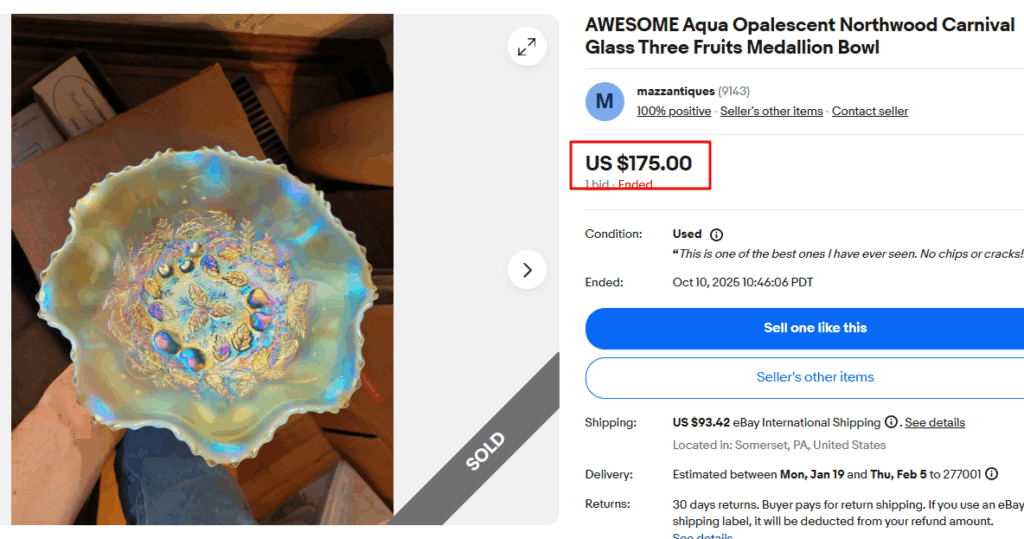
A “Three Fruits Medallion Bowl” shows an exterior featuring a complementary Meander pattern and an interior with a central three-leaf motif surrounded by apples, pears, and cherries.
Some bowls in this pattern also come with three spatula feet, which are rarer than non-footed pieces, and can fetch higher values.
| Average Value | $50 to $250+ (based on color) |
| Manufacturer | Northwood |
| Pattern Motifs | Three Fruits Medallion |
| Production Year | 1909 to the 1910s |
| Popular Colors | Amethyst, Aqua Opalescent, Ice Blue Opalescent, Green, White (Rare) |
9. “Brooklyn Bridge” Serving Bowl by Dugan – Marigold
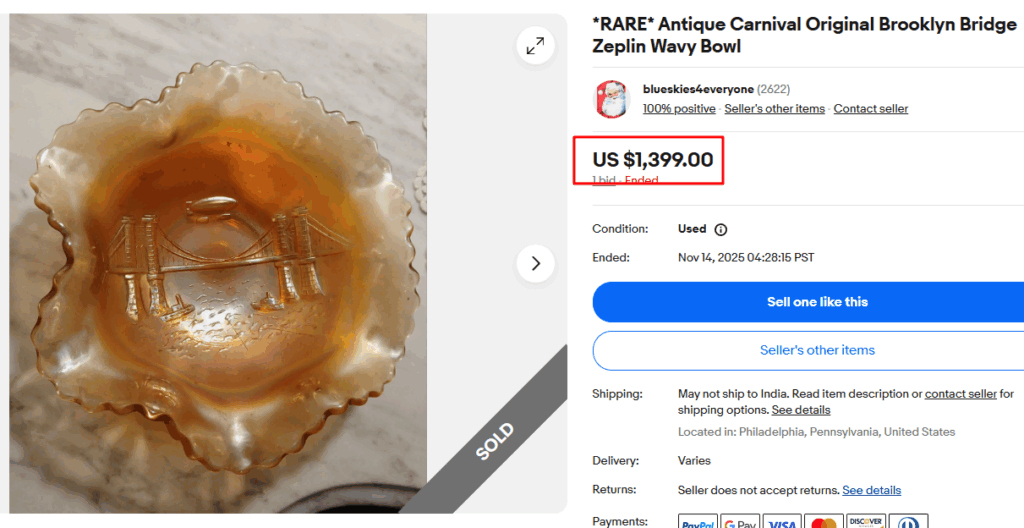
The astonishing value of almost $1,400 for this carnival glass serving bowl comes from the super-rare “Brooklyn Bridge” pattern by Dugan! Many believe that the company released this design to commemorate the bridge’s 25th anniversary.
As the name suggests, the design features an aircraft flying over the bridge and boats in the river beneath it. Some patterns may showcase ‘BROOKLYN BRIDGE’ written under the aircraft, while others may not.
| Average Value | $500-$1,500 + (based on condition) |
| Manufacturer | Dugan |
| Pattern Motifs | BROOKLYN BRIDGE |
| Production Year | 1907/1908 |
| Popular Colors | Marigold (common), Pink Afterglow, Vaseline (Rare) |
10. Amethyst “Poinsettia and Lattice” Three-footed Bowl By Northwood
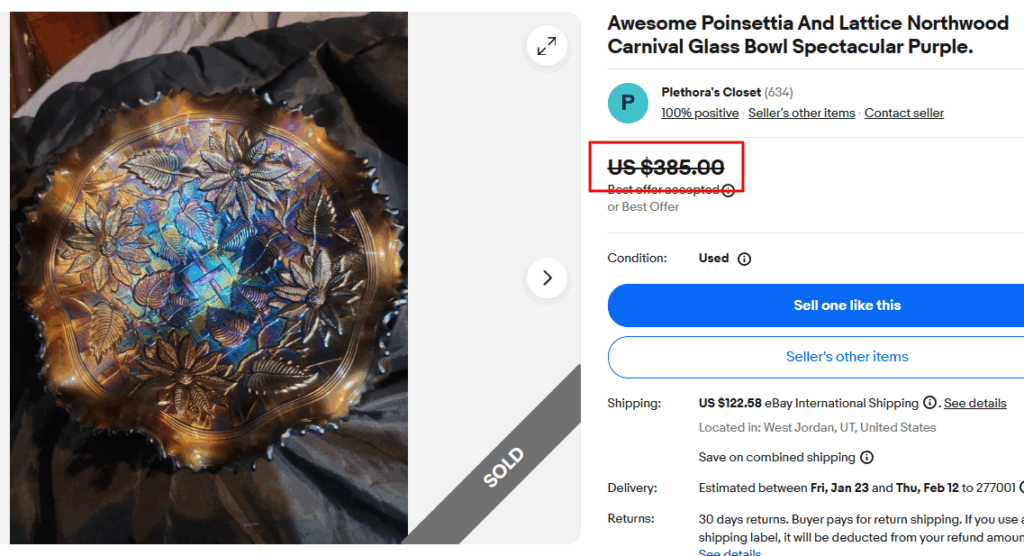
This ruffled bowl shows a scarce pattern from Northwood, “Poinsettia and Lattice.” You’ll see poinsettias and leaves, surrounded by a geometric lattice design that extends to the rim. On the outside, there’s a stippled rays pattern.
Since this pattern was only released on ruffled, footed bowls, pieces in mint condition are even more collectible and valuable.
| Average Value | $150-$500+ (as per color, condition) |
| Manufacturer | Northwood |
| Pattern | Poinsettia and Lattice |
| Production Year | 1912 |
| Popular Colors | Lavender, Electric & Ice, Amethyst, White (Rare) |
11. Millersburg’s Green “Blackberry Wreath” Sauce Bowl
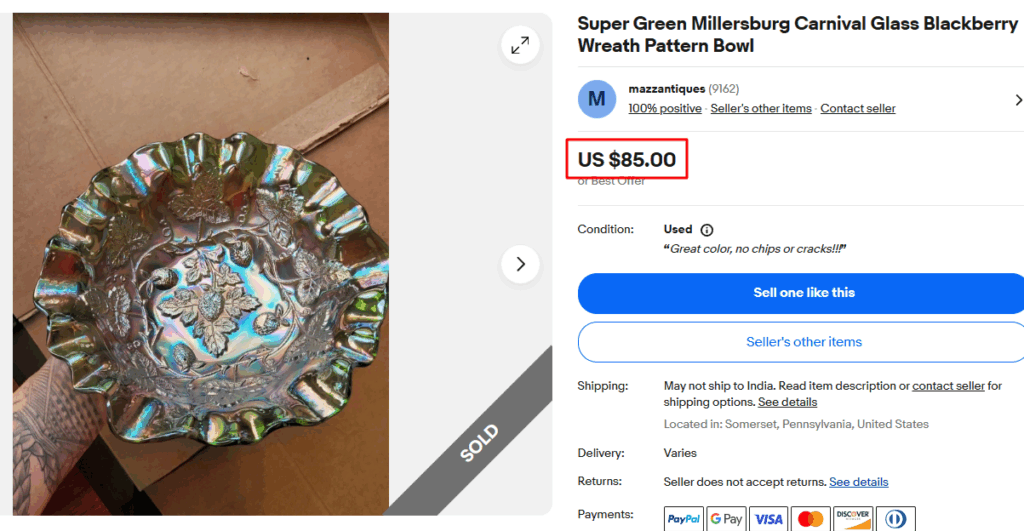
Here, you’re looking at a ruffled bowl with Millersburg’s “Blackberry Wreath” design in green color. Made for a short duration (1909 to 1912), this design is quite collectible, especially on large bowls, like this example.
To spot this design, look for blackberries on a leafy vine that forms a wreath inside. The central motif is a bunch of blackberries with foliage. Besides, this pattern was made in many colors, with green being common and, hence, moderately valuable.
| Average Value | $60-$250+ (as per color, condition) |
| Manufacturer | Millersburg |
| Pattern | Blackberry Wreath |
| Production Year | 1909-1912 |
| Popular Colors | Emerald Green, Amethyst (purple), Orange Marigold |
12. Green “Trout and Fly” Bowl By Millersburg

This carnival glass bowl shows a trout leaping out of the water and a fishing fly near its mouth. The trout and fly in this pattern are surrounded by a scroll of leaves and flowers.
Millersburg’s “Trout-and-fly” serving bowls are rare, as this pattern lasted only two years, 1909 to 1911, before the company shut down. That’s why even common colors, like marigolds, can easily fetch $100 to $200 today.
| Average Value | $150-$500+ (as per color, condition) |
| Manufacturer | Millersburg |
| Pattern | Trout-and-Fly |
| Production Year | 1909 to 1911 |
| Popular Colors | Marigold, Green (Common); Amethyst Vaseline (Rare) |
13. Northwood’s “Peacocks on the Fence” – Green
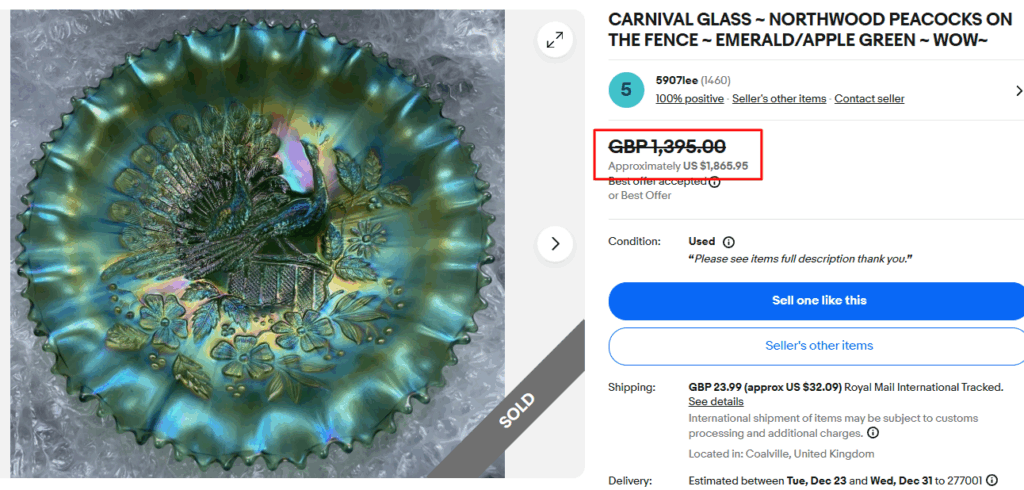
This saw-tooth-edge bowl features one of Northwood’s widely acclaimed patterns, “Peacock and the Fence.” You can easily identify it by the motifs of two peacocks sitting on a fence with a spring of flowers, berries, and leaves around them.
However, the worth of this bowl (which was sold for almost $1,870) is in its rare color. This particular design came out in a lot of colors, including ice green and ice blue, but the emerald and the apple/lime green ones are rare to spot.
| Average Value | $700-$2,000 (based on condition, hue) |
| Manufacturer | Northwood |
| Pattern | Peacocks on the Fence |
| Production Year | 1908 to 1915 (Some Pieces to 1919) |
| Popular Colors | Ice Green, Ice Blue, Purple (Common); Emerald & Lime Green, Aqua (Rare) |
Now you know that old carnival glass bowls aren’t just ordinary kitchenware pieces. They’re valuable antiques, with some pieces worth thousands. So, before you sell yours, check its pattern, color, and other details; it could be worth a fortune!
Note: This article is intended for informational, educational, and entertainment purposes only. Some images are illustrative and may not represent actual brands, products, or related entities. All trademarks, product names, brand logos, packaging, and other intellectual property referenced remain the exclusive property of their respective owners. Any brand mentions or references are provided solely for descriptive and educational context and do not imply any formal or commercial association.