Antiques Know How Research
Notable Ceramic Dishes Makers
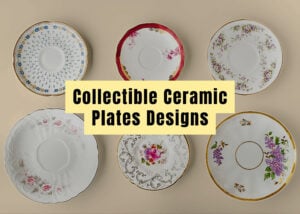
Based on our research of recent auction results and marketplace data, Antiques Know How suggests that vintage ceramic dishes from blue-chip makers can sell for $10 to $50 for common items and can reach $500 to several thousand dollars for rare pieces, sets, or early production runs. The most notable makers include Meissen, Wedgwood, Spode, Royal Worcester, and Lenox, with antique European porcelain and discontinued American patterns commanding the highest prices.
Antiques Know How
If you love collecting old antique dishes, then you must know the names behind great ceramic dishes as well as their most renowned patterns and lines. This guide is here to help you do exactly that.
We’ll walk you through ceramic makers whose dishes have stood the test of time. Their vintage dishes are not only easy to recognize but also widely collected and quite valuable.
Notable Ceramic Makers to Spot When Thrifting Vintage Dishes!
Collecting valuable vintage dishes means knowing which ceramic makers stand for quality and craftsmanship. These are the labels you want to grab before someone else does:
1. Meissen
| Manufacturing Period | 1710 – present |
| Known for | Hand-painted luxury wares |
| Why Collectors Love It | Royal heritage, museum-level designs |
| Popular Colors | Underglaze cobalt blue, polychrome florals |
Founded under royal patronage in 1710, Meissen pioneered hard-paste porcelain in Europe to rival Asian imports and became synonymous with luxury tableware. It was the first European maker to create porcelain with the similar strength and beauty of Chinese porcelain, making fine dining dishes for European royalty.
Beyond its famous dinner plates and serving dishes, Meissen also set new standards for porcelain sculpture with its highly detailed figurines. Its crossed-swords mark remains one of the most protected trademarks yet. Today, Meissen’s antique dishes and dinnerware sets command high prices at auction!
Signature Lines of Meissen
- Swan Service (1730s): Considered to be the most beautiful dinnerware ever made, Swan Service features molded swans, shells, and aquatic motifs. Meissen made around 2000 pieces, most of which were lost during World War II, making them rare!
- Blue Onion (1730–1739): Introduced in 1739, Blue Onion is Meissen’s most famous pattern, featuring stylized blue flowers and fruits inspired by Chinese porcelain. Despite its name, the design actually depicts pomegranates and peaches, not onions!
Meissen Blue Onion Dishes
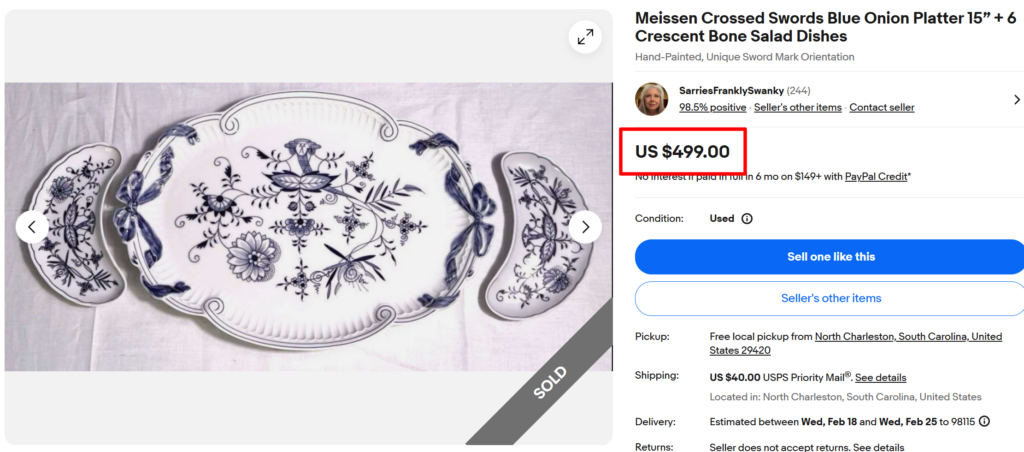
Celebrated for over two centuries, the Blue Onion remains one of the most enduring and collectible porcelain patterns. Large pieces like this generous 15-inch platter are especially desirable, and the matching salad dishes are a bonus.
2. Gladding, McBean & Co.
| Manufacturing Period | 1875–1970s |
| Known for | Hand-painted florals – wedding china staple |
| Why Collectors Love It | Mid-century charm |
| Popular Colors | Ivory and pastels (pink, blue, yellow, etc.) |
Founded in 1875 in California, Gladding, McBean & Co. combined technical skill with American ingenuity at a time when locally made high-quality ceramics were rare. As American homes embraced casual dining, the company seized the opportunity to introduce everyday earthenware as a highly profitable line.
Its vintage dishes from the Franciscan ware line are highly collectible due to their hand-painted patterns and vibrant glazes. Early production runs, discontinued patterns, and well-preserved sets are especially sought after.
Popular Patterns by Gladding, McBean & Co.
- Apple (1940–2011): Franciscan’s most iconic pattern, Apple features bright red apples with green leaves on warm ivory earthenware. Its long production run means it’s common, but early marks and uncommon forms carry strong value.
- Desert Rose (1941–2013): Known for its sculpted pink roses and soft green leaves, Desert Rose has a hand-painted, almost three-dimensional look. Because pieces were decorated individually, no two are exactly alike.
- Starburst (1954 & the late 1950s/1960s): This line reflects the space-age influence of the era with its modern black stars with blue and yellow circles on a lightly speckled background!
Franciscan Starburst Lidded Casserole
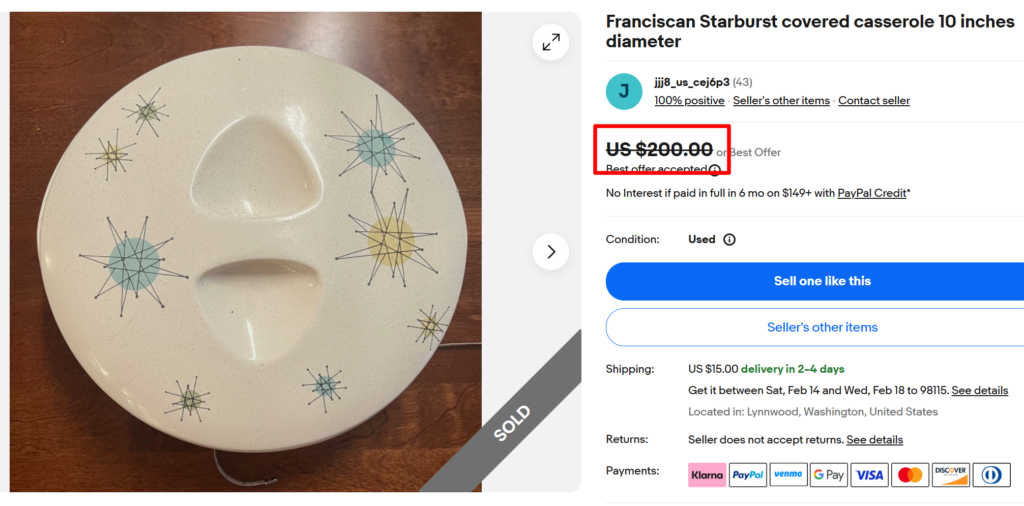
This covered casserole from Franciscan’s Starburst line sold for $200 for its size, completeness, and popularity. Its earthenware construction keeps it practical, and the graphic motifs make it suitable for modern and mid-century table settings.
3. Royal Copenhagen
| Manufacturing Period | 1775-present |
| Known for | Royal Danish heritage, pierced lacework |
| Why Collectors Love It | Timeless Nordic elegance |
| Popular Colors | Cobalt underglaze blue, fine white porcelain, fine white porcelain |
Royal Copenhagen was founded in 1775 in Copenhagen, Denmark, under royal patronage to produce fine porcelain for the Danish court. The factory combined European craftsmanship with Nordic sensibility, earning popularity for its refined forms and hand-painted decoration.
Its mastery of hand-painted underglaze blue is most famously seen in the Blue Fluted patterns. Each piece was individually painted, making each piece unique and rare!
Today, collectors prize Royal Copenhagen pieces for their quality, timeless design, and the iconic maker’s marks featuring three blue waves.
Royal Copenhagen’s Best Known Lines
- Blue Fluted Full Lace (1888–present): The most elaborate of the Blue Fluted series, Full Lace features intricate hand-painting paired with heavily pierced, lace-like borders.
- Flora Danica (1790–present): One of the world’s most prestigious porcelain services, Flora Danica showcases scientifically accurate, hand-painted botanical illustrations copied from a Danish flora atlas.
Royal Copenhagen Blue Fluted Soup Tureen
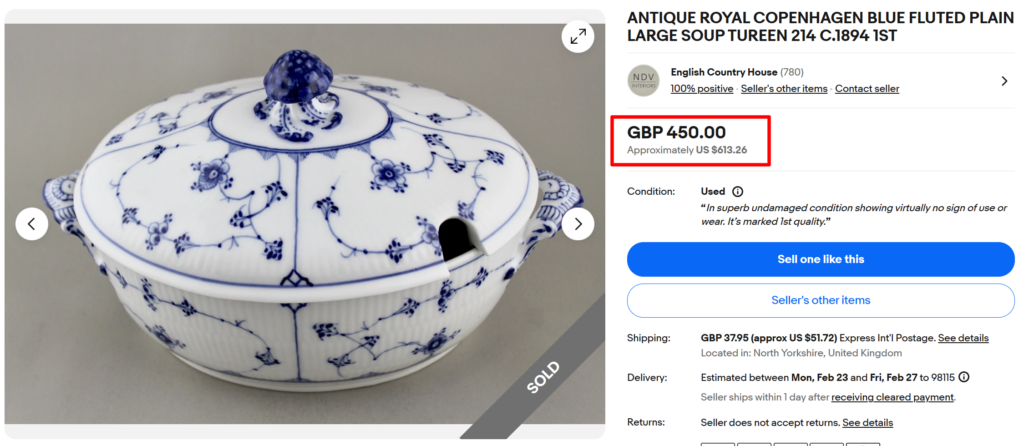
Dating from the late 1700s, this Royal Copenhagen soup tureen showcases Blue Fluted Plain, the original pattern of Royal Copenhagen. The historical back stamp confirms its origin and fine quality. Such complete pieces are highly desirable!
4. Pfaltzgraff
| Manufacturing Period | 1811–2000s |
| Known for | Everyday stoneware patterns |
| Why Collectors Love It | Everyday nostalgia |
| Popular Colors | Brown, blue, neutral glazes |
Pfaltzgraff began in 1811 in York County, Pennsylvania, making it one of the oldest pottery brands in the U.S. For much of its early history, the company focused on durable stoneware. High-fired stoneware became especially popular as it was thicker and more chip-resistant.
Plus, their glazes were designed to be matte or soft satin, helping hide wear from daily use. This combination is exactly why Pfaltzgraff became a long-term household favorite. Today, vintage pieces from discontinued patterns are highly sought after.
Standout Lines of Pfaltzgraff
- Village (1970s–1990s): The Village line leans into folk-art charm with hand-drawn blue illustrations of people, houses, and animals on a creamy background. The slightly whimsical, storybook feel sets it apart.
- Naturewood (1970s): A very different look for Pfaltzgraff, Naturewood mimics warm woodgrain using brown transfer patterns on stoneware. It fits right into the casual, earthy décor trend of the late ’70s.
- Yorktowne (1960s): This design is known for its hand-applied central floral motifs and blue rims on an off-white (or very light gray) background.
Large Yorktowne Dinner Set
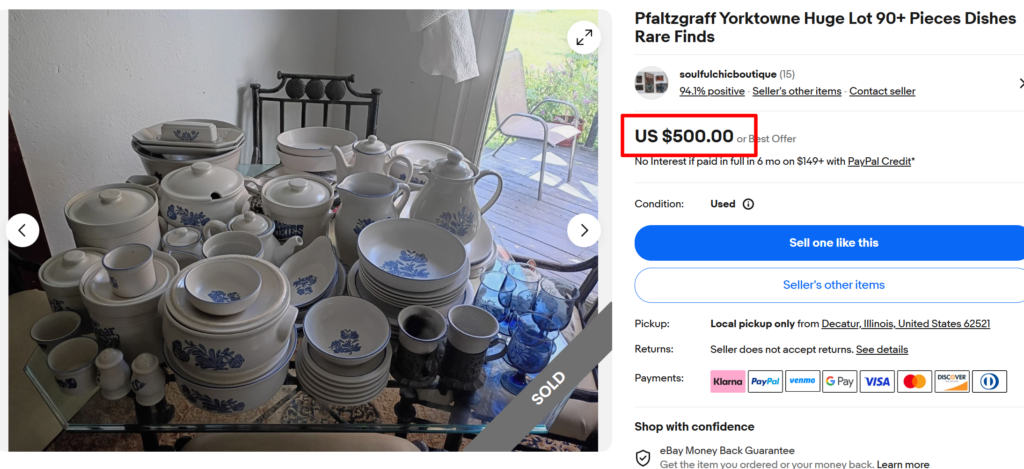
The soft blue rim lines and central design are classic Yorktowne. What really adds value here is the scale: assembling 90+ pieces, especially with harder-to-find items like teapots, creamers, shakers, and trays, takes years for most collectors.
5. Royal Worcester
| Manufacturing Period | 1751–present |
| Known for | Fine English porcelain, Victorian luxury |
| Why Collectors Love It | Artist-signed pieces, strong auction performance |
| Popular Colors | Blush ivory, cobalt, gold |
Royal Worcester started as a local factory in 1751 in the city of Worcester, England, and soon earned royal patronage for its elegant tableware that could rival continental makers.
The company became known for realistic hand-painted fruit and rich cobalt grounds. Its unique blush ivory glaze became one of the most fashionable finishes in the late 19th century and remains highly collectible today.
Royal Worcester’s Most Collected Patterns
- Evesham Gold (1960s): Oven-to-table ware with fruit motifs and gold rims. Though it’s a relatively modern pattern, discontinued pieces and full sets maintain steady collector demand.
- Vale (20th century): Vale is a refined floral pattern featuring soft sprays of small blossoms, often in muted pinks, blues, and greens, arranged delicately across a clean white ground.
- Holly Ribbons (1950s): This design has delicate holly leaves and red berries with a festive ribbon border. This classic Christmas pattern became one of the company’s most popular holiday designs and is highly collectible now.
Holly Ribbons Scalloped Vegetable Dish
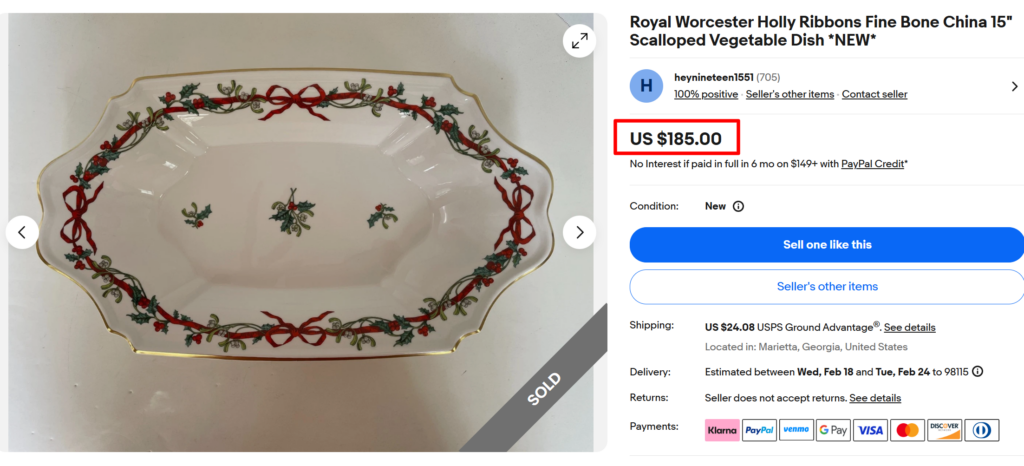
This 15-inch scalloped vegetable dish in the discontinued Holly Ribbons pattern is a strong collector’s piece. The pattern’s cheerful Christmas-y look makes it a popular festival statement piece!
6. Homer Laughlin
| Manufacturing Period | 1871-present |
| Known for | Bold, solid colors with signature concentric rings |
| Why Collectors Love It | Cheerful colors, durability, & everyday usability |
| Popular Colors | Original Red, Cobalt, Turquoise, etc. |
Homer Laughlin started in 1871 in East Liverpool, Ohio, with a simple goal to make affordable whiteware for everyday use. This was the time when American pottery was considered inferior to British and Chinese imports.
In 1886, Laughlin’s whiteware was finally recognised as fine American china. The business grew into one of the nation’s largest dinnerware companies and reached new heights with the launch of Fiestaware ceramic dinnerware line in 1936.
Today, Homer Laughlin is known for Fiestaware, which is among the most collected brands in the United States!
Homer Laughlin’s Iconic Patterns & Lines
- Magnolia (late 1951–1954): Featuring magnolia blossoms against green leaves on a light-colored background, these pieces are collectible for their Southern charm.
- Basket weave (1936-1965): The embossed woven pattern molded into the ceramic surface gives a classic mid-century aesthetic. Its bold colors and neutral glazes make this pattern highly collectible.
- Radioactive Red: This is one of the most popular colors in FiestaWare’s ‘Original Fiesta’ line. The bold glaze and inner ring detail make it instantly recognizable.
Radioactive Red Mixing Bowl
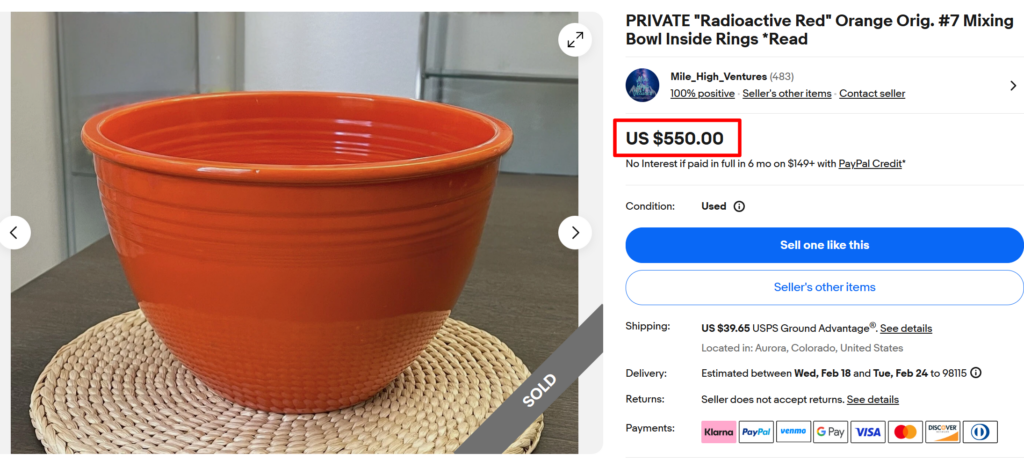
This rare mixing bowl is from the ‘Original Fiesta’ line in the most popular ‘Radioactive Red’ color. It was produced for a short time before the US Govt used saved uranium for War weapons, and later resumed with depleted uranium! Finding an original Radioactive piece is a big deal today!
7. Wedgwood
| Manufacturing Period | 1759–present |
| Known for | Fine porcelain, bone china dinnerware, and iconic Jasperware |
| Why Collectors Love It | Long, well-documented history, high-quality porcelain |
| Popular Colors | Classic cobalt blue, white, sage green, pale pink, cream, gilt-trimmed ivory |
Wedgwood began in England in 1759, founded by Josiah Wedgwood. He worked with both artists and scientists to refine materials and improve firing techniques. Even Queen Charlotte herself ordered Wedgwood creamware, leading to the famous Queen’s Ware line!
They also pioneered modern production methods like quality control and sales catalogs. Today, antique Wedgwood pieces, especially early jasperware and Queen’s Ware, are highly wanted!
Wedgwood’s Defining Styles
- Queen’s Ware (late 18th–19th century): Developed for Queen Charlotte, this soft ivory earthenware helped put Wedgwood on the map. Early pieces and later revival examples are popular with traditional collectors and period-home decorators.
- Blue and white transferware (1780s): These transferwares are all about scenic patterns, florals, and neoclassical motifs. They mix effortlessly with modern décor, making it one of the most collectible patterns today.
- Blue Jasperware (1770s): This design shows white classical relief designs on a matte blue background. This unglazed stoneware became Wedgwood’s most iconic pattern, often depicting Greek and Roman scenes.
Blue Jasperware Cheese Dome with Underplate
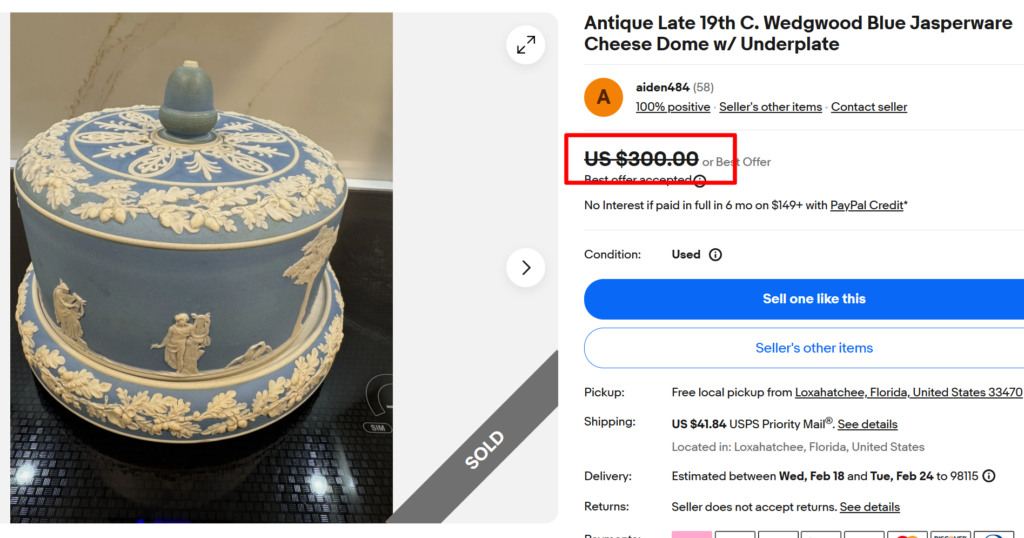
This late-17th-century Jasperware cheese dome is a great example of why pieces of this line remain collectible. The classic Wedgwood matte blue body, with crisp white relief work, showcases the brand’s mastery of fine stoneware.
8. Spode
| Manufacturing Period | Late 1700s–present |
| Known for | Blue-and-white transferware and early bone china dinnerware |
| Why Collectors Love It | Long, well-documented history, high-quality porcelain |
| Popular Colors | Timeless patterns, durable tableware & discontinued classic designs |
Spode was established in the late 1700s in England. The company made some major innovations in the pottery industry. They perfected the recipe for bone china in the 1800s, which became the industry standard and is still used today.
They also refined transfer printing enough to produce crisp, repeatable designs on a large scale, especially in blue-and-white. That’s why Spode patterns look so consistent even across decades and remain a favorite among vintage dish collectors.
Tip: Spode’s official company name was changed to ‘Copeland’ after 1833, so vintage pieces from that period often carry the Copeland mark.
Famous Patterns of Spode
- Blue Italian (1816–present): Spode’s most famous pattern features a romantic Italian landscape framed by an Imari-inspired border in cobalt blue. Early 19th-century Blue Italian examples, especially serving pieces, are rare and valuable!
- Pheasant (late 19th century): This popular pattern is known for its naturalistic bird motif set among foliage and branches. It works as a great serving ware and blends easily with farmhouse, English country, and modern rustic settings.
- Trade Winds (1960s – 1990s): This design shows a delicate, detailed blue pirate ship motif in the center on a white base.
Trade Winds Soup Tureen
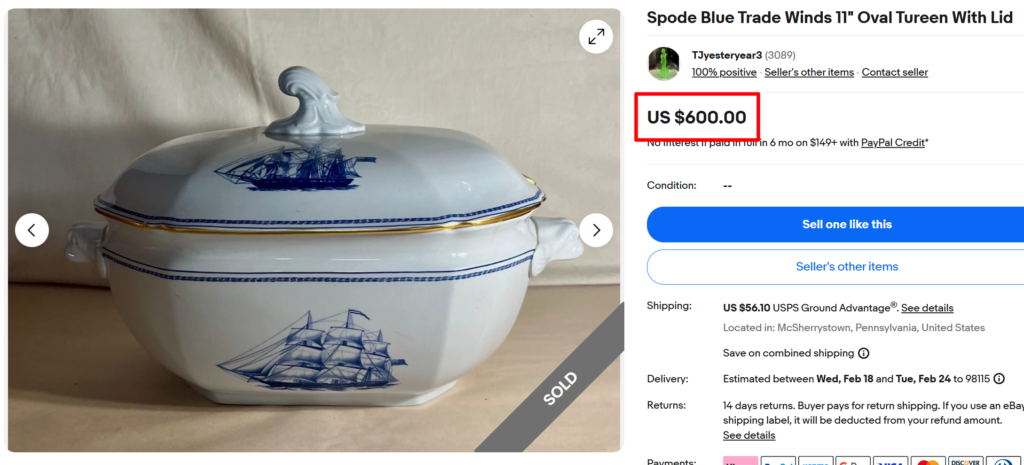
Trade Winds reflects Spode’s shift toward cleaner, mid-century friendly designs. Covered serving pieces like this tureen in this design are especially desirable since they were made in smaller numbers.
9. Lenox
| Manufacturing Period | 1889–present |
| Known for | Gold-rimmed elegance tied to American formal dining |
| Why Collectors Love It | Wedding registry history, American-made quality |
| Popular Colors | Ivory, gold-trimmed whites, soft pastels |
Lenox was founded in Trenton, New Jersey, in 1889, with the goal of creating fine American-made porcelain that could rival European imports. By the early 20th century, Lenox had positioned itself as a prestige brand, supplying porcelain for upscale homes and even official government use.
What sets Lenox apart is its creamy, ivory-toned porcelain, delicate yet durable construction, and restrained use of gold or platinum trim. Many patterns were produced for long stretches and later discontinued, which is when collector interest really took off.
Lenox’s Must-Have Patterns
- Autumn (mid-20th century): Autumn is one of Lenox’s most iconic patterns, featuring hand-applied raised fruit motifs with soft pastel coloring on their signature ivory porcelain.
- Holiday (mid-20th century): With its cheerful holly-and-berry motif, bright red accents, and gold trim, this is one of the most recognizable patterns. Although it’s still produced today, earlier pieces and discontinued serving items are in strong demand.
Colorful porcelain Butter Dish
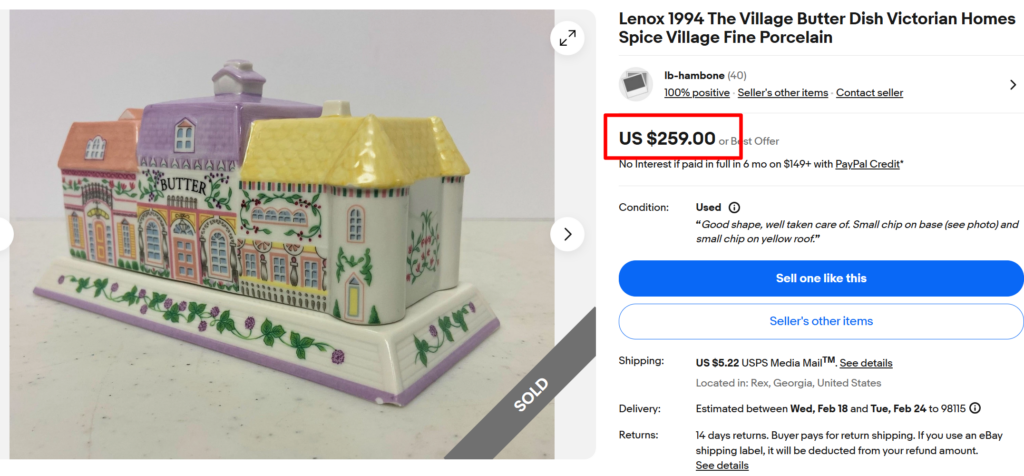
Produced in the 1990s as part of Lenox’s Victorian-inspired Village line, pieces like this butter dish were designed to be both decorative and functional. The detailed illustrations of Victorian homes make these pieces more like display-worthy keepsakes than everyday dishes.
10. Noritake
| Manufacturing Period | 1904–present |
| Known for | Delicate florals that dominated American wedding registries |
| Why Collectors Love It | Quality craftsmanship |
| Popular Colors | Gold accents, florals |
Noritake started in Japan in 1904, with its focus on export-quality dinnerware. The brand quickly became a staple in American homes, especially for wedding china and special-occasion dinners.
They perfected thin, lightweight porcelain bodies that were more durable than they looked. Their high-control manufacturing allowed them to keep patterns consistent over long runs, making Noritake pieces easy to mix and match.
Top Patterns by Noritake
- Azalea (1930s–1950s): Azalea is loved for its soft pink florals and light gold trim, a classic, romantic, and soft look. It had a limited mid-century run, which makes serving pieces and full sets especially desirable today.
- Christmas Ball (1990s): Christmas Ball features festive red and green ornaments with gold accents on a white background. This holiday pattern became one of Noritake’s most popular seasonal designs!
Christmas Ball Partitioned Relish Dish
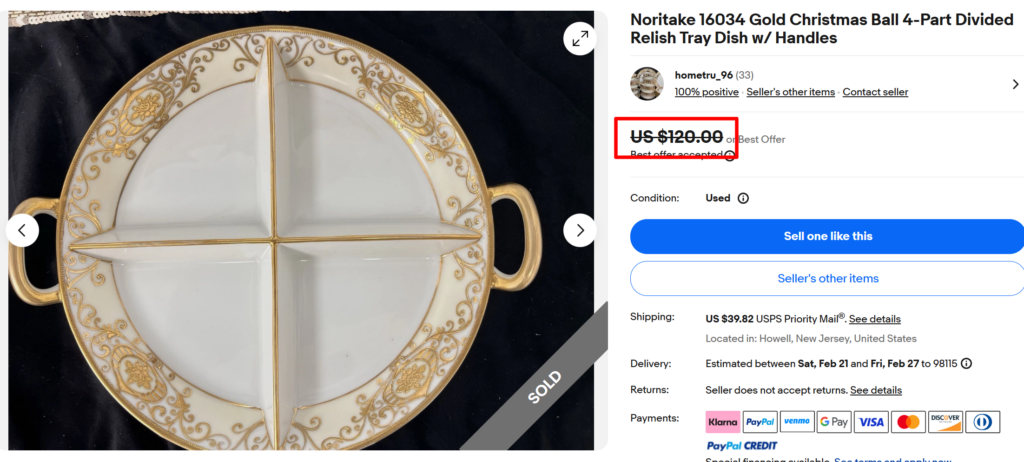
Pieces like this relish dish were designed for entertaining and produced in smaller quantities. Add in the practical four-section design with elegant handles, and you’ve got a holiday piece with Noritake’s most sought-after collectible porcelain pattern!
11. Syracuse China
| Manufacturing Period | 1871–present |
| Known for | Durable hotelware collected for its history and heft |
| Why Collectors Love It | Heavy-duty, minimalist appeal |
| Defining Colors | White, simple trims |
Founded in Syracuse, New York, in 1871, Syracuse China began with a primary focus on durability. The dishes were made for hotels, railroads, and restaurants, not display cabinets.
Syracuse pioneered high-fired vitrified china that could handle heat, stacking, and constant washing without chipping.
They soon became a go-to for commercial kitchens across the U.S., and that same toughness keeps it popular to this day. The clean, unfussy designs feel surprisingly modern and useful too.
Timeless Styles of Syracuse
- Old Ivory (Early 1900s): This was one of Syracuse’s most widely used styles, known for its warm off-white glaze and extreme durability. It was widely used in hotels and railroads and remains popular for its weight and classic look.
- Railroad China (1890s): Not a single pattern, but a category of custom-ordered designs made for U.S. railroads. These often feature logos, crests, or simple banding and were produced in limited runs for specific routes.
Syracuse Yale Dining Hall Dish
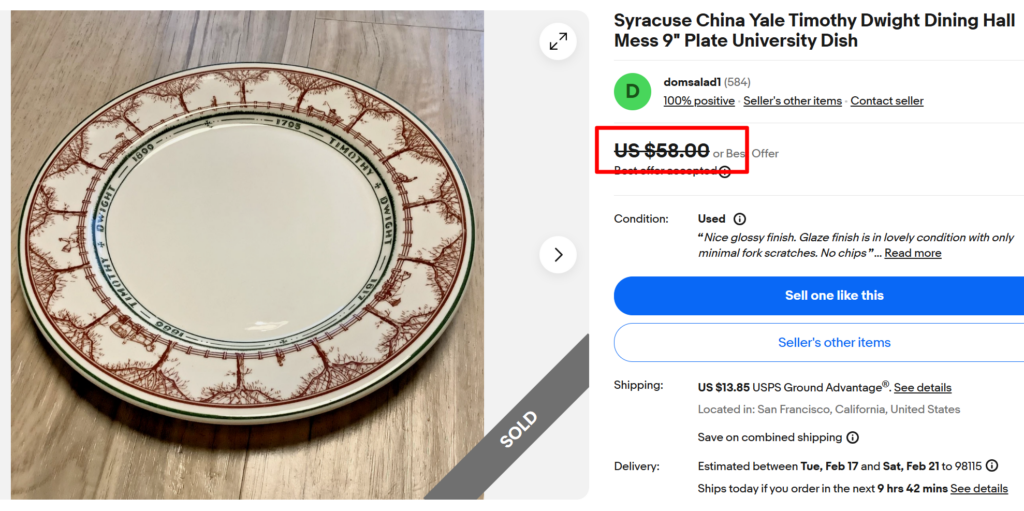
This wasn’t a retail pattern but custom-made dinnerware produced specifically for Yale University’s dining halls. These institutional pieces feature the university’s branding and were never sold to the public, making them rare and collectible!
12. Bauer
| Manufacturing Period | 1885–1962 |
| Known for | Durable commercial-use grade earthenware |
| Why Collectors Love It | Artist-signed pieces, strong auction performance |
| Popular Colors | Sculptural quality, strong demand |
Started in 1885 in Los Angeles, Bauer Pottery has deep Californian roots. Their dense clay made Bauer a pioneer in high-fired, restaurant-grade earthenware. After originally producing simple, durable earthenware, they shifted into colorful kitchenware.
Bauer mastered rich, solid glazes that felt bold at the time and still look fresh today. Just keep in mind that while the original Bauer shut down in 1962, another company has been making similar pottery under the same name.
It’s smart to check logos/ marks, weight, and glaze quality to be sure you’re buying true vintage Bauer ceramic dishes.
Bauer’s Classic Lines
- Ringware line (1933–1940s): The famous ringware line features concentric rings molded into bowls and plates. These visible raised rings give Ringware a unique look and texture, making Bauer pieces instantly recognizable.
- Plainware California colored line (1930s): Clean lines and cheerful colors, like Chinese yellow, jade green, delphinium blue, cobalt blue, black, and orange red, make them one of the most collectible vintage ceramic dishes today.
- Blue Speckled/Brusche Al Fresco (1940s): Blue Speckled features dark blue speckles on a lighter blue base, perfect for outdoor dining and California living.
Bauer Ceramic Lidded Casserole
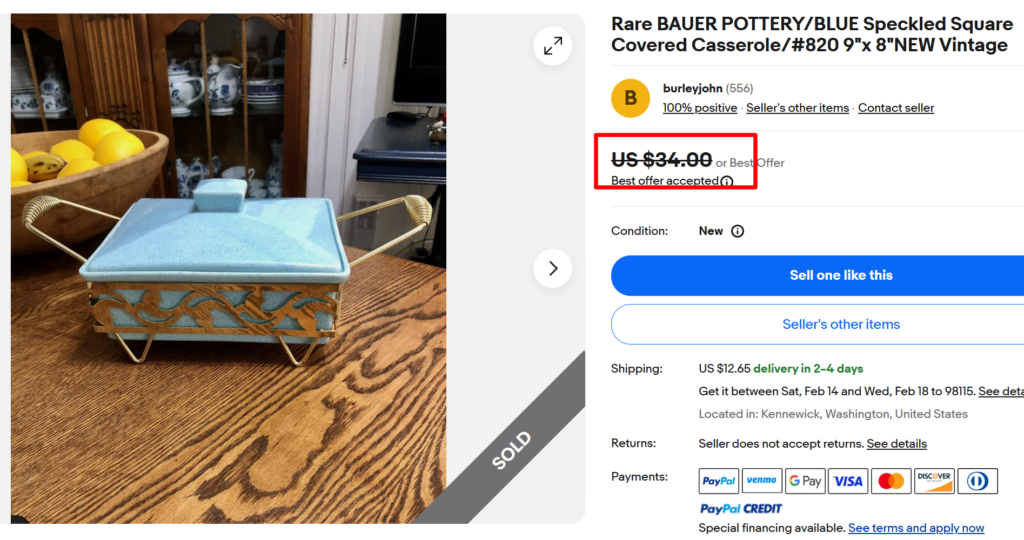
This is an example of Bauer’s blue speckled glaze! Its modern square form and heavy earthenware build have still kept such pieces usable in modern kitchens. Such vintage ceramic dish shapes were produced in smaller numbers, making them harder to find and thus, more valuable.
Note: This article is intended for informational, educational, and entertainment purposes only. Some images are illustrative and may not represent actual brands, products, or related entities. All trademarks, product names, brand logos, packaging, and other intellectual property referenced remain the exclusive property of their respective owners. Any brand mentions or references are provided solely for descriptive and educational context and do not imply any formal or commercial association.