Antiques Know How Research
Old Cobalt Glassware
Our in-depth research at Antiques Know How shows that vintage cobalt glassware ranges from $25 for common apothecary jars to over $1,500 for rare Wiener Werkstätte pieces. The most valuable cobalt glass includes Loetz Papillon vases ($300–$2,000), Otto Prutscher lamp shades ($1,500–$15,000), and Royal Lace cookie jars ($200–$600). Key value factors include maker authenticity, condition, pattern rarity, and original features!
Antiques Know How
What Is Cobalt Glassware?
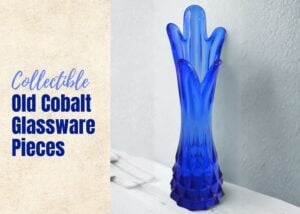
Cobalt glass gets its unique deep blue color from cobalt oxide, which is added to molten glass during the making. Although this pigment has been used in glassmaking since ancient times, cobalt glass became popular only in the 19th and 20th centuries.
However, it was not only for aesthetic purposes; cobalt blue glass was necessary to preserve light-sensitive medicines and chemicals. Later, the color was used to make anything from tableware to decorative items.
Today, cobalt glassware is highly sought after for its color, its history, and the artistic craftsmanship of famous glass manufacturers such as Fenton, Cambridge, and Hazel-Atlas.
Let’s take a look at some of the most sought-after old cobalt glassware pieces that can be worth serious money!
1. Indiana Glass Hen on Nest Cobalt Dish
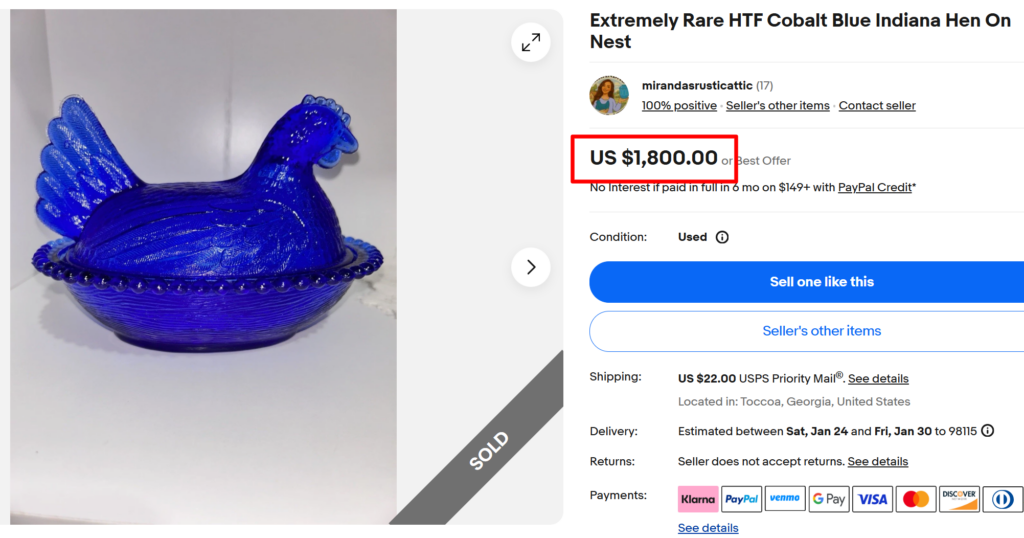
| Average Value | $50-$200 (depending on condition) |
| Brand/Maker | Indiana Glass Company |
| Manufacturing Period | 1935-1980s (original production); |
| Pattern | Hen on Nest covered candy dish |
| Collector’s Note | Authentic pieces have a narrow, flat tail and a circular “valve mark” |
The Indiana Glass Hen on Nest is one of the most sought-after candy dishes! The company introduced this unique covered dish around 1935, and it quickly became an American classic. It shows a detailed hen sitting atop a nest-shaped base!
The cobalt blue version is particularly rare and valuable compared to more common colors like milk glass or amber!
2. Loetz Cobalt Papillon Art Glass Handled Vase
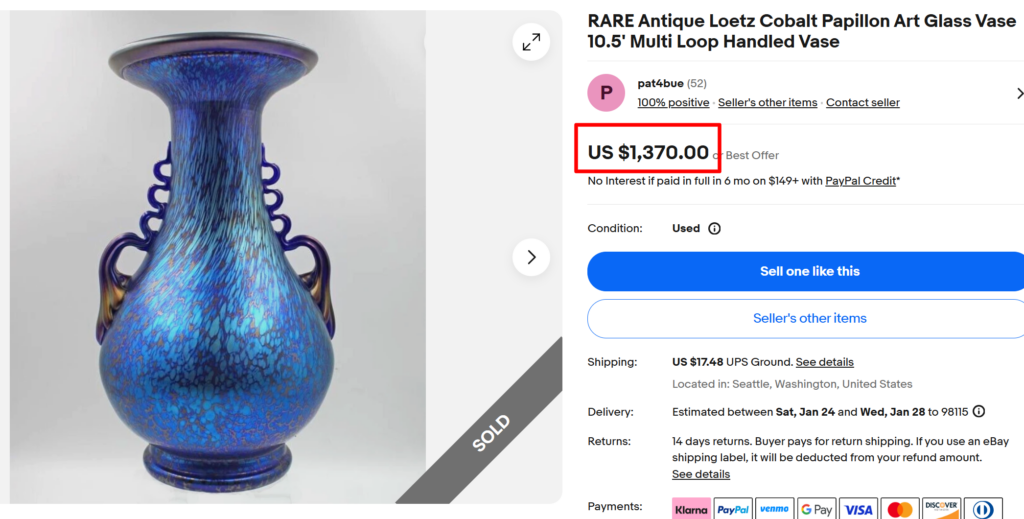
| Average Value | $300-$2,000+ (based on size, condition) |
| Brand/Maker | Johann Loetz Witwe (Loetz Widow) |
| Manufacturing Period | 1898 – 1920s (Art Nouveau period) |
| Pattern | Cobalt Papillon (butterfly wing) |
| Collector’s Note | Identify by shapes, colors, and documented techniques. |
Loetz created the Papillon designs by rolling silver-yellow glass crumbs into the melted cobalt glass, achieving the famous butterfly-wing effect.
Handcrafted in the Czech Republic during the height of the Art Nouveau period, the oil-spot designs in these vases feature peacock-blue and green highlights on the cobalt glass.
Many Loetz Papillon vases also have applied handles, silver overlay, or pewter mounts, and pieces with original silver overlay and mounts are worth the most!
3. L.E. Smith Moon & Stars Canister Set
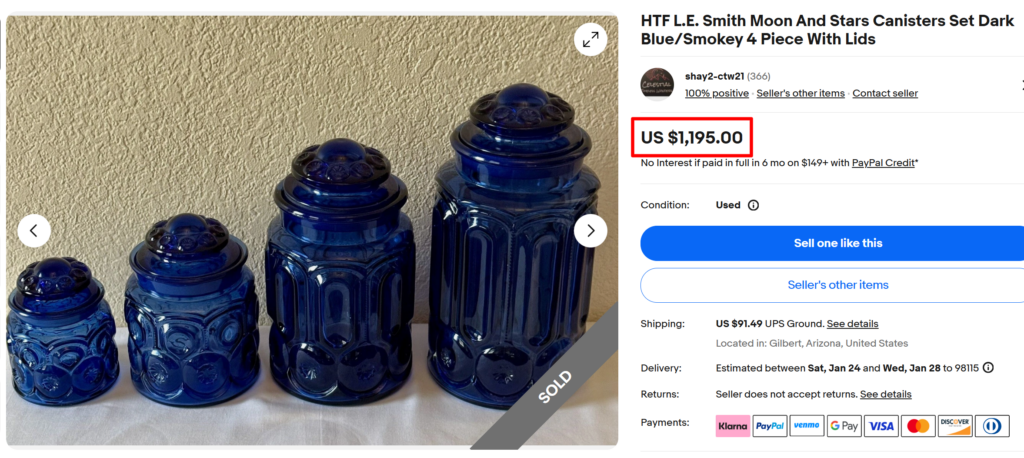
| Average Value | $40-$100 (single); $500-$1,200 (set of 4) |
| Brand/Maker | L.E. Smith Glass Company |
| Manufacturing Period | 1960s-1990s |
| Pattern | Cobalt Papillon (butterfly wing) |
| Collector’s Note | Complete sets with all original lids are rare. |
L.E. Smith’s “Moon and Stars” pattern is iconic in its own right. The company revived this Victorian-era pattern in the 1960s, creating heavily pressed glass pieces with raised celestial motifs.
These canisters were designed for kitchen storage, typically sold in sets of four graduating sizes (flour, sugar, coffee, tea). Complete cobalt blue canister sets are highly collectible.
4. Otto Prutscher Werkstättekstatte Cobalt Cut Lamp Shade
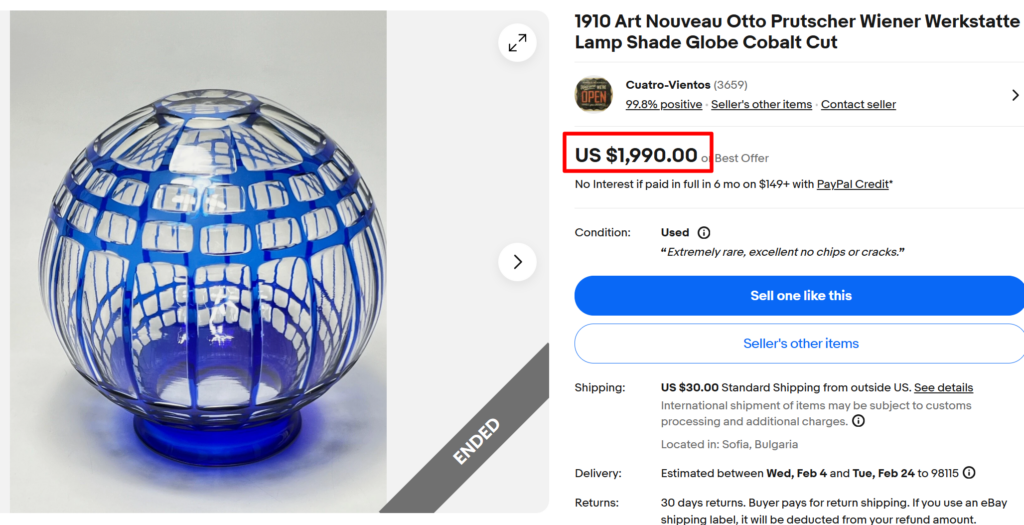
| Average Value | $1,500-$5,000+ |
| Brand/Maker | Wiener Werkstätte (executed by Meyr’s Neffe or Lobmeyr) |
| Manufacturing Period | 1900-1920s |
| Pattern | Geometric cut crystal with cobalt blue overlay |
| Collector’s Note | Prutscher’s designs are valuable. |
This is an extremely rare glassware piece designed by Otto Prutscher (1880-1949), a leading Austrian designer and key member of the Werkstättekstätte, the famous Vienna Workshop!
The lamp shades sport geometric cuts that feature checkerboard and ladder cuts, topped with a cobalt blue overlay. These are museum-quality pieces rarely seen on the open market, and when they do, they fetch premiums!
5. Cambridge Royal Blue Figural Stem Cigarette Box
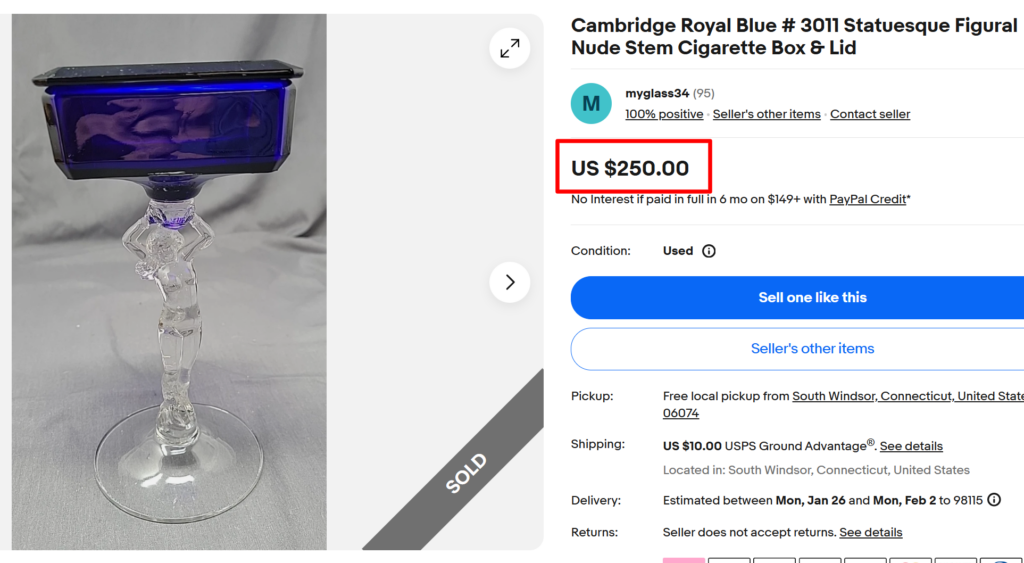
| Average Value | $150-$400 |
| Brand/Maker | Cambridge Glass Company |
| Manufacturing Period | 1931-1936 |
| Pattern | Cigarette box with figural stem |
| Collector’s Note | Cambridge’s Royal Blue is significantly darker (almost blue-black). |
What makes Cambridge Glass Company’s Royal Blue glassware so rare is that it is so dark and dense that it appears almost opaque! Produced from 1931-1936, these Royal Blue figural-stem cigarette boxes are among its most artistic pieces.
These comprise a cobalt glass lidded box supported by a clear glass figurine pedestal. The rich color and quality construction make these pieces highly collectible!
6. Heisey Cobalt Blue Pedestal Bowl
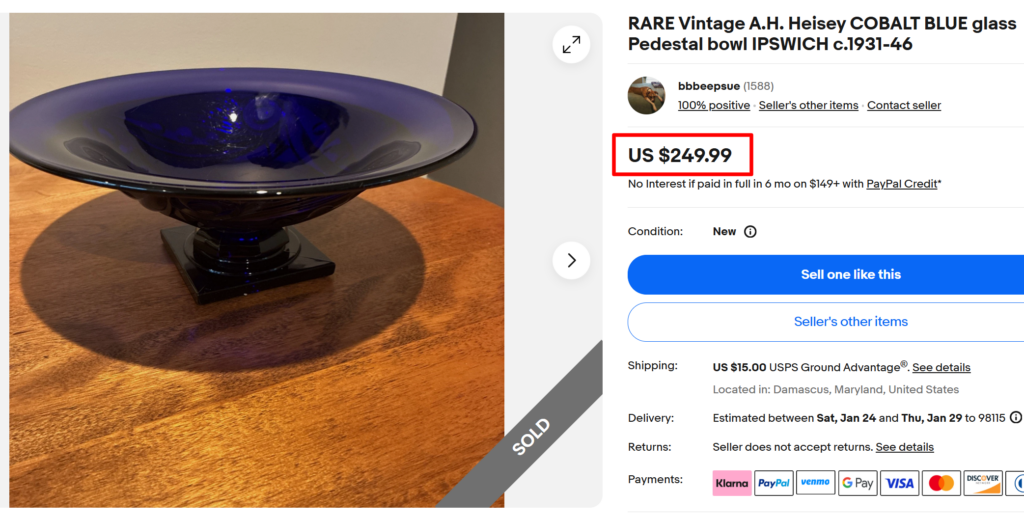
| Average Value | $100-$350 |
| Brand/Maker | A.H. Heisey Glass Company |
| Manufacturing Period | 1920s-1930s |
| Pattern | Various (Colonial, Empress, or Lariat) |
| Collector’s Note | Cobalt pieces are rare, some may have the diamond-H mark on the base. |
The A.H. Heisey Glass Company produced cobalt blue glassware (aka “Stiegel Blue”) in limited quantities from the 1930s to the early 1940s, making their cobalt pieces rare. These pedestal bowls are great examples!
You may also find many unique pieces, such as candlestick holders, animal figurines, salad plates, globe vases, and others! These are all collectible, with values determined by condition!
7. Vintage Cobalt Blue Apothecary Jars
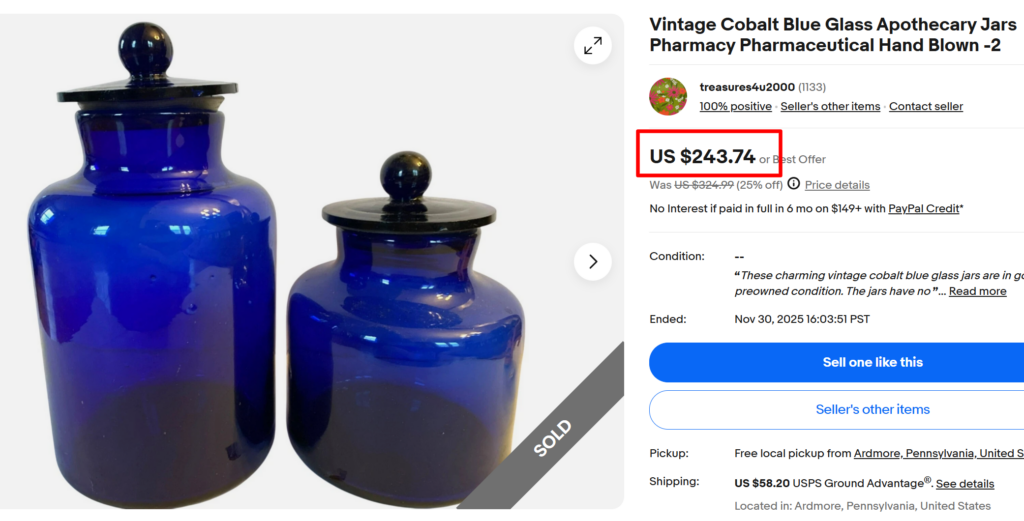
| Average Value | $25-$150 (per jar); $200-$600+ (sets) |
| Brand/Maker | Various Glass Manufacturers |
| Manufacturing Period | 1870s-1930s |
| Pattern | Cylindrical or round forms with ground glass stoppers |
| Collector’s Note | Look for ground stoppers, pontil marks & embossed marks |
Cobalt blue apothecary jars were used in Victorian and early 20th-century pharmacies to store light-sensitive medicines and compounds. These jars usually come with ground glass stoppers with airtight seals.
Some pharmaceutical pieces may also show some embossed labels, pharmacy names, or chemical symbols that can help you identify them. Plus, antique, hand-blown examples also show pontil marks and slight irregularities!
8. Hazel-Atlas Royal Lace Cookie Jar
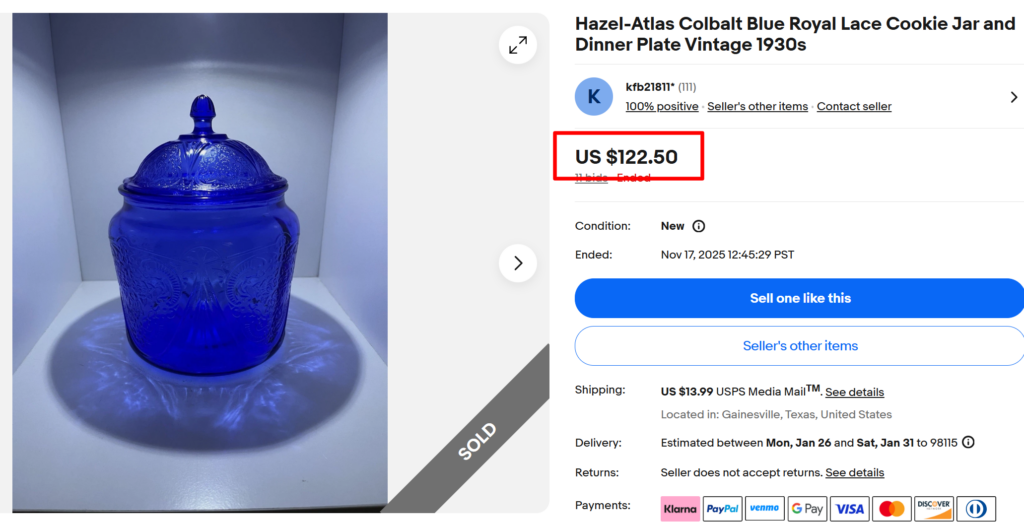
| Average Value | $80-$300 (based on condition) |
| Brand/Maker | Hazel Atlas Glass Company |
| Manufacturing Period | 1934-1941 |
| Pattern | Royal Lace (floral panels with draped swags) |
| Collector’s Note | Look for the pattern (less defined) on the bottom. Fakes don’t have any. |
Every vintage glass collector knows “Royal Lace”; it’s one of the most sough-after Depression glass patterns! And the cobalt blue Royal Lace cookie jar is among the most desirable pieces.
Produced 1934-1941, Hazel Atlas released this intricate mold-etched design featuring flowers in panels between draped swags in several colors! Blue jars are way more collectible and valuable than pink or green!
9. Shirley Temple Cereal Bowls
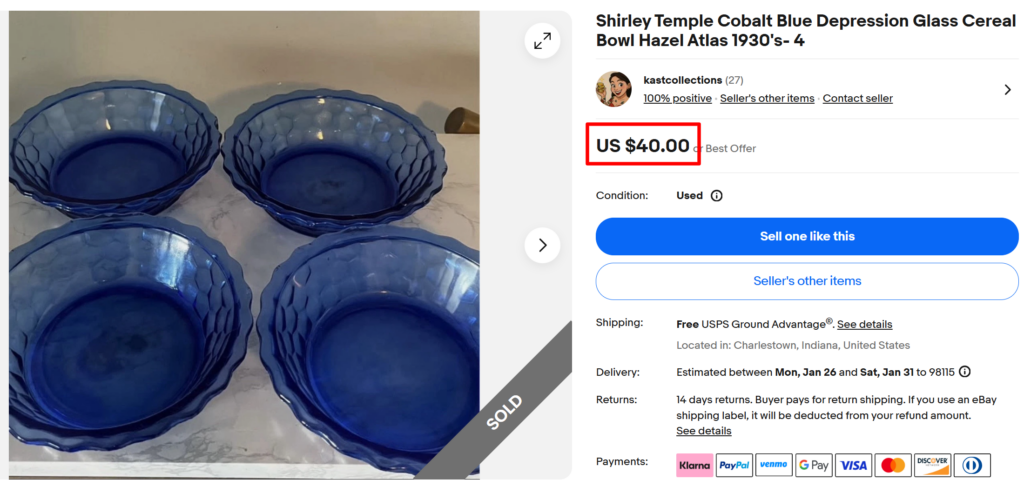
| Average Value | $35-$85 (based on decal condition) |
| Brand/Maker | Hazel Atlas Glass Company |
| Manufacturing Period | 1934-1942 |
| Pattern | Honeycomb with Shirley Temple portrait |
| Collector’s Note | Only three authentic forms exist: cereal bowl, mug, and milk pitcher. |
Hazel Atlas’ Shirley Temple cobalt blue glassware is highly collectible Depression-era glassware. It is known for featuring sandblasted portraits of child star Shirley Temple on its base and a distinctive honeycomb pattern throughout the piece.
Hazel-Atlas Glass Company created these pieces as promotional giveaways through General Mills in the 1930s. The cereal bowl (5.5″ with honeycomb pattern) is one of only three authentic Hazel Atlas Shirley Temple forms.
Collector’s Tip: The company only released this pattern on three items: cereal bowls, mugs, and milk pitchers; any other item with a similar pattern is either a reproduction or fake.
10. Hazel-Atlas Moderntone Dinner Set
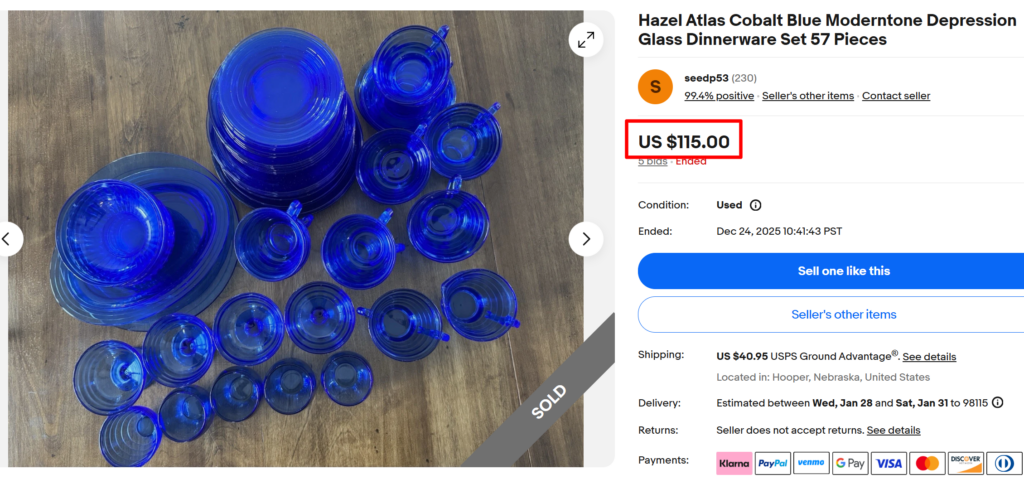
| Average Value | $15-$80 (per piece); $100-$300 (sets) |
| Brand/Maker | Hazel Atlas Glass Company |
| Manufacturing Period | 1934-1942 |
| Pattern | Moderntone (simple raised bands) |
| Collector’s Note | One of four Cobalt Depression patterns (Mt. Pleasant, Newport, Royal Lace) |
The Moderntone cobalt glassware exemplifies the Art Deco movement’s simplicity with clean lines and simple raised concentric bands. This is one of the few cobalt Depression patterns that is available as a complete dinner service set. Moderntone is more affordable than Royal Lace, making it highly collectible!
11. New Martinsville “Moondrops” Cocktail Shaker
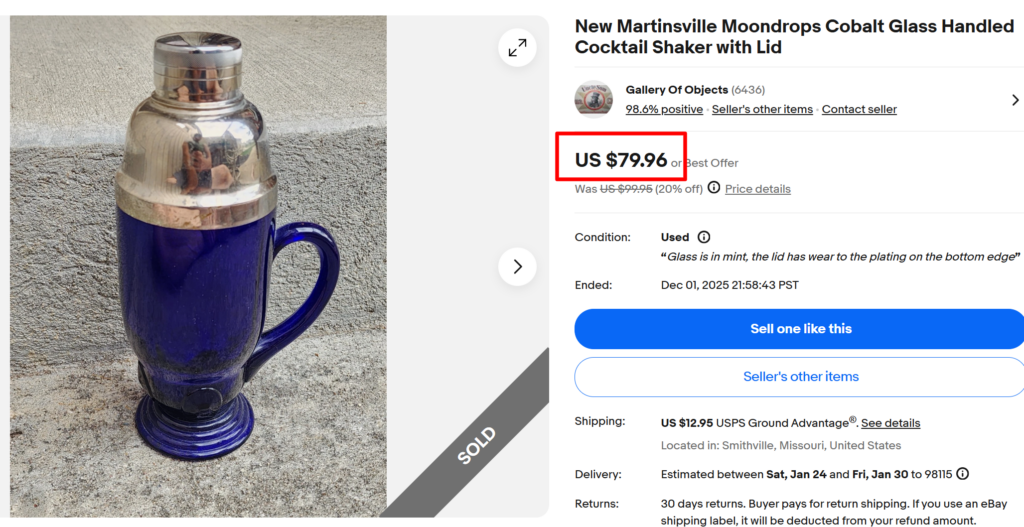
| Average Value | $50-$80 (shaker); $80-$200 (with glasses) |
| Brand/Maker | New Martinsville Glass Company |
| Manufacturing Period | 1932-1940 |
| Pattern | Moondrops (Line No. 37) |
| Collector’s Note | Look for original metal fittings and pristine condition |
New Martinsville Glass Company is known for producing sophisticated barware, and cocktail shakers are among their most desirable pieces. This cobalt shaker features the “Moondrops” pattern with raised, circular dots and a stair-like footed base.
Moondrops cobalt blue (also called “Ritz Blue”) has a vibrant, jewel-like quality, and the shakers usually come with chrome or metal tops. Complete sets with matching glasses can fetch hundreds!
12. Fenton Cobalt Blue Hobnail Basket
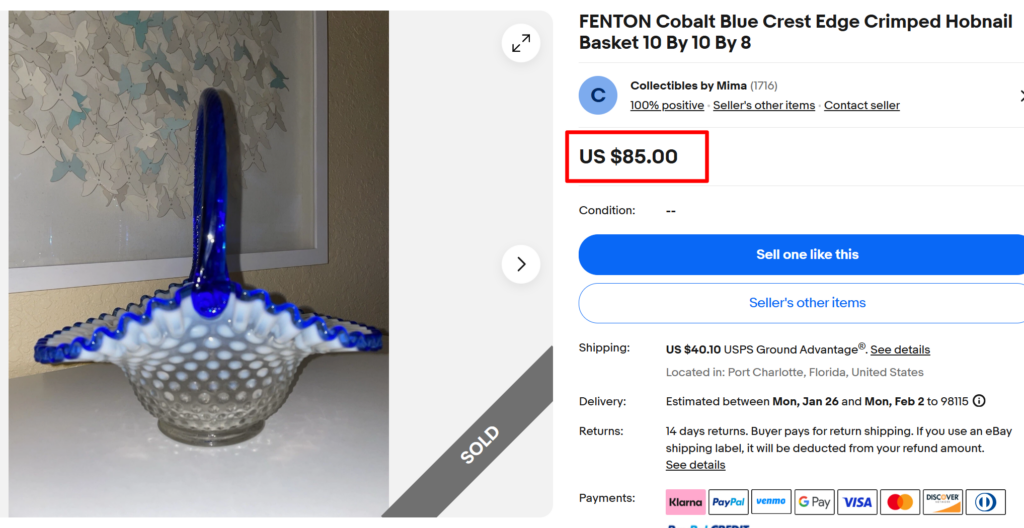
| Average Value | $50-$150 (based on size & style) |
| Brand/Maker | Fenton Art Glass Company |
| Manufacturing Period | 1930s-2011 (cobalt blue: 1930s, 1980s) |
| Pattern | Hobnail basket with weave handle |
| Collector’s Note | Look for the Fenton mark on the bottom. Signed pieces are rare. |
Vintage glass collectors can’t miss Fenton’s cobalt blue glassware, especially these hobnail baskets! These are collectible for two reasons: first, the signature hobnail pattern (raised bumps like boot-sole nails), and second, the rare cobalt blue color!
These baskets usually feature ruffled edges (crimped while the glass was still hot) and applied weave handles. Blue opalescent pieces with milky white edges are also rare!
Tips for Collecting/Assessing Old Cobalt Glassware
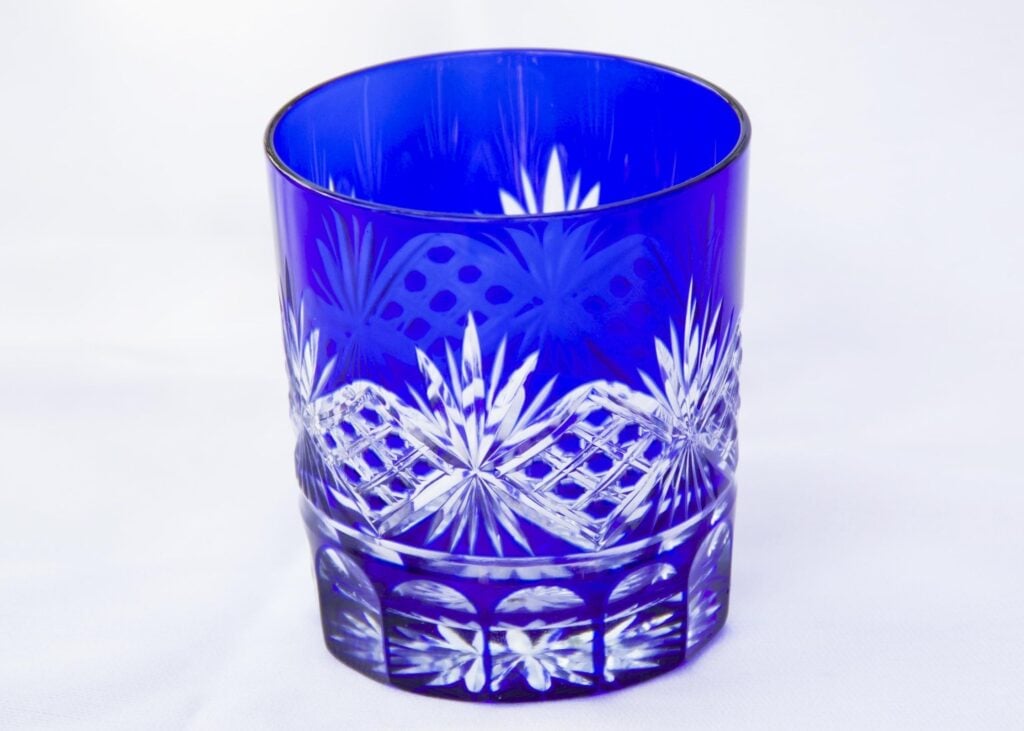
Collecting or selling old cobalt glassware, you MUST always keep these factors in mind:
- Condition: Firstly, look for chips, cracks, and excessive wear; they can all significantly reduce value, sometimes by 50% or even more. Edge damage, especially on scalloped or ruffled pieces, is common, so pristine pieces are worth the most.
- Authentic Color Matters: Genuine cobalt blue pigment, created with cobalt oxide, has a distinctive and rich blue color. Learn to distinguish authentic cobalt from darker “sapphire blue” or lighter “azure blue” shades.
- Maker’s Marks: While not all vintage cobalt glassware is marked, identifying makers helps authenticate and value it. It is possible to identify the piece by studying the makers’ marks, mold numbers, shapes, and techniques.
- Pattern Identification: Depression glass patterns are well-documented, making identification easier. European art glass may require more research. Pattern rarity directly impacts value.
- Beware of Reproductions: Many popular patterns, such as Royal Lace, Shirley Temple, and Caprice, are commonly reproduced. So, you must learn the specifics to identify the real pattern!
- Provenance: Lastly, any background details of the piece are good to have! So, look for documentation, original boxes, labels, or family history. It all can help with identification and also add to value!
Note: This article is intended for informational, educational, and entertainment purposes only. Some images are illustrative and may not represent actual brands, products, or related entities. All trademarks, product names, brand logos, packaging, and other intellectual property referenced remain the exclusive property of their respective owners. Any brand mentions or references are provided solely for descriptive and educational context and do not imply any formal or commercial association.