Antiques Know How Research
Collectible FiestaWare Colors
Several research findings from the Antiques Know How team show that vintage Fiestaware values range from $40 for common colors to over $1,500 for the rarest colors and pieces. The most valuable color combinations include Turquoise onion soup bowls, Medium Green (in any shape), and original Radioactive Red pieces. Key value factors include color rarity, manufacturing period length, completeness, and condition.
Antiques Know How
What Is FiestaWare?
Fiestaware is colorful ceramic dinnerware made by Homer Laughlin China Company starting in 1936, later known as the Fiesta Tableware Company. It was created by designer Frederick Rhead, featuring bold colors and those unique concentric rings.
The company continued the Fiestaware line until 1973, stopped for a bit, then brought it back in 1986. Pieces from 1936-1973 are called “vintage” and feature bright colors, those rings, and are heavy. And that’s what collectors really like.
How to Identify Real Fiestaware?
Checking the authenticity of Fiestaware ceramics required you to assess the piece from top to bottom! Since Homer Laughlin China Company has been using the same molds for almost 90 years, it is essential to examine minute details to track the age!
The “Fiesta” Logo:
First things first! Many FiestaWare pieces may not have any markings. The reason can be anything: the piece may have been too small, had a faded ink stamp, or not been marked at all.
But if you do find the iconic “Fiesta” mark, check the “F!” All “f” letters in old pieces (1936-1972) are in lowercase, while the “F” letters in current pieces (1986-present) are uppercase.
Also, if you see the “Lead Free” mark, it is made after 1992!
Wet Foot vs. Dry Foot:
In case your FiestaWare piece isn’t marked, turn it upside down and check the foot. You may see two different types of feet:
- “Wet foot,” which is glazed all the way over
- “Dry foot,” which refers to an unglazed area, or a ring of white sandy material, where it rested on the kiln shelf.
Vintage flatware (plates and saucers) generally has a “wet foot,” while all newer Fiestas have a dry foot.
Moreover, look for three tiny rough bumps or nicks near the edge of the base on the vintage “wet foot” pieces. These are the marks from the tripod pins (or sagger pins) that held the piece in the kiln as the glaze dried.
Concentric Rings:
This is a key feature! Real vintage Fiesta has rings that aren’t evenly spaced. They’re farther apart at the rim and get progressively closer together toward the center of the piece.
If you notice uniform, thin, and evenly spaced lines, it’s like a fake item.
11 Popular FiestaWare Colors & Piece Combinations to Look for!
Let’s explore some valuable and sought-after Fiesta color combinations that can actually bring a fortune!
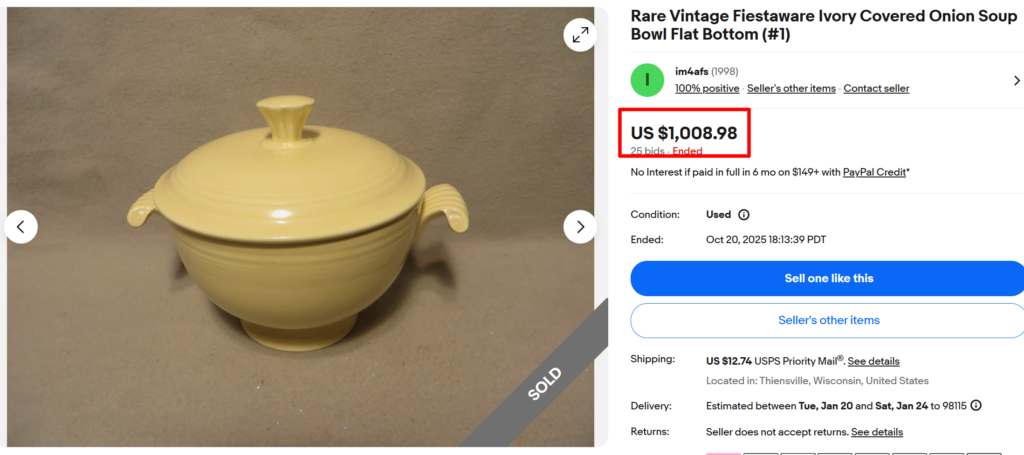
1. Yellow – Covered Onion Soup Bowl
| Average Price | $50-$500+ (depending on piece) |
| Manufacturing Period | 1936-1937 |
| Collectibility | Very High and Rare |
Old Ivory was one of the original five colors when Fiestaware launched in 1936. It’s a creamy, yellowish-white color with a soft finish.
Although the color lasted until 1951, the ivory-colored onion soup bowls are rare because they were made for only a year, 1936 to 1937, before they were dropped from the line. It’s a small, wide, flat-bottomed bowl with unique handles and a knobbed lid!
That short run makes bowls rare, no matter what color, but ivory pieces are quite rarer than other colors. Finding one with the lid is the real deal!
2. Turquoise – Dancing Lady Cookie Jar
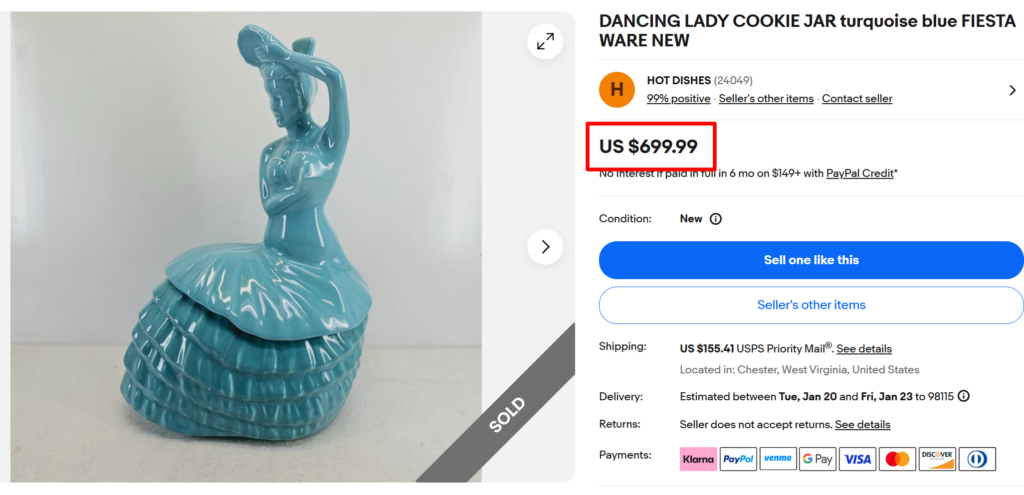
| Average Price | $350-$800+ (depending on condition) |
| Manufacturing Period | 2013–2023 |
| Collectibility | Retro, Rare |
Turquoise wasn’t in the original 1936 lineup; it was added to the FiestaWare color line one year after launch, and is one of the most beloved of all vintage colors. Rare cookie jar shapes in this color are highly collectible and valuable.
The Dancing Lady cookie jar isn’t really vintage, since it was introduced in 2013 as part of Fiesta’s modern line. But since it was retired in 2023 and is rare to find, the value is skyrocketing. Pieces in good condition are like a jackpot.
3. Medium Green – Place Setting
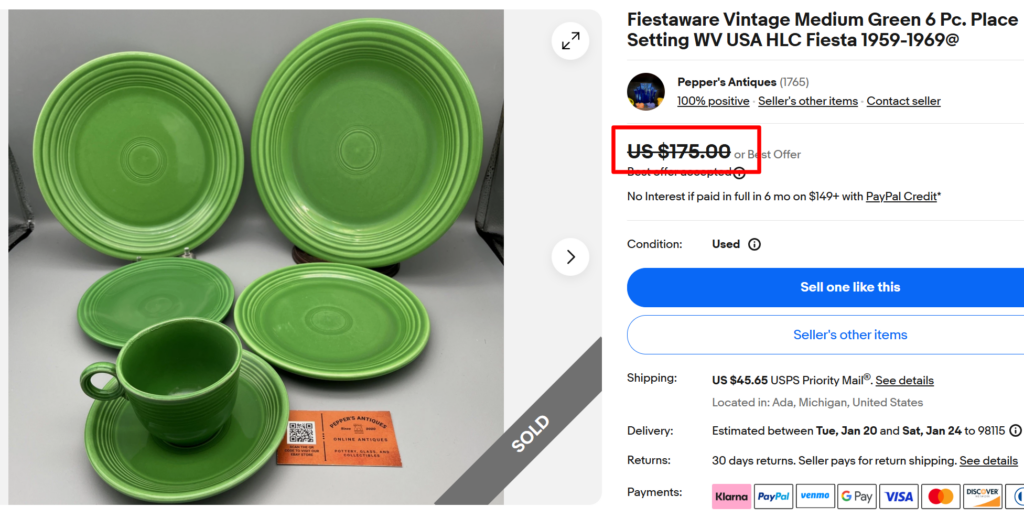
| Average Price | $100-$300+ (depending on set size) |
| Manufacturing Period | 1959-1969 |
| Collectibility | Very Rare and Valuable |
This is the last and rarest of the eleven original vintage colors.
Medium Green color was introduced in 1959 and remained in production until 1969, making it the rarest color in the entire FiestaWare line. Because production was waning during this period, very few pieces were made compared to earlier colors.
This is often called “John Deere tractor green” or “Tic-Tac green,” more yellow-toned than the original light green and darker than chartreuse. Complete Fiestaware Complete place settings in Medium Green are the most valuable pieces, fetching $150 to $300+!
4. Radioactive/Original Red – Onion Soup Bowl
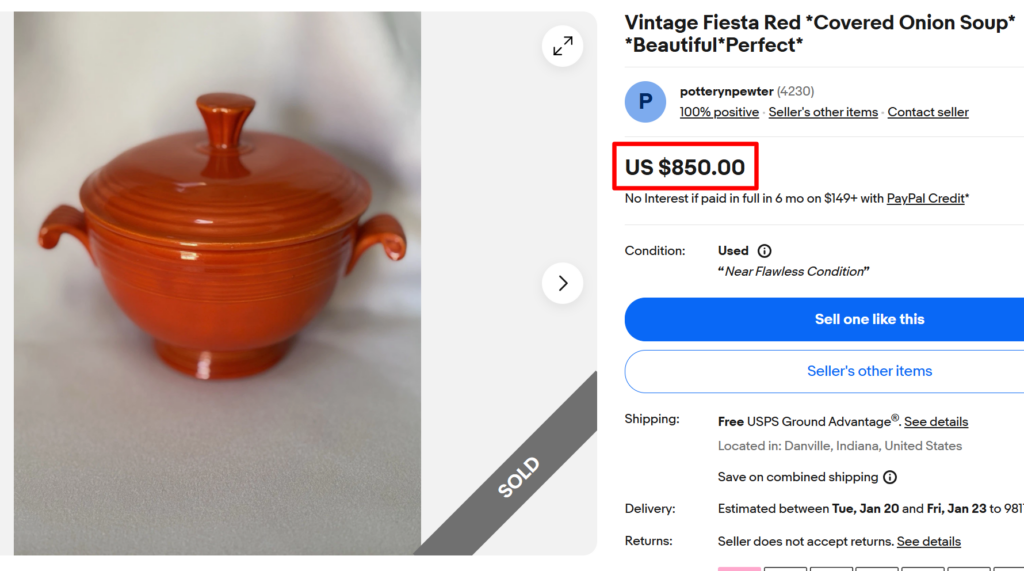
| Average Price | $200-$1,000+ (based on condition) |
| Manufacturing Period | 1936-1937 (Original Red) |
| Collectibility | Very High |
This is the original red from 1936-1943, and yes, it’s actually radioactive; Homer Laughlin used uranium oxide in the glaze to get that bright orange-red color. But the government seized their uranium supply in 1943 for the war effort.
Fiesta brought red back in 1959, but eliminated the use of uranium. That’s why collectors call the 1936-1943 color “radioactive red” or “original red.”
The covered onion soup bowl in its original red is a super-rare find. You can spot it by putting it under the UV light; the intense red color literally glows!
5. Cobalt Blue – After Dinner Demitasse Coffee Pot
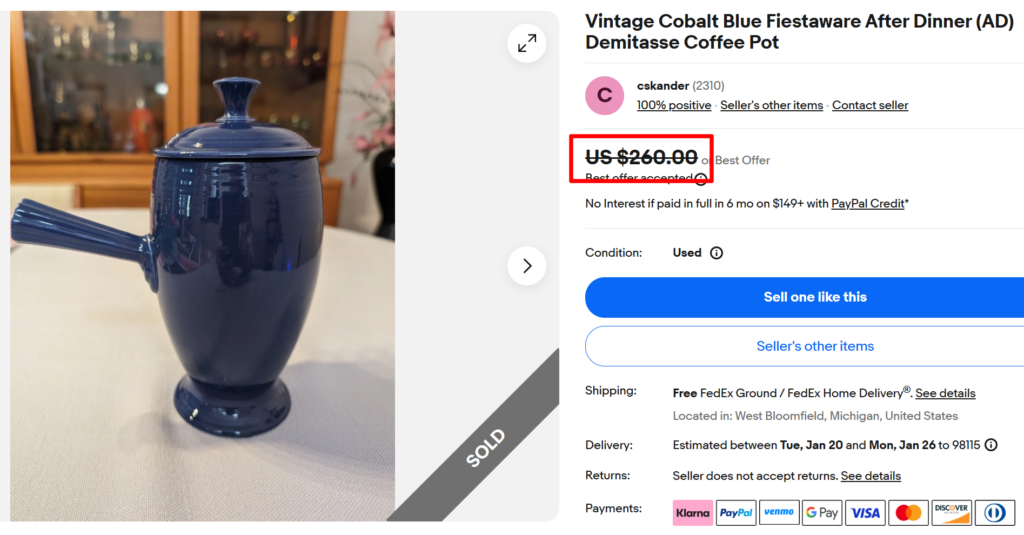
| Average Price | $100-$350+ (depending on condition) |
| Manufacturing Period | 1936-1942 |
| Collectibility | Highly Collectible |
Cobalt blue was the second color developed for Fiestaware, right after red. It was part of the original 1936 lineup and lasted until 1951 when the 50s colors came in.
The Demitasse coffeepot is a rare piece in itself. It has a distinctive stick handle, and they stopped making it in 1942 because attaching that handle by hand took too much time. Finding it in a rare cobalt blue color is like finding a hidden gem.
Besides, these pieces do not exist in any of the new 50s colors since the company discontinued them before that.
Note: Homer Laughlin originally just called Cobalt Blue “Blue,” but collectors began calling it “cobalt” to distinguish it from other blue shades that came later.
6. Light Green – Syrup Container
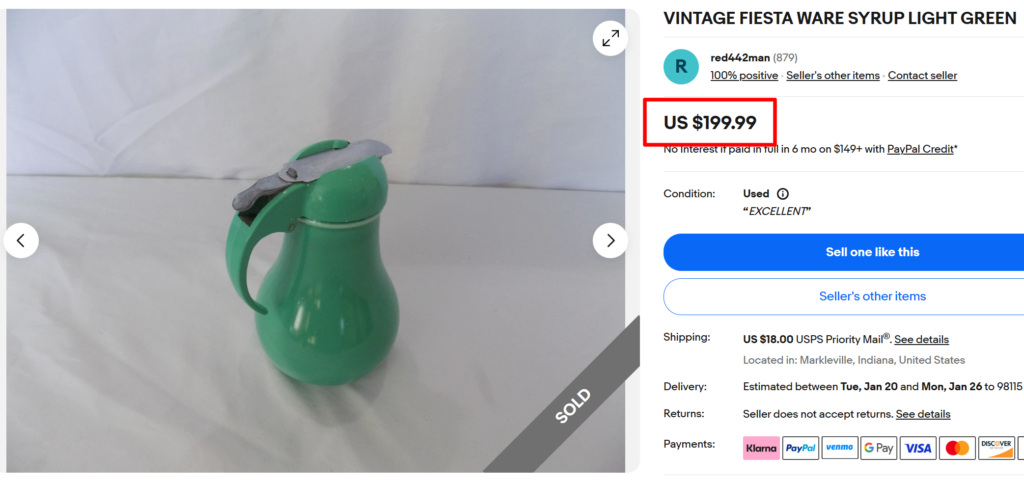
| Average Price | $100-$300 (depending on condition) |
| Manufacturing Period | 1938–1940 |
| Collectibility | Moderate, High for Intact lids |
Light green (also called “original green”) was one of the original five colors from 1936. Although this color is moderately valuable, this unique syrup container is rare due to that signature “Dripcut” chrome lid, a short-lived Kitchen Kraft design.
Not as rare as some things, but still desirable because complete Kitchen Kraft items are getting tougher to find.
7. Rose – Dinner Set
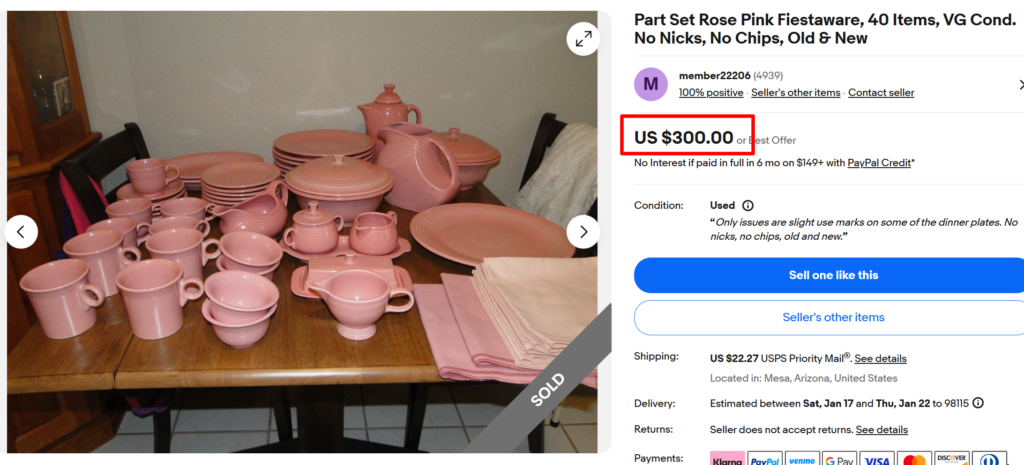
| Average Price | $200-$800+ (based on the set size) |
| Manufacturing Period | 1951–1959 |
| Collectibility | High for Full Dinner or Place Settings |
Rose is a dusty, sophisticated pink color that came out in 1951 when Homer Laughlin decided to modernize the FiestaWare line. This color is generally less sought-after than those vintage colors, but a complete dinner set of 40+ is a big deal because they produced fewer complete sets during this period!
8. Pearl Gray – Place Setting Set
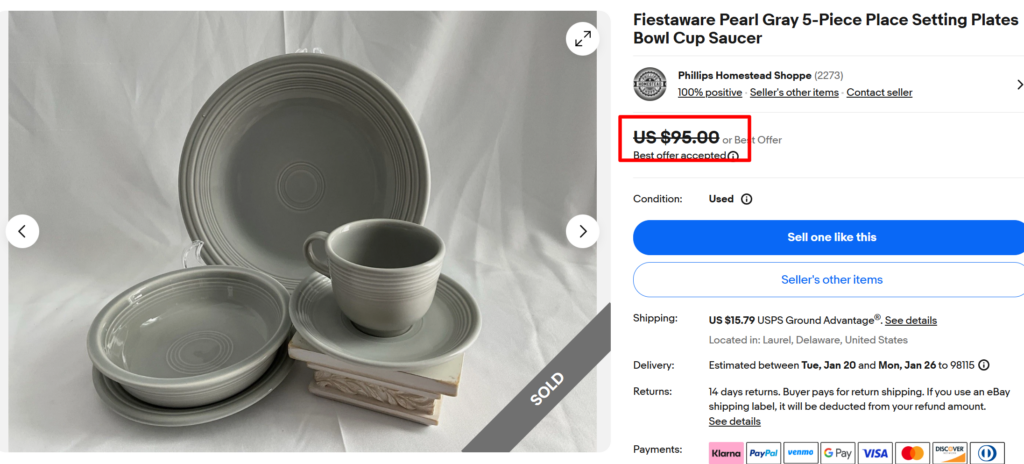
| Average Price | $50-$500+ (depending on piece) |
| Manufacturing Period | 1959-1969 |
| Collectibility | Moderate |
Homer Laughlin brought out “Pearl Gray” as a post-1986 color that ran from 1999 to 2001. Unlike the vintage gray, Pearl Gray is cooler and more neutral. Both are discontinued now and, hence, are collectible.
A place setting, including a dinner plate, salad plate, bowl, and cup with saucer, in Pearl Gray can be more valuable than other single items, since full sets are rarer to find.
Note: Pearl gray is different from the vintage “gray” (sometimes spelled “grey,” that was part of the 1950s colors from 1951-1959. Modern Pearl Gray pieces may also show a small capital “H” stamped into the base!
9. Chartreuse – Celestial Candle Holder (Limited Edition)
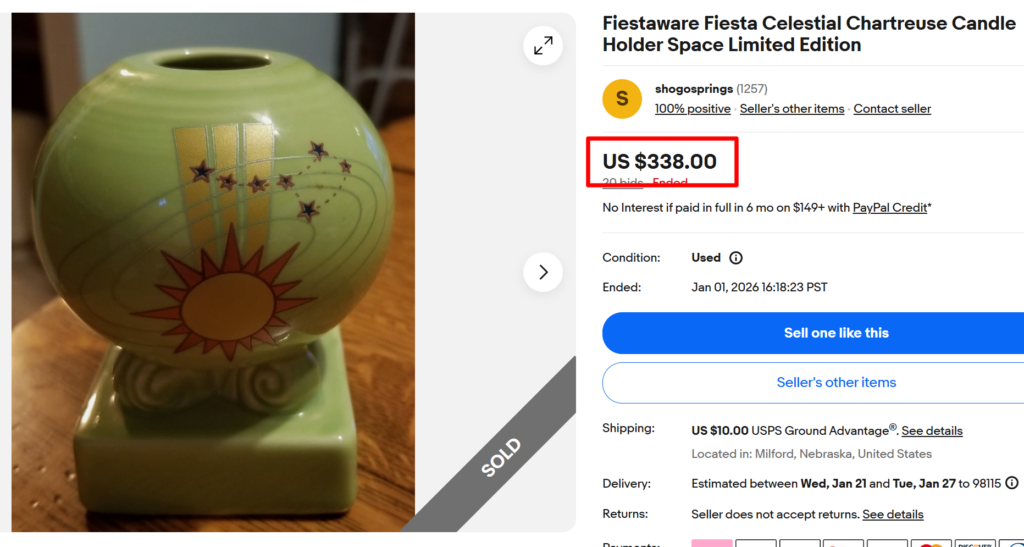
| Average Price | $50-$500+ (depending on piece) |
| Manufacturing Period | 1997–1999 (Limited Release) |
| Collectibility | High |
Chartreuse is a bright and distinctive yellow-green color that was part of the 1950s color rollout in 1951. Like the other 50s colors, it only lasted until 1959, so it had an eight-year run. Chartreuse is harder to find than the original colors, but more available than Medium Green.
This “Celestial Candle Holder” in Chartreuse is a special or limited edition. The vintage-era tripod candle holders in chartreuse would be extremely rare, since the tripod design was discontinued before the 50s colors came out.
10. Forest Green – Water Pitcher
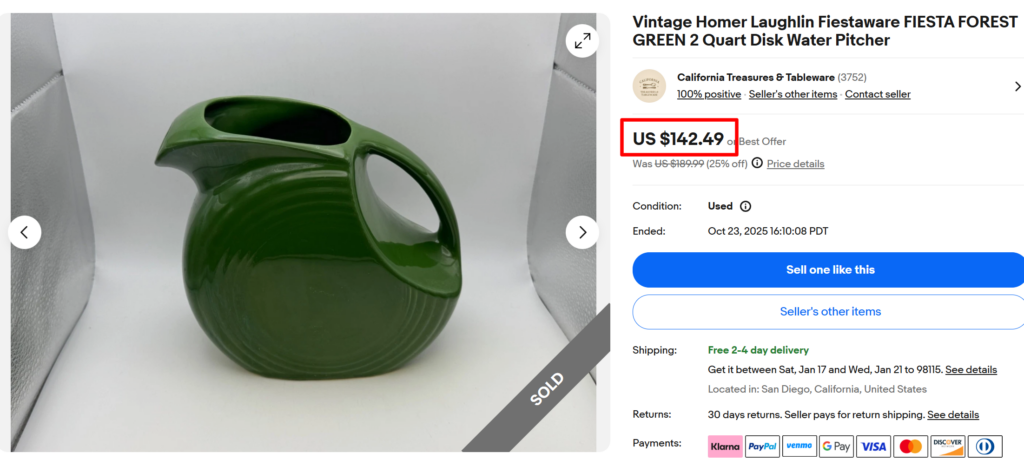
| Average Price | $50-$250+ (depending on condition) |
| Manufacturing Period | 1951-1959 |
| Collectibility | Modern to High |
This disc water pitcher is one of the most famous Fiestaware shapes. It wasn’t introduced until 1938, two years after Fiestaware started. The pitcher usually holds 71 ounces and stands 7.5 inches tall, and the handle shows Rhead’s signature concentric ring design.
This pitcher is tougher to find in Forest Green (deeper and darker than the Medium or Light Green shades than the original colors since they didn’t make many vintage pieces after the 1950s.
This design is still produced, but pieces in original vintage colors and the 1950s colors are rarer!
11. Mix-And-Match – Stacking Refrigerator Set
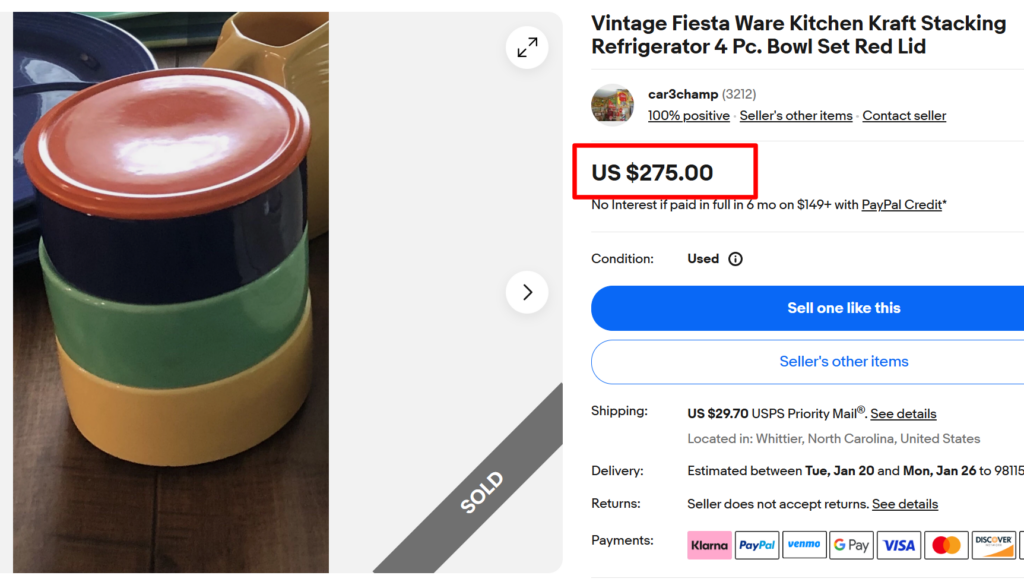
| Average Price | $150 – $300+ (depending on condition) |
| Manufacturing Period | 1937–1943 (Kitchen Kraft Line) |
| Collectibility | High |
This set was a part of the Kitchen Kraft line, featuring individual refrigerator bowls in Blue, Green, and Yellow, with a red lid. Homer Laughlin marketed these as mix-and-match!
Laughlin promoted specific color combinations in their ads: sometimes all one color, sometimes a rainbow. Finding a complete set with all the right pieces and colors from the original promotional campaigns is quite rare!
What makes Fiestaware Valuable?
Based on the above examples, you can tell that the value of FiestaWare ranges from $50 to $1,500, and can go even beyond that. The major factors determining the value of vintage FiestaWare are as follows:
- Rare Colors: Some colors were only made for a few years, like the original “vintage colors” made from 1936 to 1951. Short-lived colors are also valuable, like the original “Red” (Radioactive Red)!
- Short Production Runs: Pieces that got discontinued quickly are harder to find. The Onion Soup Bowl, which was only made from 1936 to 1937, and the DripCut syrup pitchers are great examples.
- Condition: Finding a pristine piece without any damage is extremely rare. Even minor cracks or chips can drop the value by 80% or more.
- Complete Sets: Large sets or lidded pieces are more valuable than single pieces or items with a missing lid. Finding a full place setting in one color can be super valuable.
Note: This article is intended for informational, educational, and entertainment purposes only. Some images are illustrative and may not represent actual brands, products, or related entities. All trademarks, product names, brand logos, packaging, and other intellectual property referenced remain the exclusive property of their respective owners. Any brand mentions or references are provided solely for descriptive and educational context and do not imply any formal or commercial association.