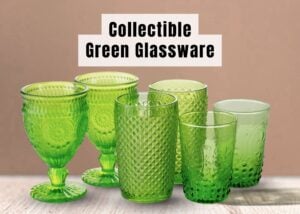
If you’re a frequent visitor to antique stores or garage sales, you might be seeing a lot of green glassware these days! And, it’s easy to guess why.
The bold hue, elegant patterns, and unusual visual effects, like the glow-under-light effect, make it highly collectible. With limited-run pieces and distinctive shapes, green glassware is becoming one of the most exciting categories to explore.
In this guide, we’ll discover some of the most sought-after vintage green glassware patterns and designs, and expert tips to help you spot the real deals.
What Makes Green Glassware Collectible?
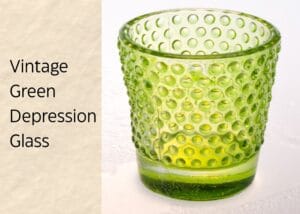
Green glassware dates back to the 1800s, but its popularity rose during the 1920s to 1940s, with the rise of depression glass. Many of the Depression-era green glasses were mass-produced, and people could easily find them in dime stores, carnivals, and even on cereal boxes.
Still, vintage green glass pieces are quite collectible these days. Here’s why:
- Historical Significance: Green glassware spans multiple eras, with different shades of green, manufacturing techniques, shapes, and patterns. Among them, Depression-era pieces (1920s to 1940s), mid-century modern lines (1950s to 1970s), and late art-glass (1980s to 1990s) are popular.
- Rarity: Green depression glassware was made from thin glass that was prone to breaking. So, despite being inexpensive, the fragile construction meant that only a few pieces survived, making the existing pieces rare.
- Color Appeal: Although green is a standard color, it came in different shades. Some green hues are more popular among collectors, like Jadeite, Emerald, Juniper, Apple Green, etc., as they were made in limited numbers.
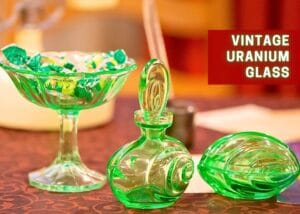
- Uranium Glow: Some Depression-era green glassware used uranium oxide, which gives the glass a unique fluorescent glow when placed under UV light. Many collectors pay insane prices for these pieces.
Green Glass Vs. Uranium Glass
There were two types of vintage green glassware: regular green glass and Uranium glass. Here’s how to tell the difference:
Regular Green Glass
Manufacturers made regular green glass by adding Chromium oxide to the molten glass mixture. It gave a green color to glasses with shades like jadeite, emerald green, pastel green, olive green, avocado green, etc.
Uranium Glass/Vaseline Glass
This glass has a yellowish-green hue, which was achieved by adding a small amount of uranium dioxide to the molten glass mixture. One of the most defining features of Uranium glass is that it glows under UV light. Usually, uranium glass appears in yellow-green, apple green, etc.
Collector’s Note: Uranium glass was considered radioactive. But the amount of uranium utilized is extremely low, making it safe to use on an everyday basis. You should avoid drinking or eating out of the glassware, though.
Vintage Green Glassware Items That Stand Out in Any Collection
Let’s explore some of the most popular vintage green glass pieces and designs trending today.
1. “Royal Lace” Cookie Jar by Hazel Atlas
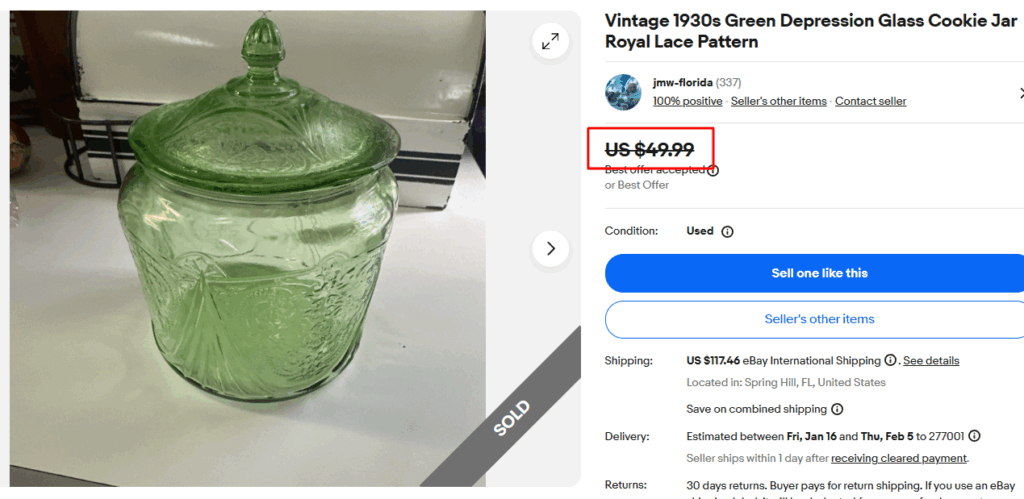
Royal Lace is one of the most collectible Hazel Atlas depression glass patterns, especially in green. You can spot it by its lace-like floral medallion, separated by a ribbed Art Deco-style drape towards the rim.
This round cookie jar is made of uranium glass, which you can confirm by the neon glow under UV light. Finding a lidded green cookie jar in this pattern is quite rare, so it can easily fetch $30 to $50, or more, in pristine condition.
| Average Price Range | $40 to $100 (lidded jar) |
| Pattern | Royal Lace |
| Glass Type | Uranium |
| Brand | Hazel Atlas |
| Manufacturing Period | 1934 to 1941 |
| Collector’s Note | Lidded jar fetches higher values |
2. “Cherry Blossom” Uranium Divided Grill Plates by Jeannette
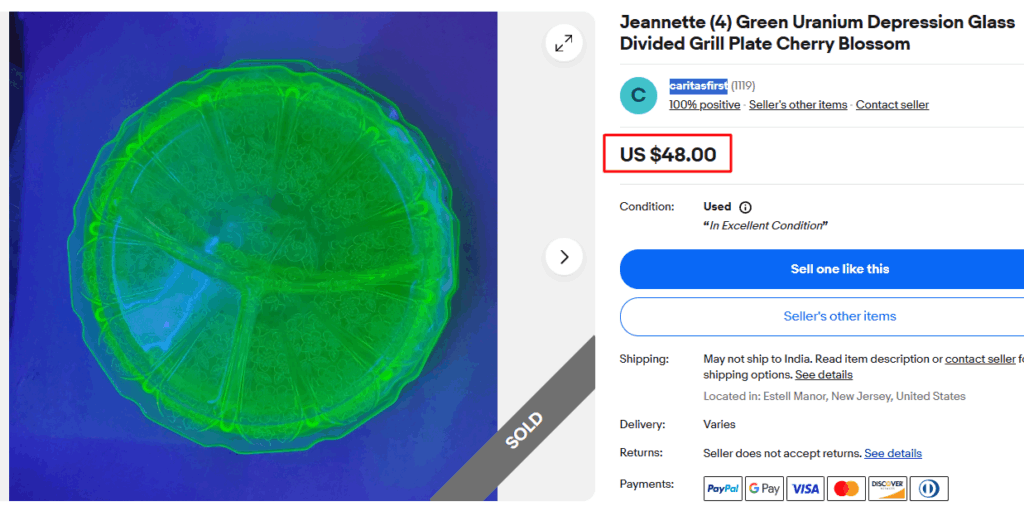
Grill plates aren’t as commonly found as dinner plates or luncheon plates. This rarity sparks collectors’ interest and adds more to the value. This set features the “Cherry Blossom” pattern, with etched designs of Cherry blossoms and clusters of cherries on the base.
Also, the scalloped edges of the plates resemble flower petals, along with raised ribs or panels that reflect Art Deco style. Pieces in this pattern generally have moderate value.
| Average Price Range | $20 to $80 (sets) |
| Pattern | Cherry Blossom/Etched Cherry Florals, Clusters of Cherries |
| Glass Type | Uranium |
| Brand | Jeannette Glass Company |
| Manufacturing Period | 1930 to 1939 |
3. “Versailles” Salad Plates by Fostoria
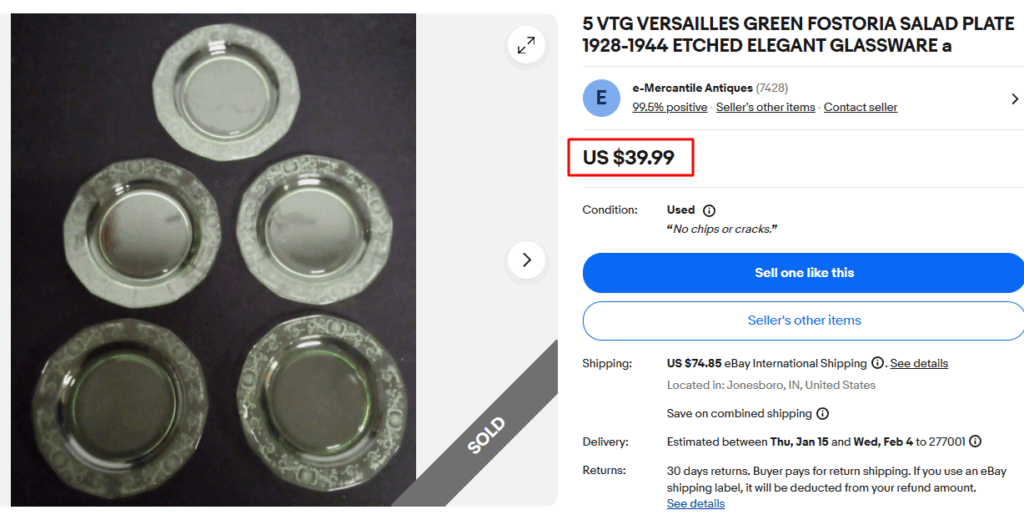
An example of elegant Depression era green glassware! This set of “Versailles” salad plates by Fostoria is distinguished by an all-over etched design of delicate shells, plumes, and a modified fleur-de-lis symbol. You can usually spot this decorative etched design on the rims, while the base is plain.
Larger sets with rare pieces can sell for hundreds of dollars, while smaller sets or everyday items, like these salad plates, typically sell at low prices.
| Average Price Range | $20 to $50+ (based on no. of plates) |
| Pattern | Etched Design of Shells, Plumes, and Fleur-de-lis |
| Glass Type | Regular Depression Glass |
| Brand | Fostoria |
| Manufacturing Period | 1928 to 1944 |
4. Fire-King “Jane Ray” Jadeite Dishes Set by Anchor Hocking
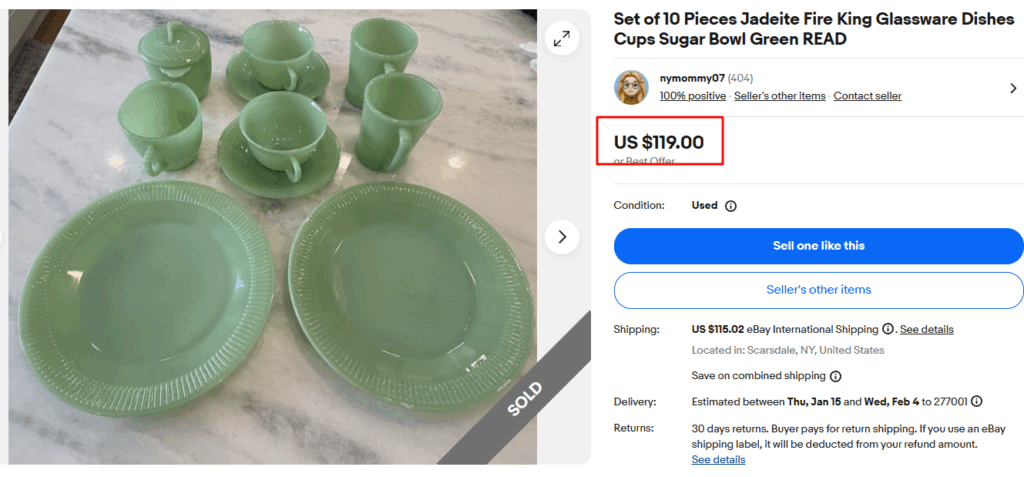
These dinnerware items are made of opaque, jade-green milk glass, which collectors fondly call “Jadeite.” The set features the ‘Jane Ray’ pattern, which you can spot by vertical, closely placed ribs.
Originally given away as freebies or promotional items, these dishes are now considered highly valuable. While individual pieces of this set sell for a low value, larger sets with a variety of items can sell for hundreds of dollars.
| Average Price Range | $10-$20 (single items); $30-$250 (sets) |
| Pattern | Jane Ray/Vertical, Closely Placed Ribs |
| Glass Type | Regular Depression Glass |
| Brand | Fire-King Line by Anchor Hocking |
| Manufacturing Period | 1940s to 1960s |
| Identification Mark | ‘Oven Fire-King Ware’ at the Base |
5. Ruffled “Thumbprint” Candy Dish by Fenton
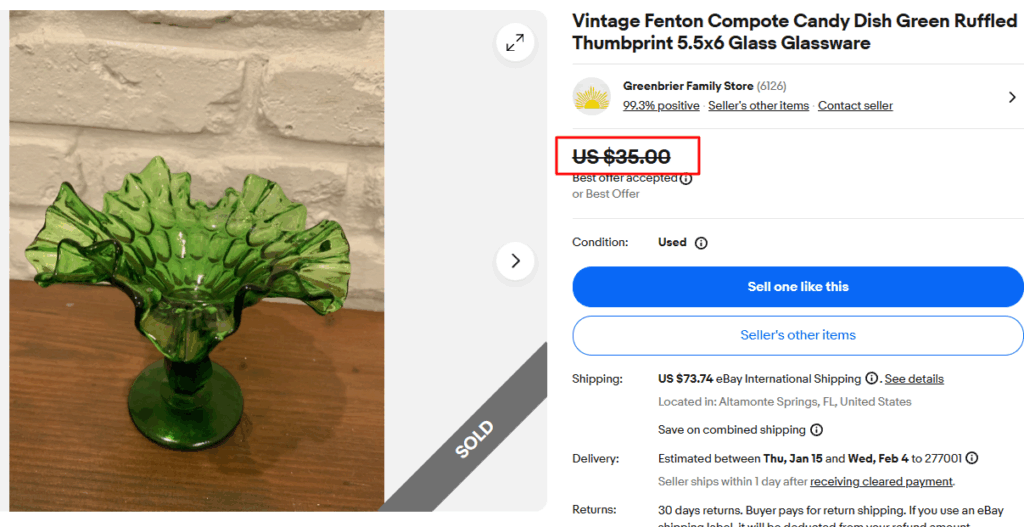
This thumbprint ruffled candy dish is a hallmark of Fenton’s expressive style in the 20th century. It features the “Thumprint” pattern, recognized by the distinctive thumb indentations on the bowl. The unique shape and the colonial green color together make this piece rare!
| Average Price Range | $10 to $50 |
| Pattern | Thumbprint |
| Glass Type | Regular Glass |
| Brand | Fenton |
| Manufacturing Period | 1940s to 1960s |
6. Northwood’s Jadeite Covered Apothecary Jar
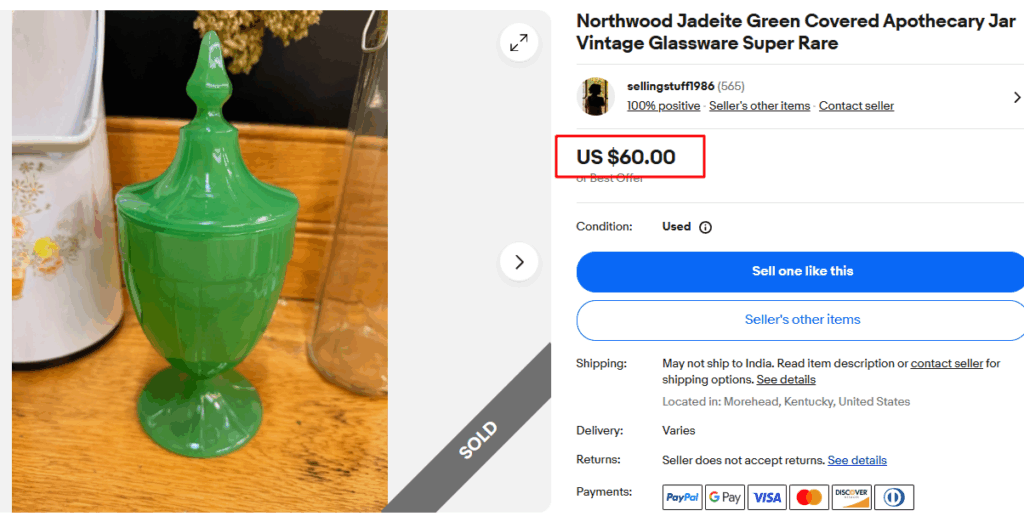
This is a classic apothecary jar with a footed base, round body, and pointed lid, made of Jadeite glass. It shows Northwood’s popular “Colonial” pattern – vertical panels. Such unique opaque jadeite green glassware pieces are quite collectible.
| Average Price Range | $30-$100 (based on condition) |
| Pattern | Colonial, Long Vertical Panels |
| Glass Type | Opaque Jadeite Glass |
| Brand | Northwood |
| Manufacturing Period | 1920s |
7. Soreno Avocado Green Set by Anchor Hocking
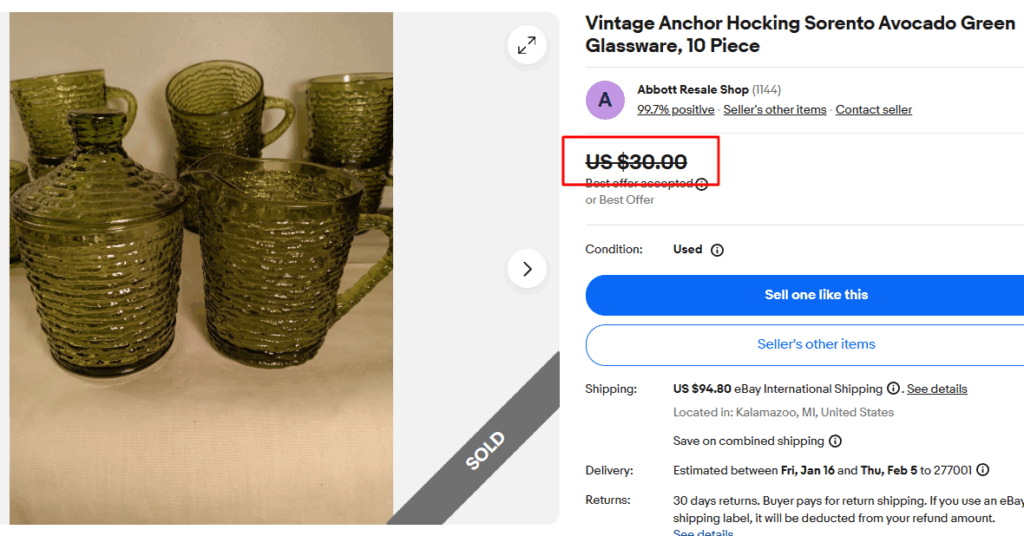
This unique avocado green mug set from Anchor Hocking is an example of Mid-century Modern glassware. It displays a heavily textured “Sorento” pattern with horizontal and circular lines that mimic tree bark on the outside.
| Average Price Range | $30-$100 (based on condition) |
| Pattern | Soreno, Textured Exterior like Tree Bark |
| Glass Type | Regular Avocado Green Glass |
| Brand | Anchor Hocking |
| Manufacturing Period | 1966 to 1970 |
8. “Lyric” Footed Tumblers by Hazel Atlas
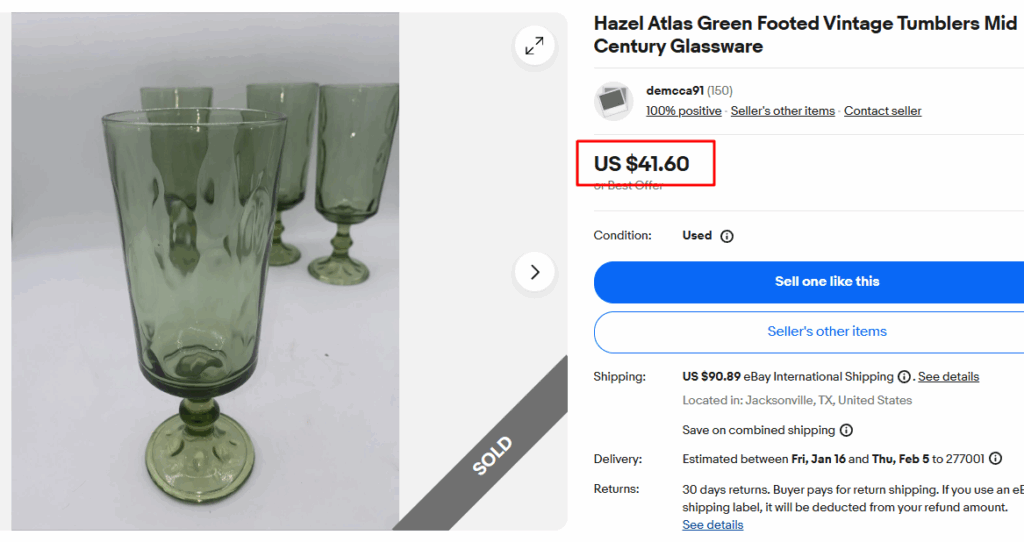
Avocado green was a very popular color for glass in the Mid-Century era, making this set rare and highly collectible. Besides, it also shows Hazel Atlas’s “Lyric” pattern, a large raindrop-like or elongated thumbprint design.
| Average Price Range | $30 to $100 (large sets) |
| Pattern | Lyric/ Elongated Thumbprint Design |
| Glass Type | Regular Green Glass |
| Brand | Hazel Atlas |
| Manufacturing Period | 1960s |
9. “Virginia” Green Luncheon Set by Fostoria
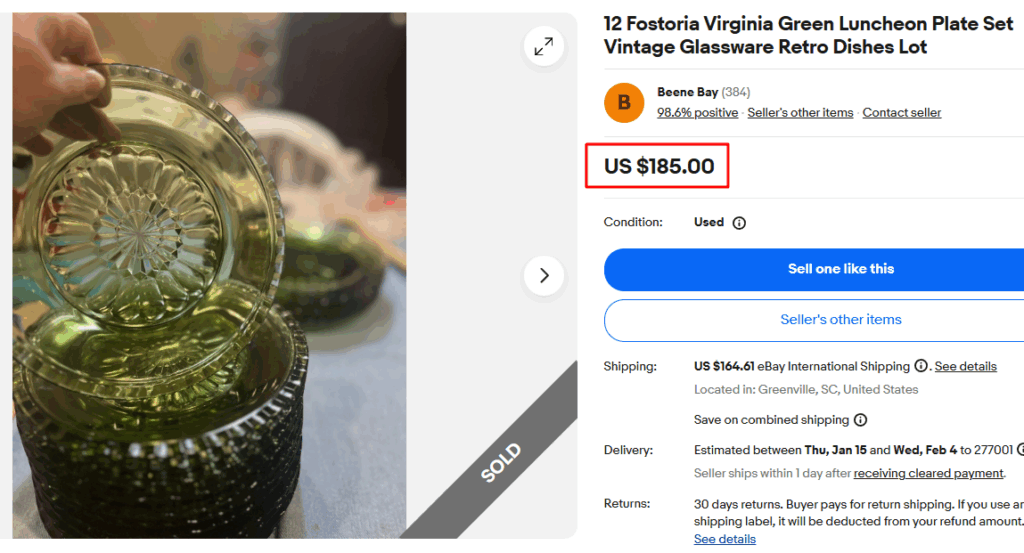
Fostoria’s “Virginia” pattern is known for its busy, geometric design featuring diamond points at the center, surrounded by raised curved panels. On plates, you will find this design in the center with scalloped or panelled edges.
This set of 12 luncheon plates is valued at $185. But sets with rare items may have an even higher price tag.
| Average Price Range | $80 to $300 (based on set size) |
| Pattern | Geometric Diamond Points & Raised Panels |
| Glass Type | Regular Green Glass |
| Brand | Fostoria |
| Manufacturing Period | 1978 to 1986 |
10. “Cameo” Footed Cake Plate by Anchor Hocking
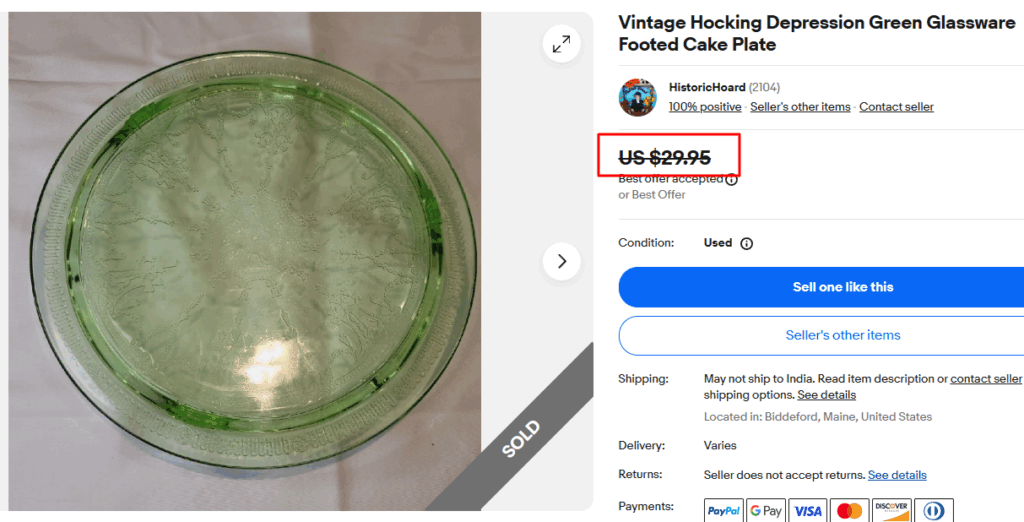
This large, footed cake plate features Anchor Hocking’s popular “Cameo” pattern, also known as “Ballerina.”
You can identify it by an etched figure of a dancing girl in a panel within the medallion. On the rim and base, the pattern appears busy, with continuous U-shaped curves, floral swags, and swirling veils.
One of the company’s most popular patterns, this cake stand is sold for almost $30. But large pieces in excellent condition can fetch hundreds of dollars.
| Average Price Range | $10-$30 (single items), $50-$200 (large pieces/sets) |
| Pattern | Ballerina, Floral Swags, Veils, Medallion |
| Glass Type | Uranium Depression Glass |
| Brand | Anchor Hocking |
| Manufacturing Period | 1930 to 1934 |
11. Decorative Unicorn by Fenton
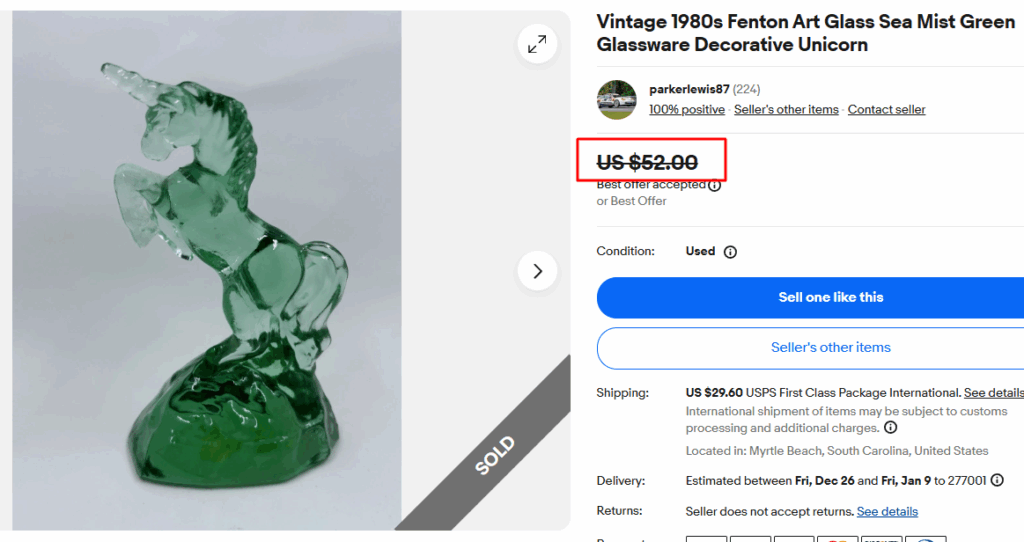
This is a rare 1980s decorative piece from Fenton! It’s a clear unicorn figurine with intricate details, made from a super-rare sea-mist green glass.
The display-worthy, five-inch figurine shows a rearing unicorn with its hind legs attached to the base. You can authenticate the piece by the “Fenton” logo on the base.
| Average Price Range | $40 to $150 |
| Shape | A Rearing Unicorn Figurine |
| Glass Type | Regular Sea Mist Green Glass |
| Brand | Fenton |
| Manufacturing Period | 1980s |
12. Emerald Juniper Wine Glasses by Libbey
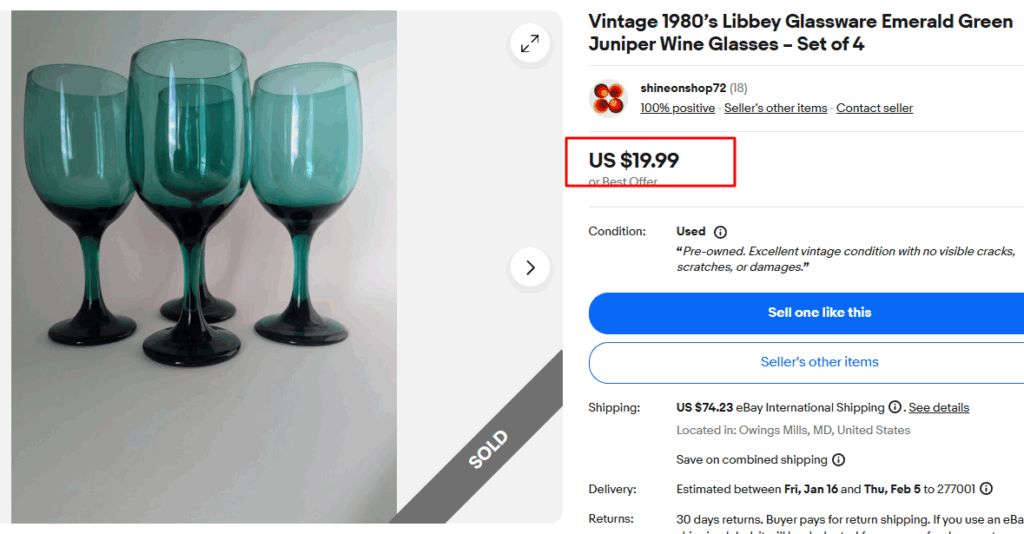
These stemmed wine glasses were launched as a part of the “Juniper” line by Libbey Glass Company. The series comprises glass items in emerald and sea green, with a ‘teardrop’ design and weighted feet.
You can identify these pieces by their smooth tulip-shaped body and thick, sturdy bases. Also, don’t forget to check the cursive ‘L’ logo on the base to ensure it’s authentic.
| Average Price Range | $10 to $60 |
| Shape | Plain Goblet Glass |
| Glass Type | Juniper – Emerald Green |
| Brand | Libbey Glass Company |
| Manufacturing Period | 1980s |
If you’re unsure whether or not a vintage green glass piece is worth the money, this guide is your companion. Use this guide to find which colors, patterns, and shapes are collectible, so you never overlook a treasure.
Just like green glass, pink is another popular color that many collectors are hunting for these days. Check out this vintage Pink glassware guide to know more!
Note: This article is intended for informational, educational, and entertainment purposes only. Some images are illustrative and may not represent actual brands, products, or related entities. All trademarks, product names, brand logos, packaging, and other intellectual property referenced remain the exclusive property of their respective owners. Any brand mentions or references are provided solely for descriptive and educational context and do not imply any formal or commercial association.