Antiques Know How Research
Colored Milk Glass Value
A detailed research on eBay sales and auction data at Antiques Know How shows that vintage colored milk glass typically values $50–$500+ for rare hues from makers like Fenton, Fostoria, Jeannette, and Fire-King. Standouts include Fenton’s pink epergne, Jeannette jadeite pieces, Fire-King Delphite bowls, and Portieux Vallerysthal blue opaline pieces. Check the marks, color opacity, and condition to estimate the right value!
Antiques Know How
When you hear “milk glass,” you think it’s just white. That’s because white milk glass is everywhere: flea markets, estate sales, thrift shops, and even your home! But once you start looking past the white pieces, you’ll find unique colored milk glass that commands real money!
The value, though, depends on who made the colored milk glass piece, how rare the color is, its shape, and its pattern! Here, I’ll show you some collectible milk glass colors and pieces, along with tips for easily spotting valuable colored milk glassware!
Why Is Colored Milk Glass More Collectible?
Milk glass was common in the 1940s, but colored milk glass was never made in the same volume as the white. Most makers made white their bread-and-butter product and colored versions in smaller quantities, for shorter periods, or as special orders.
That limited production is the core reason colored pieces are worth more today.
Plus, the color is a strong value factor in its own right, with certain shades being more desirable. For example, Delphite blue (from Anchor Hocking’s Fire-King line) and Jadeite have the most active collector bases.
Pink and aqua pieces from American manufacturers like Fostoria and Fenton also attract mid-century modern collectors as well as traditional milk glass collectors.
7 High Value Colored Milk Glass Pieces
Let’s take a look at some high-value vintage colored milk glass pieces that every collector wants in their collection!
1. Fostoria Pink Milk Glass Brazilian Vase
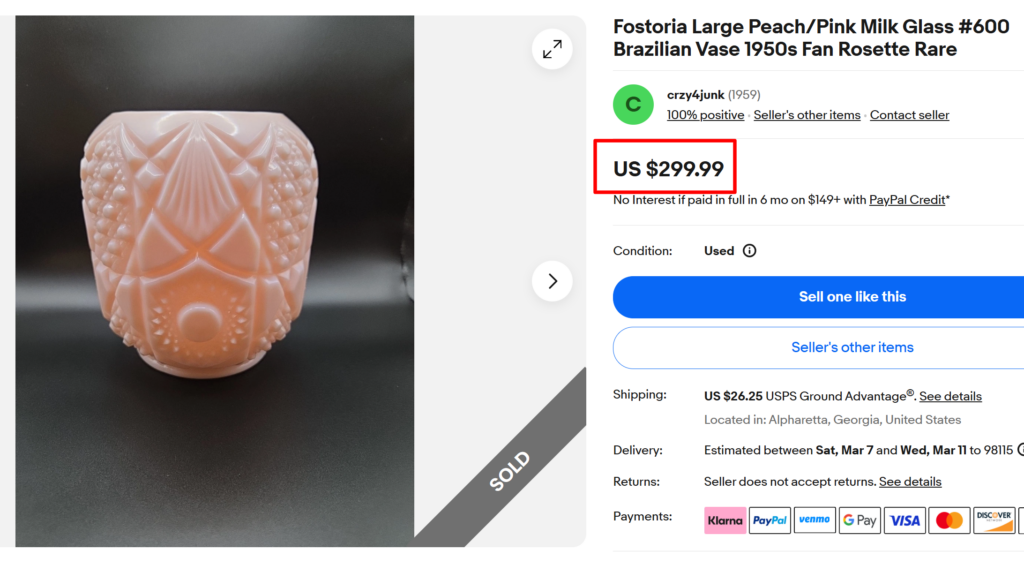
| Average Value | $150–$300 |
| Brand | Fostoria Glass Company |
| Color | Pink / Peach-Pink Milk Glass |
| Collectibility | High (Fostoria & milk glass collectors) |
| Collector Notes | These had paper lables (mostly lost) |
The Brazilian pattern, also called Cane Shield, is a pressed geometric design combining fans, diamond panels, and dot rosettes. The #600 designation is the mold number associated with this vase form.
Fostoria originally made this pattern in clear crystal from 1898 to 1913, and later revived it in the 1950s in colored milk glass. The Brazilian pattern in this pink-peach color was made for a short time in the mid-1950s, making them somewhat harder to find!
2. Fenton Grape & Cable Blue Stained Milk Glass Humidor
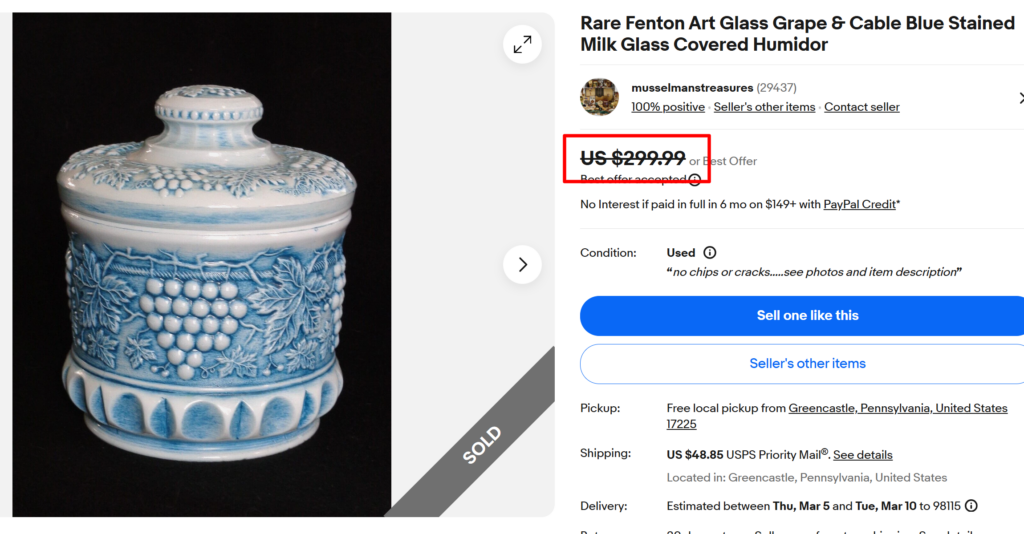
| Average Value | $100–$350 |
| Brand | Fenton Art Glass |
| Color | Blue Stained Milk Glass |
| Collectibility | High |
| Collector Notes | “Hand Painted By Fenton” label inside the jar |
The Grape & Cable pattern is one of Fenton’s classic motifs, originally produced in carnival glass. It features a molded design of grape clusters and twisted cable borders.
The tobacco humidor or covered jar in this pattern was made in multiple colorways, like purple slag, green slag, and this blue-stained milk glass.
Blue-stained milk glass means the base glass is white milk glass with blue stain applied to the raised design areas. The result is a two-tone piece where the grape and cable relief appear in blue against a white body.
Humidors in this colorway are less common than the slag versions and were made as special orders for collectors, making them a rare find!
3. Fostoria Winburn Aqua Blue Milk Glass Candy Dish
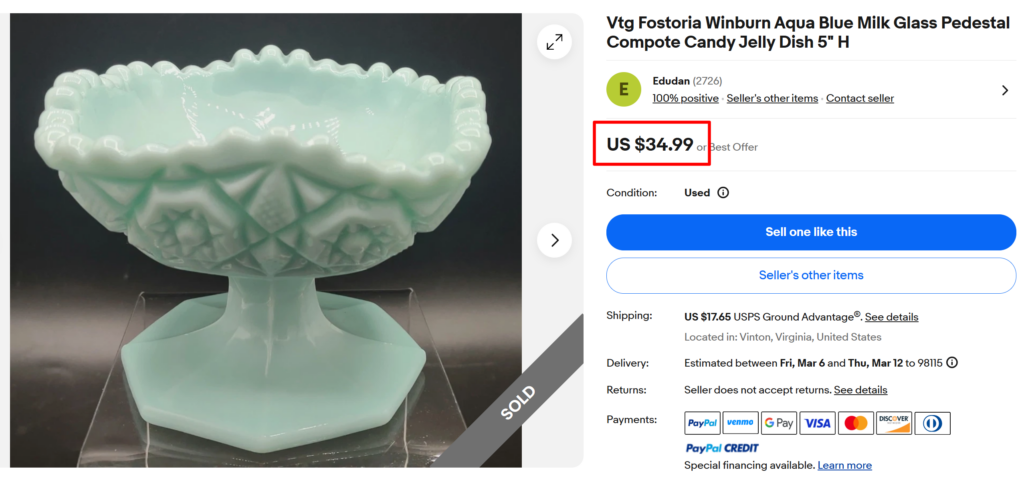
| Average Value | $30–$75 |
| Brand | Fostoria Glass Company |
| Color | Aqua / Turquoise Blue Milk Glass |
| Collectibility | High |
| Collector Notes | Fostoria pieces are usually unmarked; had paper labels |
Fostoria produced milk glass in this unusual aqua or turquoise blue color during the 1950s, in a pattern they originally called Winburn (from the crystal version made 1910–1928). Later, they called it Rosby or Line #1704. The pattern features diamond-cut hobstar panels and a scalloped edge.
Fostoria’s aqua milk glass is rarer than its white milk glass. And, although the candy dish on a pedestal base is one of the more commonly seen forms in this color, it’s still collectible due to a shorter run, from around 1954 to 1960.
4. Jeanette Jadeite Batter Pitcher
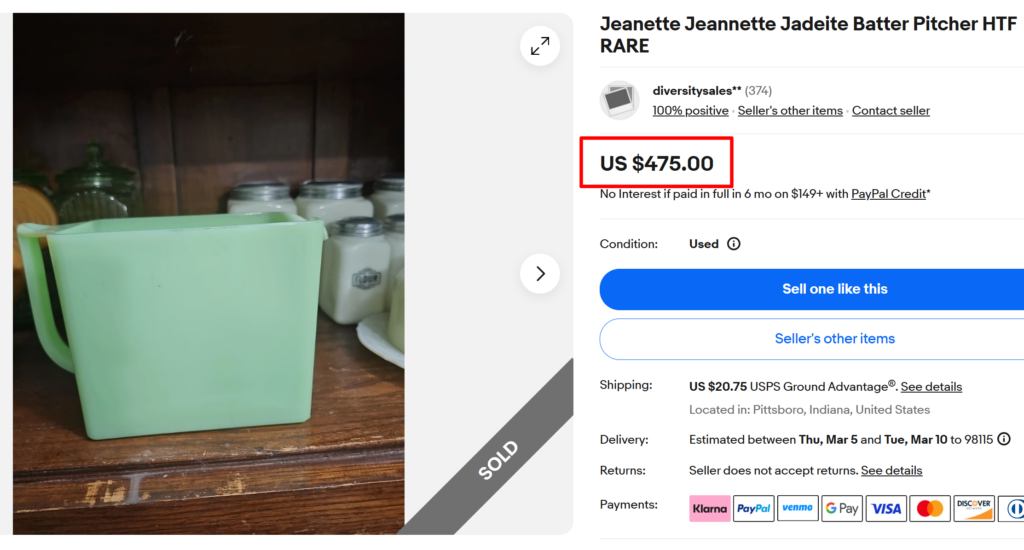
| Average Value | $200–$500+ |
| Brand | Jeannette Glass Company |
| Color | Jadeite (opaque green) |
| Collectibility | Very High |
| Collector Notes | Genuine pieces glows under a UV light |
Jeannette Glass made Jadeite during the 1930s and 1940s, and their pieces contain uranium, which means they glow under a blacklight. This is a key authentication test.
The #370, also called the Ice Box Jug or Batter Pitcher, is one of the most sought-after Jeannette jadeite pieces because it’s simply hard to find intact. The large rectangular body and D-shaped handle make this piece quite distinctive.
This piece was also listed in Keller and Ross’s Jadeite Identification and Price Guide, which confirms it’s a documented collectible.
Good to Know: Unlike Fire-King Jadeite, Jeannette pieces don’t carry manufacturer marks on the glass itself.
5. Portieux Vallerysthal Blue Milk Glass Block and Star Cake Stand
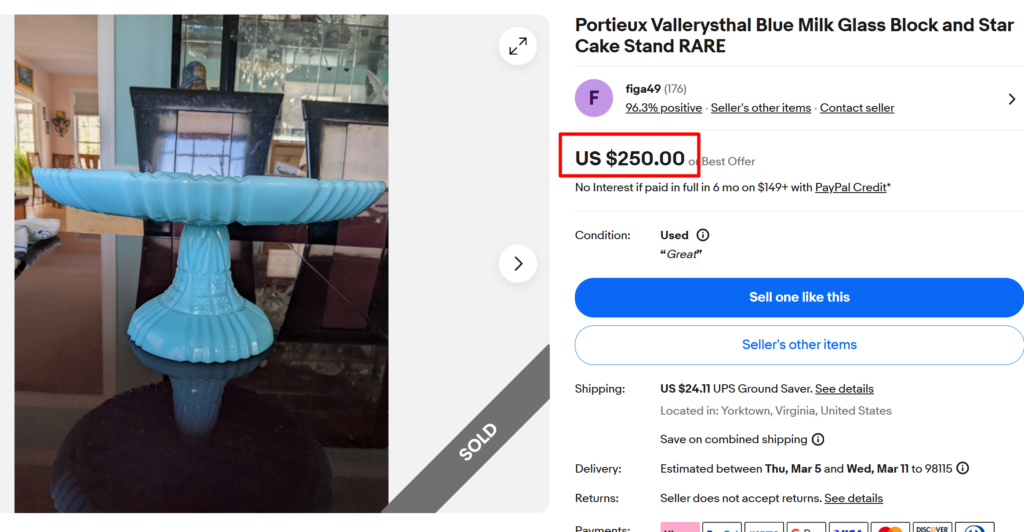
| Average Value | $150–$300 |
| Brand | Portieux Vallerysthal (France) |
| Color | Blue Opaline (Celeste Blue / Robin’s Egg Blue) |
| Collectibility | High |
| Collector Notes | Blue Opaline (Celeste Blue / Robin’s Egg Blue) |
Portieux Vallerysthal is a French glass company with roots going back to the 18th century. Their blue opaline milk glass, a robin’s egg blue sometimes called ‘Opaline’ or ‘Celeste Blue,’ is highly collectible.
Most PV pieces that turn up are stemware, covered dishes, and small decorative objects. A footed cake stand with this blue opaline color and pressed geometric Block and Star pattern is a legitimate rare find!
6. Fenton Pink Hobnail Milk Glass Epergne
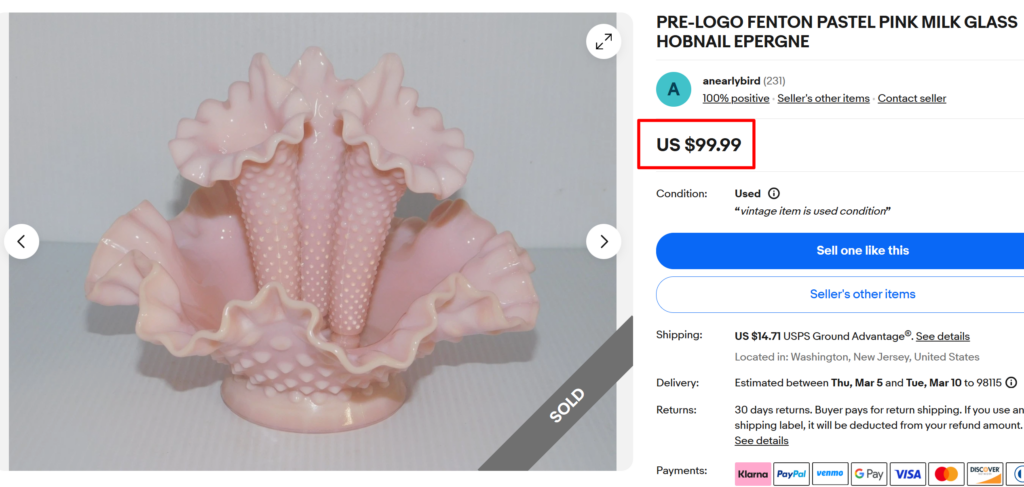
| Average Value | $75–$125 |
| Brand | Fenton Art Glass |
| Color | Rose Pastel (soft pink) |
| Collectibility | High |
| Collector Notes | Pre-logo pieces have no Fenton mark; only stickers |
An epergne is a multi-arm centerpiece with a ruffled base bowl and three removable horn inserts, generally used for flowers or fruit. Fenton made hobnail milk glass epergnes from the early 1950s, and the pre-logo versions (before the early 1970s oval mark) are more desirable.
This particular piece is in Rose Pastel, Fenton’s soft pink color produced during the 1950s. It was made for a short window, which is why these epergenes are more valuable than common white milk glass versions.
7. Fire-King Delphite Blue Teardrop Mixing Bowls
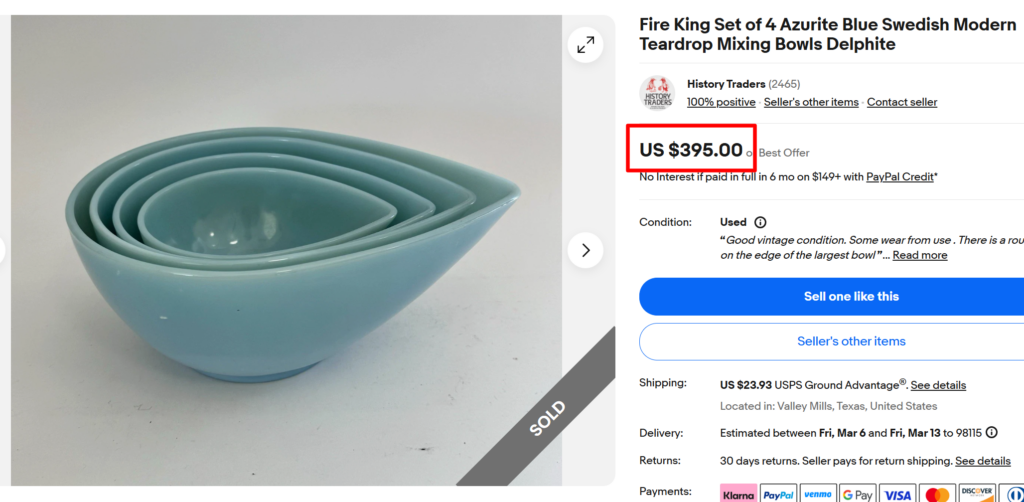
| Average Value | $150–$440 (set of 4) |
| Brand | Anchor Hocking Fire-King |
| Color | Delphite Blue (Azurite) |
| Collectibility | Very High |
| Collector Notes | Factory sticker intact adds value |
The Swedish Modern line is one of Fire-King’s most collected patterns. The asymmetrical teardrop shape with a pointed pour spout on one end makes them stand out against the traditional round bowls.
Fire-King produced these in Delphite blue, also called Azurite, during the 1950s. While individual bowls have a modest value, complete sets of four (in pristine condition) can bring a few hundred dollars, especially with the original factory sticker intact!
Things to Check While Collecting/Selling Colored Milk Glass!
- Color Opacity: Genuine colored milk glass should be fully opaque. Hold it up to a strong light source; if it’s transparent or translucent, it’s colored glass, not milk glass. (Opalescent milk glass has a halo of milkiness around the edges under a strong light source.)
- UV Blacklight Test (for Jadeite): Jeannette and McKee jadeite pieces from the 1930s and 1940s contain uranium and glow yellow-green under a blacklight. Fire-King jadeite and L.E. Smith reproductions do not glow. This is a quick way to separate originals from later production.
- Maker Marks: Certain makers are more desirable, but not all milk glass pieces are marked; only some are. Fire-King pieces have a ‘Fire-King Oven Ware Made in USA’ or the anchor-H logo. Fenton pieces (post-early 1970s) have an oval Fenton mark, and L.E. Smith seconds have a molded ‘S.’ For unmarked pieces, use patterns to identify.
- Pattern Identification: Color is not enough to spot a valuable piece. Go further and check reference books and collector databases to identify the pattern or designs. You can also refer to authentic identification and price guides, as well as the company’s catalogs!
- Color Matching: Each color has a definite look. For example, Delphite is a soft, dusty blue-gray; Jadeite is an opaque, medium green; Fenton’s Rose Pastel is a warm, soft pink; and Fostoria’s aqua is a true turquoise blue. Knowing the correct shade is important for knowing what’s real!
- Condition: Regardless of color, any significant damage can deeply hurt the value of milk glass. So, do a quick scan to spot any chips, especially on the pour spouts of pitchers and rims of bowls, and cracks.
- Completeness: Colored milk glass pieces are generally rarer than white. This makes complete sets way more desirable than individual pieces or partial sets. Fire-King Teardrop bowls, Fenton epergnes, and Jeannette ribbed shaker sets all command strong premiums when complete!
Note: This article is intended for informational, educational, and entertainment purposes only. Some images are illustrative and may not represent actual brands, products, or related entities. All trademarks, product names, brand logos, packaging, and other intellectual property referenced remain the exclusive property of their respective owners. Any brand mentions or references are provided solely for descriptive and educational context and do not imply any formal or commercial association.