Antiques Know How Research
Hobnail Glass Value
According to our research of hundreds of sales and auctions at Antiques Know How, the value of vintage Hobnail glass generally ranges from $10 to $1,500, depending on the rarity of patterns and colors, size, shape, and condition. The most valuable hobnail glass colors are Cranberry Opalescent, Blue Lagoon, and Plum Opalescent, while collectible pieces include swung vases, GWTW lamps, and epergnes.
Antiques Know How
If you love collecting glassware, I’m sure you must have one of those milky-white or clear glass pieces with round or pointed raised bumps all over. That’s the iconic “Hobnail” glass, named after old-fashioned boot nails!
This bumpy pattern has been a sensation in the glassware world since the 1930s. Besides, from Fenton to Anchor Hocking, many makers have released their variants. In this guide, you’ll learn to identify authentic Hobnail glass and discover some highly collectible pieces worth keeping!
What Is Hobnail Glassware?
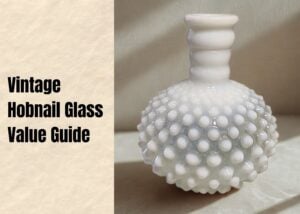
Hobnail glass is easy to recognize. It’s covered with raised bumps, also known as the “hobs.” These look like the metal studs people used to put on the bottom of work boots back in Victorian times.
The pattern has been around longer than the name. It dates back to the 1880s, when glassmakers like Hobbs, Brockunier & Co. made it and called it “Dewdrop.” But it was Fenton Art Glass Company that really made hobnail famous.
They started their version in 1939, and by 1952, Hobnail Milk Glass was popular all across the United States. Companies like Westmoreland and Imperial also followed the trend and released their own versions of hobnail glass!
How Do You Identify Hobnail Glass?
Since Hobnail glassware is so popular and widely available, it’s easy to confuse real and reproduction pieces. To spot authentic hobnail glassware, check these three things:
1. Makers & Their Marks
A maker’s mark on the bottom is a clear indication of authenticity. However, most of the hobnail glassware is unmarked. Nonetheless, you can use the following details to identify pieces that have them.
Fenton Art Glass
Fenton released their hobnail pattern in 1939, with hobnail milk glass beginning in 1952. But the company began adding a molding mark on its pieces only after 1970. It’s a raised “Fenton” mark in an oval or script.
From 1980 onward, the company added a number to denote the decade, for instance, “8” for the 80s, “9” for the 90s, and “0” for 2000-2011.
Earlier pieces (1939-1970) generally lack marks, so you might need to identify their hobnail pieces via hob shapes, pattern catalogs, and colors.
Westmoreland Glass
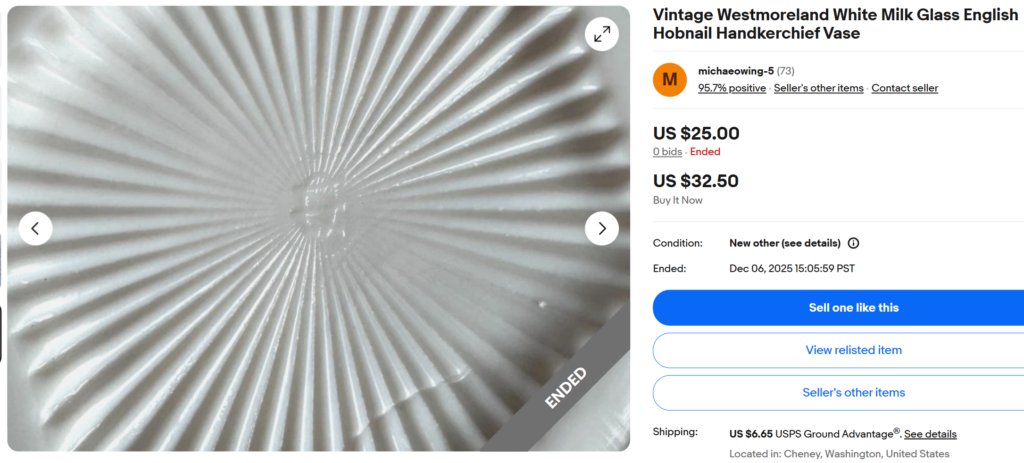
Westmoreland entered the “hobnail” game with their unique “English” design in 1915, and later released the “American Hobnail in 1952. Their earlier hobnail pieces may show “W” inside a Keystone, while the later pieces (from 1946 to 1981) likely have the famous intertwined “WG” logo.
Imperial Glass Company
Imperial’s hobnail glassware ran from the 1930s to 1984. Although the earlier pieces (from the 1930s to 1950) are unmarked, you may find an “IG” mark on the post-1950 pieces.
Also, if you see an “L” added to the “IG” stamp (LIG), the piece was likely made during the Lenox years (1973–1981).
L.E. Smith Glass
Smith hobnail glass came into the industry in the 1940s and ran until 2004. During this period, the company barely marked its original pieces. But, you may sometimes see an “S” mark with tiny letters “G” and “C” in the curves of the “S,” on the 1970s revival pieces.
Hobbs, Brockunier & Co.
Hobbs is the discoverer of the hobnail glass. They began making it back in 1886, patented as the “Dewdrop” pattern. The production only ran from the 1880s to the 1890s. These pieces never had any molded marks or were either sold with paper labels (long gone).
Anchor Hocking
Hocking introduced their own version of the hobnail design in 1934, popularly known as “Moonstone hobnail,” which flourished until the mid-1940s. However, their pieces barely show the “Anchor” logo, unlike the “Fire-King” lines.
2. Pattern Distinction
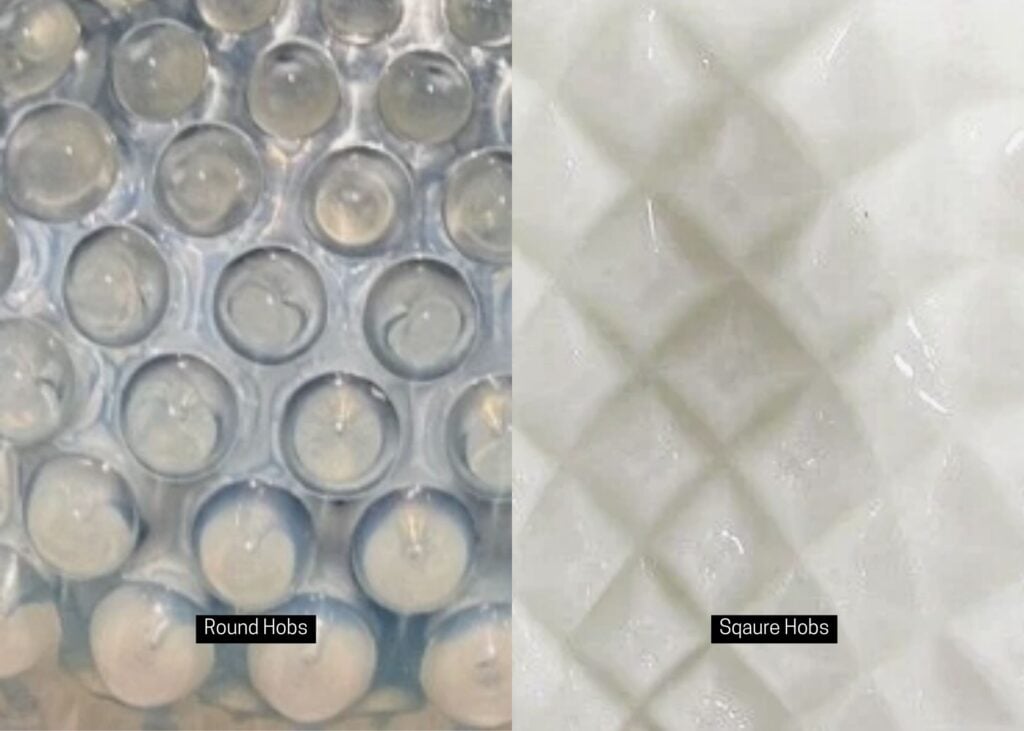
Another thing that might help you spot authentic hobnails from a brand is the design of hobs, the glass’s texture, and edge styles. Here’s how these features differ from brand to brand:
- Fenton: Fenton’s hobs are pointy, almost sharp. They’re also perfectly uniform, shaped like little cones, and spaced out with precision. As for the edge, you’ll almost always see a ruffled or crimped edge.
- Westmoreland Glass: Westmoreland’s American hobnail has less-sharp, regular round bumps, while the English hobnail has square hobs with flat tops. They sit in a diamond grid, looking like a waffle pattern.
- Imperial Glass: The hobs in Imperial glass are pointed like Fenton’s, but the glass itself is thicker and heavier. Also, they use a scalloped rim on the fan.
- Anchor Hocking: Officially called “Moonstone,” their hobs are bigger (than Fenton’s, smooth, and rounded, like little pearls. The edges of many pieces are softly scalloped.
- L.E. Smith: Hobs on L.E. Smith glassware are well-defined but more spaced out than Fenton’s, making them look chunkier and more modern. Besides, you might find three-peg feet on vases and bowls. That’s a dead giveaway.
Is Hobnail Glass Valuable? (4 Factors to Assess)
Let’s take a closer look at the factors that affect the actual value of any hobnail glassware item.
Maker and Provenance
Who made the piece matters quite a lot in the case of hobnail glass. For example, pieces from Fenton are generally worth a lot because they dominated production. But a piece from the 1880s by Hobbs, Brockunier & Co. will hold greater value for its history than a Fenton piece from the 1950s.
So, try to trace the maker of your hobnail pieces with the clues explained earlier.
Shape Complexity
In simple terms, the harder a hobnail piece was to make, the more it’ll be worth today. And this complexity comprises several aspects, such as:
- Hand-Finished Details: Ruffled edges or applied handles were hand-finished while the glass was still hot. Stunning craftsmanship means higher value.
- Multi-Part Items: Things like epergnes (centerpieces with removable horns), fairy lamps, and Gone With the Wind lamps (with two domes) are valuable because finding all the original parts in good shape is tough.
- Size: Larger pieces, like a 20-inch vase, are way rarer than a 10-inch one, so it’s worth more. That’s why those long “swung” vases generally fetch premium prices.
Color Rarity
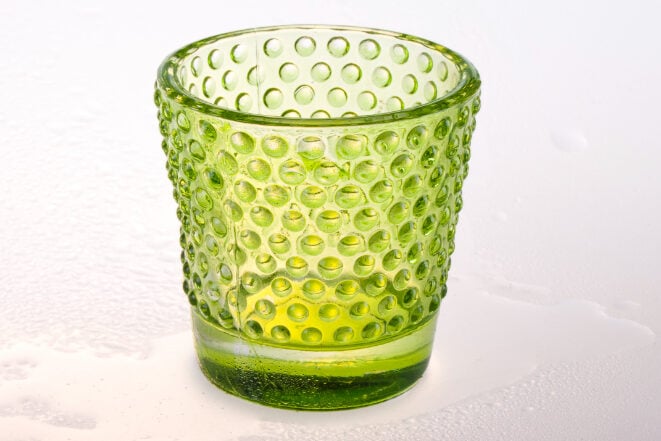
Fenton’s white milk glass and clear glass are the most common colors for hobnail glass. However, collectors mostly strive for opalescent colors, in which the tips of the bumps are whiter than the rest of the piece.
Here are some of the most popular hobnail glass colors:
- Milk Glass (white opalescent) – The most widely produced color
- Clear/Crystal with opalescent hobnails (Moonstone)
- Cranberry opalescent – Highly desirable pink-red with opalescent edges
- Plum opalescent – Scarce color from Fenton
- Blue opalescent – Ranging from powder blue to cobalt
- Green opalescent – From pale jade to darker emerald
- Topaz opalescent – Warm amber yellow
- French opalescent – Blue with opalescent edges (Fenton)
Condition
Hobnail pieces in excellent condition are typically more valuable. Why? Well, Hobnail glassware has those bumps all over; it is prone to chipping and cracking, making pristine pieces rare to find. To assess the value, observe these two major things:
- Flea Bites: These are tiny chips or sharp, jagged spots that you can spot easily by running your fingers over the bumps. These can cut the value by 20-50%.
- Glass Sickness: This is permanent cloudiness or etching from dishwashers, which significantly drops the value. Please pay close attention, as it might be difficult to spot in opalescent colors.
- Cracks: Make sure to check the piece inside out for cracks. Cracked pieces are a big no for collectors.
Collectible Hobnail Glass Items to Look for!
Now, let’s explore some valuable and highly collectible antique Hobnail glass pieces worth money!
1. Hobnail Swung Vase by L.E. Smith
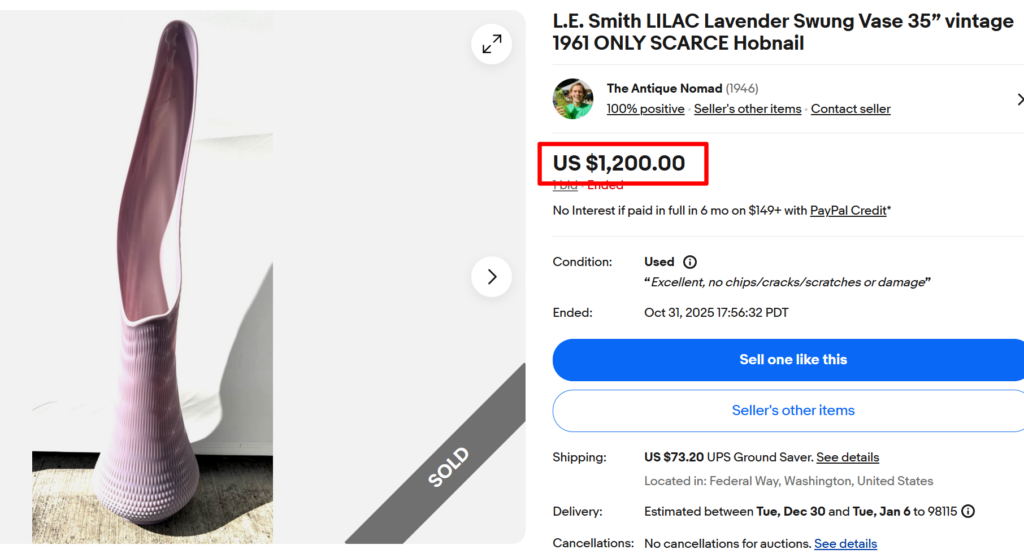
L.E. Smith’s hobnail “swung” vases are one of their most exotic pieces. Unlike regular molded vases, “Swung” vases are made by swinging the hot glass around in circles to stretch out the neck.
The hobs on these vases are typically placed near the bottom and get vertically elongated towards the top. Since they’re hand-made, every piece ends up a little different in height and shape.
Collectors pay more for taller vases and brighter colors like this Lavender/Lilac example, Bittersweet orange, and Peacock Blue.
| Average Price Range | $500 to $1,200+ |
| Brand | L.E. Smith Glass |
| Color | Lilac, Bittersweet (Orange), Peacock Blue |
| Manufacturing Period | 1960s – 1970s |
| Status & Age | Vintage / Mid-Century Modern |
2. Blue Lagoon Hobnail Gone with the Wind Lamp by Fenton
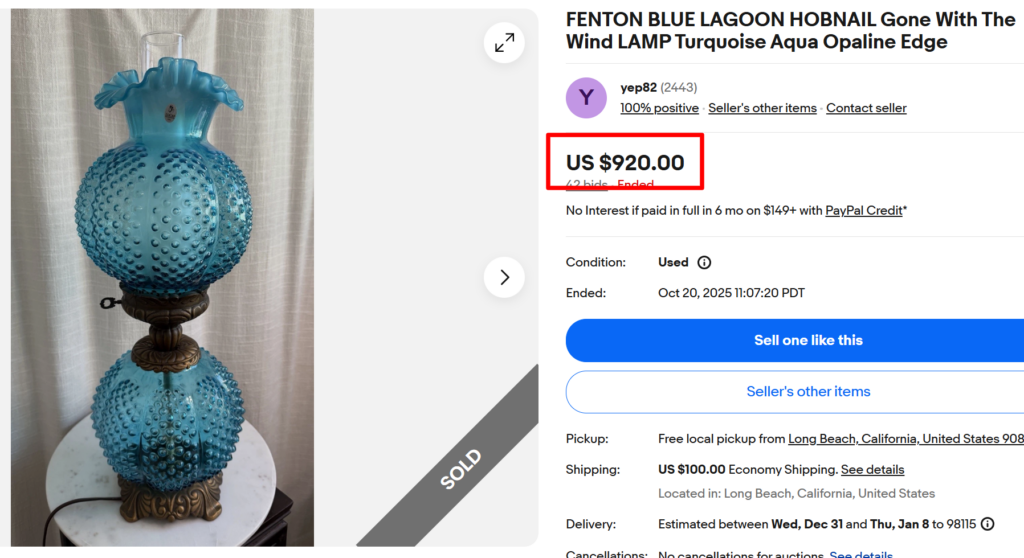
This is a big, showy lamp with a hobnail base and matching globe top, popularly known as “Gone With The Wind” style. It features the “Blue Lagoon” shade, which is a deep teal-aqua color from Fenton’s fancy giftware lines, making it collectible!
Moreover, working lamps with original brass accents can be worth up to a thousand dollars today!
| Average Price Range | $350 – $1,000+ |
| Brand | Fenton Art Glass |
| Color | Blue Lagoon |
| Manufacturing Period | 1950s – 2000s |
| Status & Age | Discontinued / High-End Decor |
3. Hobnail Opalescent Epergne by Fenton
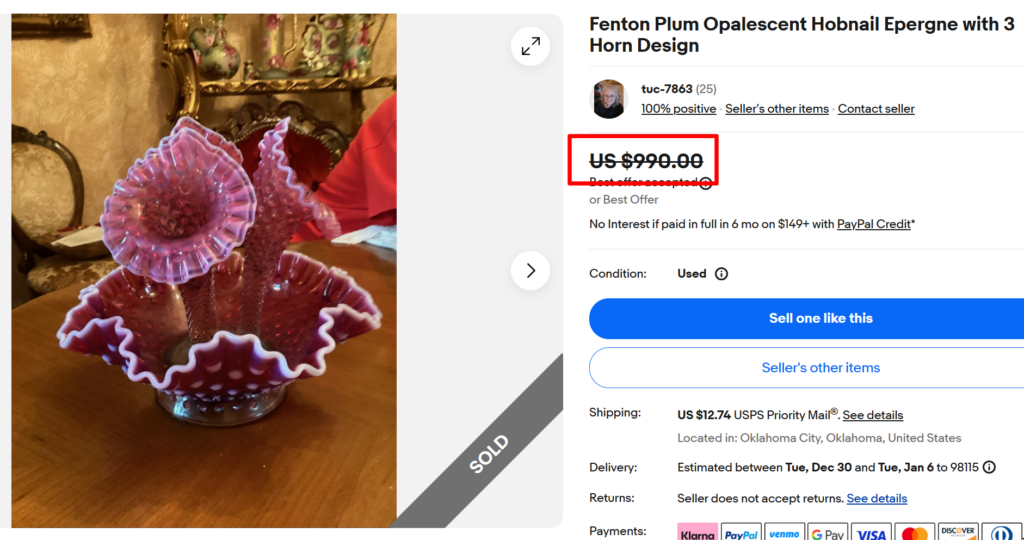
The epergne is the ultimate Victorian centerpiece. You’ll see a big ruffled bowl with three or four detachable horn-shaped vases sticking up. In French Opalescent white, the tips of the bumps and ruffles have this milky glow.
The value of these hobnail vases largely depends on the colors and the number of horns. Since plum is one of the rarest colors, it can sell for $500 to over $1,000.
| Average Price Range | $500 to $1,200+ |
| Brand | Fenton Art Glass |
| Color | Plum Opalescent |
| Manufacturing Period | 1940s – 1950s |
| Status & Age | Discontinued / Rare Vintage |
4. Wild Rose Overlay Hobnail Vase by Fenton
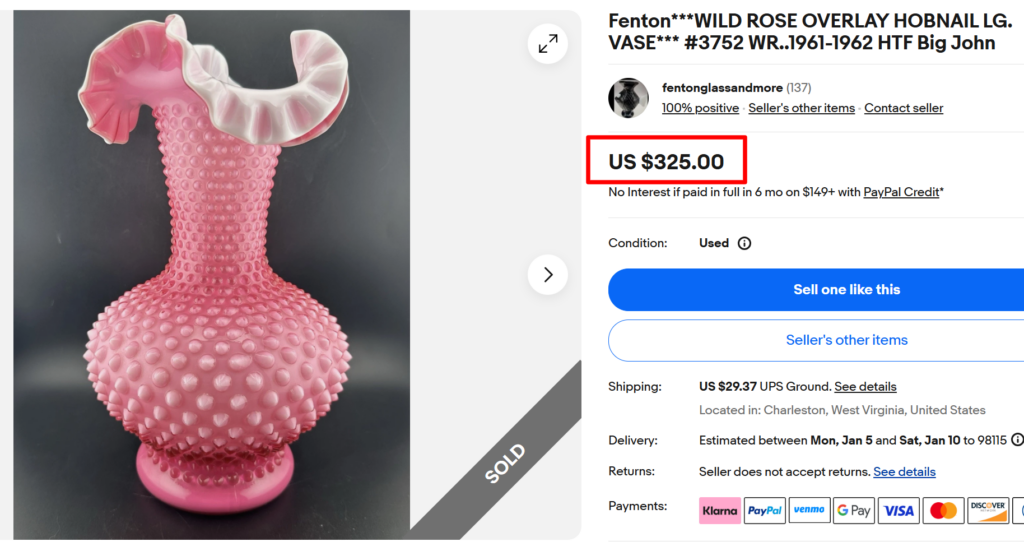
Fenton made their “Overlay” glassware by fusing a layer of pink glass over white milk glass, giving it a soft, creamy look. These vases usually have either a clear “Silver Crest” edge or a white “Snow Crest” ruffled rim.
Also, the hobs are widely placed on the rounded base and get smaller and closer together towards the stem and neck.
| Average Price Range | $100 to $400 |
| Brand | Fenton Art Glass |
| Color | Wild Rose Overlay (Pink on Milk Glass) |
| Manufacturing Period | 1960s |
| Status & Age | Discontinued / Rare Vintage |
5. Canary Vaseline Hobnail Dewdrop Vase by Imperial Glass
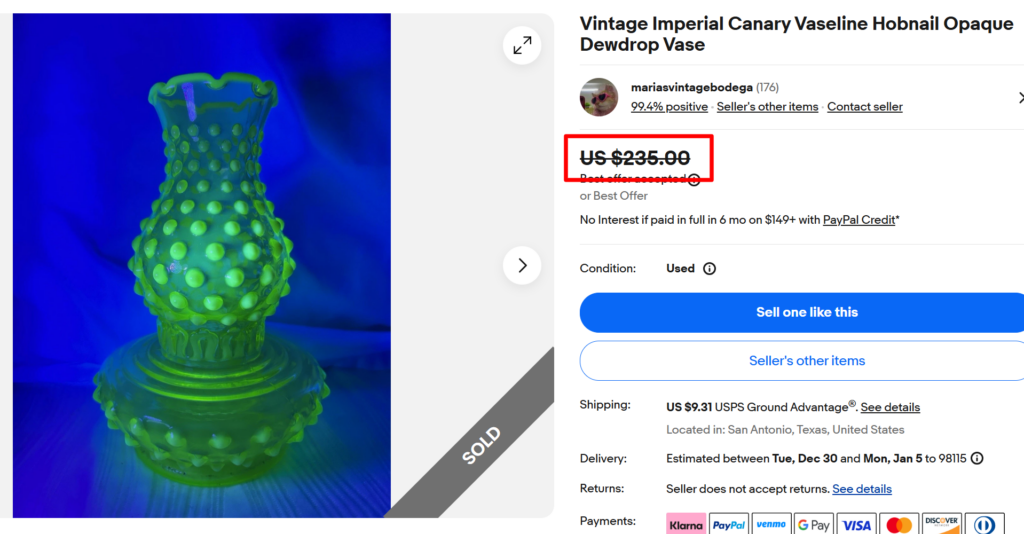
This vase showcases Imperial’s take on hobnail, “Dewdrop!” The patterns look slightly different from Fenton’s hobnail due to the hobs’ size and spacing. The “Canary” color is actually Uranium Glass, which glows bright neon green under light.
These vases come in other colors, such as yellow, blue, and clear. Colored versions hold more value than clear examples.
| Average Price Range | $70 – $150 |
| Brand | Imperial Glass Company |
| Color | Green / Vaseline |
| Manufacturing Period | 1940s – 1950s |
| Status & Age | Vintage / Discontinued |
6. Hobnail Milk Glass Cake Stand by Duncan and Miller
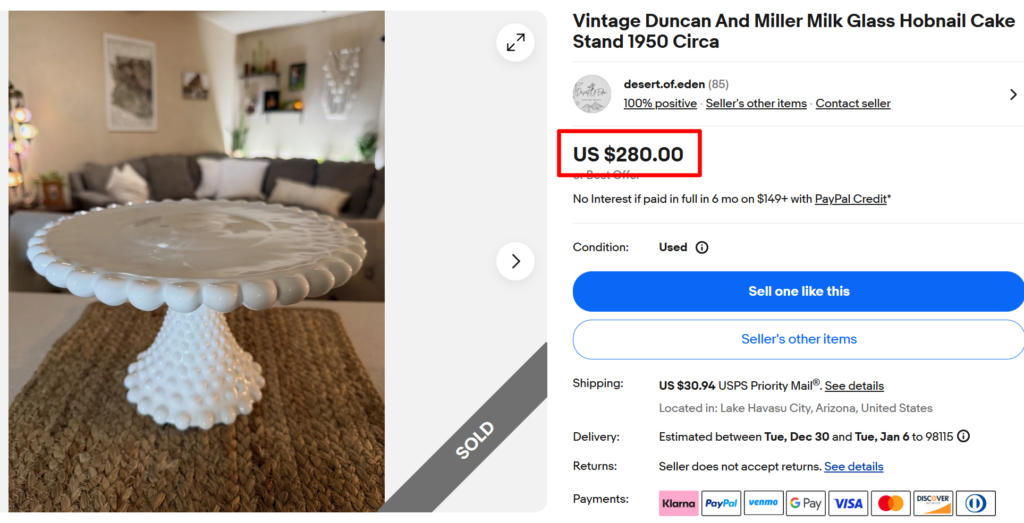
Duncan and Miller made superior milk glass, really white and chunky. Besides, their hobnail cake stands were a hit at weddings back in the day. You can easily spot these pieces by their “skirted” edge, where the hobnail pattern goes all the way down the pedestal.
The company also released this pattern in clear glass; hobnail cake stands usually sell for $100 to $250, depending on condition.
| Average Price Range | $150 to $300 |
| Brand | Duncan & Miller |
| Color | Milk Glass, Crystal Clear |
| Manufacturing Period | 1940s – 1955 |
| Status & Age | Vintage / Discontinued |
7. Twilight Blue Carnival Glass Pitcher Set by Fenton
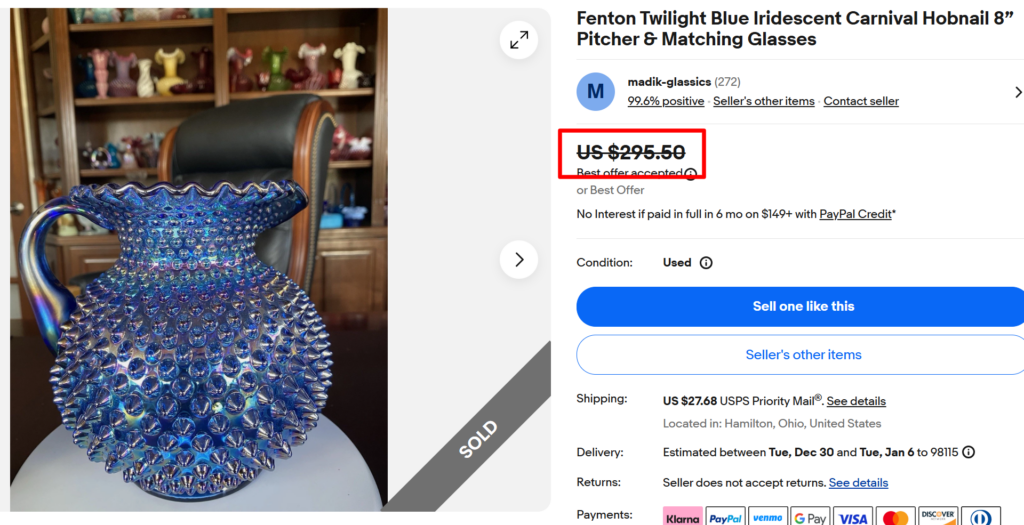
This is a hobnail water set from Fenton that includes a large water pitcher and matching tumblers. It’s made of “Twilight Blue” carnival glass that shimmers like an oil slick in the light.
Carnival glass hobnail pieces are not that common, which is why full sets like these can sell for a few hundred dollars, while single pieces go for less.
| Average Price Range | $80 to $350 (no. of items per set) |
| Brand | Fenton Art Glass |
| Color | Twilight Blue Carnival Glass |
| Manufacturing Period | 1980s – 1990s |
| Status & Age | Discontinues / Retro |
8. “Frances Ware” Dewdrop Tumblers by Hobbs Brockunier
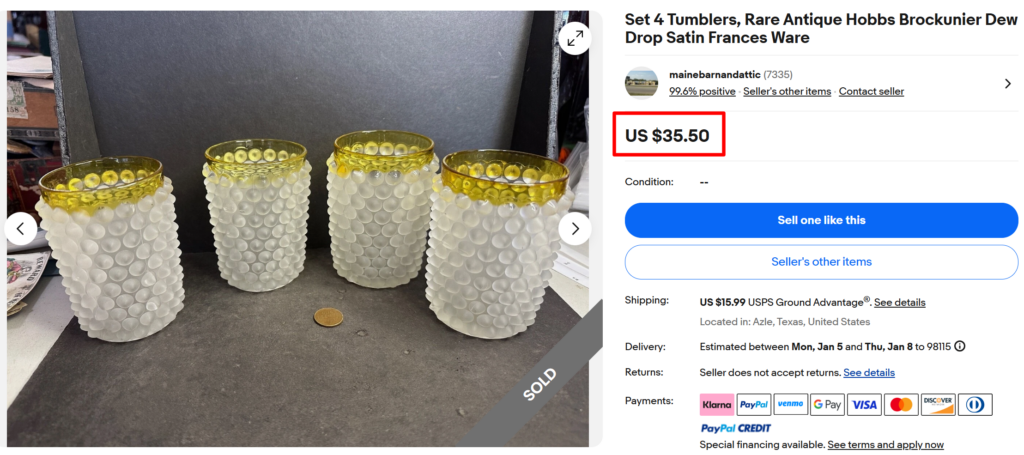
This water set comes from Hobbs Brockunier’s “Frances Ware”: frosted clear glassware with a satin-finished amber-stained rim. But the hobnail pattern only appears on the frosted glass, not the rim.
Note: The amber stain was applied to the surface, so it’s likely to be scrubbed off in a dishwasher over the years. Pieces with intact stain are worth more.
| Average Price Range | $15 – $70 (no. of items & shape) |
| Brand | Hobbs, Brockunier & Co. |
| Color | Frosted Clear with Amber Rim |
| Manufacturing Period | 1880s |
| Status & Age | Antique / EAPG (Early American Pattern Glass) |
9. Topaz Uranium Opalescent Hobnail Vase by Fenton
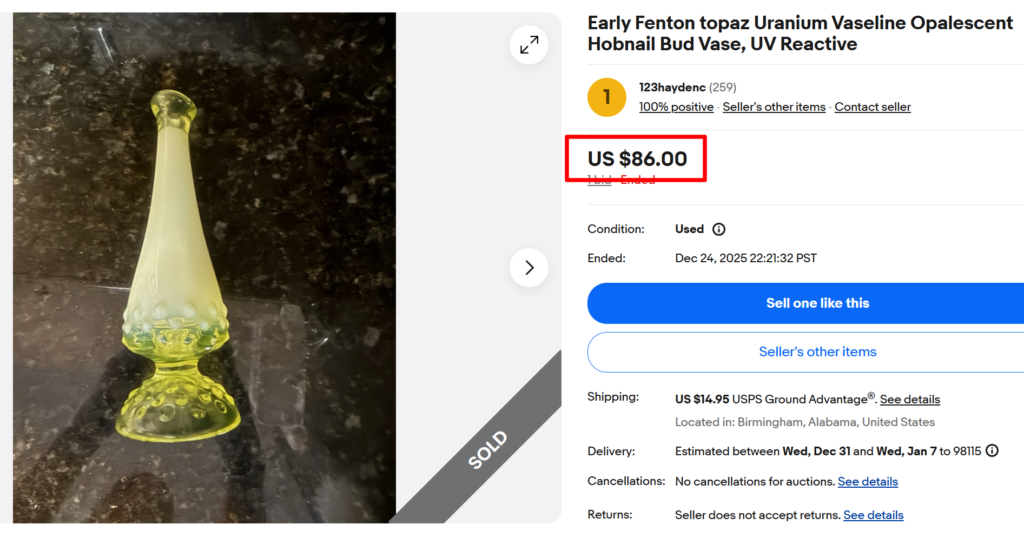
Like the Imperial Canary, this Fenton piece is “Topaz,” but it comes with opalescent tips on the bumps. Also, you get two effects: a pretty milky glow on the body and a bright yellow-green uranium glow on the mouth and base under blacklight.
Also, pay attention to the tips: lower-quality pieces may have uneven white “milky” tips, while premium pieces have a “snow-capped” look, with every hob perfectly tipped.
| Average Price Range | $50 – $150 |
| Brand | Fenton Art Glass |
| Color | Topaz (Vaseline) Opalescent |
| Manufacturing Period | 1940s – 1950s (Reissued in limited runs later) |
| Status & Age | Discontinued / Highly Collectible |
10. “Moonstone” Opalescent Bowls by Anchor Hocking
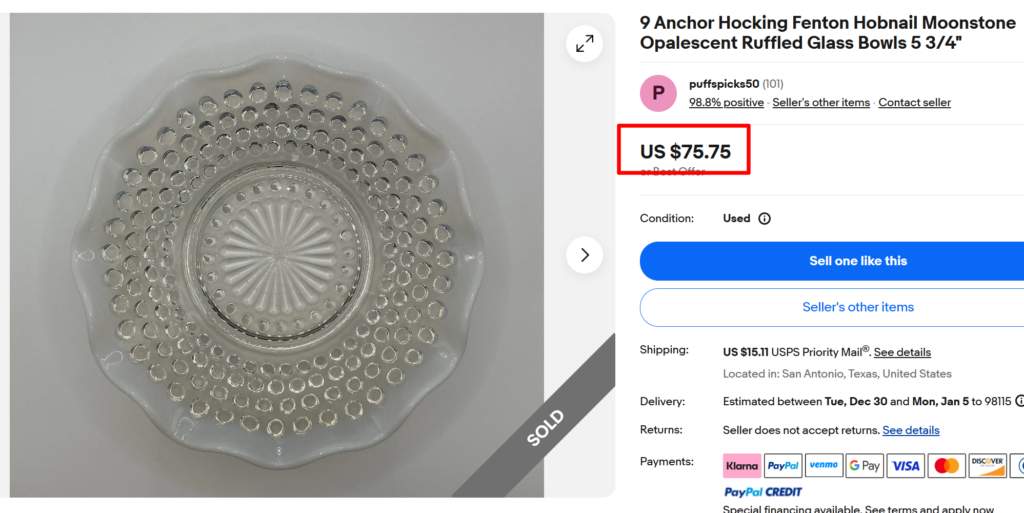
Anchor Hocking’s “Moonstone” hobnail has a very specific look; the glass is crystal clear, but every single bump is perfectly round and tipped in milky white. This set of bowls also features ruffled edges, making them slightly more collectible than pieces with plain edges.
These were often sold as dessert bowl sets; that’s why complete sets will be worth more than single bowls.
| Average Price Range | $50 – $150 |
| Brand | Anchor Hocking |
| Color | Opalescent |
| Manufacturing Period | 1942 to 1946 |
| Status & Age | Discontinued / Highly Collectible |
11. “English Hobnail” Handkerchief Vase by Westmoreland
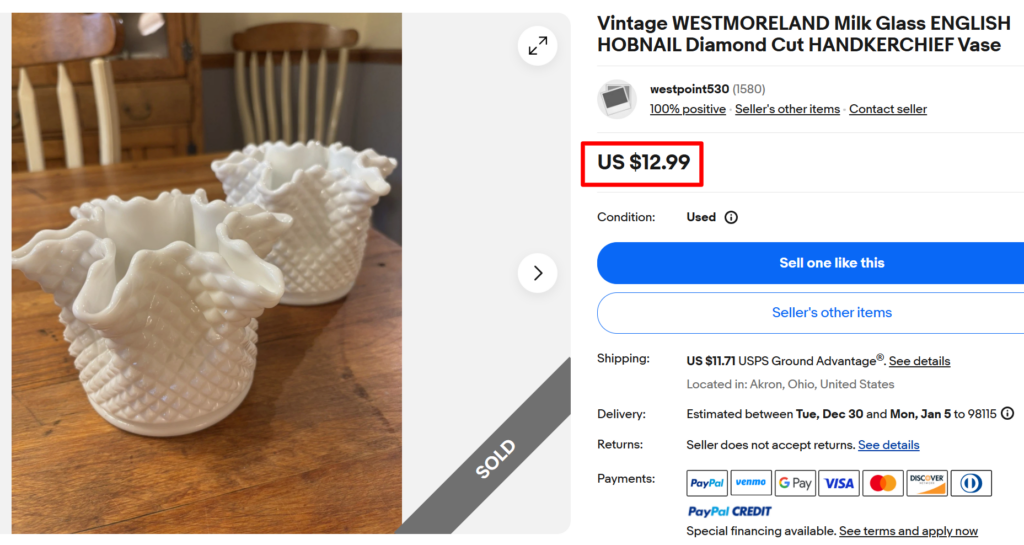
This vintage vase features Westmoreland’s distinctive square-cut “English” hobs. It gets its name from its unique, crimped or folded rim, which resembles a crimped handkerchief.
The company made these vases mostly in milk glass, but you may also find some pieces in colored or clear glass. Also, pay attention to the “WG” logo, which appears either at the center or at the very edge of the base.
| Average Price Range | $10 – $55 |
| Brand | Westmoreland Glass |
| Color | Milk Glass or Sparkling Clear |
| Manufacturing Period | 1915s – 1970s/80s |
| Status & Age | Vintage / Affordable Entry-Point |
12. Cranberry Opalescent Hobnail Barber Bottle by Fenton
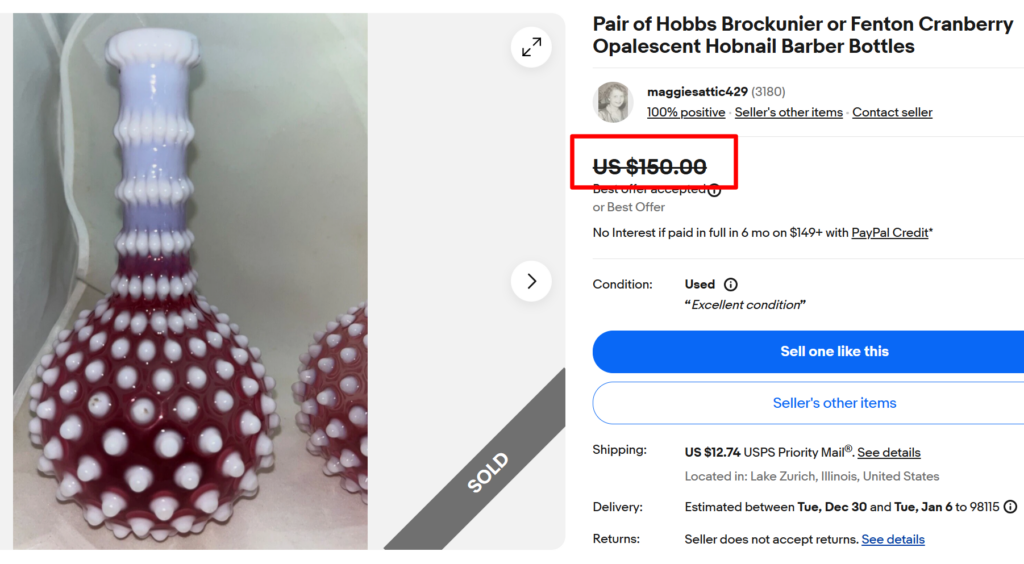
Originally made to hold hair tonics in barbershops, vintage barber bottles are now popular as collectibles as well as decorative vases or window pieces.
What makes these bottles worth over $100 is the cranberry color with white opalescent bumps, which is one of the most iconic color combinations in American glass.
Note that the entire bottle isn’t cranberry; the neck is usually milky white with elongated hobs.
| Average Price Range | $50 – $250 |
| Brand | Fenton Art Glass |
| Color | Cranberry Opalescent |
| Manufacturing Period | 1940s – 1950s (original production) |
| Status & Age | Vintage / Discontinued |
Note: This article is intended for informational, educational, and entertainment purposes only. Some images are illustrative and may not represent actual brands, products, or related entities. All trademarks, product names, brand logos, packaging, and other intellectual property referenced remain the exclusive property of their respective owners. Any brand mentions or references are provided solely for descriptive and educational context and do not imply any formal or commercial association.