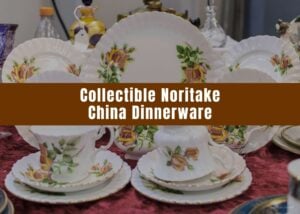
Noritake china has been gracing American dining tables for over a century now. You would easily find a Noritake plate, bowl, or teacup in every kitchen. But, with such extensive availability, people often mistake Noritake china as ordinary dinnerware.
What they may not know is that specific Noritake designs are highly sought-after these days; even single items can sell for hundreds of dollars! So, before you sell your old Noritake dinner set, let me show you some of the most collectible patterns!
15 Classic Noritake China Patterns to Look for!
Let’s explore some of Noritake’s most popular and classic patterns that can sell for hundreds today!
1. Azalea (Early Floral Style)
Azalea is Noritake’s most popular pattern. It’s known for its mesmerizing hand-painted pink-and-yellow Azalea flowers with green leaves, mostly set against a white background.
Azalea pieces also feature heavy gold trim and sometimes Moriage (raised enamel dots), making them extremely lavish and regal.
Originally released during WWII, this pattern was later reproduced in the 1980s and 1990s. To spot the original pieces, look for the famous “Green M in Wreath (Maruki) mark backstamp with “Made in Japan” and the #19322 pattern number.
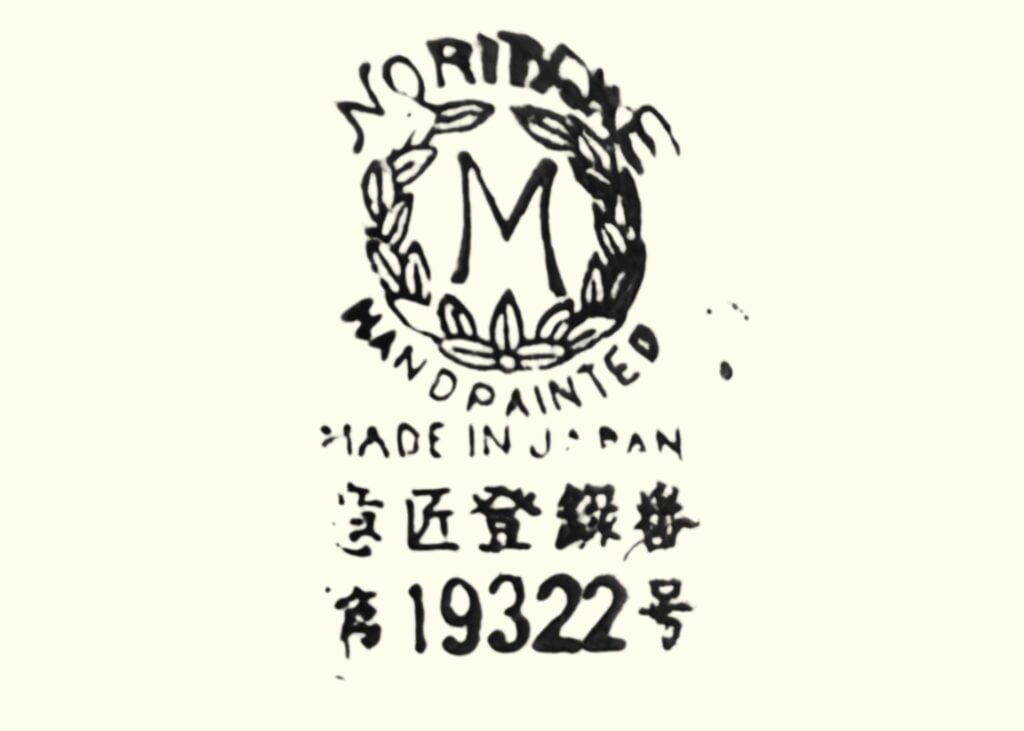
| Typical Value Range | $60-$200+ for common sets $50-$600 for rare single pieces |
| Production Era | 1918 – 1940s (Reproductions in 1980s & 1990s) |
| Status | Discontinued |
| Pattern & Color | Pink & Yellow Azalea Flowers w/ Green Leaves |
| Pattern Number | #19322 |
Notable Examples:
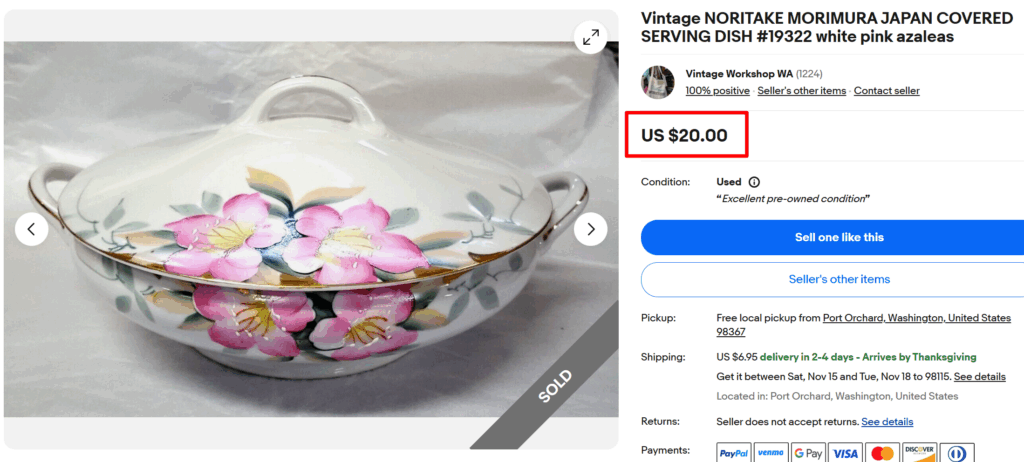
This is a beautiful covered dish with handles from Noritake with its Azalea pattern. You’ll find the vibrant floral motifs mostly on the upper side of these dishes, near the edge. Larger sets of serving dishes like these can fetch a few hundred dollars.
2. Rosamor (Mid-Century Design)
Rosamor holds a special place in Noritake history for its connection to the US military in Japan during the Vietnam War. It was only in the late 70s, when the production was made available to the public.
While both versions feature the same design of gray roses, gray and black leaves, with a hint of bird’s egg blue and a platinum rim, the difference is in the back mark.
Sets made for military families were marked “5851S,” while public pieces had the number “5851” without the “S.” The former pieces are generally more valuable.
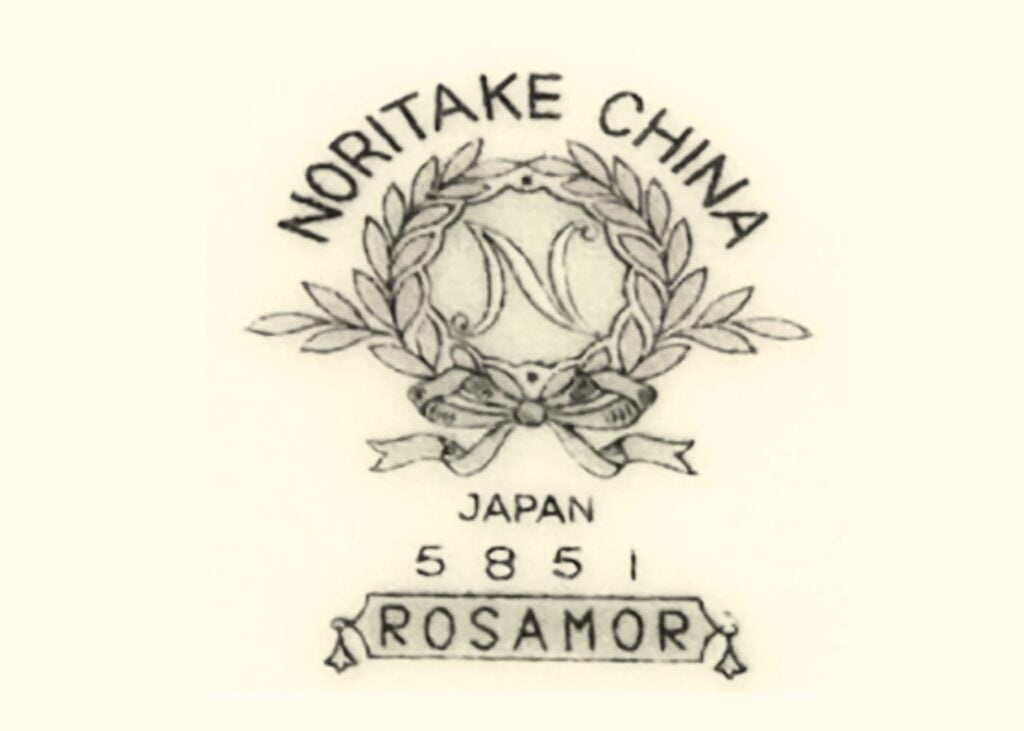
| Typical Value Range | $5-$80 for single items $100-$600 for sets (plates, dishes) |
| Production Era | 1957 – 1975 |
| Status | Discontinued |
| Pattern & Color | Roses in Gray (or Silver) with Platinum/Silver Trim |
| Pattern Number | #5851 |
Examples to Check:
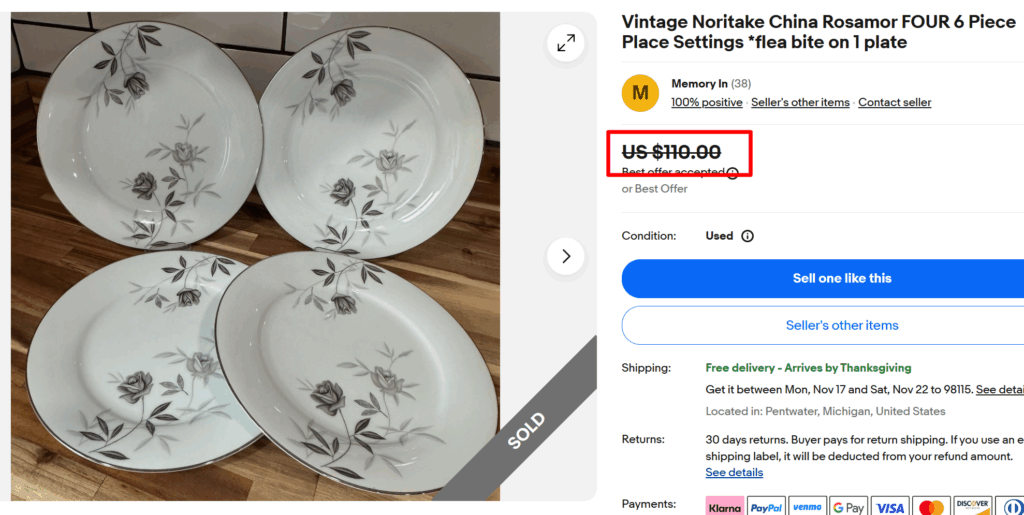
This Rosamor set of four plates shows that simple yet elegant Mid-Century Modern aesthetic that makes these Noritake pieces highly versatile for even modern use.
3. Prelude (The Wedding Classic)
This pattern will remind you of the dishes you’d have seen at the lavish weddings of the late 1960s and 1970s. It shows a sophisticated and bordered platinum scrollwork around the rim. A formal yet homey appeal perfect for special occasions.
| Typical Value Range | $60-$100 (small sets); $15-$40 (singles) |
| Production Era | 1969 – 1981 |
| Status | Discontinued |
| Pattern & Color | An ornate silver/platinum scroll band around the rim |
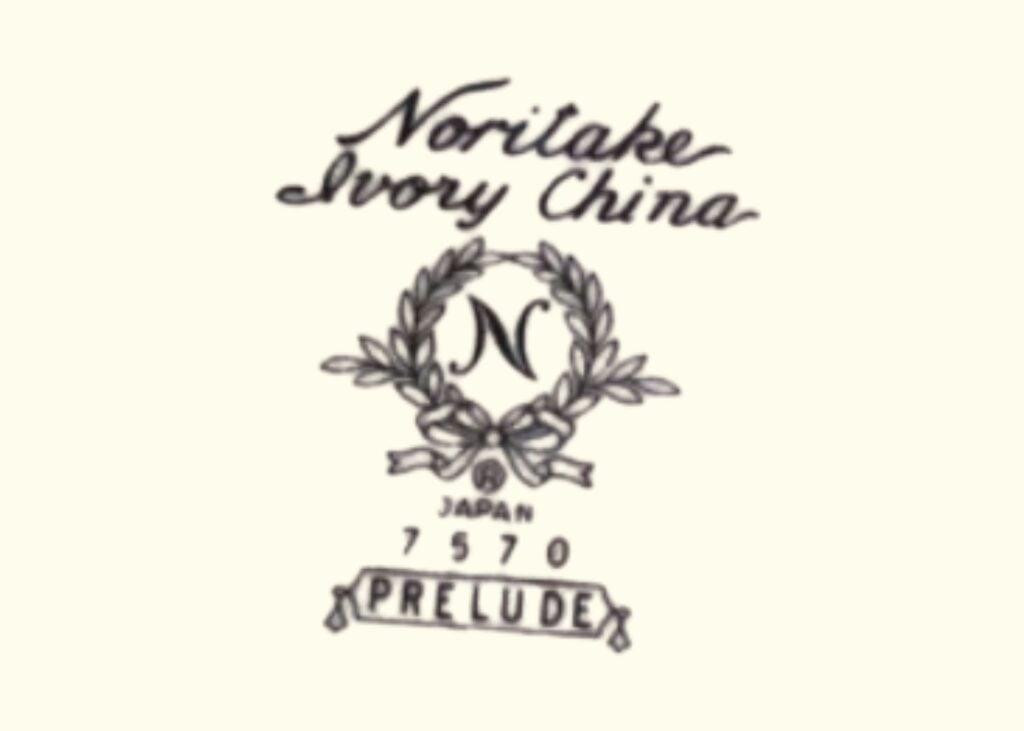
| Pattern Number | #7570 |
Common Examples:
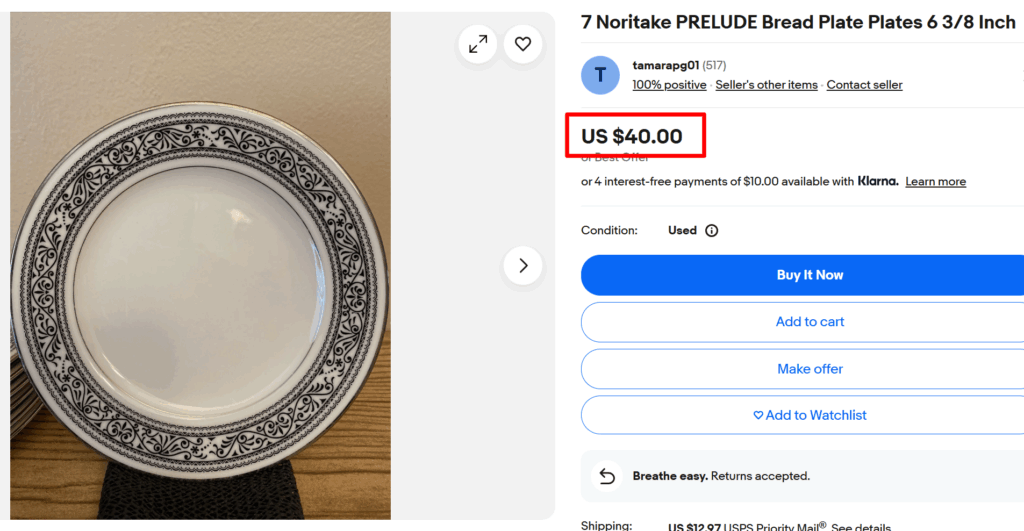
This set of seven Noritake Prelude bread plates sold for $40! This proves that despite not being as popular as other patterns, collectors who love a refined mid-century aesthetic are still crazy for Prelude!
4. Sonoma
Vintage Sonoma looks pretty simple, with its white embossed diamond design and a simple platinum trim. But it’s the unique coupe shape (flat plates without rims) that gives the Sonoma dishes a fashionable look.
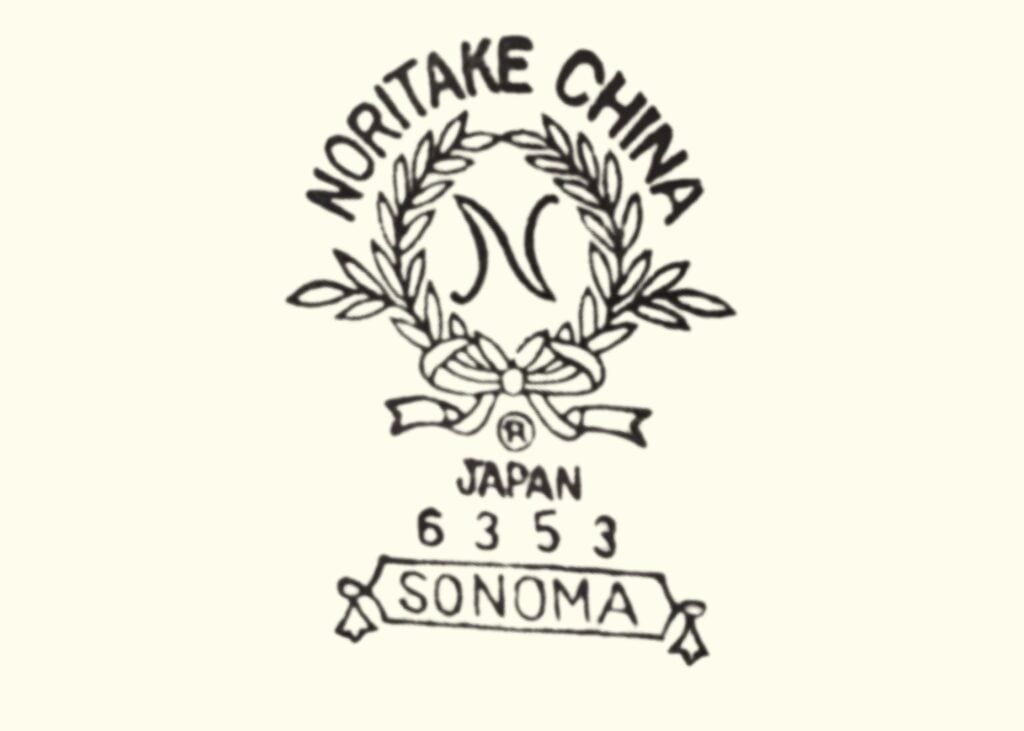
The pattern also has other retro variations, such as “Sonoma Trellis” and “Sonoma Gardens.” You can spot the original vintage pattern by the number “6353” on the back.
| Typical Value Range | $150-$350+ (sets); $15-$80 (singles) |
| Production Era | 1962 – 1970 |
| Status | Discontinued |
| Pattern & Color | Coupe Shape Design with a Platinum/silver Trim |
| Pattern Number | #6353 |
Examples to Look for:
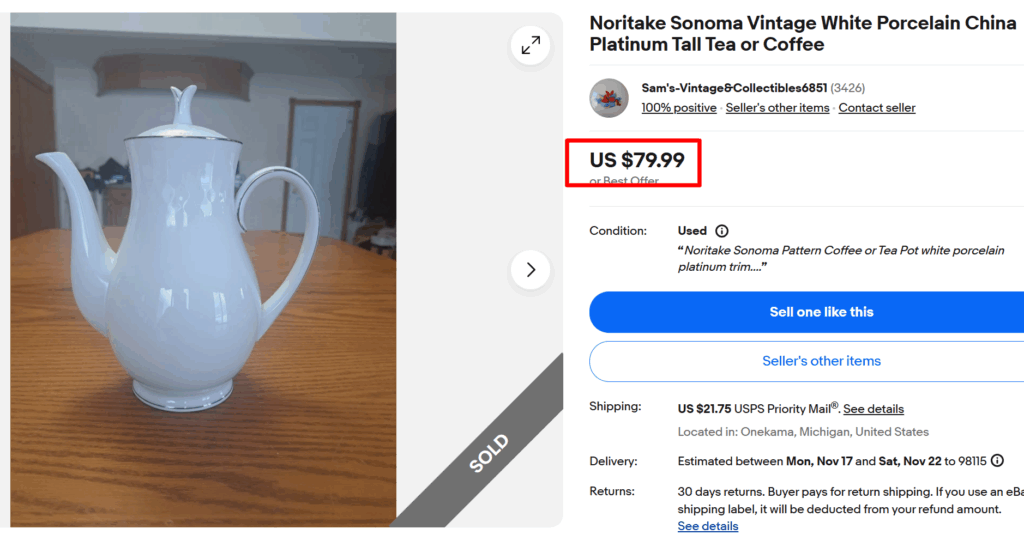
Here we have a stylish, tall tea/coffee pot with the original vintage Sonoma pattern. On items with handles, like this pot, you’ll find the platinum trim on the base, handle, and edges. On plates, the trim is present on just the rim.
5. Christmas Ball/Pattern 175 (Early Century Glam)
Eighty-five years. That’s how long the Pattern 175, aka “Christmas Ball” pattern, ran, making it one of Noritake’s longest-running patterns. The pattern got the “Christmas Ball” name because of its iconic, ornate gold bulb-and-flower design and gold trim.
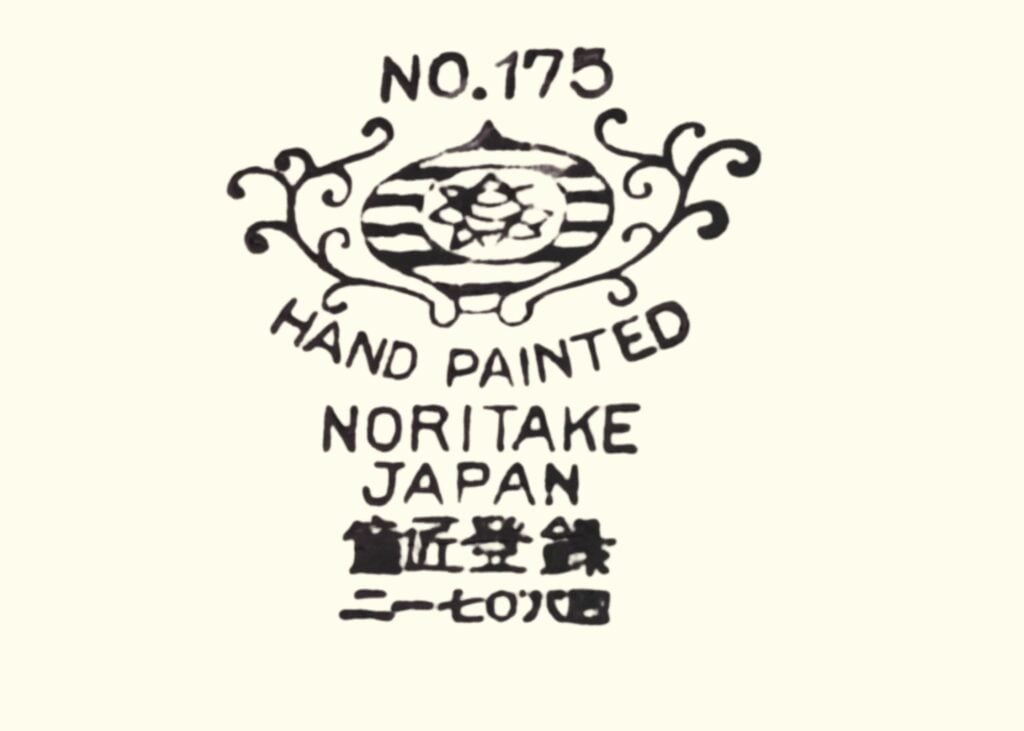
This pattern underwent quite a few changes, which is why knowing the back marks is crucial.
Early “175” pieces from 1906 to 1940 typically have a green “NO.175/HAND PAINTED/NORITAKE JAPAN/” mark. Pieces from 1947 to 1953 (approx) have a “Occupied Japan” mark in gold. The later pieces from the 1950s to the 1990s have gold markings without “Occupied Japan!”
The older the piece, the more value it has!
| Typical Value Range | $500+ for large sets, $200 to $500 for small sets, $5-$100+ for single items |
| Production Era | 1906 – 1991 |
| Status | Discontinued |
| Pattern & Color | Scrolling Floral Design with 24k Gold Enameling |
| Pattern Number | #175 |
Valuable Examples:
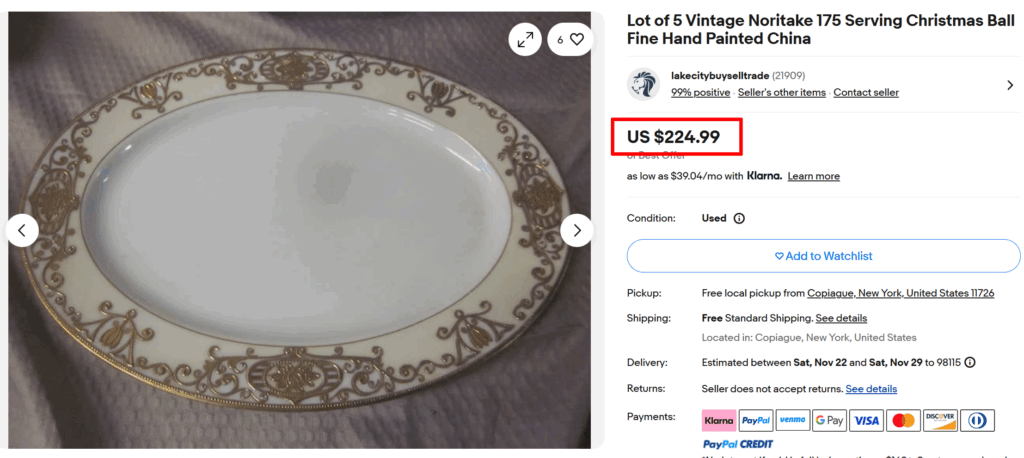
The Pattern #175 comes in a wide variety of styles and sizes, including plates, servers, demitasse sets, and covered butter dishes. This is a set of five plates, all with the earliest Green marking. Even small sets like this can sell for around $200.
6. Wheaton (A Luxurious Vibe)
Noritake’s Wheaton is a beautiful and affordable example of 1950s/1960s fine china. It features stylized wheat stalks in gold and silver, with a gold or platinum/silver trim, giving this pattern a modern, royal appeal.
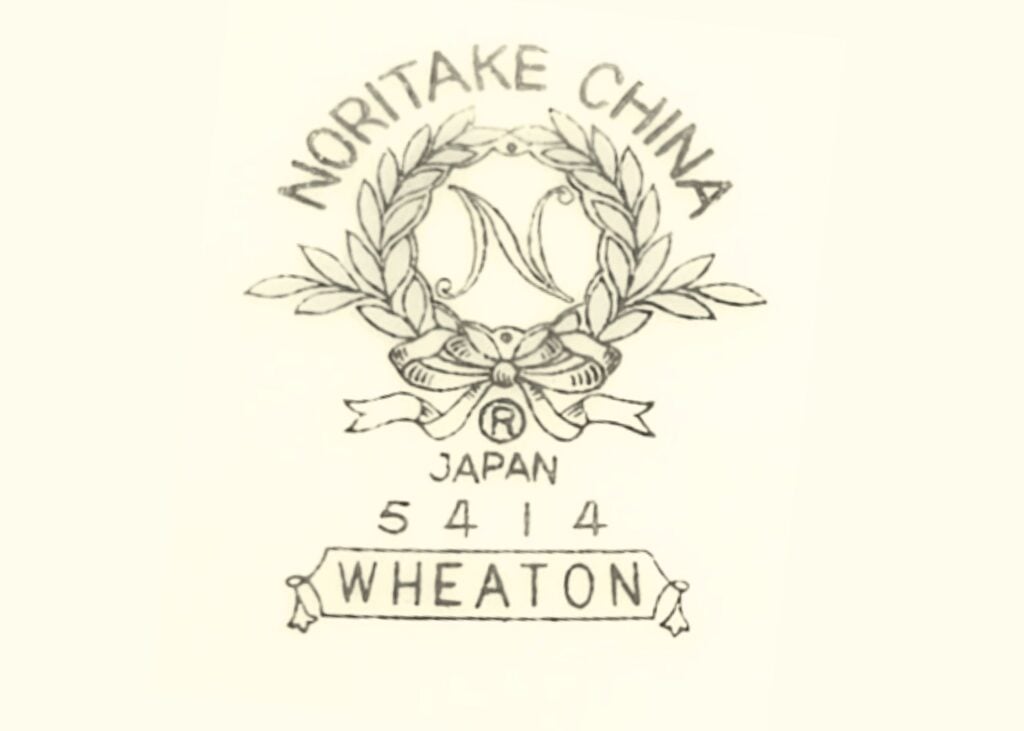
Collector’s Note: The Wheaton pattern is often confused with the Wheaton “20056,” which is a different, earlier black-and-gold design. Look for the backstamp to check the original Wheaton pattern.
| Typical Value Range | $30 – $75; small sets (plates, servers) $100 – $300+; large pieces, sets |
| Production Era | 1953 to 1967 |
| Status | Discontinued |
| Pattern & Color | Gold & Silver floral design and a decorative gold rim |
| Pattern Number | #5414 |
Common Pieces:
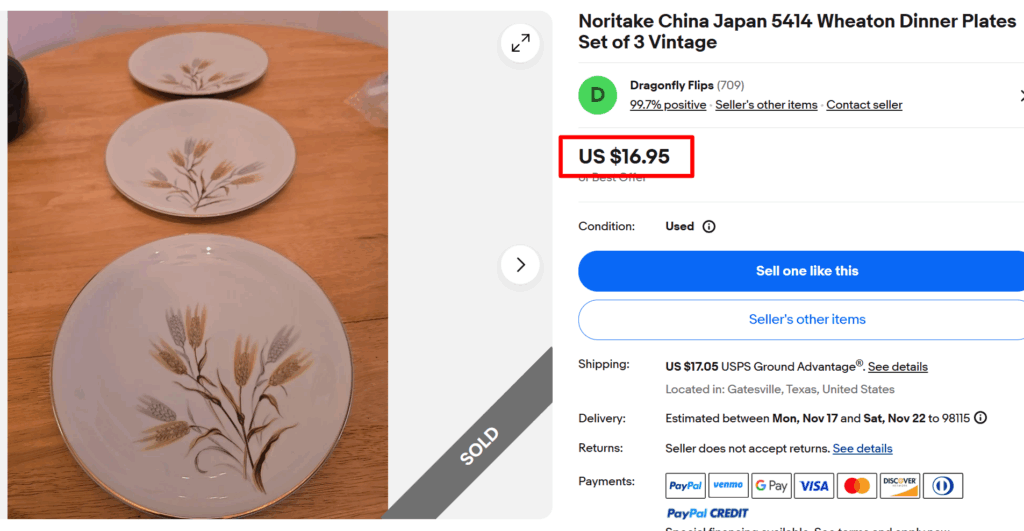
This small set of “Wheaton” china plates sold for almost $17. Complete plate sets and dinnerware sets, including servers, pitchers, etc., can sell for a few hundred dollars.
7. Tree in the Meadow (Vintage Vibes)
As the name suggests, this Noritake pattern shows a warm, hand-painted scene with a large, lone tree and a country-style house by a lake/river. You can spot this china for its warm, tranquil colors and often gold trim.
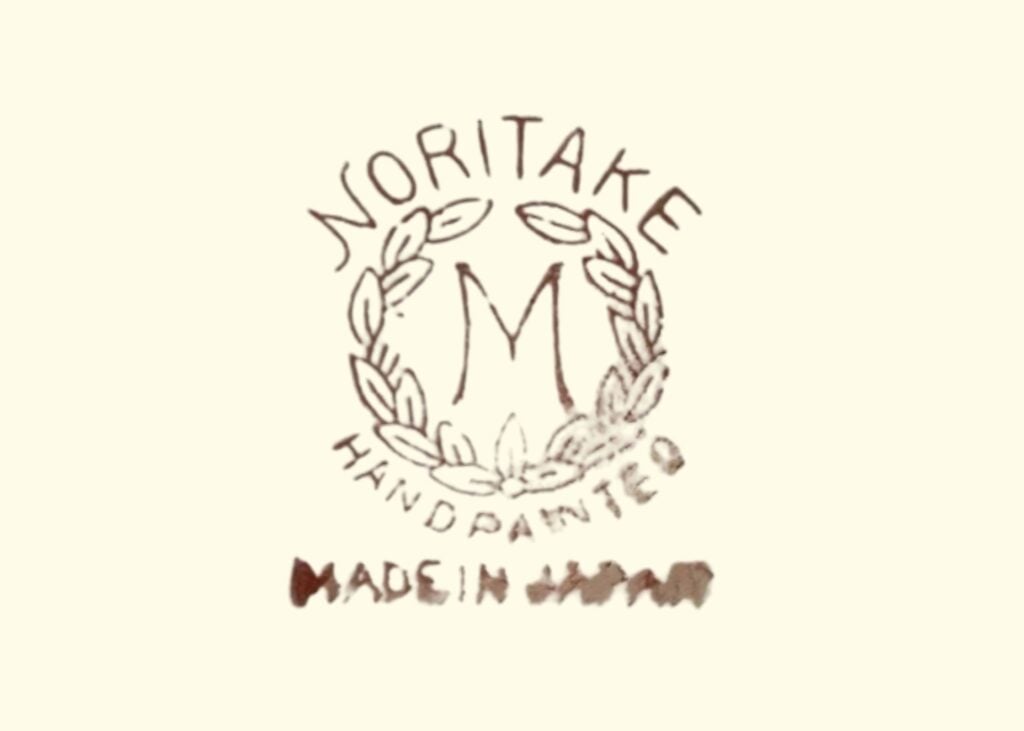
| Typical Value Range | $20 – $70; small sets (plates, servers) $70 – $150+; large pieces, sets |
| Production Era | 1918 |
| Status | Discontinued |
| Pattern & Color | A Meadow Scene in Warm Colors |
| Pattern Number | None (“Made in Japan” Mark on Base) |
Collectible Examples:
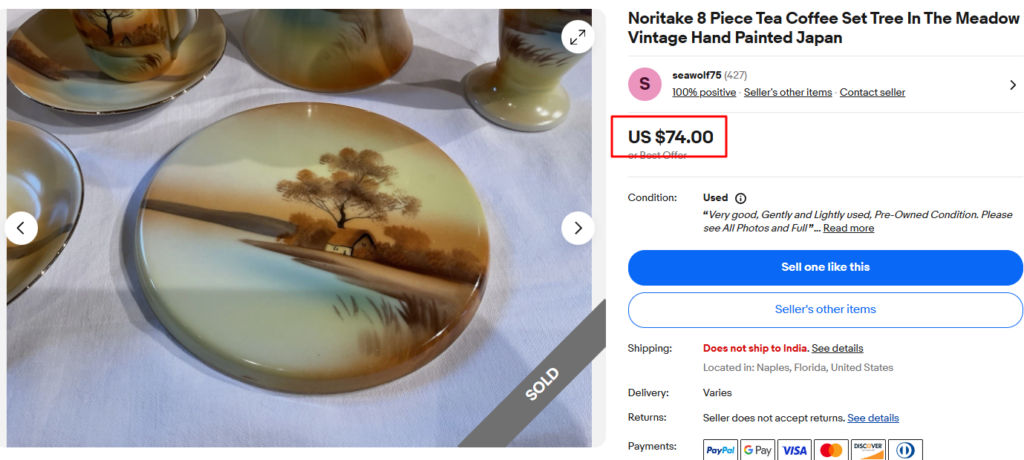
The company released this design on many items, including bowls, plates, serving pieces, waffle sets, and jam jars.
8. Anemone (1933)
The “Anemone” pattern came out after the war, in the early 30s and is now discontinued. You can spot it by soft, anemone sprays on a cream-white base and an intricate golden and maroon scrollwork near the edges.
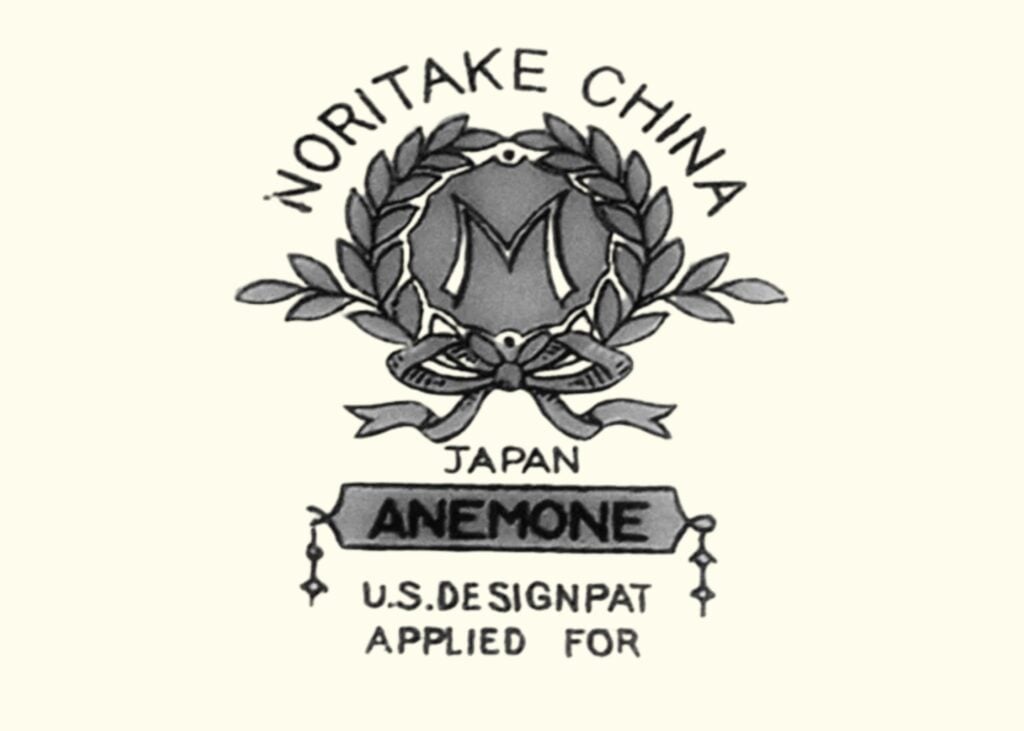
Usually, “Anemone” pieces show the “M in the Wreath” marking with the pattern name and code, but some pieces may also show the wreath mark with the “U.S. Design Pat Applied for” stamp.
| Typical Value Range | $20-$50 (singles); $50-$200+ (sets) |
| Production Era | 1933 – N/A |
| Status | Discontinued |
| Pattern & Color | Floral Sprays (like Anemone) with an Intricate Border & Trim in Gold, Maroon/red |
| Pattern Number | #5011 |
Common Pieces to Look:
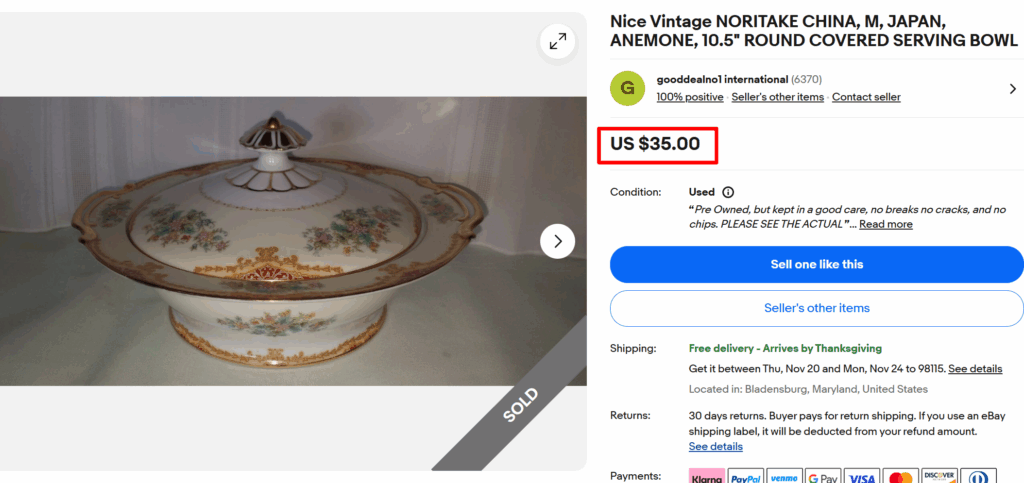
Since it is discontinued, complete or near‑complete sets in good condition can sell for a few hundred. Even single, unusual, and large pieces like this round, covered serving dish can sell for $20 to $50.
9. Fitzgerald
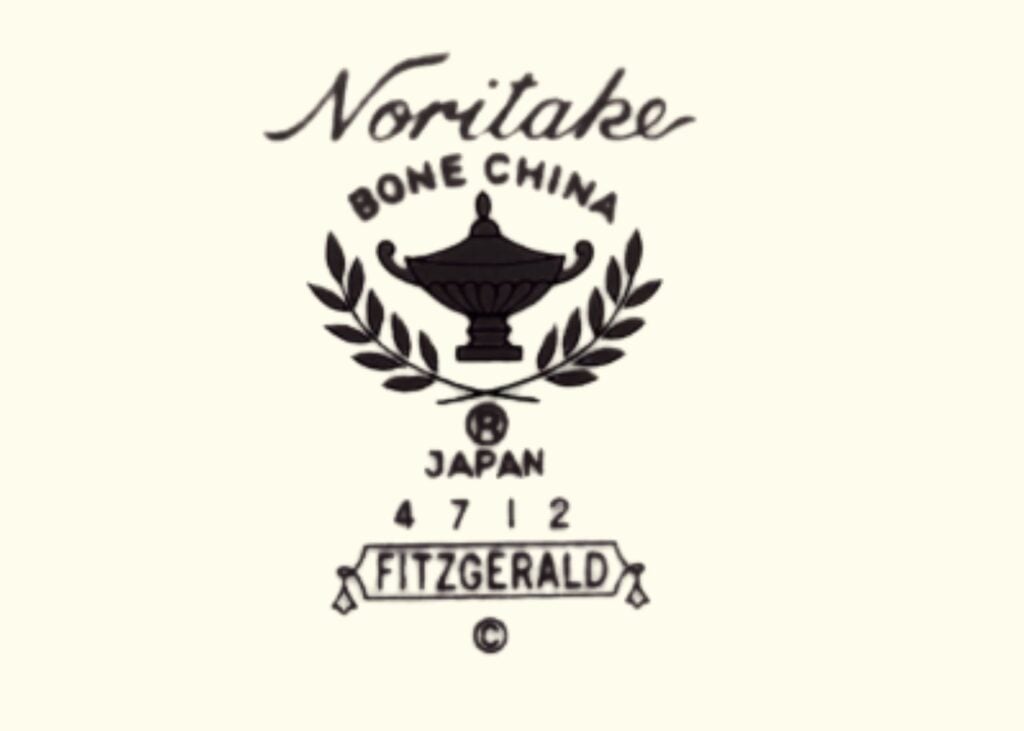
The “Fitzgerald” pattern gives china dishes a classic and nostalgic, yet luxurious look. Coming from the early 1990s, this design displays a wide emerald-green (marbleized/mottled) rim with a thick inner golden band, and a thin outer band.
You’ll also find an intricate etched design on the inner gold band, while the outer one is plain. To confirm authenticity, see the pattern name and number on the base.
| Typical Value Range | $20-$50 (singles, small sets); $80-$250 (large sets, unique items) |
| Production Era | 1993 to Present |
| Status | Discontinued |
| Pattern & Color | Emerald Rim with Etched Golden Outer and Inner Band |
| Pattern Number | #4712 |
Notable Examples:
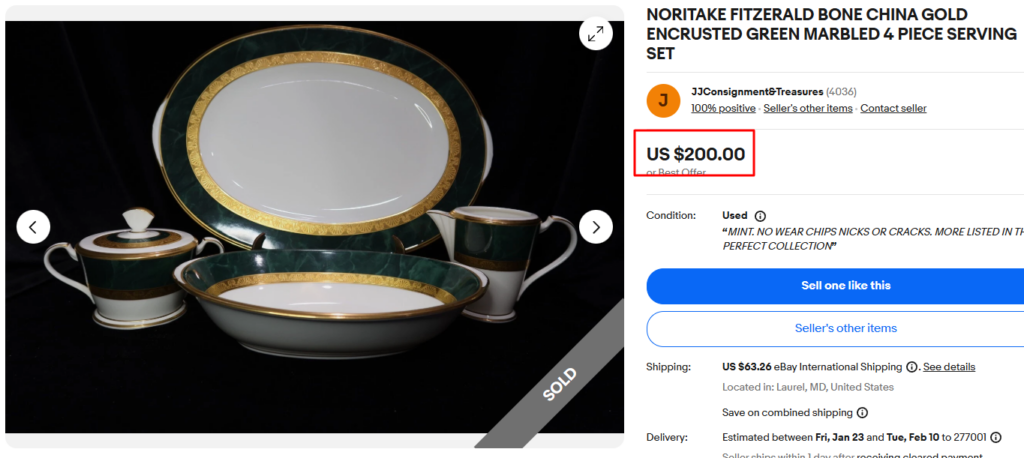
This is a 4-piece “Fitzerald” serving set, sold for a stunning price of $200 for the uniqueness of the items. A large set of plates (10-12) can also sell for $150 to $200+, while single items and smaller sets go for lower prices.
10. Edinburgh (1970s Elegance)
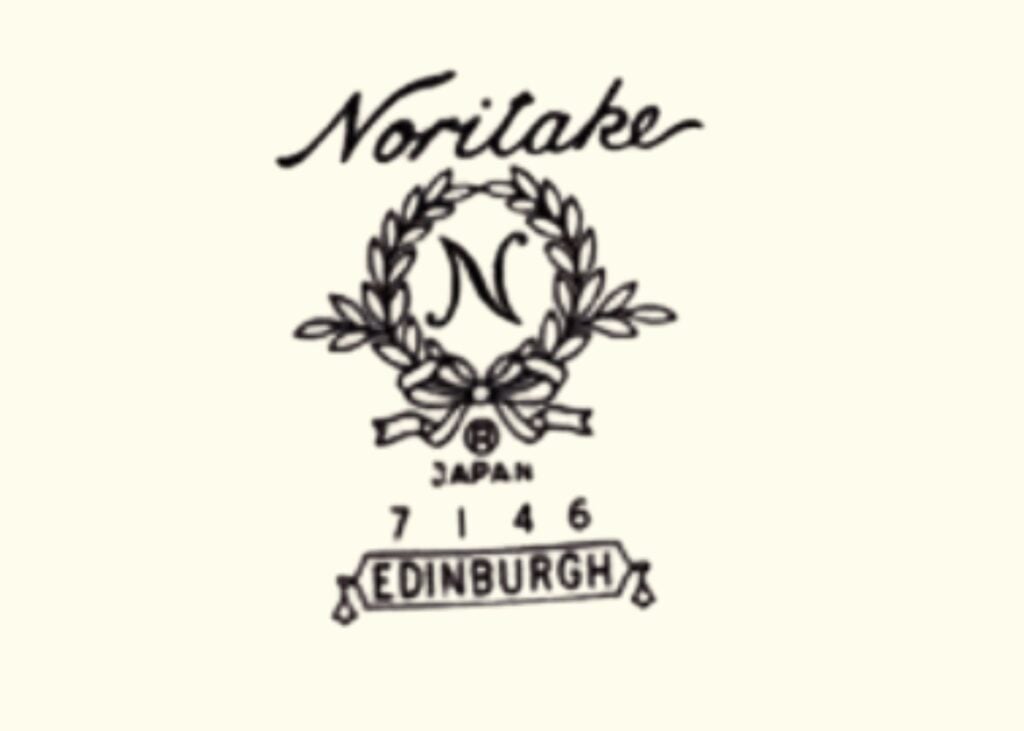
Noritake’s “Edinburgh” stands out for its simple yet elegant design, featuring a golden rim encrusted with tiny brown scrolls below. The sleek yet intricate design adds a nostalgic, traditional appeal to the dishes.
| Typical Value Range | $15-$30 (small sets); $40-$150+ (large sets) |
| Production Era | 1972 to 1975 |
| Status | Discontinued |
| Pattern & Color | Gold-Encrusted Rim, Tan/Light Brown Borders |
| Pattern Number | #7146 |
Collectible Pieces:
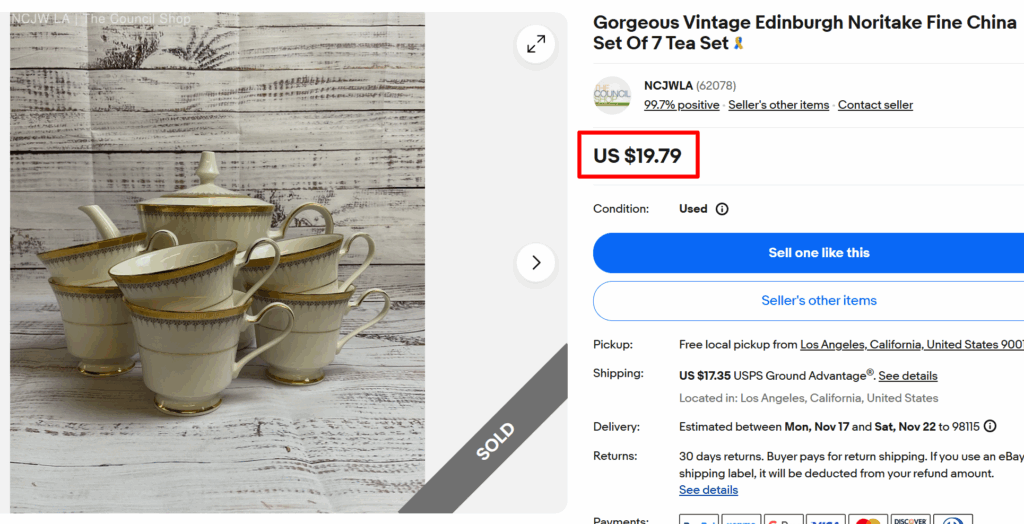
Although this pattern was short-lived, it holds moderate value in the market today. For example, small tea sets with cups, saucers, or both generally sell for $15 to $20. Large dinner sets are hard to find and, hence, can fetch more.
11. Bellefonte (Blue Pastel Florals)
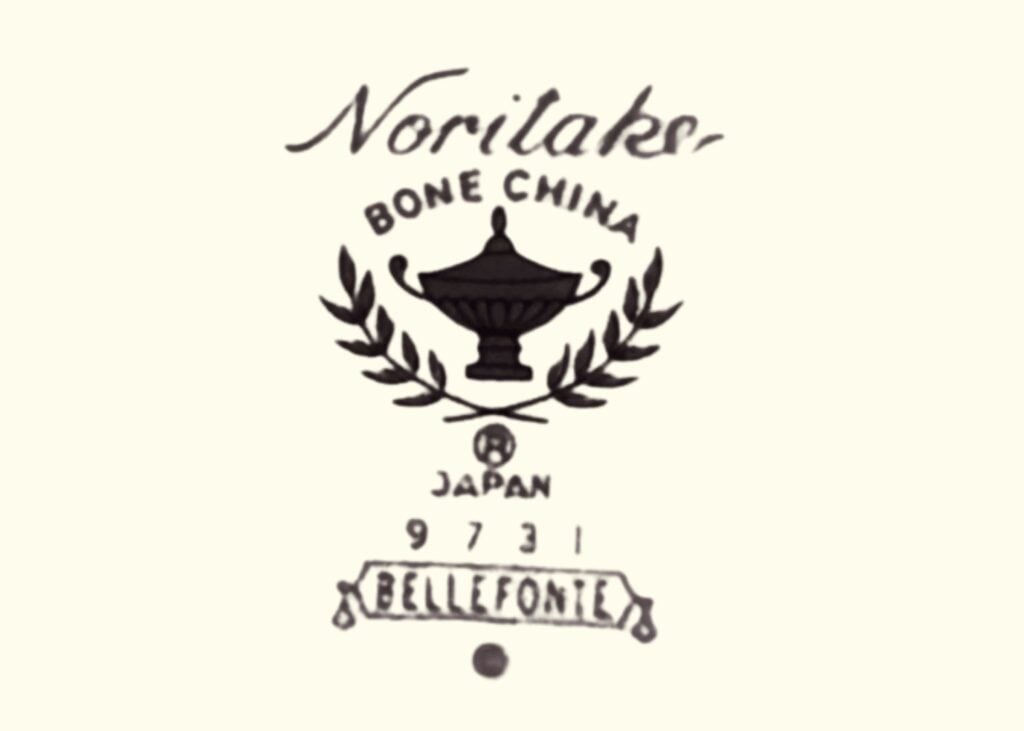
This is one of Noritake’s most important patterns to know! It came in different versions, which you can identify by the pattern name.
The #9731 version features soft, blue floral sprays and scrolls on the border, with a thin, dark blue band, and a golden trim. Make sure to check the pattern number and name on the bottom.
| Typical Value Range | $18-$30 (small sets); $50-$250 (large, unusual sets) |
| Production Era | 1982 to 1986 |
| Status | Discontinued |
| Pattern & Color | Light Blue Florals, Dark Blue Rim, & Gold Trim |
| Pattern Number | #9731 |
Notable Pieces:
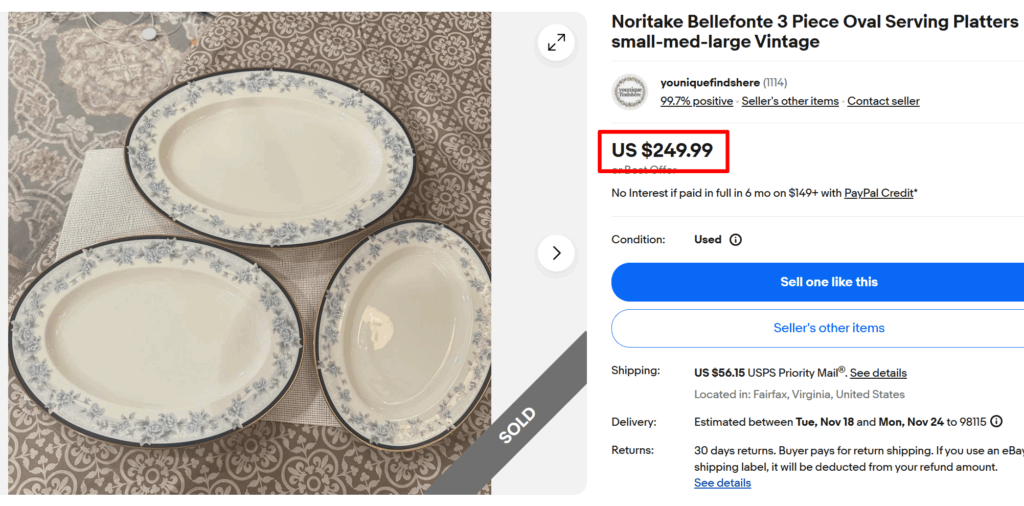
The high value of this small 3-piece serving platter set comes from the uniqueness of the set. Finding similar pieces in different sizes can be difficult. Usually, small sets of tea cups, plates, butter plates, and bowls are worth $18 to $30!
12. Mimi Pattern (Cottage-Style Vibes)
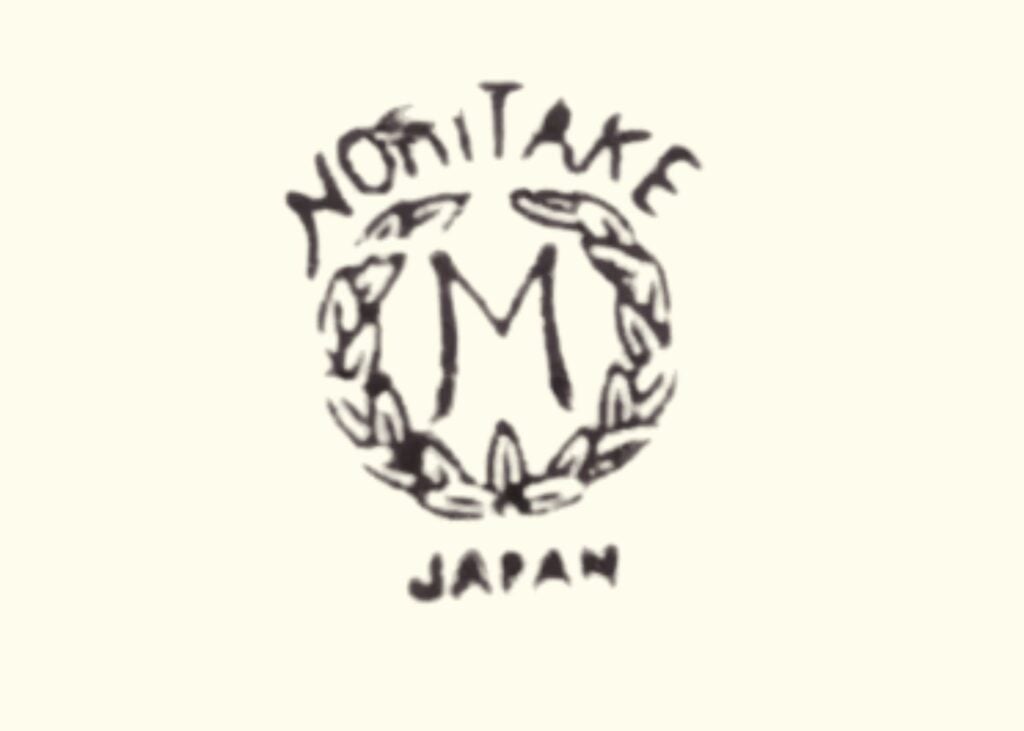
The “Mimi” dinnerware looks cheerful and vibrant because of multicolored floral motifs, mainly yellow, green, blue, and pink. You’ll also find an orange scroll border/rim and a circular scroll band (usually, at the center of the plates).
Usually, “Mimi” china pieces don’t show any specific pattern number, like most of the other Noritake patterns.
| Typical Value Range | $10 to $200 |
| Production Era | 1930s (Early Ver.), 1960s (Later Ver.) |
| Status | Discontinued |
| Pattern & Color | Multicolor floral motifs, Orange scroll borders |
| Pattern Number | None (“Japan” Stamp on the Base) |
Valuable Examples:
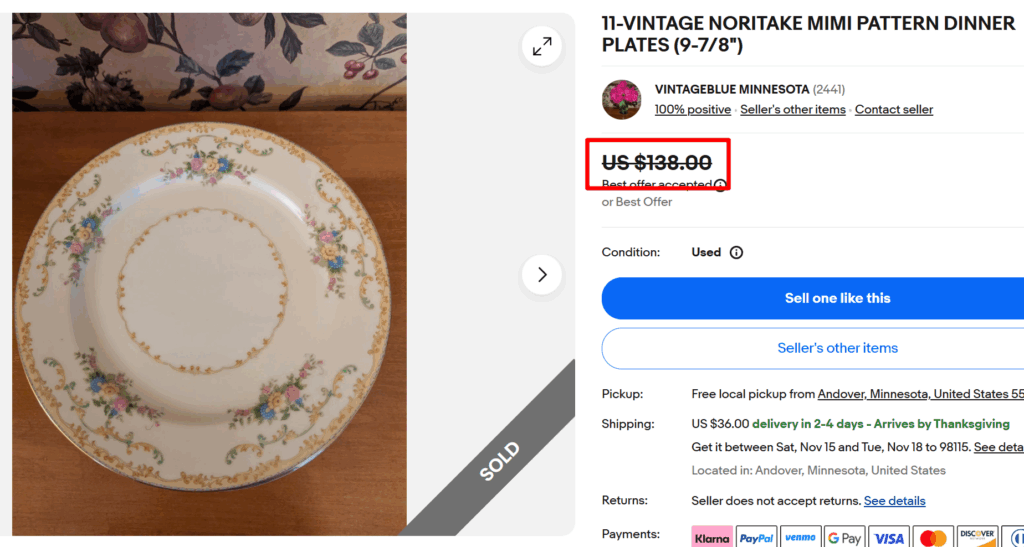
Here, we have a set of 11 “Mimi” plates, sold for almost $140. This pattern was released in many other shapes, like bowls, vegetable dishes, divided dishes, tea cups, etc. The value can range from $10 to $200 per shape and condition.
13. Etienne (Late 20th Century Elegance)
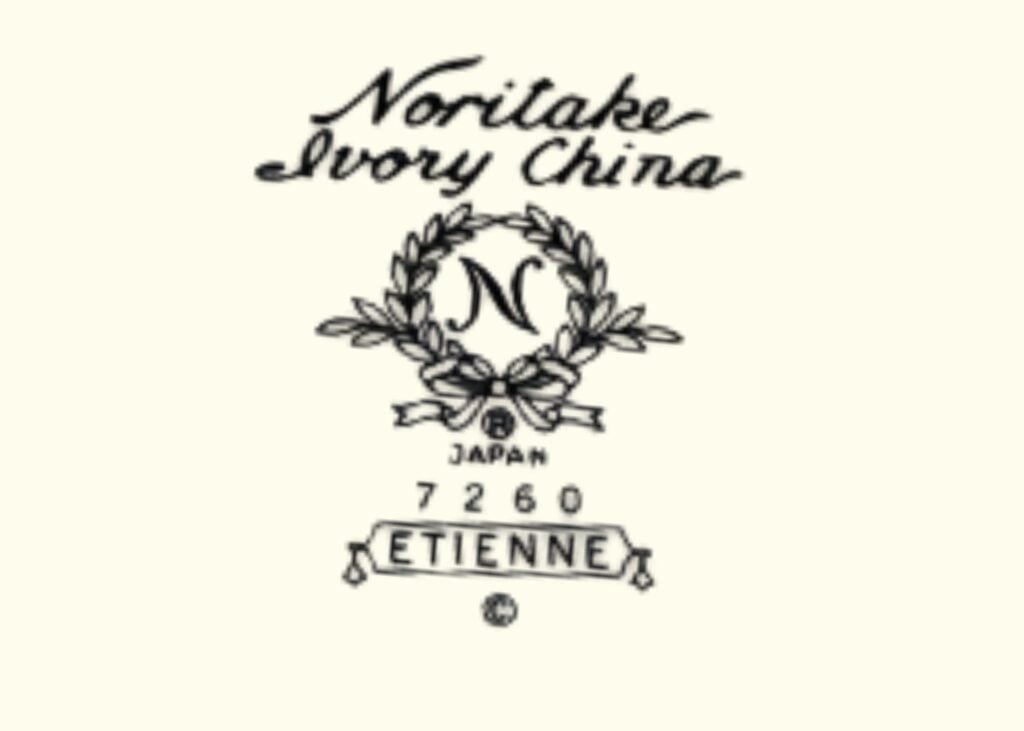
This is a late-20th-century Noritake pattern, recognized by its striking design featuring soft pink and light gray florals on a black border, plus platinum/silver trim on ivory china.
The “Etienne” pattern ran for 15 long years, making it relatively common and, hence, moderately valuable.
| Typical Value Range | $10-$25 (singles, small sets); $50-$150+ (large sets) |
| Production Era | 1981 to 1996 |
| Status | Discontinued |
| Pattern & Color | Pink & Gray Florals on a Black Border, a Platinum Trim on Ivory |
| Pattern Number | #7260 |
Common Examples:
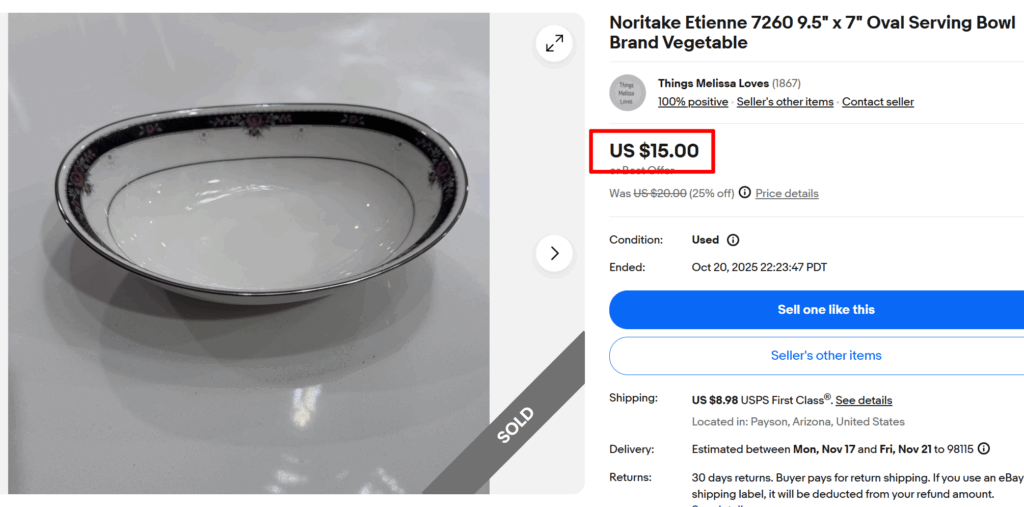
Single items in the “Etienne” pattern, like this serving bowl, generally go for $10 to $25. Because of its commonness, even large 40-piece or larger sets are valued at $100 to $150.
14. Barrymore
Another one of Noritake’s longest-running patterns, “Barrymore,” shows an Art Nouveau‑style floral design in soft pastels. You’ll find large blush pink and white flowers with light gray or teal accents, and a sharp gold trim.
The long production years mean you can find a reasonable amount of these Chinese dishes in circulation.
| Typical Value Range | $10-$35 (singles); $50-$350 (large sets) |
| Production Era | 1985 to 2006 |
| Status | Discontinued |
| Pattern & Color | Large Pink & White Flowers, Light Accents, Gold Trim |
| Pattern Number | #9737 |
Valuable Examples:
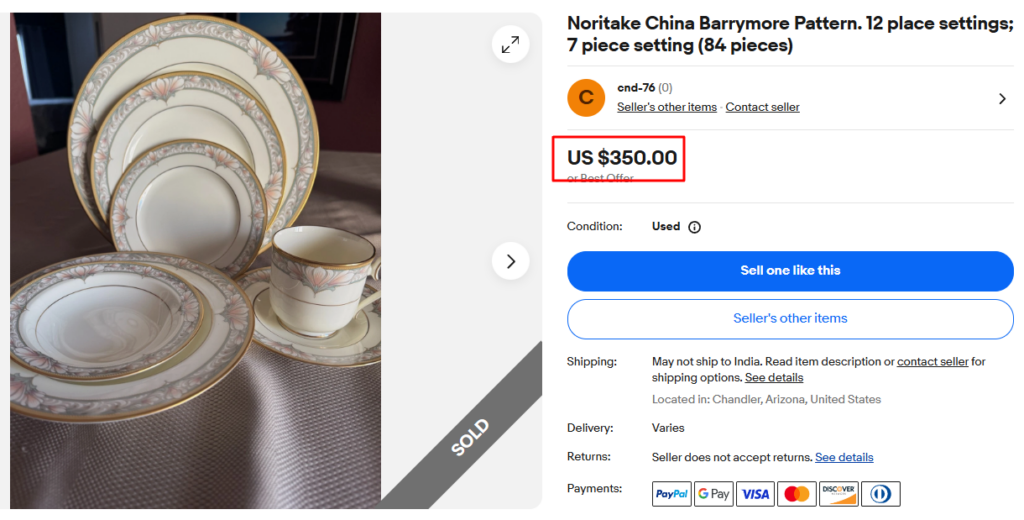
Although “Barrymore” china is everyday, finding large and complete sets is still tricky, making them worth $100 to $300, depending on condition and number of items.
15. Sedan (Fresh Florals)
This antique Noritake pattern can be identified by its intricate pink-and-blue floral scrolls on a cream china base and bright gold trim.
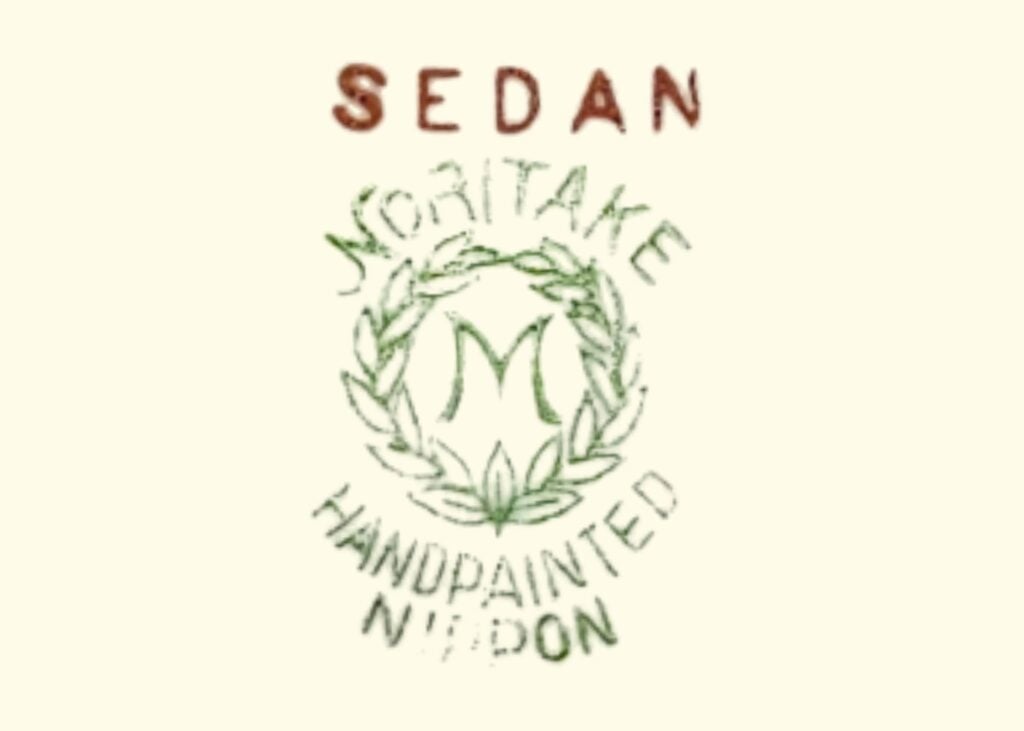
Since this pattern was popular in the pre-1921 era or the Nippon era, you’ll find a “Hand-painted/Nippon” mark and pattern name, along with the wreath stamp, on the bottom of these pieces.
| Typical Value Range | $10-$35 (singles); $50-$350 (large sets) |
| Production Era | 1911 to 1914 |
| Status | Discontinued |
| Pattern & Color | Pink/Blue Floral Gold Trim |
| Pattern Number | None (Has “Nippon” Mark) |
Notable Pieces:
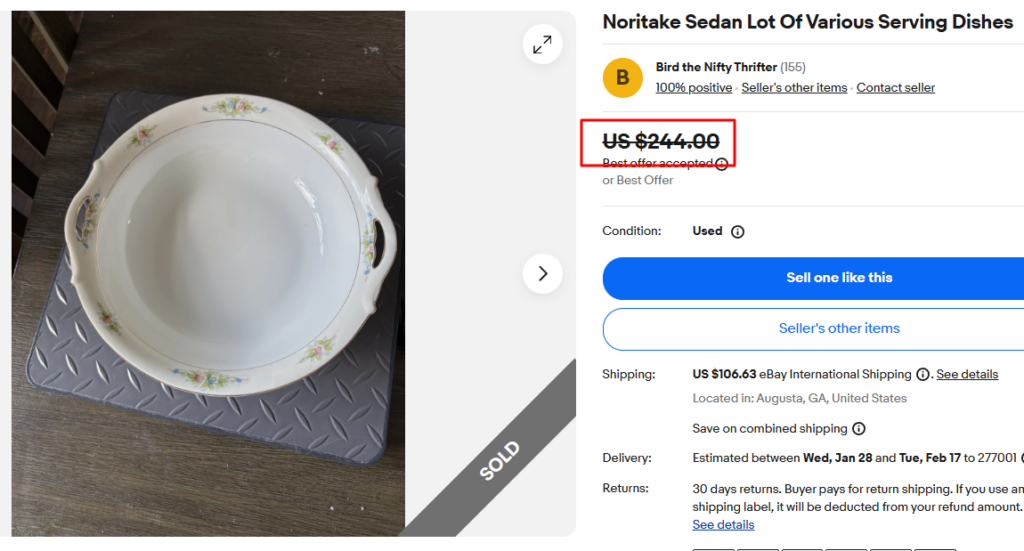
Since “Sedan” is an antique design that ran for only three years, it’s quite rare and valuable. Unusual, large single pieces can fetch a few hundred dollars, while sets can sell for even higher prices.
How to Identify Authentic Noritake China?
Since Noritake has released thousands of patterns since its establishment, spotting real pieces can be a bit tricky. These three tips will make it easier for you!
Check for Marks & Stamps:
Backstamps are the strongest clues to spot real Noritake china. The company changes its stamps over the years, which will also help you date your piece.
- 1890‑1921: All Noritake china before 1921 shows the “Nippon” mark. Some pieces may also show “Hand Painted” with “Nippon” over or underneath the wreath stamp.
- 1911-1941: These pieces show the “M-in-Wreath” logo, where “M” stands for the Morimura brothers, the founders.
- 1921–1941: After 1921, the company removed “Nippon” and added “Japan” or “Made in Japan.” These appeared below or above the “M‑in‑wreath” logo. Some early pieces may also show “RC” (Royal Crockery) marks and Komaru/Maruki symbols.
- 1947-1952: Many pieces from this era showed the “Made in Occupied Japan” or “Occupied Japan” stamp with the wreath stamp.
Look for Pattern Names & Numbers:
Most Noritake china dishes have a pattern number as a separate stamp on the base, below or above the Noritake mark. It’s usually four or five digits, sometimes with a letter. For example, “Azalea” is #19322. “Christmas Ball” is #175, “Rosamor” is #5851, and so on.
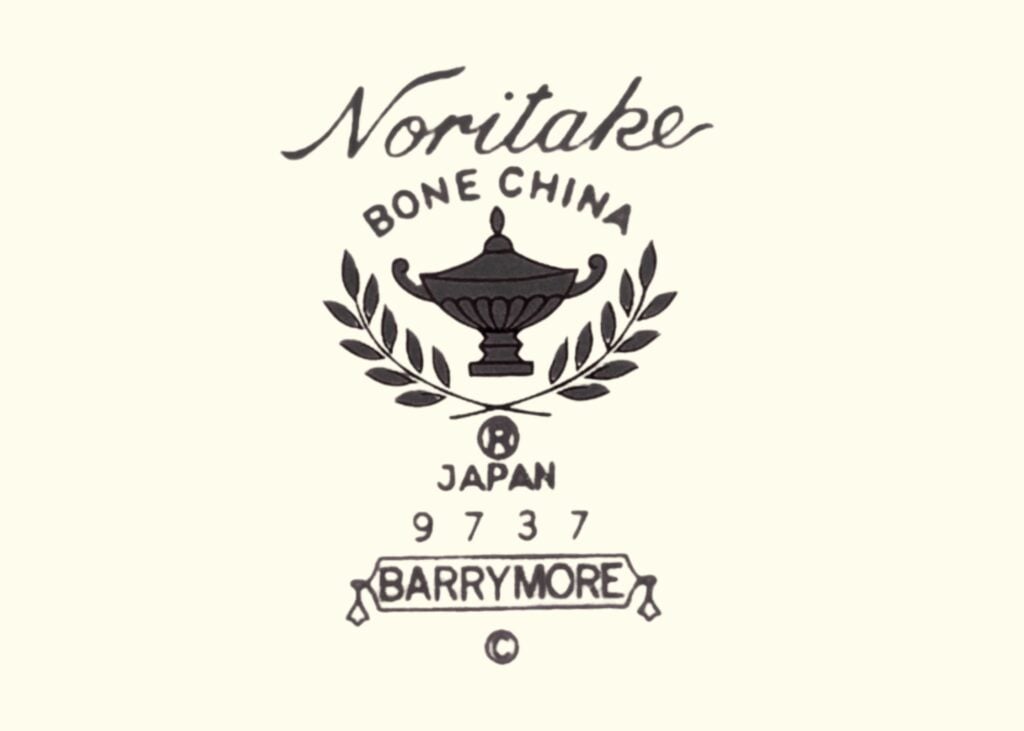
Many patterns also show the name, along with the number. These names are either stamped above the Noritake mark or sometimes stamped inside a ribbon below the pattern number. The “Barrymore” and “Etienne” are good examples.
If you only see a number with no pattern name, you can look it up on Noritake pattern databases. Also, some early pieces have no pattern number at all. That’s normal for pre-1930s production.
Observe Painting Style, Glaze & Finish:
Early Noritake pieces from the pre-1930s were mostly hand-painted, as you can tell by slight variations, such as non-identical flowers, wobbly lines, uneven colors, and lines.
By the 1940s, the company began using transfer printing for many patterns. The design is printed onto the china using a decal-like process. These pieces look more uniform, with more identical motifs and crisp lines.
As for glaze, genuine pieces will show an even, high-quality glaze across the entire surface. You’ll hardly ever see large empty spots, heavy drips, or pinholes. Besides, the gold or platinum trim is always clean and evenly applied.
Note: This article is intended for informational, educational, and entertainment purposes only. Some images are illustrative and may not represent actual brands, products, or related entities. All trademarks, product names, brand logos, packaging, and other intellectual property referenced remain the exclusive property of their respective owners. Any brand mentions or references are provided solely for descriptive and educational context and do not imply any formal or commercial association.