
Antiques Know How Research
Louis Vuitton Trunks Value
A detailed analysis of several auction results and eBay sales by our Antiques Know How team suggests that old Louis Vuitton trunks sell for $2,500–$50,000+, with rare pieces fetching over $50,000. Some high-value LV trunks are Vuittonite Wardrobe, Damier/Monogram Steamers, Wardrobe Steamer, Boîte Bijoux, Alzer 65/80, and Early Trianon. Check interior labels, date codes, engraved brass hardware with patented locks, canvas, and natural aging for authenticity.
Antiques Know How
Most people who own an old trunk don’t really know what they have until they check the name inside. If the label in an antique trunk reads Louis Vuitton, it’s not just a trunk; it’s a gem.
Old Louis Vuitton trunks are easily the most valuable finds in the category, with some antique designs having sold for hundreds of thousands of dollars in auctions.
This list covers eight of the most notable Louis Vuitton trunk styles and designs, what makes each one collectible, what they’re realistically worth today, and tips on spotting authentic LV pieces.
Why Are Old LV Trunks So Valuable?
Louis Vuitton’s journey began in Paris with a revolutionary flat-topped trunk released in 1858 that made stacking luggage possible. The earliest trunks were made of a gray, waterproof fabric called Trianon canvas.
By 1872, LV introduced striped canvas to fight counterfeiting, followed by the Damier (checkerboard) canvas in 1888. In 1896, Louis’s son, Georges Vuitton, created the iconic LV Monogram canvas as a tribute to his father.
Today, antique and vintage LV trunks are among the most actively traded collectibles in the luxury market. Most trunks are auction pieces, selling for hundreds of thousands of dollars.
High-Value Louis Vuitton Trunks to Know
Let’s take a look at some of the most valuable Louis Vuitton trunk designs and styles collectors are paying premiums for today.
1. Vuittonite Orange Wardrobe/Malle Trunk
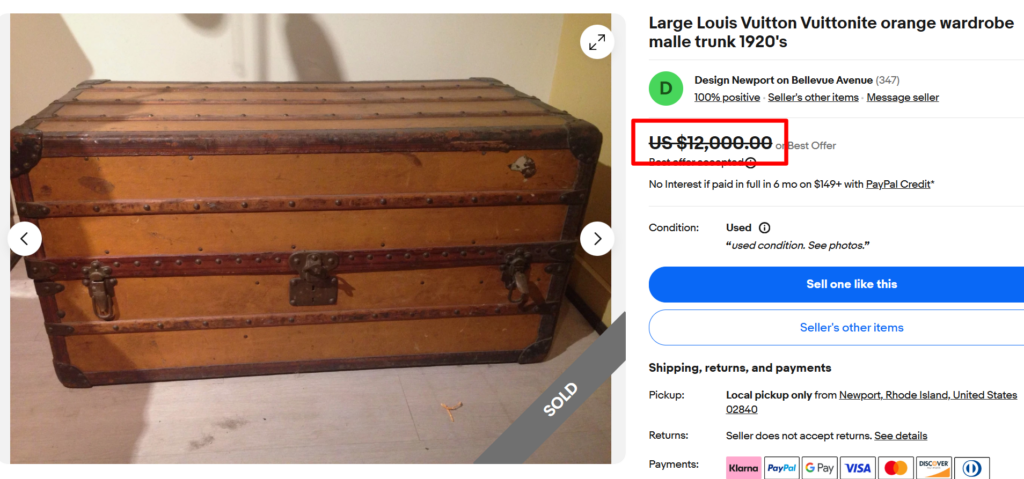
| Average Value | $8,000 – $18,000 (orange); $20,000 (yellow versions) |
| Production Period | Turn of the century – 1920s |
| Type | Wardrobe trunk/malle |
| Collectibility | Very High |
| Collector Notes | Yellow Vuittonite is rarer |
Vuittonite was a stain-resistant, waterproof-coated canvas used by LV from the turn of the century through the 1920s. It primarily came in orange, yellow, and black. Orange Vuittonite trunks are rarer than their monogram counterparts and are actively sought by collectors.
This specific wardrobe configuration (called a “malle” in French) opens horizontally and features hanging storage.
Trunks in Vuittonite canvas in any good condition are uncommon on the market. Orange examples, especially in wardrobe format, are among the hardest LV trunks to source. Yellow Vuittonite is rarer still.
2. Monogram Damier Steamer Trunk
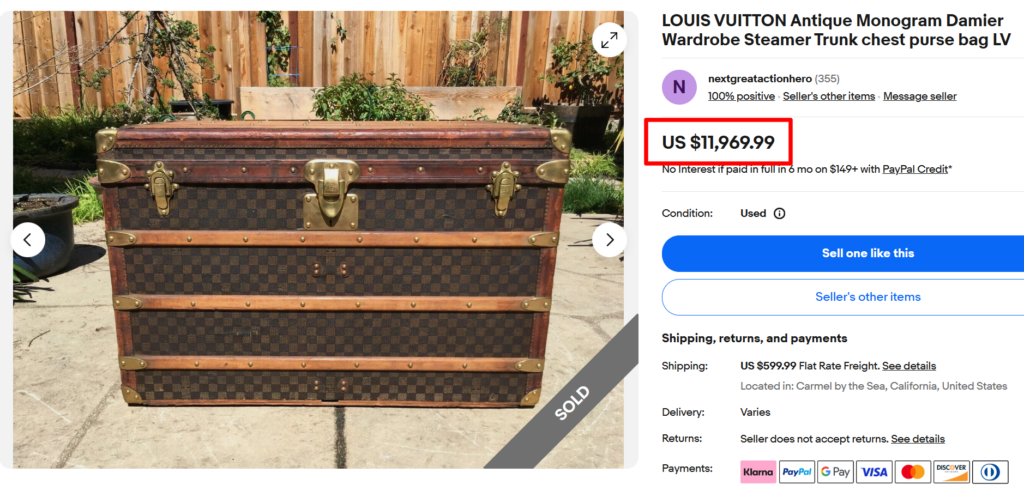
| Average Value | $8,000 – $15,000 (with wear) $15,000–$30,000+ (good condition) |
| Production Period | 1888 – 1930s |
| Type | Steamer trunk / Wardrobe |
| Collectibility | Very High |
| Collector Notes | Squares with printed “Louis Vuitton Depose” confirm authenticity |
The Damier (checkerboard) canvas was Georges Vuitton’s first anti-counterfeit design, introduced in 1888. Early Damier trunks feature alternating squares of brown canvas, with select squares printed “Louis Vuitton Depose.”
This version is the most recognized and valued Damier pattern. A rare red-and-white Damier variant also exists, though it’s far less common.
Antique Damier trunks are rarer than Monogram examples today, especially large steamer or wardrobe trunks like this one. Make sure to check the LV label and hardware engravings for authenticity.
3. Wardrobe Steamer Trunk
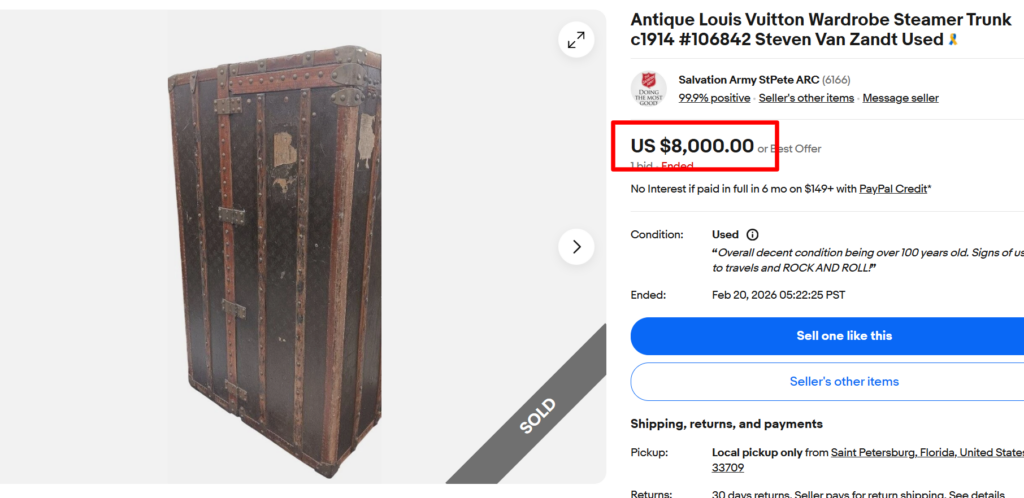
| Average Value | $5,000 – $15,000 (monogram); $20,000–$50,000 + (rare variants) |
| Production Period | 1870s – 1940s |
| Type | Wardrobe trunk (vertical opening) |
| Collectibility | Very High |
| Collector Notes | Original hangers, drawers, and brass locks add value. |
The vertical wardrobe trunk is LV’s most complex and historically significant design. It opens vertically, like a portable closet, with a hanging section on one side and drawers on the other.
This format was first introduced around 1870 and became widely popular from the 1890s through the 1930s. Trunks from the 1910s–1920s are among the most collectible, especially with strong provenance.
For example, the trunk shown here was used by musician Steven Van Zandt during his “Born to Run” tour, as documented.
Original monogram canvas wardrobe trunks with original hangers, drawers intact, working brass locks, and other unusual features (like zinc cover) are also highly valuable.
4. Monogram Boîte Bijoux Vanity Trunk
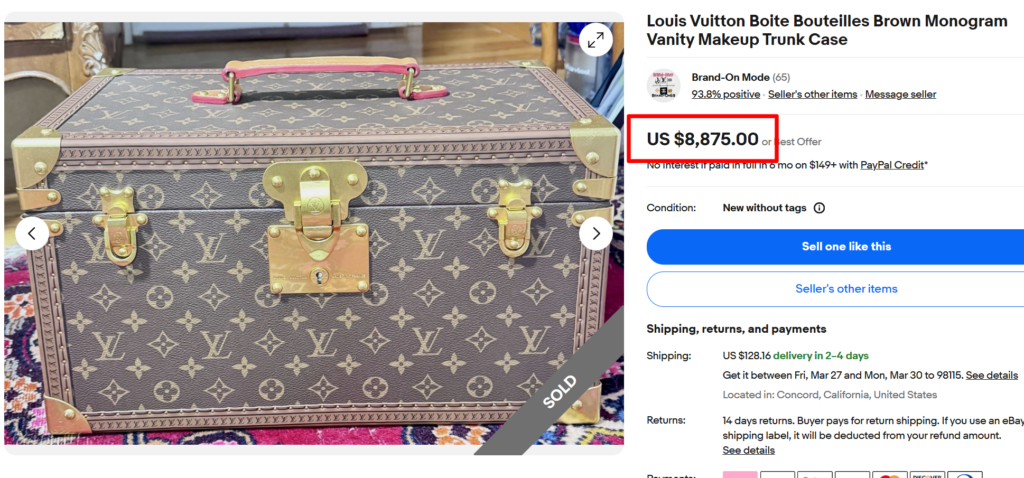
| Average Value | $3,000 – $9,000 |
| Production Period | 1950s – present |
| Type | Vanity/cosmetics trunk case |
| Collectibility | High (for early pieces) |
| Collector Notes | Check brass stamps and date code |
LV’s vanity trunks are quite collectible today. The Boite Bouteilles (literally “bottle box”) is a compact, hardshell train trunk designed to carry perfume bottles, toiletries, and cosmetics.
It features a flat top handle, an interior mirror, adjustable leather straps for bottles, and gold-tone brass hardware. The example shown here is the Monogram version of this compact trunk, which makes it more desirable.
Also, this is one of LV’s most heavily counterfeited small leather goods pieces, so authentication is crucial.
You can spot the post-1970s examples by date codes, properly stamped brass hardware, and the characteristic LV-branded leather handle markings.
5. Monogram Steamer Trunk
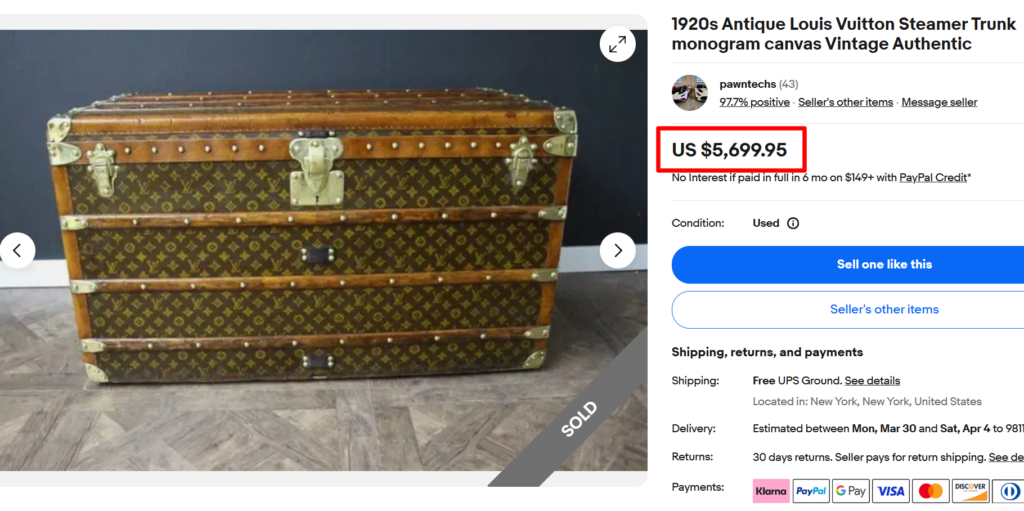
| Average Value | $4,000 – $8,000; $10,000+ (excellent/complete) |
| Production Period | 1896 – 1950s |
| Type | Flat-top Steamer Trunk |
| Collectibility | High (pre-1930 examples) |
| Collector Notes | Interior LV store label helps verify date. |
The standard monogram steamer trunk is the most recognized LV trunk of all. It’s a flat-top rectangular travel chest featuring hand-stenciled Monogram canvas, unlike modern printed versions. You’ll also find solid brass hardware and wood-and-lozine trim.
The most sought-after are LV steamer trunks made between the 1910s and 1930s. These may also have store labels inside that help you date the piece.
The price of these antique trunks depends on the condition of the canvas material, clean interiors, functional locks, and original keys.
6. Louis Vuitton Alzer 65 Case
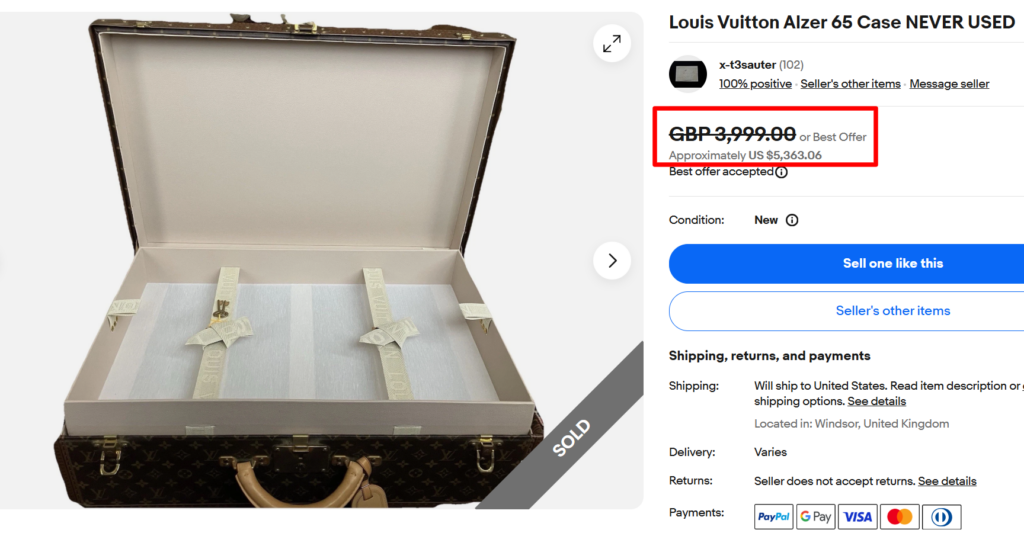
| Average Value | $2,500 – $5,500 (used); $5,000–$7,000+ (near-mint) |
| Production Period | 1960s – present |
| Type | Hard-sided suitcase trunk |
| Collectibility | Moderate to High (1960s–1990s) |
| Collector Notes | Original interior packaging adds value. |
The Alzer 65 is the mid-size version of LV’s flagship hard suitcase line, at 65cm wide. It uses the same construction as the Alzer 80: Monogram canvas over a poplar wood frame, with brass hardware and cotton canvas interior straps.
It’s proportionally more compact and easier to transport, which makes it functional as well as collectible. While common in Monogram canvas, rare variations in Epi leather or limited edition finishes can significantly boost the value.
7. Early Plain Trianon Canvas Trunk
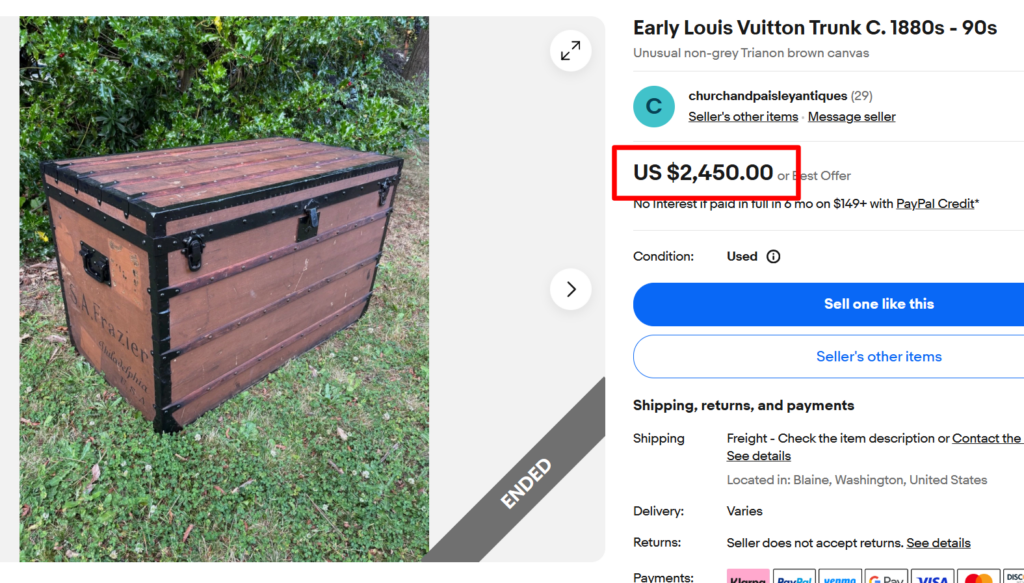
| Average Value | $10,000 – $20,000 (good condition) |
| Production Period | 1858 – 1895 (pre-Monogram era) |
| Type | Steamer / flat-top travel trunk |
| Collectibility | Ultra-Rare |
| Collector Notes | Identification relies on the interior label and lock details. |
The Trianon was Louis Vuitton’s first canvas, predating all logos. These designs from the 1870s–1890s used the striped Rayee canvas (introduced in 1872) or plain brown canvas.
The trunk shown here uses a brown non-grey Trianon-style canvas, identified by its black-lacquered iron hardware and flat-top construction.
Condition plays a major role in the value of these 19th-century trunks. The canvas construction is relatively fragile compared to later-coated canvas. Also, because these lack the LV Monogram, owners may not realize they are holding the very first designs from 1858.
So, always check the interior and labels to spot the original Louis Vuitton labeling.
8. Alzer 80 Monogram Trunk
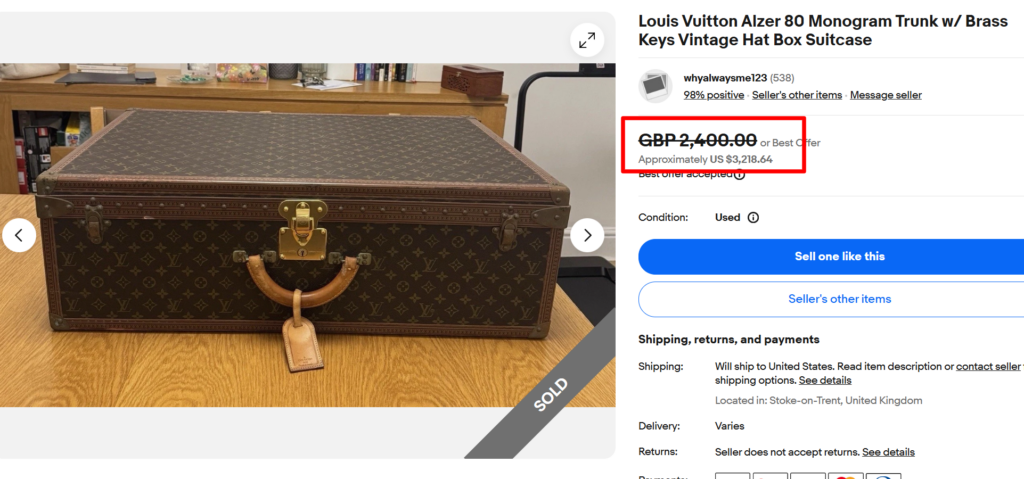
| Average Value | $10,000 – $15,000 |
| Production Period | Late 20th Century to Present |
| Type | Hardsided Suitcase |
| Collectibility | Very High |
| Collector Notes | Check for the original removable interior tray and key. |
The Alzer is Louis Vuitton’s classic hard-sided suitcase line. The “80” refers to its 80cm (approximately 31.5 inches) width, making it the largest size produced in this format.
This Alzer 80 example features the signature Monogram canvas, brass hardware, and a single-piece flat lid. This means there’s no internal frame, just the canvas shell over a poplar wood base.
LV still produces new Alzer suitcases as special-order pieces, but the vintage versions from the 1960s through 1990s are much more collectible. Check the Original brass keys and an intact interior tray; they can increase the value.
How to Tell If an Antique Trunk is Louis Vuitton?
As Louis Vuitton is a leading brand, there are many replicas of their luggage trunks available in the market with similar designs and monogram canvas. To identify an original LV luggage trunk, check for the following:
Interior Labels
The very first step to spot a genuine LV trunk is to check the labels inside it. Authentic LV trunks carry a paper or fabric label inside the lid or base listing the brand’s store locations.
The number of locations on the label helps date the trunk. For example, earlier trunks list fewer stores (Paris only, or Paris + London), while labels from the 1920s usually list Paris, London, Nice, New York, and others.
Here’s a quick table to help you identify the LV labels:
| Production Era | Label Features | Collectibility |
| 1858 – 1870s | “Rue Neuve-des-Capucines” address. | Extremely Rare |
| 1880s – 1908s | “1 Rue Scribe, Paris” & “London” addresses. | Very High |
| 1908 – 1914 | Above + Nice (4 Jardin Public) | Highly Sought After |
| 1914 – 1940s | “70 Champs-Élysées” + multiple French cities | Collector Standard |
| 1950s – Present | Printed/plasticized labels; modern store list | Moderate |
Apart from this, the label may also show:
- The Serial Number: A 5 or 6-digit number, usually handwritten or stamped. You can cross-reference it with the LV archives.
- The Medal Logos: Labels from the 1920s often feature “Exhibition” medals, proving the brand’s award-winning status at the time.
- Authentic Aging: Real labels are made of paper and should show natural yellowing; they should never look like a modern glossy sticker.
Serial Numbers (Post-1980 Pieces)
LV introduced date codes (not unique serial numbers) starting in the early 1980s. The code is typically stamped on an interior leather tab or directly into the lining.
The format follows: two letters (country/factory) followed by four numbers (production date).
Vintage trunks before 1980 will not have this code. A missing code on a trunk from the 1890s is normal. A missing code on a trunk from the 1990s requires explanation.
Hardware
All of the hardware on a genuine Louis Vuitton trunk, including locks, clasps, rivets, and corner brackets, is made of solid brass (or steel and black lacquer on earlier models).
The locks should have “Louis Vuitton” engraved on them, and the rivets should be marked as well. Rough or hollow-feeling hardware, inconsistent engraving, or chrome-finish metal on antique pieces are red flags.
Also, check the lock mechanism. A non-pickable lock was patented by Georges Vuitton as early as 1886. The lock should have a tumbler mechanism, a particular type of click.
Replacement locks from non-LV sources or lock plates with damage decrease the trunk’s value and question its authenticity.
Canvas Pattern
On authentic monogram canvas, the Louis Vuitton initials and floral motifs run diagonally and are never cut off at the seams; they’re intentionally centered. If you notice misaligned or inconsistently sized motifs, irregular printing, or patterns that don’t align across seams, it’s a questionable piece.
Overall Condition
Check the trunk inside out to evaluate its condition correctly. A trunk with major canvas loss, missing hardware, or replaced non-original parts is worth significantly less than the same model in original condition.
Particularly for wardrobe trunks, where drawers, hangers, and interior dividers must all be intact, condition is the most important value factor.
Note: This article is intended for informational, educational, and entertainment purposes only. Some images are illustrative and may not represent actual brands, products, or related entities. All trademarks, product names, brand logos, packaging, and other intellectual property referenced remain the exclusive property of their respective owners. Any brand mentions or references are provided solely for descriptive and educational context and do not imply any formal or commercial association.