
Antiques Know How Research
Antique Picture Frames Value
A detailed analysis of several eBay sales by the Antiques Know How team suggests that antique picture frames can range from around $100–$300 for common 20th‑century examples and $800–$5,000+ for rare, high‑craft pieces. Some of the most valuable frames are Tiffany Studios grapevine and Greek‑key bronze‑glass frames, French Empire frames, Louis XV-style frames, Flemish Baroque giltwood and ormolu models, Newcomb‑Macklin Arts & Crafts carvings, micromosaic, and Victorian beaded frames. The value depends on age, construction, materials, aging, maker marks, originality, and overall condition.
Antiques Know How
While appreciating an old painting, everyone usually overlooks the frame surrounding it. However, one must know that the value of the frame could exceed that of the artwork enclosed in it.
Old frames from famous manufacturers fetch high prices of hundreds or thousands of dollars. The difficult part is being able to differentiate the high-value ones from others. Let’s understand what makes an antique picture frame valuable, and which styles and designs are worth the most.
How to Identify Valuable Antique Picture Frames?
The value of antique picture frames can range from $100 to $1,000 or even more, depending on when it was made, what material was used, and how it was constructed. Let’s understand all the value factors in detail.
Age & Construction
Age is a crucial factor to evaluate antique frames. Pieces produced prior to 1920 are regarded as antiques, and their value is the highest. Pieces made between the 1920s and 1970s are collectibles, although they mostly do not carry much collector value.
The rear of the frame provides an indication of how old it is.
Hand-forged nails with odd-shaped heads hint at a pre-1890s manufacture. Machine-made nails, which provide clues as to when they were manufactured, are usually seen on 1800s to 1900s pieces.
Wood oxidation is another clue. Old wood darkens unevenly over time into a gray-brown patina. If the back looks uniformly light or freshly cut, it needs inspection.
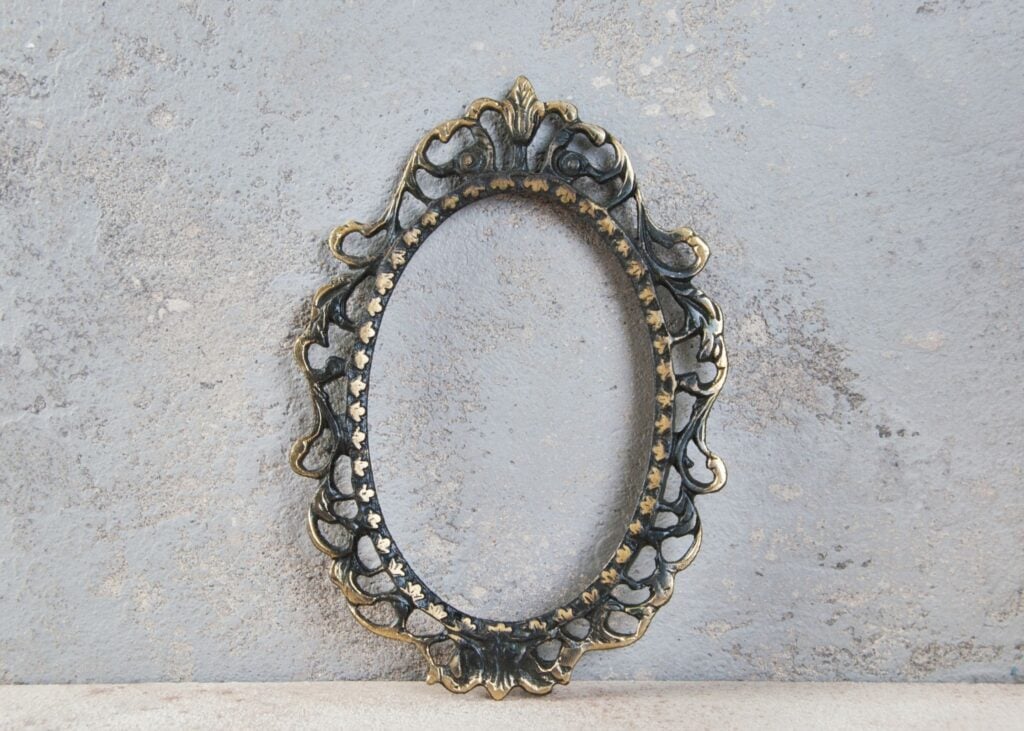
Base & Decoration Material
Materials can reveal much about the quality and origin of the frame. For instance, hardwoods such as walnut, oak, or basswood show that the frame was an expensive antique one; otherwise, most inexpensive examples were constructed of soft woods, such as pine.
The decoration or gilt material is also important. The two main decorations you’ll find are: gold leaf versus gold paint. Examples with real gold leaf work are naturally more valuable.
Here’s how you can differentiate between the two:
- Gold Leaf: Genuine gold leaf appears with a warm tone and visible overlap lines. When scratched, it separates into thin sheets.
- Gold Paint: Gold paint appears flat and uniform. Scratching will cause it to chip or powder.
Gesso (a plaster-like coating applied before gilding) is another valuable finish. It develops fine cracks over time, called crazing, which confirms the surface is original, not a modern re-coating.
Other valuable materials you might find include bronze, brass, tortoiseshell, micromosaic tesserae, and hand-applied enamel.
Craftsmanship
How the frame is made will affect its value. In most cases, hand-carved frames are considered more valuable than machine-carved frames.
Hand-carved frames can be distinguished from machine-carved frames by running your hand through the carvings, which have some imperfections, and the leaves or scrolls vary from one to another. In machine-carved frames, all the elements are exact replicas of each other, with sharp edges and even depths.
On gilded frames, hand-applied gold leaf shows faint overlap lines and subtle texture changes. Machine-applied or spray finishes are smooth and consistent throughout.
Also, check the joints. Older handmade frames use mortise-and-tenon or pegged joints. Some makers used distinctive methods. Newcomb-Macklin frames, for instance, have unique perpendicular corner splines that are easy to spot.
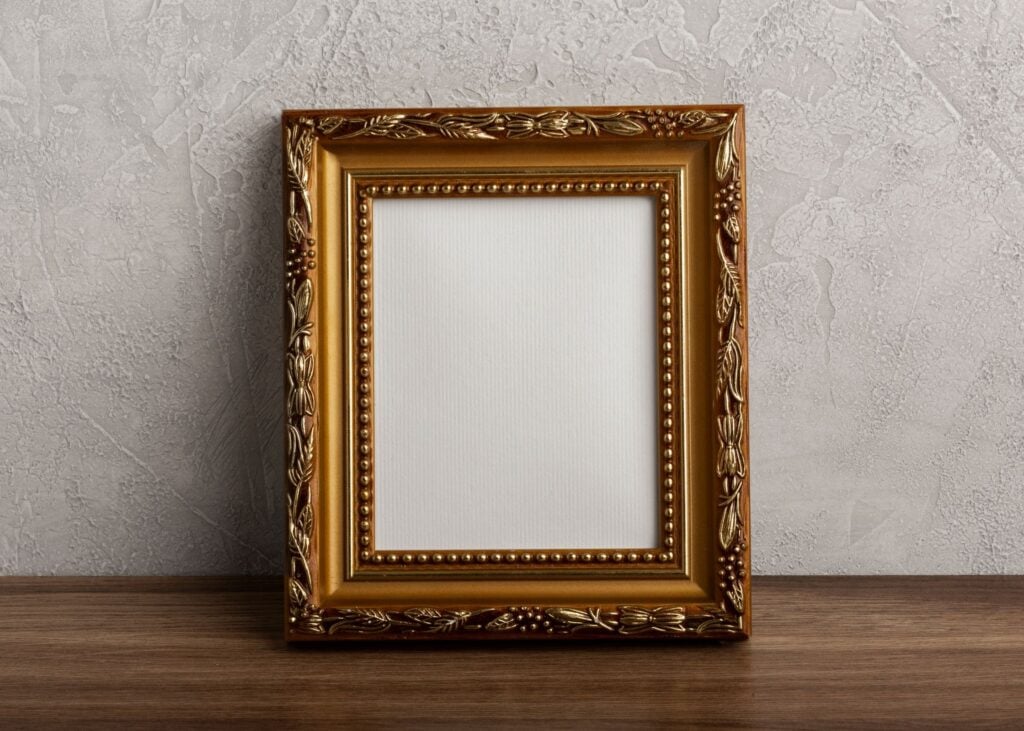
Style & Design
Knowing the frame style and period helps you estimate value. Certain frame styles are more collectible than others. Below are some of the most popular styles:
- French Louis XV and XVI styles feature carved gilded wood with rococo scrollwork and shell motifs. These were popular from the mid-1700s through the 1800s.
- Arts & Crafts frames (1890s–1930s) have flatter profiles with hand-carved geometric or nature patterns. Newcomb-Macklin and Carrig-Rohane are the top names in this style.
- Tiffany Studios frames (early 1900s) used cast bronze, often with glass panels, and were stamped with model numbers. These are among the most valuable American frames you can find.
- Flemish and Dutch Baroque frames (1600s–1700s) feature ebonized wood with ripple-molded edges, sometimes with tortoiseshell veneer.
Apart from this, the design rarity is another value driver. Frames with an unconventional shape, like octagonal, shield, Tabernacle Frames, free-form, etc., are rarer and more desirable than common rectangular and square shapes.
Condition
Last but not least, assess the condition. The more damage on the frame, the less valuable it will be.
However, not all the damage signs affect value. Some signs are actually signs of true age and add value. Fine gesso cracks, natural wood patina, and gentle wear all confirm authenticity and justify age.
What truly hurts the value is structural damage, like broken corners, missing carved ornament, or heavy flaking. Poorly done repairs, like sloppy re-gilding or mismatched fill material, also lower prices. For most collectors, an original surface is almost always preferred over a restored one. Even a worn original finish beats a freshly re-gilded frame.
11 Valuable Antique Frames & Designs to Know
Now you know what affects the value of old picture frames. With these factors in mind, let’s look at the most valuable antique frames, with their defining features and average values.
1. Tiffany Studios 948 Grapevine Bronze & Glass Frame
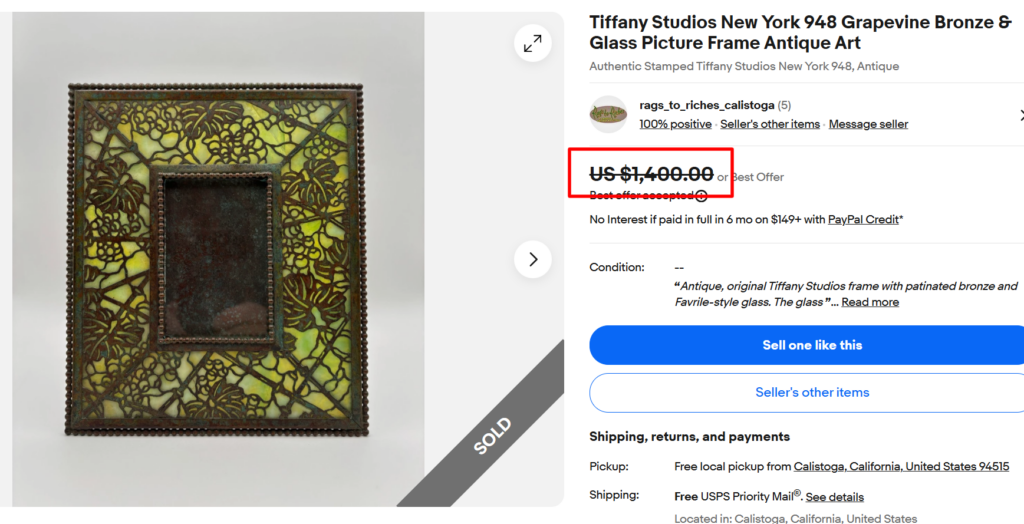
| Average Value | $800 – $1,800 |
| Time Period | Early 1900s (circa 1900–1920) |
| Style | Art Nouveau |
| Key Features | Patinated bronze, slag glass, grapevine filigree |
| Collector’s Note | Verify the “Tiffany Studios New York” stamp. |
The Grapevine (#948) is one of Tiffany Studios’ most recognized desk set designs. It features a patinated bronze overlay of vine leaves and tendrils sitting over green and amber Favrile-style slag glass panels and a beaded border.
Authentic pieces are always stamped “Tiffany Studios New York 948” on the back. Another key check is natural bronze patina; polished or cleaned examples lose a lot of value, and so do examples with major glass loss.
2. Victorian French Hand Beaded Pansy Gold Doré Frame
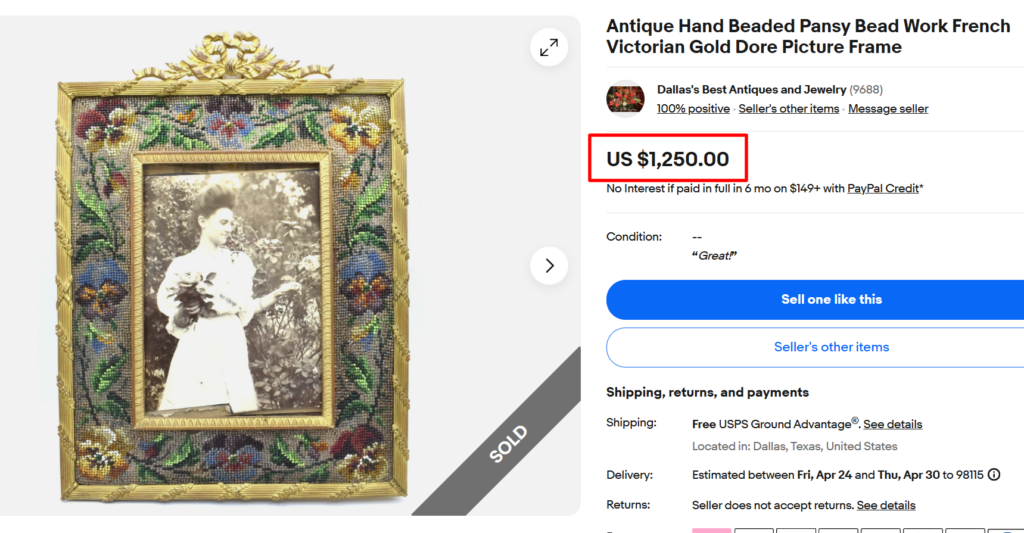
| Average Value | $800 – $1,500 |
| Time Period | 1860s – 1900s |
| Style | Victorian / French |
| Key Features | Glass beading, gold doré frame, pansy and flower motifs |
| Collector’s Note | Frames with fully intact beadwork are increasingly hard to find |
This frame combines a gold-doré metal base with hand-applied glass beadwork. The beads are individually strung on fine wire to form floral designs, typically pansies and wildflowers.
Also, the doré base uses a mercury-gilding technique, which is common in French work.
The beadwork is extremely fragile, so most surviving examples show some bead loss or wire damage. That’s why fully intact beadwork is the single biggest value factor for these frames.
3. French Empire Gilt Bronze Frame
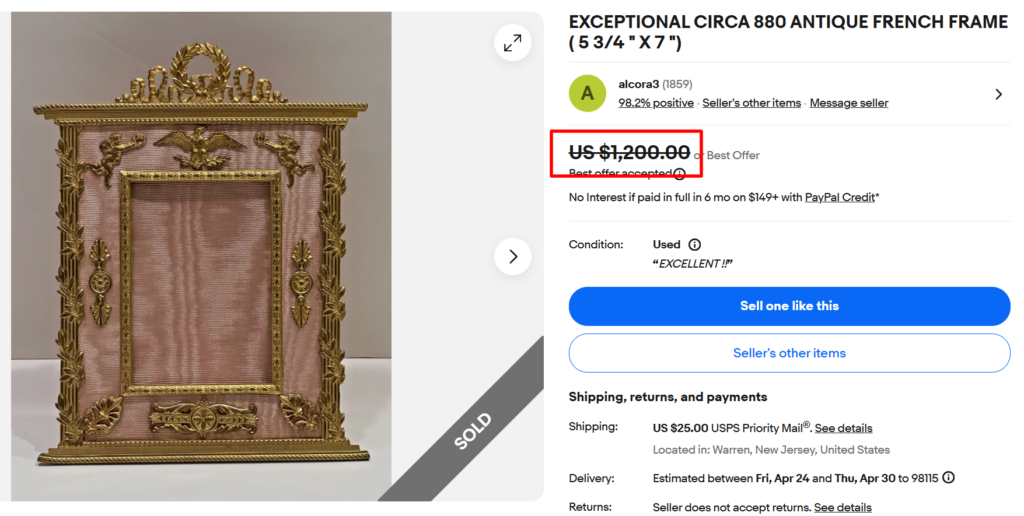
| Average Value | $800 – $1,800 |
| Time Period | Circa 1870s – 1900s |
| Style | French Empire / Neoclassical |
| Key Features | Cherub motifs, laurel wreath crest, silk lining |
| Collector’s Note | Check for original silk mat & backing. |
These small frames take inspiration from Empire and Neoclassical design, and feature architectural pediment crests with eagles, crossed laurels, beaded borders, and ribbon bows. These also mostly feature a silk mat inside the frame.
The body is mostly cast bronze with a fire-gilt or mercury-gilt finish.
Fire gilding produces a warmer, deeper gold than modern electroplating, making it a quick identification feature. Also, check the weight; heavy weight indicates solid bronze rather than pot metal.
Genuine French frames also have sharp casting detail with crisp edges. Today, frames with intact original silk mats and easel backs are worth considerably more.
4. Shield-Shaped French Ormolu Frame
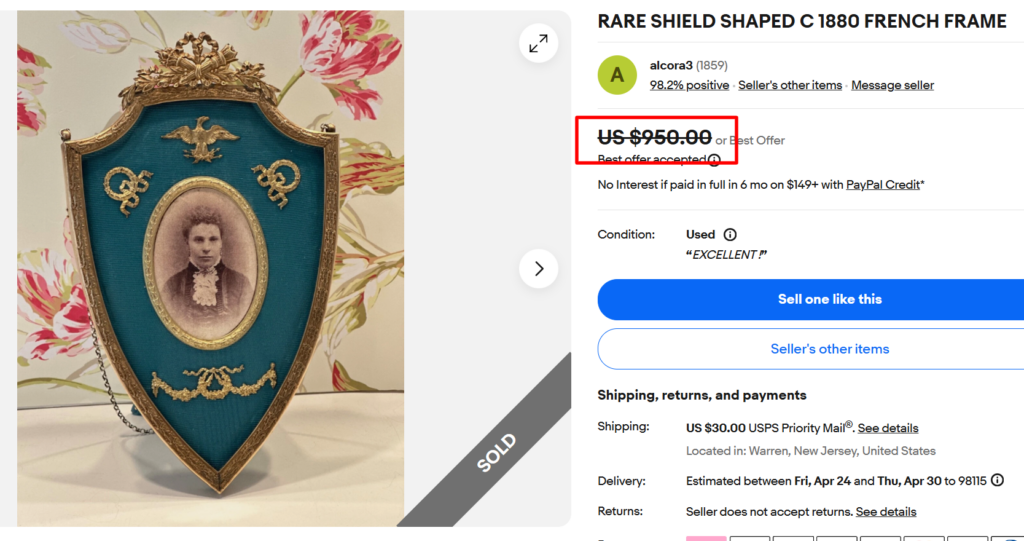
| Average Value | $700 – $1,500 |
| Time Period | Circa 1870s – 1890s |
| Style | French Empire / Napoleon III |
| Key Features | Shield shape, gilt bronze mount, silk background |
| Collector’s Note | Original silk fabric backing add value. |
This 1880s French frame is unique for its patriotic shield silhouette. Shield-shaped frames were a French specialty during the Napoleon III period. These frames were often used for military portraits or high-society mementos.
The body is typically brass-covered in silk or fabric, with applied gilt bronze (ormolu) mounts featuring eagles, laurel wreaths, or monograms. The unusual shield shape is the first factor that makes these frames uncommon.
Another feature is the silk backing, which degrades over time. So, intact fabric adds to value. Also, look for the quality of the bronze casting and original patina to confirm authenticity.
5. French Louis XV Style Giltwood Frame
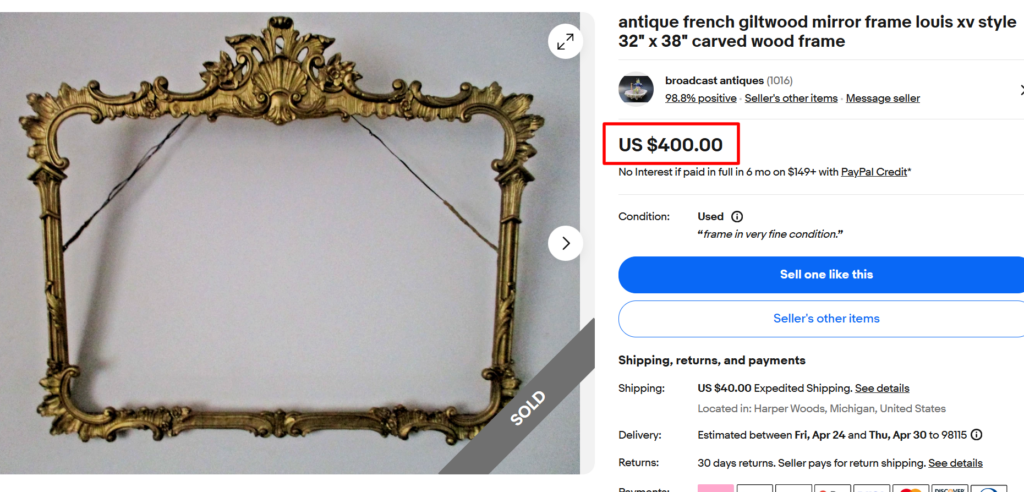
| Average Value | $300 – $1,500 |
| Time Period | 1700s (originals); 1800s–1900s (reproductions) |
| Style | French Rococo / Louis XV |
| Key Features | Pierced carved wood with gesso, gold leaf, shell crest |
| Collector’s Note | Larger frames (24+ inches) are more valuable. |
This large, openwork frame showcases the Rococo style with its “C-scrolls,” shell motifs, scrolling acanthus, and sweeping, asymmetrical lines. It’s usually hand-carved from wood, coated in gesso, and then gilded with gold leaf.
These frames are perfect for both mirrors and large painting canvases. Its value lies in the depth of the carving and those skillfully pierced wooden borders. Plus, larger frames are worth more because they needed significantly more carving work.
Most examples on the market are 19th-century reproductions using cast composition ornament on a wood base. You can check this by observing the scroll; if every shell and scroll looks identical, it’s cast, not hand-carved.
6. Victorian Gesso Gilt Frame
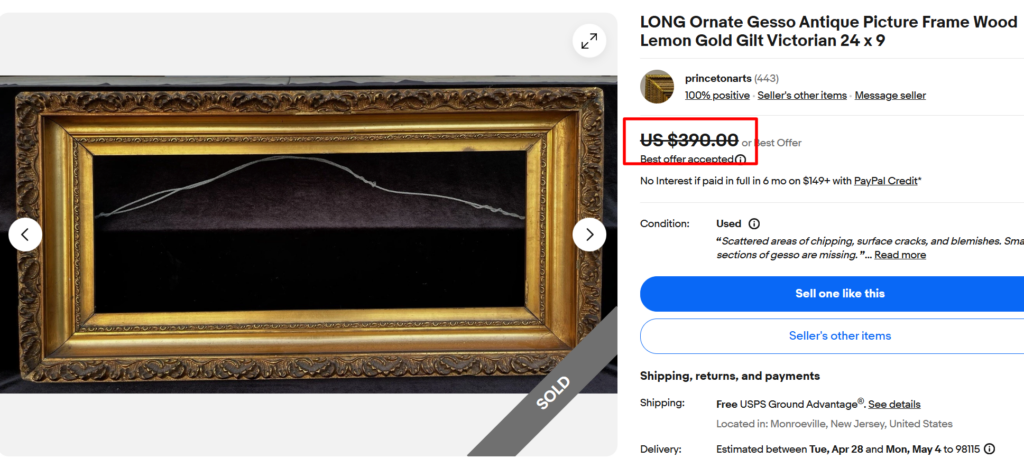
| Average Value | $300 – $1,000 |
| Time Period | 1850s – 1900s |
| Style | Victorian / Baroque Revival |
| Key Features | Wood base, molded gesso ornament, gold leaf or gold gilt finish, scrollwork |
| Collector’s Note | Long or non-standard sizes are rare and valuable. |
These frames have a wood base with ornament molded in gesso, a plaster-chalk mixture shaped using molds, then gilded. This was faster and cheaper than hand-carving, making ornate frames accessible to Victorian households.
Look for the gilt finish type. This example features a stunning “lemon gold” gilt finish, which indicates a custom gilding choice.
Gesso chipping is common and acceptable in really old pieces, but large missing sections lower the value. Besides, the gilt should be original and untouched; re-gilded examples are worth less.
7. Tiffany Studios Gilt Bronze Green Key Frame
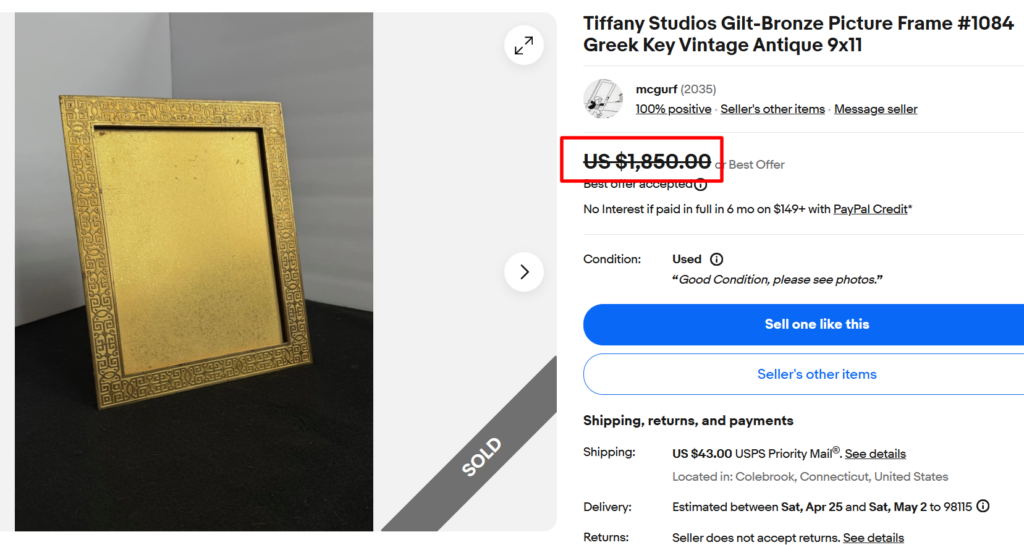
| Average Value | $1,200 – $2,500 |
| Time Period | Early 1900s (circa 1900–1920) |
| Style | Neoclassical / Art Deco |
| Key Features | Cast gilt bronze, Greek key border |
| Collector’s Note | Verify the “Tiffany Studios New York” stamp & number on back. |
This Greek Key frame (#1084) from Tiffany Studios has a repeating geometric border cast in gilt bronze with a doré (gold-washed) finish. These were sold as part of coordinated desk sets alongside inkwells, blotters, and calendars.
These frames are popular among collectors who prefer Art Deco-style streamlined designs. In pristine condition, these frames can easily sell for up to $2,500 or more.
Remember that fakes and reproductions of this design are common. So, always check the “Tiffany Studios New York” with the model number on the back. And also, assess the stamp depth and casting sharpness; originals have crisp, well-defined edges.
8. Newcomb Macklin Style Arts & Craft Frame (1930s)
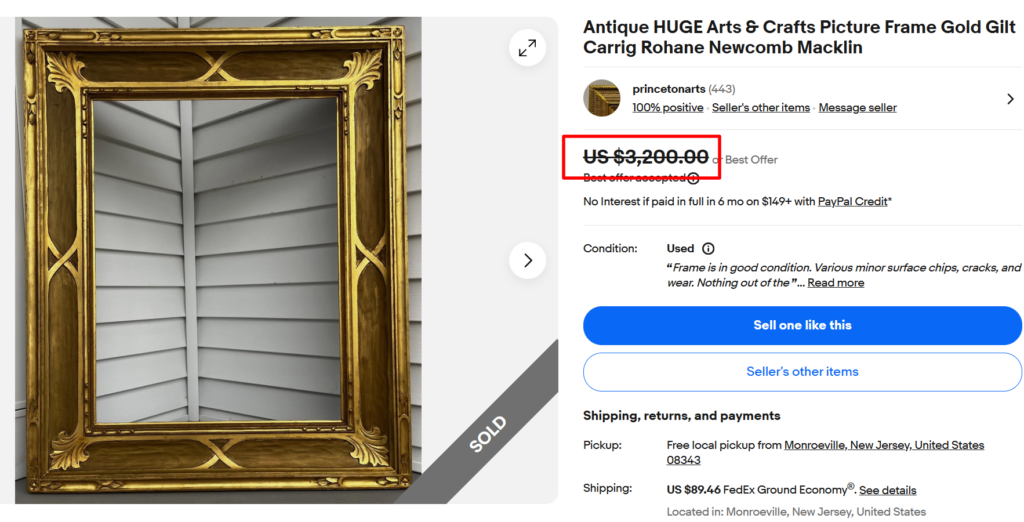
| Average Value | $1,500 – $5,000+ |
| Time Period | 1890s – 1940s |
| Style | American Arts & Crafts |
| Key Features | Hand-carved basswood, gold leaf finish, perpendicular corner splines |
| Collector’s Note | The unique corner spline joints are the easiest identification feature |
Newcomb-Macklin is a Chicago-based company (founded in 1871) that built custom frames for artists like Sargent, Parrish, and Bellows. Its frames are hand-carved from basswood and finished in gold leaf, silver leaf, or metal leaf.
The key identification feature is their perpendicular corner splines. It’s a V-shaped joint piece instead of a standard miter cut. Make sure to check the factory stamps or labels on the back to confirm authenticity, because most examples are unbranded pieces made in Macklin style.
Original, larger Newcomb-Macklin frames with original gilding sell for thousands of dollars today.
9. Flemish European Style Picture Frame
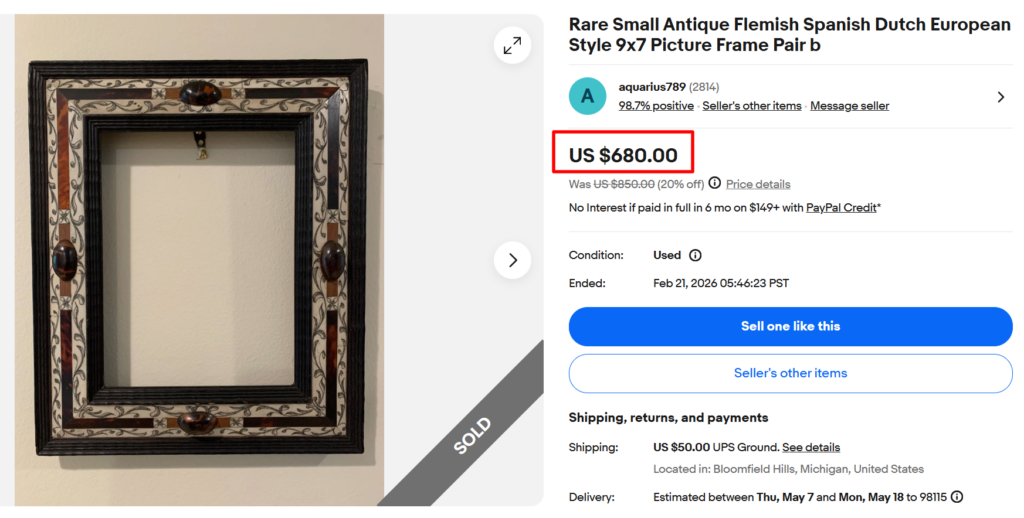
| Average Value | $500 – $1,200 |
| Time Period | 1600s – 1800s (originals) |
| Style | Flemish / Dutch Baroque |
| Key Features | Ebonized wood, ripple molding, tortoiseshell veneer, bone inlay |
| Collector’s Note | Genuine 17th-century pieces are the rarest. |
This frame draws inspiration from 17th-century Dutch and Flemish designs. It features dark, “ebonized” wood with intricate bone or tortoiseshell inlays and wavy “ripple” moldings. Bone or ivory corner inlay is also a common feature of these.
Genuine period frames use hand-scraped ripple moldings, while reproductions from the 1800s use machine-cut ripples and are far more common.
Its rarity and value come from the complex, multi-layered construction and historical European aesthetic. Authentic 17th-century pieces are the hardest to find, and can realize thousands of dollars at auction.
10. Italian Micromosaic Frame
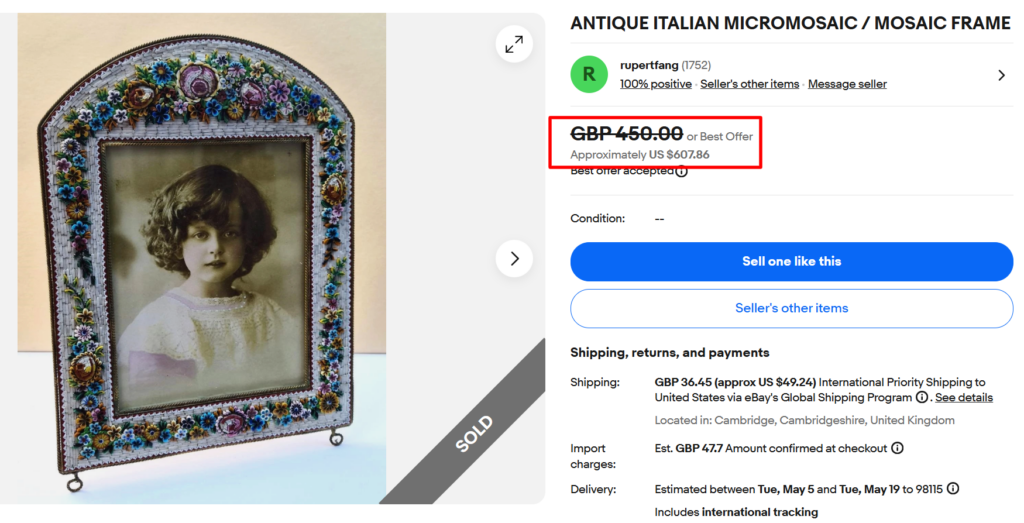
| Average Value | $400 – $900 |
| Time Period | Mid-1800s to early 1900s |
| Style | Victorian Italian |
| Key Features | Tiny glass tesserae, floral motifs, bronze body |
| Collector’s Note | Missing tesserae can hurt the value. |
These frames are covered in tesserae, which are tiny colored glass pieces arranged by hand into floral patterns on a brass or bronze body with an easel back. The craft originated in Rome and became a popular Grand Tour souvenir.
Each frame took days to assemble, making this style labor-intensive. Finer tesserae (smaller pieces) indicate higher-quality workmanship and bring stronger prices. Always check the tesserae; missing pieces are common and reduce the value.
11. Jay Strongwater Lily Jeweled Enamel Frame
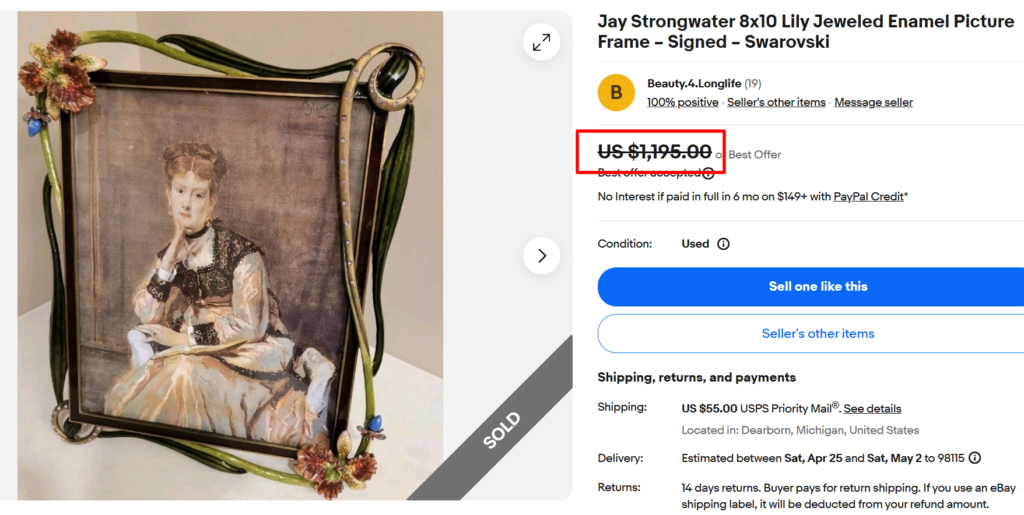
| Average Value | $150 – $1,500 |
| Time Period | 1990s – present |
| Style | Contemporary Luxury/Art Nouveau Revival |
| Key Features | Cast pewter with 14K gold finish, hand-painted enamel, Swarovski crystals |
| Collector’s Note | Larger frames (8×10), limited editions are most valuable. |
Jay Strongwater frames aren’t exactly antique, but they hold strong resale value. The designer started in fashion jewelry with Oscar de la Renta before launching his “Jewels for the Home” collection in the late 1990s.
Each frame is cast pewter with 14K gold finish, hand-enameled, and set with Swarovski crystals. Look for the signed stamp on the back to confirm authenticity and attribution.
Larger Strongwater frames and limited editions are the most valuable today. But always check for crystals; missing crystals significantly lower value.
Note: This article is intended for informational, educational, and entertainment purposes only. Some images are illustrative and may not represent actual brands, products, or related entities. All trademarks, product names, brand logos, packaging, and other intellectual property referenced remain the exclusive property of their respective owners. Any brand mentions or references are provided solely for descriptive and educational context and do not imply any formal or commercial association.