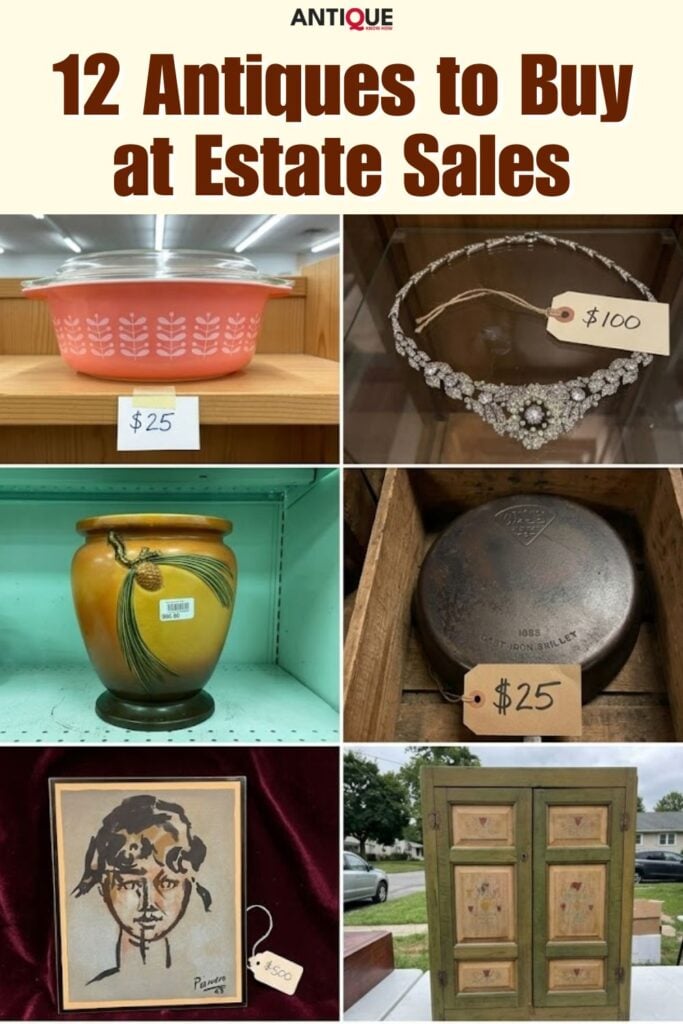
The prices of most items at an estate sale are meant to make them sell quickly, not the prices collectors actually pay. That’s why most people easily overlook the pieces with $5-$15 price tags, without realizing that they could actually have a resale value of $500 or even more.
The twelve types of items listed here are found at nearly all estate sales, and being able to recognize them could help turn a forty-dollar morning into a fifteen-hundred-dollar sale.
12 Valuable Estate Sales Finds Not to Miss
1
Mid-Century Modern Furniture
Typically sells for $300 to $5,000+
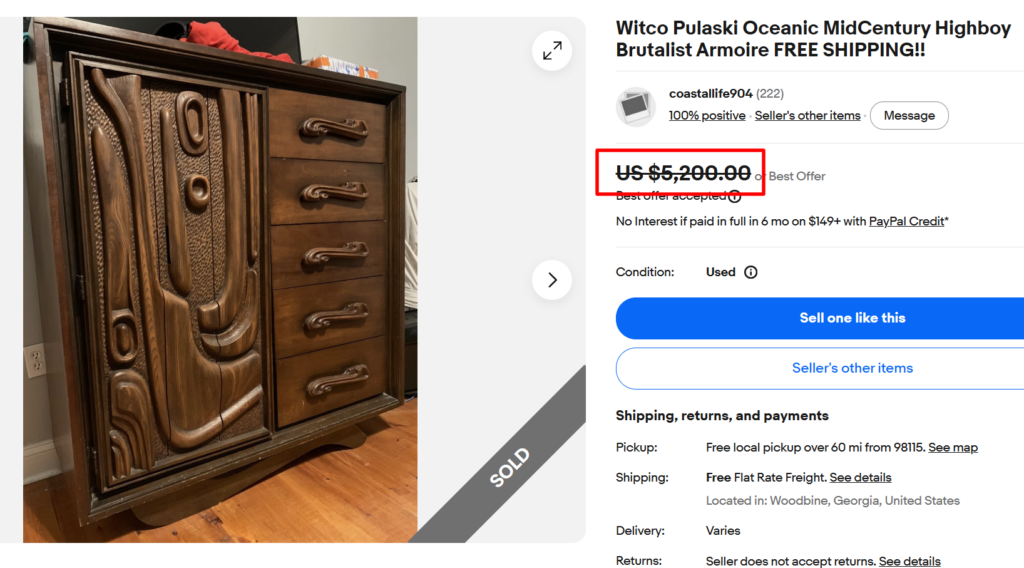
The mid-century furniture from the 1950s and 1960s has become collectible due to the fact that it matches the current interior. The most expensive is the furniture made by Herman Miller, Knoll, Eames, and Danish teak manufactured by Hans Wegener.
Even if the furniture is not signed but is made of walnut and has solid construction, it sells fast.
What to Buy:
- Solid walnut, teak, or rosewood construction
- Herman Miller, Knoll, or Eames maker tags intact
- Danish modern or American mid-century styling
- Original hardware and dovetail joinery
What to Skip:
- Particle board or veneer over MDF
- Heavy water damage or warped tops
- Missing drawers, broken legs, or replacement parts
- Modern reproductions in distressed finishes
2
Sterling Silver Flatware and Hollowware
Typically sells for $40 to $300+ per piece
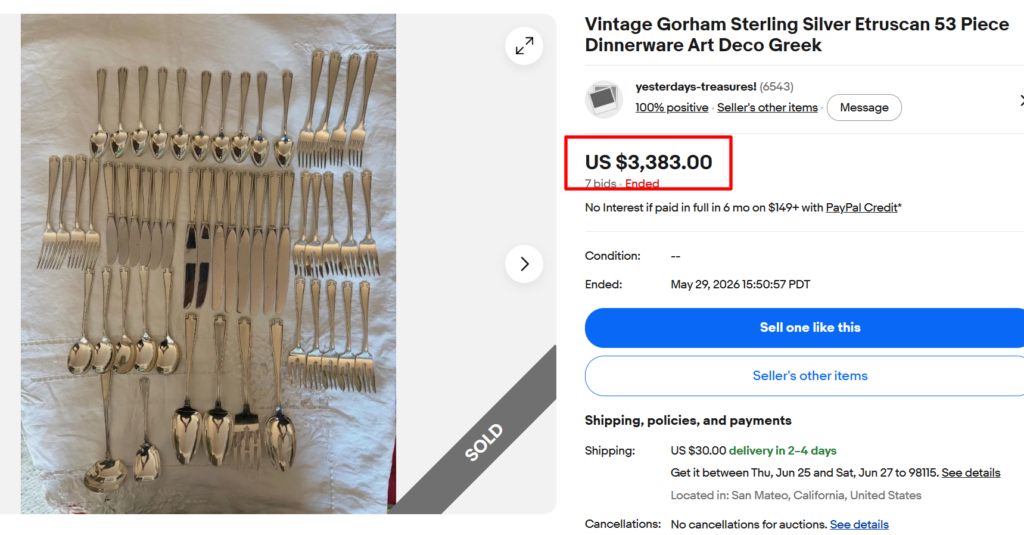
There are two forms of value to sterling silver. It has a melt value that is quite high, while items with the marks of known brands such as Gorham, Towle, and Reed & Barton have an added value based on their patterns.
Look out for “STERLING,” “925,” or the lion passant mark. Any item with an “EPNS” or “silver-plated” marking is made of base metal and should be avoided.
What to Buy:
- “Sterling,” “925,” or hallmark stamps present
- Named makers like Gorham, Tiffany, Towle, Reed & Barton
- Complete sets or matched serving pieces
- Pieces feel heavy for their size
What to Skip:
- “EPNS,” “Silver Plated,” or “A1” markings
- Deep monograms that hurt resale
- Bent tines, cracked handles, or solder repairs
- Hollow-handle knives sold individually (low scrap weight)
3
Vintage Pyrex (Promotional and Rare Patterns)
Typically sells for ($1 – $2)
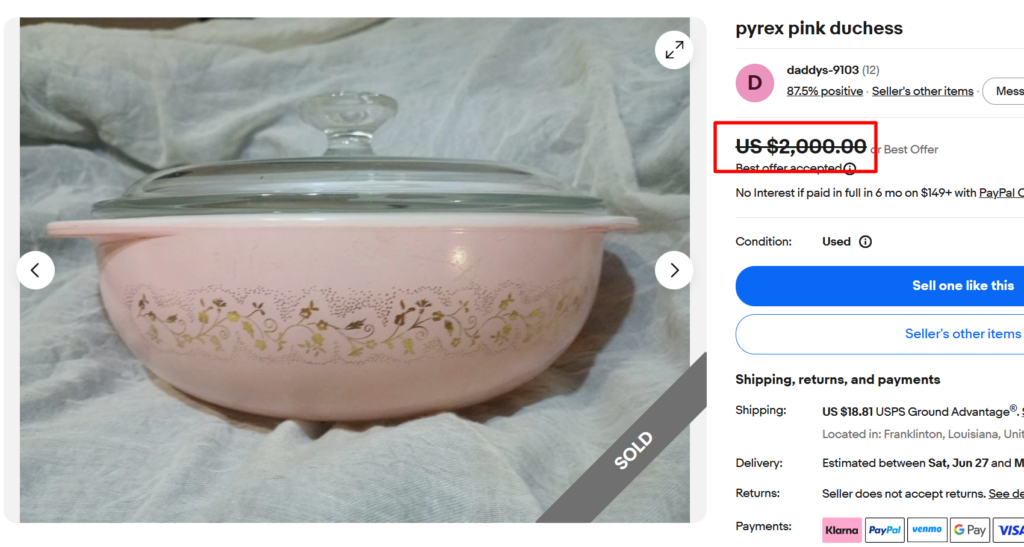
Pyrex collectors chase specific patterns, not the brand itself. Promotional and short-run patterns such as Lucky in Love, Pink Stems, Blue Dianthus, Atomic Starburst, and Barcode easily sell hundreds at a time on eBay.
The fastest authenticity check is the bottom stamp. All-caps “PYREX” with “Made in USA” means pre-1998 American production. Lowercase “pyrex” means modern overseas glass with no collector value.
What to Buy:
- All-caps “PYREX” backstamp
- Promotional patterns and pink colorways
- Casseroles with matching original lids
- Bright, unfaded silk-screened graphics
What to Skip:
- Lowercase “pyrex” mark (post-1998)
- Chips, cracks, or rim damage
- Faded or scratched patterns from dishwasher use
- Cloudy etching on the interior
4
Antique Copper Cookware
Typically sells for $80 to $1,500+
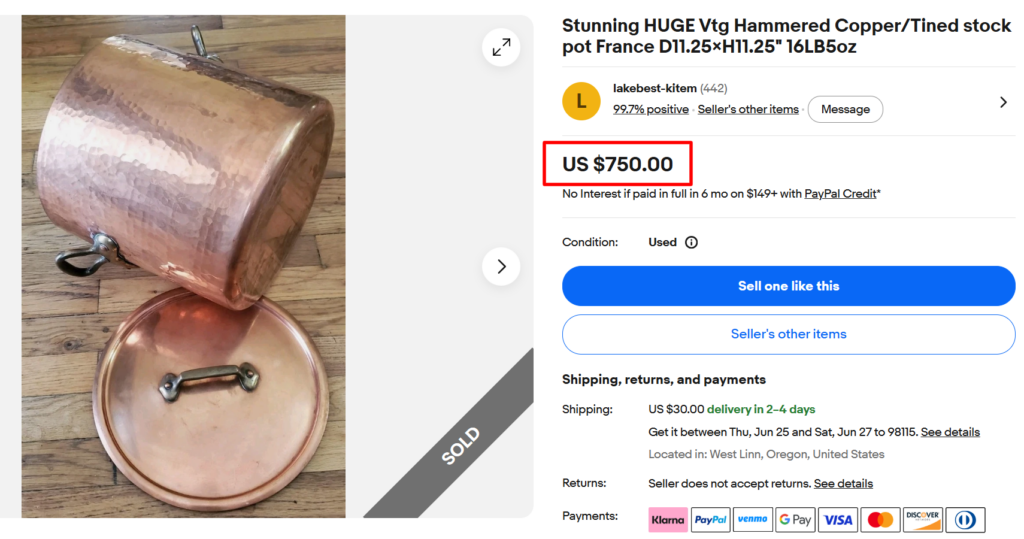
Real French copper from Mauviel, Dehillerin, or Gaillard is built for serious cooking and serious collecting. Heavy-gauge pieces with hammer marks indicate handmade construction, and the original tin lining is part of what holds the price.
A maker’s stamp on the bottom is the deciding factor. French names add a real premium over generic mid-century copper.
What to Buy:
- Thick walls (2mm or heavier) and dense weight
- French maker stamps (Mauviel, Dehillerin, Gaillard)
- Hammered surface and dovetail seams
- Original tin lining, even if worn
What to Skip:
- Thin decorative copper from Turkey or India
- Heavy dents that crush the cooking surface
- Plated copper over steel or aluminum
- Loose or replaced handles
5
Vintage and Antique Jewelry
Typically sells for $400 to $3,000+
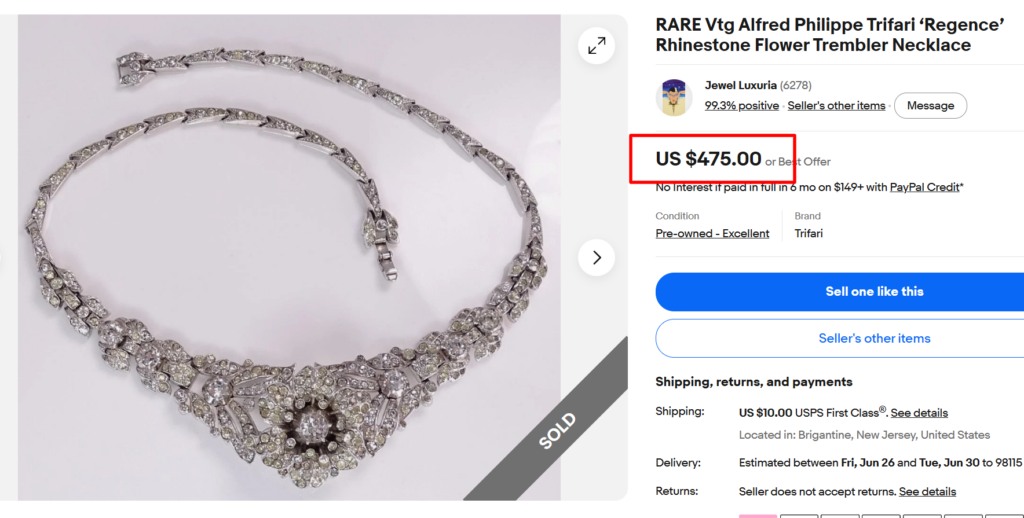
That undervalued box of “junk jewelry” could actually hold a $1,000 worth piece if you know what to look for. Costume jewelry by Miriam Haskell, Trifari, Eisenberg, and Weiss is quite collectible, especially rare designs.
Sometimes, authentic gold and silver reside in the same boxes, waiting to be discovered when they get tarnished. So, always examine all clasps and backs for hallmarks and designer marks.
What to Buy:
- Karat stamps (10K, 14K, 18K) or “925”
- Designer signatures (Trifari, Haskell, Bakelite)
- Heavy clasps and screw-back earrings (pre-1950s)
- Original mid-century costume sets in matching pieces
What to Skip:
- Tarnished base metal with no marks
- Loose stones in glued mounts
- Modern fashion jewelry from the 2000s
6
Persian and Turkish Handmade Rugs
Typically sells for $80 to $2,500+
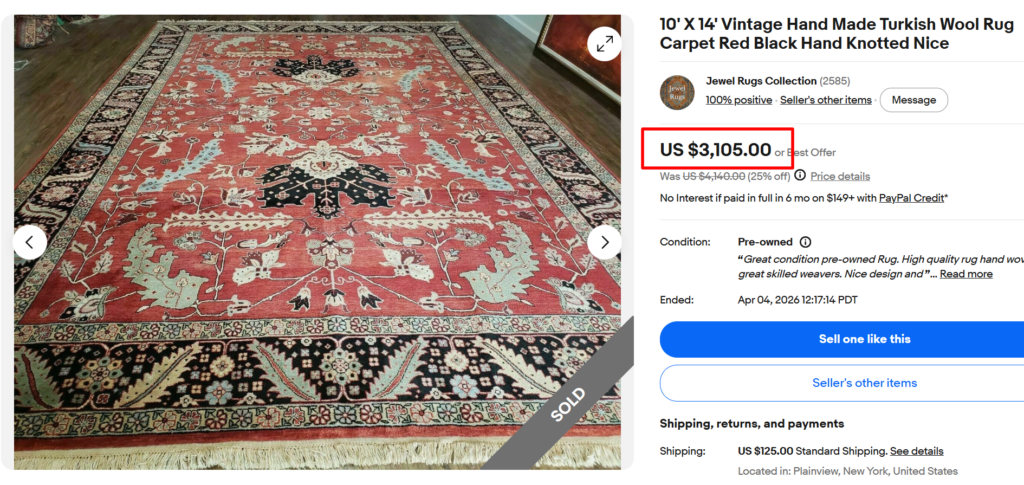
Hand-knotted rugs from Iran, Turkey, and the Caucasus region get priced like used carpet at most estate sales. Flip a corner and look at the back. Individual knots visible on the underside mean handmade. A printed or perfectly uniform back means machine-made and worth almost nothing on resale.
What to Buy:
- Hand-knotted back with tight knot count (visible individual knots)
- Natural wool with vegetable-dye colors
- Runner or room-sized formats with tribal motifs
What to Skip:
- Synthetic backing or printed underside
- Dry rot that crumbles when bent
- Heavy stains in the field or center medallion
- Machine-made rugs with rubber edges
7
Antique Cast Iron Cookware
Typically sells for $80 to $2,500+
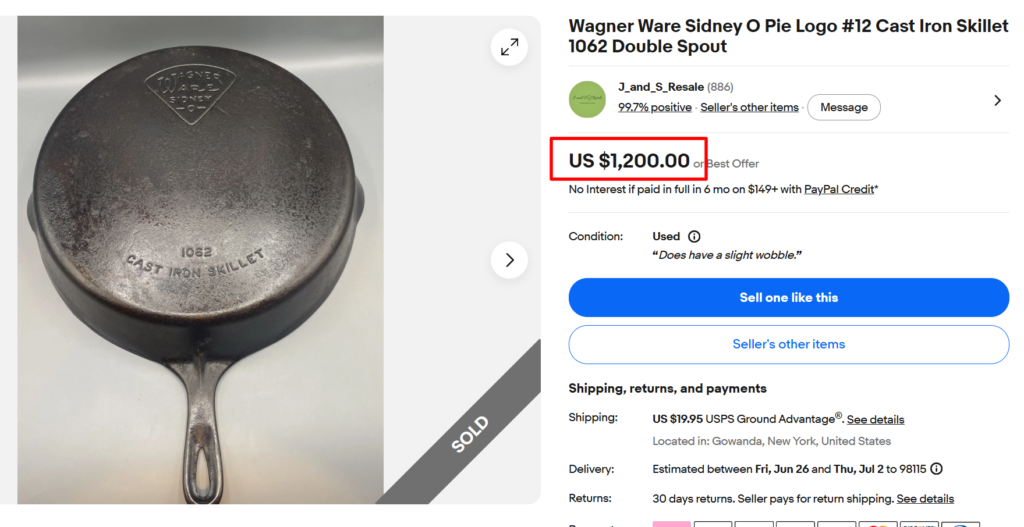
Griswold and Wagner Ware cookware are not to be missed. While an ordinary Griswold #8 with the big block logo is available at between $80 and $180, rarer numbers, such as No. 13, as well as unusual pieces like waffle irons, sell for higher prices.
What to Buy:
- Griswold, Wagner, or Wapak maker marks
- Smooth machined cooking surface & flat sitting bottom
- Rare sizes (No. 2, No. 13, No. 14, No. 20)
What to Skip:
- Synthetic backing or printed underside
- Heavy stains in the field or center medallion
- Machine-made rugs with rubber edges
8
Depression Glass and Elegant Glass
Typically sells for $30 to $400+ per piece
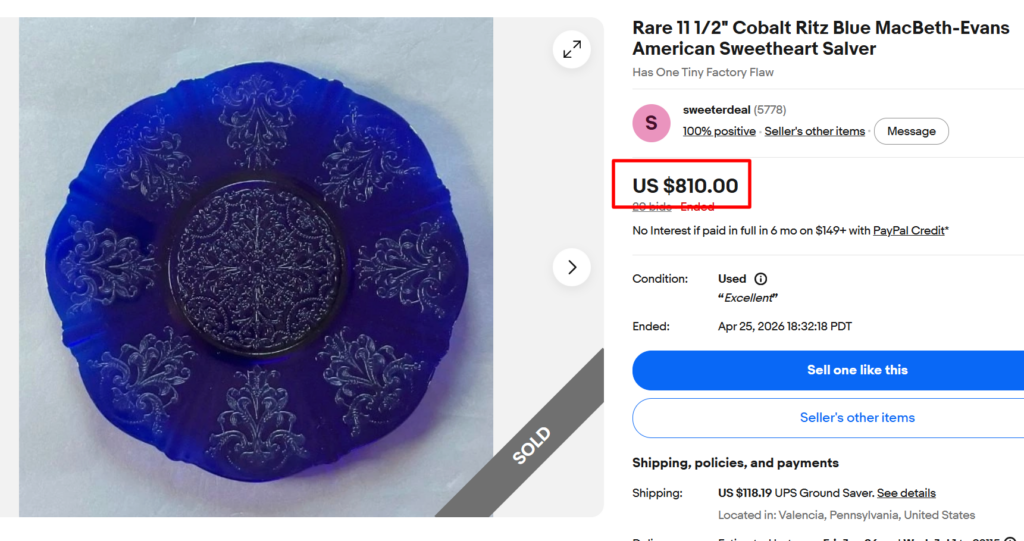
Depression glass came cheap in the 1920s and 30s and still gets priced that way at estate sales. But the pattern and color can drive the value way higher. Pink, cobalt blue, and uranium glass (which glows green under a UV light) bring real premiums.
What to Buy:
- Pink, cobalt, green, or uranium-glow colors, rare Carnival glass
- Named patterns (Cherry Blossom, Mayfair, Princess)
- Complete dinner sets or matched serving pieces
- Mold seams and slight irregularities (signs of period production)
What to Skip:
- Clear pressed glass with no pattern
- Chips on rims, feet, or handles
- Modern reproductions (perfectly smooth, no seams)
- Carnival glass in common marigold (oversupplied)
9
American Art Pottery
Typically sells for $100 to $2,000+
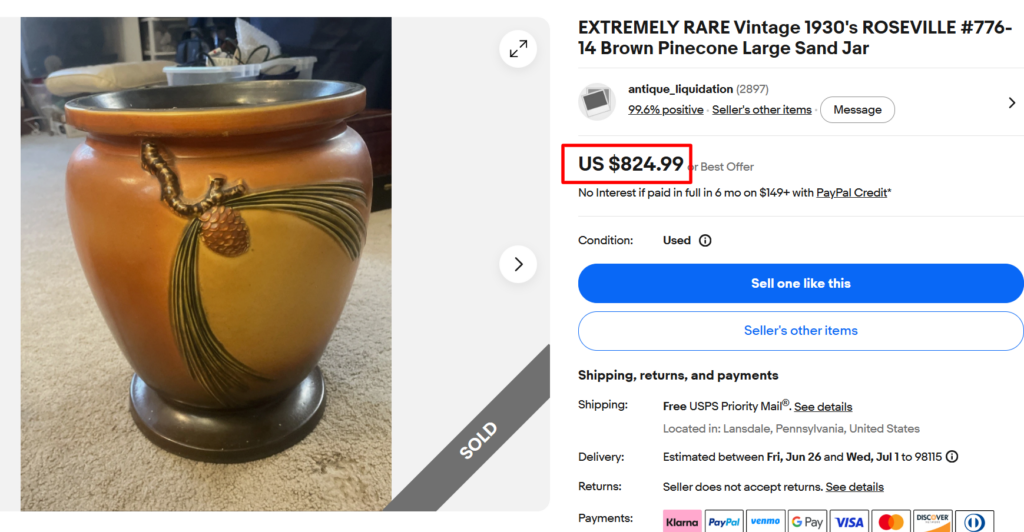
Roseville, Rookwood, Weller, McCoy, and Van Briggle made decorative ceramics between 1900 and 1950, and these ceramics are in very high demand among collectors.
Desirable pieces like Pine Cone floor vases or rare collections such as Della Robbia and Futura hold the highest value, and shouldn’t be missed. These items are sensitive to any kind of damage, so examine each item before purchasing.
What to Buy:
- Impressed or raised maker marks (Roseville, Weller, Rookwood)
- Blue, green, and matte glazes (more desirable than browns)
- Large forms (floor vases, jardinières)
What to Skip:
- Hairline cracks and chips at the rim or base
- Repainted or restored glaze
- Unknown maker with no marks
10
Antique Hand Tools
Typically sells for $40 to $500+
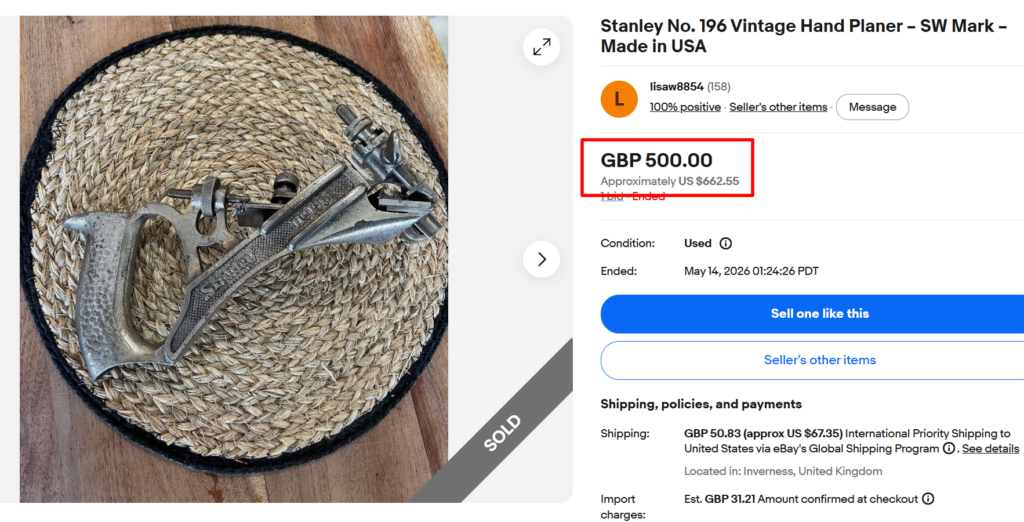
Antique wrenches, screwdrivers, Stanley Planer Disston handsaws, and Starrett measuring instruments are valued decently by woodworkers who appreciate vintage steel. The value lies in their functionality, and harder-to-find models such as the No. 1 or No. 2 Stanley or any early Disston D-8 saw.
What to Buy:
- Stanley, Disston, Starrett, or Sargent makers
- Original wooden handles intact
- Type-stampings and patent dates are legible
- Light surface rust only (cleans off)
What to Skip:
- Cracked plane bodies or chipped blades
- Replacement handles with new screws
- Pitted, flaky steel
- Generic hardware-store tools post-1960
11
Vintage Lighting
Typically sells for $200 to $3,500+
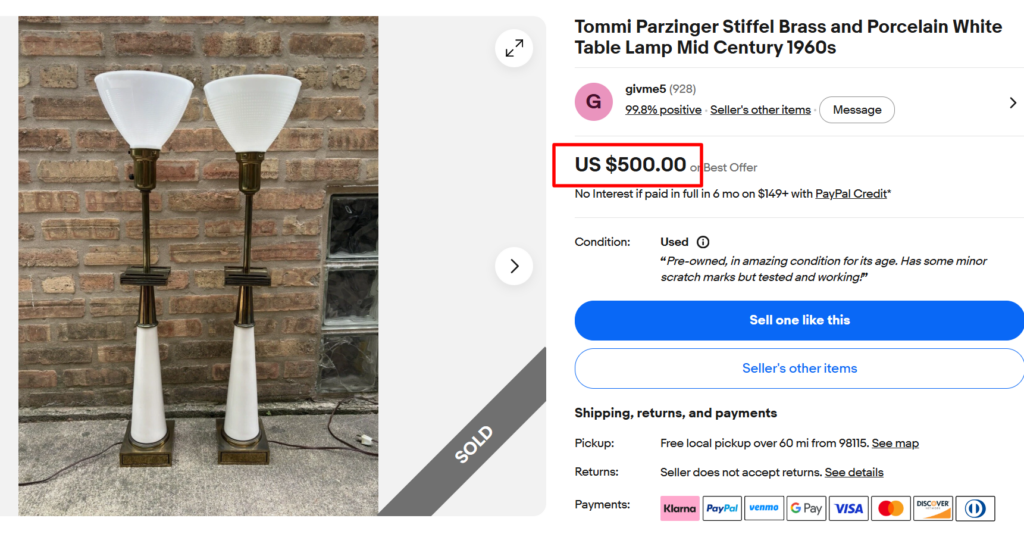
Brass table lamps by Stiffel and Frederick Cooper, mid-century Sputnik chandeliers, and machinist lamps sell quite fast at estate sales. The material, socket, and working condition are the three things you should check before paying anything.
What to Buy:
- Solid brass, bronze, or cast iron bodies
- Maker stamps (Stiffel, Frederick Cooper, Tiffany Studios)
- Original glass shades or globes
- Hand-blown glass with small bubbles or seams
What to Skip:
- Hollow plastic or pot-metal bases
- Frayed cloth wiring with exposed copper
- Sockets that spark or do not click
12
Original Art, Signed Prints, and Vintage Posters
Typically sells for $200 to $4,000+
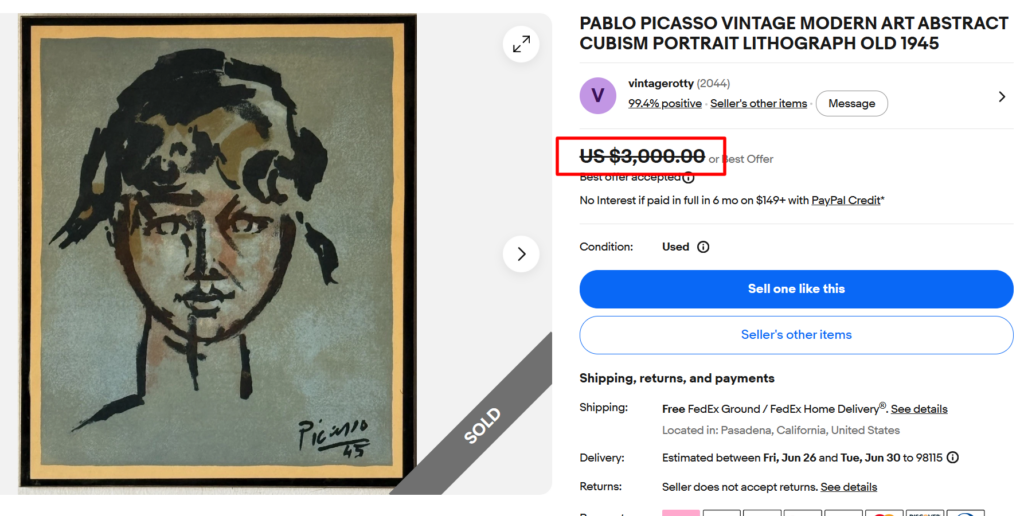
Estate sales often display framed original artwork, lithographed pieces signed by hand, and antique posters. These are mostly priced for decoration, not their collector value. The marks and embossed stamps from studios and galleries are actual value drivers.
Antique travel and airline posters from the 40s to the 60s have seen sharp increases. Signed midcentury travel posters are also worth grabbing.
What to Buy:
- Pencil signatures with edition numbers
- Raised plate marks (real etchings) or embossed stamps
- Gallery labels on the back of the frame
- Original mid-century travel, airline, or design posters
What to Skip:
- Inkjet prints sold as “originals”
- Heavy foxing (brown spots) that cannot be cleaned
- Water rings on the paper or mat burn
- Mass-produced decorator prints from the 1980s
Note: This article is intended for informational, educational, and entertainment purposes only. Some images are illustrative and may not represent actual brands, products, or related entities. All trademarks, product names, brand logos, packaging, and other intellectual property referenced remain the exclusive property of their respective owners. Any brand mentions or references are provided solely for descriptive and educational context and do not imply any formal or commercial association.