Those tiny hinged trinket boxes that often get overlooked everywhere, whether it’s a grandmother’s dresser, garage sales, or thrift stores. People underprice these pieces by their size.
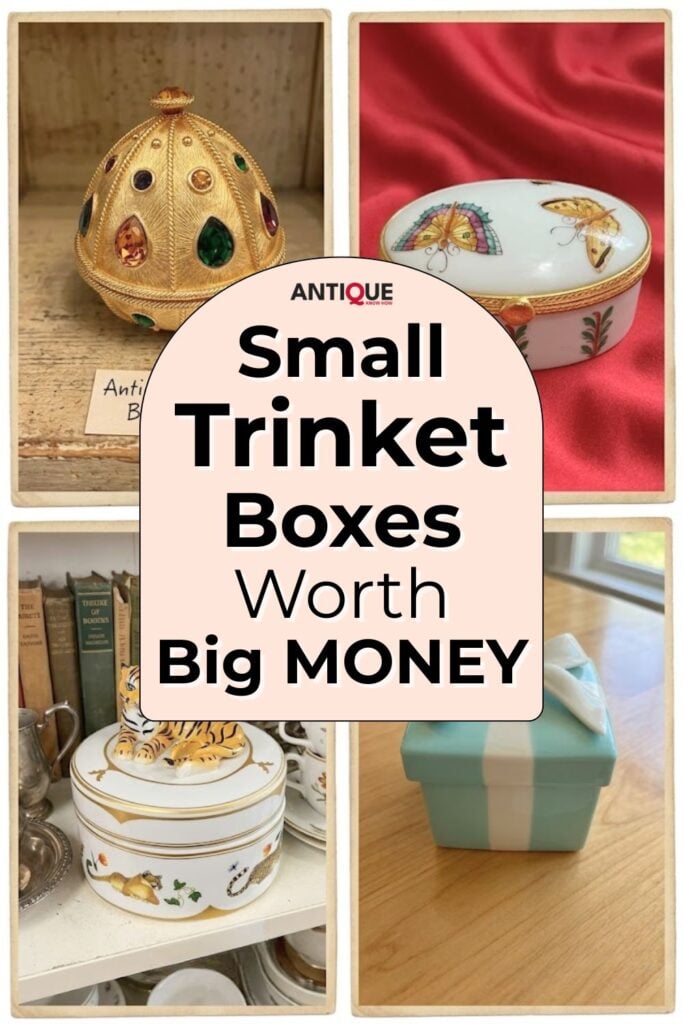
But the truth is that some vintage and antique trinket boxes are way more than just “cute old things”; they are selling for hundreds, and in a few cases thousands, today.
This guide reveals the small trinket boxes that actually bring big money in today’s collector market, with real examples and key features for you to look for.
What Makes a Vintage Trinket Box Valuable?
Values for antique trinket boxes may vary between $20 and $2,000, based on four main criteria:
- Maker is the most important criterion because a marked Limoges peint main trinket box sells ten times better than a porcelain box that lacks markings.
- Rarity comes next, particularly retired designs and limited editions.
- Materials define the foundation; hand painted porcelain, sterling silver, and cloisonné enamel have greater value compared to pressed glass or resin.
- The better the condition, the higher the value.
- Original packaging and boxes can double what a separate box fetches.
Most Valuable Trinket Boxes Worth Collecting Today
1
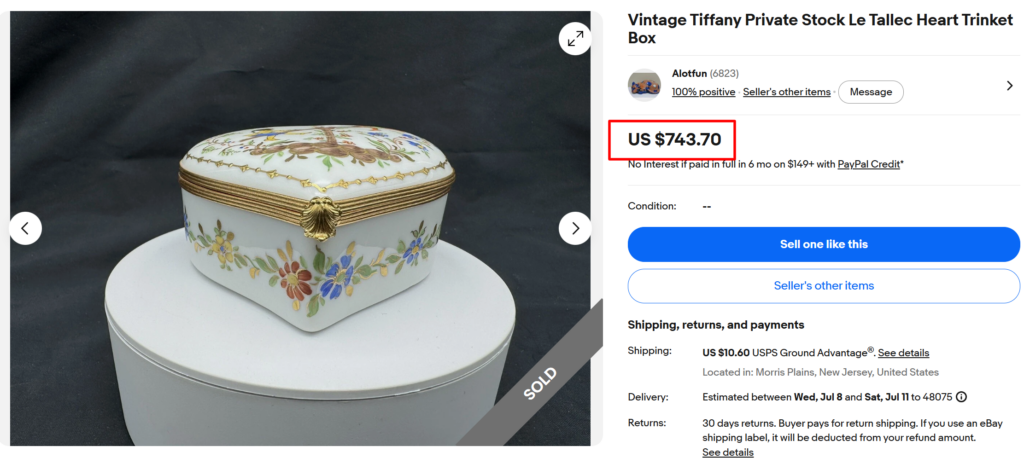
Tiffany Private Stock Trinket Boxes
Typically sells for $200 to $500 (rare designs: $700 to $1,500+)
| Production period | 1961 to 1991 for Private Stock era |
| Material | Hand-painted French porcelain, gilt |
| Key features | Red script mark plus blue Le Tallec stamp |
| Collector notes | Heart-shape and Cirque Chinois worth the most. |
Atelier Camille Le Tallec was a Parisian porcelain studio founded in 1928, and starting in 1961, they hand-painted an exclusive line for Tiffany & Co. called Private Stock.
The partnership ran until Tiffany acquired the atelier outright in 1991, which makes the Le Tallec era pieces limited.
Heart-shape boxes and pieces in the Cirque Chinois pattern (introduced in 1973) are the ones that fetch the strongest numbers.
ID Tip: Check the underside for the handwritten red script “Tiffany & Co. Private Stock Hand Painted in France” plus the blue Le Tallec mark and a date letter.
2
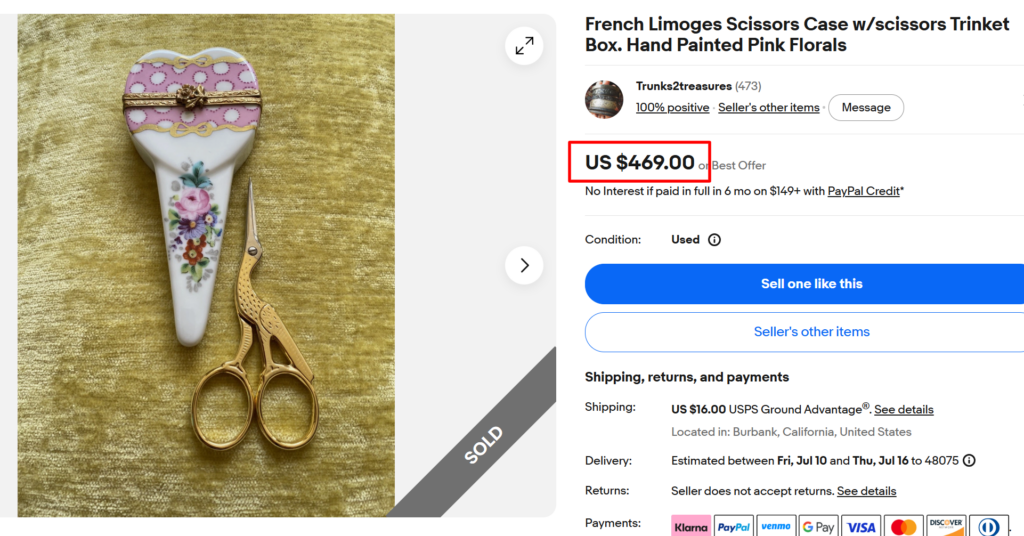
Limoges (France) Porcelain Trinket Boxes
Typically sells for $150 to $600 (rare pieces: $800 to $1,500+)
| Production period | Late 1800s to present 1970s to 1990s (peak collectibility) |
| Material | Hand-painted French porcelain, brass fittings |
| Key features | Peint Main mark, artist signature, gold accents |
| Collector notes | Retired figural designs bring the strongest prices |
Limoges boxes are what collectors chase first. These small hinged porcelain boxes are hand-painted in Limoges, France. Figural boxes shaped as animals, food, or objects sell far above traditional round ones.
The distinctive hand-painting strokes and the mark “Peint Main” on the base are how you can identify authentic pieces. The market is flooded with fake Limoges porcelain boxes, so identification is a must.
3
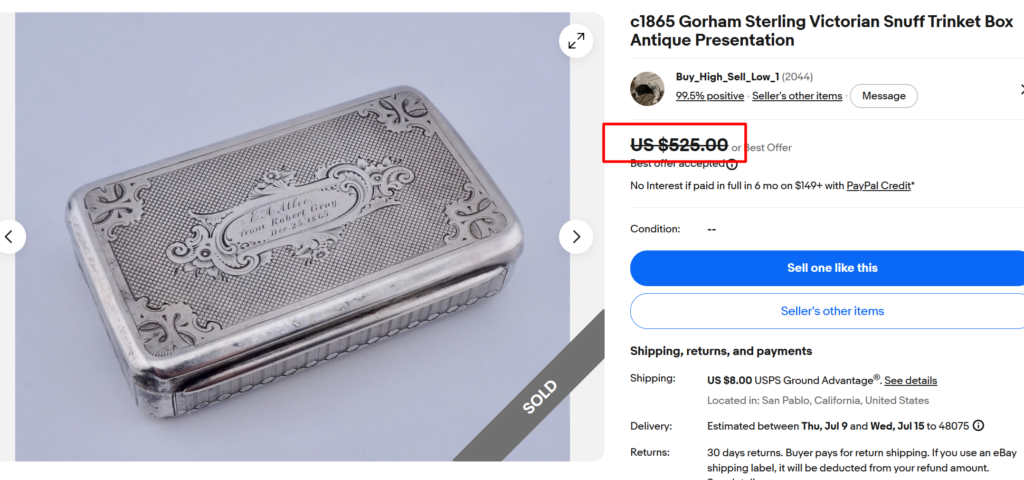
Victorian and Edwardian Sterling Silver Trinket Boxes
Typically sells for $150 to $2,500+
| Production period | 1837 to 1910 core years |
| Material | Sterling silver, often with gilt interior |
| Key features | Full hallmarks: lion, city, date letter |
| Collector notes | Novelty shapes lead the market |
English hallmarked sterling trinket boxes from the Victorian and Edwardian periods, particularly novelty forms like piano-shaped or heart-shaped boxes, regularly sell in the mid-hundreds.
The most expensive makers are Asprey, Nathan, and William Comyns, Gorham, and Tiffany.
For sterling boxes, be sure to look for the complete hallmarking system, which includes: the lion passant (for sterling), the city mark (the leopard for London, anchor for Birmingham, and crown for Sheffield), and the date letter.
4
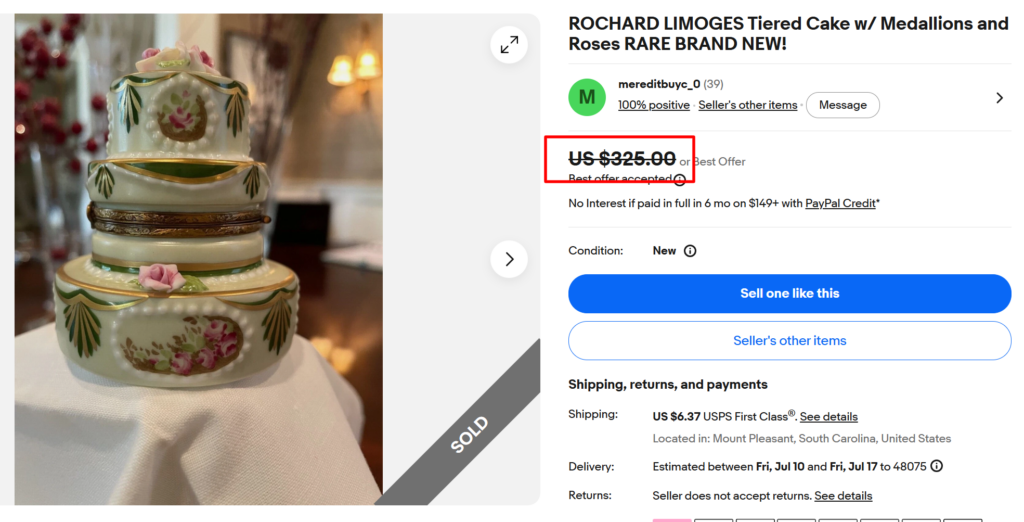
Rochard Limoges Tiered Cake Trinket Box
Typically sells for $125 to $500
| Production period | 1970s to present, key pieces retired |
| Material | Hand-painted Limoges porcelain |
| Key features | Food-themed designs, hand-painted |
| Collector notes | More detailed pieces sell high |
Rochard trinkets from Limoges are highly collectible. The company signed its pieces and retired popular molds that now command a premium on the secondary market.
Look for the individual studio stamp alongside the Limoges, France mark. Rochard’s unique food and animal boxes are the ones that show up most on eBay.
Value Tip: A missing artist signature on a piece marked Limoges France can reduce the value by 30 to 50 percent.
5
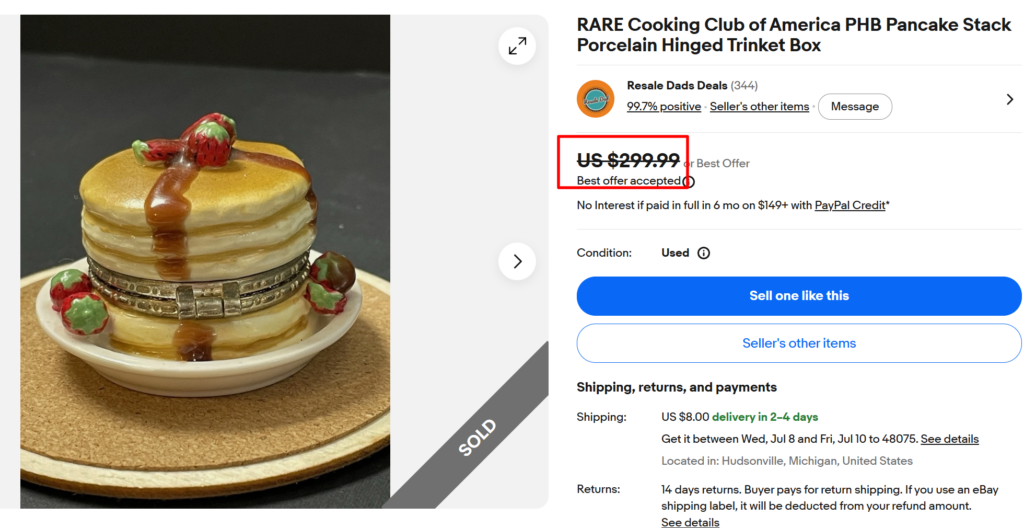
PHB Collection Porcelain Hinged Boxes
Typically sells for $25 to $150 (rare designs: $200 to $400+)
| Production period | 1990s to early 2000s, all retired |
| Material | Porcelain with brass hinge |
| Key features | Themed shape, matching trinket inside |
| Collector notes | Complete set with trinket is crucial for top value. |
The PHB (Porcelain Hinged Box) line ran through the 1990s and early 2000s and was discontinued years ago. That’s why prices stay steady.
The most interesting detail is that every box came with a tiny matching trinket inside (a mouse in the computer box, a fortune cookie in the takeout box). Examples without that trinket sell for far less.
Character licenses like Hershey’s, Coca-Cola, Monopoly, and Peanuts fetch the most. Tracy Porter Home Collection PHBs (marked TPHC by MCF) are collectible sub-lines in this category.
6
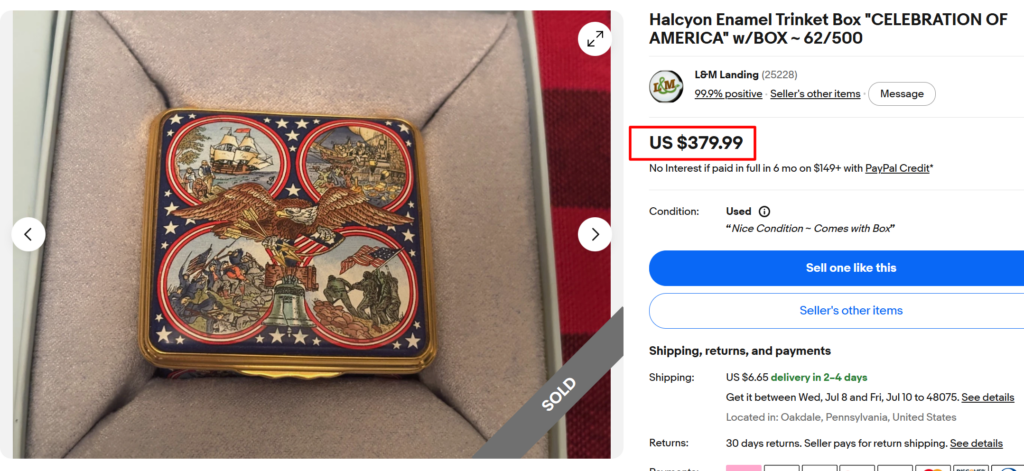
Halcyon Days Enamel Boxes
Typically sells for $65 to $200 (limited editions: $300 to $1,000+)
| Production period | 1950s to present |
| Material | Hand-painted enamel over copper |
| Key features | Halcyon Days or Bilston Battersea stamp |
| Collector notes | Christmas and royal editions rank highest |
The Halcyon Days is like the English version of Limoges, with hand painted enamel on copper in the old style of Bilston and Battersea. Halcyon Days had a Royal Warrant, which is one reason that makes the brand highly coveted by collectors.
Most valuable examples include the Christmas boxes from the 1970s and 1980s, National Trust limited editions of 750 pieces or fewer, and pieces commissioned for royal occasions. Common floral or wedding boxes go for $65 to $130.
7
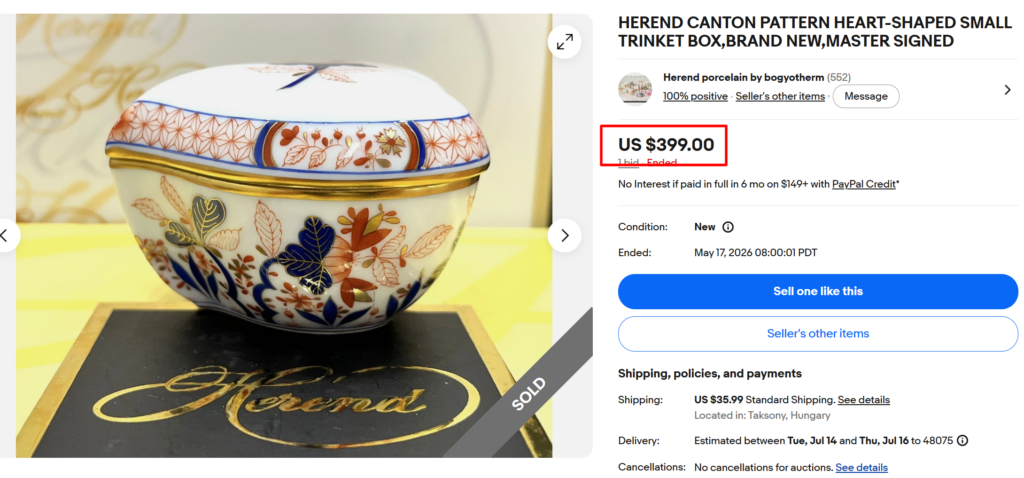
Herend Porcelain Boxes
Typically sells for $150 to $600 (rare fishnet: $800+)
| Production period | 1826 to present |
| Material | Hand-painted Hungarian porcelain |
| Key features | Blue shield mark, fishnet scale pattern |
| Collector notes | Animal-finial lids bring premium prices |
Herend’s trinket boxes carry the same fishnet, floral, and Rothschild Bird patterns that make their figurines so collectible. The fishnet pattern, called Vieux Herend, is the most collectible of all.
Boxes with animal finials on the lid (bunnies, seals, kittens) in rust, blue, or green fishnet also fetch high returns. Make sure to check the “Herend Hungary” backstamp.
8
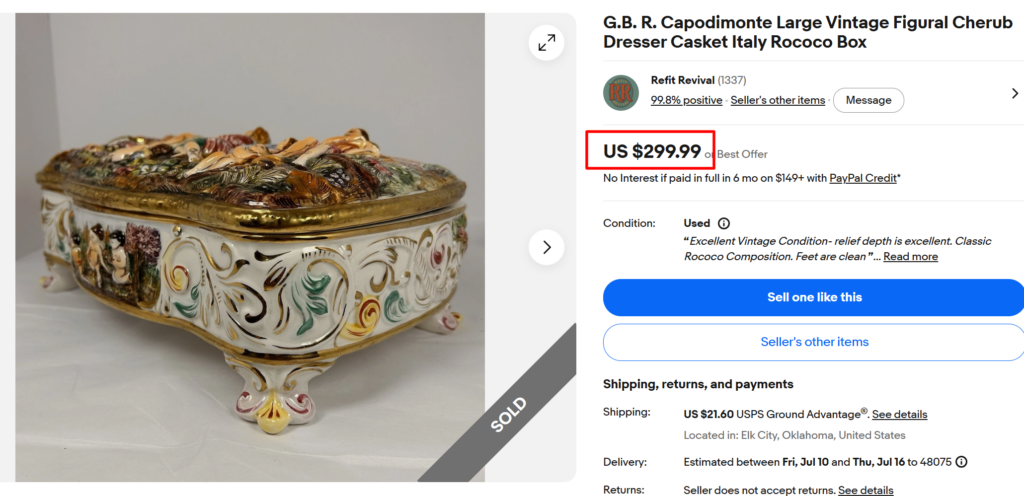
Capodimonte Porcelain Boxes
Typically sells for $75 to $350
| Production period | Late 1700s to present |
| Material | Italian porcelain, applied decoration |
| Key features | Crown-over-N mark on base |
| Collector notes | Watch for modern reproductions |
These are ornate Italian porcelain boxes with applied flowers, cherubs, and gold detailing. The most expensive pieces feature three-dimensional applied roses (called “encrusted” pieces) and figural cherub scenes.
Reproductions are common, so weight and quality of hand painting are what separate a $30 mall find from a $300 estate piece.
Also, look for the crown-over-N mark on the base, which is the historic Capodimonte mark used by successor factories in Naples.
9
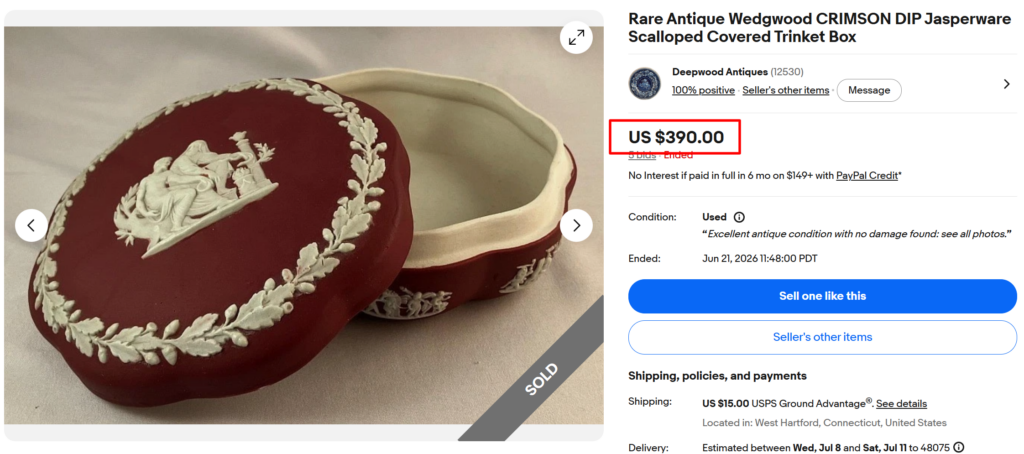
Wedgwood Jasperware Trinket Boxes
Typically sells for $60 to $250 (rare colors & shapes: $300 to $500)
| Production period | Late 1700s to present |
| Material | Unglazed stoneware (jasperware) |
| Key features | Impressed WEDGWOOD mark, cameo relief |
| Collector notes | Lilac and yellow double blue prices |
Matte jasperware boxes, featuring a cameo relief in white, have become iconic. The pale blue jasperware is the most common, while those that are sage green, black, red, terracotta, and even lilac are more expensive. Heart-shaped or oval-shaped boxes, particularly in colors like yellow and lilac, are highly desirable.
10
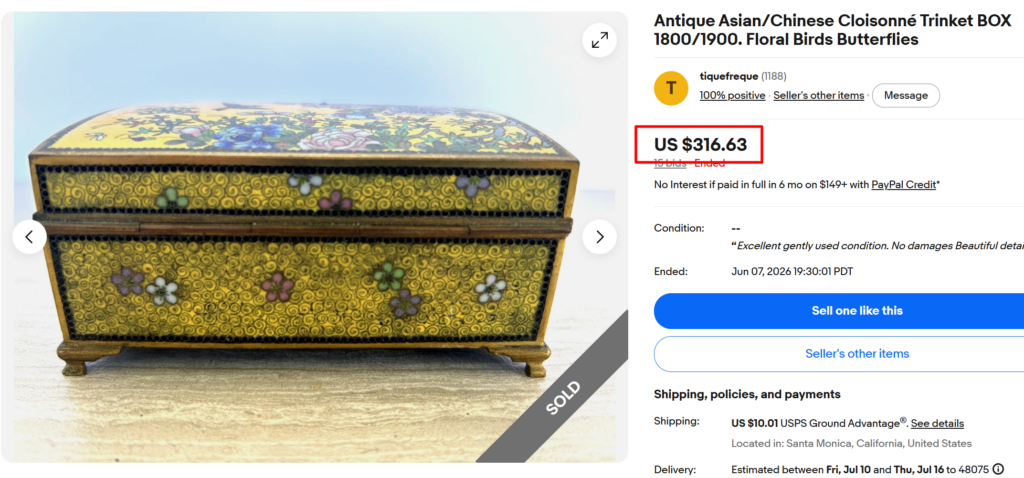
Antique Cloisonné Trinket Boxes
Typically sells for $80 to $400 (fine antique examples: $500 to $1,200)
| Production period | Late 1800s to mid 1900s peak |
| Material | Enamel with fine wire cells |
| Key features | Cobalt, turquoise, or yellow grounds |
| Collector notes | Modern versions trade far cheaper |
Cloisonné is just the enamel that is held together by thin metal wires. The Antique Chinese Cloisonné boxes in the late Qing and Republic era are the most unique, with those of the Japanese Meiji era following behind.
Look for examples in cobalt blue, turquoise, and imperial yellow ground colors.
ID Tip: Modern mass-produced Chinese cloisonné boxes from the 1980s onward are worth $30 to $80, and shouldn’t be confused with earlier hand-wired antique work.
11
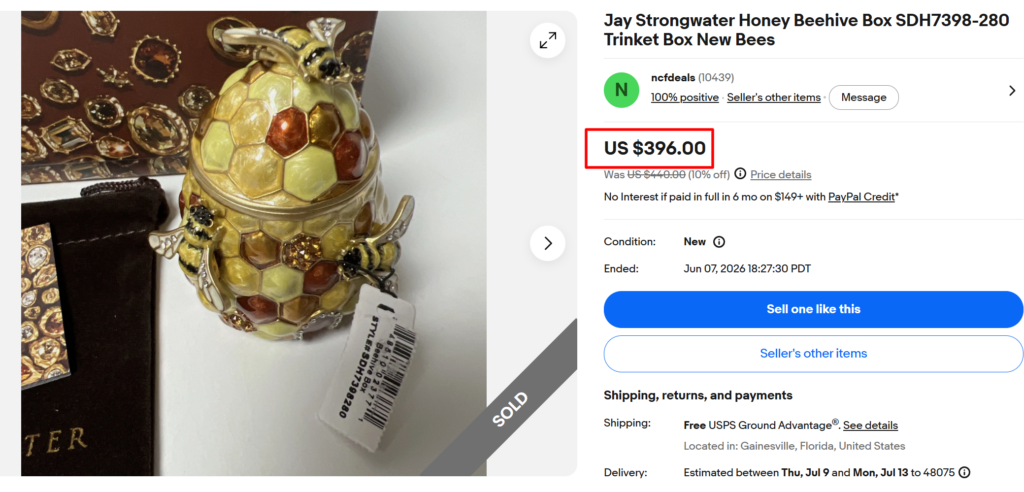
Jay Strongwater Enameled and Jeweled Boxes
Typically sells for $150 to $600 (retired designs: $700 to $1,000)
| Production period | 1990s to present |
| Material | Enameled metal, Swarovski crystals |
| Key features | Signed and numbered on base |
| Collector notes | Original presentation box lifts value |
Although it’s a modern maker, Strongwater’s retired designs are quite collectible. The brand is known for using hand-enameled metal with hundreds of Swarovski crystals per box, which makes each piece unique.
Also, each piece is signed and numbered on the base.
The biggest value comes from those retired models and pieces that come in the original display box. The butterfly, flower, and animal figurals produced during the late 1990s to mid-2000s periods also have premium values.
Note: This article is intended for informational, educational, and entertainment purposes only. Some images are illustrative and may not represent actual brands, products, or related entities. All trademarks, product names, brand logos, packaging, and other intellectual property referenced remain the exclusive property of their respective owners. Any brand mentions or references are provided solely for descriptive and educational context and do not imply any formal or commercial association.