Antiques Know How Research
Wedgwood Blue Jasperware Value
Based on detailed research of several eBay sales and auction results at Antiques Know How, Wedgwood Jasperware values range from $50 to $1,500, with rare forms reaching $ 2,500+. The most valuable blue Jasperware pieces are trophy vases, chandeliers, plaques, Classical Muses figurines, urns, and limited editions like Bi-Centenary plates or Ladies’ Paint Boxes. Value depends on markings, rare colors, size/complexity, and condition.
Antiques Know How
What is Wedgwood’s Jasperware?
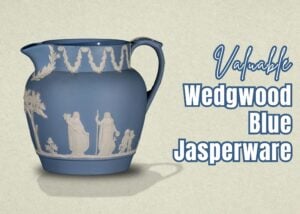
Jasperware is a style of unglazed stoneware, initially created by Josiah Wedgwood in the 1770s after thousands of experiments. It is known for its matte finish, called “biscuit,” and white raised decorations, based on Greek and Roman art.
It is available in a range of colors, such as lilac, dark blue, sage green, black, and yellow, but “Wedgwood Blue” is its most legendary color. This color is found in numerous forms, including vases, plaques, dinnerware pieces, and more.
Collectors love early 19th-century and rare 20th-century limited edition Jasperware for its highest market value.
Most Valuable Wedgwood Blue Jasperware Pieces to Know
The following are some of the most valuable Blue Jasperware Wedgwood pieces ever made. Some of these pieces are worth thousands of dollars today.
1. Apollo & Muses Trophy Vase
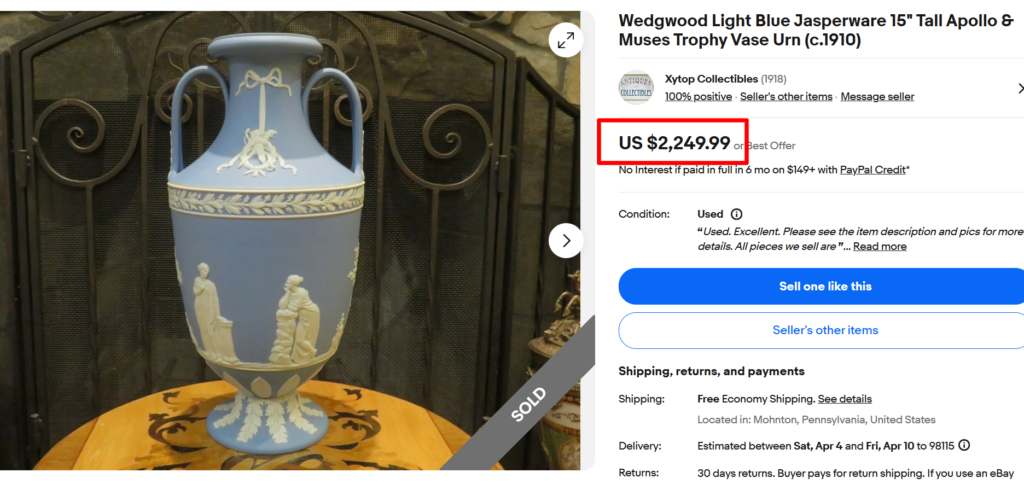
| Average Value | $500 – $2,500+ |
| Production Period | Late 19th – early 20th century |
| Pattern Details | Apollo, nine Muses, trophy emblems, Pegasus finial |
| Collectibility | Very High |
| Collector Notes | Check the “WEDGWOOD ENGLAND” mark on the base. |
Trophy vases are easily the most impressive and high-value Jasperware pieces. This example of a two-handled amphora form features Apollo and the nine Muses in white relief, trophy emblems at the neck (quivers, lyres, laurel wreaths).
These usually originally came with a Pegasus-finial cover and a plinth base. Examples produced around 1910 are especially valued for their deep blue “Portland” color and crispness.
The value of these pieces depends on their size and age; large, late 19th- or early 20th-century pieces like this are worth a lot.
2. Wedgwood Blue Jasperware Chandelier
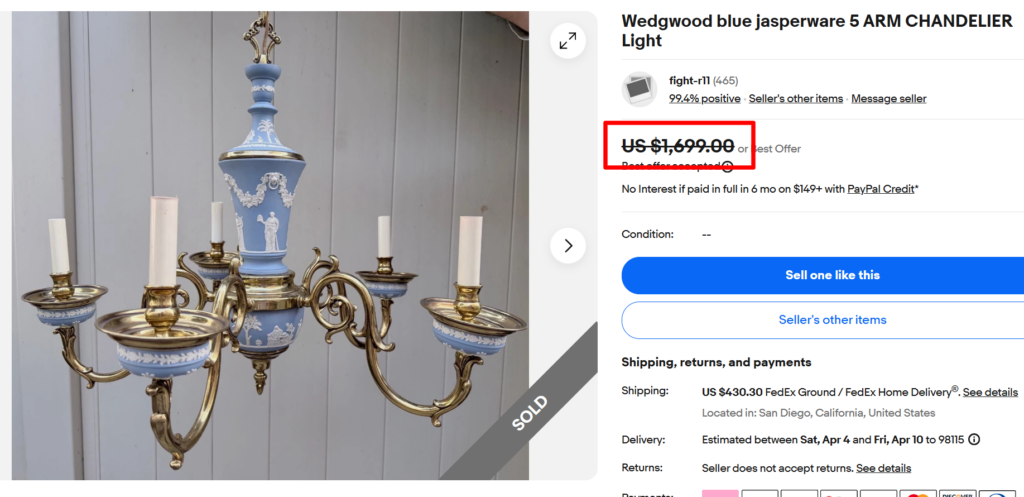
| Average Value | $1,000 – $2,000+ |
| Production Period | 20th century |
| Pattern Details | Jasperware urn column with classical figures, brass arm fittings |
| Collectibility | Very High |
| Collector Notes | Check for all original ceramic components. |
Lighting fixtures are some of the rarest items the brand produced. This example is a large chandelier with a central urn column in pale blue, adorned with white neoclassical reliefs, extending into five brass arms, each with a Jasperware bowl.
These pieces are rarely seen on the market, making them rare and highly valuable. A Jasperware chandelier with all pieces and brass fittings intact can sell for $1,000 or more, depending on the condition of the stoneware and fittings.
3. Classical Muses Figurines
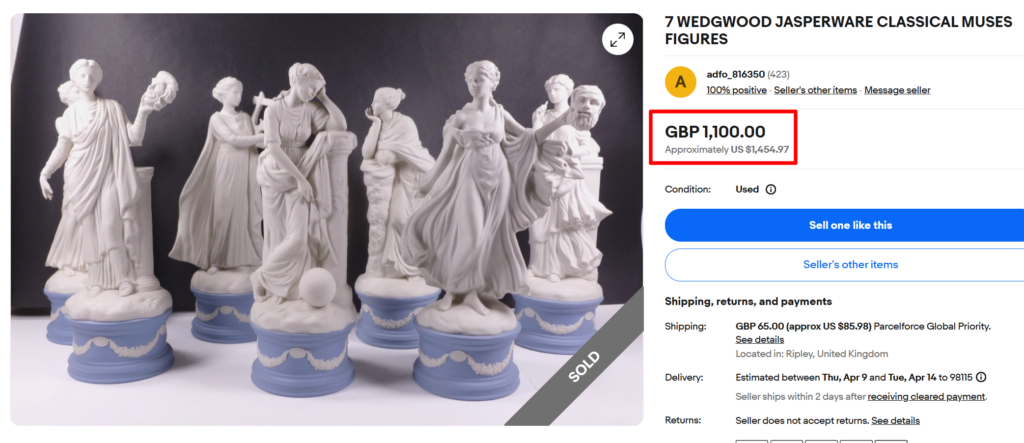
| Average Value | $1,000 – $1,500 (set) $200 – $500 (Singles) |
| Production Period | Late 19th to Mid-20th Century |
| Pattern Details | Full 3D neoclassical female figures |
| Collectibility | Very High |
| Collector Notes | Check the “Wedgwood” markings on the base. |
Individual figures depicting the Nine Muses are among the most artistic Wedgwood creations. The company released these figurines under the “Classical Muses” collection, a limited edition of 12, 500.
You can find the Wedgwood stamp, figure/muse name, along with the limited edition designation and a hand-painted edition number, on the inside of the figurine’s feet.
The delicate hands and heads are prone to damage over time, making intact pieces without damage increasingly rare. A set of all nine figures is undoubtedly a significant find, but even single figures can fetch $200 to $500 in pristine condition.
4. Wall Plaque – Choice Judgment of Hercules
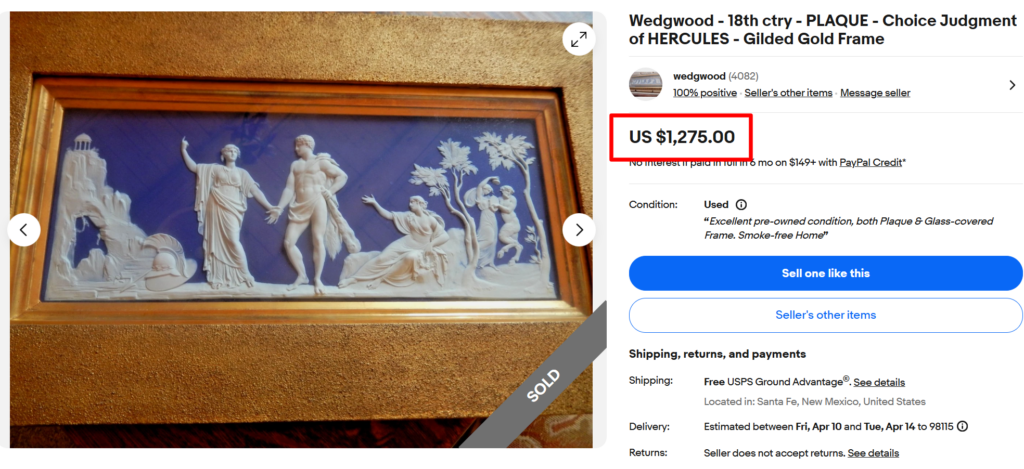
Jasperware wall plaques are one of the earliest and most valuable of Josiah Wedgwood’s decorative forms. This large horizontal plaque features the “Judgment of Hercules” scene, Hercules choosing between Virtue and Vice, set in a gilded frame.
18th-century plaque examples are the scarcest and most expensive pieces today. The value of these pieces depends largely on the size and framing. Also, the plaque inside the frame must have the “Wedgwood” mark.
5. Ladies’ Paint Box
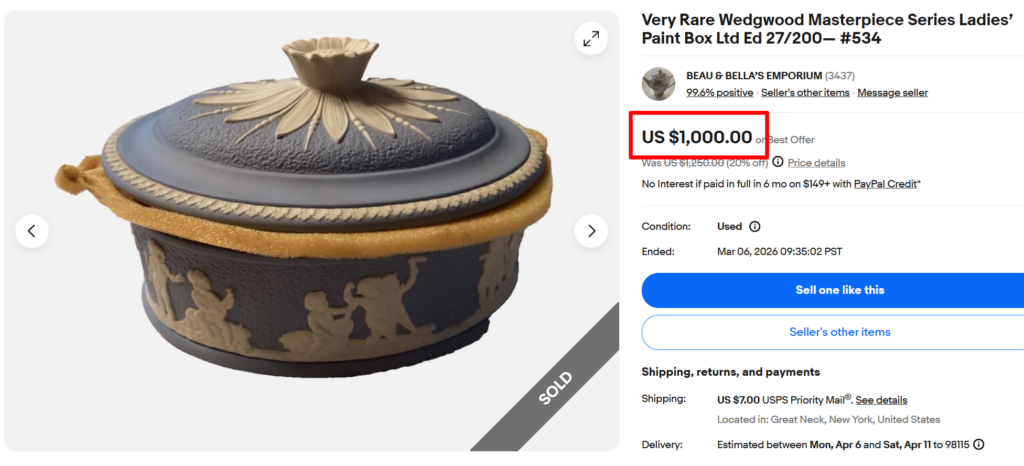
| Average Value | $400 – $700 |
| Production Period | Late 20th Century (Limited Edition) |
| Pattern Details | Exquisite floral and figural miniature reliefs |
| Collectibility | Elite / Rare |
| Collector Notes | Check Wedgwood marking & edition number. |
This Jasperware paint box is an extremely rare find. It’s a part of Wedgwood’s limited edition “Masterpiece Series” of 200, a reproduction of the 18th-century vanity items.
The design features white sprigged cherub and figure reliefs on the pale blue base. The box contains two color palettes with twelve Inkwells. Authentic pieces have clear Wedgwood markings along with a printed “limited edition” note on the base.
6. Lidded Urn Vase – Sacrifice Figures
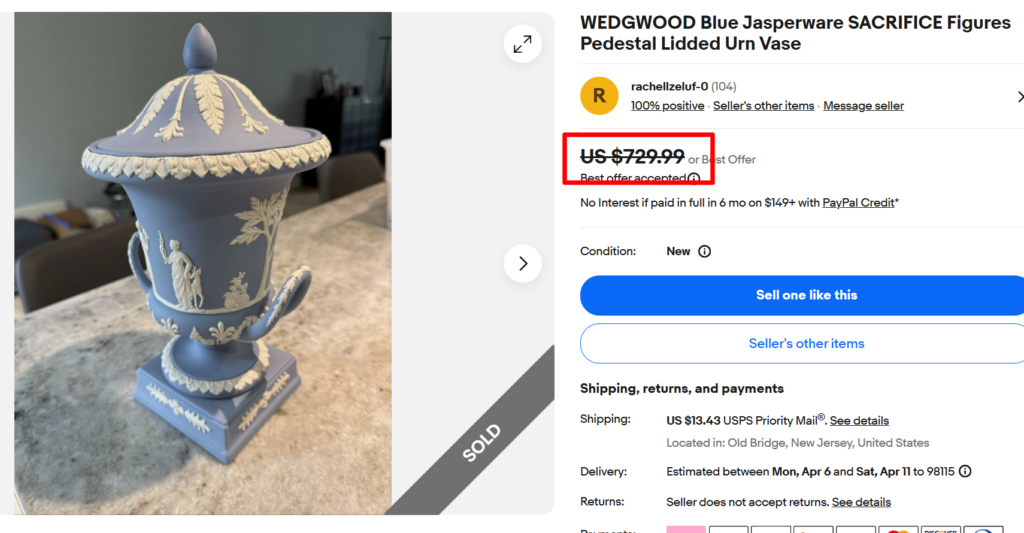
| Average Value | $300 – $900+ |
| Production Period | 1770s – 20th century |
| Pattern Details | Robed classical figures in sacrificial ritual poses |
| Collectibility | High |
| Collector Notes | Original lids are crucial for value. |
This majestic urn vase features “Sacrifice Figures,” one of Wedgwood’s longest-running relief patterns. You can identify it by high-relief, robed women and cherubs in ritual poses drawn from ancient Roman decorative art.
The lidded urn is the most valued form of blue Jasperware, especially with a popular pattern like this. With their original boxes, these vase urns can sell for up to $1,000.
Check the engraved “Wedgwood / Made in England” marking on the base for authenticity.
7. Gold Cameo Ring
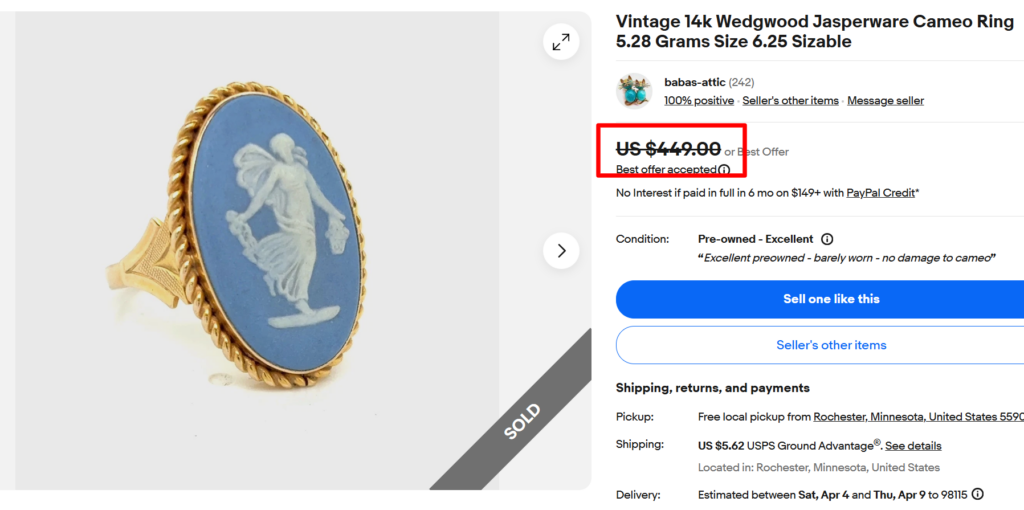
| Average Value | $200 – $500+ |
| Production Period | Victorian era – 20th century |
| Pattern Details | Blue Jasperware cameo with white classical figure, 14k gold mount |
| Collectibility | High |
| Collector Notes | Verify gold hallmarks and maker’s mark. |
Wedgwood has made Jasperware cameos for jewelry since the 1770s, when they were first mounted in gold, silver, and cut steel by craftsmen, including Matthew Boulton of Birmingham.
Victorian and Edwardian examples in 9ct or 14ct gold settings are the most desirable pieces today. The value lies in the gold content, size, and the rarity of the specific cameo design. This example of a 14k ring with a neoclassical figure sold for almost $450; larger pieces can sell for even more.
8. Wedgwood Jasperware Tea Set
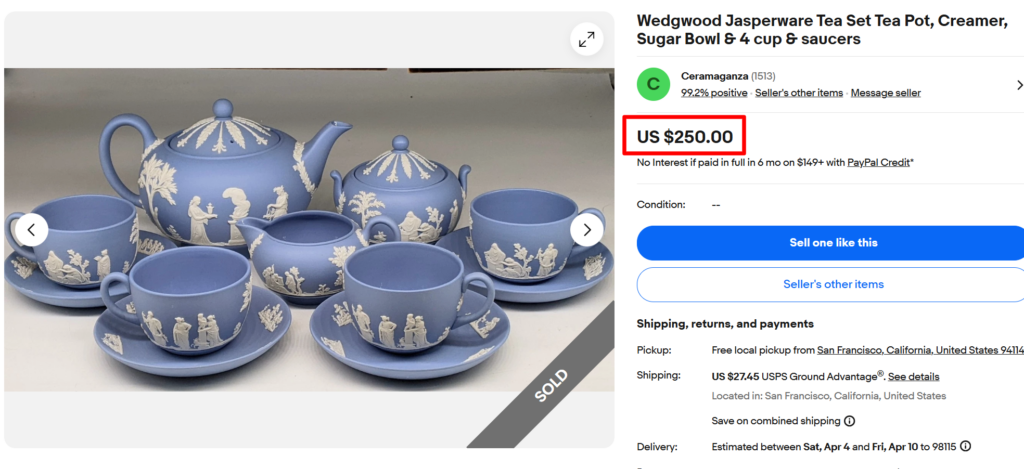
| Average Value | $100 – $350 (matched set) |
| Production Period | 20th century |
| Pattern Details | Classical neoclassical scenes |
| Collectibility | Moderate (high for matched sets) |
| Collector Notes | Ensure matching marks on all pieces. |
A complete Wedgwood Jasperware tea set, including the teapot, sugar bowl, and creamer, all with the same pattern, is a collector’s dream. Individual pieces get separated over decades of use, making a matching set rare and valuable.
These pieces are less valuable and rarer than other Jasperware forms, like vases and urns, making them moderately valuable.
9. Dancing Hours Bowl
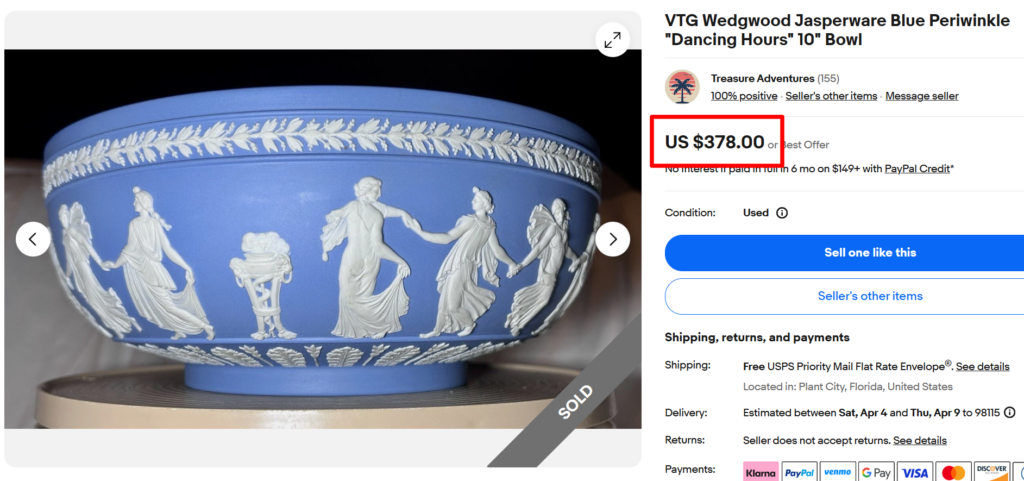
| Average Value | $80 – $400+ (condition & age) |
| Production Period | 1779 – ongoing (various eras) |
| Pattern Details | Eight dancing Horae figures |
| Collectibility | High |
| Collector Notes | Pre-1891 pieces (marked “WEDGWOOD” only) are rare |
This large bowl depicts the “Dancing Hours” pattern, featuring eight robed female figures (the Horae) holding hands in a continuous frieze. This pattern first appeared in Wedgwood’s 1779 catalog, and is closely associated with sculptor John Flaxman Jr.
Bowls are one of the best applications of the design because the full frieze wraps around the shape. But since they are common, only antique Jasperware bowls are desirable. Smaller dishes in the same pattern usually fetch $30–$80.
10. Bi-Centenary Collector Plate
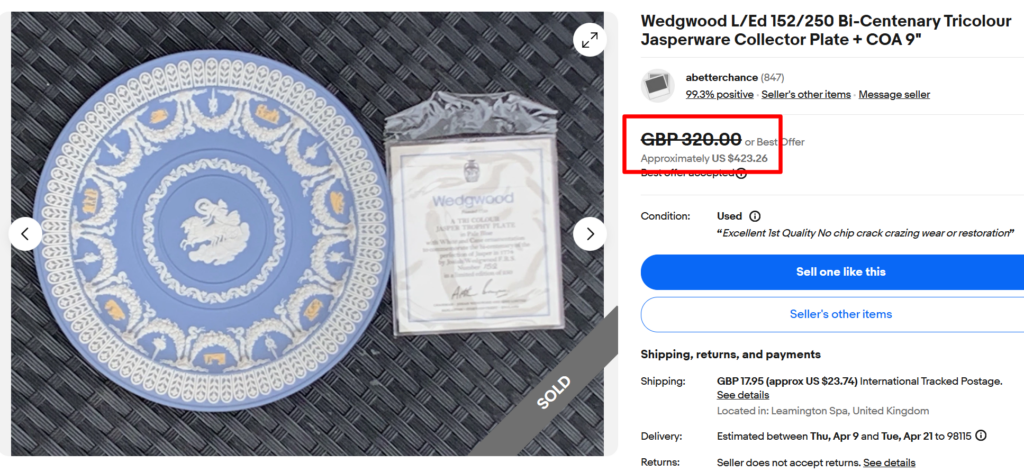
| Average Value | $300 – $500 |
| Production Period | 1974 (Bi-Centenary issue only) |
| Pattern Details | Tricolor Jasper |
| Collectibility | Very High (numbered edition) |
| Collector Notes | A certificate of authenticity adds value. |
In 1974, Wedgwood issued a tricolor Jasperware plate in an edition of just 250 to mark the 200th anniversary of Jasper’s invention. Each plate features pale blue grounds with white and gilt relief.
Original pieces came with a certificate of authenticity, which is an essential value factor. The plate itself features the limited edition declaration and the edition number on the back.
Tricolor Jasperware is a rarer and more valuable category than standard blue-and-white production.
How to Tell if Jasperware Is Real & Valuable?
As you must have noticed already, the price differences in Jasperware can be dramatic. A common blue-and-white teacup might go for $15, a large bowl can be worth $300+, and a vase-urn can fetch thousands.
Here’s what actually drives those differences.
Markings & Age
Wedgwood marked almost all its Jasperware pieces, making it an important identifier for genuine pieces. And since the marking has changed over the years, it also helps date the piece.
- Before 1860: “WEDGWOOD” only (the oldest pieces)
- 1860–1929: Three-letter date code system (month, potter, year)
- After 1891: “WEDGWOOD ENGLAND” required for export
- After 1908: “MADE IN ENGLAND” (most 20th-century pieces)
Pre-1860 solid jasper pieces, with color running through the body, are the most collectible antiques in the category.
Tracing the age is important since earlier Wedgwood Jasperware pieces are more valuable within comparable color and pattern ranges.
Colour
Color is the single biggest price differentiator in Jasperware, even within the same pattern and form.
Pale blue, or Wedgwood blue, is the most common color and thus readily available, and it is at the low end of the price scale. Crimson dip, made primarily in the 1920s before it was discontinued because of color bleeding, is the rarest and thus the most valuable.
Other rare and premium colors include: yellow, lilac, sage green, and dark (cobalt) blue. Tri-color pieces combining two or more jasper colors on a single piece also command premiums regardless of how simple the form is.
Solid Jasper vs. Jasper Dip
Jasperware came in two types: Solid jasper (color throughout the body) and jasper dip (color on the surface only, white interior).
Solid jasper is the original, more labor-intensive format used in the earliest pieces. Jasper dip was introduced from 1777 onward to reduce the production cost. Both types are still collected, but solid jasper commands higher prices, particularly in pre-1860 examples.
To check the type of your piece, look at the base of an unglazed piece. If the interior and exterior are the same color, it’s solid jasper. If the interior shows white clay, it’s a dip piece.
Form and Size
Naturally, larger, more complex shapes fetch higher premiums. Vases, urns, plaques, and full tea sets all bring more than small trinket dishes or ring trays in comparable conditions.
Lidded pieces are worth more than open ones. Likewise, pairs and sets are worth considerably more than singles. Unusual forms, chandeliers, lamp bases, and paint boxes all hold high collector interest and value.
Condition
Jasperware is unglazed and porous, which means it stains, chips, and shows surface dirt differently than glazed pottery. The key condition factors:
- Chips or Cracks: While minor, soft scratches are acceptable, severe chips and cracks can substantially hurt value.
- Staining: Staining of the jasperware surface from dirt or age is common on older pieces. It’s acceptable if light or heavy discoloration is a red flag.
- Complete Pieces: Pieces that come with more than one part (lids, bases, etc) should be complete to be valuable. Missing relief sections can also reduce the value.
Note: This article is intended for informational, educational, and entertainment purposes only. Some images are illustrative and may not represent actual brands, products, or related entities. All trademarks, product names, brand logos, packaging, and other intellectual property referenced remain the exclusive property of their respective owners. Any brand mentions or references are provided solely for descriptive and educational context and do not imply any formal or commercial association.