So, you found an old brown 1914 cent in your old coin jar. It might look like any other common cent at first glance. But you’d be surprised to know that one example of this ordinary penny actually realized a whopping $31,200 at auction!
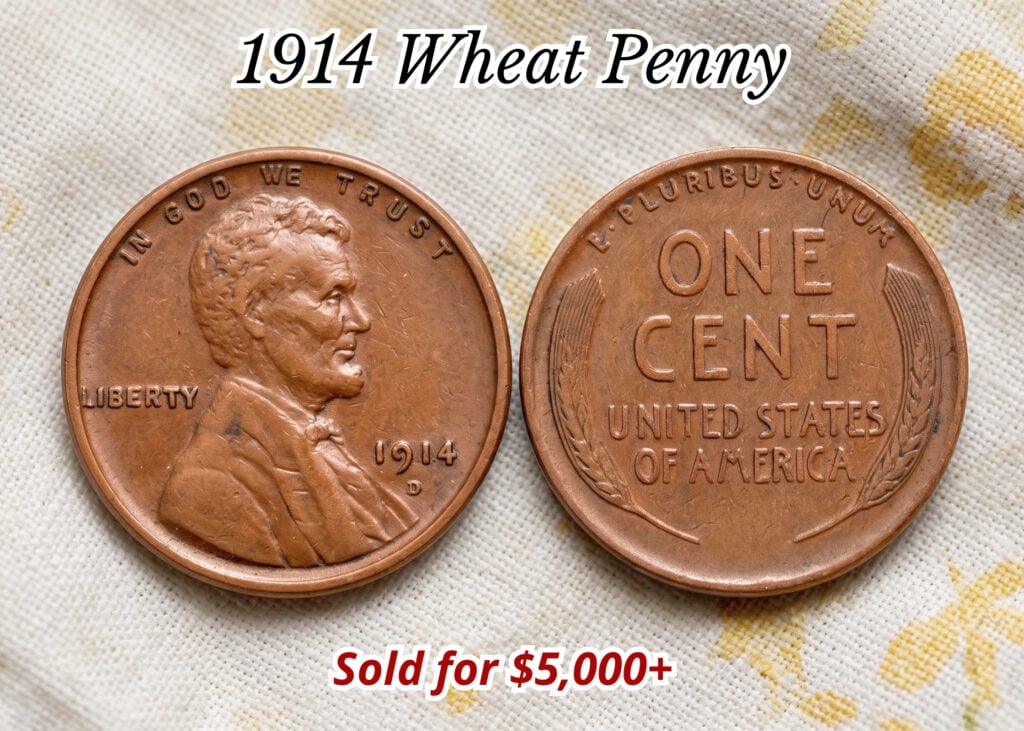
That’s why it’s worth knowing whether your 1914 wheat penny is worth something before you send or discard it. Learn the factors, varieties, and errors that can raise the value from a cent to a thousand dollars or more.
Brief History of the 1914 Lincoln Cent
The 1914 Wheat cent was the sixth issue of the famous Lincoln coin series designed by Victor David Brenner, which first came out in 1909 in honor of the centennial of the birth of President Abraham Lincoln.
Three mints made the coin that year, although the Denver minting facility made just 1,193,000 of the coins. This, along with the coin’s extensive circulation, is why the 1914-D is one of the key dates in the whole series.
| 1914 Lincoln Wheat Cent | Key Specification |
| Coin Composition | 95% copper, 5% tin and zinc (bronze) |
| Minting Locations | Philadelphia, Denver, San Francisco |
| Year of Minting | 1914 |
| Face Value | $0.01 (One Cent) |
| Weight | 3.11 grams |
| Diameter | 19.05 mm |
| Thickness | 1.52 mm |
| Designer | Victor David Brenner |
| Mint Marks | None (Philadelphia), D (Denver), S (San Francisco) |
| D-mint Mintage | 1,193,000 (key date) |
| S-mint Mintage | 4,137,000 |
| Total Mintage | ~80,410,000 |
How to Spot a Genuine 1914 Wheat Penny?
The first step, before you even get excited about a possible key date, is to make sure your 1914 penny is authentic and rightly attributed. The 1914-D is one of the most counterfeited variants, so identification matters even more.
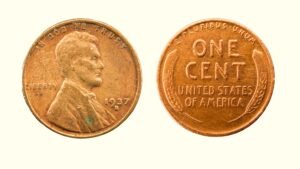
1914 Penny Obverse:
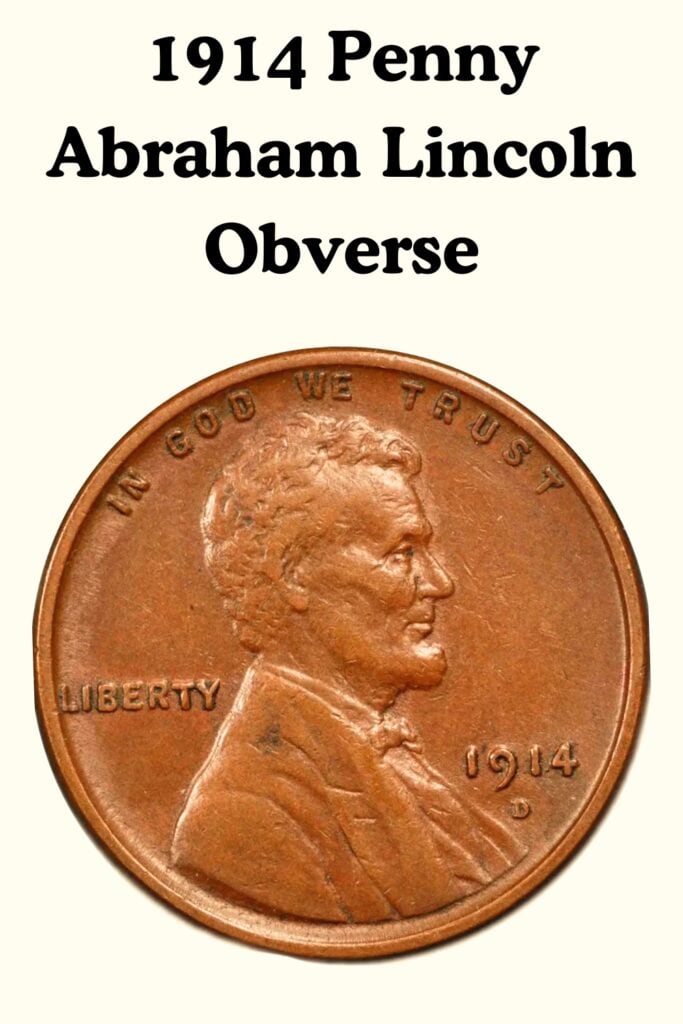
- Right-facing bust of Abraham Lincoln, centered on the coin
- IN GOD WE TRUST arched across the top rim
- LIBERTY to the left of Lincoln’s shoulder
- Date 1914 to the right of the bust
- Mint mark (D or S) sits directly below the date; Philadelphia coins are blank
Note: No V.D.B. initials on Lincoln’s shoulder truncation. The initials were removed from the reverse in 1909 and did not return to the obverse until 1918. Any 1914 cent with V.D.B. under Lincoln’s bust is likely altered.
1914 Penny Reverse:
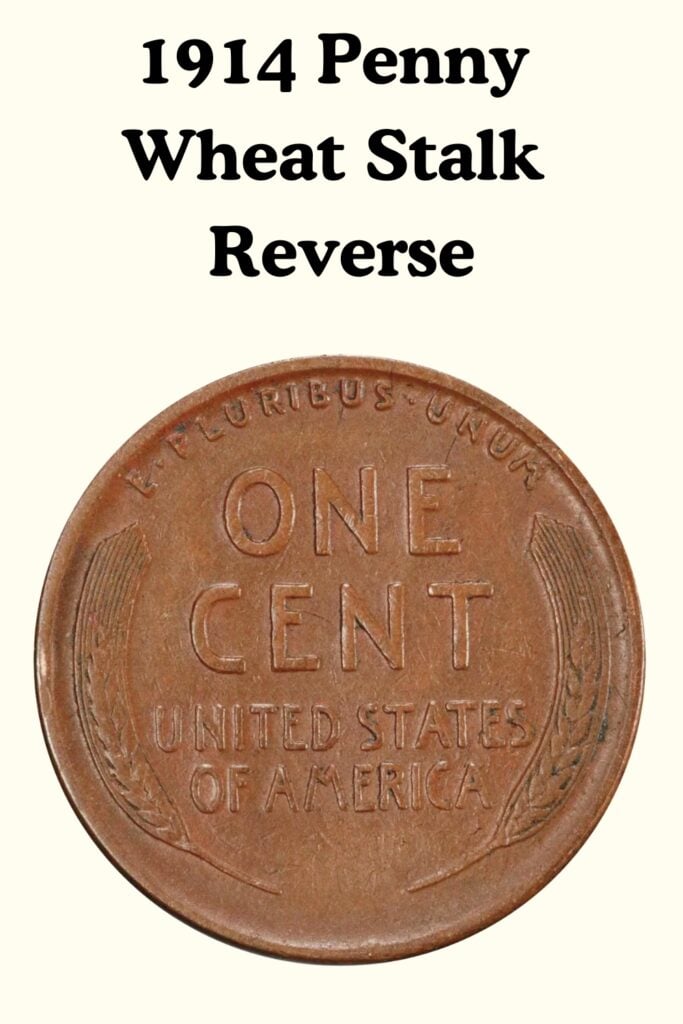
- Two full wheat stalks framing the center of the coin
- ONE CENT stacked above UNITED STATES OF AMERICA
- E PLURIBUS UNUM curves along the top rim
- Plain edge with no reeding
Weight & Composition:
A genuine 1914 wheat cent will have a weight of 3.11 grams on the jeweler’s scale, with a permissible variation of 0.13 grams. Also, the bronze (95% copper, 5% tin and zinc) metal is non-magnetic. So, if your coin is attracted to the magnet or is somewhat lightweight, it’s a red flag.
How to Tell if a 1914 Penny is Valuable?
A wheat penny’s value mainly depends on four factors: the mint mark, grading, the designation of the copper color, and rarity. Circulated coins from the Philadelphia mint in good condition are affordable, but those that are in Mint State condition or have a rare feature bring more money.
Coin Grading and Color Designation
Copper coins are graded on the Sheldon 70-point system starting with Poor-1 and going all the way up to the theoretical perfection of Mint State-70.
Cents with grades lower than MS60 are considered circulated coins, meaning that they have been worn by their use as money. For grades MS60 and above, the coin has never been used and has not sustained any wear.
The higher the grade, the more valuable the 1914 penny will be.
Copper pennies are also graded by color, based on how much they have toned. A brown (BN) coin has toned fully to the point that it is a chocolate coin; red-brown (RB) lies in between, while a red (RD) coin still has 95% of its mint color left.
Red (RD) examples sit at the top of each range. Red-Brown (RB) falls in the middle. Brown (BN) sits at the lower end. Here’s a quick 1914 wheat penny value chart based on grades.
| Grade Range | 1914 (No Mint Mark) | 1914-D | 1914-S |
| Poor (P1) – Extremely Fine (XF45) | $1 – $80 | $250 – $2,000 | $30 – $400 |
| Almost Unc. (AU50) – MS60 | $90 – $180 | $2,200 – $3,500 | $475 – $900 |
| Mint State (MS61 – MS64) | $190 – $600 | $3,800 – $9,000 | $1,000 – $6,500 |
| Mint State (MS65 – MS66+) | $650 – $2,000 | $12,000 – $24,000 | $7,500 – $28,000 |
| Mint State (MS67 – MS67+) | $2,500 – $9,000 | $45,000+ | $60,000+ |
| Mint State (MS68 or Above) | Very rare, auction only | None certified | None certified |
Mint Mark Variants of 1914 Cent
Every mint had its own variety of 1914 Lincoln penny, with a significant difference in mintage and, hence, value between each.
- 1914 No Mint Mark (Philadelphia): The Philadelphia mint struck the most common 1914 penny variant with 75,238,432 coins. That’s why these coins are easy to find in worn condition. And so, collectors hunt the high-grade examples.
- 1914-D (Denver): Denver made just 1,193,000 cents, which is the second-lowest business strike mintage for any year in the Lincoln wheat cents. Few of these coins survive in Mint State because very few ever wound up in collector hands.
- 1914-S (San Francisco): The S-mint produced 4,137,000 coins, putting it in the semi-key position. San Francisco coins of this period tended to be struck from worn dies; therefore, high-quality coins in full Red color are harder to find than suggested by the mintage figures.
- 1914 Matte Proof Cent: Along with standard coins, the Philadelphia Mint also released 1,265 matte proofs for collectors. These pieces have a grainy, satin-like appearance unlike the mirror-like fields of standard proofs, with sharp edges and exceptional details. Authentic coins are rarely found outside of collections.
Minting Errors
The 1914 cent may not have any famously dramatic error like the 1955 doubled die, but some rare varieties and mint-produced anomalies, like a repunched mint mark, off-center strike, and lamination, do turn up.
These error coins are only moderately valuable.
Valuable Mint Errors & 1914 Penny Varieties
1
1914-D in Red Mint State
Typically sells for $2,000 to $30,000+ (mint state)
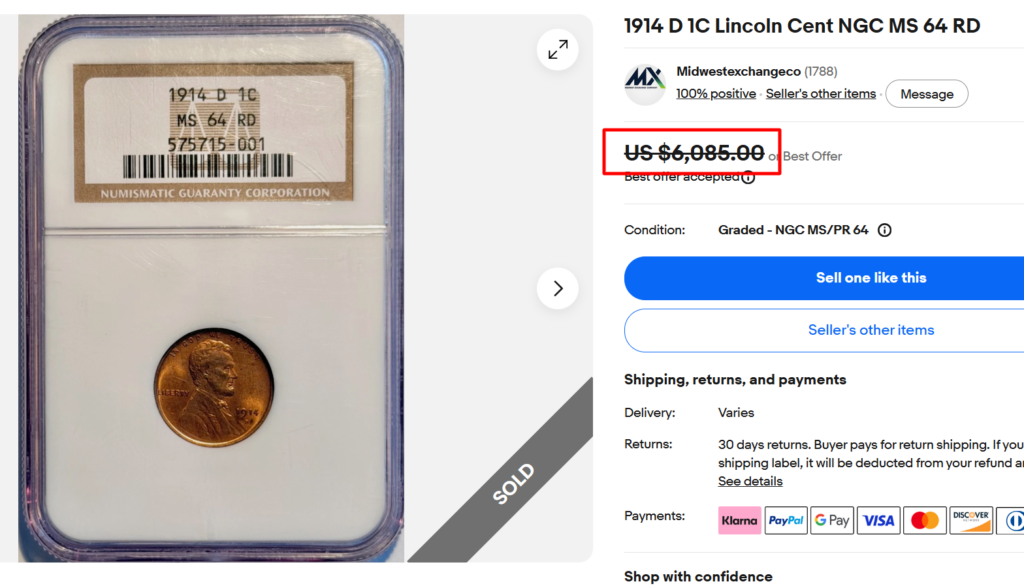
The 1914-D Wheat penny is easily among the most valuable wheat pennies ever released, thanks to its low mintage and strike quality. In a Red Mint State with a 64 or higher grade, this coin can be worth several thousand dollars.
But remember, since this coin commands such a premium, it’s heavily counterfeited, so authentication through PCGS or NGC is a must.
2
1914 Penny Lamination Error
Typically sells for $10 – $400
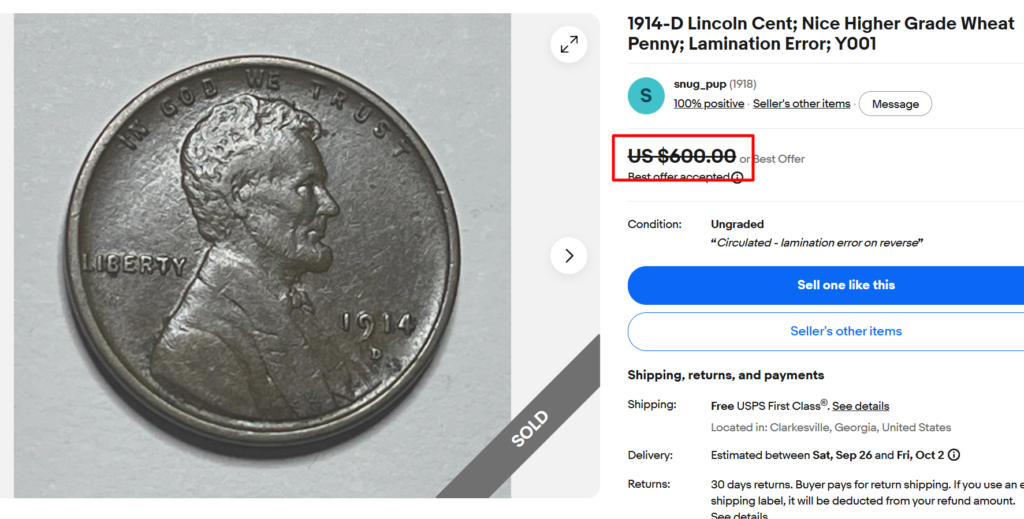
This error occurred when impurities in the copper strip sometimes caused the metal to peel or flake off after striking, leaving rough patches or missing chunks on the coin’s surface.
Lamination errors on 1914 cents tend to be small and command modest premiums. Larger, more dramatic flakes on the obverse near the portrait hold the strongest demand.
3
1914 Penny Off-Center
Typically sells for $10 to $1,000 (based on strike percentage)
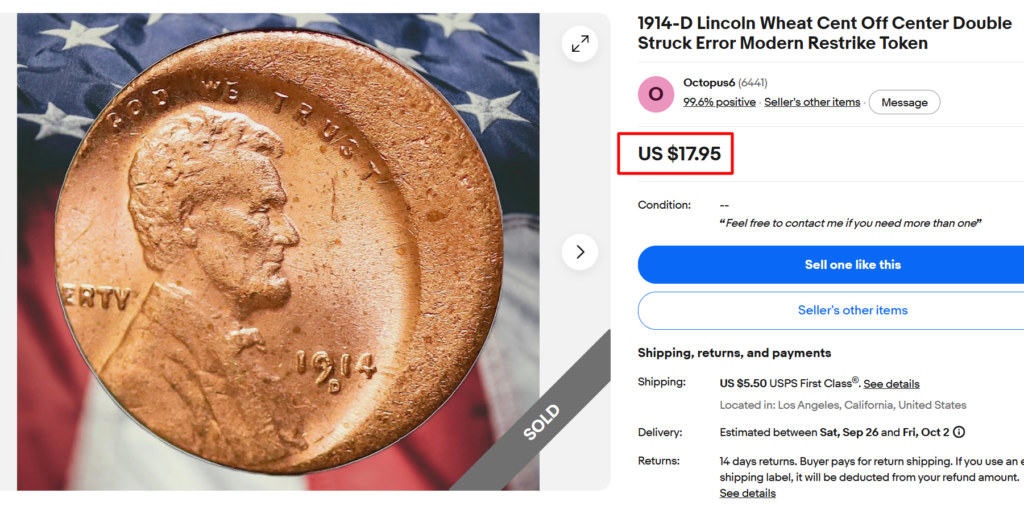
An off-center strike happens when the planchet is improperly seated in the striking collar, creating a crescent of unstruck metal on one side of the coin.
There are only two factors that determine its value: the extent of the off-center strike and the presence of both the date and mint mark. Coins with a 40-50% strike with an intact date are most collectible.
4
RPM – 1914-D Doubled Mint Mark
Typically sells for $15 to $500+
In a genuine example of the 1914-D Doubled Mint Mark, there is doubling of the Denver mint mark in the form of an outline of the letter that is seen when magnified by 10x.
There are four known mint mark locations on the 1914-D, and RPM specimens have a premium over the regular coin.
Note: This article is intended for informational, educational, and entertainment purposes only. Some images are illustrative and may not represent actual brands, products, or related entities. All trademarks, product names, brand logos, packaging, and other intellectual property referenced remain the exclusive property of their respective owners. Any brand mentions or references are provided solely for descriptive and educational context and do not imply any formal or commercial association.