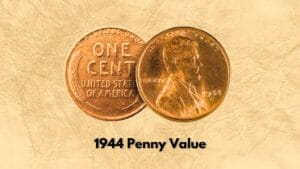
Do you know that a 1943 Bronze Lincoln penny went for $840,000 in 2021? And this is just one of the wheat pennies with an impressive worth; there are several others that often get lost in pocket change because the owners just can’t spot them.
Lincoln pennies with the wheat stalk reverse are the most recognized coins. These lasted until 1958, when the reverse design was changed to the Memorial Building. And now collectors want those old wheat cents, especially rare ones.
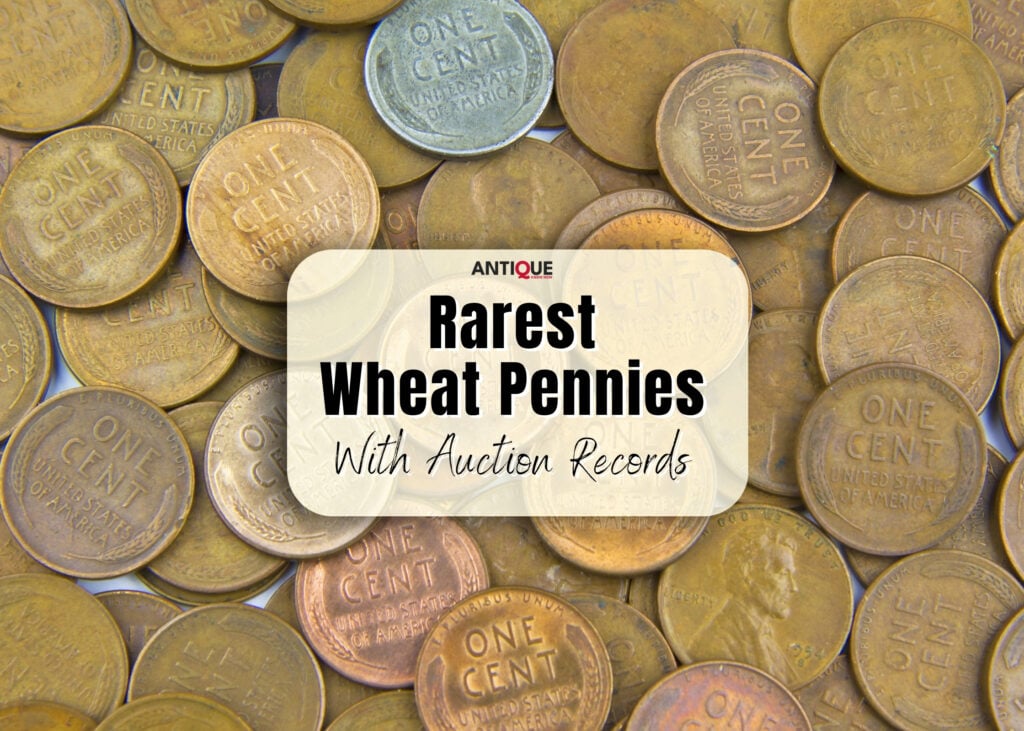
So, what you need is the knowledge of the penny dates, errors, and varieties that matter. Let’s find out which wheat pennies are rare today and what they’re worth.
What Actually Makes a Lincoln Penny Rare?
A cent’s scarcity is due to four factors, which it is essential to understand to separate the wheat and the chaff:
- Key date low mintage years: Some years had an issue of less than two million cents, making the demand exceed the supply.
- Minting errors: Off-metal pennies, doubled die wheat pennies, and repunched mint mark pennies are the ones fetching huge prices at auctions.
- Absent or mis-struck mint marks: It’s the small letter below the date or its absence that makes the penny very valuable.
- Grade: After you have the rare date, grade will determine if it is worth $200 or $200,000.
Price List of Rare and Valuable Wheat Pennies
1
1943 Bronze (Copper) Lincoln Wheat Penny
$100,000 to $840,000+ (graded)
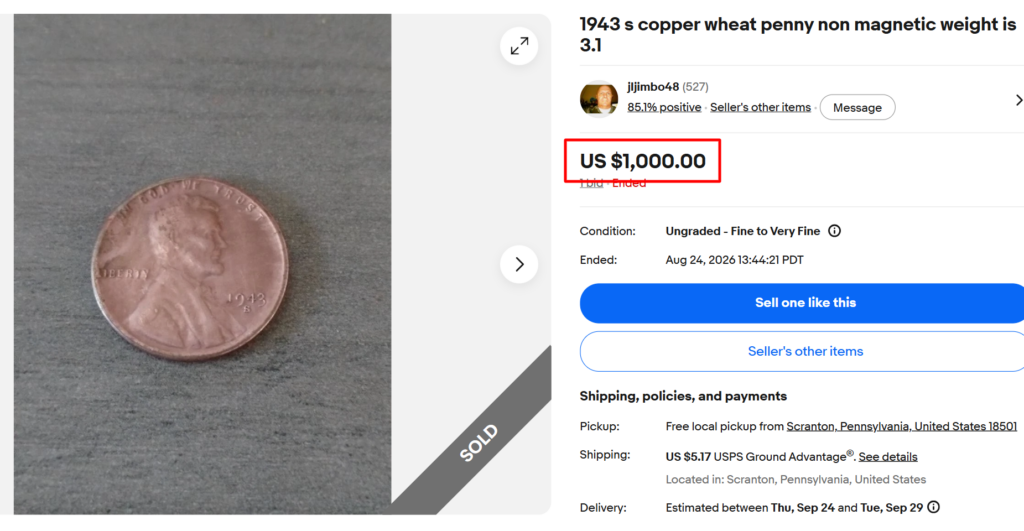
| Error type | Wrong planchet, transitional error |
| Key features | Copper color, non-magnetic, 3.11g |
| Collector notes | Authenticate before selling |
The wartime need for copper in shell casings caused the Mint to use zinc-plated steel for the 1943 issue. However, some leftover bronze blanks from 1942 were mistakenly struck. Today, fewer than 20 such coins exist.
The key identification sign is that this penny will not be attracted to a magnet and will weigh 3.11 grams. Fakes are common, so authentication is necessary.
2
1944 Steel Lincoln Penny
$75,000 to $408,000+ (high grade examples)
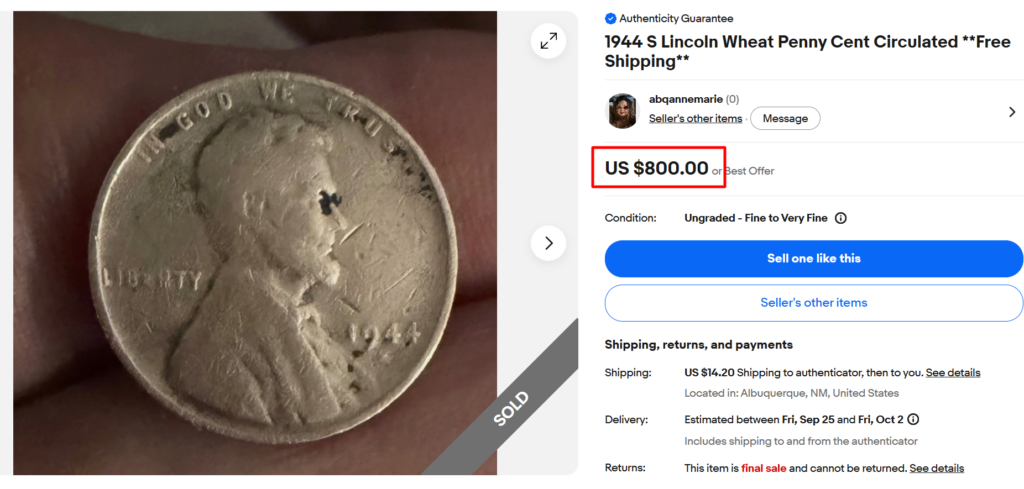
| Error type | Wrong planchet, transitional error |
| Key features | Silvery color, magnetic, 2.7g weight |
| Collector notes | 1944-S is the rarest of the three variants |
The cent is the opposite of the 1943 bronze coin. After switching to the copper alloy again in 1944, the Mint struck some leftover steel planchets from 1943, creating these 1944 steel cents.
The rarest of these coins is the 1944-S, with only two known specimens in existence. The plain 1944 (Philadelphia) has around 20-30 specimens, while the 1944-D likely has only 7-10.
Identification goes the same way but with the opposite outcome: these wheat pennies have magnetic properties and a silver color.
3
1909-S VDB Lincoln Wheat Penny
$2,000-$10,000 (MS65); $75,000 to $408,000+ (high grade)
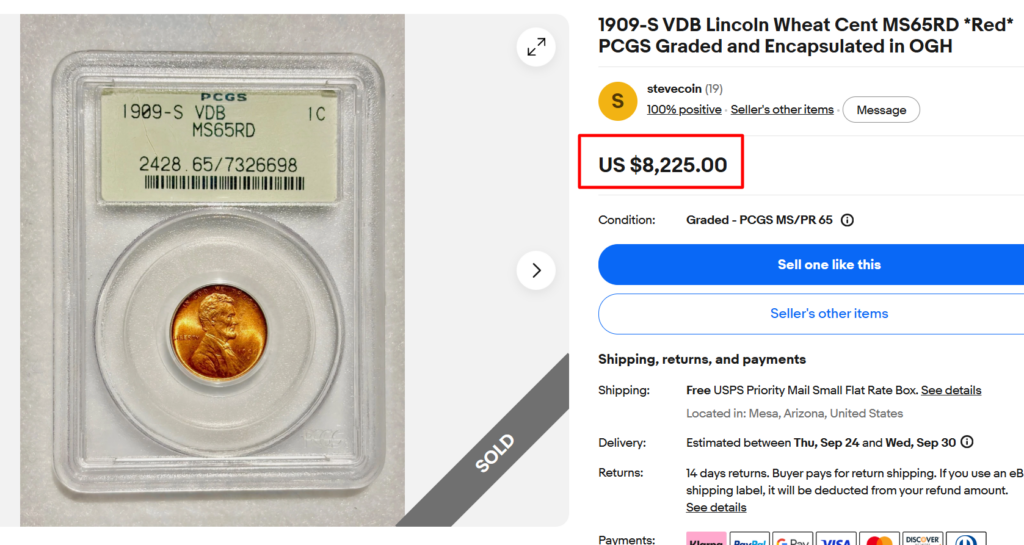
| Variety | Key date, low mintage |
| Key features | “V.D.B.” on reverse, “S” under date |
| Collector notes | Watch for altered “VDB” or “S” marks |
This is the most popular cent. It’s the first Lincoln cent(s) released in 1909 to mark President Abraham Lincoln’s 100th birthday, with a large “V.D.B.” mark on the reverse for the designer. Victor David Brenner.
Only 484,000 coins were minted in San Francisco until complaints about the big initials forced the Mint to get rid of them. The rare date of this year and the low mintage make this a coin that every coin collector wants to own.
Even in worn condition, this coin can sell for $700 to $1,500, while Mint State specimens can fetch $5,000 to $200,000 or more.
4
1914-D Lincoln Wheat Penny
$150 to $25,000+
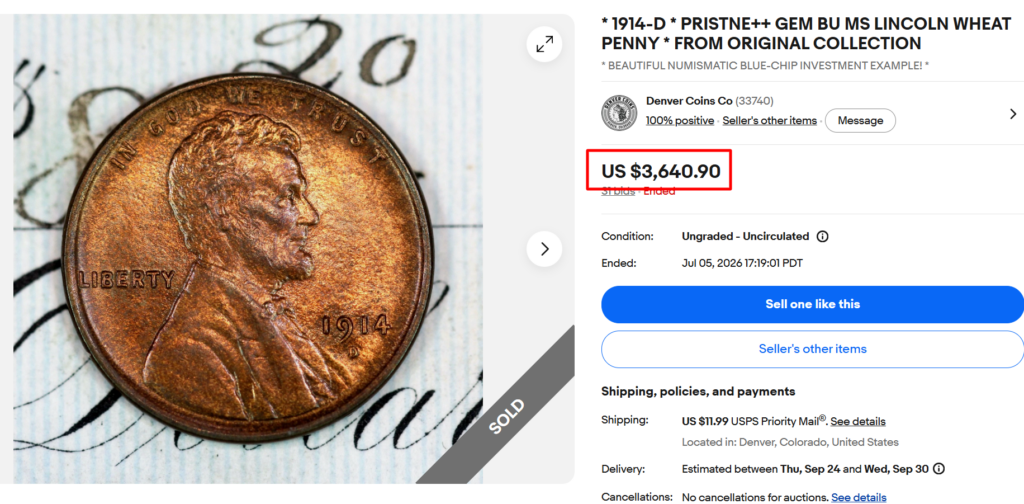
| Vareity | Key date, low mintage |
| Key features | “D” under date, 1,193,000 mintage |
| Collector notes | Heavily counterfeited; always certify |
The Denver Mint minted only 1,193,000 cents in 1914, and the majority were in circulation when collectors took notice. It is therefore scarce in all conditions and very scarce in Mint State Red.
It is also among the most counterfeited Lincoln cents. Counterfeit versions include modified 1944-D wheat pennies, with the first “4” converted to “1,” and the Philadelphia cents with a phony “D” added under the date. So, certification is a must.
5
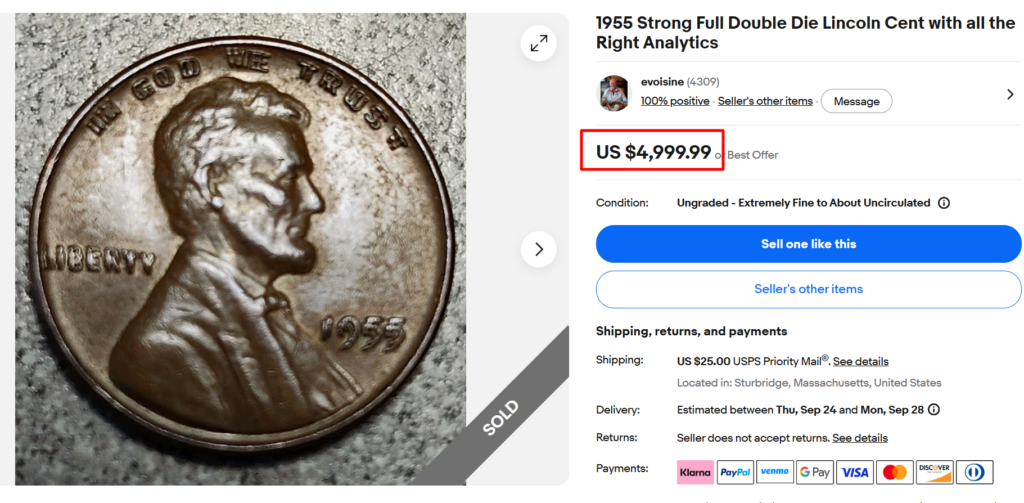
1955 Doubled Die Obverse Penny
$1,500 to $287,000+
| Error Type | Doubled die obverse (DDO) |
| Key features | Bold doubling on date and mottos |
| Collector notes | Machine doubling is not the same |
This is perhaps the best-known error in U.S. coin collecting. It occurred when an out-of-alignment hubbing produced heavy doubling of the date, LIBERTY, and IN GOD WE TRUST on the 1955 cents; the doubling is visible even with the naked eye.
Approximately 20,000 coins got away into circulation, most from cigarette vending machines. The top grades of Red varieties have realized values from $124,000 to $287,000, with circulated specimens selling for $1,000 to $3,000.
6
1958 Doubled Die Obverse Penny
$100,000 to $1,136,000+ (finest known)
| Error type | Doubled die obverse |
| Key features | Strong doubling, no mint mark |
| Collector notes | Only 3 known, mandatory authentication |
Only three examples of this error penny are known to survive, which makes it the rarest doubled die in the entire wheat cent series. Like the 1955 DDO, it shows clear doubling on IN GOD WE TRUST and LIBERTY.
It is the final-year wheat cent counterpart of the 1955 DDO and does not have a mint mark, as it was made in Philadelphia. The best one known is a PCGS MS65 Red that was auctioned at $1,136,250.
Since there are only 3 known survivors, any coin labeled as a 1958 DDO is most likely a machine-doubled or counterfeit.
7
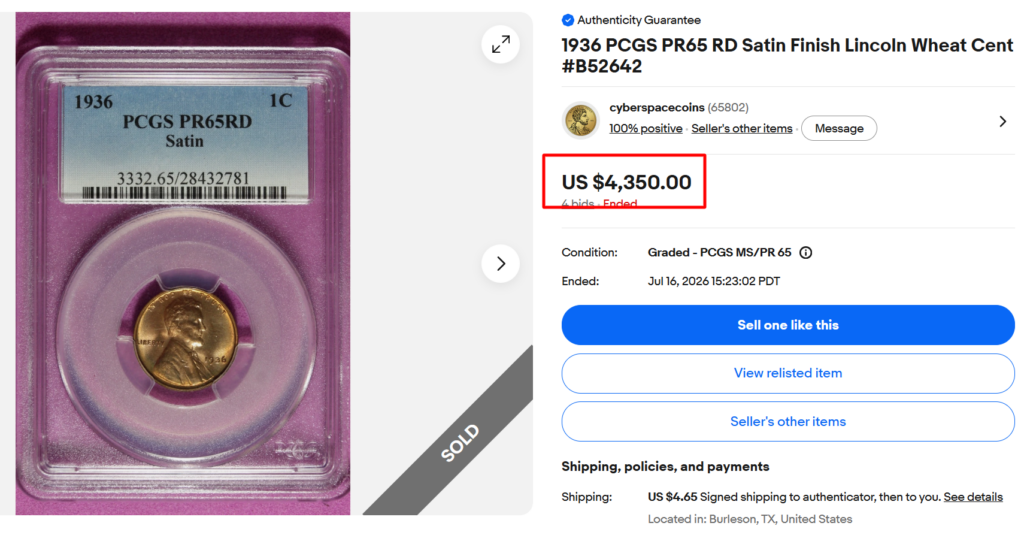
1936 Proof Penny (Satin Finish)
$150 to $6,500+
| Vareity | Proof issue |
| Key features | Satin surfaces, non-reflective fields |
| Collector notes | Three DDO varieties exist for 1936 |
The year 1936 marked the reintroduction of proof wheat pennies after an absence of 20 years, with a small mintage of 5,569 coins. These facts make these pennies both historically significant and rare.
The mint experimented with two finishes for these coins: Satin finish, with a non-reflective surface, and Brilliant finish, with mirror-like, reflective fields. Satin finish proofs are more valuable.
8
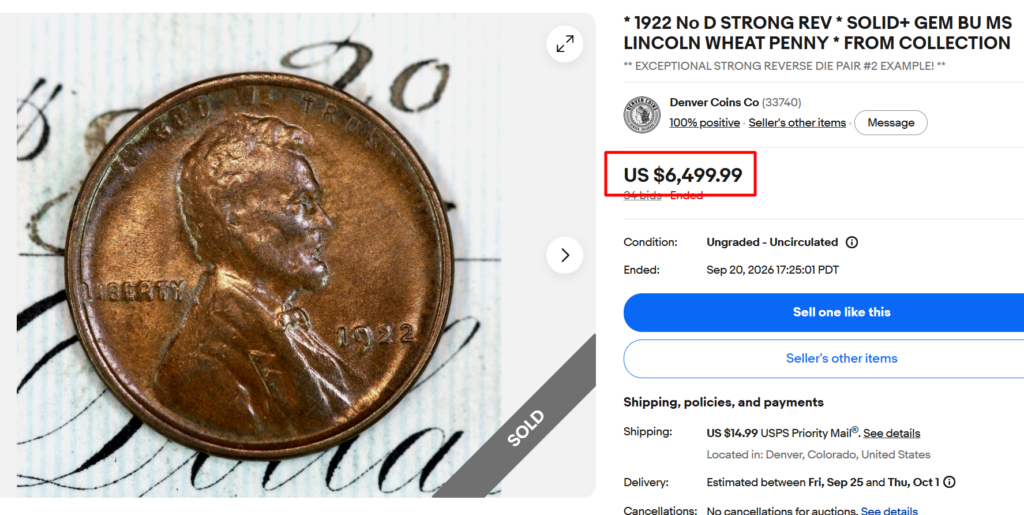
1922 No D Strong Reverse
$500-$8,000 (circulated); $47,000 to $150,000+ (mint state)
| Error type | Missing mint mark, die polishing |
| Key features | No D, sharp reverse detail |
| Collector notes | Die Pair II is the valuable one |
In 1922, Denver was the only mint producing cents. A single obverse die was accidentally over-polished during the cleaning process, erasing the D mint mark.
The well-defined reverse is the identifying feature that distinguishes the coin from other 1922 wheat pennies without a clearly readable mint mark. Only die pair II, which has a very well-defined reverse, can be regarded as a “true” No D variety.
The value of circulated examples ranges from the mid-hundreds to $8,000, while MS examples have been auctioned between $47,000 and over $150,000.
9
1943-D Bronze Lincoln Cent
$500,000 to $840,000+ (auction prices)
| Variety | Mint mark rarity |
| Key features | D mint mark under the date |
| Collector notes | Only 1 authenticated example exists |
This penny is among the rarest of all, since there is only one example ever authenticated: an MS64 brown that fetched $840,000 at Heritage Auctions in January 2021. The chances of finding an authentic 1943-D Bronze penny are almost zero.
10
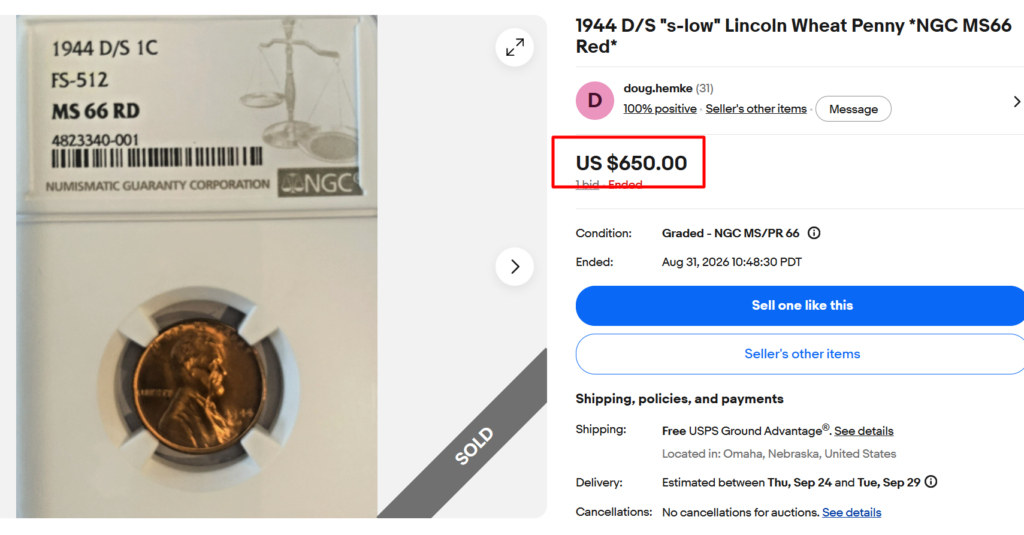
1944-D/S Overmintmark
$150 to $22,000+
| Error type | Repunched mint mark (RPM) |
| Key features | “S” visible under “D” |
| Collector notes | Loupe-check every 1944-D you see |
There are examples of 1944 coins that are Denver strikes which originally had an “S” representing San Francisco, but then had the letter “D” repunched on top.
In such cases, when using a magnifying glass, you will be able to see the “S” underneath the “D.” In Red Mint State, a 1944-D/S penny can fetch up to $25,000, while regular examples sell for hundreds of dollars.
11
1926-S Lincoln Cent
$20 to $5,000+
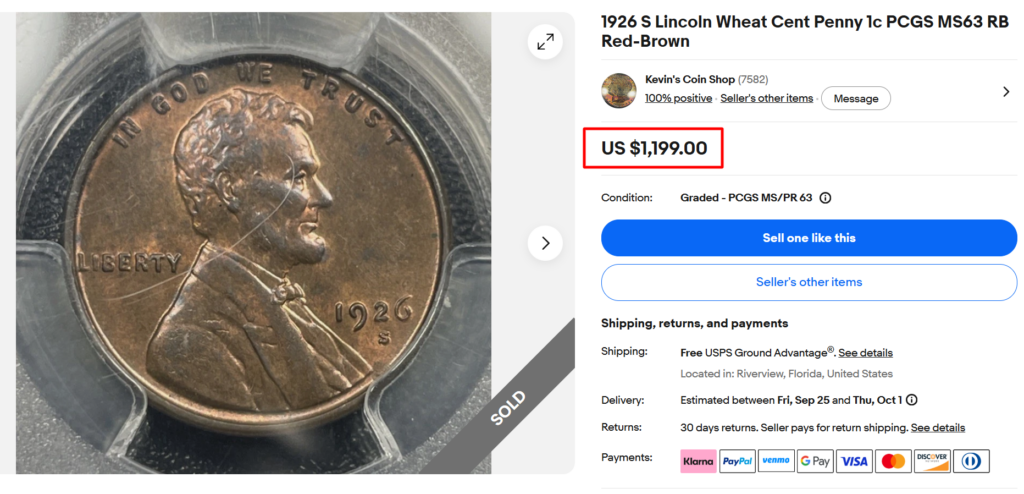
| Variety type | Semi-key date, low mintage |
| Key features | “S” mint mark, natural brown surfaces |
| Collector notes | Avoid cleaned examples |
This is a semi-key date penny. San Francisco produced about 4.5 million, which sounds like a lot until you factor in decades of wear and melting. High-grade Red examples are extremely scarce, and Mint State pieces regularly bring $5,000 or more. Also, original brown patina is worth more than a cleaned coin every time.
12
1931-S Lincoln Wheat Penny
Typically sells for $85 to $2,000+
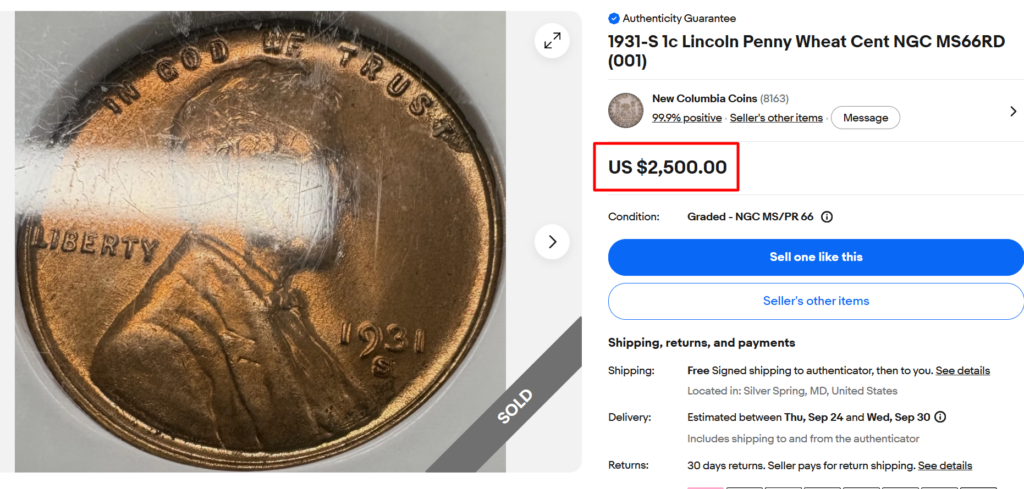
| Variety type | Key date, low mintage |
| Key features | “S” mint mark, 866,000 mintage |
| Collector notes | Check for altered dates on 1936-S |
The 1931-S penny with a mintage of just 866,000 is one of four true key-date wheat pennies. The Great Depression period reduced mintage, and San Francisco got the smallest number of coins minted.
The coins were kept as oddities back then; hence, some are available in circulated condition. Uncirculated Red coins go for more than $2,000.
13
1917 Doubled Die Obverse Penny
$200 to $120,000+ (finest known)
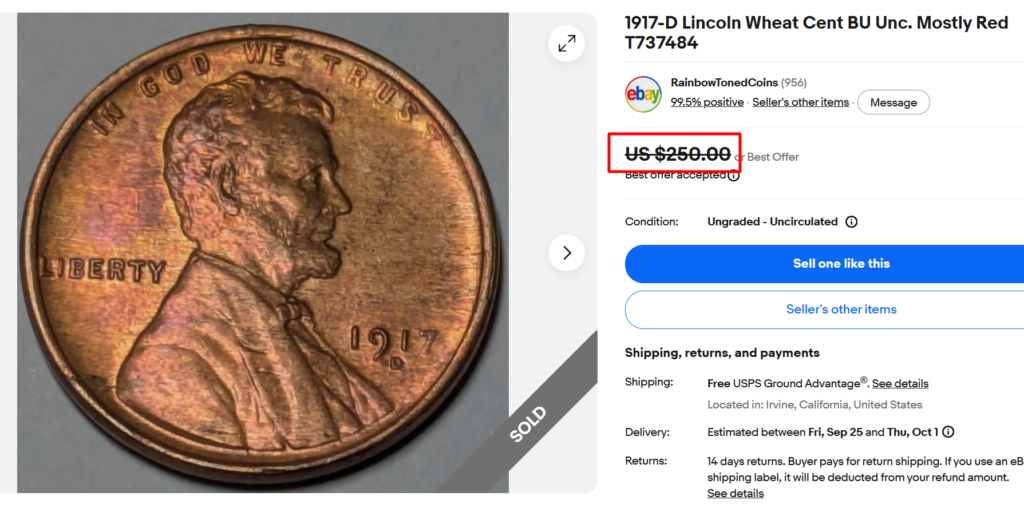
| Error type | Doubled die obverse (FS-101) |
| Key features | Doubled date, “GOD WE TRUST” |
| Collector notes | Machine doubling is not this variety |
Although it’s less well-known than the 1955 variety, experts highly regard the 1917 DDO as one of the more popular early wheat cents. You’ll notice doubling on the date and “GOD WE TRUST”; use a 10x loupe for clear visibility.
Missed for 60 years, so very few are known that have not seen extensive circulation. Fewer than 200 are thought to exist, and fewer than 40 are Mint State.
Note: This article is intended for informational, educational, and entertainment purposes only. Some images are illustrative and may not represent actual brands, products, or related entities. All trademarks, product names, brand logos, packaging, and other intellectual property referenced remain the exclusive property of their respective owners. Any brand mentions or references are provided solely for descriptive and educational context and do not imply any formal or commercial association.