Most 1922 wheat pennies cost between $15 and $50 today. However, a specimen from the same period without any mint mark under the date is worth many times more, with the most expensive one ever going for $92,000.
The secret behind the high value lies in some simple traits observable through a 10x magnifier. This article will explain how to spot a valuable 1922 wheat penny and which ones are worth the most money today.
Why Is a 1922 Penny Special?
The early 1920s were not an easy time for the U.S. Mint. The post-World War I recession had banks with far too many cents. So, the Mint Director F.E. Scobey decided to make fewer pennies.
So, in 1922, Philadelphia and San Francisco did not mint any pennies; only Denver minted all 7,160,000 pieces.
And the Mint worked its dies extra hard to fulfill that order. So, some of its dies got worn out, while others were so heavily polished that the D mint mark became weak. This is how the Weak D and No D pennies came about.
| 1922 Wheat Cent | Key Specification |
| Coin Composition | 95% copper, 5% tin and zinc (bronze) |
| Minting Location | Denver only |
| Year of Minting | 1922 |
| Face Value | One cent ($0.01) |
| Weight | 3.11 grams |
| Diameter | 19.00 mm |
| Thickness | About 1.55 mm [VERIFY: not listed by PCGS] |
| Designer | Victor David Brenner |
| Mint Marks | D (Denver): 7,160,000. No Philadelphia or S coins exist. |
| Total Mintage | 7,160,000 |
What Does a Genuine 1922 Wheat Cent Look Like?
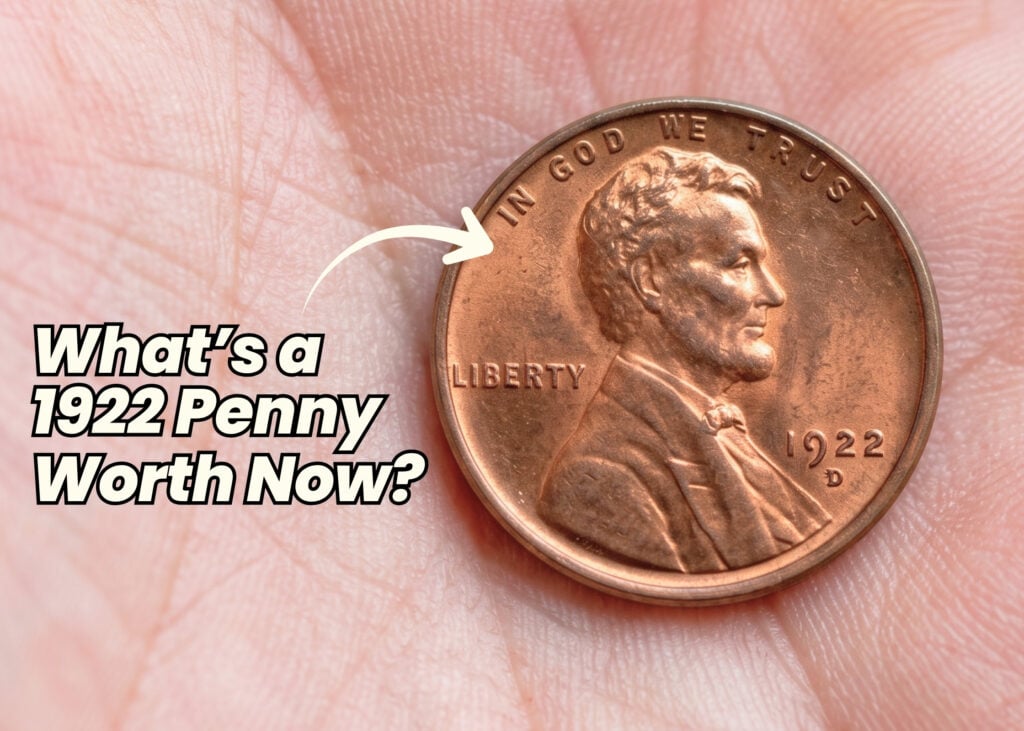
To make sure your 1922 cent is authentic, start with the date, then look right under it; that is where you will find what you need to know. Then, check the sharpness on both sides; the contrast between the two often separates a $20 penny from a $2,000 one.
1922 Penny Obverse:
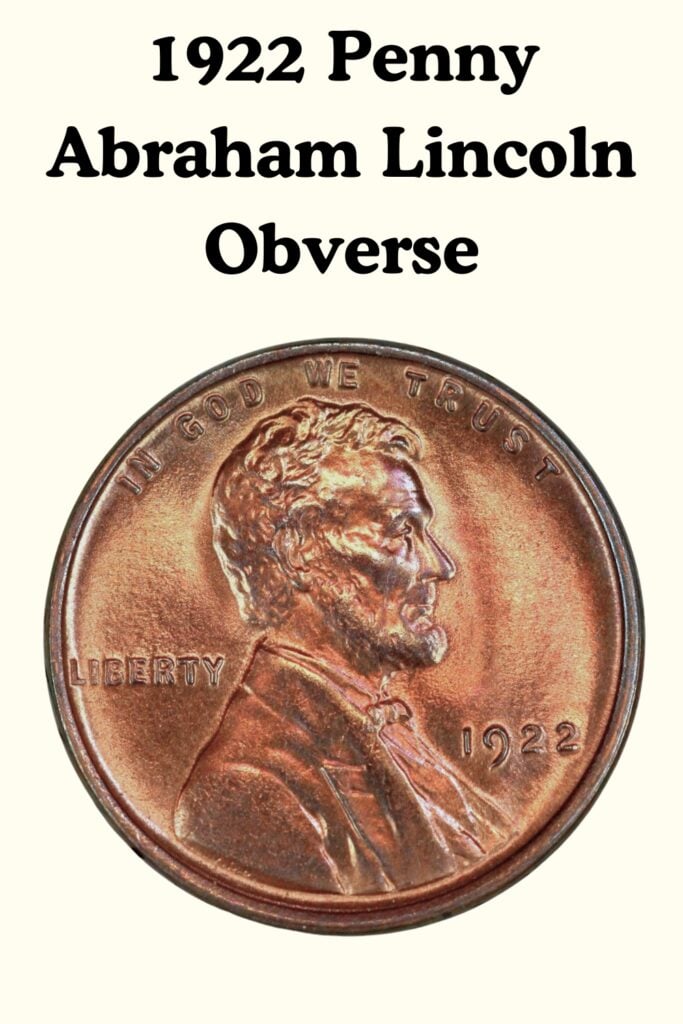
- Portrait: Abraham Lincoln faces right, and his bust fills most of the coin.
- Motto: “IN GOD WE TRUST” curves along the top rim.
- LIBERTY sits to the left of Lincoln’s portrait.
- Date and mint mark sit at the lower right, with the mint mark under the date.
- Designer’s initials “V.D.B.” sit on the edge of Lincoln’s shoulder
1922 Penny Reverse:
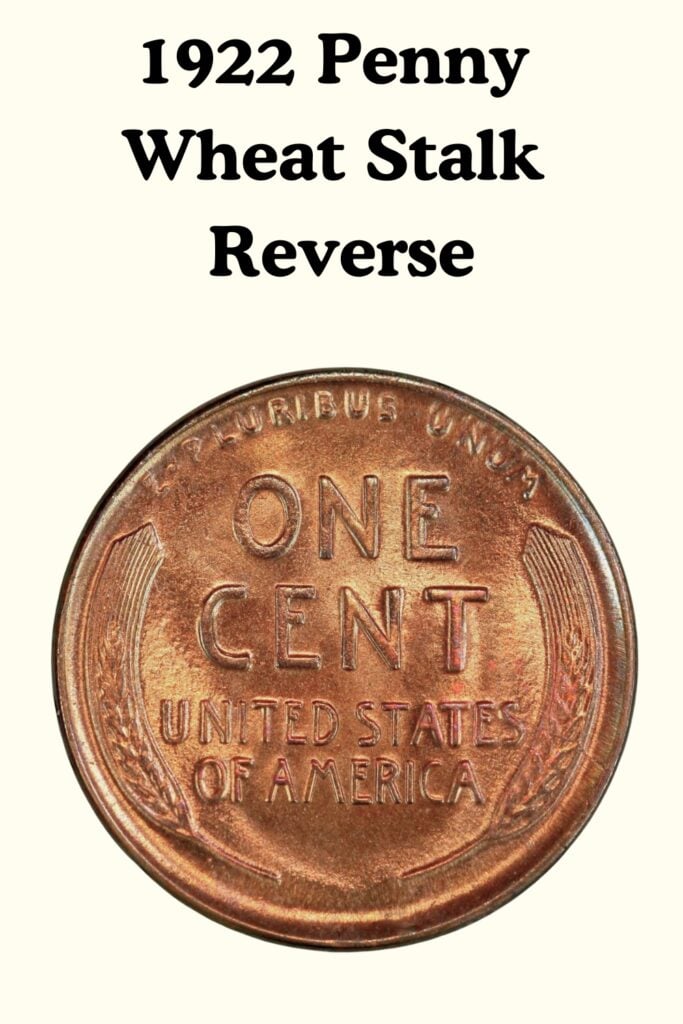
- E PLURIBUS UNUM runs along the upper rim.
- The Denomination “ONE CENT” appears in large letters across the center, with the “UNITED STATES OF AMERICA” just below.
- Two wheat stalks frame the left and right edges
Weight & Composition
A genuine 1922 penny is composed of bronze with 95% copper and 5% tin + zinc and weighs 3.11 grams. Simply place the coin on an accurate scale to the 0.01 gram. A weight that deviates significantly from that figure is a red flag.
Also, an authentic copper penny will not be magnetic.
1922 Wheat Penny Value Guide
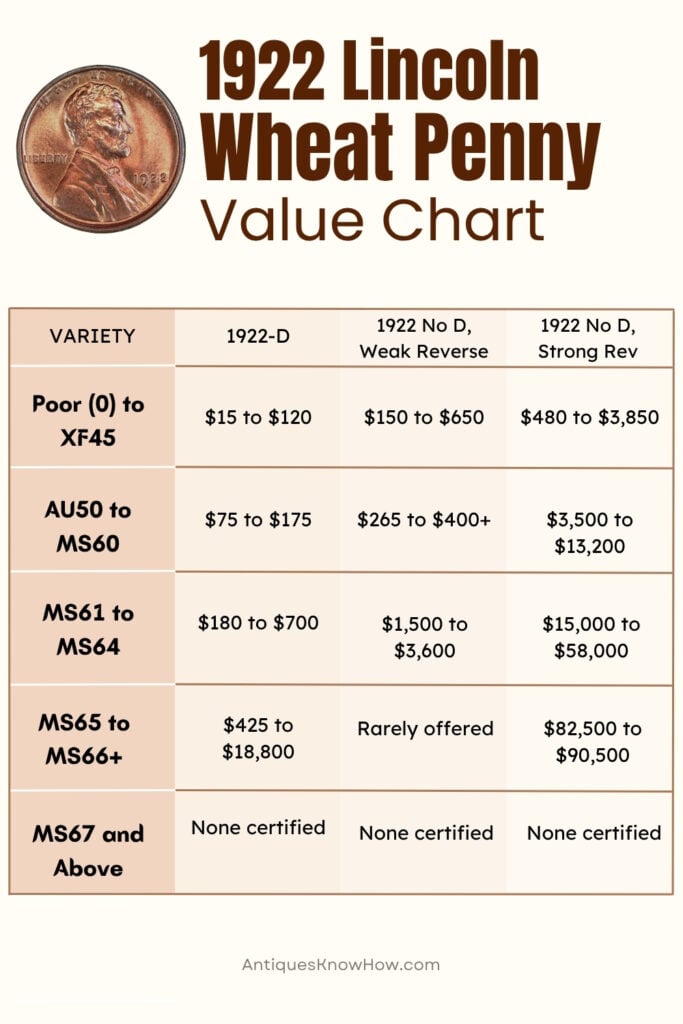
So, how valuable is a 1922 one-cent coin really? There are three factors that determine its value: the variety, the grade, and the color. The variety plays a critical role here.
A 1922-D circulated coin can be priced between $ 15 and $ 50, whereas a No D Strong Reverse with the same grade should cost about $480.
Coin Grades and Color Designation
Grading is on a scale of 70 points. When grading a 1922 penny, look for the condition of Lincoln’s cheek and jaw on the obverse and wheat lines on the reverse of the coin, as they will wear out first.
- Good (G-4): The coin exhibits heavy wear, a flat bust, and a readable date.
- Fine (F-12): All features are visible, and some of the wheat lines are separated.
- Extremely Fine (XF-40): Wear is visible only on the cheek and wheat tips.
- About Uncirculated (AU-50 to 58): There are traces of wear visible on the high spots, but luster remains in protected areas.
- Mint State (MS-60 to 66): There is no wear on the coin, and the grade is based on surface imperfections, luster, and eye appeal.
Note: Since most of the coins of 1922-D were produced using worn dies, they tend to appear soft even without any wear. The poorly struck coin retains its shine on the smooth areas, whereas worn ones lack shine on those spots.
Color is another checkpoint for pennies. Three designations exist: the term “Red” is used for coins that have retained more than 95% of their original color; “Red-Brown” for coins that have retained 5% to 95% of color; “Brown” – less than 5%.
The 1922 Red pennies are the most valuable.
The price chart below shows average values for popular 1922 cent varieties:
1922 Coin Mint Marks and Mintage
There was only one mint that produced pennies in 1922: Denver. This simplifies the story about mint marks considerably.
- 1922-D (Denver): All of the 7,160,000 pennies that were minted in 1922 were produced by the Denver mint, making every one of those coins a 1922-D cent.
- 1922 No D (1922 Plain): This coin is not a different mintage; it is simply a coin where the D was polished off from the die, so there is no mintage figure.
There’s no 1922-S cent. If you see one with the “S” mint mark, it’s either a wrong date or an altered coin.
Does the 1922 Proof Penny Exist?
No. The Mint stopped producing proofs in 1916, resuming production only in 1936. So a 1922 proof penny is either a shiny business strike or a counterfeit.
Most Valuable 1922 Pennies
1
1922 No D, Strong Reverse (FS-401)
Typically sells for $480 (G-4) to $90,500 (MS-65)
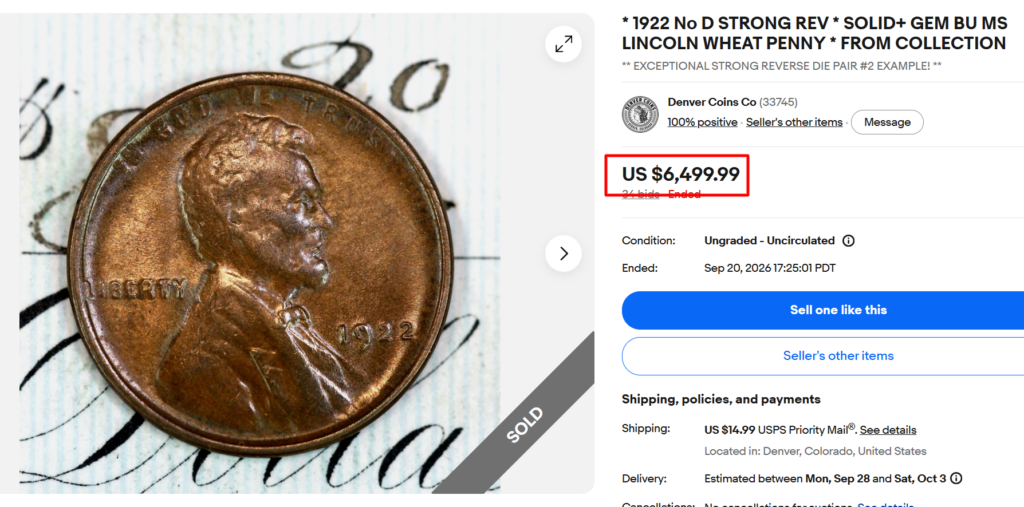
This is the most popular “1922 Plain” penny that collectors chase today. It came from Die Pair 2, where a polished front die with no D met a fresh back die.
So, the coin’s obverse shows no mint mark and a weak Lincoln portrait, but the motto and the second “2” in the date stay bold and sharp. The reverse, on the other hand, is completely crisp and fresh.
A 1922 No D, Strong Reverse penny is the most valuable penny from this year. In medium Mint State grade (MS61 to 63), it can fetch over $10,000 easily.
2
1922 No D, Weak Reverse
Typically sells for $150 (G-4) to $3,600 (MS-63 RB)
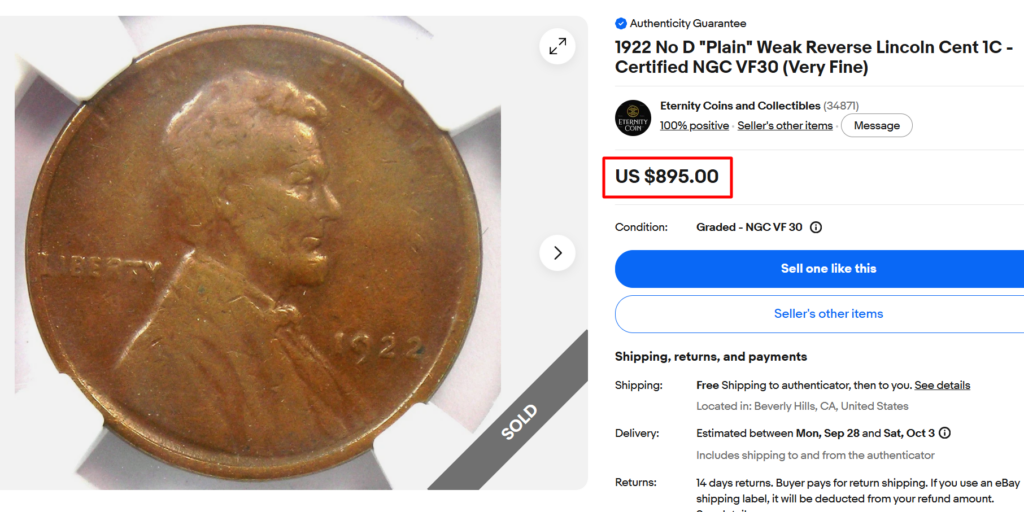
In this variety, the D mint mark is still missing, but both sides look weak and faded. The reverse die was heavily worn out, making the wheat ears faint.
The poor condition of the reverse die makes this coin less desirable compared to the Strong Reverse variety. But it remains a true “No D” coin. There’s hardly a Red example ever documented for this variety.
3
1922-D Weak D
Typically sells for $45 (G4) to $7,500 (MS65 BN)
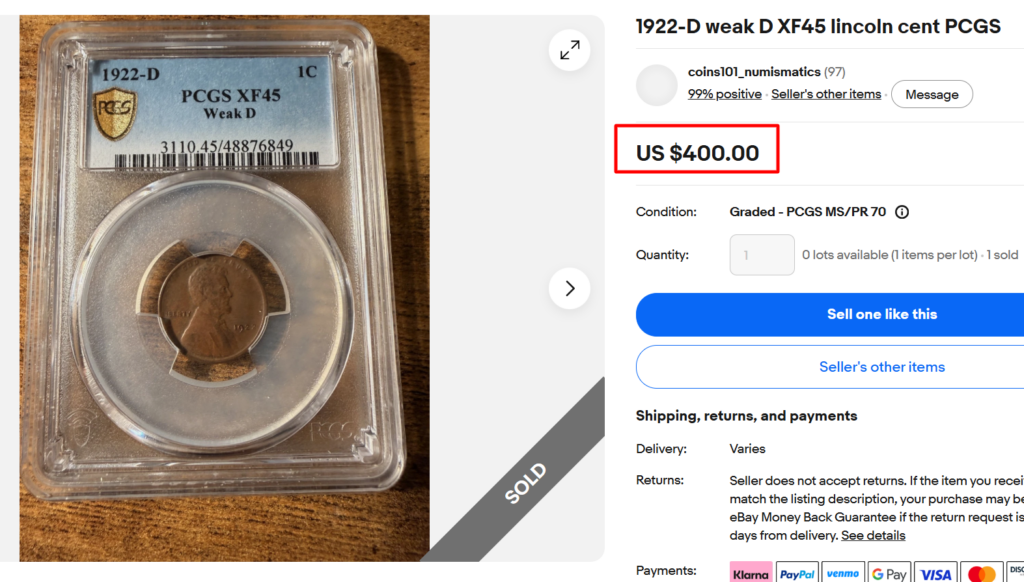
This variety shows the “D” mint mark, but only as a faint ghost below the date. You can hardly see the mark with the naked eye, and might need a 10x loupe to spot it clearly.
Weak D usually sells for more than a normal 1922-D (in mint condition), but still not as valuable as the true No D.
4
High-Grade Red 1922-D
Typically sells for $3,600 (MS-65 RD) to $18,000 +(MS-66 RD)
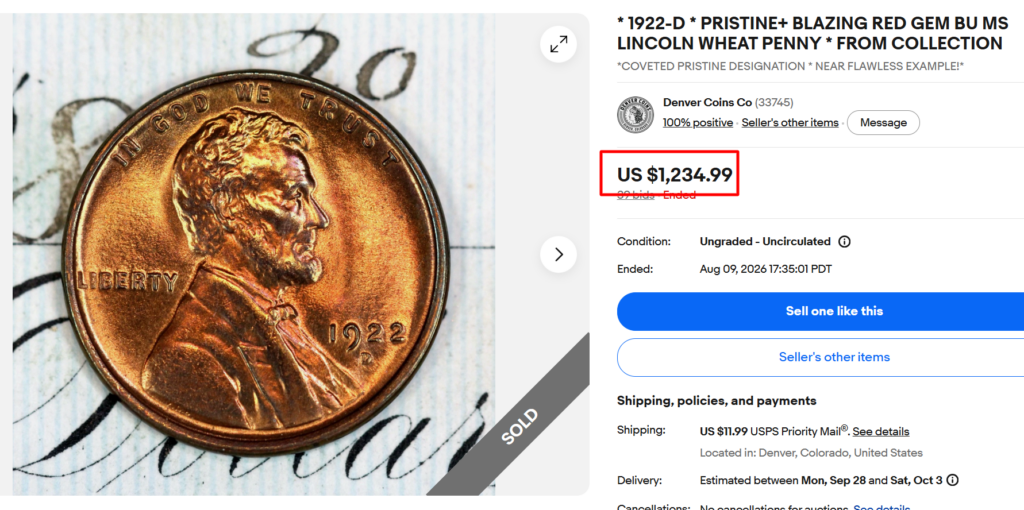
The standard 1922-D penny isn’t usually worth a lot. But it becomes a valuable coin when it reaches excellent quality while still retaining its original red color.
Most have long since been circulated and toned brown. So, Red Gems are not common despite the date being common. High-grade Mint State Red 1922-D pennies can fetch a few thousand dollars.
5
1922-D Die Cracks and Cuds
Typically sells for $50 to $150 for large cuds/breaks
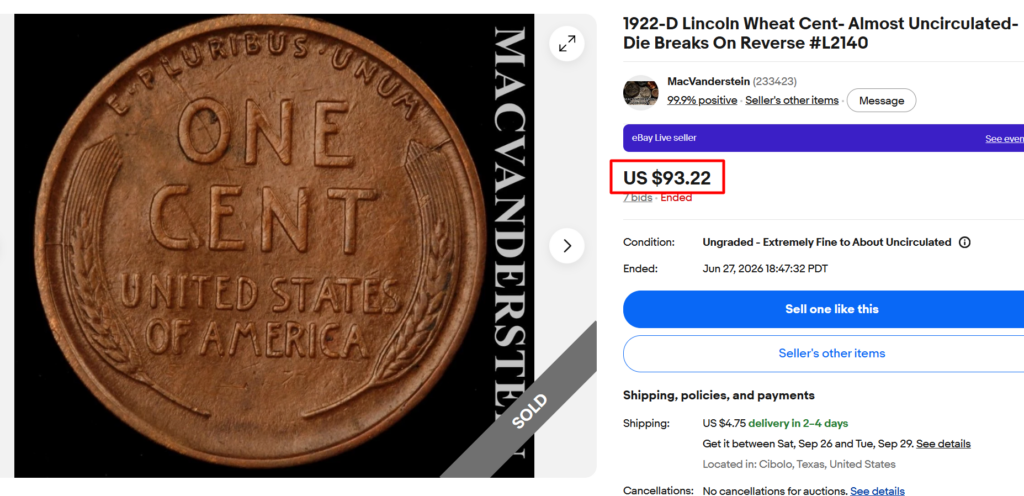
Denver kept using its 1922 penny dies way past their lifespan, which caused the die to crack. So, raised die cracks are common. They look like thin, wandering lines, often starting at the rim.
A cud happens when a bigger chunk from the die breaks off, leaving a raised, blank blob along the edge. Although not as valuable as the No-D, these errors can still be collectible.
6
1922-D Lamination Error
Typically sells for $15 to $150 (big flaking)
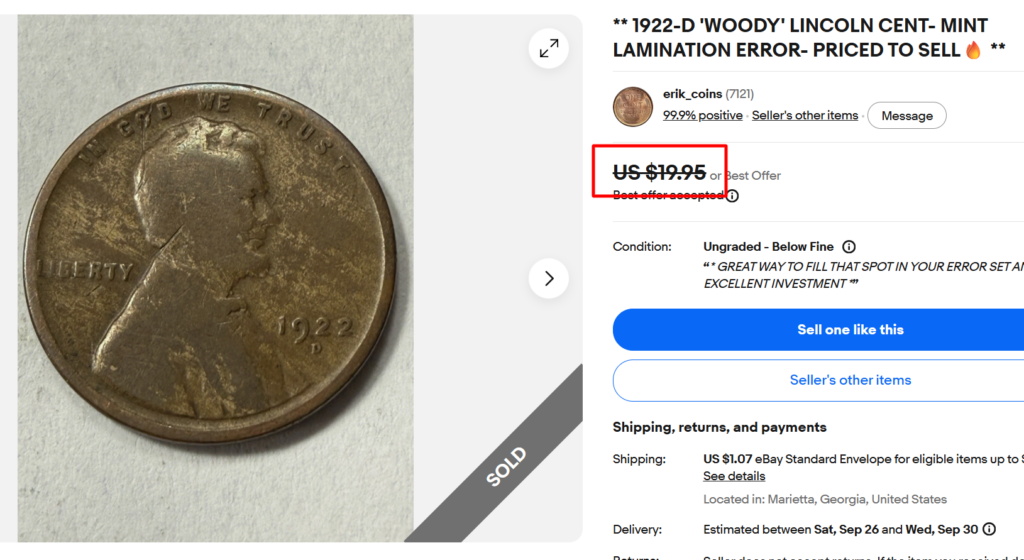
Laminations occur as a result of impurities or trapped gas, which affects the metal blank strip. This causes cracking, flaking, or peeling of the coin’s surface.
Flaking does not contribute much. But a big and stable flake that appears on the obverse of the coin without obscuring the 1922 date or mint mark gets collectors’ attention.
Note: This article is intended for informational, educational, and entertainment purposes only. Some images are illustrative and may not represent actual brands, products, or related entities. All trademarks, product names, brand logos, packaging, and other intellectual property referenced remain the exclusive property of their respective owners. Any brand mentions or references are provided solely for descriptive and educational context and do not imply any formal or commercial association.