Do you have some dusty, old glass dishes from your mother’s or grandmother’s time? If yes, keep them safe, because they might be worth more than you think!
From Depression-era glassware that sold for pennies to Tiffany glassworks that are worth a small fortune, many people have antique glassware in their kitchens that is worth a lot of money without even realizing it!
This guide will show you some rare and valuable antique glass dishes, and give you expert advice on how to spot the real ones!
10 High-Value Antique Glass Dishes Worth Collecting!
Let’s take a look at some valuable old antique glassware dishes that can actually sell for hundreds of dollars!
1. LC Tiffany Favrile Blue Open Salt Dish
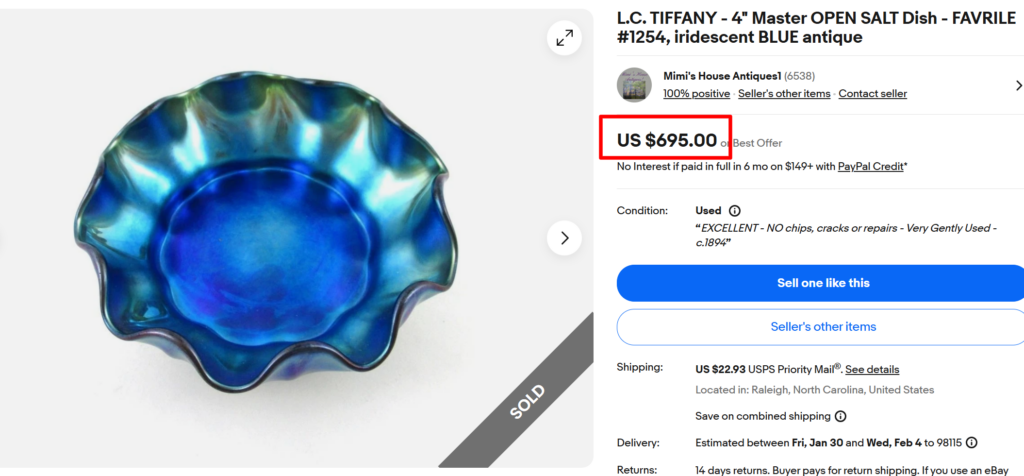
| Average Price | $300 – $800 |
| Manufacturer | Tiffany Studios / Louis Comfort Tiffany |
| Manufacturing Period | 1900-1920s |
| Pattern/Theme | Iridescent Favrile glass with ruffled edges |
| Collector’s Note | Blue versions are rare |
Tiffany’s antique Favrile glass pieces are holy grails for glassware collectors. And these salt cellars were standard dining accessories in the early 1900s. Each piece was hand-blown with scalloped edges, making them super rare and unique!
The production of these glass dishes ended in the 1920s when Tiffany Studios closed, making the existing pieces highly sought after.
Collector’s Tip: Authentic L.C. Tiffany pieces are hand-signed “L.C.T. Favrile” on the bottom.
2. Lalique Trevise Frosted Base Fish Bowl
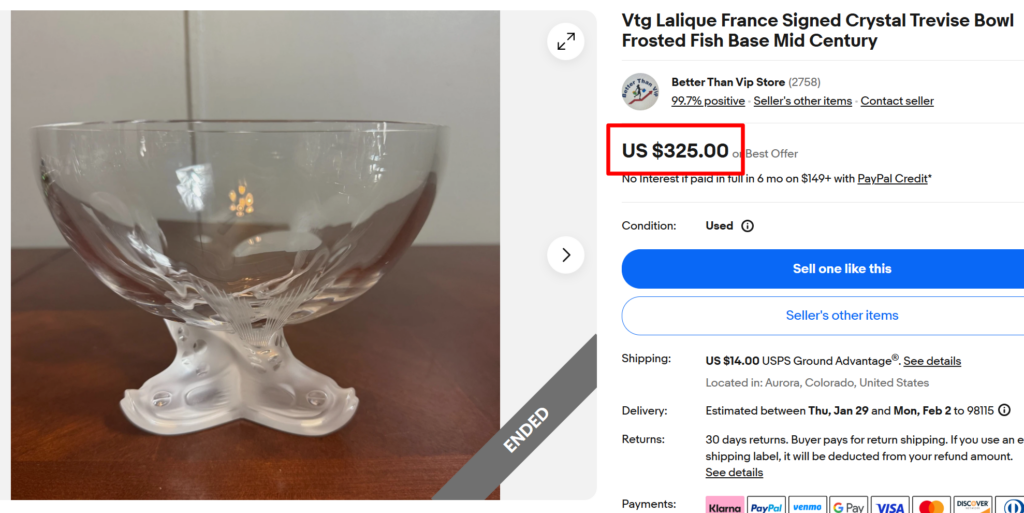
| Average Price | 200 – $1,500 |
| Manufacturer | Lalique (René Lalique/Lalique France) |
| Manufacturing Period | 1900-1920s |
| Pattern/Theme | Footed bowl with frosted fish base |
| Collector’s Note | Pristine pieces are more valuable. |
This unique piece by René Lalique features a crystal-clear bowl supported by a base of three frosted glass fish. You’ll see amazing, clear, and frosted glasswork at the base, with intricate details on the fish’s fins and tails.
This dish is a part of the brand’s “Trevise/Treves” Crystal line, inspired by nature and sea life. Authentic Lalique dishes are mostly signed with “Lalique France” or “R. Lalique.”
3. American Brilliant Period Cut Glass Punch Bowl
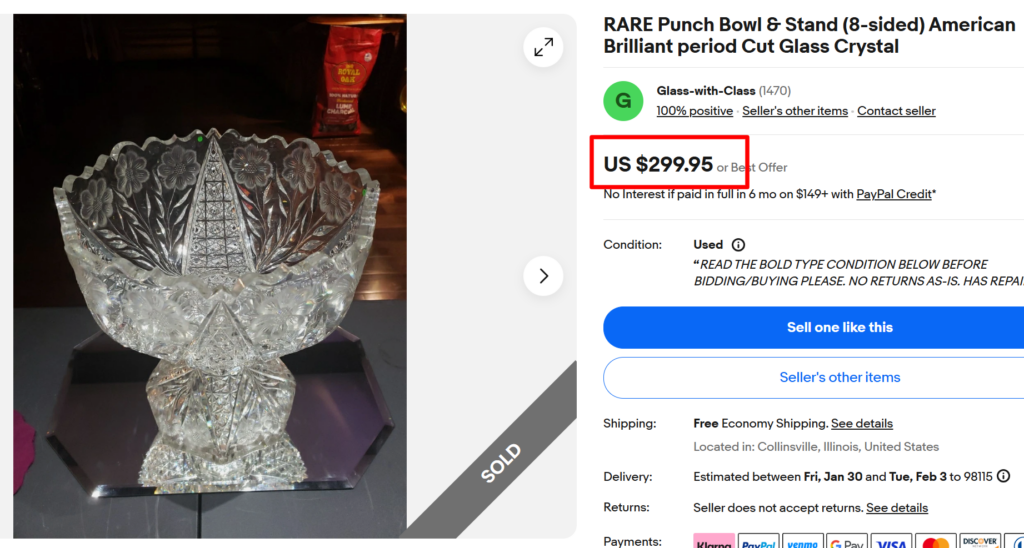
| Average Price | $200 – $500+ |
| Manufacturer | Various (Hawkes, Libbey, Dorflinger, Hoare, Tuthill) |
| Manufacturing Period | 1876-1916 |
| Pattern/Theme | Deep-cut geometric & floral patterns |
| Collector’s Note | Deep cut & clear glass dishes are rare. |
Made during the American Brilliant Period (1876-1916), this antique punch bowl shows elaborate and deep hand-carved designs made using stone wheels. Common popular patterns include hobstars, pinwheels, fans, and diamonds from makers like Hawkes, Libbey, Dorflinger, and Hoare.
Production of these pieces went down after World War I, making existing pristine pieces highly collectible.
4. Royal Lace Cobalt Cookie Jar
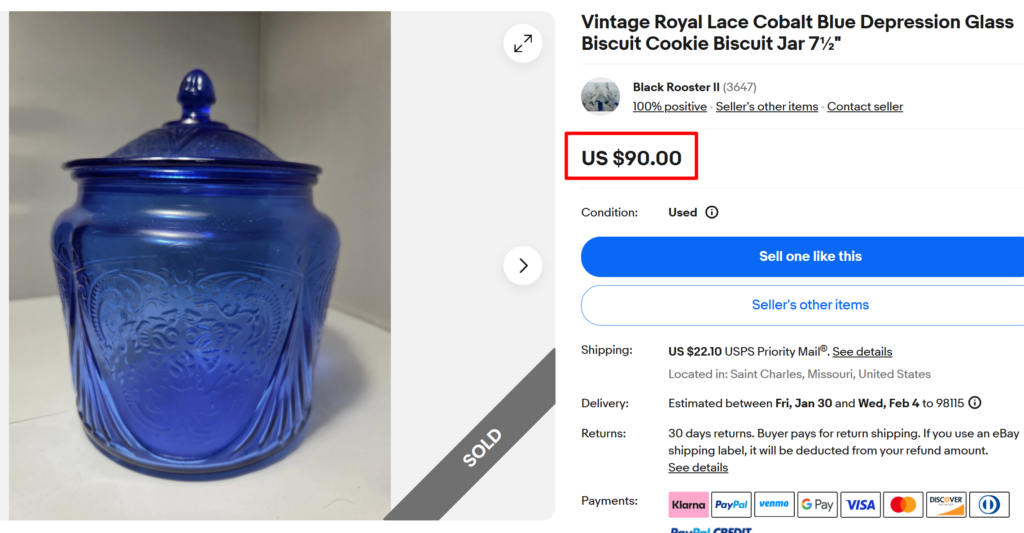
| Average Price | $100 – $500 |
| Manufacturer | Hazel Atlas Glass Company |
| Manufacturing Period | 1934-1941 |
| Pattern/Theme | Intricate lace scrollwork |
| Collector’s Note | Cobalt blue is rarest color. |
Hazel Atlas made the “Royal Lace” pattern from 1934 to 1941 during the Great Depression, featuring lace-like scrollwork molded into the glass.
The cobalt blue version called “Ritz Blue” was produced in much smaller quantities than pink or green, making it rare today. These cookie jars were sold cheaply or given away as promotional items, but are now valuable because of scarcity!
5. Anchor Hocking’s Mayfair (Open Rose) Blue Depression Compote
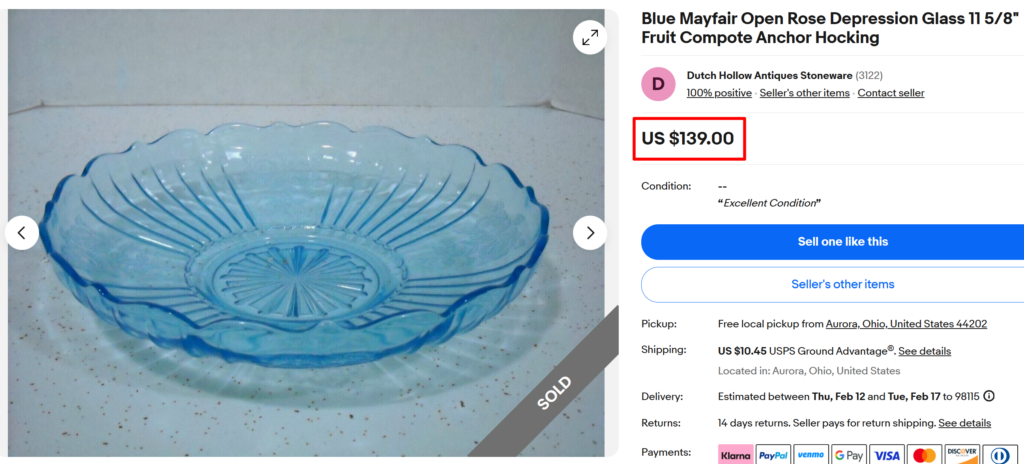
| Average Price | $100 – $350 |
| Manufacturer | Hocking Glass Company |
| Manufacturing Period | 1931-1937 |
| Pattern/Theme | Open Rose design & Art Deco elements |
| Collector’s Note | Blue antique glass dishes are valuable. |
“Mayfair” or “Open Rose” is one of the most renowned patterns from Hocking Glass Company. The name comes from the molded rose design between thick ribs.
This pattern was released in different pieces, including antique glass candy dishes, footed compotes, like this, and or dessert plates.
While “Mayfair” is common, the blue color was made in smaller quantities than pink or green, making it more desirable and valuable.
6. Northwood Grape & Cable Carnival Glass Banana Boat
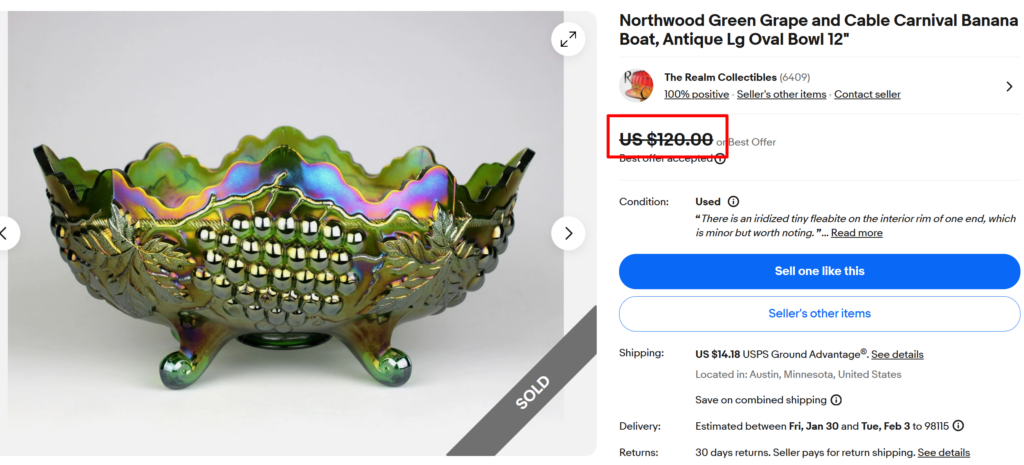
| Average Price | $150 – $800 |
| Manufacturer | Northwood Glass Company |
| Manufacturing Period | 1908-1925 |
| Pattern/Theme | Grape clusters with cable design |
| Collector’s Note | Green, purple & ice blue dishes are rare. |
Northwood’s antique “Grape and Cable” carnival glass dishes are extremely hot collectibles, with scarce colors like green, ice blue, and purple. You can easily spot this pattern with those grape clusters and twisted cables.
This is a banana boat, an oval serving dish used for serving fruits. The pattern is also available on other dishware like punch bowls, dessert bowls, creamers, and more.
The pattern lasted until 1925, when the company closed, making existing pieces valuable.
7. Westmoreland Paneled Grape Milk Glass Punch Set
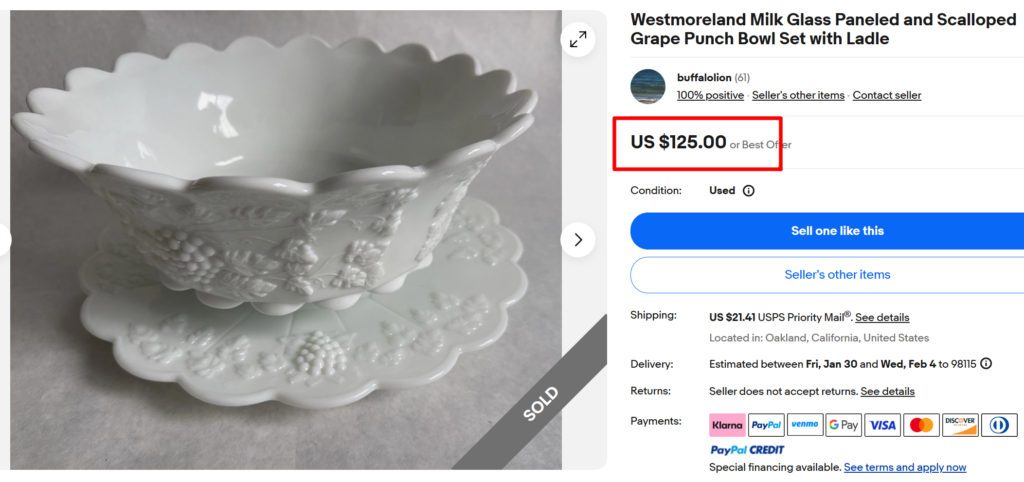
| Average Price | $100 – $300 (set) |
| Manufacturer | Westmoreland Glass Company |
| Manufacturing Period | 1940-1985 |
| Pattern/Theme | Paneled grape clusters and leaves |
| Collector’s Note | Collector’s Note |
Westmoreland brought out the “Paneled Grape” pattern around 1940, featuring grape clusters and leaves in panels around each piece. It was a massive hit until 1985 when the company stopped making it.
Complete “Paneled Grape” punch bowl sets with a large bowl, footed base, and ladle are highly collectible.
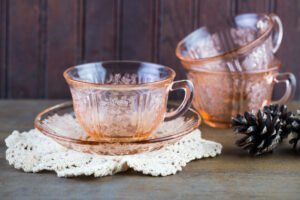
8. Jeannette Adam Pink Depression Glass Pitcher
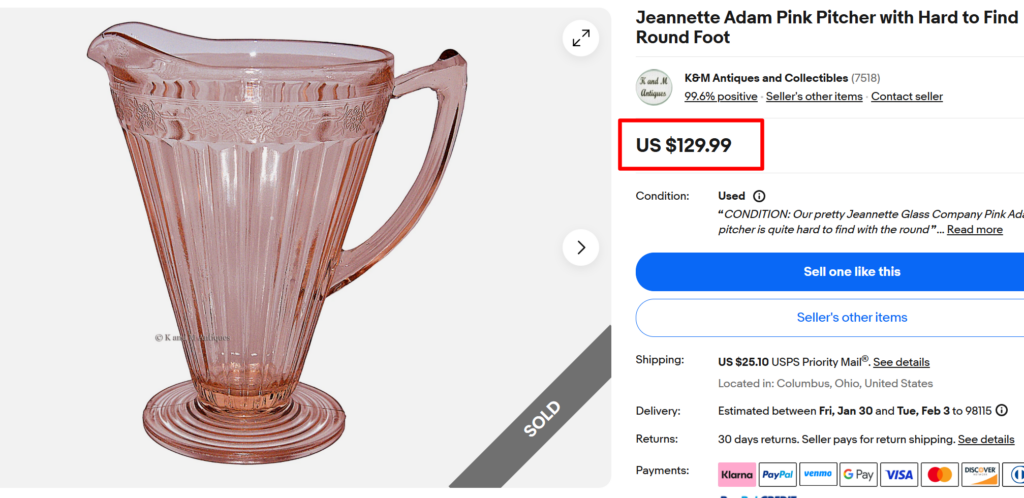
| Average Price | $100 – $400 |
| Manufacturer | Jeannette Glass Company |
| Manufacturing Period | 1932-1934 |
| Pattern/Theme | Floral & paisley design with ribbed edges (sides) |
| Collector’s Note | Pink, round-footed pitchers are rare. |
Jeannette’s “Adam” dishes have floral designs with paisley swirls and ribbed edges. The company made the pattern for only two years, 1932 to 1934, which already makes these pieces scarce.
This pitcher has a round foot base, and this style is relatively hard to find, especially in pink. You can also find antique green glass dishes in this pattern, which are more common.
9. Cameo (Ballerina) Yellow Depression Glass Plates
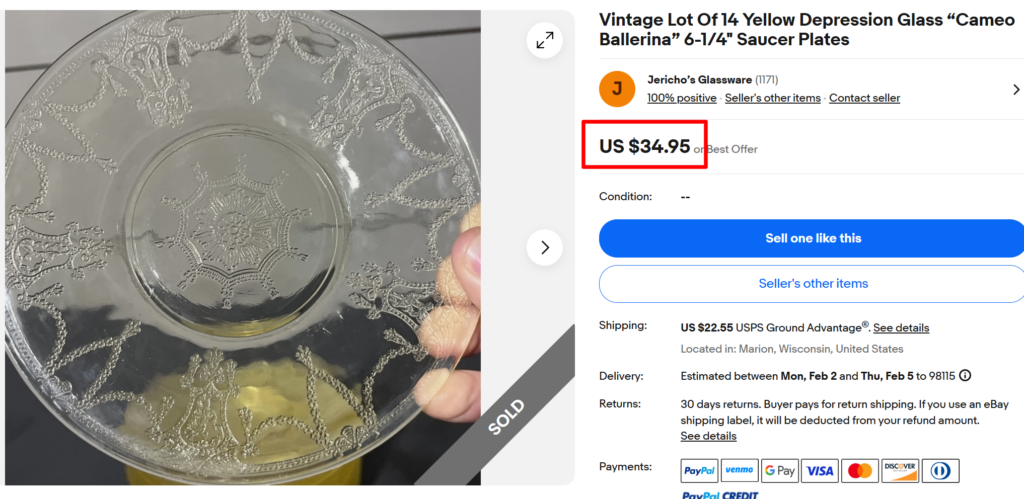
| Average Price | $25 – $100 per plate |
| Manufacturer | Hocking Glass Company |
| Manufacturing Period | 1930-1934 |
| Pattern/Theme | Dancing girl silhouette with garlands |
| Collector’s Note | Yellow is rarer than green or clear. |
“Cameo” or “Ballerina” dishes are Hocking’s first mold-etched dinnerware pieces. Green was the primary color for this pattern, while antique yellow (or topaz) or amber glass dishes were made in much smaller numbers, making them rarer.
Cameo dishes show a dancing woman surrounded by swirls and beaded details. This is one of the most popular Depression glass patterns and, hence, is super collectible.
Collector’s Tip: To spot genuine Cameo dishes from 1970s reproductions, note the following: The dancing figure should be visible and detailed against the light, and the design should be present on both the top and bottom.
10. Westmoreland Satin Lotus Green Plate
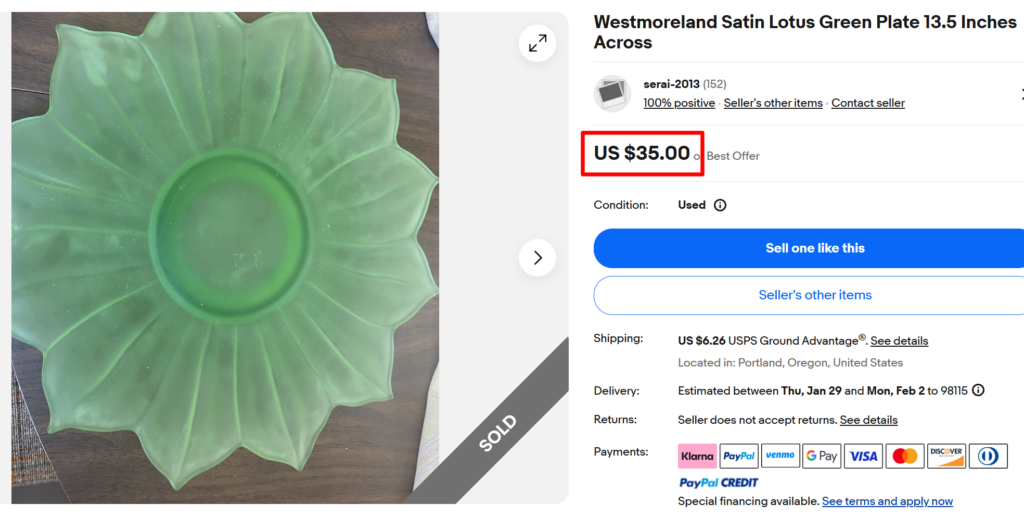
| Average Price | $25 – $75 |
| Manufacturer | Westmoreland Glass Company |
| Manufacturing Period | 1950s-1980s |
| Pattern/Theme | Lotus flower (petal)-shaped edge |
| Collector’s Note | Uranium green pieces are worth more |
This is an example of Westmoreland’s Mid-century style decorative dishes from the 1950s-1980s.
The Lotus pattern shows flower petals radiating from the center, with a unique satin finish that comes from acid-etching the glass surface. Glowing uranium Lotus plates generally fetch more than milky white or clear dishes.
Tips for Identifying Genuine Antique Glass Dishes
Since most old glass dishes lack specific marks and many patterns look nearly identical, spotting authentic antique dishes can be tricky! Assessing the following signs will make it easier for you:
How It Was Made?
The method used to make a glass dish can reveal a lot about the age and authenticity of the dish. Antique glass often shows clear signs of being hand-blown or early machine-pressed, like slight imperfections, mold seams, tiny bubbles within the glass, and pontil marks.
Modern glassware generally doesn’t show these irregularities. And if it does, you can easily know they’re fake.
Manufacturer’s Marks
As I already said, not all antique glass dishes have maker’s marks, but many do, mainly on the base. Some makers that marked their glassware are:
- Northwood (underlined “N” in a circle)
- Fenton (oval mark)
- Hazel-Atlas (the “H over A” logo)
- Libbey Glass (acid-etched “Libbey”)
- Imperial Glass (“Stylized IG” mark/”I” and “G” are superimposed)
But remember, not every glass piece from the above-listed manufacturers is marked. And some marks changed over time. The best way to identify is to check the brand’s authentic marks guidelines or catalogs to match the marks.
Also, since many makers didn’t mark their pieces, the absence of a mark does not mean it’s a reproduction. You can use other clues to spot the piece.
Pattern Recognition
Hundreds of patterns were created by different manufacturers, each with its own look. This is why knowing the pattern on your antique dish can help you identify it quickly
So, be sure to check out some reference guides and online databases to get to know the different patterns from different manufacturers.
Some popular antique glass dish patterns include Royal Lace, American Sweetheart, Cherry Blossom, Mayfair, and different carnival glass designs with peacocks, grapes, and flowers.
Weight and Feel
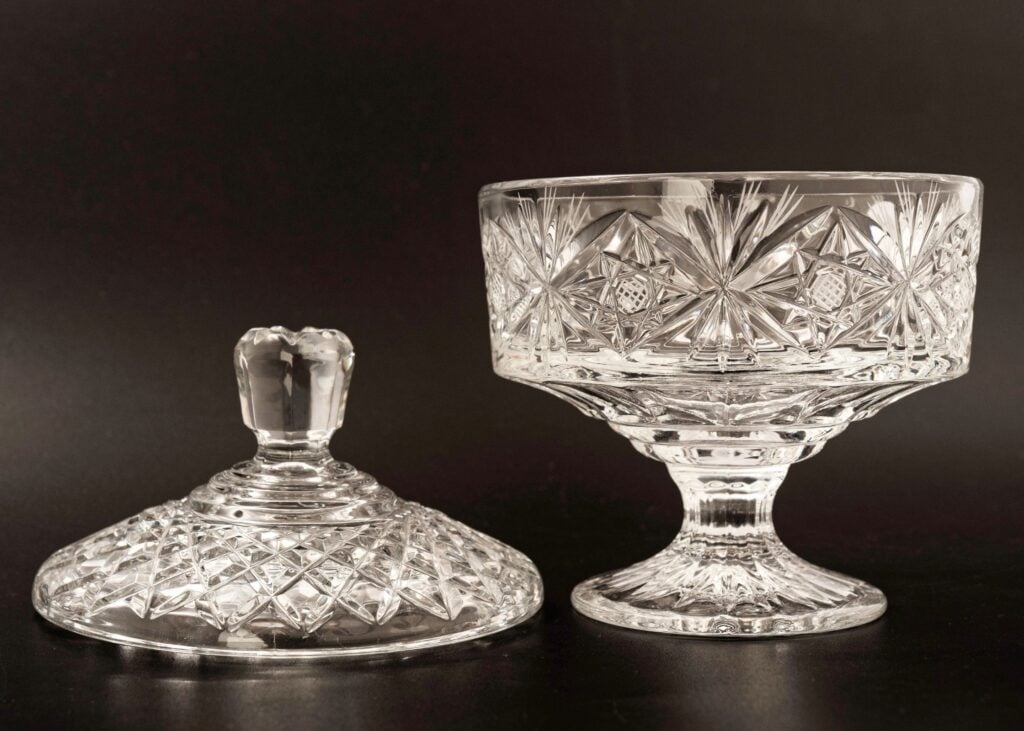
Real antique glass dishes usually feel heavier than modern glassware because of different manufacturing processes and materials.
You can also feel the difference between the older and newer glass dishes: older ones tend to be smoother, and the newer reproductions are usually rougher. Touch the edges to see the differences.
How to Know If an Old Glass Dish is Valuable?
To find out whether your old glass dishes are worth anything, you must assess the following factors:
- Condition: The condition of antique glass dishes is the biggest value driver, because even highly desirable pieces lose value if damaged. This means mint-condition pieces without chips, cracks, cloudiness, or wear bring premium prices.
- Rarity & Production Runs: If a piece was made in limited numbers or for a short time, it becomes rarer and more valuable over time. This includes short-lived patterns, styles, colors, or experimental pieces. Like, Royal Lace in cobalt blue!
- Pattern & Designs: Naturally, some patterns are just more popular and loved than others, like “Royal Lace,” “Cameo,” and “Farmyard” carnival glass. Pieces in popular designs tend to be collectible despite being common.
- Color Variations: Color has a big impact on vintage glassware across all glass types. In Depression glass, tangerine, alexandrite, and cobalt blue pieces are worth more, while in carnival glass, red, ice blue, or Vaseline are rarer. Even in milk glass, colored versions in pink, blue, or black are more sought-after!
- Size & Form: For glassware, larger pieces and complete sets command premiums. Also, rare shapes like punch bowl sets, water pitchers, butter dishes, and serving platters are more valuable than cups or saucers.
- Age: While age doesn’t automatically add value, dishes from specific periods are more desirable. For example, Victorian-era milk glass (1870-1910), early Depression glass (1929-1934), and pre-1940 carnival glass are generally more sought-after than later pieces.
Note: This article is intended for informational, educational, and entertainment purposes only. Some images are illustrative and may not represent actual brands, products, or related entities. All trademarks, product names, brand logos, packaging, and other intellectual property referenced remain the exclusive property of their respective owners. Any brand mentions or references are provided solely for descriptive and educational context and do not imply any formal or commercial association.