Antiques Know How Research
Vintage Bud Vases Value
Antiques Know How’s in‑depth review of eBay sales shows that most vintage bud vases sell for $20 to $80 at flea markets or thrift shops, while rare designs from top-tier makers can sell for $75–$2,000+. The most collectible bud vases include Fenton topaz‑opalescent Cactus, Moser stone‑cut underlaid, Gallé cameo glass, Tiffany sterling silver, Rookwood art‑pottery, Blenko “Rocket” Tangerine, Daum pâte‑de‑verre, Wedgwood jasperware, and Murano latticino crystal vases. Check the maker, glass or pottery technique, color/pattern rarity, and condition for value.
Antiques Know How
What is a Bud Vase?
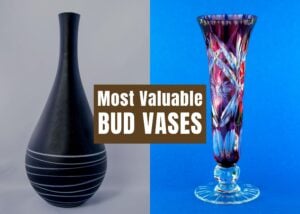
A bud vase is a vase that is made to hold one flower or a few flowers. These vases are usually not very tall; they are between 5 and 12 inches high. They have a slim neck and profile, which helps to keep one flower standing up straight.
Bud vases are appealing because they were made by nearly every major pottery, glass, and metalwork company. You can find them in different materials as well, like Bohemian cameo glass, American art pottery, and French crystal.
Because they are small, a lot of them are still in good shape after many years, making them more collectible.
12 Most Valuable Bud Vase Designs Worth Knowing
Bud vases were made from lots of materials, like art pottery, cameo glass, crystal, sterling silver, and pressed glass. The most special pieces come from European glasshouses and American pottery studios and luxury brands that put a lot of skill into making even the smallest details.
Here are 12 rare bud vases that collectors really want to find today.
1
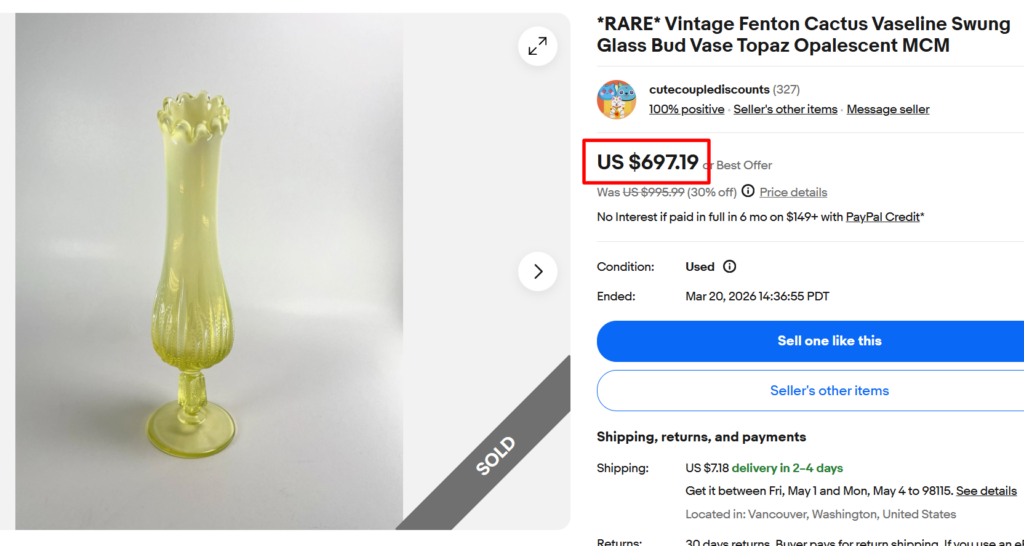
Fenton Cactus Swung Bud Vase
Typically sells for $150 – $700
| Average Value | $150 – $700 |
| Style | Pressed glass, topaz opalescent (vaseline glass) |
| Production Period | 1940s – 1950s |
| Key Features | Cactus pattern, glows under blacklight |
| Collector Notes | Tall swung vases are rarer. |
Fenton‘s Cactus pattern in topaz opalescent is a pressed glass design with a raised cactus-like texture. This is a “Swung” vase, which means the piece was stretched while hot to create an elongated shape.
These vases contain uranium oxide, which makes them glow green under a blacklight, a key identification feature to check authenticity. Swung bud vases, especially in rare colors, are among the most valuable pieces in this category.
2
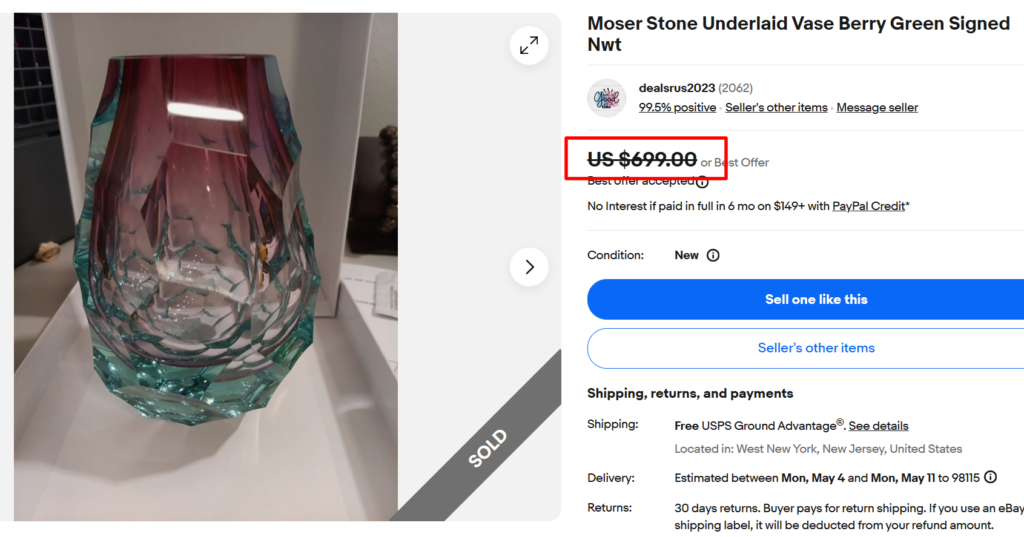
Moser Stone Underlaid Glass Bud Vase
Typically sells for $400 – $800
| Average Value | $400 – $800 |
| Production Period | Late 1800s – present |
| Key Features | Faceted crystal, underlaid (two-color) glass |
| Collector Notes | Older acid-etched signatures are more valuable. |
Moser’s stone-cut underlaid vases use thick crystal with deep facets and two-color layering; one color sits beneath another. This example features green glass on the outside and berry color on the inside.
The Czech glasshouse has been making luxury crystal since 1857, and they’ve never used lead in their glass, which is one way to distinguish it.
Both vintage and current-production Moser bud vases hold value, but older examples with acid-etched signatures on the base are more desirable.
3
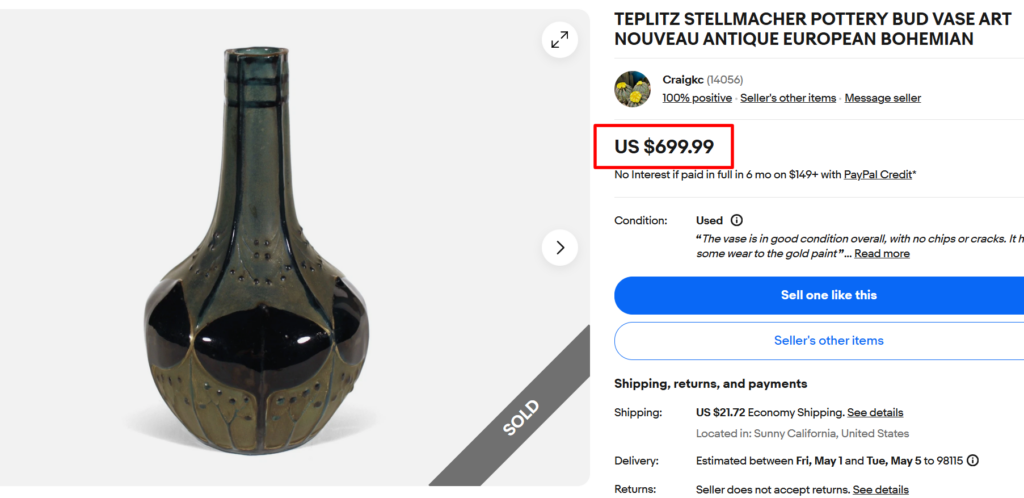
Teplitz Stellmacher Pottery Bud Vase
Typically sells for $350 – $750
| Average Value | $350 – $750 |
| Production Period | 1905 – 1912 |
| Key Features | Unglazed stoneware with applied white relief, sprigged figures |
| Collector Notes | Pre-1860 pieces lack “ENGLAND” on the mark |
Teplitz pottery bud vases have a distinctly Art Nouveau character with organic shapes, applied leaf or floral decorations, and mottled glazes with gold accents. They were made in the Turn-Teplitz region of Bohemia (now the Czech Republic) in the late 1800s and early 1900s by the Stellmacher family, among others.
You’ll sometimes see these alongside pieces marked “Amphora” or “RSTK” (Riessner, Stellmacher & Kessel); those are related manufacturers from the same area. Because these were produced in smaller numbers, finding pristine bud vases is quite rare today.
4
Tiffany & Co Sterling Silver Bud Vase
Typically sells for $300 – $800
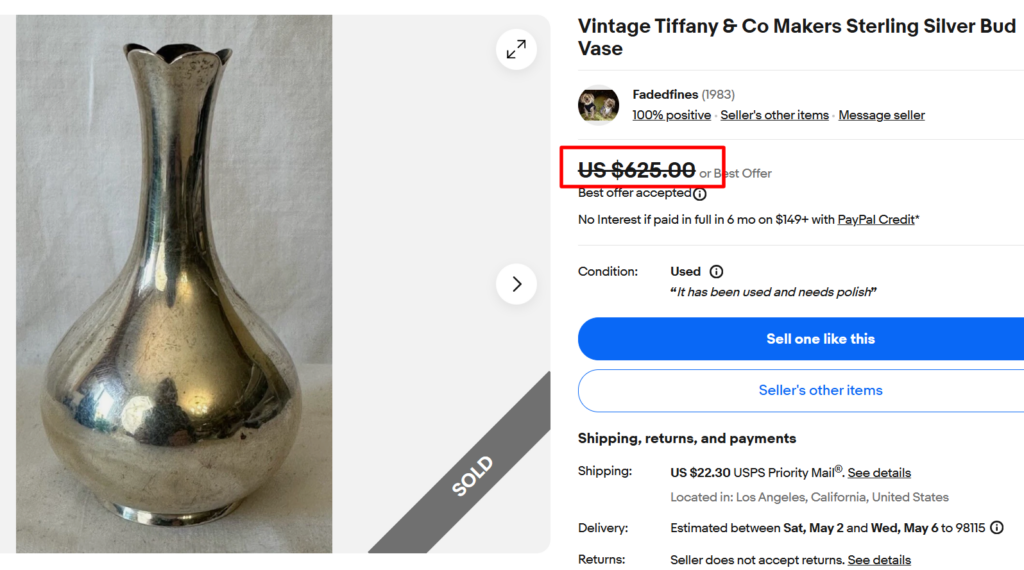
| Average Value | $300 – $800 |
| Production Period | Late 1800s – present |
| Key Features | Silver body (polished or decorated) |
| Collector Notes | Check the “Tiffany & Co. Makers” stamp & pattern number |
Tiffany bud vases in sterling silver range from simple polished forms to more detailed Art Nouveau and Art Deco designs. This one is a simple design with no engraved or embossed design.
The base is typically marked “TIFFANY & CO.” with “MAKERS” and a pattern number. The silver content alone gives these vases melt value, but the Tiffany name adds a premium well above that.
Condition is critical here for Silver vases. Dents, deep scratches, and over-polishing can reduce the value significantly.
5
Rookwood Art Pottery Bud Vase
Typically sells for $200 – $600
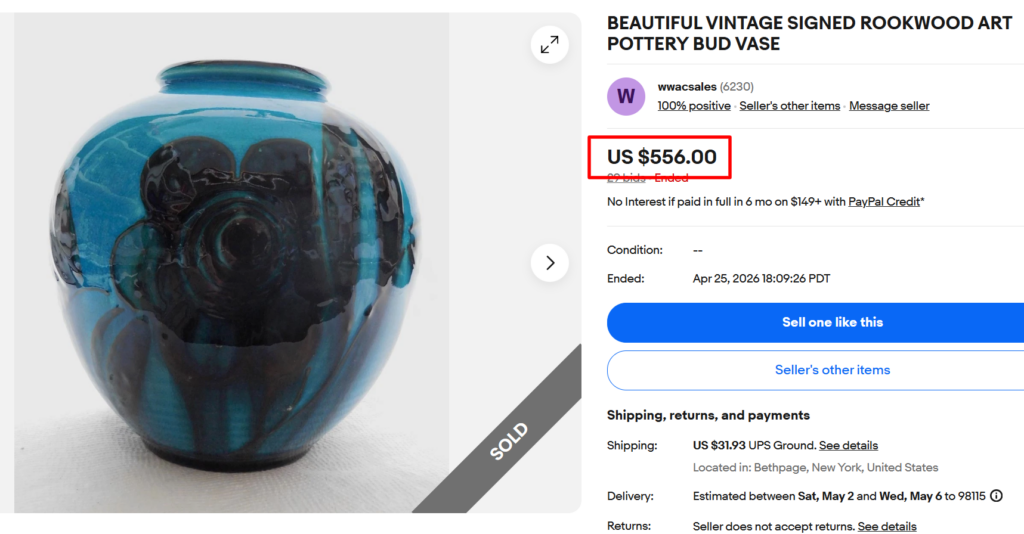
| Average Value | $200 – $600 |
| Production Period | 1880s – 1960s |
| Key Features | Glazed art pottery, hand-decorated |
| Collector Notes | Vellum, Standard Glaze command premiums |
Rookwood bud vases are hand-decorated American art pottery, made in Cincinnati starting in 1880. They come in several glaze types: Standard, Vellum, and matte being the most common.
This vase features a stunning deep blue and black “drip” glaze, with floral or abstract patterns underneath. Each Rookwood piece is hand-thrown and individually glazed, so each one is unique.
The value of these vases lies in the artist cipher. Pieces signed by a known decorator can sell for several times more than unsigned production work. Also, check the flame marks on the back for authenticity.
6
Blenko Tangerine Rocket Bud Vase
Typically sells for $250 – $500
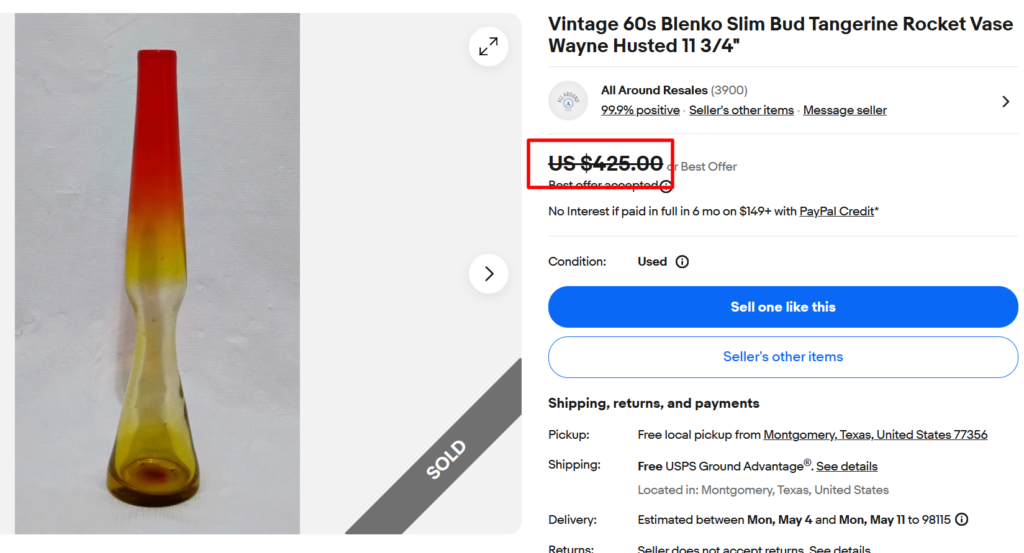
| Average Value | $250 – $500 |
| Production Period | 1960 – 1961 |
| Key Features | Hand-blown Tangerine ombré glass, elongated rocket shape |
| Collector Notes | Sandblasted Blenko mark used 1958–1961 only |
The Blenko “Rocket” vase is a hand-blown mid-century piece designed by Wayne Husted. It was produced only in 1960 and 1961, which makes it a rare sight in the vintage market today.
The color of this Blenko vase is one of its most desirable features. It starts as a red-orange color at the top, and then gets lighter and turns into a golden amber color at the bottom. Also, check the base for a sandblasted “Blenko” mark; that marking style was used only from 1958 to 1961.
7
Lalique Femme Fleurs Crystal Bud Vase
Typically sells for $200 – $450
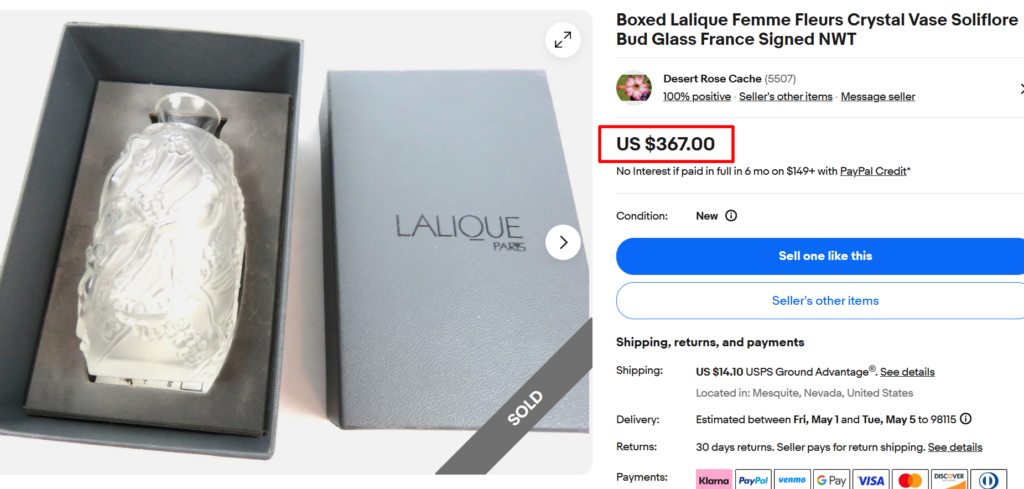
| Average Value | $200 – $450 |
| Production Period | Modern production |
| Key Features | Frosted & clear crystal, figurative design |
| Collector Notes | Original box and papers add value. |
Although not a vintage piece, Lalique’s Femme Fleurs (Women and Flowers) is a highly collectible piece because of the brand and the craftsmanship involved.
It features female figures entwined with flowers in a mix of frosted and clear crystal glass. These vases are often signed “Lalique France/Paris” on the bottom. The value ranges from $200-$250, but the original box and papers can add 10–20% to the value.
8
Roseville Pine Cone Blue Bud Vase
Typically sells for $150 – $350
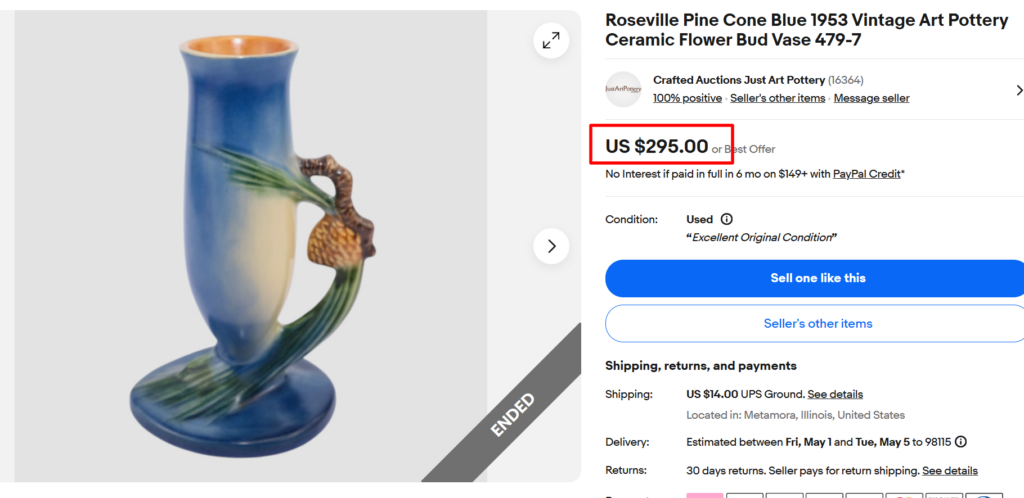
| Average Value | $150 – $350 |
| Production Period | 1935 – early 1950s |
| Key Features | Molded art pottery, raised pine cone branch |
| Collector Notes | Blue Pine Cone is the rarest. |
This is Roseville‘s Pine Cone bud vase. The pattern features realistic pine cones and needle branches in raised relief. The pottery made this design from 1935 until it closed in 1954.
The blue Pine Cone version is one of the most desirable variants of this pattern; it regularly outsells the brown and green versions by about two to one.
Each piece has a shape number (like 479-7) on the base that helps with identification. Since Roseville is long out of production, every vase you find is vintage and collectible.
9
Daum Nancy Pâte De Verre Crystal Bud Vase
Typically sells for $150 – $400
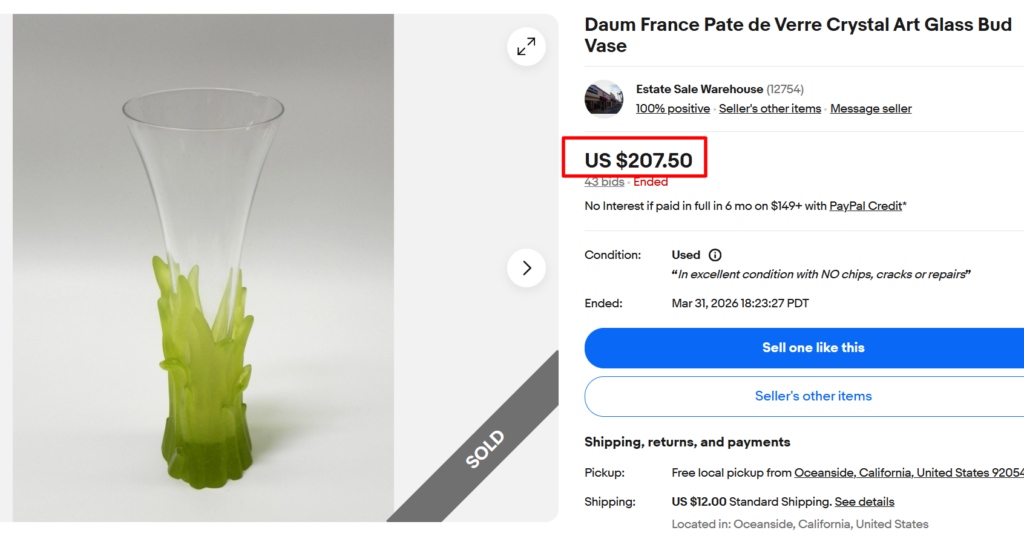
| Average Value | $150 – $400 |
| Style | Pâte de verre crystal with sculptural relief |
| Production Period | 1960s – present |
| Key Features | Frosted finish, molded floral elements |
| Collector Notes | Older Daum cameo glass pieces can exceed $1,000 |
Daum bud vases use pâte de verre (glass paste), a technique where glass is crushed into powder, pressed into a mold, and fired. The finished pieces have a frosted, translucent look with sculptural flowers, leaves, or animals molded in relief.
Daum has been based in Nancy, France, since 1878, and they’re the only glass company still using this ancient method. You can confirm the authenticity by the “Daum France” mark etched on the base.
10
Emile Galle Cameo Glass Bud Vase
Typically sells for $300 – $2,000
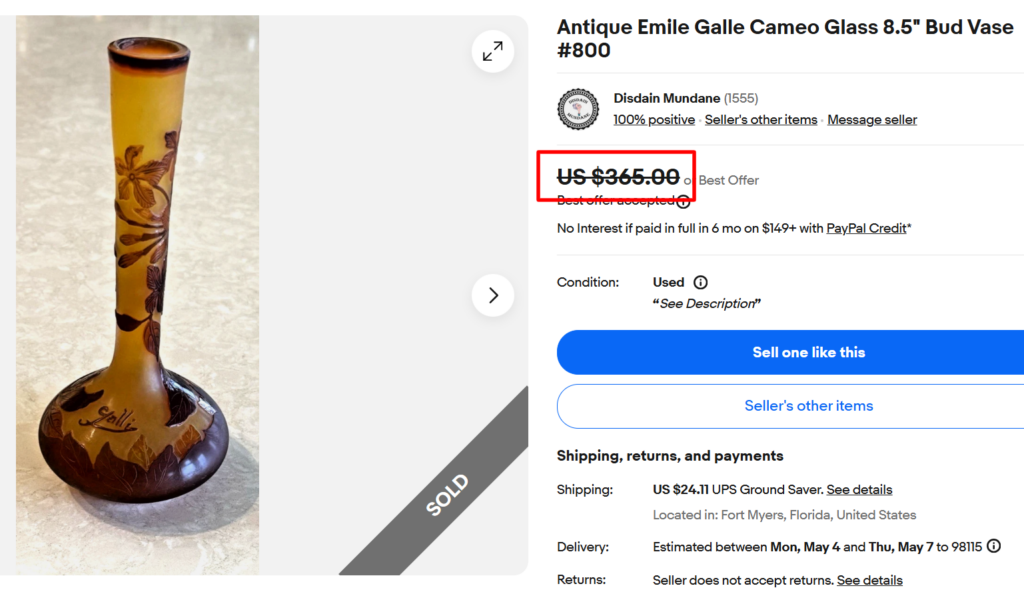
| Average Value | $300 – $2,000 |
| Production Period | 1890s – 1930s |
| Key Features | Cameo glass, acid-etched layered glass |
| Collector Notes | Star before “Gallé” indicates post-1904 production |
These are layered glass bud vases with botanical designs, like flowers, leaves, and sometimes landscapes, revealed through acid-etching. French glassmaker Émile Gallé developed this cameo technique in the 1890s, and his workshop continued production after his death in 1904.
Most vintage Gallé vases today are worth $300 to $2,000 range. But pieces Gallé personally made before 1904 are the rarest. You can track the age by the mark; a star before the “Gallé” signature means it was made after his death.
11
Wedgwood Blue Jasperware Bud Vase
Typically sells for $75 – $300
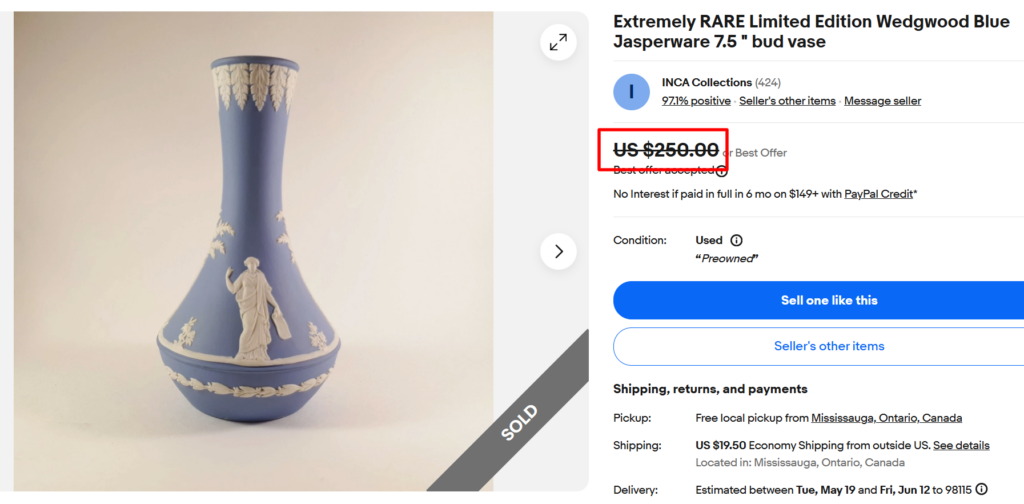
| Average Value | $75 – $300 |
| Production Period | 1770s – present |
| Key Features | Unglazed stoneware, applied white relief figures |
| Collector Notes | Pre-1860 pieces lack “ENGLAND” on the mark |
Wedgwood jasperware bud vases are easily recognizable by applied white relief designs on a blue matte stoneware body. The one shows white sprigged figures, along with trees and plants.
This type of unglazed stoneware has been in production since the 1770s, so there’s a wide range of age and quality out there. Most are fairly common, but limited editions and older pieces with crisper relief detail are valuable.
To estimate the age of your jasperware vase, get familiar with the backstamps Wedgwood used over the decades.
12
Murano Latticino Venetian Ribbon Glass Bud Vase
Typically sells for $100 – $250
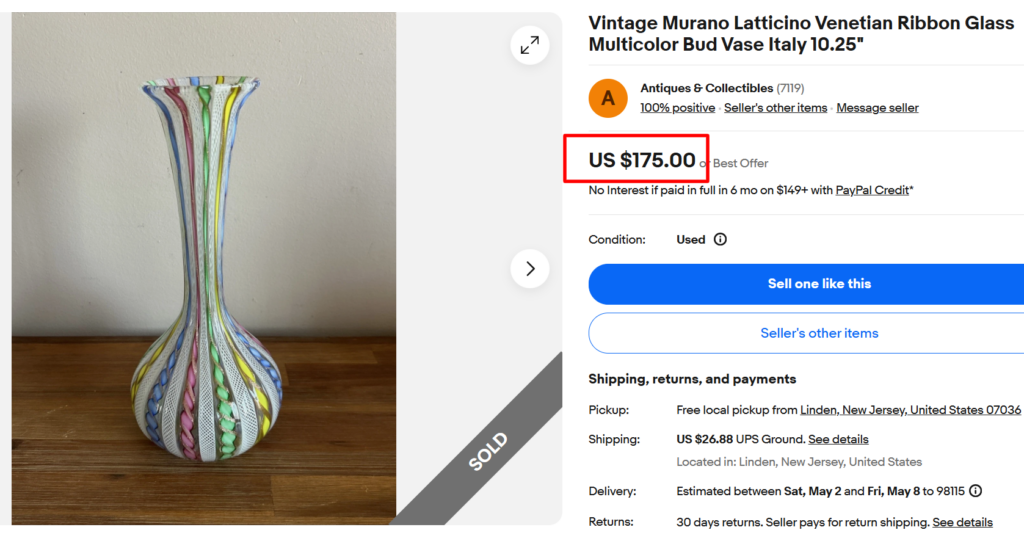
| Average Value | $100 – $250 |
| Production Period | Mid-1900s – present |
| Key Features | Hand-blown glass, latticino ribbon canes |
| Collector Notes | Look for original Murano stickers or labels |
Latticino is a Venetian glass technique where thin rods of colored and white glass are twisted together and embedded into clear glass. The result is distinctive multicolor ribbon patterns running through the vase’s body.
Each piece was handmade on the island of Murano, making each one unique. Vases with other Venetian glass techniques like Sommerso, Cristallo, and Millefiori are also quite collectible.
To ensure a genuine Murano piece, check the base for a pontil mark (the rough spot where it was broken off the blowpipe) and any surviving Murano stickers.
What Makes an Old Bud Vase Valuable?
The value of an old bud vase can range from $50 to $700, with the rarest pieces reaching $1,000. This wide range comes down to different factors, including the material, maker, rarity, and condition. Here’s how to assess these factors:
- Maker: Valuing an old vase is easier if you can identify who made it. If you have a vase from someone like Gallé, Daum, Rookwood, or Tiffany, it is most likely worth more than one that does not have a name on it. Always look at the bottom of the vase for stamps, the artist’s signature, or etched marks.
- Material and Technique: Hand-blown glass, hand-decorated pottery, acid-etched cameo, pâte de verre pieces are usually worth more as these methods take more skill than machine-pressed or mold-poured pieces. The more labor-intensive the technique, the higher the value.
- Color and Pattern: Certain colors are just worth more in specific lines. Blue Roseville Pine Cone and Topaz opalescent Fenton are perfect examples. If you’re evaluating a vase, check what collectors are actually paying for your specific color, not just the pattern in general.
- Age and Rarity: Just because a vase is old does not mean it is valuable. But if it’s old and not many were made, that can boost the value. For example, a bud vase that was only made for a year or two, like the “Blenko Rocket,” will usually sell for more money than a vase made for many years.
- Condition: The better the condition, the higher the value. Chips, cracks, and repairs are the first things to reduce the value. This is especially true for vases made of glass and crystal. For pottery, you should check if the glaze is flaking off and if the base is chipped. For silver vases, look for dents and deep scratches that are very deep.
Note: This article is intended for informational, educational, and entertainment purposes only. Some images are illustrative and may not represent actual brands, products, or related entities. All trademarks, product names, brand logos, packaging, and other intellectual property referenced remain the exclusive property of their respective owners. Any brand mentions or references are provided solely for descriptive and educational context and do not imply any formal or commercial association.