Antiques Know How Research
Hand-Painted Antique Plates Value
Antiques Know How’s detailed eBay review shows most vintage hand-painted plates sell for $5–$20, while professionally decorated, signed, or marked pieces with factory backstamps commonly range from $80–$5,000+. Top value goes to Limoges underglaze pieces, Nippon M-in-Wreath plates with Moriage, R.S. Prussia scenic molds, authentic Royal Vienna Imperial portrait plates, and Pickard or Coronet signed decorator works, where value depends on underglaze factory marks, separate studio marks, front artist signatures, hand-applied gilding, and sophisticated subject matter.
Antiques Know How
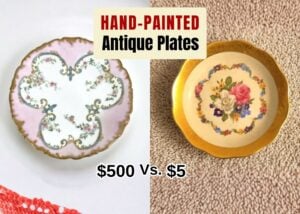
The “Hand Painted” stamp on the back of an old plate doesn’t mean what most people think. Some hand-painted antique plates sell for $500 to $1,500 on eBay. Most sell for $5 to $20, or sit in the listing queue and never move.
The gap comes down to a handful of details on the back, front, and edge of the plate. Once you know what to look for, you can sort a stack of inherited or thrifted hand-painted plates easily.
Why “Hand Painted” Isn’t a Value Sign on Its Own?
Since the late 19th century, two major types of hand-painted plates have been seen in the secondary market. And both look almost identical at first glance.
First are the pieces from 1891 until around 1921. The McKinley Tariff Act of 1890 required imported products to include their origin printed on them in English. So, many manufacturers from Japan, Germany, and France included “Hand Painted” along with their other marks, including “Nippon,” “Bavaria,” and “Limoges, France.” Most of these pieces are worth real money today.
The second type was a part of the China painting craze in America between the 1950s and the 1980s. During this time, people would purchase plain factory blanks like those that were used by professionals, like the Limoges and Bavarian varieties, and paint them at home.
Almost none of these have a resale market today, even though they say “Hand Painted” on the bottom. Telling the two types apart is how this guide will help you.
Five Quick Checks to Tell Valuable Hand-painted China
From certain backstamps to painting style, genuine antique handpainted plates possess unique features that you can easily spot without any expert help. Here are the 5 easy checks you should do first:
1. Is there a factory backstamp under the glaze?
Look at the piece against a strong light source. Any green, blue, or red marking beneath the glaze (and which you can not detect by feeling with your nails) is a genuine factory marking.
If the marking exists above the glaze, alone, it indicates that an amateur painter finished the blank plate himself.
2. Is there a separate decorator mark with the factory mark?
Two marks (one for the factory that made the blank, one for the studio that painted it) is the strongest value signal you can get on the back of a plate. Pickard, Coronet, and Stouffer are the studio names to learn first.
3. Is there an artist’s signature on the front of the plate?
A signature painted into the scene itself, not on the back, is the single biggest value lever. Front-signed plates by listed decorators routinely sell for $200 to $500 or more.
4. Does the gilding look hand-applied?
Genuine hand-applied gold has slight irregularities and a raised feel when you run a fingernail across it. Mechanical gold trim from later production is perfectly even and lies flat against the glaze.
5. Is the subject matter sophisticated?
Portraits, named fish species, hunting scenes, and detailed fruit still lifes point to professional decorators. A single rose in the center with a plain rim almost always points to a hobbyist.
The Marks That Mean a Lot for Value
When it comes to marked hand-painted china, certain markings have higher collectibility and value in the vintage china market. Below are the five most sought-after marks that signal a plate is likely in the $100-plus tier. These are the ones to memorize before your next thrift run or estate sale.
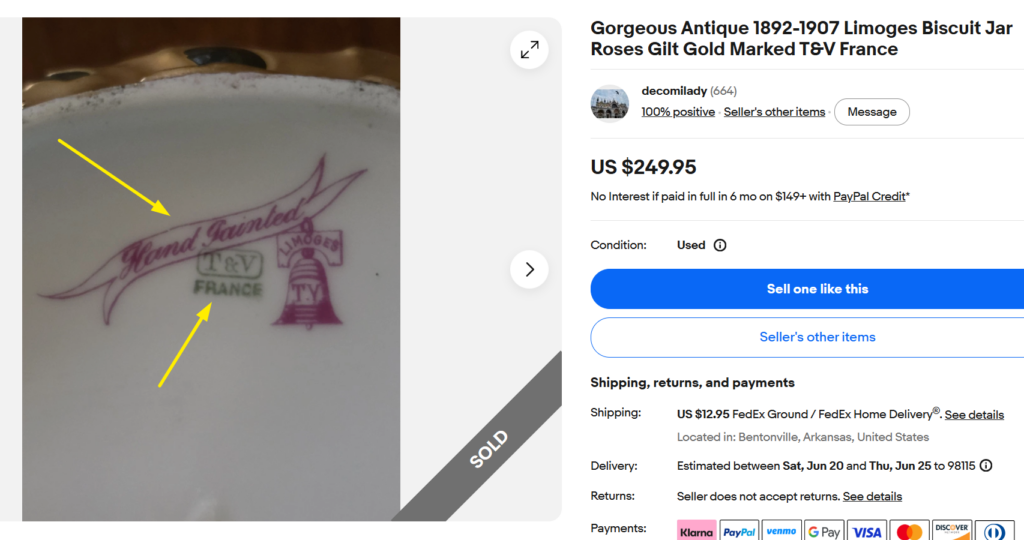
1. Limoges Underglaze Mark (France, 1890s to 1930s)
- Average Value: $80 to $400+ for decorated and signed examples
- Item Type: Hand-painted porcelain plate or cabinet plate
- Marks to look for: Green underglaze “Limoges France” stamp from Haviland, T&V (Tressemann & Vogt), or GDA, paired with a separate overglaze decorator mark or front signature
- Made: Roughly 1890 to 1930
- Collectibility: Strong, especially for signed pieces
Limoges is the most commonly misattributed brand name in the hand-painted plate industry. The city of Limoges was home to many porcelain manufacturers that produced blanks that were sent to decorating establishments all over Europe and America.
A plate marked merely “Limoges France Blank” in green on the reverse was painted somewhere else, and by whom is the key to its worth.
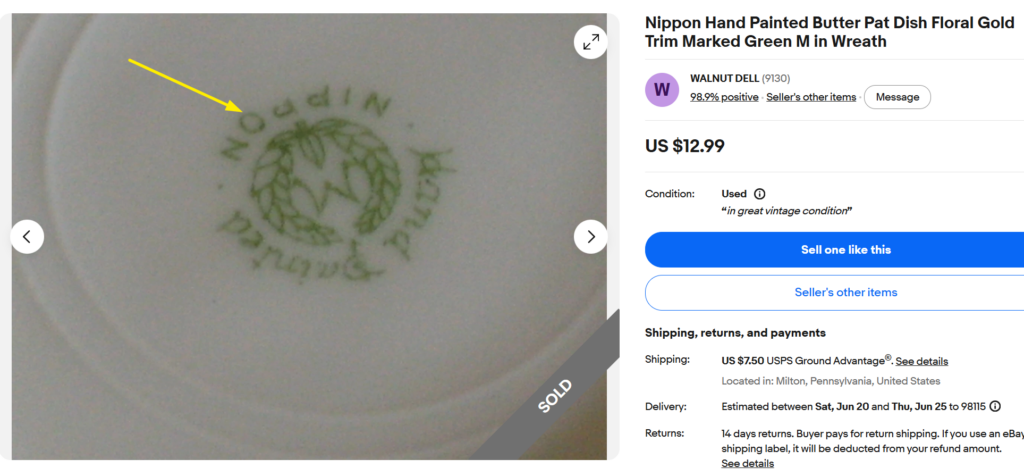
2. Nippon M-in-Wreath Mark (Japan, 1911 to 1921)
- Average Value: $25 to $200 for common pieces, $200 to $1,000+ for exceptional Moriage or Coralene
- Item Type: Hand-painted Nippon porcelain plate, bowl, or vase
- Marks to look for: Green “M” inside a wreath (Morimura Brothers, who founded Noritake), with “Hand Painted Nippon” below
- Made: 1911 to 1921 strictly
- Collectibility: High, especially with raised slip (Moriage) decoration
The M-in-Wreath is the mark most American collectors associate with Nippon, since Morimura Brothers exported huge quantities to the U.S. between 1911 and 1921. Following the 1921 customs regulation, plates used “Made in Japan” labels instead.
So, if your piece has the label “Nippon” but not “Japan,” it must have been manufactured before 1921. Plates with raised slip decoration (called Moriage), portrait scenes, or animal motifs sit at the top of the value range.
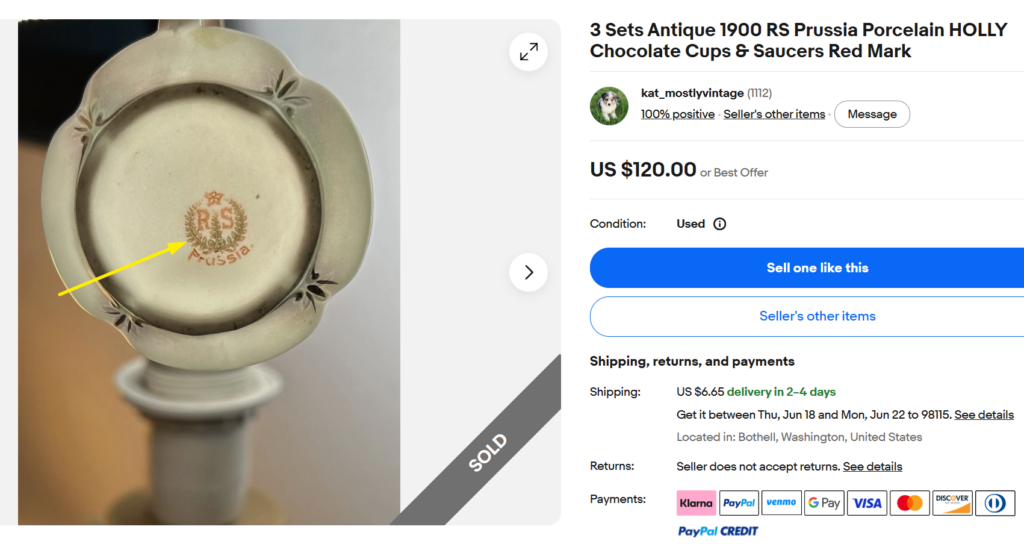
3. R.S. Prussia Red Mark (Germany, 1870s to 1918)
- Average Value: $85 to $125 for common floral pieces, $300 to $800+ for scenic, portrait, or animal-motif molds
- Item Type: Decorated porcelain plate, bowl, or serving piece
- Marks to look for: Red “R.S.” letters and a red star inside a green wreath, with “Prussia” in red below
- Made: Roughly 1870 to 1918 (Reinhold Schlegelmilch factory in Suhl)
- Collectibility: Very high, with active reproduction concerns
Notice the color combination on the mark: the letters and star are red, the wreath itself is green. Reproductions often get this wrong, using too much red or making the lines look thick and sloppy.
The porcelain is also thin, lightweight, and translucent. Hold an authentic piece up to a window, and your fingers behind it should cast a shadow through the plate.
Most R.S. Prussia plates on the market today are everyday floral designs priced between $85 and $125. The big money sits in rare molds (Iris, Poppy, Carnation) with scenic or portrait decoration.
4. Royal Vienna Beehive Mark (Austria, 1744 to 1864)
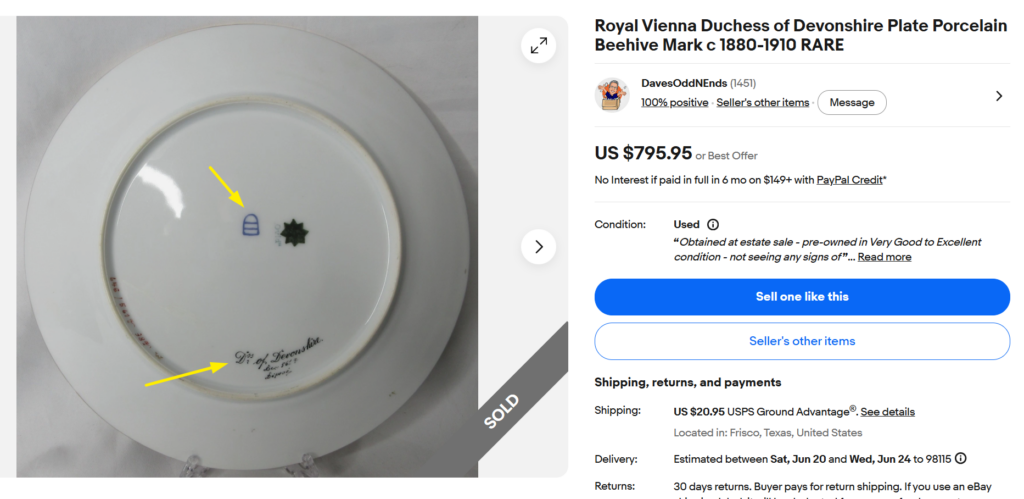
- Average Value: $200 to $600 for late “Royal Vienna style” plates, $1,000 to $5,000+ for authentic Imperial pieces
- Item Type: Hand-painted portrait or scenic cabinet plate
- Marks to look for: Blue underglaze “beehive” mark, which is actually a shield (the Habsburg Bindenschild) viewed upside down
- Made: True Royal Vienna 1744 to 1864; later “Royal Vienna style” pieces 1880 to 1920
- Collectibility: High across both eras
The mark you should look out for is the blue shield shape, which is underglaze and looks like a beehive when turned upside down. The two red flags for fakes are a mark done overglaze (the mark will sit on top and will be raised), and the perfect symmetry of the mark. Originals were hand-applied and show small irregularities.
Note: The Imperial and Royal Porcelain Manufactory of Vienna was shut down in 1864. This means that practically all “Royal Vienna” plates that you will encounter in estate sales have been produced from 1880 to 1920 by German and Austrian decorating companies using the Royal Vienna technique. These are still collectible and still sell in the hundreds. The truly old Imperial pieces are rare and usually appear at auction houses, not thrift stores.
5. Pickard or Coronet Signed Decorator Plates
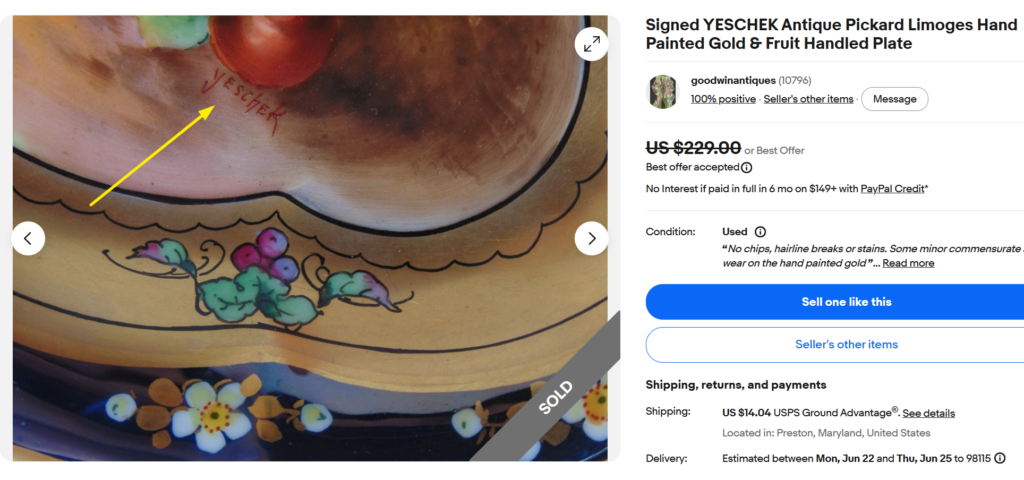
- Average Value: $200 to $500+ for listed Pickard artists, $20 to $40 for unsigned Bavarian blanks
- Item Type: Hand-painted plate on a French or German factory blank
- Marks to look for: Pickard or Coronet studio stamp on the back, plus an artist’s signature on the front
- Made: Pickard 1898 onward; the most valuable signed period runs 1898 to 1925
- Collectibility: Very strong for documented artists
Pickard was a Chicago decorating studio that bought blanks from Haviland Limoges and Bavarian factories, then employed trained artists to paint them. Names like Joseph Yeschek, Edward Challinor, Curtis Marker, and Robert Hessler are the ones collectors chase.
A plate signed by Yeschek on the front, with the Pickard mark on the back, sold recently in the $200 to $500 range. The exact same Haviland blank without the signature would bring $20 to $40.
How to Spot the $5 Hobbyist Antique Plates?
Just as authentic hand-painted plates show certain signs, hobbyist plates do so, too. The fastest way to identify amateur-painted china is to check for the following signs:
- A plain factory blank stamp with no decorator or studio mark alongside it.
- Decorations that completely rest atop the glaze. Run your nail along it; you will feel the ridges where the paint was applied over the fired clay.
- The back features a handwritten signature and date like “Mildred 1973,” or “Painted by Aunt Lou.”
- Subjects limited to only one floral pattern, placed centrally, such as roses, daisies, and violets.
- Colors characteristic of the ’60s-’70s craft kit era, such as pastel pink tones, green avocados, and yellow mustards.
These plates were thoughtful gifts and meaningful family pieces. They just don’t have a resale market today, because millions exist and almost no one is buying. If sentimental value matters, keep them. If you’re sorting to sell, this is the donate pile.
Note: This article is intended for informational, educational, and entertainment purposes only. Some images are illustrative and may not represent actual brands, products, or related entities. All trademarks, product names, brand logos, packaging, and other intellectual property referenced remain the exclusive property of their respective owners. Any brand mentions or references are provided solely for descriptive and educational context and do not imply any formal or commercial association.