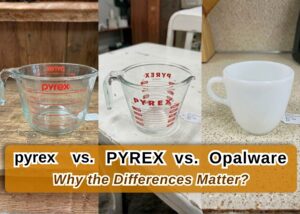
Vintage Pyrex is among the most delightful items to fall in love with at a thrift store; however, it’s also one of the items most susceptible to damage while washing at home. The wrong sponge, the wrong cleaner, even a hot rinse on a cold bowl can take a piece that survived sixty years and quietly ruin it in ten minutes.
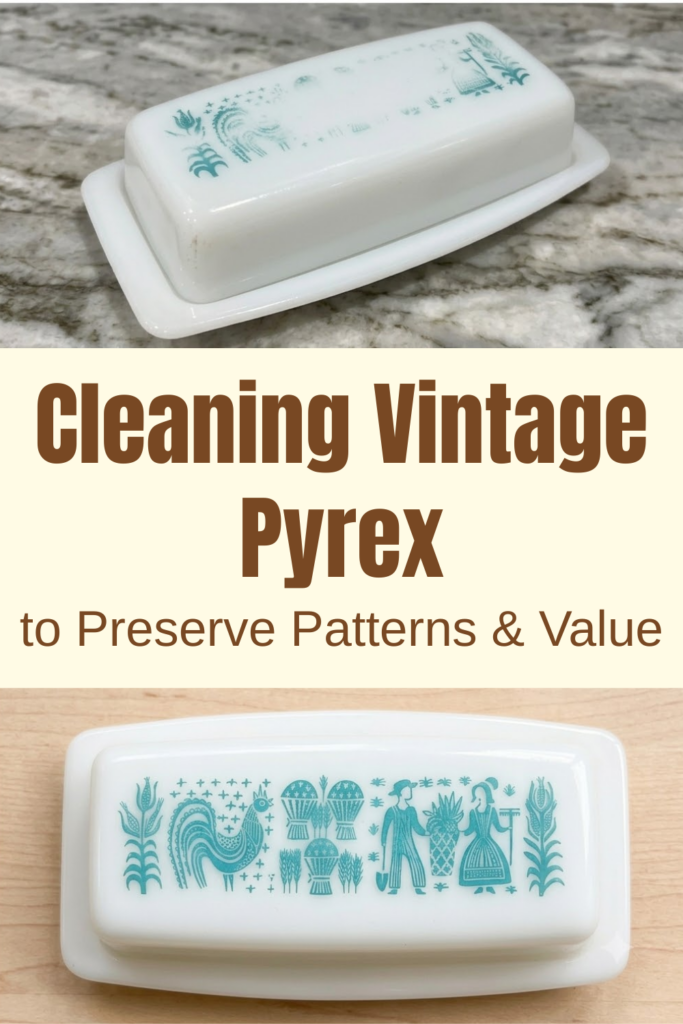
So before you go cleaning that grimy Butterprint or Spice of Life casserole, it helps to know what these pieces can and cannot take. The cleaning rules for vintage Pyrex differ from those for modern glass cookware. This guide shows how!
Why Vintage Pyrex Needs Different Care Than Regular Cookware?
It’s simple. The colored patterns on vintage Pyrex are not part of the glass. They were sprayed on as an enamel coating and then fired. So, they’re basically colored layers (designs) on top of the white opal glass.
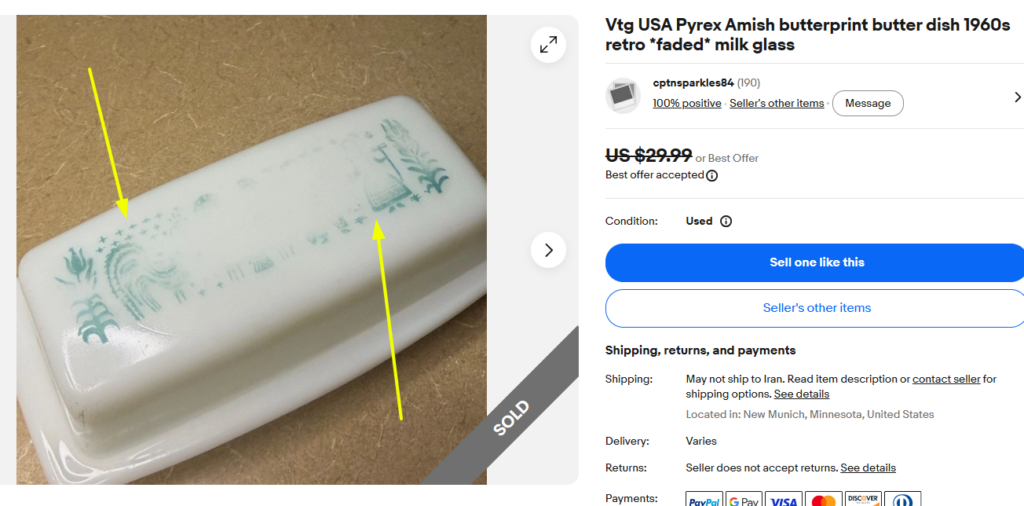
And because it’s not inside but on the glass, this layer is what fades, hazes, and lifts off. Once it’s gone, it’s gone. And it’s bad because vintage Pyrex with faded patterns loses most of its value.
Dishwasher detergent, harsh abrasives, and high heat are the three big offenders. They don’t always do visible damage on the first wash, but they wear that enamel down each time until the once vivid pattern looks washed out and chalky.
What You Need Before You Start
If you want to clean your vintage Pyrex, all you need are some basic items, which you almost certainly already have.
- A soft cotton dish towel for drying
- Warm water (never hot to start)
- Mild dish soap, the basic Dawn type
- A soft microfiber cloth or the yellow side of a sponge
- Baking soda for grease and light stains
- White vinegar for hard water haze
Cleaning Tip: You can also use Bar Keepers Friend, only if used carefully and only in certain spots.
Cleaning Vintage Pyrex – Step-by-Step Method
For day-to-day cleaning, keep it gentle. Most Pyrex pieces just need a soak and a wipe, not a scrub. Here’s how to do it properly:
- Ensure that the item is at room temperature before washing it. The use of hot water on a cool dish or cool water on a heated dish may cause antique Pyrex to break due to sudden changes in temperature.
- Soak the piece in warm, soapy water for 15 to 20 minutes. This loosens almost everything without any scrubbing.
- Wipe gently with a soft cloth. On the patterned side, use very light pressure and circular motions. No scouring pads, no steel wool, ever.
- Rinse with lukewarm water, again to avoid sudden temperature changes.
- Immediately dry the dish using a soft cloth. Leaving it to air-dry causes water marks on it, especially where there are dark patterns.
For most thrift finds, that routine alone will get a piece back to looking good. The real test starts when you’ve got stains baked in.
Cleaning tip: Remember to avoid the heavy-duty cleaners and the green scrubber side of the sponge.
Removing Stubborn Stains and Burnt-On Food
Burnt food, greasy residue, and hard water marks are all common if your Pyrex dishes have been used regularly. These respond to different treatments, so you must know what to use for what.
- Baking soda paste is good for greasy residue and light staining. Simply mix a few tablespoons with just enough water to make a thick paste, spread it on the dirty spot, and let it sit for 20 to 30 minutes. Wipe it off with a soft cloth.
- A vinegar soak helps with cloudy haze and hard water stains, common for dishwashed pieces. Fill the dish with a half-and-half mix of warm water and white vinegar, and let it sit for an hour. Rinse and dry.
Note: The vinegar soak will not help with dishwasher etching, which is permanent damage to the glass.
- Bar Keepers Friend is your best bet for stubborn stains, though there are a few things to keep in mind when using it. It must only be used on non-colored and non-patterned items; otherwise, if you are unsure, try it on an inconspicuous area first. To clean with it, just sprinkle some on a wet sponge and clean either the clear inside part or the white back part, and rinse after a minute. Even on white pieces, it can dull the shine if left too long.
Is Vintage Pyrex Dishwasher Safe?
No. And the short version of why is that dishwasher detergent and high heat are designed to strip residue, which is exactly what your enamel pattern is made of.
Modern, clear Pyrex is fine in the dishwasher. The vintage colored pieces are not. You’ll often see thrifted pieces described as “dishwasher dead,” which means the pattern has been faded to a washed-out ghost of what it was.
So, only hand-wash your old Pyrex, always. There is no exception worth the risk.
Storing and Displaying Your Pieces Safely
For vintage Pyrex, just cleaning is not enough. How you store and display a piece between uses also matters a lot for keeping it in good shape. Keep these storage tips in mind:
- Slip a piece of felt, a coffee filter, or even a paper towel between each piece when you stack bowls or casseroles. This will keep the ring marks and scratches.
- Your collection should be away from the sun, since UV rays will cause colored enamel patterns to fade gradually, especially red, pink, and orange.
- An open shelf display works well for vintage Pyrex, just rotate the pieces every few months if they sit in a sunny spot.
- Avoid keeping it in garages, attics, and uninsulated storage rooms for too long, as the swings in temperature stress the glass.
Handle your Pyrex piece properly, and it will maintain its pattern, luster, and value for the next six decades, just as it has done so for the last six decades.
Note: This article is intended for informational, educational, and entertainment purposes only. Some images are illustrative and may not represent actual brands, products, or related entities. All trademarks, product names, brand logos, packaging, and other intellectual property referenced remain the exclusive property of their respective owners. Any brand mentions or references are provided solely for descriptive and educational context and do not imply any formal or commercial association.