Mid-century modern antiques are one of the few categories where thrift store donors still routinely give away money. A retiree cleans out an inherited house, the furniture from 1955 goes into the Goodwill truck, and someone with a good eye walks out with a chair worth thousands.
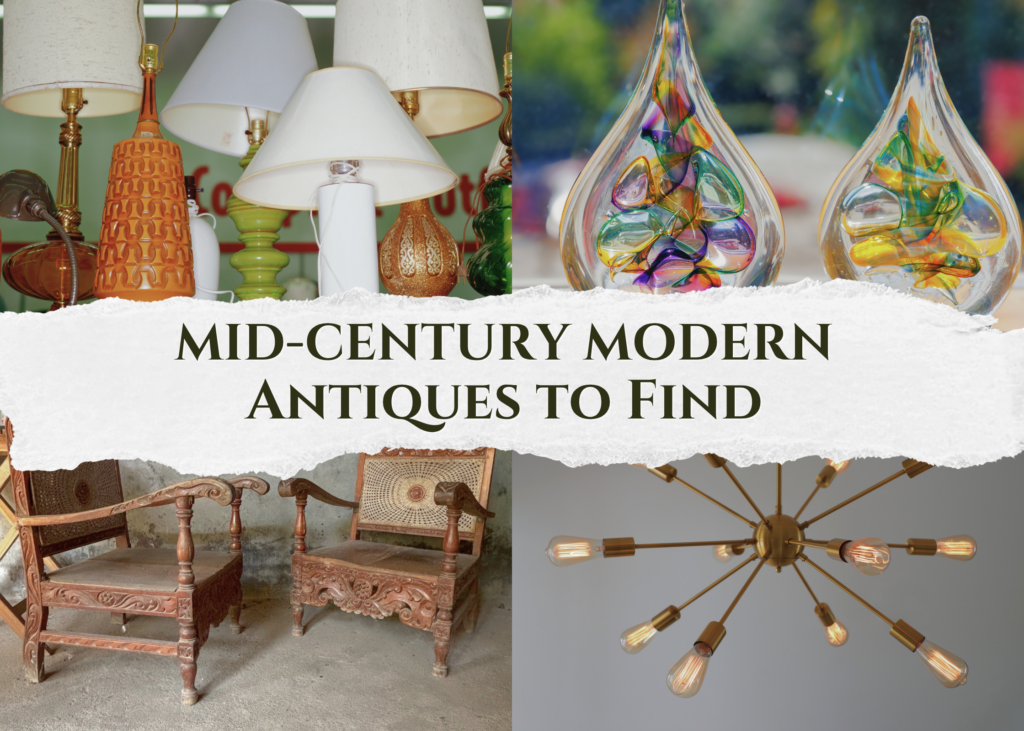
The MCM pieces in this list are the ones actually paying off right now, based on real sales. Save this guide to know which categories are worth exploring, so you know what to slow down for when you walk into a store.
Vintage Mid-Century Modern Items That Sell Fast Today
1
Danish Teak Sideboards and Credenzas
Typically sells for $600 to $5,000+
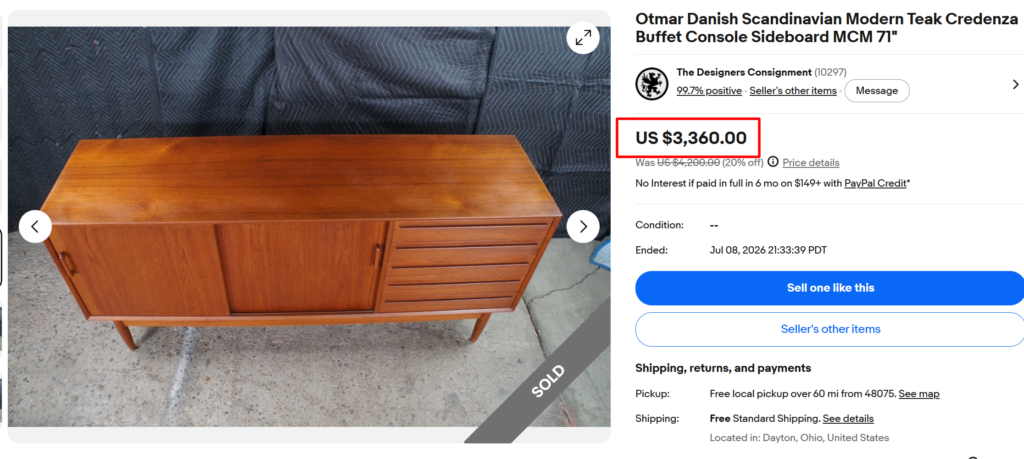
Danish teak credenzas from the 1950s and 1960s are the most collectible pieces in vintage mid century modern furniture. Flip the piece and check for a Danish Control stamp and dovetail joints.
Signed work by Arne Vodder, Otmar, Ib Kofod-Larsen, or Poul Hundevad can easily reach $2,000 to $5,000, while unsigned pieces move for $600 to $1,800.
Most valuable examples to find:
- Arne Vodder credenzas with sculpted drawer fronts
- Ib Kofod-Larsen sideboards for Faarup
- Poul Hundevad tambour-door cabinets
- Any signed rosewood Danish credenza in original finish
2
Blenko and Italian Art Glass
Typically sells for $100 to $3,500
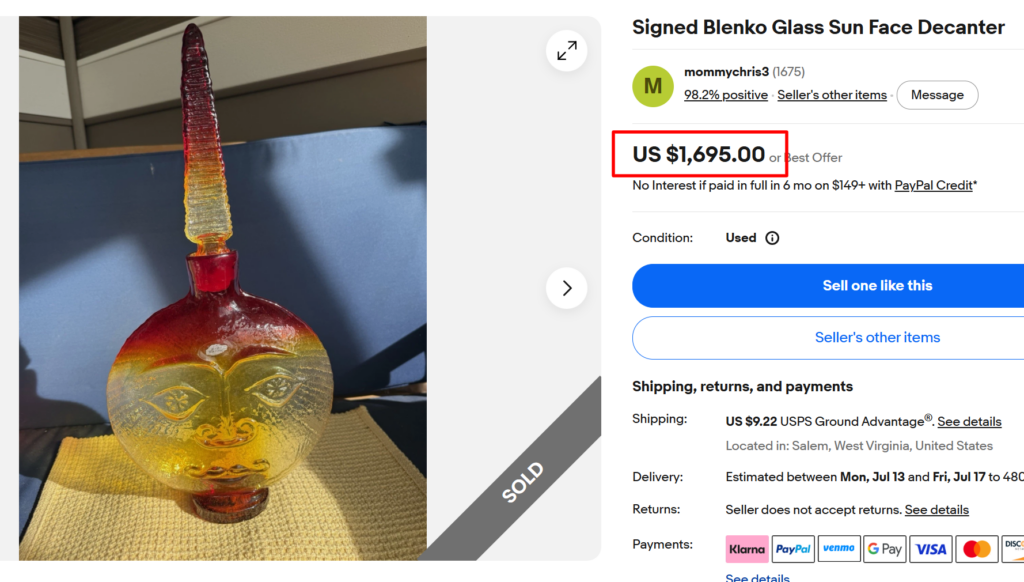
American Blenko decanters and Italian Empoli and Murano glass are the small mid century finds that hide on thrift store shelves. Signed Blenko genie bottles with original stoppers, Empoli decanters in citrus colors, and Murano fish and clown figurines by Archimede Seguso are the pieces to grab first.
Collectible MCM art glass pieces to look for:
- Signed Blenko decanters with original amber or ruby stoppers
- Empoli genie bottles in yellow, orange, or green
- Murano sommerso block sculptures
- Archimede Seguso figural glass
3
Walnut Dressers (Broyhill Brasilia, Kent Coffey, and Lane Acclaim)
Typically sells for $500 to $6,500
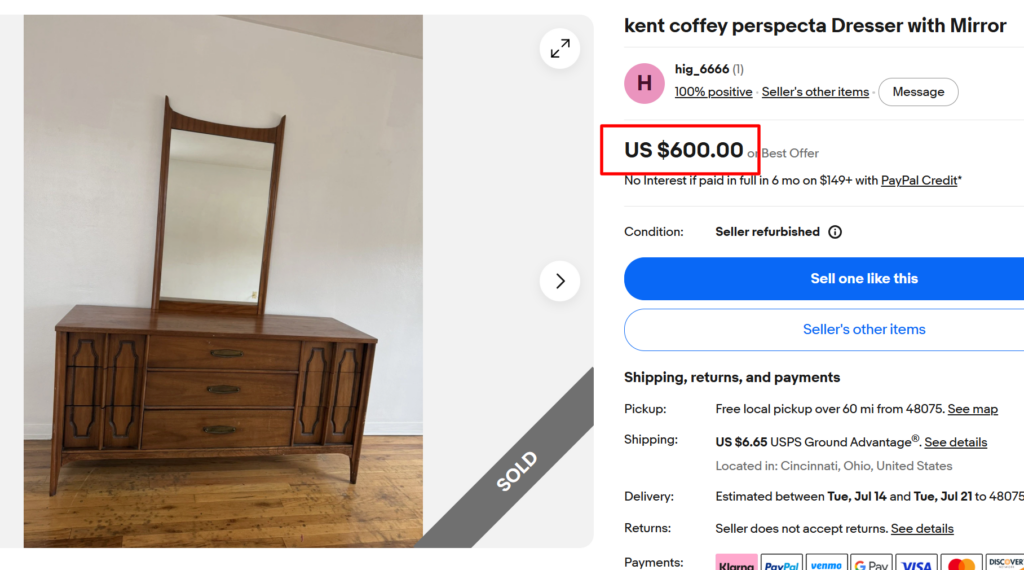
American walnut dressers by Broyhill Brasilia, Kent Coffey, and Lane Acclaim are the sweet spot of collectible mid-century antiques. They feature real designer-era style, solid walnut construction, and sculptural drawer pulls at prices well below Danish imports, which boosts their collectibility.
Top pieces collectors chase:
- Broyhill Brasilia 9-drawer lowboy dresser
- Broyhill Brasilia magna dresser and highboy chest
- Kent Coffey Perspecta triple dresser
- Lane Acclaim dovetail-front dressers and nightstands
4
Sculptural Lounge Chairs (Adrian Pearsall & Milo Baughman)
Typically sells for $800 to $5,900 (Pearsall Grasshopper up to $15,500)
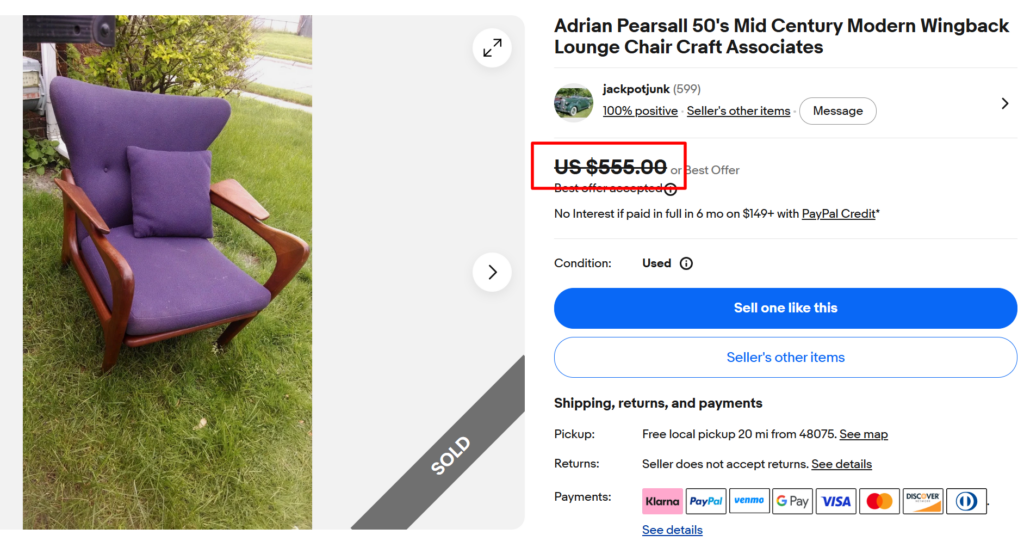
These are the iconic mid century modern chairs collectors covet after Eames. Adrian Pearsall’s Grasshopper and Havana lounge chairs for Craft Associates have skyscraper-tall backs and sculpted walnut frames.
Milo Baughman’s low-slung recliners and Thayer Coggin swivel chairs fetch big money, especially in restored condition.
Some valuable MCM lounge chairs to look for:
- Adrian Pearsall Grasshopper Model 990-LC
- Adrian Pearsall Havana Model 1717-RC and Model 2231 walnut
- Milo Baughman swivel recliners for Thayer Coggin
5
Vintage Pyrex
Typically sells for $25 to $650 (rare patterns $500 to $4,000+)
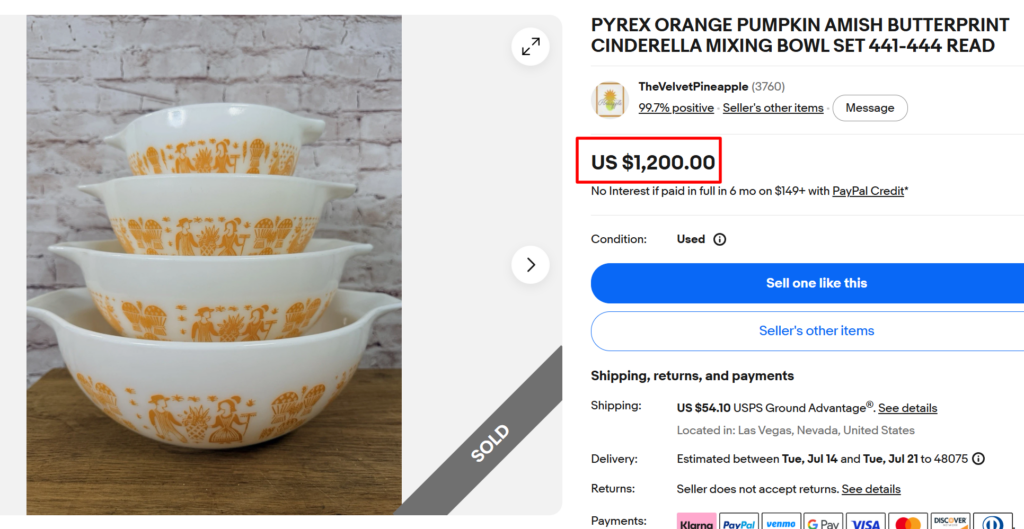
Vintage Pyrex is the entry-level mid-century kitchenware category with its own collector market. Common Pyrex pieces with 1950s and 1960s patterns are quite affordable, but the rarest promotional patterns have crossed into four-figure territory.
ID Tip: Look For: “PYREX” in all caps on backstamp (pre-1998), model numbers, “MADE IN USA”
Pattern & pieces collectors that fetch the most:
- Lucky in Love (1959 promotional, hearts and clovers)
- Atomic Eyes / Starburst chip and dip
- Turquoise Diamonds mixing bowl (Dainty Maid)
- Pink Butterprint and Orange Butterprint
- Pink Gooseberry, Pink Daisy, and Pink Stems
- Blue Stripe and orange stripe (Barcode) casserole sets
6
West German Fat Lava Pottery
Typically sells for $50 to $500 (rare pieces $500 to $1,900)
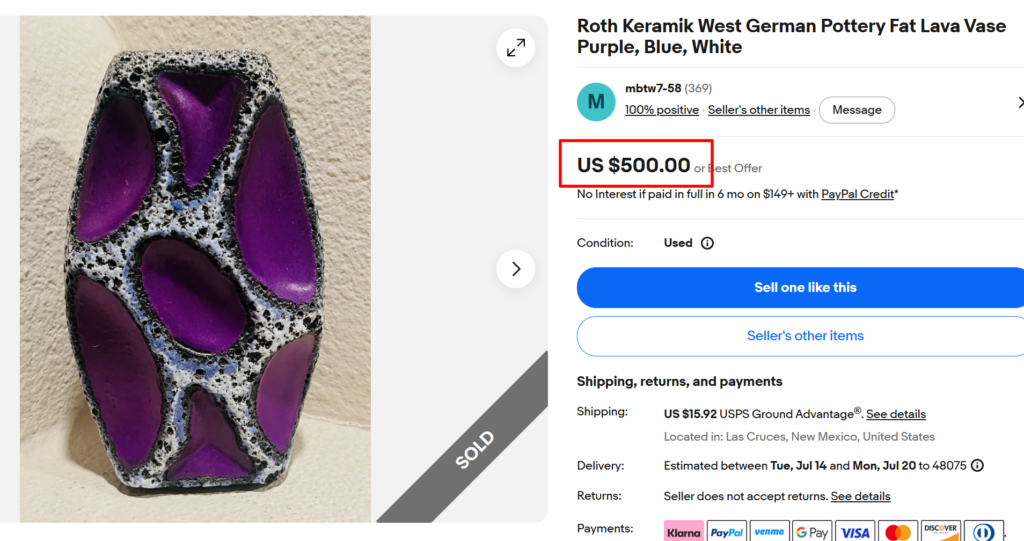
Fat lava pottery from Scheurich, Ruscha, Bay Keramik, and Dümler & Breiden is one of the fastest-growing mid-century finds today. It’s identified by its unique textured volcanic glazes and unconventional shapes of the MCM era.
Basic Scheurich vases stay under $100, while larger pieces with dramatic drip glazes and rare colorways can reach $500. Always check the base for a shape number stamped like “285-42,” as it impacts value.
Look for these makers first:
- Scheurich Keramik shelf and floor vases
- Ruscha pitchers designed by Kurt Tschörner
- Bay Keramik lamp-base vases
- Dümler & Breiden thick lava-glaze pieces
- Otto Keramik “UFO” glazes
7
Cathrineholm Lotus Enamelware
Typically sells for $50 to $500 (rare color sets up to $1,500)
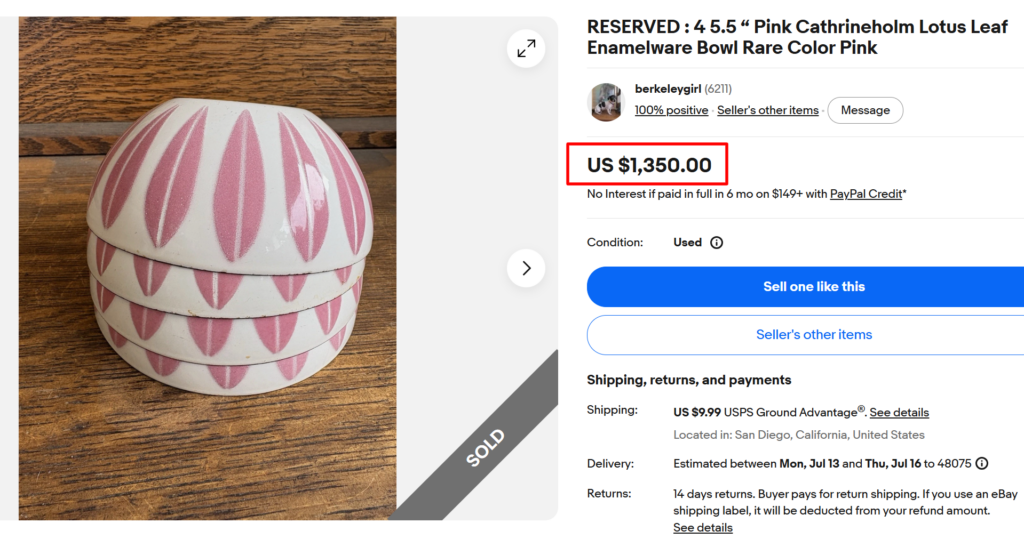
This is the popular Norwegian enamelware. The lotus pattern was only produced from 1962 to 1965, and that short window keeps the collectibility and value high. While small bowls usually sell for $50 to $150, large bowl sets can reach up to $1,500, especially in rare orange, pink, and red colors.
ID Note: Authentic lotus petals are wider at the top and narrower at the bottom. Reproductions have petals shaped like coffee beans.
Most valuable examples:
- 11-inch lotus bowls in turquoise or orange
- Red lotus kettles with original lid
- Complete Dutch ovens with matching lids
- Any pink lotus pattern piece (rarest color)
8
George Nelson Ball Clocks and Sunburst Clocks
Typically sells for $400 to $2,200 (rare motion clocks $4,000+)
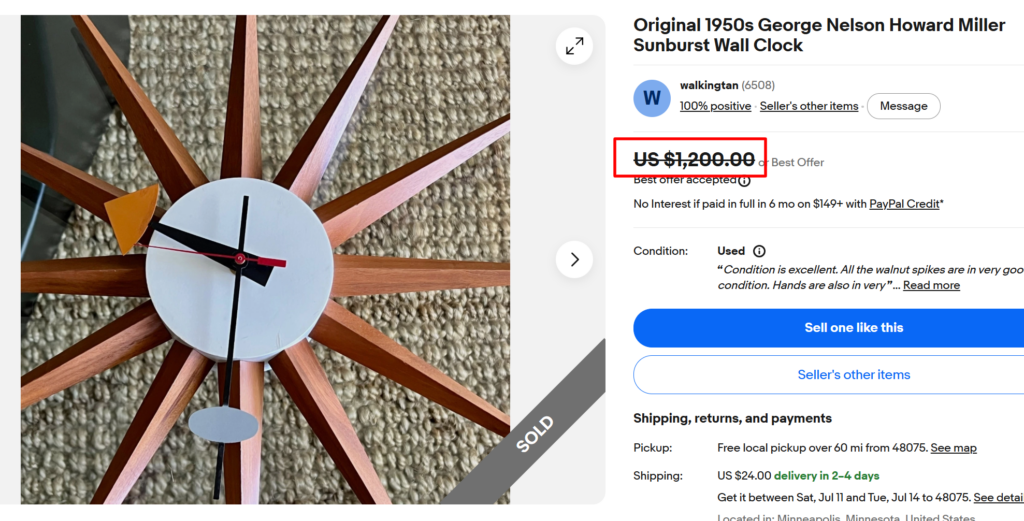
George Nelson’s clocks for Howard Miller are as iconic as any MCM chair. The 1949 Ball Clock, the Spike, the Sunburst, and the Compass Motion Clock all came out of his New York studio and are actively traded on eBay.
Collector’s Tip: Vintage Howard Miller labels on the back separate real from Vitra reissues.
Most valuable pieces to hunt:
- Original 1950s Howard Miller Ball Clock (Model 4755)
- Nelson Sunburst and Spike wall clocks with a Howard Miller decal
- Nelson Compass Motion Clock (Model 2278)
- Nelson Bitossi pottery “Meridian” wall clock
9
Mid Century Barware and Ice Buckets
Typically sells for $80 to $700
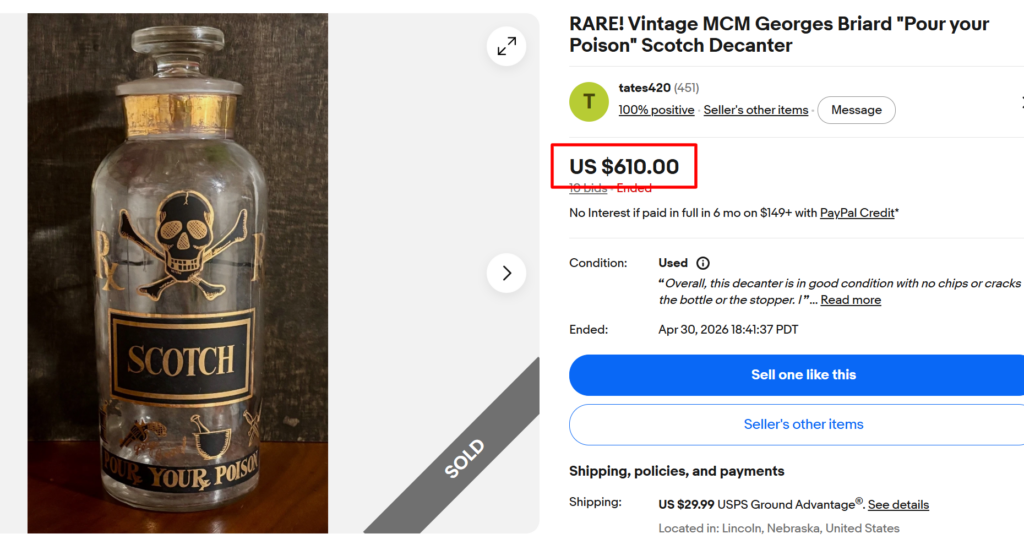
Mid century barware is the easy entry point, and often sits unnoticed on thrift store glass shelves. Ice buckets, decanters, and cocktail sets from brands like Ernest Sohn, Kraftware, and George Briard are among the most collectible today.
Most sought-after makers & pieces:
- Ernest Sohn stainless and teak ice buckets
- Kraftware chrome-lidded ice buckets
- Georges Briard signed decanter sets
- Culver signed cocktail glasses with 22k gold trim
10
Ceramic and Sculptural Table Lamps
Typically sells for $80 to $1,600
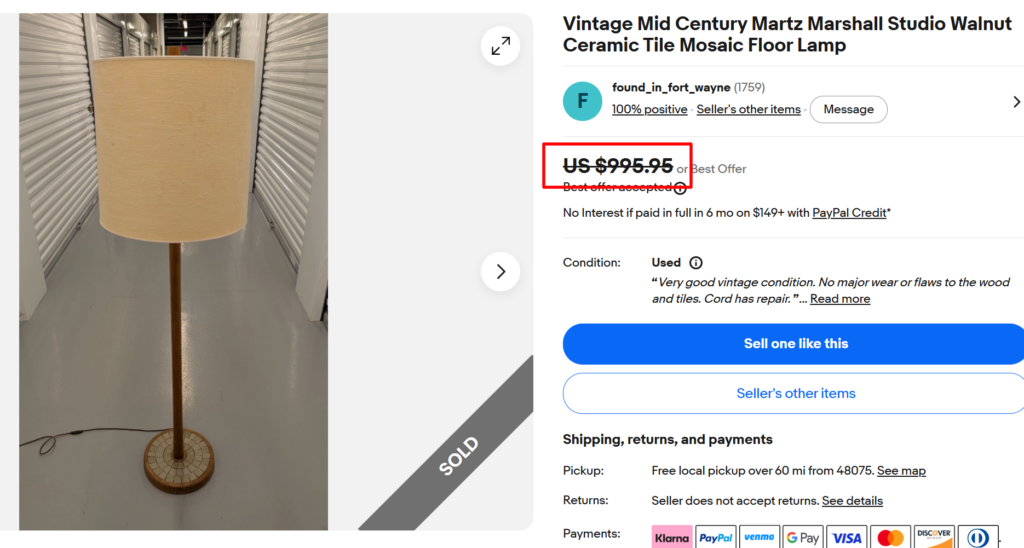
Table lamps are one of the most underpriced mid century finds at thrift stores. Signed Martz lamps by Marshall Studios from Indiana are among the first pieces you should look for; they carry maker labels on the base.
Even unsigned MCM pottery lamps in drip-glaze or teardrop shapes move steadily, even without attribution.
Other valuable MCM lamps to look for:
- Signed Martz / Marshall Studios ceramic lamps
- Gordon and Jane Martz’s walnut and ceramic combinations
- Danish teak table lamps with original shades
- Unsigned California studio pottery lamps in unusual glazes
11
Pendant, Sputnik, and Sunburst Lighting
Typically sells for $300 to $3,000
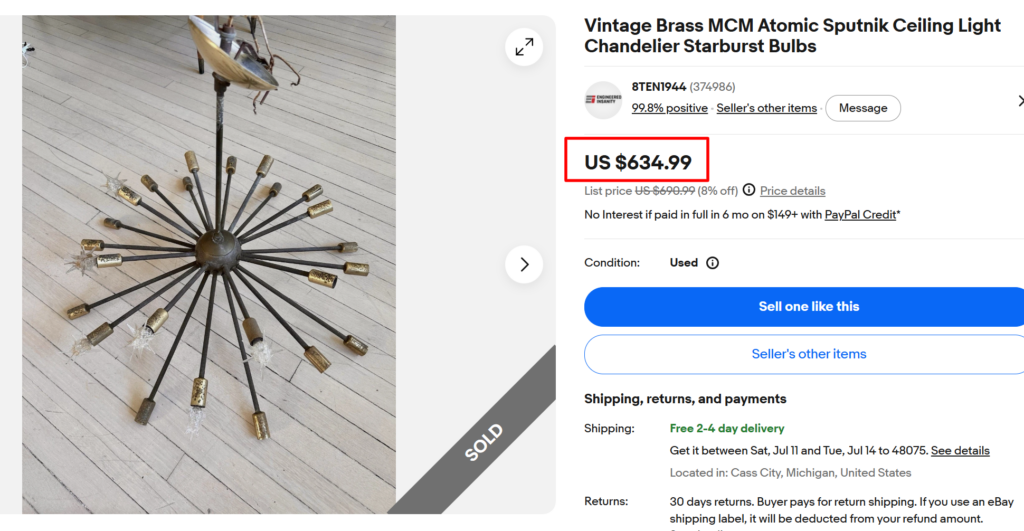
Ceiling fixtures from the mid century are another valuable category to explore. Sputnik chandeliers with brass arms and glass bulbs, Louis Poulsen PH pendants, and George Nelson bubble lamps all trade well with the original wiring and labels.
Highest-selling pieces:
- Authentic multi-arm Sputnik chandeliers with brass fittings
- Louis Poulsen PH series pendants (signed)
- George Nelson Bubble Lamps with original label
- Stilnovo and Arredoluce Italian brass chandeliers
How to Spot Real MCM Antiques in 30 Seconds
If you’re unsure whether the item at hand is a genuine mid century antique or a replica, use the following tips:
- Flip it over and look for a maker mark – Almost every collectible MCM piece carries some form of identification, whether it’s a foil label, an ink stamp, a burned-in mark, or an incised number. No mark does not automatically mean fake, but marks are appreciated as they make identification easy.
- Check the construction – Real 1960s case goods have dovetail joints where the drawer sides meet the front, and the drawer bottoms slide into grooves rather than being stapled or glued. This construction is skillful, and reproductions can’t copy it.
- Weigh the wood in your hand – Solid teak, walnut, and rosewood feel heavy for their size and show continuous grain that runs through the edges. Most repros use a thin veneer over particle board or MDF, which is lighter and shows a printed grain that stops at the edge or repeats on panels.
- Look at the leg attachment – Original MCM chairs and tables use brass hanger bolts or wood joinery to attach legs. Replicas use screws driven straight into MDF, which strip out fast and give the piece away.
- Read the patina – 60-year-old wood, brass, and finishes wear unevenly because they were touched, sat on, and cleaned in specific spots for decades. Uniform darkness or shine across the whole piece usually means it was refinished or made recently.
- Search the mark on your phone in the aisle. Type the maker’s name plus “maker’s mark” into Google Images. If your piece does not match the reference photos in ninety seconds, it’s not worth your time.
Note: This article is intended for informational, educational, and entertainment purposes only. Some images are illustrative and may not represent actual brands, products, or related entities. All trademarks, product names, brand logos, packaging, and other intellectual property referenced remain the exclusive property of their respective owners. Any brand mentions or references are provided solely for descriptive and educational context and do not imply any formal or commercial association.