Corelle came out in 1970, and its holiday sets followed soon as seasonal releases. Most families pulled the Christmas set out for just one month before storing it away again.
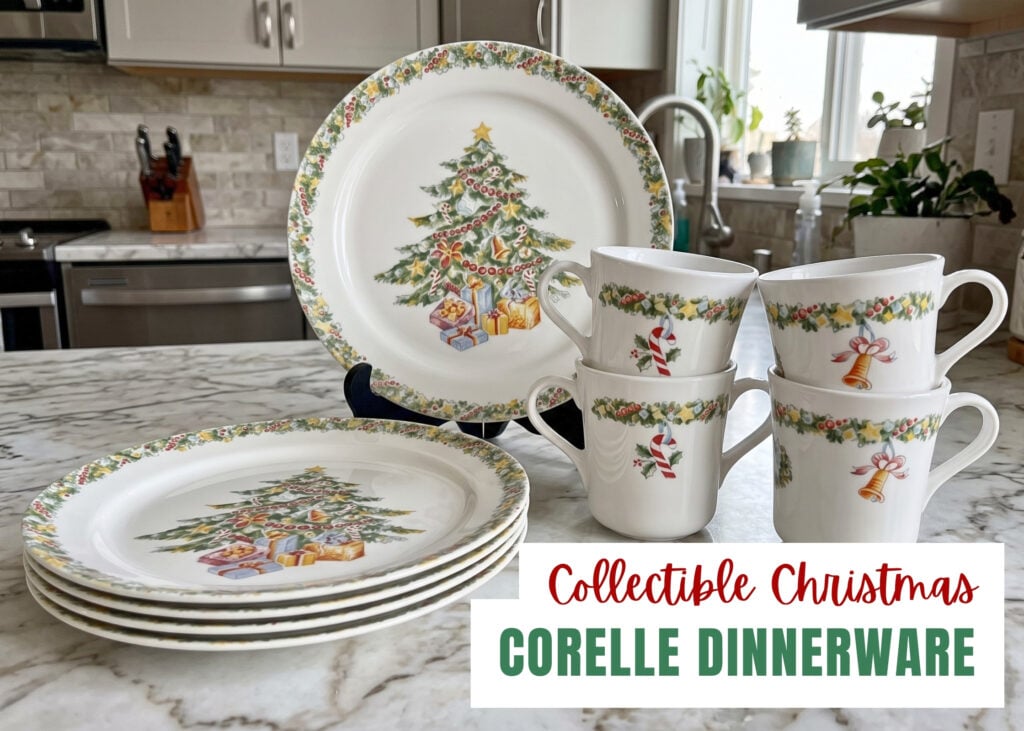
These seasonal sets were made for limited periods, and most have already been discontinued. So they get harder to find every year, because collectors grab them the first time they lay an eye on one at a store.
So, if you know which vintage Christmas Corelle dishes disappear fast and what to check before you pay, you can get to the good sets first.
10 Christmas Corelle Patterns Collectors Hunt Every Holiday
1
Holly Days
$15 to $60 (partial sets); $80 to $140 (large sets)
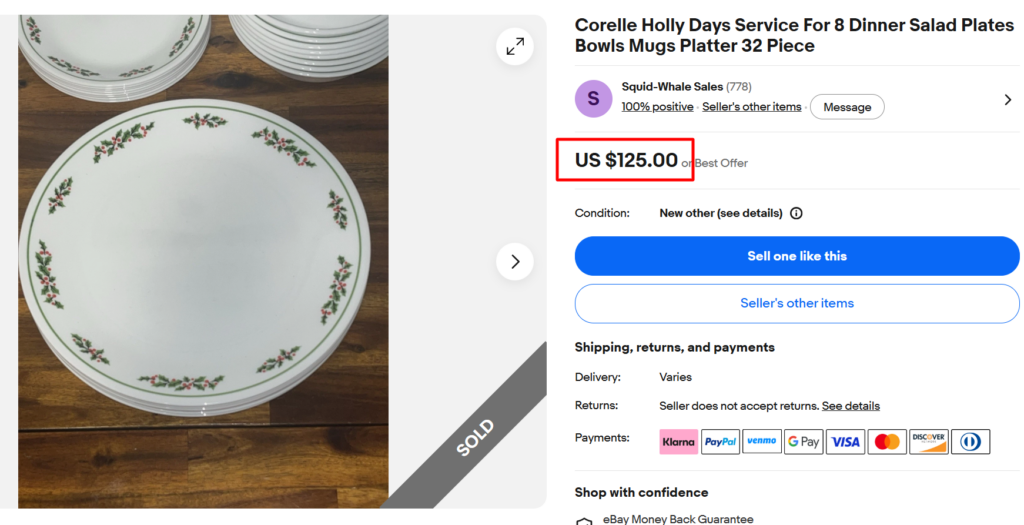
| Manufacturing Years | 1985 to 1986 |
| Key Features | Green holly, red berries, black or white leaf veins |
| Collectors’ Notes | Often listed as “Winter Holly Days.” |
Holly Days is the most searched Christmas Corelle pattern. The brand released it around 1985, featuring green holly leaves with red berries and a green band on white glass.
2
Winter Holly (Green Band)
$25 to $160 (more for boxed sets)
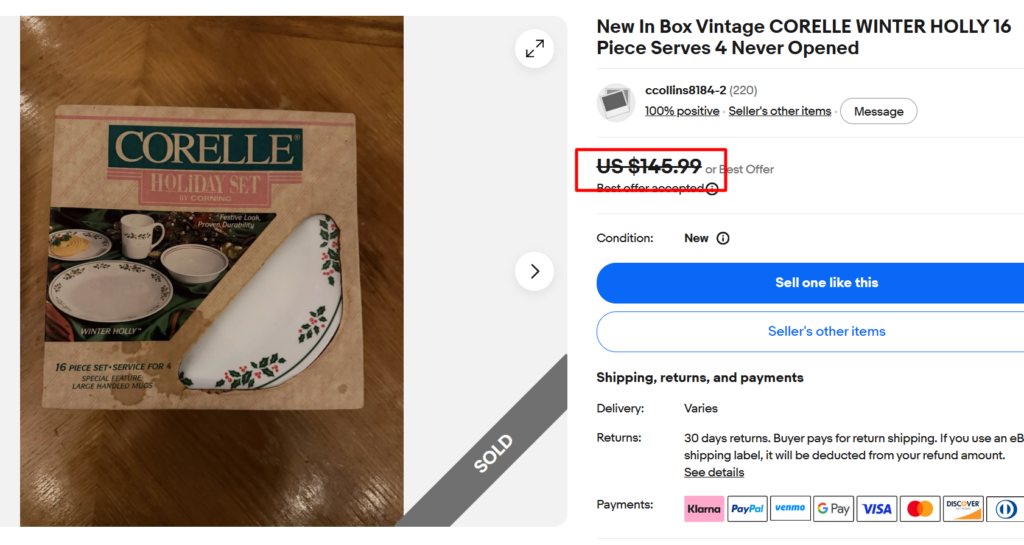
| Manufacturing Years | Introduced in 1991 (end year not documented) |
| Key Features | Green rim band, holly and berries |
| Collectors’ Notes | Hostess sets bring the most |
This pattern came out in 1991 and looked a lot like the Holly Days design. The veins on the leaves are the quickest way to tell it apart from Holly Days; Winter Holly has white-veined leaves, while Holly Days had black-veined leaves.
Corelle later reused the name for a red-band version, so band color is an age sign.
Large matching stacks, like a 12-plate set, sell well because hosts want identical plates.
3
Winter Holly (Red Band)
$40 to $150(high for large sets)
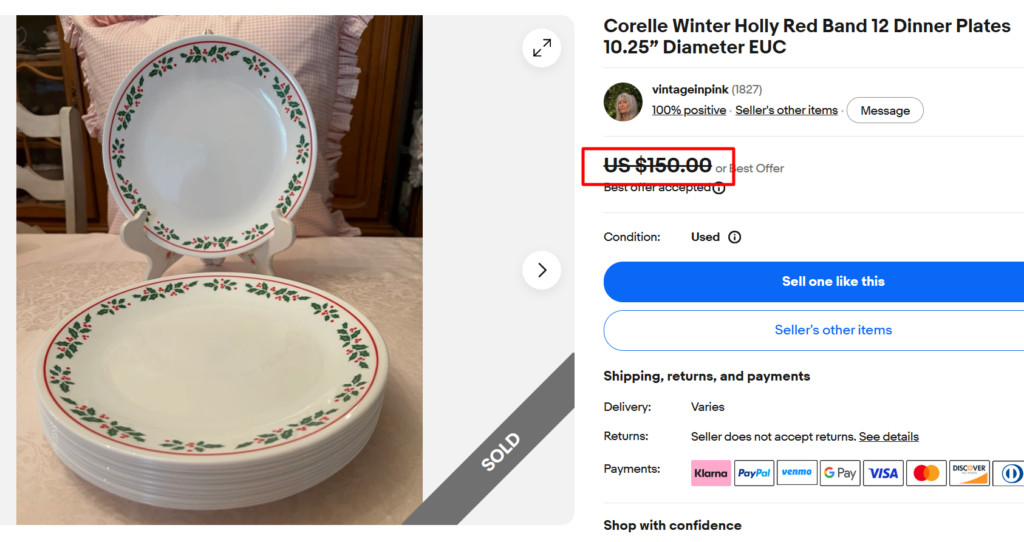
| Manufacturing Years | 2014 to 2018 |
| Key Features | Thin red rim line, holly garland |
| Collectors’ Notes | Not the 1991 original |
This is a later variant of the Winter Holly pattern. The only distinctive feature is the red band (instead of the original Winter Holly’s green band) around the rims. The white-veined green leaves and red berries are the same.
4
Holly Impressions
$50 to $170 (sets of 4 to 12 dinner plates)
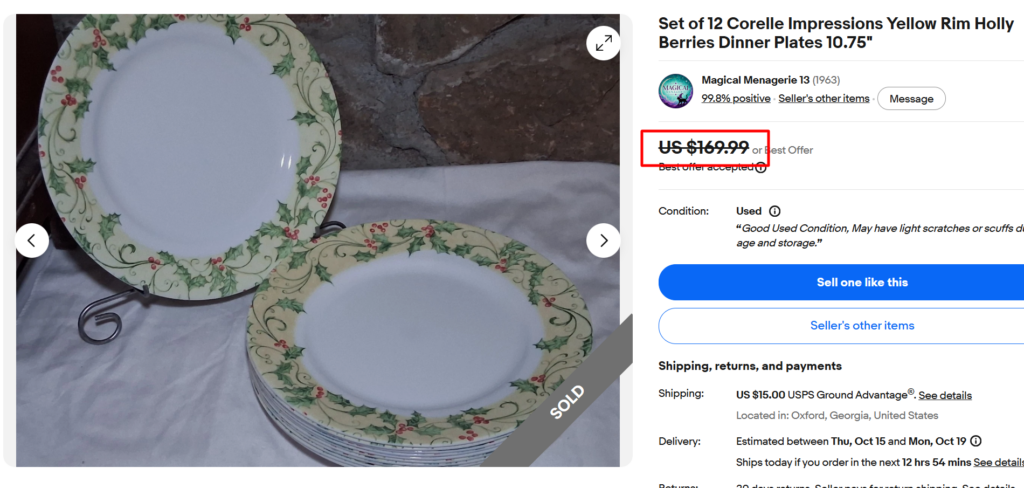
| Manufacturing Years | 2006 to 2008 |
| Key Features | Pale yellow rim, holly, red berries, vines |
| Collectors’ Notes | Check the yellow border for scuffs and fading |
This Impressions pattern shifts away from Corelle’s popular white-rim look. You can identify this by its pale yellow border with green holly leaves, red berries, and flowing vines. The center remains plain white.
Full sets of twelve plates are hard to put together, so buyers tend to pay a premium.
5
Christmas Joy
$10 to $45 (single plates to sets of eight); $100-$150 (20-piece sets)
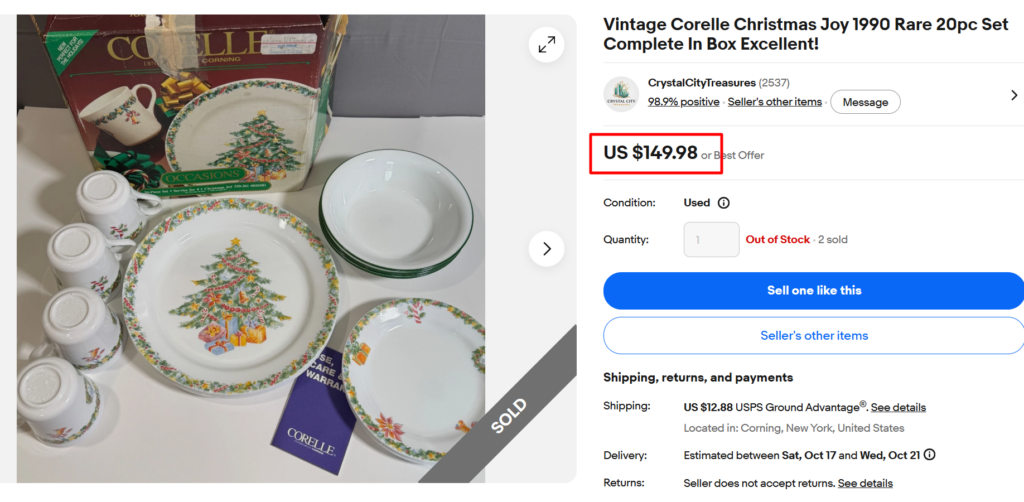
| Manufacturing Years | 1900 to late 1990s |
| Key Features | Bells, presents, candy canes, holly |
| Collectors’ Notes | Boxed cake plate & server set are rare. |
Like Holiday Magic, Christmas Joy also shows a large decorated Christmas tree with presents at the center, but with additional bells, beaded garland, and candy canes. Some pieces add a wreath.
Remember that the tree appears on large plates; smaller ones, as well as cups and bowls, have the holiday border, which is like a green garland, with hanging gifts, poinsettias, candy canes, and wreaths.
The boxed cake plate with its server and the 16-inch oval platter are the rarest pieces to find.
6
Sponge Santa
$20 to $100 (small sets to large lots)
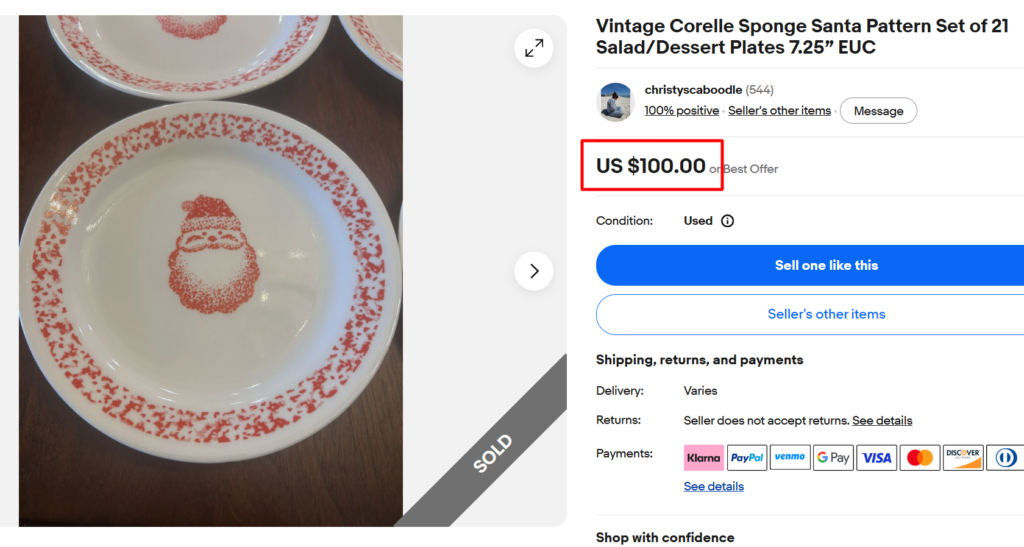
| Manufacturing Years | 1986 to 1996 |
| Key Features | Sponged Red Santa face and wide rim |
| Collectors’ Notes | Large matching lots are worth the most. |
As you can tell by the name, this design features a spongeware look, like a stippled finish resembling dabbed-sponge painting. The key design elements are a red Santa face at the center and a broad speckled red band.
This one sits beside Corelle’s Sponge Christmas Tree pattern in collector lists.
7
Birds and Boughs Impressions
$50 to $120 (boxed plate & dinner sets)
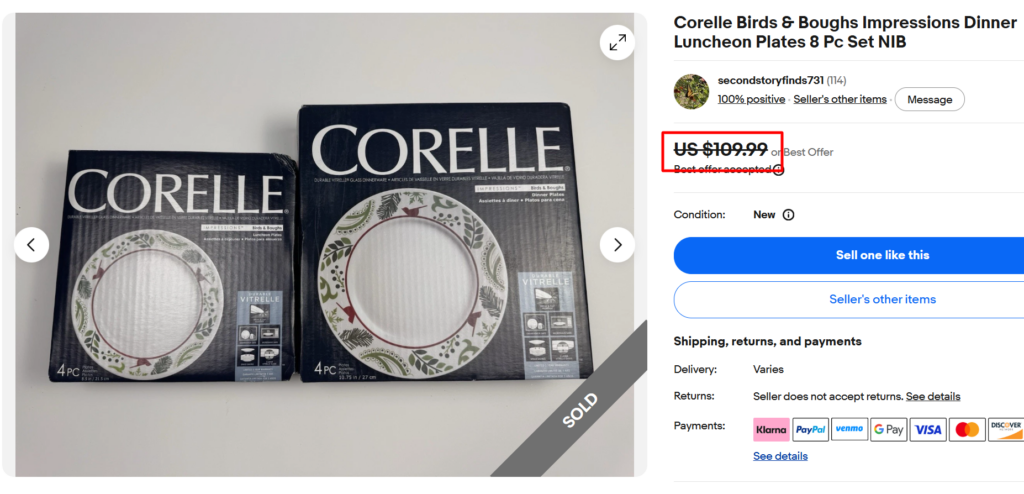
| Manufacturing Years | 2014 to 2019 |
| Key Features | Red cardinals, evergreen boughs, embossed rim |
| Collectors’ Notes | Unopened boxes sell for far more than loose plates |
A part of the Impressions line, this Corelle holiday pattern has a raised, embossed rim. The design includes red cardinals perched among green evergreen boughs, leaves, and small berries above a thin red inner ring.
Sealed pairs of boxes can be easily found for around $100 today.
8
Callaway Holiday
$30 to $110 (plate sets to service – four)
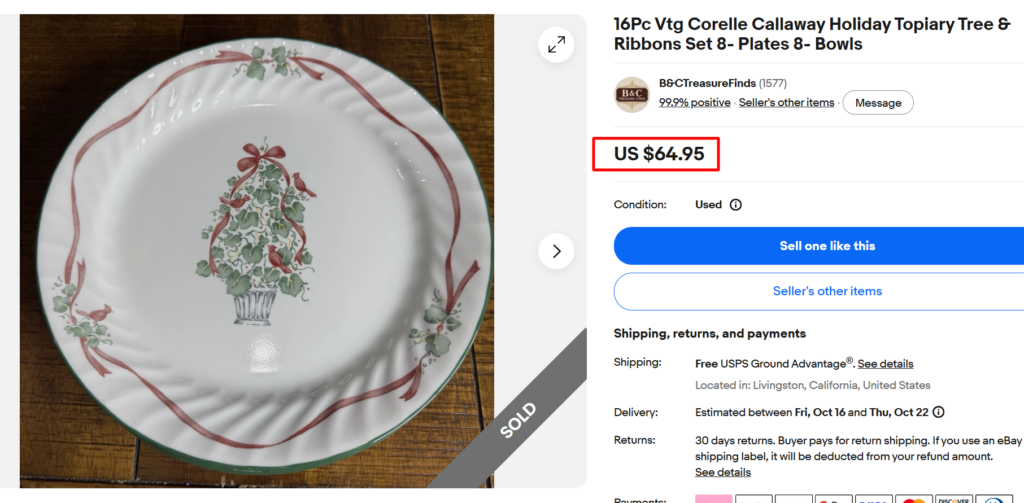
| Manufacturing Years | 2000 to 2002 |
| Key Features | Ivy topiary trees, red ribbons |
| Collectors’ Notes | Teapots & boxed gravy boats add value |
As the name hints, this is Corelle’s original Callaway pattern, but with a festive twist. So, you’ll see small ivy topiary trees tied with red ribbons at the center and a ribbon flowing across the rims on the plates.
This design came from the Corelle Coordinates line, which added stoneware teapots, gravy boats, and sugar and creamer sets.
9
Holiday Magic
$20 to $60 (place settings to plate sets)
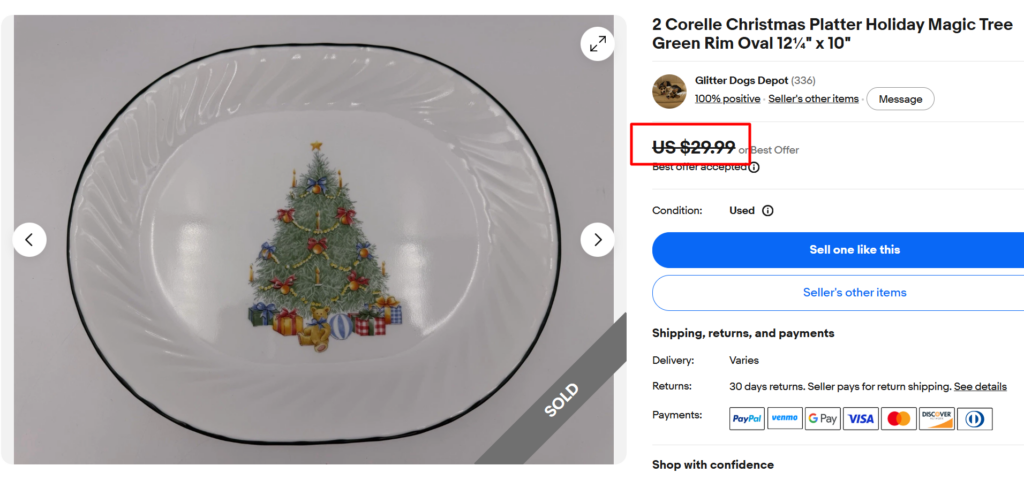
| Manufacturing Years | 1990s (mostly around 1996) |
| Key Features | Swirl rim, decorated tree, presents, teddy bear, ball |
| Collectors’ Notes | Pie plates and chop plates are rarer |
Holiday Magic features Corelle’s unique swirl rim (a molded edge of curving ridges), trimmed in green. The central design is a heavily decorated Christmas tree (with candles & ribbons) surrounded by presents, a teddy, and a ball.
Corning made extras such as pie plates, chop plates, and teapots in this design, which are quite sought-after.
10
Winter Festival
$20 to $50 (small sets); $60 to $110 (large mixed sets)
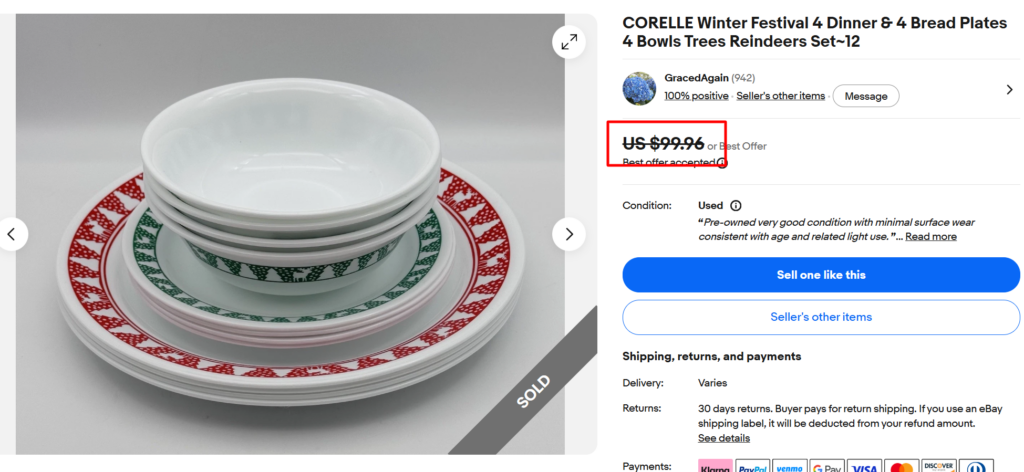
| Manufacturing Years | Likely 1984 to 1990 |
| Key Features | Red reindeer, evergreens, snowmen |
| Collectors’ Notes | Crisp red color matters more than set size |
White stenciled Christmas trees, snowmen, and falling motifs on a red or dark green border are what define this pattern. It doesn’t have holly at all, which makes it different from most Christmas Corelle designs.
Check the green and red backgrounds; Red decoration often fades first from dishwashers and knives.
What to Look For on Christmas Corelle While Collecting
In most cases, you will find most of the information on the bottom of the plate and the edge. Here’s what you should pay attention to:
- Backstamp: Check the base first. Earlier Corelle pieces bear “Corelle by Corning,” and later ones have updated company stamps. Backmarks give clues to determine what year a piece belongs to.
- Plate Size: The common size of most dinner plates produced in the 70s and 80s is 10.25 inches. 10.75-inch dinner plates are later ones.
- Band Color: Note the band color in the patterns with bands. Winter Holly with the red band is a 2014 reissue of the original 1991 version.
- Color Fading: Hold the plate to a light source. Frequent washing in dishwashers fades designs, which hurts the value. Berries are the first features to fade.
- Chipped Edges and Crazing: Slide fingers along the lip. Any sign of chips reduces the worth significantly. When examining Corelle stoneware mugs and teapots, examine crazing patterns.
- Lids and parts: These matter a lot for the value of lidded pieces and those with additional parts, like sugar bowls and gravy boats.
- Original box: Boxed Coordinates serving pieces and sets sell better than loose ones.
When to Buy and When to Sell Christmas Corelle?
While the collectibility increases during the holiday season itself, the best time to buy is from January through August, when interest is lowest. And if you’re selling, late October to November is the best time; that is when searches peak.
Note: This article is intended for informational, educational, and entertainment purposes only. Some images are illustrative and may not represent actual brands, products, or related entities. All trademarks, product names, brand logos, packaging, and other intellectual property referenced remain the exclusive property of their respective owners. Any brand mentions or references are provided solely for descriptive and educational context and do not imply any formal or commercial association.