In 1956, Ted Nierenberg presented his teak-handled flatware at a Manhattan store, and the store ordered several hundred pieces on the spot.
Ted and his wife, Martha, saw that unique cutlery in a Copenhagen museum. Charmed by its beauty, they found its designer, Jens Quistgaard, and started making it at Dansk in New York.
Quistgaard next designed the Kobenstyle line for Dansk: light enameled steel with the sculpted shapes of heavy cast iron, which is what the company became known for.
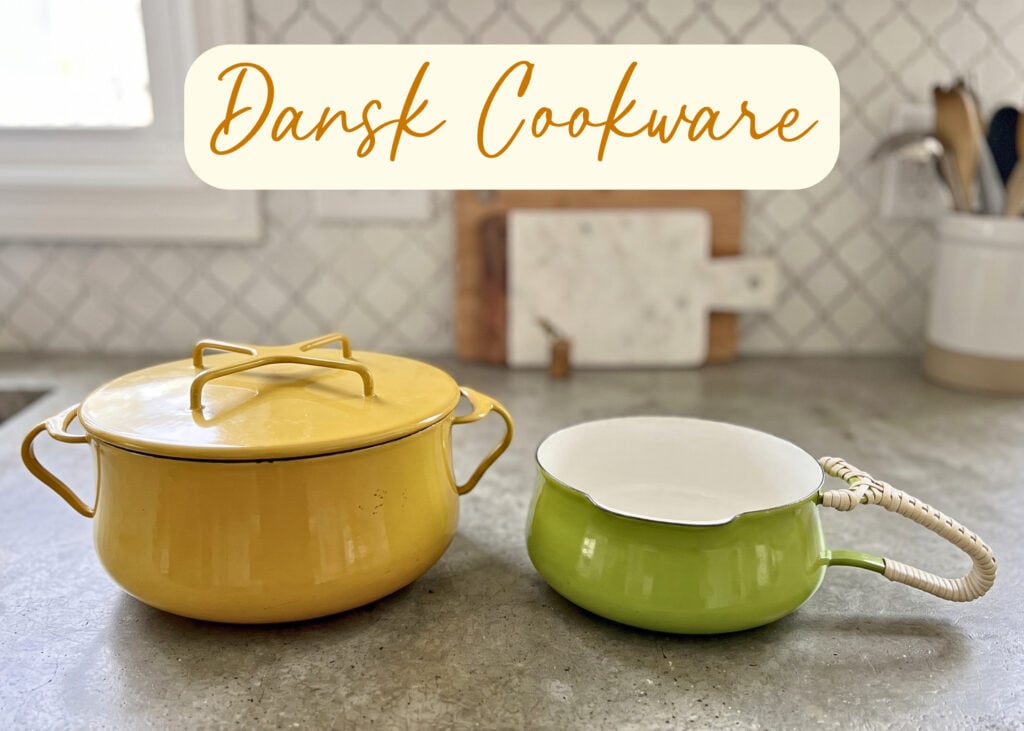
But finding vintage Dansk cookware with its original lid, handle wrap, stand, or warmer base is a task today. Let’s see which designs are the hardest to find complete, and how to spot them.
How to Tell If Your Dansk Cookware Is Vintage?
Dansk marked all their cookware. So, the stamp on the base is the key dating and location clue. Knowing this is crucial because the age can affect the value more than size or color.
- Four ducks in a circle with “Denmark”: This is the earliest mark used from 1956 to the mid-1960s. Pieces fetch the highest premiums.
- “Dansk Designs France IHQ”: IHQ is Quistgaard’s monogram. This mark was used after production moved to France in the mid-1960s.
- “Dansk International”: This stamp indicates pieces made after 1965, usually in France.
- “Japan”: This is found on some 1970s pieces, especially teapots and kettles.
- “Thailand” only: This one is a modern reissue made after 2012; not vintage at all.
Rare Vintage Dansk Cookware Designs Collectors Want
1
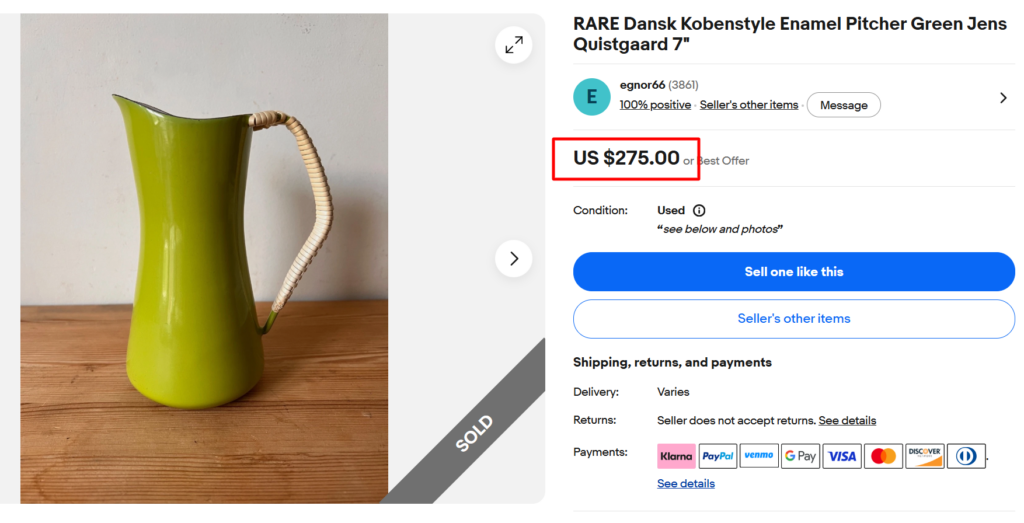
Cord-Wrapped Handle Pitcher
Typically sells for $60 to $300
| Manufacturing Years | 1956 to early 1970s |
| Shapes | 7, 8, and 9.5-inch pitchers |
| Key Features | Wrapped handle, tall tapered body |
| Collectors’ Notes | Teal sets of three are rarest |
Quistgaard had early pitchers’ handles wrapped in either cord, cane, or rattan to enable pouring without a towel. But the wrapping is also the main problem since it wears out, becomes loose, and is usually cut off.
So, a pitcher with intact wrapping is quite a rare find. Robin egg blue and turquoise colors are the most expensive.
2
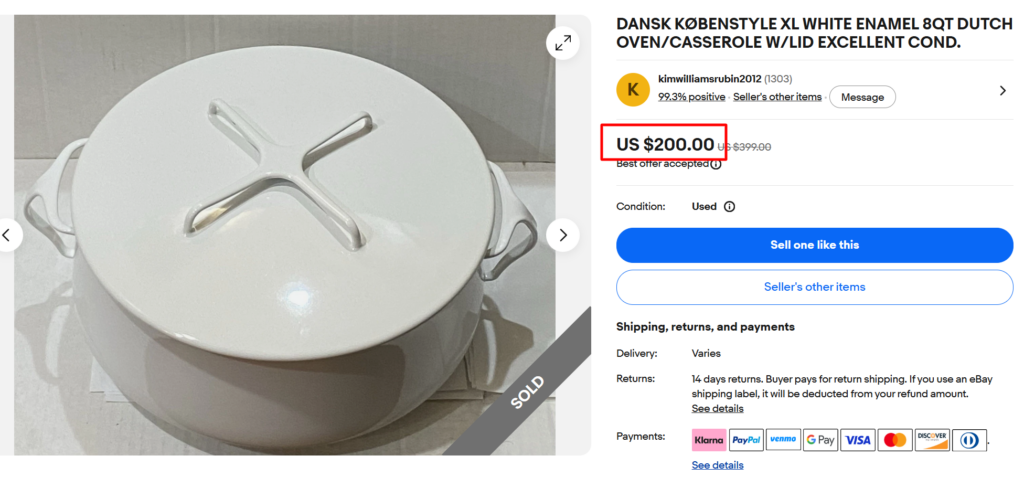
Kobenstyle 8-Quart Stock Pot with Lid
Typically sells for $80 to $200
| Manufacturing Years | 1960s to 1970s |
| Shapes | 6- and 8-quart stock pots |
| Key Features | Tall body, trivet lid |
This is the biggest pot in the line. It was made for everyday soups and stews, so most of them are heavily used. Rims chip, bases scorch, and the matching trivet lid often goes missing first.
Red-and-yellow France examples are the most common, while brown, white, and early Denmark versions are much harder to find, especially with their original lids.
3
Kobenstyle Teapot and Tea Kettle
Typically sells for $75 to $225
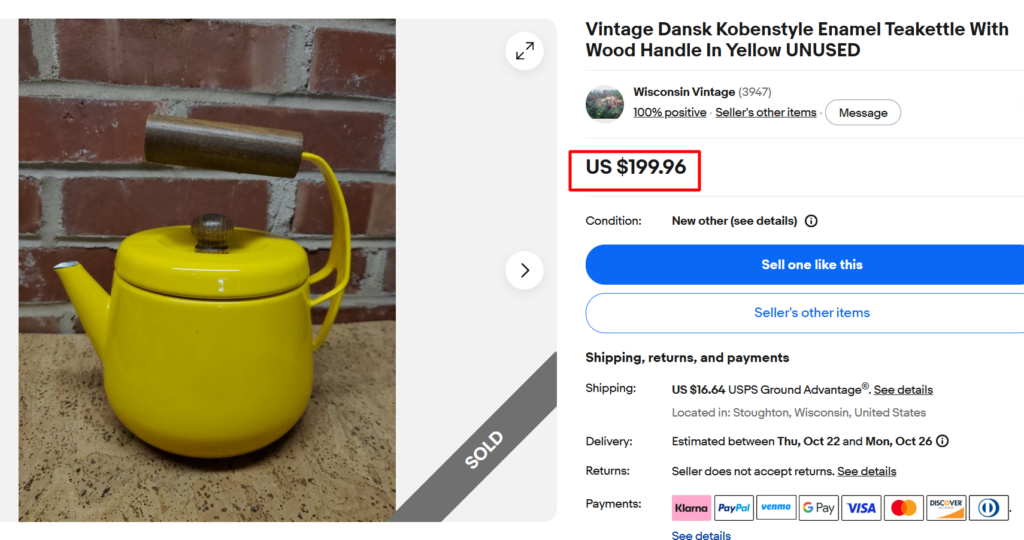
| Manufacturing Years | 1960s to 1970s |
| Shapes | Teapot, stovetop tea kettle |
| Key Features | Teak side handle, enamel spout |
| Collectors’ Notes | Japan-made pieces are still vintage |
Kettles deviate a bit with Kobenstyle designs. Firstly, most of them were made in Japan during the 1970s and show the “IHQ Japan” base stamp instead of France. Secondly, most have a teak side handle and a wooden or cross-shaped lid grip.
White and tan kettles are the rarest variants; red, yellow, or blue are common and affordable.
4
Small Wrapped-Handle Saucepan
Typically sells for $60 to $150
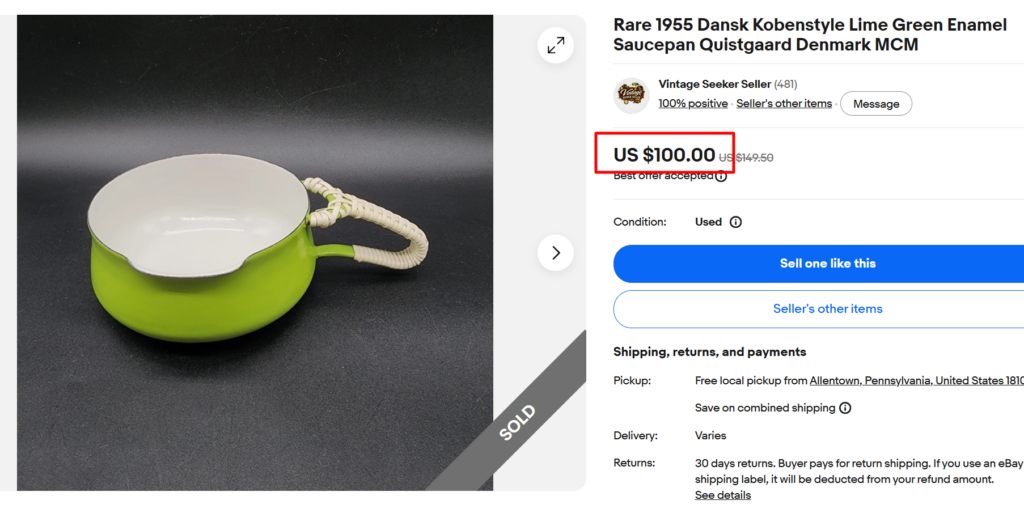
| Manufacturing Years | 1950s to early 1960s |
| Shapes | Petite saucepan, sauté pan |
| Key Features | Woven handle wrap, four ducks mark |
| Collectors’ Notes | An intact wrap adds the most value |
The small saucepan was made for heating up butter and sauces, and most ended up being thrown away once the plastic weave on the handle was broken. So, these small pieces with the original handle wrap, especially in the earliest bright red color, are scarce today.
5
17-Inch Kobenstyle Paella Pan
Typically sells for $50 to $200
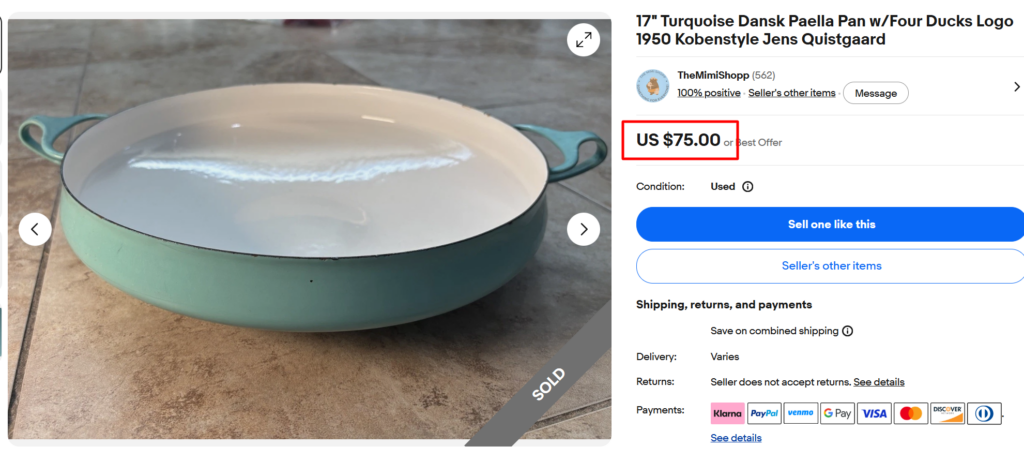
| Manufacturing Years | 1956 to 1970s |
| Shapes | 10, 13.5, and 17-inch pans |
| Key Features | Two loop handles, shallow wide body |
Paella pans are common in the 10- and 13.5-inch sizes, but the large 17-inch pan is a difficult piece to find. Families used these big pans as roasters and buffet servers, so rims and handles took a beating. A chip-free four-duck example is worth saving.
6
Complete Kobenstyle Fondue Set
Typically sells for $50 to $200
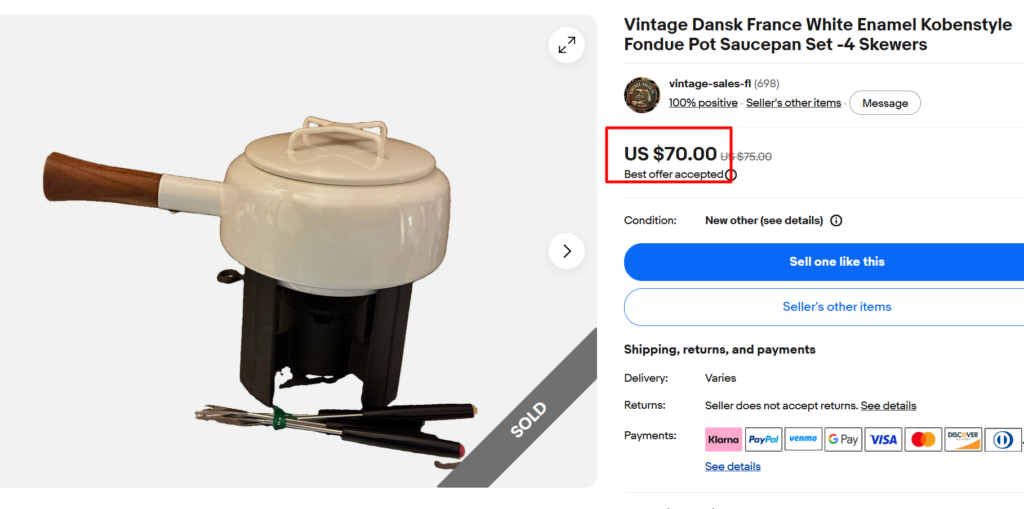
| Manufacturing Years | 1960s to 1970s |
| Shapes | 8- and 9-piece fondue sets |
| Key Features | Teak-handled pot, cast iron stand |
| Collectors’ Notes | Count the forks before buying |
Dansk released this set during the 1960s fondue craze. A complete set has the enamel pot with lid, the black cast iron stand, the fuel burner, and the long-handled forks.
The value of this piece lies in completeness; a full eight- or nine-piece set will be worth twice as much as just the pot alone.
7
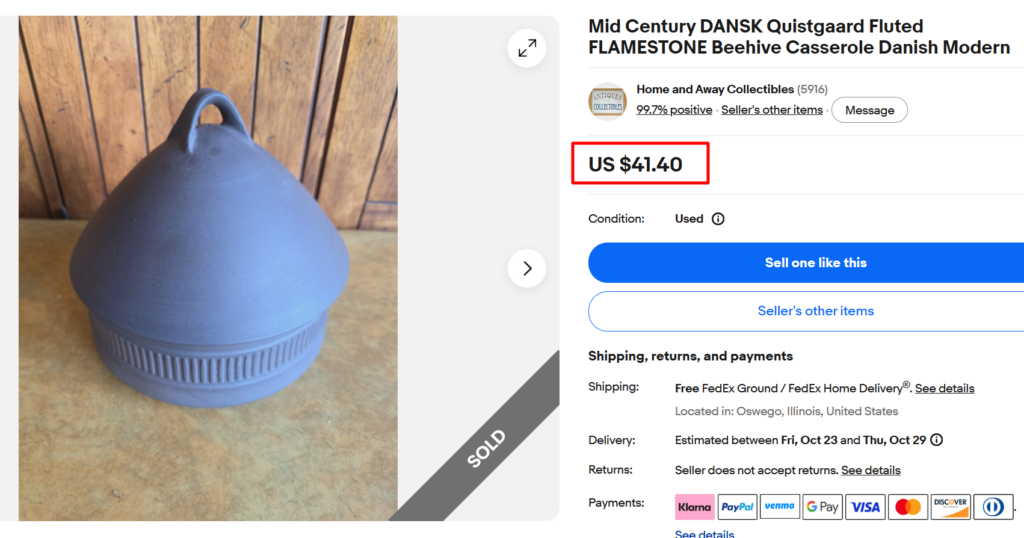
Flamestone Beehive Casserole with Warmer Base
Typically sells for $60 to $175
| Manufacturing Years | Late 1950s to 1960s |
| Shapes | Beehive casserole, fluted casseroles |
| Key Features | Ribbed lid, matte brown exterior |
Flamestone was a stoneware line Quistgaard designed for Dansk. You can identify it by its beehive-shaped form with a ribbed dome lid that sits on a round dish over a matching warmer base.
Early pieces have a rough, matte exterior, while post-1964 ones have a smoother surface. The warmer is the biggest value driver for this piece.
8
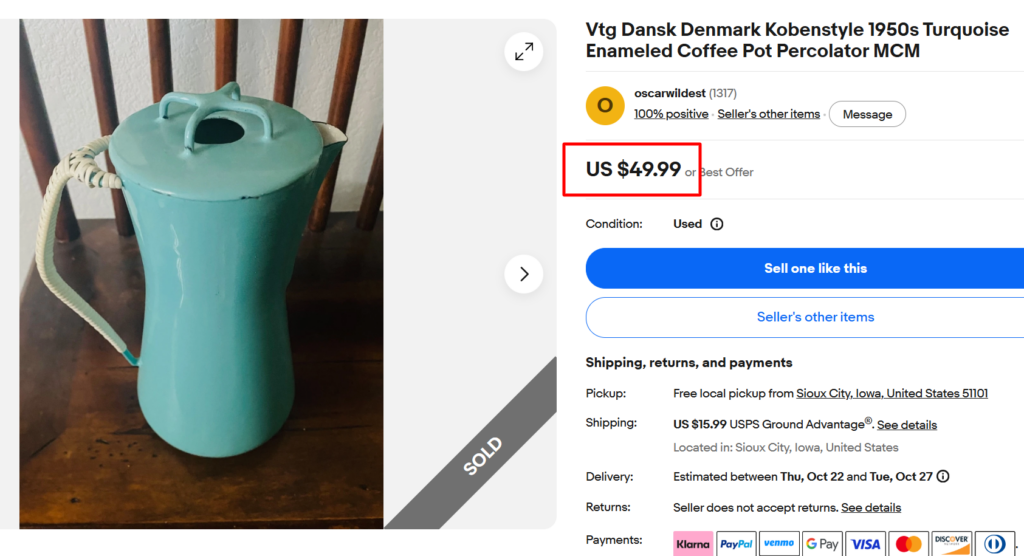
1955 First-Edition Kobenstyle Coffee Pot
Typically sells for $40 to $200 (turquoise, yellow); $200 to $500 (red-orange)
| Manufacturing Years | 1955 to late 1950s |
| Shapes | Stovetop coffee pot |
| Key Features | Cane-wrapped handle, Denmark stamp |
| Collectors’ Notes | Damaged wraps hurt value. |
This coffee pot is among the very first Kobenstyle shapes. It has a cane-wrapped handle, and the base carries the early Denmark stamp. The earliest version was an orange-red body, which is the rarest to find today. Turquoise, blue, and yellow colors are easier to find and are quite collectible.
Which Dansk Cookware Isn’t Rare: Kobenstyle Butter Warmer
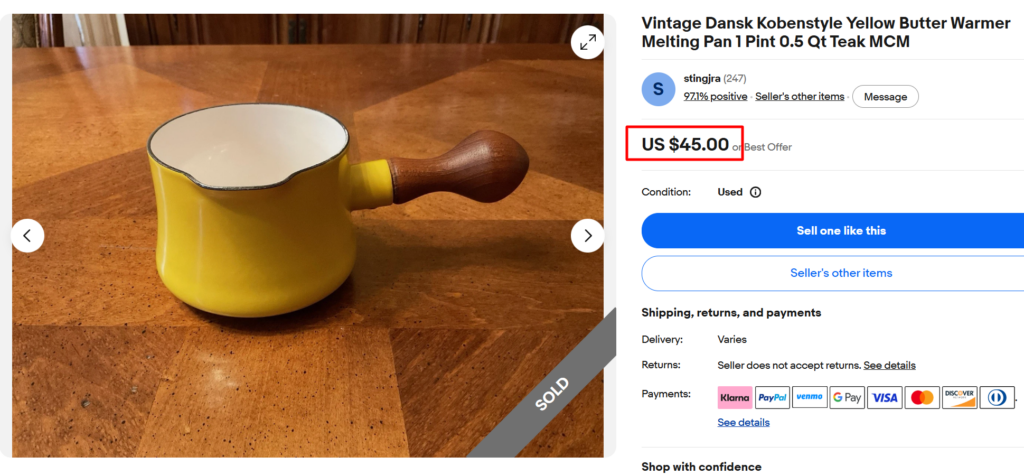
The butter warmer is the most sought-after Kobenstyle piece. But it was mass-produced by Dansk, so it’s also extremely common and quite easy to find. Plus, the 2012 re-issue added more.
So a plain red or yellow vintage Dansk cookware piece is a good collectible, but it’s not a rare one, unless it has the four ducks mark or an unusual color.
Completeness Is Key
Vintage Dansk cookware is quite common, but the challenge is to find a complete set. The price rarely depends just on the pot itself; it depends on the lid, handle wrap, stand, and base mark.
Note: This article is intended for informational, educational, and entertainment purposes only. Some images are illustrative and may not represent actual brands, products, or related entities. All trademarks, product names, brand logos, packaging, and other intellectual property referenced remain the exclusive property of their respective owners. Any brand mentions or references are provided solely for descriptive and educational context and do not imply any formal or commercial association.