In 1926, all three mints struck a huge number of Lincoln cents, reaching a total of over 189 million coins. So, most 1926 pennies that turn up in coin jars and old albums today are only worth a dollar or two.
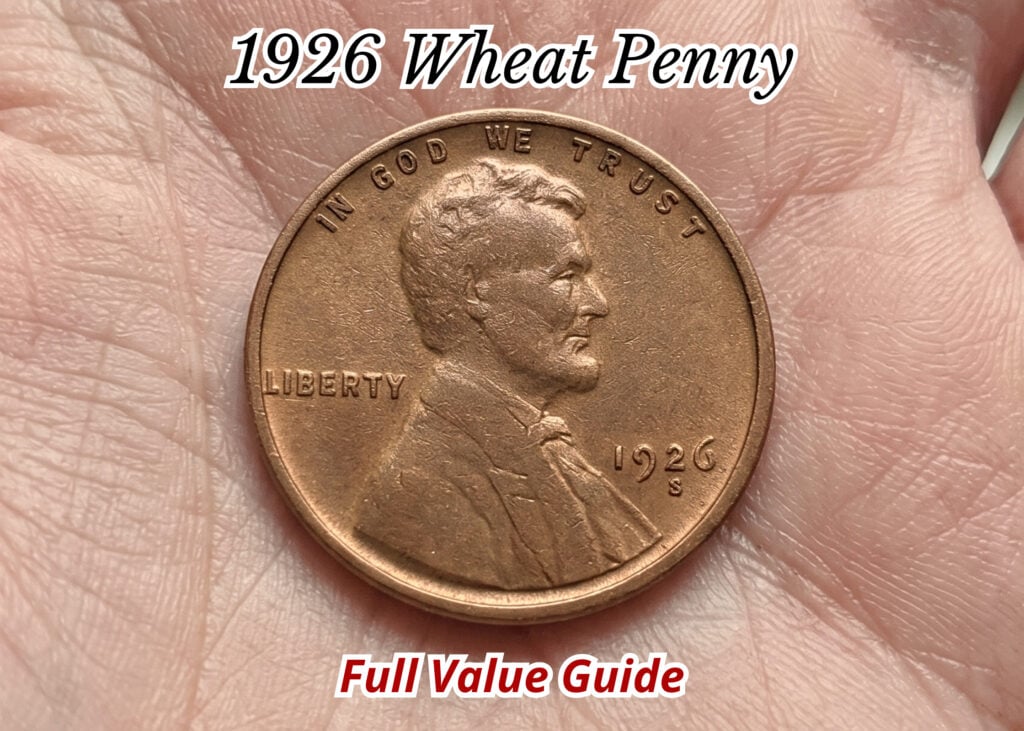
But one of the same 1926 cents also sold for $149,500 at an auction, and plenty of others bring hundreds or thousands, too.
So what is your 1926 penny worth? This guide shows you how to spot a genuine coin, check the 1926 wheat penny value, and spot collectible varieties.
| 1926 Lincoln Penny | Specification |
| Coin Composition | Bronze (95% copper, 5% tin and zinc) |
| Minting Location | Philadelphia, Denver, San Francisco |
| Year of Minting | 1926 |
| Face Value | $0.01 (one cent) |
| Weight | 3.11 grams |
| Diameter | 19.00 mm |
| Thickness | About 1.52 mm |
| Edge | Plain |
| Designer | Victor David Brenner |
| Mint Marks | None (Philadelphia): 157,088,000 D (Denver): 28,020,000 S (San Francisco): 4,550,000 |
| Total Mintage | 189,658,000 |
Identifying a Genuine 1926 Wheat Penny
To tell whether an old 1926 Lincoln Penny is real or not, check three things: the date, the mint mark, and the strike. A 5x to 10x magnifier helps with all three.
1926 Penny Obverse:
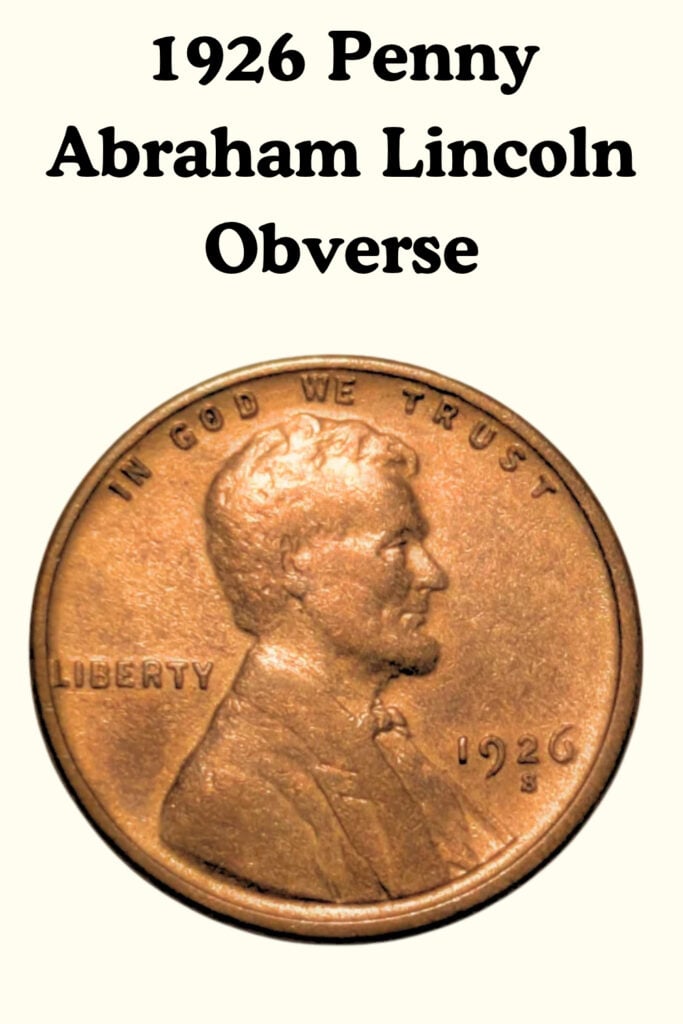
- Lincoln’s bust facing right
- IN GOD WE TRUST arched across the top.
- “LIBERTY” sits to the left of Lincoln’s chest.
- Mint Date “1926” appears on the right, in front of Lincoln’s coat.
- Mint mark (“D” or “S”) directly below the date.
- Designer’s initials “VDB” sit on the cut edge of Lincoln’s shoulder.
1926 Penny Reverse:
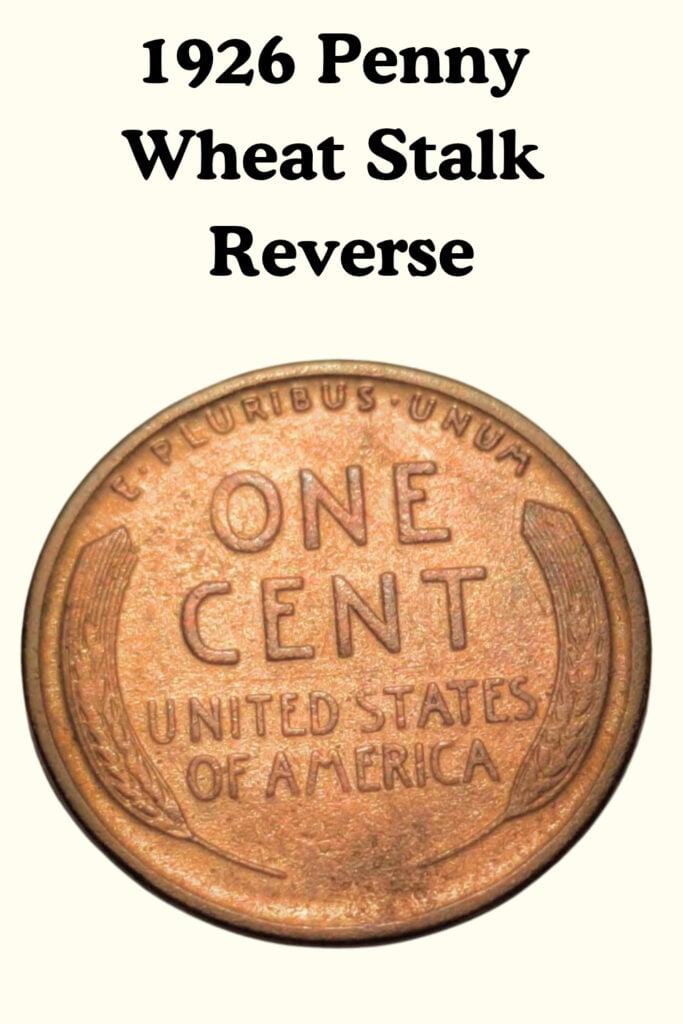
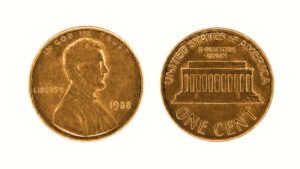
- Motto “E PLURIBUS UNUM” arches across the top.
- Denomination “ONE CENT” appears in large letters
- “UNITED STATES OF AMERICA” below the denomination.
- Wheat ears or stalks curve up the left and right sides (gives the nickname “wheat penny”.
Weight & Composition:
A genuine 1926 cent is bronze and weighs 3.11 grams. A digital scale that reads to 0.01 grams will confirm it in seconds.
There are no steel or silver 1926 pennies. The Mint struck steel cents only in 1943, so a gray or silver-colored 1926 has been plated or altered.
1926 Wheat Penny Value Guide: How Much It’s Worth
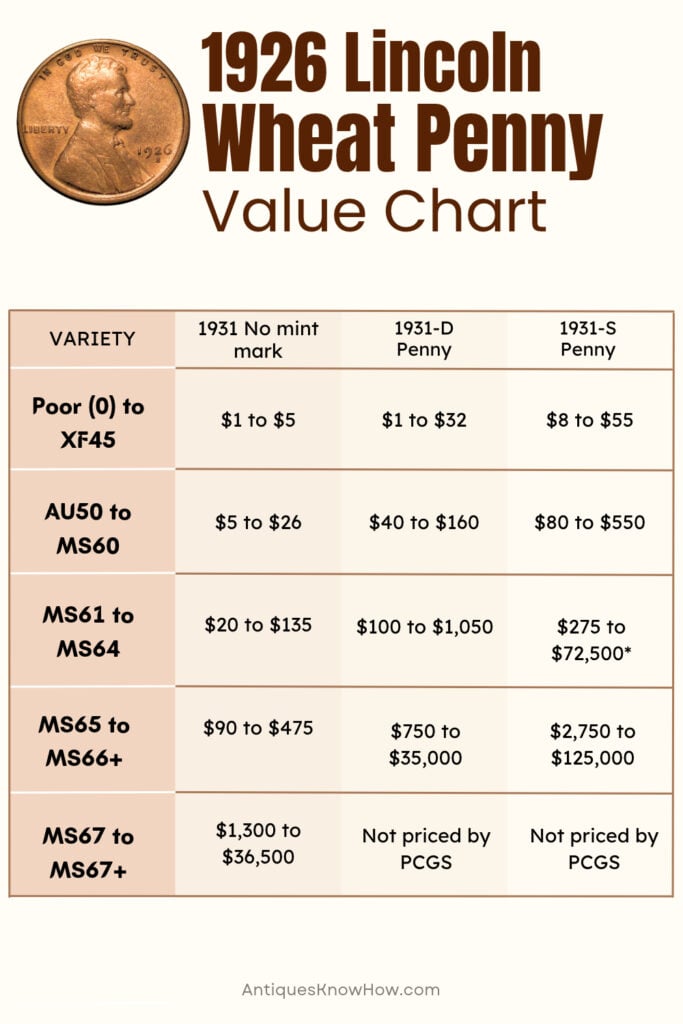
Most circulated 1926 and 1926-D pennies sell for $1 to about $30 today. The 1926-S penny is worth slightly more, starting around $8 in worn condition and reaching thousands of dollars in mint state.
Serious money for 1926 Lincoln cents lies only in Mint State and full red color.
Coin Grades & Color Designation
Coin Grades and Color Designation
Coins are graded on the Sheldon scale, a 1-to-70 system. Grades 1 to 58 cover circulated coins, from Poor to About Uncirculated, while MS60 to MS70 cover Mint State.
Apart from grades, copper cents also get a color label, based on how much of the original color has been retained:
- RD (Red): Nearly all the original mint red remains.
- RB (Red-Brown): A mix of red and brown toning.
- BN (Brown): Mostly brown.
Color directly impacts the coin’s value. A 1926-S in MS65 Brown is priced at $2,750, but the same grade in Red sits at $125,000. That’s why you should never clean a copper cent, because graders spot it right away.
Mint Marks & Mintage
- 1926 No Mint Mark (Philadelphia) – 157,088,000: Philadelphia struck the most 1926 cents, so circulated coins sell for just $1 to $5. Gem Red examples are where the top value lies, ranging from hundreds to a few thousand dollars.
- 1926-D (Denver) – 28,020,000: With the second-highest mintage, the 1926-D is also quite common in circulated grades and scarce in Mint State. MS65 and above examples with full red color are extremely rare and can fetch up to $22,000.
- 1926-S (San Francisco) – 4,550,000: This is the key coin of the year. Worn examples start around $8, with values climbing fast for Mint State coins. PCGS estimates only five 1926-S cents survive in MS65 or better with full red color.
Is there a 1926 Proof Penny? No, the Mint didn’t make proof Lincoln cents in 1926, since matte proofs ended in 1916 and didn’t return until 1936.
1926 Wheat Penny Errors & Rare Varieties
Unlike the famous 1955 doubled die, the 1926 penny does not have any wide varieties that are well-known. The rarest of the 1926 pennies are the high-quality specimens, along with some minor varieties and mint errors.
1
1926-S Penny in Gem Mint Full Red
Typically sells for $550 (MS60 RD) to $150,000 (MS65 RD)
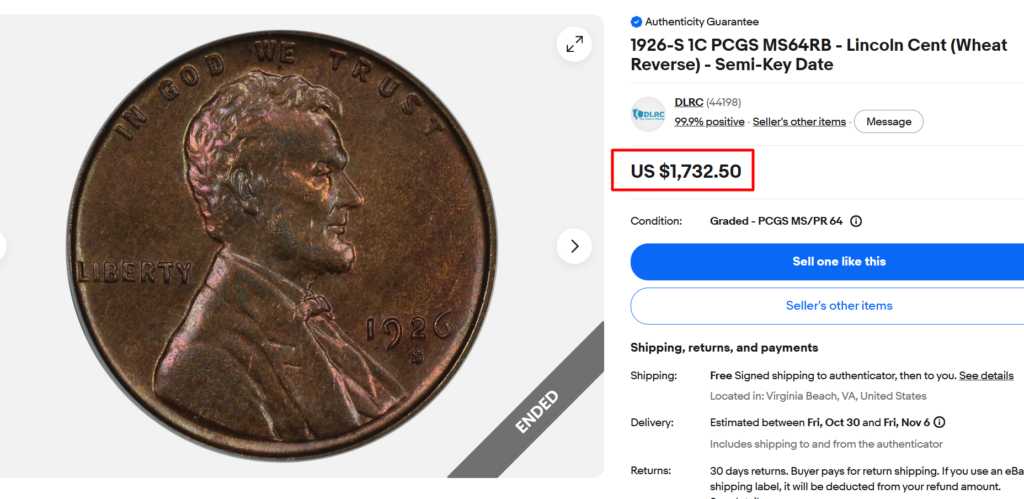
Despite the lowest mintage, most 1926-S cents in Mint State are brown to red-brown and often have poor striking details. A specimen with its original red color, sharp details, and no wear is extremely rare. The most expensive example was an MS65RD 1926 penny that realized a stunning $149,500.00 at Heritage Auctions.
2
1926 Philadelphia Cent in MS67 and MS68 Red
Typically sells for $1,300 to $3,750 (MS67 RD to MS67+ RD)
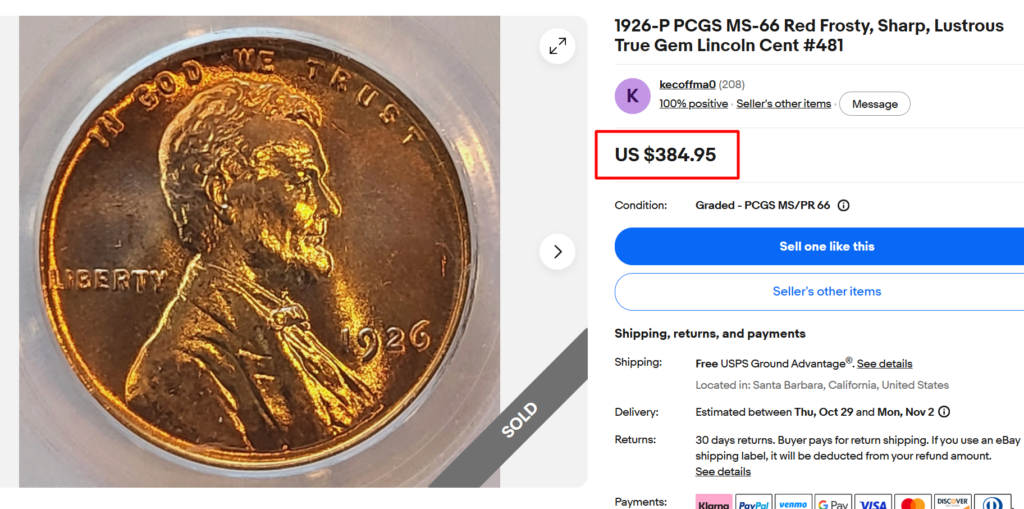
The Philadelphia variety is highly common, but it can still bring big money at the top of the grading scale because very few survive with almost no contact marks. Starting from MS65, the price jumps to four figures, reaching five figures for MS68 grades.
According to PCGS, only one MS68 1926 No Mint Mark penny has been documented as of today, which sold for $36,000 at Heritage Auction.
3
1926-D in Gem Red (MS65 RD and Higher)
Typically sells for $3,500 to $5,250 (MS65 RD to MS65+ RD)
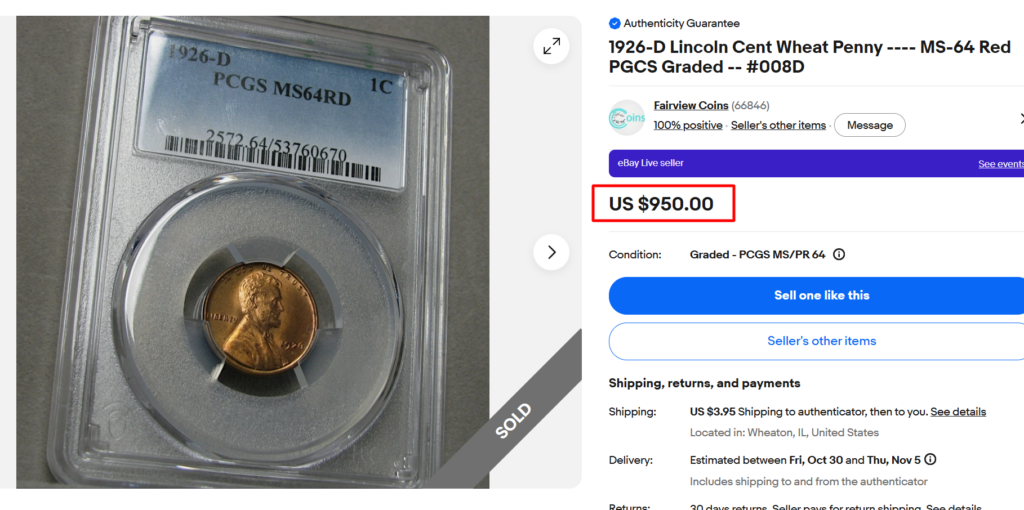
Very few Denver cents from the 1920s were hoarded in rolls because collectors usually collected Philadelphia coins. This explains why full red Denver cents dated 1926 that grade MS65 and higher with nice red color and sharp mint mark are extremely rare today.
The record price of a 1926-D penny is $38,400 for a MS-66+ RD example, sold at Stack’s Bowers auction.
4
1926 Penny Off-center
Typically sells for $5 to $15 (>10%); $35 to $100 (15%-40%); $100 to $300+ (50% or more)
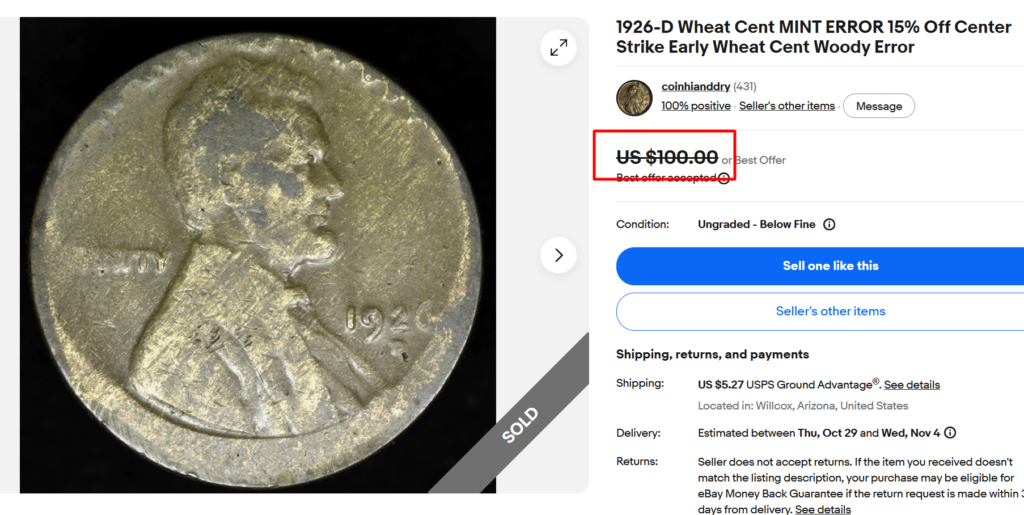
Off-center strikes occur when the blank coin is out of place when the dies meet. This results in missing parts of the design and a blank crescent on one side of the coin.
This error isn’t very significant and only fetches premiums if the coin is in mint condition, the off-center degree is high, and the date is clearly visible.
5
1926 Penny Die Cud Break Error
Typically sells for $20 to $65 (most circulated examples); more for large cuds
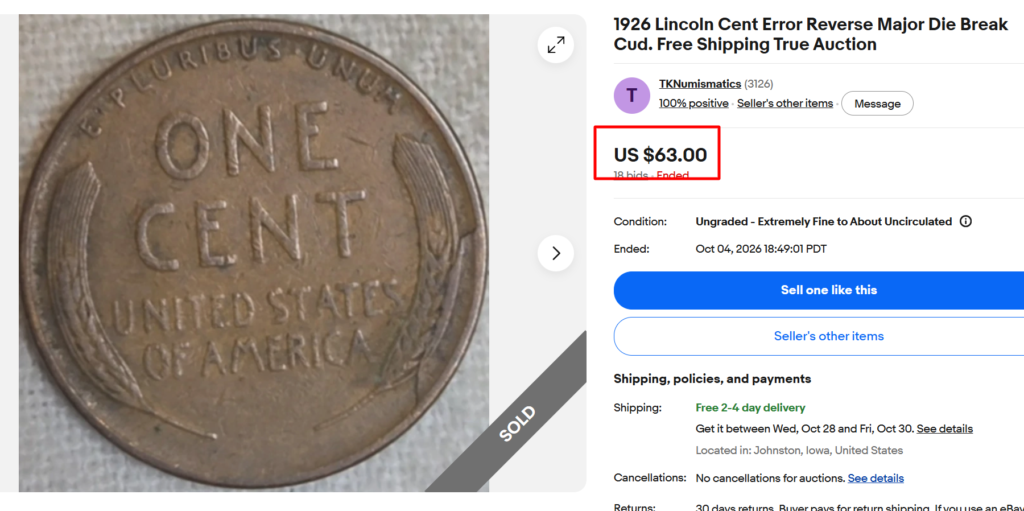
A cud is made when a piece breaks away from the rim of the die. The metal fills the gap, forming a raised, featureless lump on the coin. The genuine cud always meets the rim. Any break that occurs within the field is a die break.
Cud or die break size decides the value; larger cuds or breaks fetch more.
6
1926 Penny Clipped Planchet
Typically sells for $5 to $20 (rim clip); $25 to $50 (curved); $40 to $90+ (straight/ragged clip)
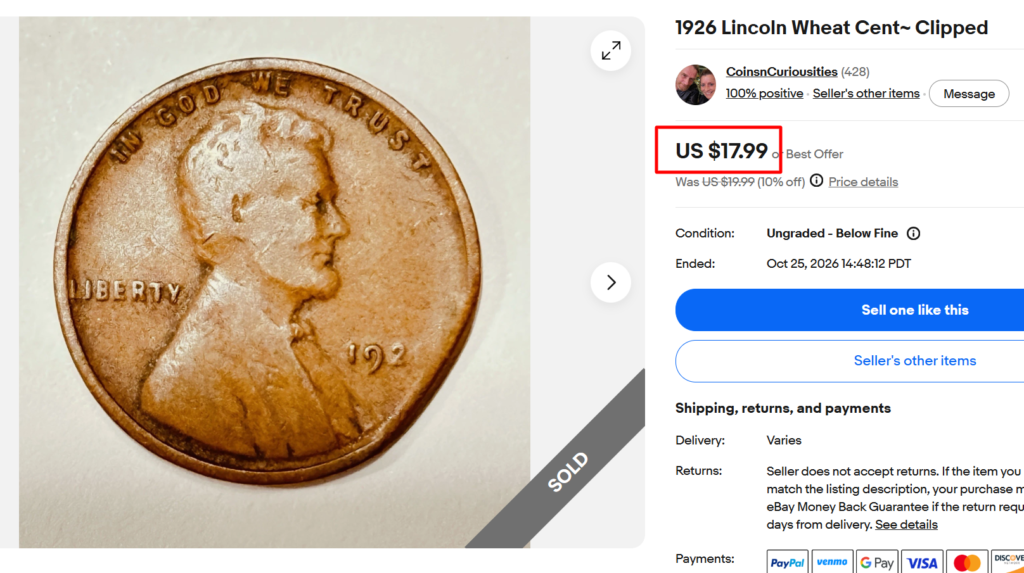
A clipped blank occurs where the punching that cuts out blanks from a copper strip touches a hole or the edge. There will be a missing part on the rim, either curved or straight.
Check the coin for the Blakesley effect, which is a weak spot due to the clip on the other side. Damaged coins don’t show this.
7
Lamination and “Woody” Errors
Typically sells for $1 to $5 (minor flakes); $10 to $40 (large peels); $5 to $25 (woody)
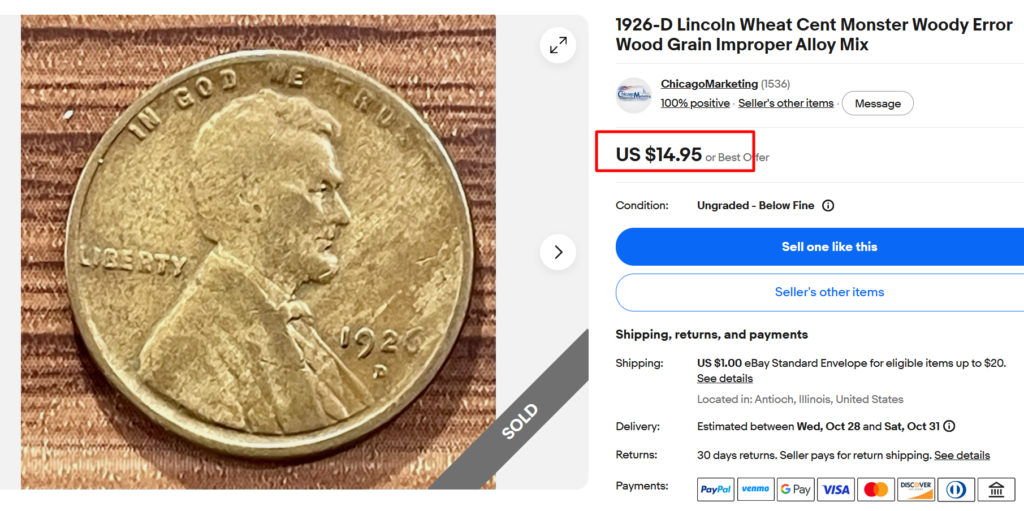
Lamination defects appear as flaking or cracking on the surface due to contamination within the metal. Some of the cents produced in the 1920s have streaks of colors due to improper mixing of the alloy, and these are called “woody.”
Note: This article is intended for informational, educational, and entertainment purposes only. Some images are illustrative and may not represent actual brands, products, or related entities. All trademarks, product names, brand logos, packaging, and other intellectual property referenced remain the exclusive property of their respective owners. Any brand mentions or references are provided solely for descriptive and educational context and do not imply any formal or commercial association.