Vintage Pyrex is one of the most collectible things today. The brand is known for its striking opal glassware with vibrant patterns and, of course, its durability.
But most collections start by accident. You see a beautiful turquoise or pink bowl at a thrift store and get it, and within a month, your shelf is full of so many dishes with a wide range of colors and patterns.
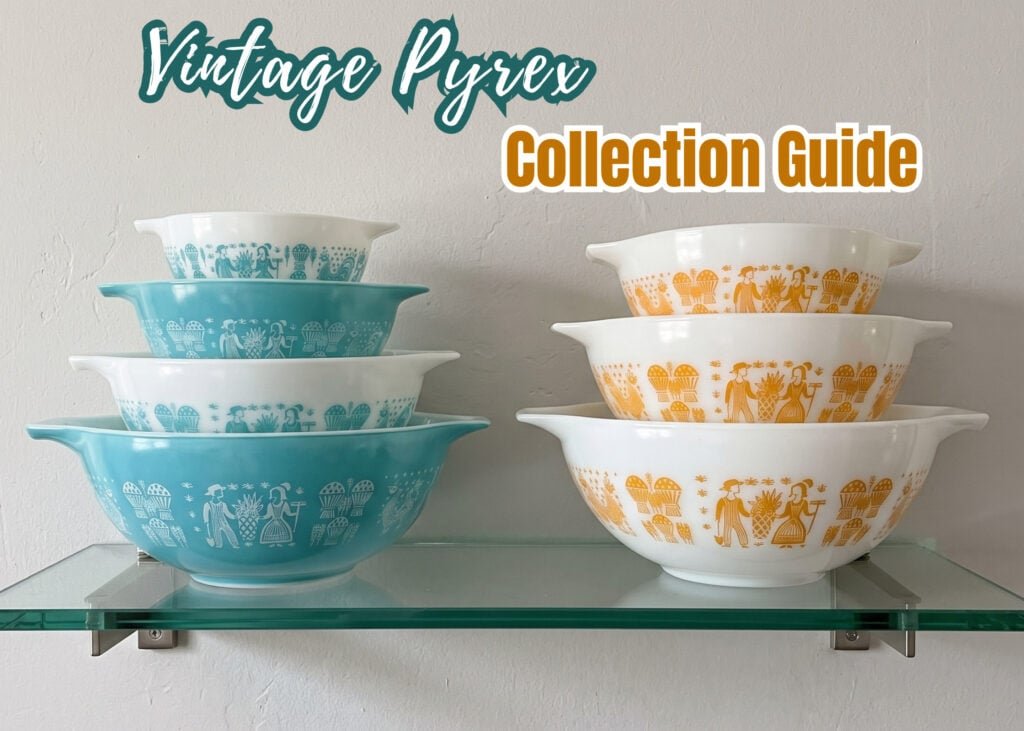
But getting a random dish just because you liked it is not how you build a collection. Below are some simple tips to start and grow your own Pyrex collection.
What Counts as “Vintage” Pyrex?
Pyrex wasn’t always the milky-white glassware with colorful designs you know. Corning Glass Works started Pyrex in 1915 as heat-resistant bakeware in clear glass.
Then, in 1936, Corning acquired the MacBeth-Evans Glass Co. and started making the popular opal glassware (white or ‘milk glass’) at their Charleroi factory in Pennsylvania. One of the first dishes was bowls and cookware.
Colored Pyrex began in 1945, when Corning launched four primary-color nesting mixing bowls. These were plain colored milk glass bowls, with no designs. The first printed patterns came in 1956. Snowflake and Pink Daisy were the first patterns, followed by hundreds of others throughout the late 1950s to the late 1970s.
And that’s the window that refers to Vintage Pyrex: colored and printed Corning-made opalware from 1945 to 1986.
How to Tell If Pyrex Is Really Vintage?
Modern reproductions and retro lines from Pyrex’s later owners often turn up at sales, and they look almost like genuine vintage pieces. Check these two things to spot the difference:
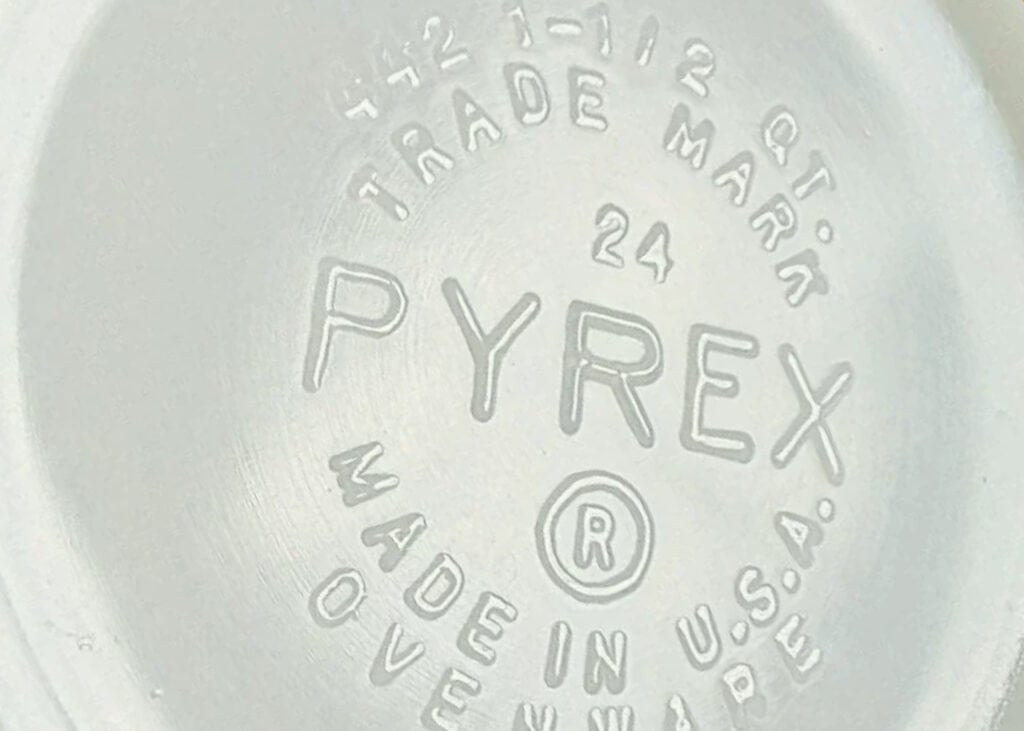
The Backstamp
Most genuine vintage Pyrex has “PYREX” (in caps) stamp molded on the base, while newer pieces show “pyrex” (lowercase). But the letter case is just one clue, not proof, because Corning also used a lowercase logo around 1994.
The Glass
Many collectors claimed that all-caps “Pyrex” pieces are borosilicate glass, but that doesn’t matter regarding the colored Pyrex bowls. Corning made Opalware with tempered soda-lime glass, which is an ordinary glass made stronger through heat treatment.
Why You Want to Build a Collection?
This question might seem out of place, but it’s actually the basis of starting a collection. Knowing why you want to collect vintage Pyrex shapes all the next steps you’ll take, like what to buy, how much to credit the condition, where in your home it goes, etc.
Most Pyrex collectors come from one or more of the following categories:
- The Nostalgic Collector: You grew up in your mother’s or grandmother’s home seeing a certain pattern, and now it hits nostalgia. So, you want to keep it. In this case, go with that one pattern that strikes your heartstrings, and don’t worry about a little bit of wear.
- The Utilitarian Collector: You are looking for functional dishes used for cooking purposes. If you belong to this group, condition should be your first priority. Avoid anything with heavy wear. And only handwash the dishes.
- The Decorator Collector: You want Pyrex as decor around the house. In this case, go after a color or theme, and build your collection or harmony rather than rarity.
- The Investor Collector: You want things that nobody has. Here, you need to learn more about the patterns, when they came out, and for how long they were made. Finding rare Pyrex needs research and expert valuation tips.
You could have more than one of the above reasons, or something entirely personal and different, too. But no matter the reason, some collecting tips will always come in handy.
Is vintage Pyrex safe to use?
It mostly is, but there’s a catch. Many vintage Pyrex pieces were found to have lead in their exterior paint. So, if you plan to cook with them, do a home lead test first. And don’t use any piece with worn or flaking paint.
6 Simple Tips for Collecting Vintage Pyrex
1. Pick a Focus
Once you’re sure why you’re starting your collection, decide the focus.
- A particular pattern – grab every single piece made in a single pattern.
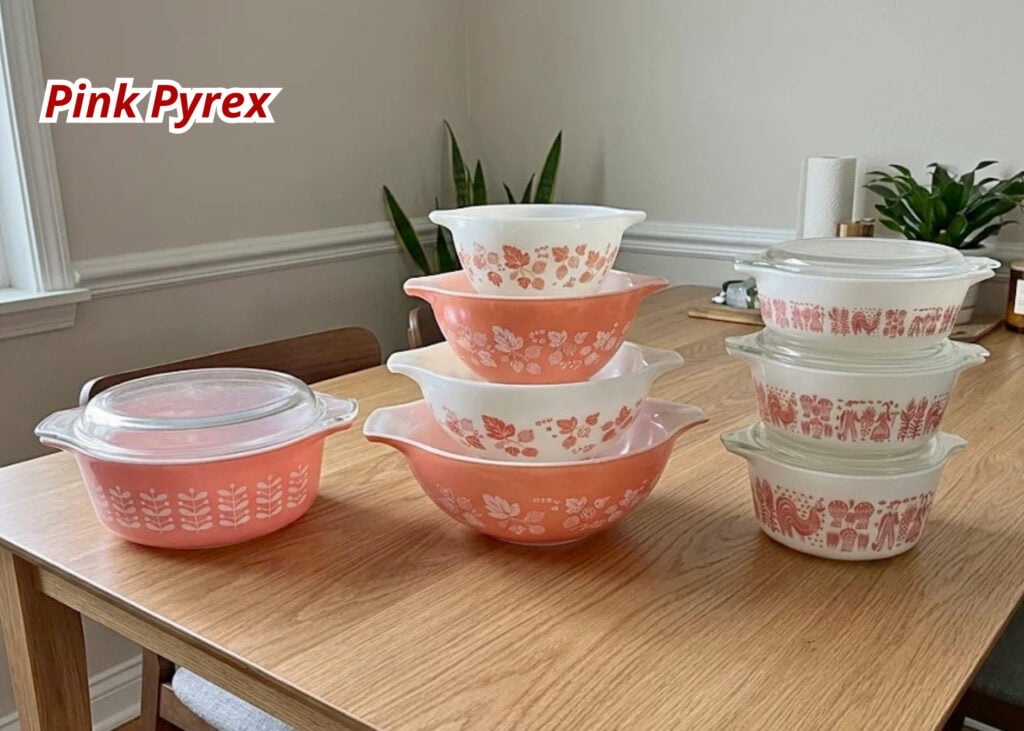
- A particular color or palette – collect all turquoise, all pink, or all 70s earth tones.
- A particular shape – collect all mixing bowls, refrigerator dishes, or one casserole size in as many patterns and colors as possible.
- A particular year or period – Pieces released the year you were born, or lived at your granny’s home, or got married.
2. Start Easy and Affordable
Whether you’re collecting a color, pattern, shape, or year, start with low-value pieces. The first primary-color bowls and Cinderella bowls (two flared hands on opposite sides) are among the most common and affordable dishes at thrift stores and garage sales. Grab them first.
3. Know the Key Patterns
Again, regardless of your focus, it’s always better to know the key patterns and when they were made. Also, master the common ones first before moving on to rarer colors.
Here are some popular patterns to get started with:
- Gooseberry
- Amish Butterprint
- Butterfly Gold
- Spring Blossom Green (Crazy Daisy)
- Snowflake Blue
- Woodland
- Homestead
- Eyes
Colors such as pink and orange Butterprints (only obtainable via trade stamp programs) will become easy to spot once you know how the common turquoise pieces look. Some rarities to go after are:
- Lucky in Love (Opalware)
- Atomic Starburst
- Duchess
- Pink Stem
- Black Star
- Ducks in the Marsh
- Balloons
4. Always Assess the Condition
Condition matters the most if you’re collecting to use the Pyrex dishes. But it also matters for decor purposes as well because you’d rather not have a broken or chipped piece on your display shelf.
Some of the most important damage to look for:
- Dishwasher damage or “DWD.” It’s basically a loss of color and a hazy texture.
- Chips on the rim and the foot ring.
- Scratches or utensil marks, especially undesirable on the exterior.
- Rub wear at the undersides of handles and corners of square dishes.
5. Know the Prices Beforehand
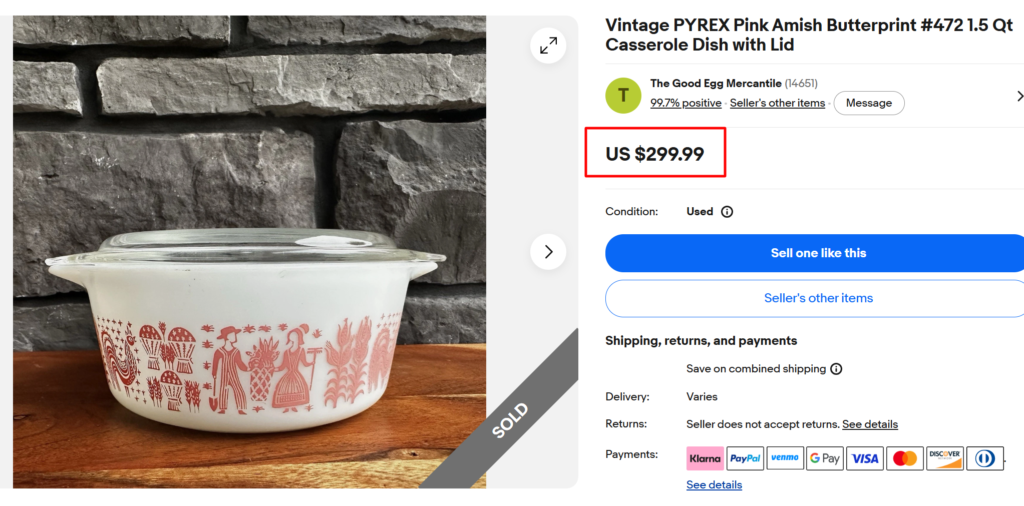
Before you go out hunting at thrift stores, flea markets, or garage sales, or thrifting online, do some homework. Open eBay and search for vintage Pyrex, along with your focus (pattern name, year, color, or form), and filter the sold listings.
This tells you an average price people are paying for a particular pattern or shape.
6. Build Sets Yourself
It might seem convenient to buy a pre-assembled set, but avoid it. A taped box listed as a lot may contain pieces with chips and wear, too. Buying piece by piece lets you choose the condition you’re paying for.
Where to Find Vintage Pyrex?
If you’re just beginning your collecting journey, I’d recommend shopping in person. It gives you the freedom to check every piece manually and pay only once you’re satisfied.
Yard and estate sales, thrift stores, indoor flea markets, and antique malls are among the best spots to find them. Prices are usually highest at antique malls and lowest at yard sales.
If shopping online, eBay, Etsy, and Facebook Marketplace are the best platforms. You can find nice bargains, but then there will be shipping costs. And if you’re shopping online, make sure to always ask for well-lit photos from every angle before buying and for double-box packaging after finalizing.
Caring for Your Pyrex Collection
Building a Pyrex collection comes with a responsibility of caring for it. Some things that you should always be mindful of are:
- Never wash the vintage dishes in the dishwasher. Hand wash them with some lukewarm water and mild dish soap. For stubborn stains, soak the dish in warm water with a little baking soda overnight.
- If you see grayish utensil stains, you can use metal polishes (like Nevr-Dull). But make sure not to apply it to any gold decoration.
- Avoid giving your dishes temperature shocks; it can crack the glass. Don’t pour cold water on a hot dish or put hot dishes in cold water.
- I recommend avoiding microwaving any Pyrex pieces with gold or metallic decorations, like Butterfly Gold.
Growing a Pyrex collection isn’t just random picking. Focus on one thing (pattern, color, shape, or year), start with affordable pieces and one set, and grow to adding the rarest pieces.
Note: This article is intended for informational, educational, and entertainment purposes only. Some images are illustrative and may not represent actual brands, products, or related entities. All trademarks, product names, brand logos, packaging, and other intellectual property referenced remain the exclusive property of their respective owners. Any brand mentions or references are provided solely for descriptive and educational context and do not imply any formal or commercial association.