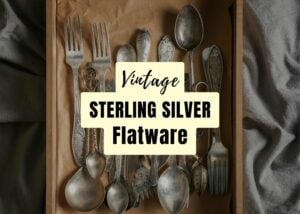
That blackened spoon you found in your grandmother’s drawer is not ruined. But the way you try to “fix” it may definitely destroy its value and turn it worthless.
Cleaning antique silverware needs patience and attention. The wrong method can erase decades of patina in under five minutes, strip the silver layer off a plated piece, or dull the engraving that actually makes it a treasure.
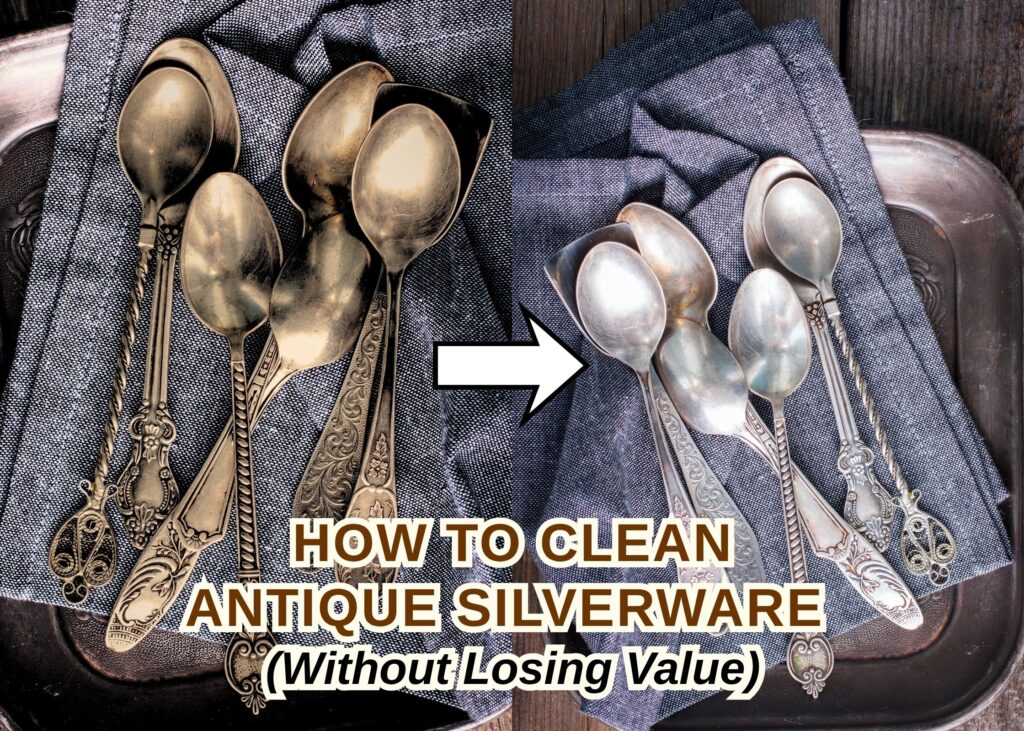
If you’re planning to clean your old silverware, save this guide and learn the safest ways to do so.
Patina vs. Tarnish: Know the Difference Before You Touch Anything
Before you even think of cleaning your antique or vintage silverware, find out what it wears. Patina is the soft, warm darkening that builds up inside engravings and along low-relief details over decades.
Collectors cherish patina because it’s a sign of genuine age and not chemical stripping.
Tarnish is different. It is the black or yellow sulfide film that forms on the smooth, exposed surfaces. This is something you might want to remove.
The goal of cleaning antique silver is to take off the tarnish on the flat areas while leaving the dark patina in the recessed details. Get this right, and your piece looks alive instead of bleached.
Collector’s Tip: If a piece is so uniformly bright that the engraving looks shallow and flat, it has been over-polished. That alone can drop the resale value by half on rare hallmarked pieces.
Identify What You Have Before You Start
The cleaning doesn’t begin yet. Your cleaning method will depend entirely on what the piece is made of. A quick identification can save you a permanently damaged heirloom.
Look at the back of the handle or the underside of the bowl for a mark. Here is what the common ones tell you:
- STERLING, 925, or a walking lion (lion passant): Solid sterling silver, 92.5% pure. It is silver all the way through, so the surface can be cleaned more confidently. The lion passant has been used in England since 1544 and is one of the most reliable age markers in antique silver.
- EPNS, EP, A1, Silver Soldered, or Quadruple Plate: Silver plate, which is a silver coating over copper, nickel, or brass. Aggressive cleaning will remove the silver plate, revealing the base metal underneath.
- COIN or PURE COIN: Early American coin silver, typically 90% pure. Often pre-1860s. Treat these like museum pieces.
- GERMAN SILVER, Nickel Silver, or Alpaca: This isn’t silver at all. A copper-nickel-zinc alloy that simply looks like silver.
If you see a maker’s mark from Tiffany, Gorham, Reed & Barton, Towle, or any British assay office, stop and check the piece’s value before cleaning. Learn more about silver hallmarks here.
3 Safe Methods for Cleaning Antique Silverware
There are three safe methods you can use to clean antique silver. The method you use will depend on the level of tarnish. Start with the gentlest method and only move up if it is not enough.
Method 1: The Gentle Soap and Warm Water Wash
This is especially useful for treating slightly tarnished or dusty silverware, which is usually all that silverware stored in drawers requires.
Dissolve one drop of phosphate-free liquid dish soap in warm water in a plastic bowl. Don’t do this in a metal sink since there could be an adverse reaction to stainless steel.
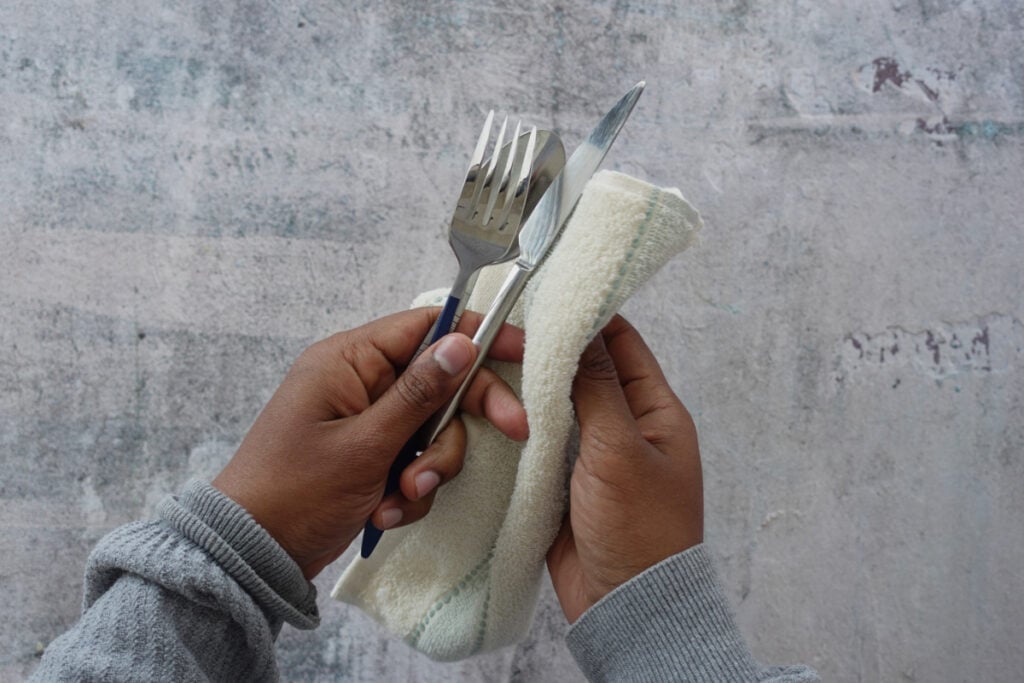
Wash each piece individually with a soft cotton or microfiber cloth, working with the grain of any brushed finish. Rinse in clean warm water and dry immediately with a 100% cotton or microfiber towel.
Cleaning Tip: Never let antique silver air dry because water spots etch into the surface and pull moisture into the seams of hollow handles.
Method 2: Silver Polish for Heavier Tarnish
If plain dish soap doesn’t do the trick in cleaning your silverware, use long-strand cotton silver polish products such as Hagerty or Goddard’s.
Apply a little to a soft cloth and work in straight lines from the center of the piece out. Don’t use circular motion since it will make visible swirls under the light.
Also, only polish the smooth, raised surfaces. Do not touch the engraved areas, monograms, and decorative borders. That is where the patina lives, and you won’t want to clean that at all.
Buff lightly with a fresh microfiber cloth to bring up the shine. One polish can last years if done carefully and if the piece is stored well.
Method 3: The Aluminum Foil + Baking Soda Bath (Use With Caution)
You must have seen this trick often on the internet, where you add baking soda, salt, and aluminum foil into hot water, soak the silverware in it for some time, and rinse it. This method pulls the sulfur off the silver through an electrochemical reaction. So, it’s fast.
However, it is also genuinely risky for antique pieces. Because the reaction does not distinguish between unwanted tarnish and the intentional darkening makers applied to highlight repoussé and floral patterns.
Also, on worn silverplate, it can eat right through the thin silver layer and expose the copper underneath, which often shows as a yellow or pink bleed on the high points.
So, it’s better to use this method, with a short soak (2-3 minutes), for cleaning only everyday silverware made after the 1950s with no decorative detail.
Warning: Avoid using the foil method on weighted candlesticks, hollow handled knives, anything with cement set decoration, silver with niello inlay, or rare hallmarked antique pieces.
How to Clean Heavily Tarnished Antique Silver?
When the tarnish is so old, almost like a black crust, you may want to scrub harder. But don’t do it. Heavy abrasion can carve micro scratches into the surface, and those scratches actually attract tarnish faster the next time.
Instead, use repeated gentle cycles. A soak in warm soapy water, a soft polish, a thorough rinse, and a careful dry. And then repeat it all the next day if needed.
For pieces with rare hallmarks, ornate hollowware, or any item you suspect is worth more than a few hundred dollars, it’s best to hand it over to a professional silversmith for cleaning.
Cleaning Mistakes That Quietly Destroy Value
Young collectors and beginners handle vintage silverware differently and often repeat common mistakes without realizing it. And every single one of them lowers what a piece will fetch.
- Toothpaste: The internet loves this hack, but collectors do not. It’s abrasive enough to leave hairline scratches and strip thin plating.
- The dishwasher: Heat, harsh detergents, and contact with stainless steel cause pitting, dezincification on silverplate, and clouding on sterling. One cycle can do permanent damage.
- Straight vinegar or lemon juice: It’s simply acidic and can easily etch the surface, especially on softer pre-1900 sterling alloys. Again, an internet hack that’s only good for everyday pieces.
- Steel wool, magic erasers, and Scotch-Brite pads: All abrasive. All leave permanent scratches and marks.
- Over-polishing the engraving: Monograms might devalue a piece, but so can erasing the monogram or softening a hallmark, because it wipes out the very details that confirm authenticity and provenance.
- Storing in newspaper, rubber bands, or plastic wrap: Don’t do this. The sulfur in newsprint and rubber will accelerate tarnish faster than you know.
When Not to Clean Old Silverware at All?
Do not clean it before an appraisal. Appraisers want to see the natural condition, including the patina, to confirm age and provenance. Cleaning right before a valuation can actively lower the estimate.
The same goes for any piece headed to auction, anything with a museum-quality maker’s mark, and any item with verified provenance you cannot easily replicate. In those cases, the dark surface is part of the story, and the story is part of the price.
Storing Antique Silverware to Prevent Future Tarnish
For old silverware, cleaning is half the job. How you store it is even more important, and most people skip it or do it wrong.
Unless you’re storing your silver as part of a display, cover each individual item in anti-tarnish cloths like Pacific Silvercloth, or use acid-free tissue paper. Place active charcoal packets or anti-tarnish strips inside the box containing your silver items to absorb any air-borne sulfur.
A lined flatware chest with felt dividers is the gold standard for a full set.
Silver needs to be kept in dry surroundings, away from attics, basements, or anywhere with humidity. Surprisingly enough, it is a good choice to wrap silver in some kind of cloth, rather than keeping it in a tightly sealed plastic bag.
Lastly, wool, rubber, eggs, onions, and latex gloves all accelerate tarnish, so keep them well away.
Note: This article is intended for informational, educational, and entertainment purposes only. Some images are illustrative and may not represent actual brands, products, or related entities. All trademarks, product names, brand logos, packaging, and other intellectual property referenced remain the exclusive property of their respective owners. Any brand mentions or references are provided solely for descriptive and educational context and do not imply any formal or commercial association.