Cabbage Patch Kids dolls started as hand-stitched cloth dolls, but became extremely popular when they got their iconic soft vinyl heads – so popular that the license went to not one or two but seven different brands.
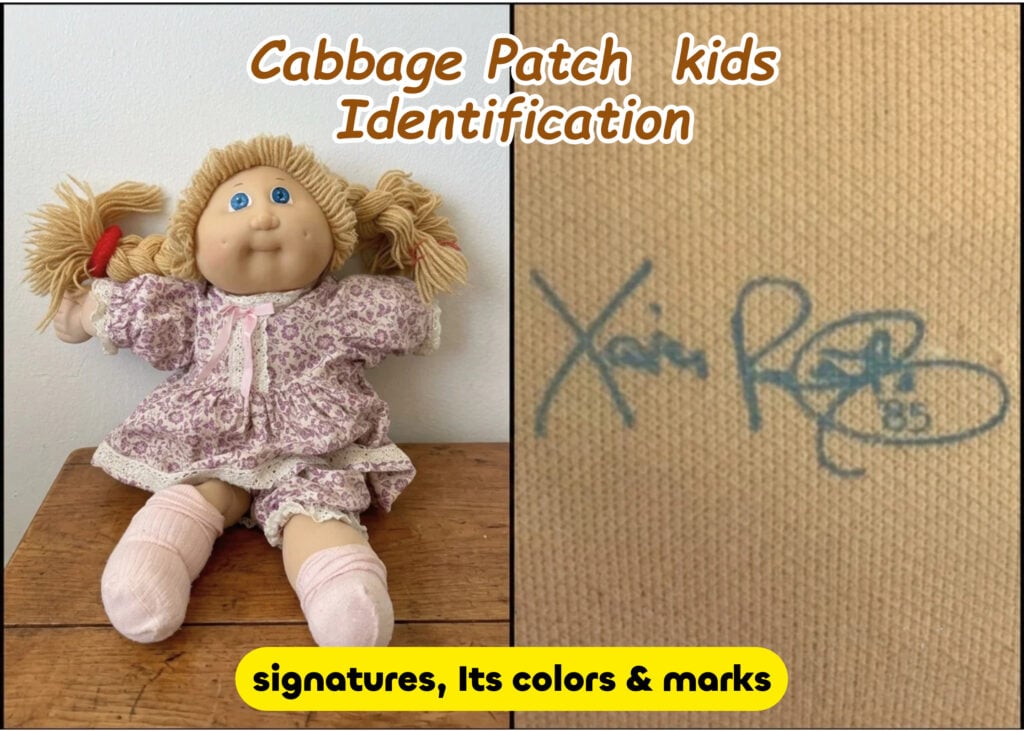
This is one of the factors new collectors struggle with when identifying the original vintage CPK dolls. Let’s see how to read every mark on your Cabbage Patch Kids dolls and figure out which group yours falls into.
Quick Cabbage Patch Kids Identification Checklist
- The Xavier Roberts signature on the doll’s bottom
- The signature color and printed year
- The copyright stamp on the back of the head/neck.
- The cloth tag in the left side seam
- The unique factory code
- The head mold number, plus dimples, a tooth, freckles, or a pacifier.
- The birth certificate and adoption papers
The First Distinction: Hand-Signed Soft Sculpture Vs. Mass-Market Doll
These dolls started as soft-sculpture cloth dolls (from head to toe), hand-stitched by Xavier Roberts in the late 1970s. He called them Little People. These were made for sale at arts and crafts shows and then at Babyland General Hospital (a clinic turned into a toy store) in Cleveland, Georgia.
In 1981, Atlanta’s designer Roger L. Schlaifer got the license to make the Little People. These were then renamed Cabbage Patch Kids to avoid copyright claims from Fisher-Price.
Finally, in 1982, Coleco got the license to make the mass-market dolls with vinyl heads, cuter features, and softer bodies with toddler-like proportions. Vintage Cabbage Patch Kids refers to these.
After about six years, the license passed to Hasbro (around 1989), Mattel (1995), Toys “R” Us (2001), Play Along (2004), JAKKS Pacific (2011), and Wicked Cool Toys (2015 to today). Each maker marked its dolls differently.
Signs to Date and Authenticate Cabbage Patch Kids
From the bottom signature to the head stamp and body tag, there are several ways to date and identify vintage Cabbage Patch Kids dolls. Let’s start with the most important dating clue, the XR signature.
1. The Xavier Roberts Signature & Its Color
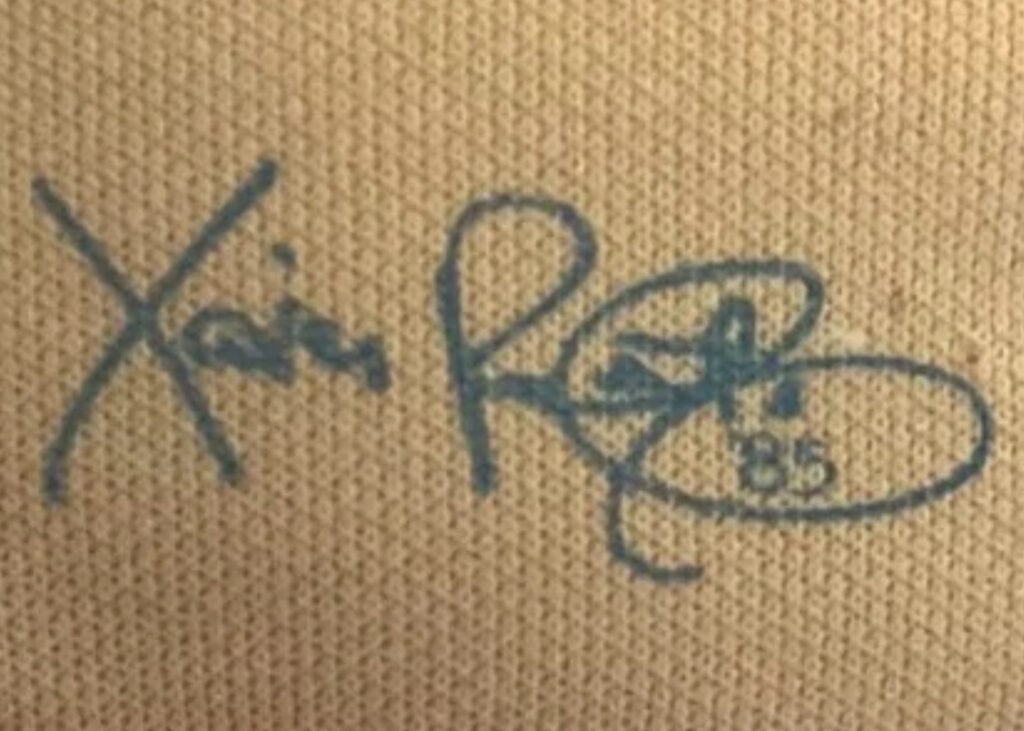
Most mass-market Cabbage Patch Kids have the signature on the bottom-left cheek. You may find some stamped on the right or a few with an upside-down stamp; these are variations, not fake signatures.
The signature remained the same over the years, and the company’s ownership changed, but its color changed. Coleco, Mattel, and Hasbro- everybody changed the signature colors over the years.
Here’s a quick reference table to date a Cabbage Patch Kid by the Xavier signature color:
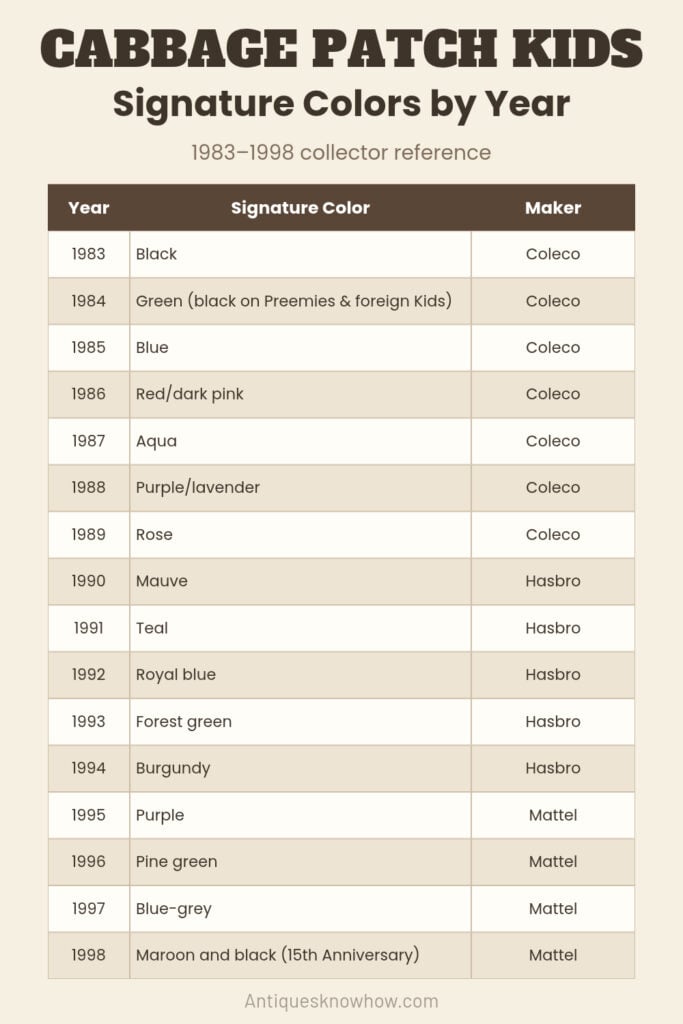
Quick Note: A black signature isn’t necessarily from 1983. Play Along restarted the Coleco color sequence with black in 2004 and reused original Coleco head sculpts for its 25th Anniversary line; check the head stamp.
Dolls from 1984 to 1986 also show the last two digits of the years inside the Xavier Roberts Signature. The undated 1984 green stamps came before the dated ones.
2. The Head Stamp
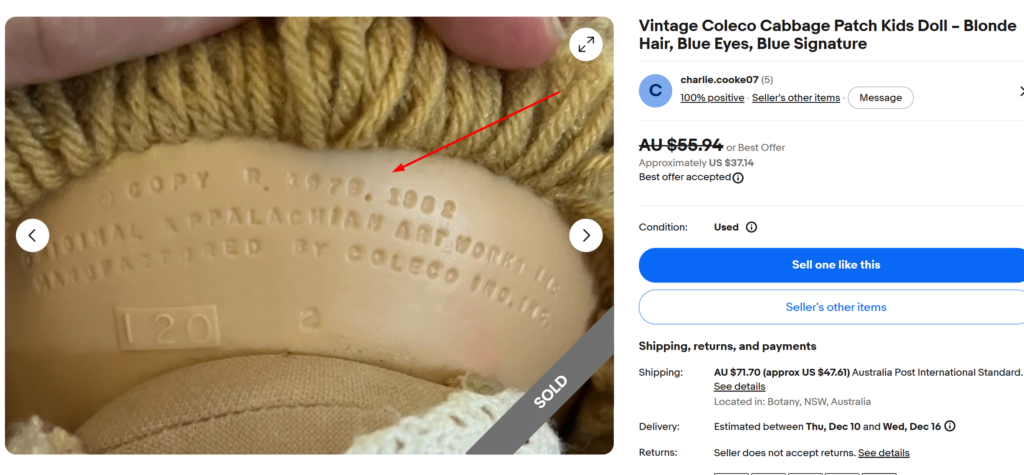
You’ll find this stamp on the back of the doll’s head, at the nape.
Coleco Kids shows the “©1978, 1982 Original Appalachian Artworks Inc./Manufactured by Coleco Ind. Inc.” stamp. Note that the years on this stamp are not production years, but design copyright dates. So, a 1988 Coleco Kid has the same years as the stamp.
Hasbro CPK dolls mostly show only “©1978, 1982 O.A.A. Inc.” along with the mold number. But these also have a stitched brand tag to identify them.
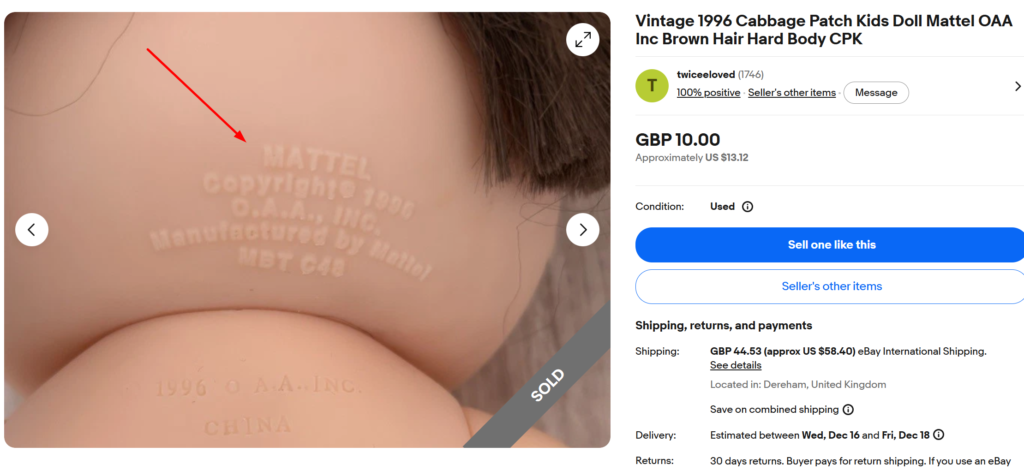
Mattel CPK heads show a raised “Mattel” or “Mattel First Edition / Copyright © (Year) / OAA Inc.” until 1997.
3. Head Molds
The back side of each doll’s head also shows stamped numbers inside small boxes or circles. Collectors call these “cavity codes.” These are factory tracking codes for different designs and styles.
Some common mold numbers you’ll see are:
- #1 – “Shy Face” – no dimples and narrow-set eyes
- #3 – a lone left-side cheek dimple
- #4 – two dimples and removable pacifier; these “Paci Kids” dolls fetch higher prices
- #5 – two dimples with lone tooth in front
- #6 – left dimple, pacifier, and wider face
- #8 – wider face mold with bigger ears, designed to wear glasses
- #11 – pink tongue sticking out, two dimples
- #19 – open-mouth, visible teeth, no dimples
- #17 – open mouth with tiny top teeth, single dimple
- #23 – Coleco’s Growin’ Hair line, open-mouth smile, single tooth
4. The Body Tag and Factory Code
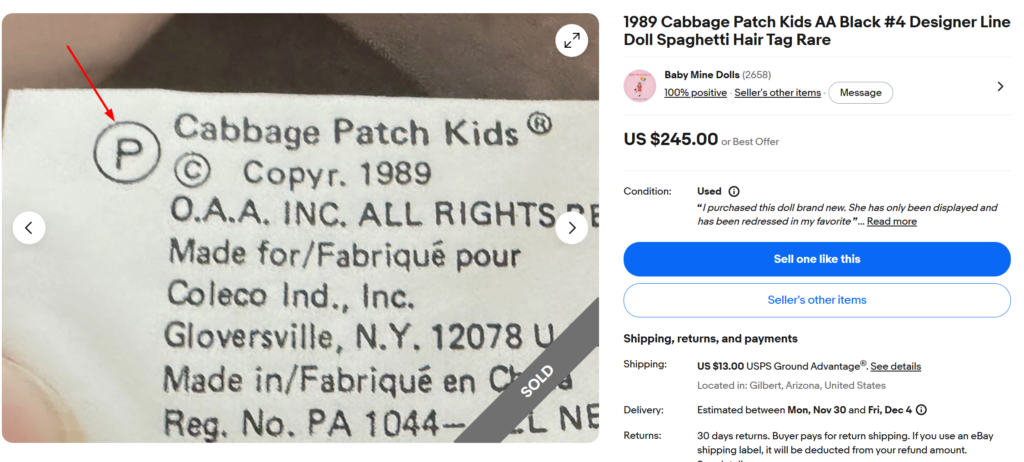
The body tag is stitched into the seam on the body’s left side. A Coleco tag lists OAA, “Mfg. for Coleco Industries, Inc., Amsterdam, NY,” and the country.
Also, Most say “Made in China,” but early 1983 tags say “Made in Hong Kong.” Embroidered tags are very hard to find.
An important detail on the tag that many collectors miss is the one (or two, in some cases) letter that appears inside a small circle. This code tells the factory, and some other crucial features:
| Code | What It Means |
| OK | Kader factory (chubbier bodies) |
| KT | Stocky bodies; vinyl can turn grey; embroidered tags source |
| P | Perfecta (longer legs); vinyl prone to pox |
| PMI | China, 1984 to 1985; vinyl very prone to pox |
| UT / IC | Taiwan; vinyl can yellow (UT) or turn greenish (IC) |
Note: Just like the name suggests, pox is nothing but dark spots caused by moisture on vinyl over time. It’s not a brand’s terminology, but a collectors’ term.
4. Birth Certificate and Adoption Papers
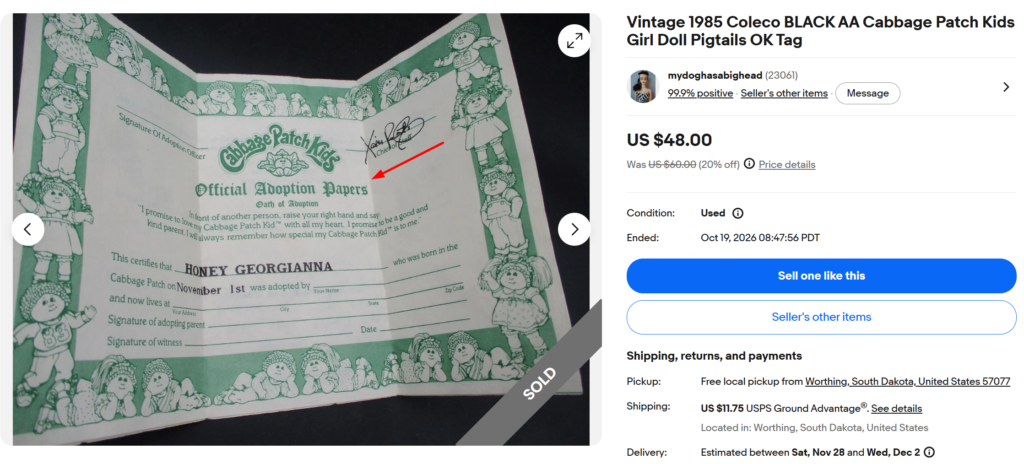
Each subsequent brand picked up the adoption theme Xavier Roberts started. So, every single Cabbage Patch Kid had an enclosed paper stating his or her name, date of birth, and oath of adoption.
Kids made between 1982 and 1983 had birth dates of September 1, October 1, or November 1. Loose papers alone can sell for $10-$20, indicating how essential they are when they match the doll.
Foreign-Made CPK Dolls
Coleco licensed Jesmar (Spain), Lili Ledy (Mexico), Tsukuda (Japan), and Tri-Ang Pedigree (South Africa). Their head stamps name the country. Many dolls have unique hair or eye colors that were never released in the US market.
What Makes a Cabbage Patch Kid Valuable?
Among all the brand variants, Coleco Cabbage Patch Kids are the most popular. But since millions of them were made, a played-with doll is only worth $15 to $45, or maybe a little more with papers.
The final value depends on the following things:
- Condition: The better the condition, the higher the value. So, no pox or discoloration, uncut hair, no ink marks, readable signature- all matter a lot.
- Rare Feature Combinations: Some CPK doll features are more desirable than others, such as grey-eyed girls on molds #1 and #3, brown-haired boys with blue eyes, green-eyed bald Kids, fuzzy red-haired boys, and 1983 freckled Kids.
- Rare Hair and Molds: Brown, black, red-orange hair, and blond/yellow (lemon, butterscotch, or lemon) hair are common. Gaudy gold and taffy hair are rare. Also, popcorn hair (tight yarn curls), especially on mold #19 or African American Kids, is very rare.
- Rare Sources: Embroidered KT tags, Lili Ledy Kids, and Canada-only Couture Kids add more value than regular tags
- Completeness: Finally, a complete doll with its original tagged outfit, shoes, matching papers, and original box, especially in good condition, is worth way more than a loose doll.
Note: This article is intended for informational, educational, and entertainment purposes only. Some images are illustrative and may not represent actual brands, products, or related entities. All trademarks, product names, brand logos, packaging, and other intellectual property referenced remain the exclusive property of their respective owners. Any brand mentions or references are provided solely for descriptive and educational context and do not imply any formal or commercial association.