Most people think that Coca-Cola only made bottles, but that’s not the truth; the brand made everything from trays and clocks to vending machines and ice chests. These old Coca-Cola Memorabilia are frequently seen at estate sales and passed by.
But there are some rare collectibles that may sell for as high as $2,000 based on age, design, and condition.
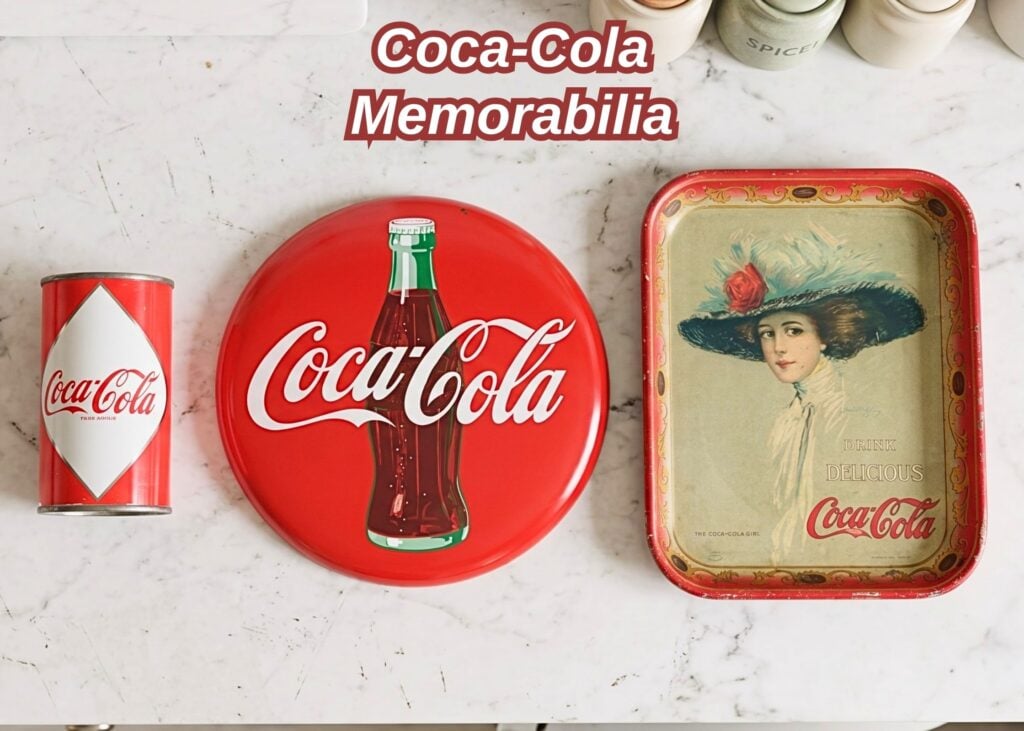
Here is a list of the types of Coca-Cola collectibles that you should know, along with the actual value of each collectible, as well as the distinguishing features of each one.
Quick tip: Anything with the script Coca-Cola logo, no ® or ™ symbol, and a design tied to a known artist or bottler almost always predates 1960. That’s the era that’s most collectible.
Collectible Coca-Cola Memorabilia That Are Worth Money Now
1
Hutchinson Coca-Cola Bottle
Typically sells for $500 to $7,000
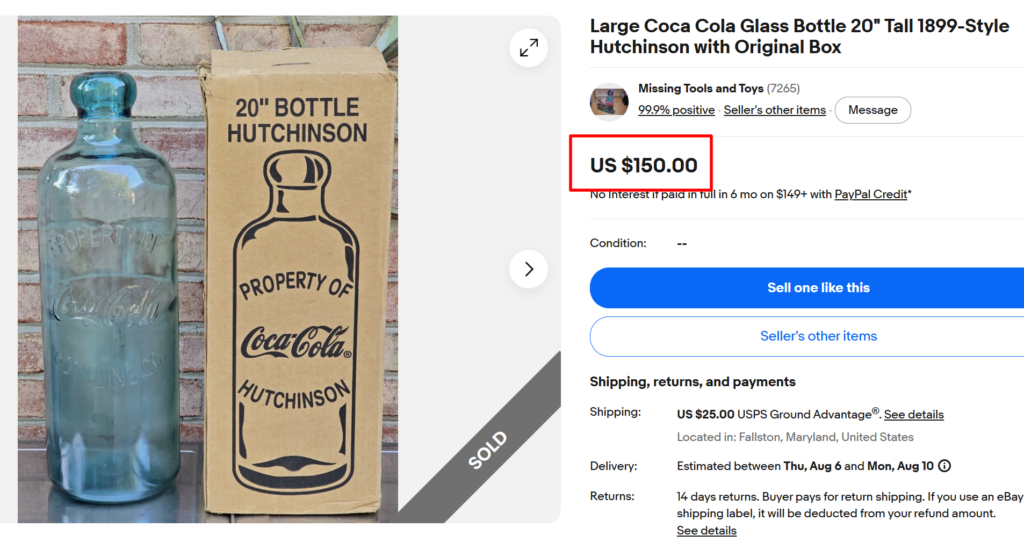
| Manufacturing period | 1894 to 1902 only |
| Key features | Wire stopper, embossed script logo |
| Collector notes | First bottled Coke ever made |
These were the first bottles Coca-Cola ever used, sealed with an internal wire and rubber stopper instead of a cap. Coke only used them for about seven years before switching designs in 1906, which is why examples naming early bottlers like Biedenharn of Vicksburg are so scarce today.
2
Straight-Sided Amber Coca-Cola Bottle
Typically sells for $50 to $600
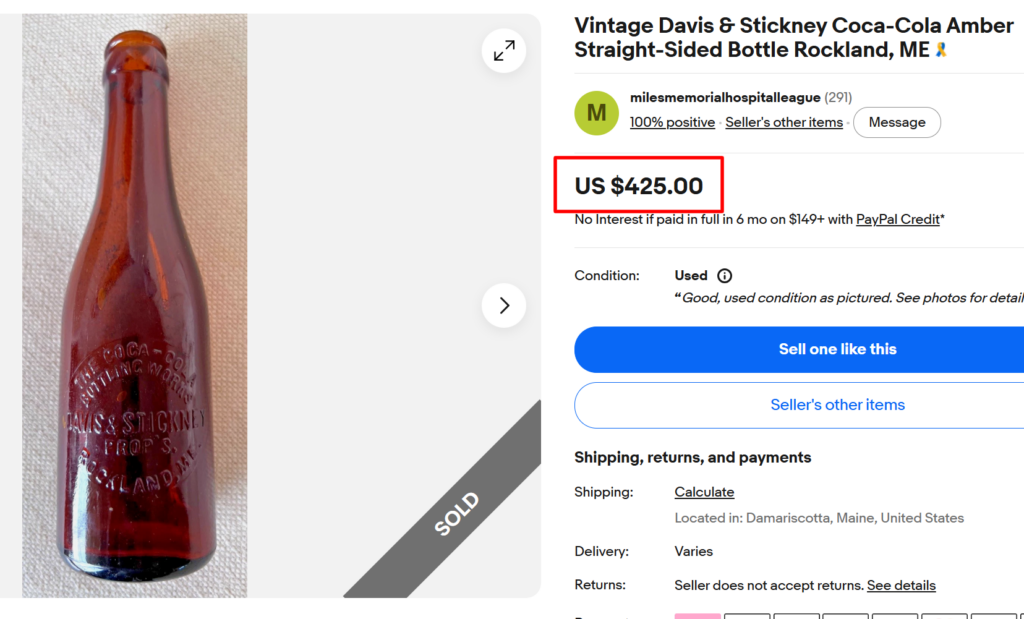
| Manufacturing period | Roughly 1900 to 1916 |
| Key features | City name embossed near base |
| Collector notes | Amber is scarcer than aqua |
Straight-sided bottles came right before the famous curved contour design was patented in 1915. They usually carry the town name of the local bottler embossed near the base.
The amber glass coke bottles from smaller Southern plants are harder to find today than the common aqua ones.
3
Hamilton King Serving Trays (1909–1913)
Typically sells for $200 to $1,200
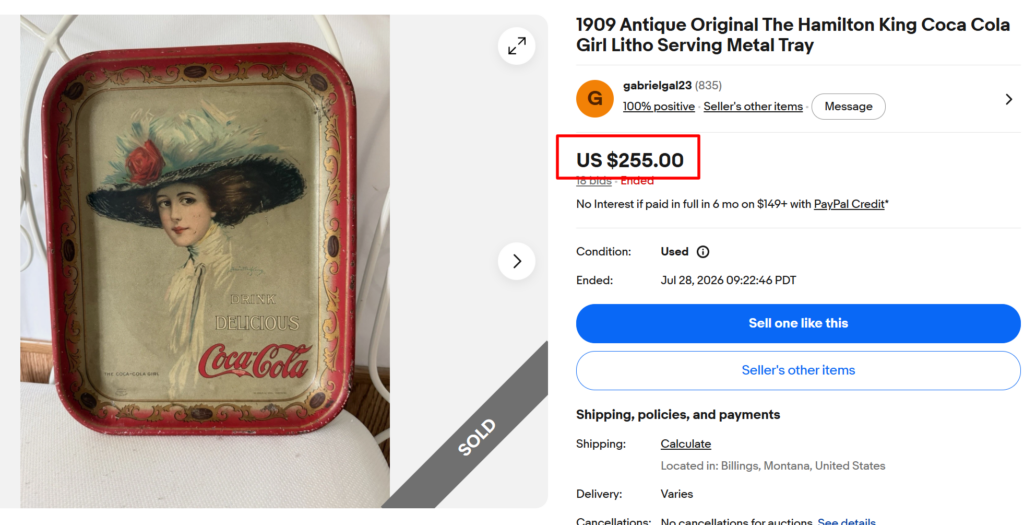
| Manufacturing period | 1909 to 1913 originals |
| Key features | Signed Hamilton King artwork |
| Collector notes | Reproductions from 1970s common |
Hamilton King was the illustrator behind Coke’s most famous early tray series. The design shows a woman in a wide-brimmed hat holding a glass of soda.
The lithography by Passaic Metalware is sharp, and the colors are still vivid on nice examples, which explains why bright 1910 trays currently sell for $800 to $1,500 at auction.
Quick Note: 1970s reproductions of the 1909 and 1910 Hamilton King trays are everywhere. Originals are heavier, show natural crazing in the finish, and have printed patent info on the back.
4
Porcelain Button Signs
Typically sells for $600 to $2,500
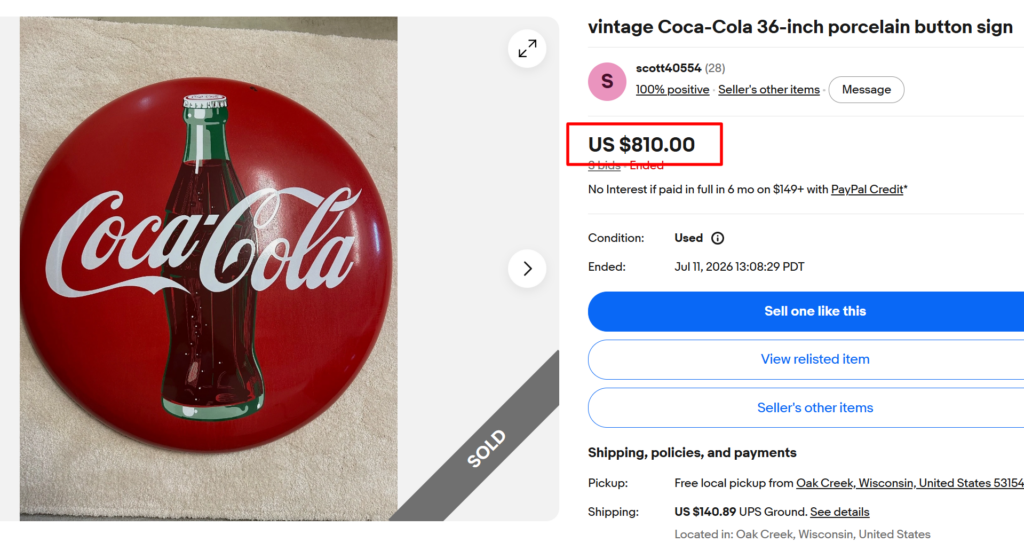
| Manufacturing period | 1947 through late 1950s |
| Key features | Red porcelain over steel disc |
| Collector notes | 48 inch size button is the rarest. |
The round red disc signs, called Coca-Cola “buttons” by collectors, were introduced in 1947 and used through the 1950s for storefronts and curbside display. They came in 24, 36, and 48-inch sizes. The largest buttons featuring an embossed Coke bottle graphic are the toughest to find, especially with intact porcelain.
5
Vintage Ice Chest Coolers
Typically sells for $150 to $2,500+
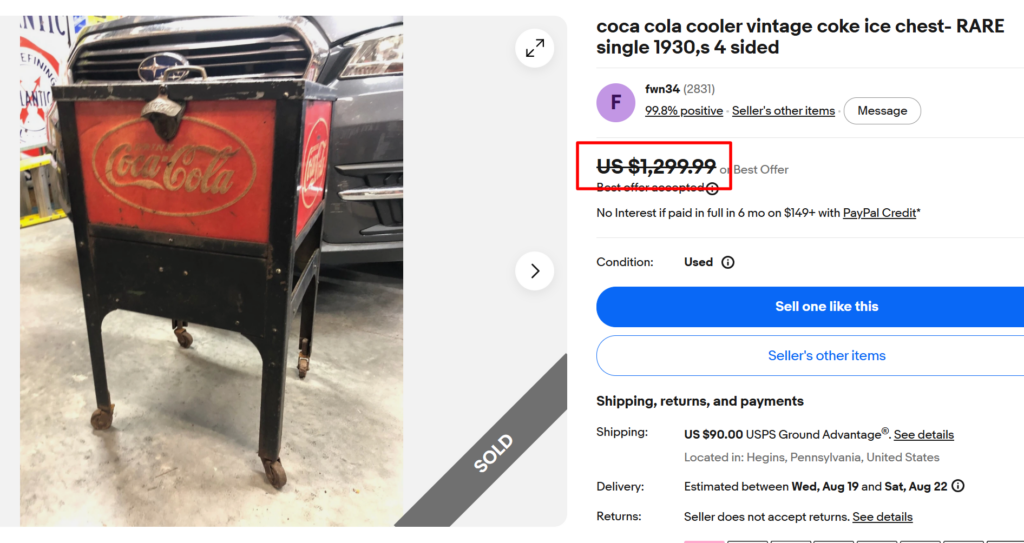
| Manufacturing period | 1930s through late 1950s |
| Key features | Embossed script, drain plug, opener |
| Collector notes | Salesman samples are worth the most. |
Cavalier and Progress Refrigerator Company made most of the classic red steel coolers you see. These usually have the Coca-Cola logo on the front and the script embossed on the lid.
The rare Cavalier salesman sample coolers are miniature working versions traveling reps used to show off the design; these command the strongest prices.
6
Cardboard Litho Advertising and Calendars
Typically sells for $150 to $2,500+
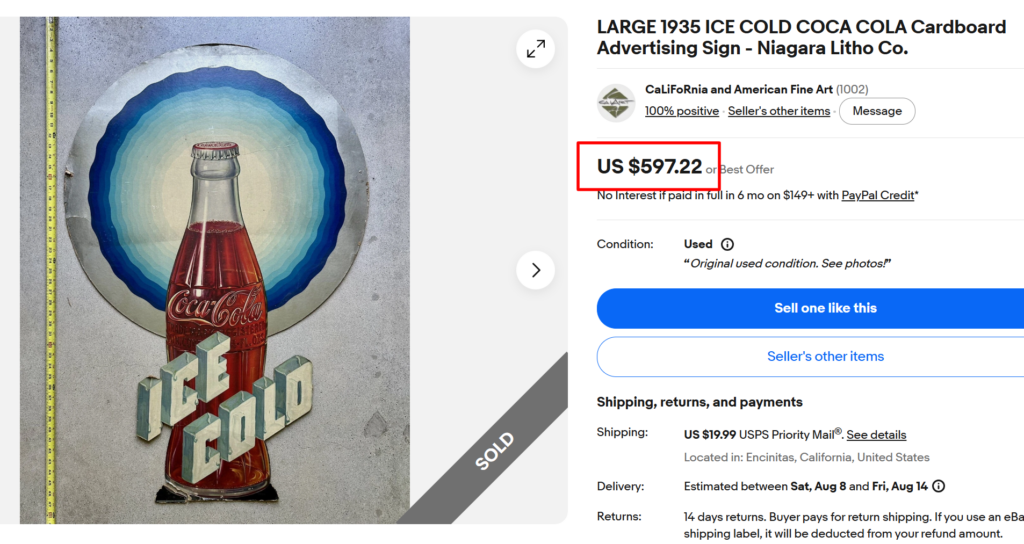
| Manufacturing period | 1900s through 1950s |
| Key features | Lithographed cardboard, seasonal art |
| Collector notes | Complete calendars extremely scarce |
Cardboard is fragile, which is exactly why cardboard litho Coke advertising is rare today. Store display signs, wall calendars, and trolley cards were meant to be tossed after a season, so intact examples from the 1910s and 1920s barely exist.
Today, these are so collectible that a framed 1910 Hamilton King calendar can easily fetch up to $2,000 or more at an auction.
7
Silhouette Girl Clocks (Neon & Other Models)
Typically sells for $400 to $3,500 (neon models)
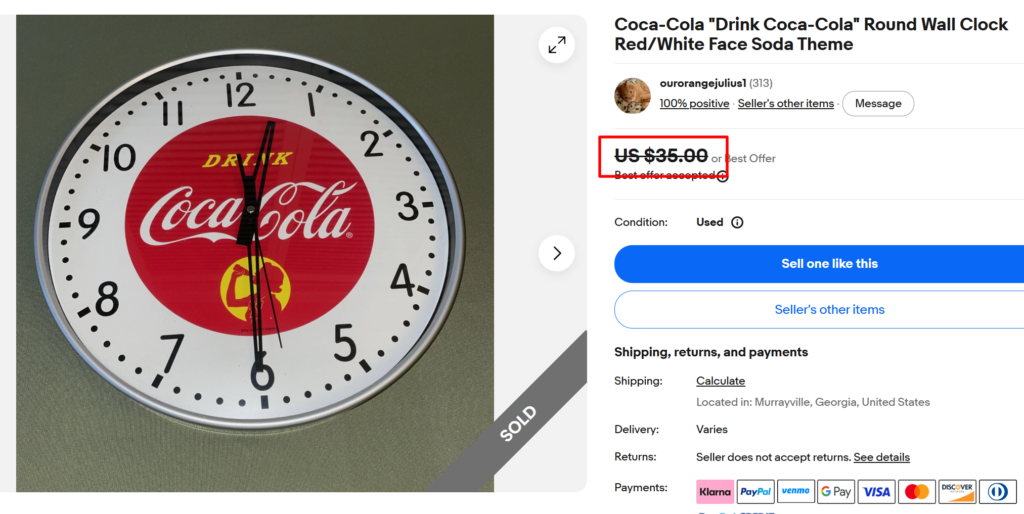
| Manufacturing period | 1930s through 1950s |
| Key features | Neon ring, reverse-painted glass |
| Collector notes | Working neon adds serious value |
The top Coca-Cola clocks are the 1939 to 1941 Silhouette Girl models made by Neon Products Inc. of Lima, Ohio. These came with an octagonal neon ring surrounding a lithographed steel dial.
Later Pam Clock Corp bubble-glass clocks from the 1950s are more common and trade in the $300 to $600 range.
8
Vintage Coca-Cola Cans and Diamond Can Prototypes (1960s)
Typically sells for $50 to $800 (diamond designs)
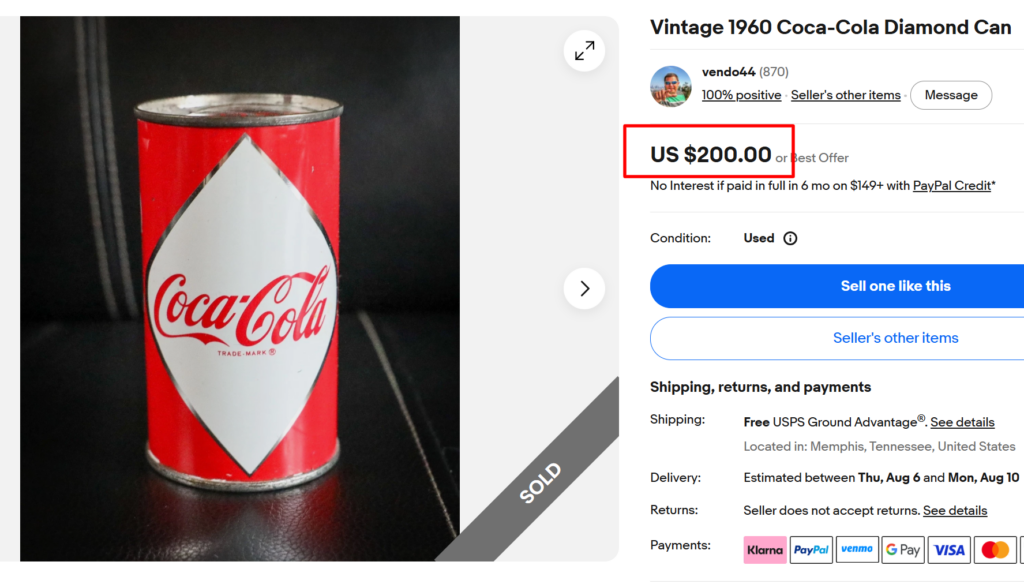
- Manufacturing period: 1960 through 1969
- Key features: Diamond graphic, flat or pull top
- Collector notes: Unopened cans are much more valuable
Coke came late to cans, only starting in 1955 for military use and expanding to consumers in 1960. The short-lived diamond design cans from 1963 to 1969 with a flat top or pull tab are the ones to know.
Unopened test-market cans and rare bottler variations have sold for $200 to $800, while common 1970s pull-tab cans have stayed under $20.
9
Bottle-Shape and Silhouette Girl Thermometers
Typically sells for $150 to $600
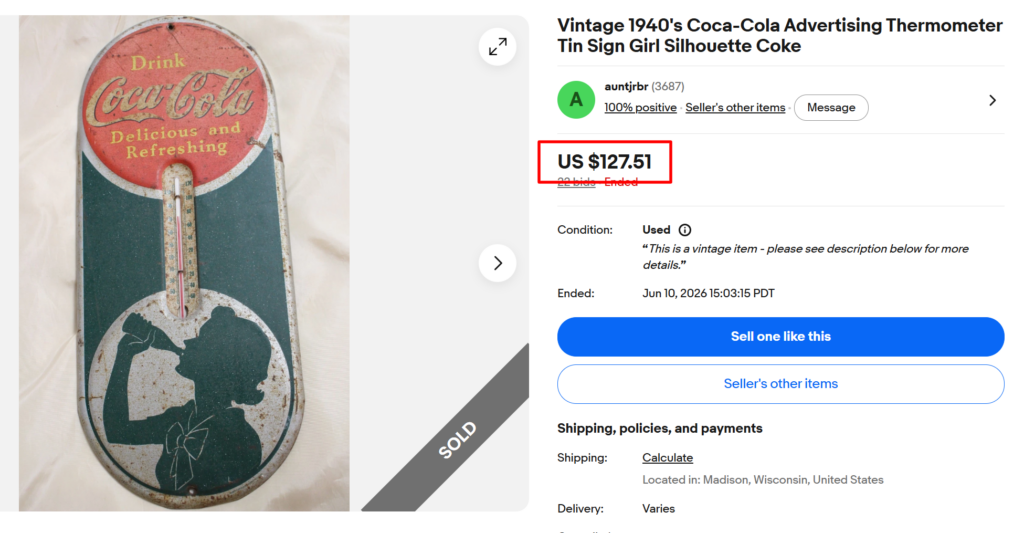
| Manufacturing period | 1930s through 1950s |
| Key features | Embossed tin, bottle or round dial |
| Collector notes | Intact mercury tube preferred |
Coca-Cola thermometers hung outside general stores and gas stations for decades, which is why so many show heavy weathering today. The 1939 Silhouette Girl model made by Robertson is the most recognized.
And the 1950s round bubble-glass dial versions marked Pam Clock Corp are the easiest to find in clean shape, and usually trade around $200 to $350.
What Actually Drives the Value?
The difference between a $5 Coca-Cola tray and the $2,000 tray usually comes down to the following things:
- Age matters, but the design matters more: The average tin sign from the 1970s is worth less than the rare cardboard cutout from the 1940s, despite its durability and age. Pre-1960 pieces by named artists such as Hamilton King, Haddon Sundblom, and Norman Rockwell tend to outprice generic pieces.
- Condition doubles or triples the value: A tray with strong color and no rim damage might sell for $800. The same tray with heavy fading and a bent rim brings $150. Look for original paint, unrepaired dents, and readable text before you buy.
- Reproductions are quite common: If an item looks too pristine for its age, too light in weight, or displays clear dots of modern printing magnified through a loupe, then it must be a replica from the seventies or later. True antiques will be heavy, chip at the edges naturally, and display a slightly irregular hue in direct light.
Note: This article is intended for informational, educational, and entertainment purposes only. Some images are illustrative and may not represent actual brands, products, or related entities. All trademarks, product names, brand logos, packaging, and other intellectual property referenced remain the exclusive property of their respective owners. Any brand mentions or references are provided solely for descriptive and educational context and do not imply any formal or commercial association.