Do you have an old vintage glass vase in your home that you look at every day and just ignore? What if I tell you it could be worth a fortune today? Surprising but true! Old glass vases are hot collectibles today, with some selling for as much as $5,000!
In this guide, I’ll show you some high-value antique vintage glass vases that are still available today and are fetching insane money, along with the easy tips for spotting rare vases from ordinary glassware!
Collectible Glass Vases Worth a Lot of Money!
1. Red Tiffany Favrile Millesiori Vase
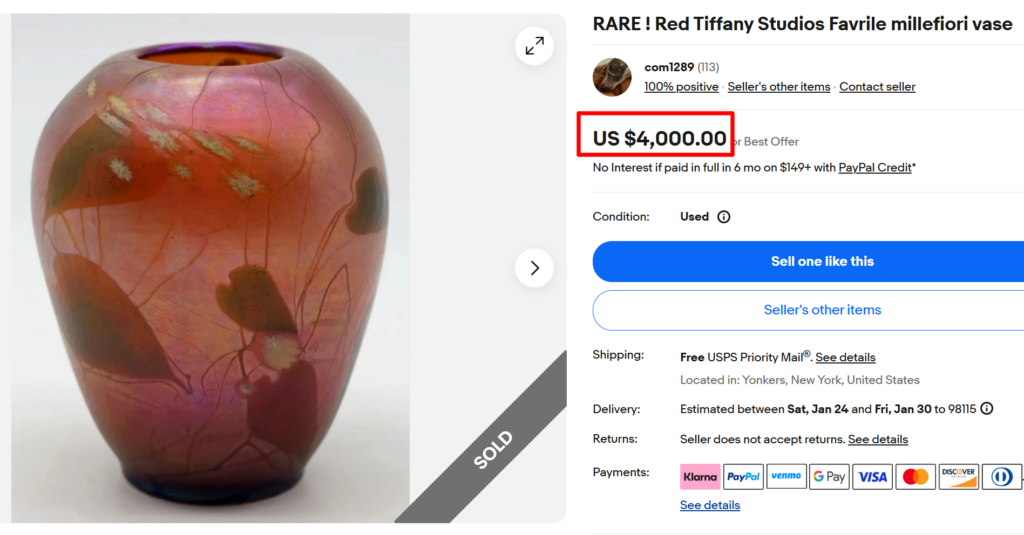
| Average Price | $500-$5,000+ |
| Brand | Tiffany Studios / Louis Comfort Tiffany |
| Manufacturing Period | 1892 – 1928 |
| Pattern/Theme | millefiori, damascene |
| Collector’s Note | Black decorated vases & elaborate millefiori or damascene patterns are rare |
Favrile glass was discovered by Louis Comfort Tiffany in the 1890s by embedding metallic oxides directly into molten glass, creating an iridescent surface. So, it has color built into its structure, not painted.
The Millefiori Favrile vases feature small glass canes arranged to create flower-like patterns throughout the vase. Red Favrile vases are particularly rare because the color was difficult to make!
Quick Tip: Most pieces have the “L.C.T.” or “Louis C. Tiffany Favrile” etched into the base, often with a model number.
2. Steuben Aurene Red Flower Form Vase
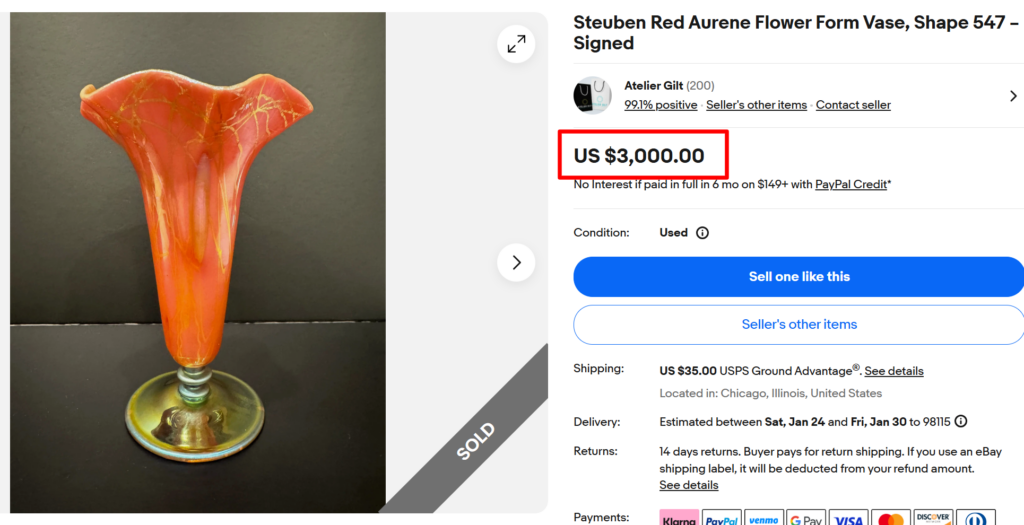
| Average Price | $1,000 – $3,500+ |
| Brand | Steuben Glass Works |
| Manufacturing Period | 1910–1915 |
| Pattern/Theme | Aurene |
| Collector’s Note | Gold Aurene is the most common, Blue and red are rarer |
Steuben Glass Works’ Aurene glass was a solid answer to Tiffany’s Favrile. The name “Aurene” comes from two Latin words: aurum, meaning gold, and schene, meaning sheen.
These glass vases feature a rich iridescent surface achieved by spraying metallic salts on hot glass before a final firing.
Flower-form vases shaped like tulips or lilies are highly sought after. The most common color is gold; blue ones are rarer, and red is among the rarest colors produced!
Collector’s Tip: Look for “Aurene” or “Steuben” etched into the base!
3. Northwood “Tree Trunk” Carnival Glass Vase
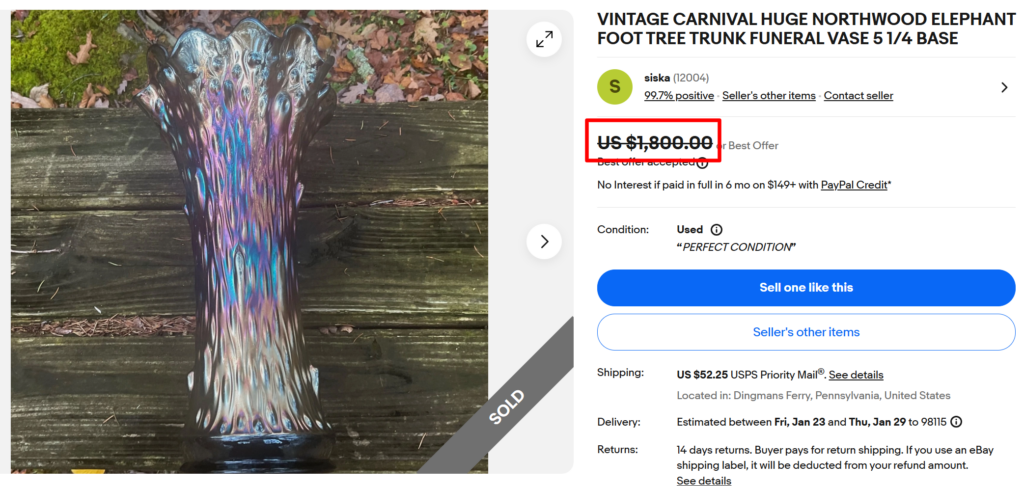
| Average Price | $500 – $1,500+ (fine condition) |
| Brand | Northwood |
| Manufacturing Period | 1909 – 1915 |
| Pattern/Theme | Tree Trunk |
| Collector’s Note | Green pieces in good condition are rare |
Carnival glass vases are quite popular in the market, especially with rare patterns from renowned brands. This Northwood vase displays the “Tree Trunk” pattern, featuring realistic bark texture with branches encircling the vase.
Northwood produced this pattern in several colors, with green and purple being especially valuable.
4. Loetz “Oil Spot” Gold-Violet Iridescent Vase
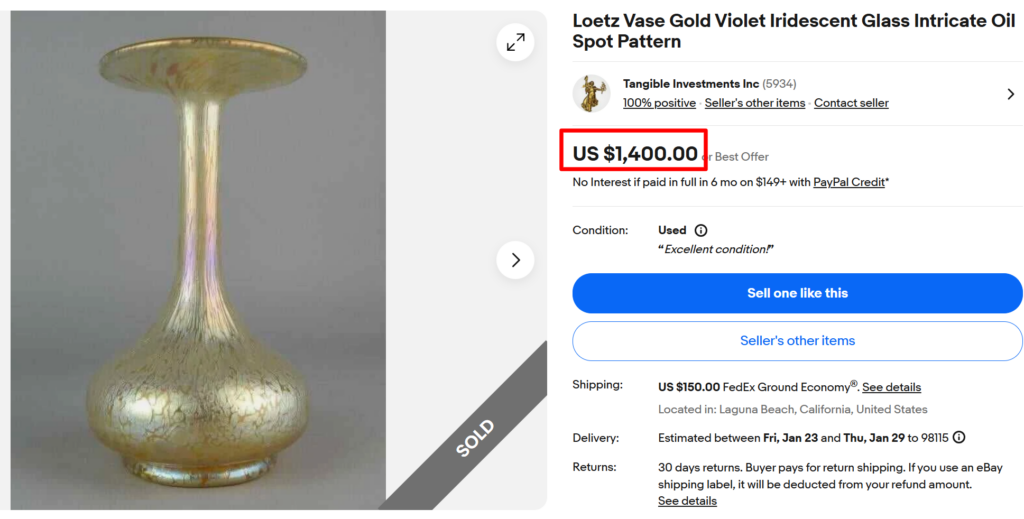
| Average Price | $300 – $1,500 |
| Brand | Loetz |
| Manufacturing Period | 1890s – 1910s |
| Pattern/Theme | Oil Spot/Papillon |
| Collector’s Note | Look for ground and polished pontil |
Loetz glass vases from Austria are hot collectibles today. Made in Klostermühle (now Czech Republic), these vases showcase elegant iridescent finishes with swirling “oil spot” patterns: an effect that looks like oil on water.
These large vases in gold-violet with gold tints gradually changing to purple are considered to be very collectible.
Note: Most Loetz vessels are not signed, but they can be detected by their typical form, color designs, and distinctive pontils marking the bottom of each piece.
5. Murano Venini Sommerso Carlos Scarpa Vase
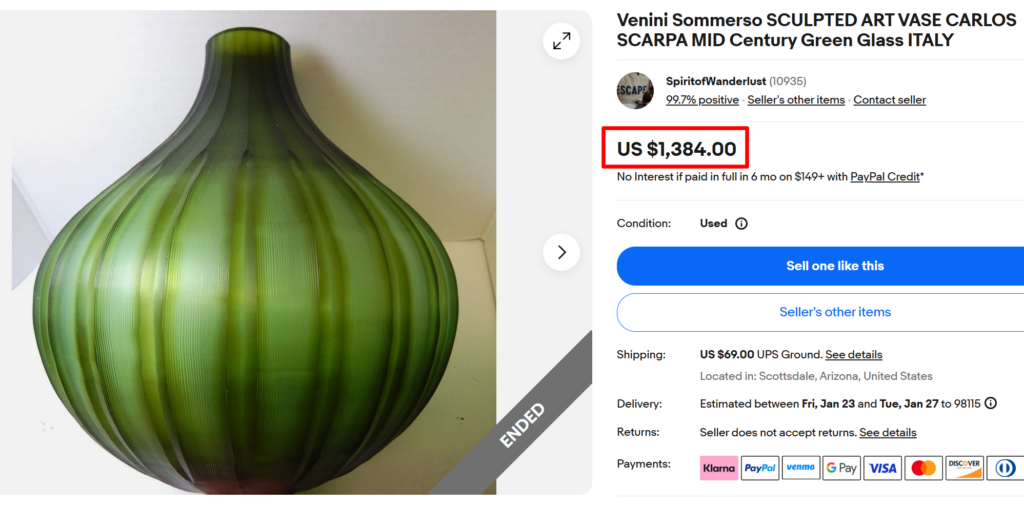
| Average Price | $400 – $1,500 |
| Brand | Venini |
| Manufacturing Period | 1930s – 40s |
| Pattern/Theme | Sommerso (Layered/Submerged color) |
| Collector’s Note | Look for sharp, faceted edges & significant weight |
Sommerso means “submerged” in Italian. This technique from Murano involved layering different colors of molten glass, creating depth and dimension. Modernist pieces designed by Carlos Scarpa for Venini in the 1930s-40s are highly collectible.
These vases usually have bold color combinations, often deep blues, greens, reds, or purples layered with clear glass. Large pieces in fine condition and rare colors can fetch over a thousand dollars!
6. Émile Gallé Cameo Stick Vase
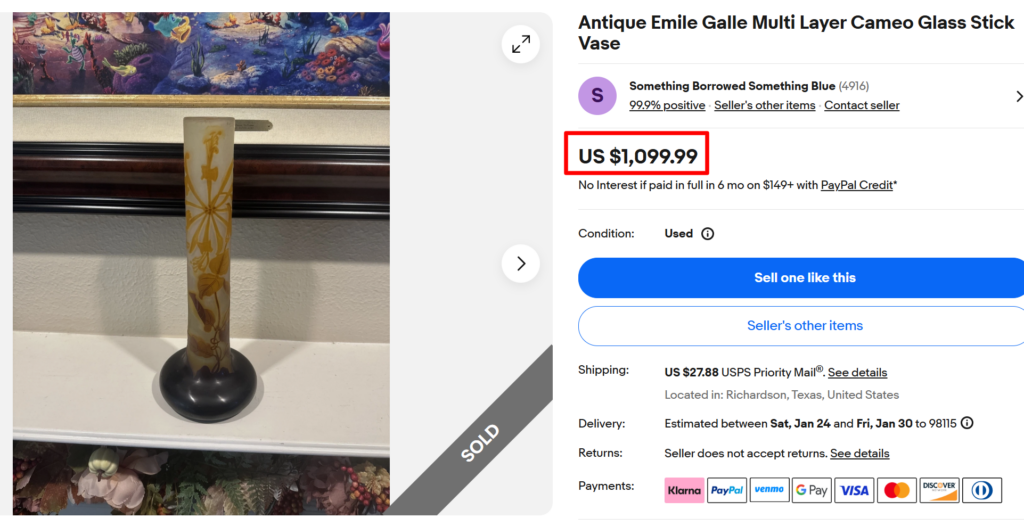
| Average Price | $450 – $1,500+ |
| Brand | Émile Gallé |
| Manufacturing Period | 1874 – 1914 |
| Pattern/Theme | Landscapes, botanical designs, & insects with cameo technique |
| Collector’s Note | Pieces with Gallé’s signature are rare |
Émile Gallé is known for making the iconic “cameo glass” by layering different colors of glass, then using acid etching or wheel carving to cut through the outer layers and reveal designs.
Among many vase forms, stick vases with tall, slender necks are most popular and collectible. These pieces generally have botanical designs, landscapes, or insects carved in relief.
Collector’s Tip: Most pieces have Gallé’s signature, usually cameo-carved into the design. If you see a star, too, it means the piece is from after 1904, when Gallé died.
7. Lalique Frosted Glass Vase
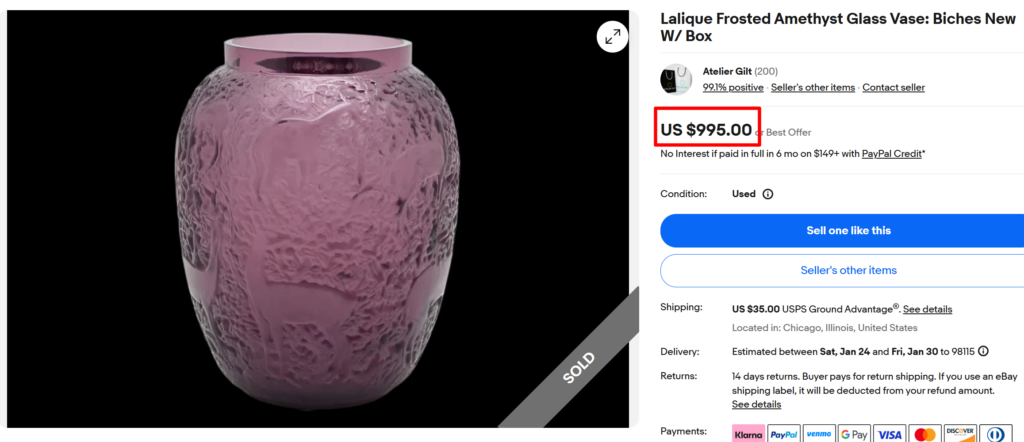
| Average Price | $400 – $2,000+ |
| Brand | Lalique (France) |
| Manufacturing Period | 1920s – Present |
| Pattern/Theme | Nature/Wildlife (Relief) |
| Collector’s Note | Colored pieces and those with “R. Lalique” sign are valuable |
Art Nouveau and Art Deco frosted-glass vases by René Lalique are holy grails for collectors. These pieces include natural themes such as birds, fish, flowers, and nudes in relief.
The frosted glass section features a satin, opaque surface. This is because it is acid-etched glass. Plus, the glass is often opalescent, and it tends to emit light when it is backlit. Colored Lalique frosted vases, like this piece, especially in blue or amber, bring premium prices.
8. Fenton Hobnail Plum Opalescent Epergne Vase
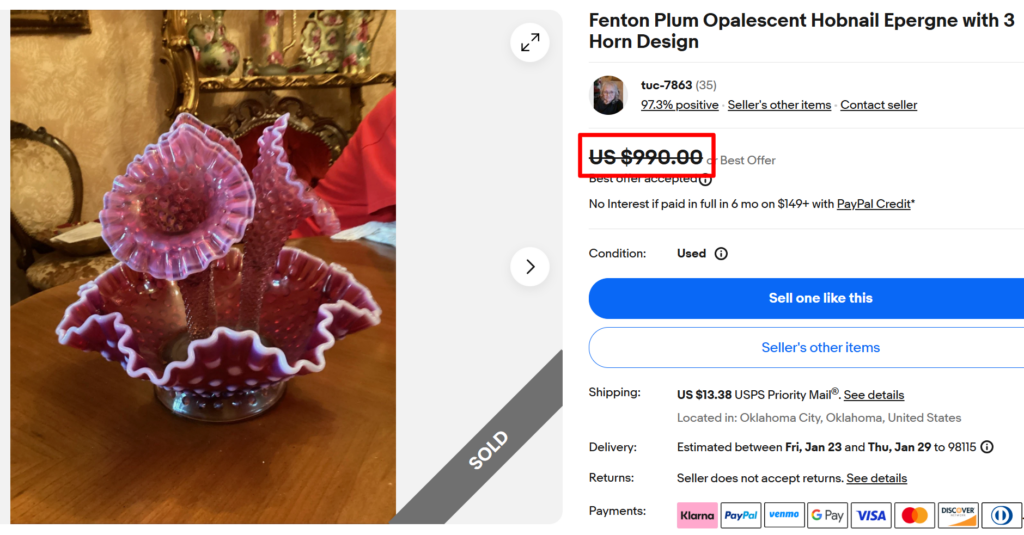
| Average Price | $500 – $1,000 (rare colors) |
| Brand | Fenton Art Glass Company |
| Manufacturing Period | 1950s – 1970s |
| Pattern/Theme | Hobnail (Raised studs) |
| Collector’s Note | Look for the “Fenton” logo or a “Silver Crest” |
Fenton Art Glass popularized the hobnail pattern; those raised bumps that look like old boot nails. You may have seen white milk glass hobnail vases everywhere, but colored opalescent pieces like this are rare and bring serious money.
Also, epergnes (known for ruffled edges and multiple tiers) are generally more collectible than regular vase shapes.
9. Fenton Burmese Glass Vase
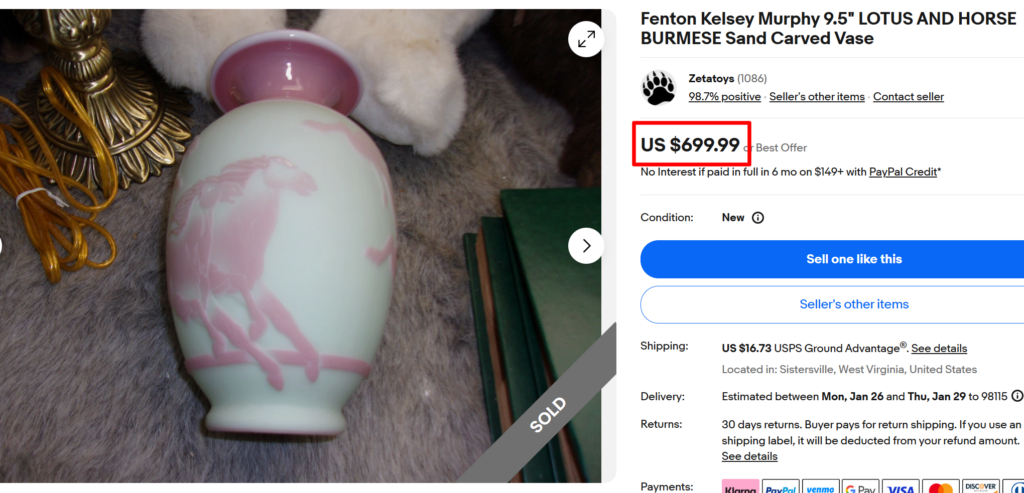
| Average Price | $50 – $500+ |
| Brand | Fenton Art Glass Company |
| Manufacturing Period | 1960s – 1970s (revival period) |
| Pattern/Theme | Pink-to-yellow gradation, Hand-painted florals |
| Collector’s Note | Hand-painted examples and unusual forms are valuable |
This unique Fenton vase is made of Burmese glass, known for its unique color-shifting characteristic. It’s usually an opaque glass that gradually changes from yellow at the bottom to salmon pink towards the neck.
Burmese glass is a heat-sensitive glass that contains real uranium. Initially created by Mount Washington Glass in the 1880s, Fenton revived the pattern in the 1960s-70s. Fenton’s Burmese vases often have hand-painted floral decorations, which adds value.
10. Viking Epic Swung Vase
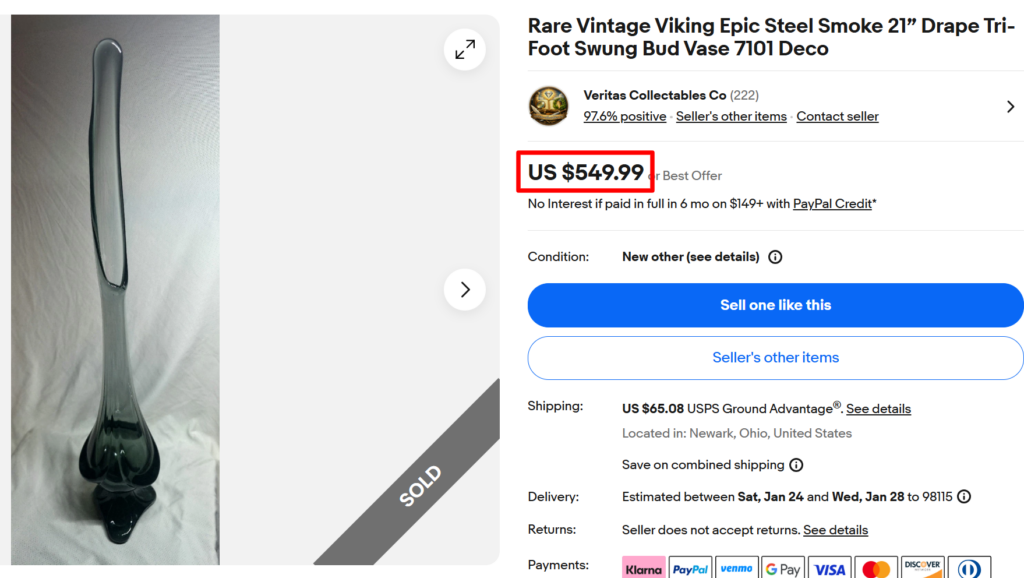
| Average Price | $100 – $500+ (rare colors) |
| Brand | Viking Glass Company |
| Manufacturing Period | 1960s – 1970s |
| Pattern/Theme | Swung Glass with Elongated Neck |
| Collector’s Note | Extra-long vases (20+ inches are valuable |
Viking Glass created “swung” vases using a special technique of swinging hold-and-bendy glass in an arc, stretching the neck and creating graceful, irregular shapes. You can identify authentic Viking vases by the seam, which is clear at the base but fades toward the elongated top.
Epic line vases came in vibrant colors such as amber, orange, blue, green, and amethyst. Extra-tall pieces or floor vases (over 20 inches) are especially desirable.
11. Imperial Glass Shoji Trellis Shaker Vase
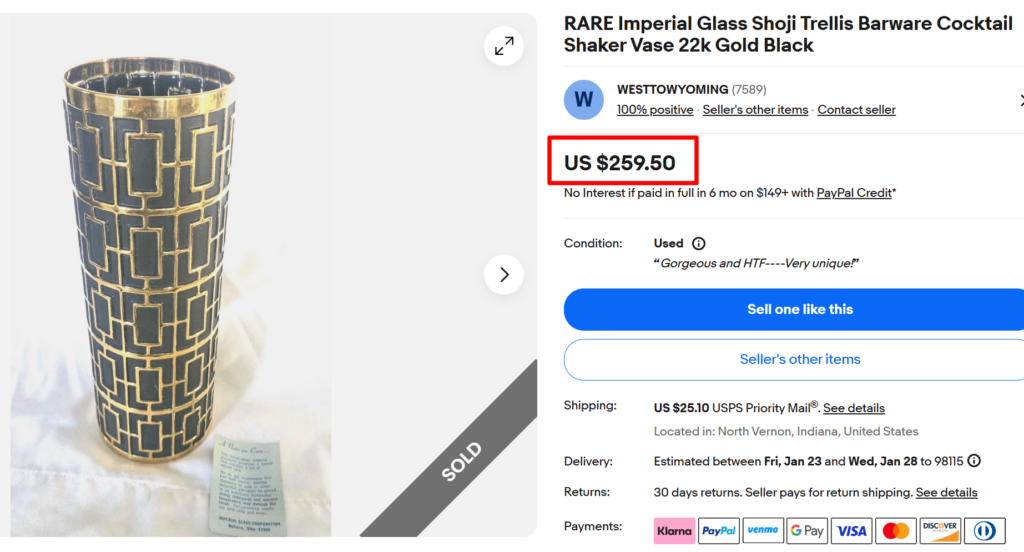
| Average Price | $100 – $500 (bar sets can fetch $1k+) |
| Brand | Imperial Glass Corporation |
| Manufacturing Period | 1960s |
| Pattern/Theme | Shoji (Geometric Trellis) |
| Collector’s Note | Pieces with 100% intact gold & complete barware sets are rare |
This unique vase shows Imperial Glass Corporation’s Shoji pattern, inspired by Japanese screens. You can identify it by the unique high-karat gold trellis design on clear, frosted, or opaque glass.
This mid-century modern pattern was sold in sets that included cocktail shakers, glasses, and serving pieces. The vase was a part of the barware sets. Pieces with 100% intact gold decoration are worth the most! If you can find a set, even better!
12. Indiana Glass Diamond Point Amethyst Vase
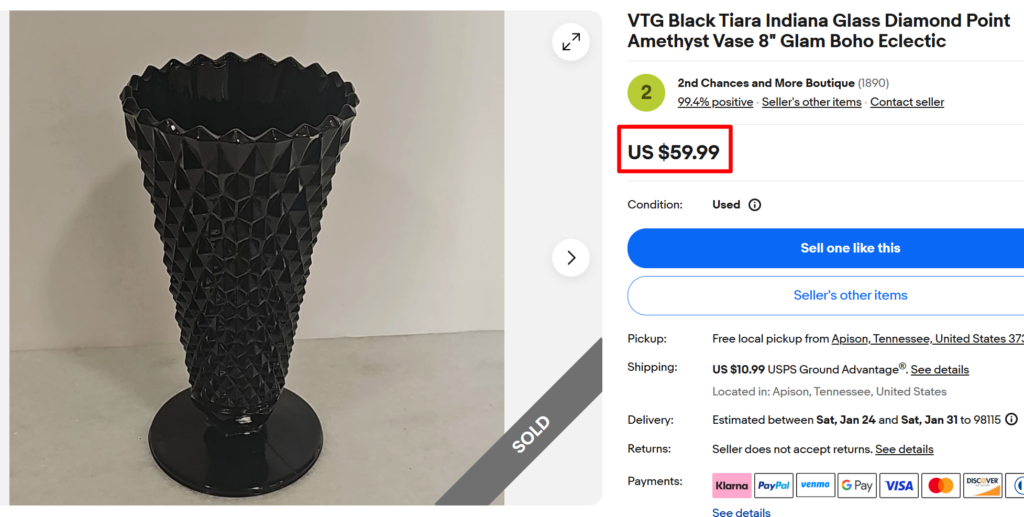
| Average Price | $25 – $80 (high for rare colors) |
| Brand | Indiana Glass Company |
| Manufacturing Period | 1960s – 1970s |
| Pattern/Theme | Diamond Point |
| Collector’s Note | Dark colors, like “Ruby Flash, “Amethyst & “Royal Blue” are rare |
This vase from Indiana Glass features the popular “Diamond Point” pattern, with pressed diamond-shaped facets covering the body. This pattern was mass-produced and originally inexpensive, making it affordable for collectors today.
Clear and pink were common, but dark colors like amethyst are harder to find. Ruby flash (clear glass with red coating) and royal blue are also rare.
13. Fostoria American Glass Stretch Vase
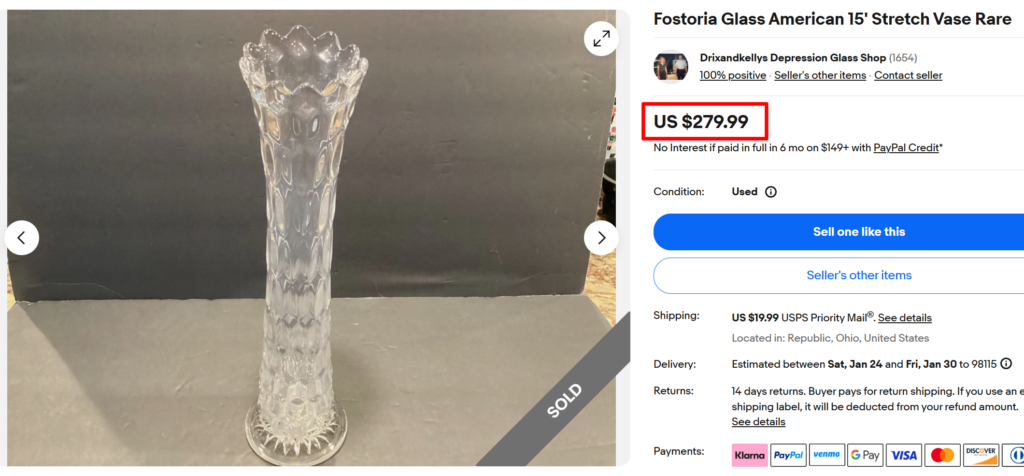
| Average Price | $40 – $300 |
| Brand | Fostoria Glass Company |
| Manufacturing Period | 1915 – 1980s |
| Pattern/Theme | American (Cube/Geometric) |
| Collector’s Note | Long “stretch” vase are rarer. |
This long glass vase features one of Fostoria’s longest-running and most popular patterns called “American.” It has a geometric cube-facet design that looks like an ice tray!
These tall, stretch vases are rarer than shorter bud vases or bowls. Most pieces are clear crystal, though some colored examples also exist and can be more valuable.
14. Anchor Hocking Royal Ruby Vase
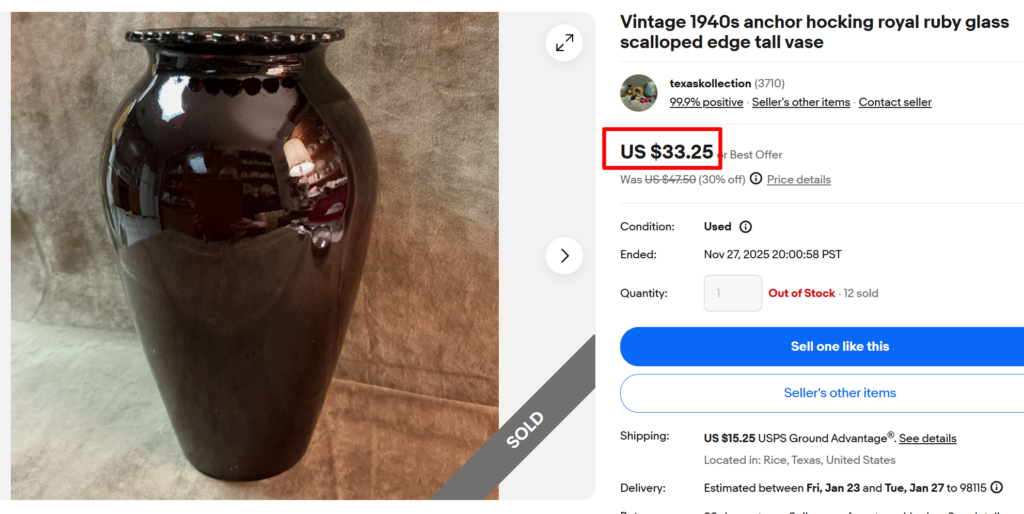
| Average Price | $15 – $50+ (high value for large vases) |
| Brand | Anchor Hocking |
| Manufacturing Period | 1930s – 1960s |
| Pattern/Theme | Plain Royal Ruby Shapes |
| Collector’s Note | Large “Coronation” or “Bubble” vases are rarer than bud vases |
Anchor Hocking’s Royal Ruby (a deep, rich red) glass vases were a staple of mid-century American homes. This color came from adding gold salts to the molten glass. Royal Ruby bud vases are common and cheap, but larger vases in patterns like Coronation or Bubble are harder to find.
What to Look for While Collecting Glass Vases?
Whether you’re selling or collecting old glass vases, there are a few things you MUST be aware of! Let’s understand.
The Condition
Condition matters more than anything else when it comes to old glass vases. Even a rare Tiffany vase loses most of its value if it’s cracked. Here are the most important things to check:
- Flea Bites: Run your fingernail gently along the rim and base. “Flea bites” are tiny chips you might not see but definitely feel.
- Cracks (vs. Straw Marks): Look for cracks; it will reflect light, but a “straw mark” (a common flaw in old glass from the cooling process) is just a shallow surface line. Cracks reduce value; straw marks generally don’t.
- Sick Glass: If a glass looks cloudy or milky even after washing, it’s “sick glass.” It’s a chemical reaction from hard water or age that’s usually permanent.
Maker’s Marks and Signatures
Always check the bottom of a glass vase for signatures, marks, or labels. These identifiers authenticate the piece and can boost its value. In cases where there are no marks, identification relies on characteristic shapes, colors, and techniques.
Remember, paper labels were common on mid-century glass, but they often fell off over time. If a label is present, it’s a bonus!
The “Pontil Mark”
The pontil mark is found at the very bottom of the vase and tells you how the piece was made. If it is Rough Pontil, it could have been hand-blown glass.
A pontil that is glossy, highly polished, or concave indicates superior art glass (as in Steuben or Loetz), where the pontil was ground away.
Finally, if you notice a thin line running down the sides of the vase, it was produced using a machine mold. This information can help you because handmade glassware can sell for more than molded glassware, but Fenton glassware is one of several exceptions.
Glass Quality and Weight
Pick up the vase, feel its weight, and observe. Authentic antique art glass usually feels substantial and well-balanced, with clarity and no cloudiness. But yes, slight imperfections like air bubbles are normal in handmade glass and actually indicate authenticity.
Modern reproduction vases tend to appear lighter and slimmer compared to original pieces. The glass may also appear too perfect or have a dull clunk when gently tapped.
Color & Pattern Rarity
In vintage glass vases, color and pattern can dramatically affect price. For example, deep reds (Ruby), purples (Amethyst), and cobalt blues cost more to produce and are more desirable to collectors than clear or amber glass.
Similarly, vases with a creamy shade or a fiery glow at the edges (like opalescent milk glass) are usually more collectible.
Also, research the authentic patterns from the manufacturer of the piece you own. There were several patterns that were copied several decades later, or by other manufacturers, so you must know what the original designs looked like.
Observe the details, such as the shape of the leaves in a flower design, the style of geometric cuts, and how the colors merge. For this, you can refer to books on crafts, museum pieces, and dealer stock.
Provenance and Documentation
An antique or vintage vase with documented history becomes more valuable than one without. So, look for original receipts, family history, exhibition records, or authentication from recognized experts; all add credibility and value.
Note: This article is intended for informational, educational, and entertainment purposes only. Some images are illustrative and may not represent actual brands, products, or related entities. All trademarks, product names, brand logos, packaging, and other intellectual property referenced remain the exclusive property of their respective owners. Any brand mentions or references are provided solely for descriptive and educational context and do not imply any formal or commercial association.