Antiques Know How Research
Fostoria Glassware Value
Our research at Antiques Know How, based on several sold eBay listings and recent auction results, suggests that vintage Fostoria glassware usually sells for $5 to $10 for common pieces and can reach $1,000 or more for rare patterns and unique pieces. The most collectible Fostoria patterns include American, Navarre, Fairfax, Coin, and Midnight Rose, as well as elegant etched crystal stemware and complete serving sets!
Antiques Know How
Vintage glassware doesn’t just bring an old-world charm to the table; some of it also holds astonishing value. And Fostoria pieces stand in a league of their own. Manufactured over a century ago, the fine craftsmanship of those times has now become highly sought-after collectibles.
Explore the nuances of their fine crystal, graceful shapes, and intricate etched patterns to help you identify truly antique Fostoria pieces worth keeping, collecting, or cashing in!
About Fostoria Glass Company!
The signature elegance and collectability of Fostoria glassware come from decades of careful design and production. The Fostoria Glass Company was founded in Fostoria, Ohio, in 1887.
After relocating to Moundsville, West Virginia, in 1891 due to natural gas shortages, the company transitioned from making basic pressed glass to elegant tableware and stemware during the 1900s to the 1920s.
From the 1930s to the 1950s, Fostoria’s affordable Depression-era glassware became a household staple, while etched patterns became favorites for wedding gifts and formal dining.
In 1983, Lancaster Colony bought Fostoria and produced modern designs until 1986, when the factory officially closed. Existing Fostoria pieces remain highly collectible!
Highly Collectible Fostoria Glass Patterns & Pieces
1. American Pattern
The “American” is one of Fostoria’s longest-running glass patterns, so there’s a good chance you already have a piece. Introduced in 1915, this bold pattern features repeating cubes across the glass surface. Each cube shows three visibly distinct lines, making the design sturdy and stylish.
Collector’s tip: Don’t confuse Fostoria American with Colony’s American Whitehall or Indiana’s Whitehall. Always check for the Fostoria mark and production date.
| Average Price Range | $1-$12 (Single items), $12-$100 (small sets & single dishes), $100-$700 (large sets) |
| Manufacturing Period of Pattern | 1915 to 1986 |
| Status | Discontinued |
| Pattern Details | Cubic/Geometric Pressed Blocks |
| Notable Piece Types | Decanters, jars, dinner bells, ring holders, vases, dinnerware, pedestals |
Fostoria American Square Pomade Boxes
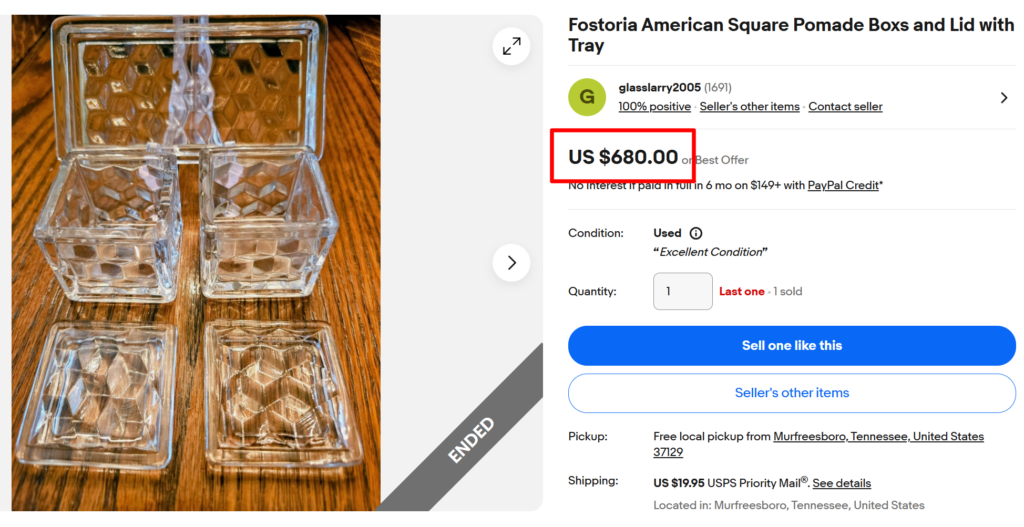
The American pattern is highly valuable, and uncommon pieces, like this pomade box set, drive even higher collectibility. You can notice the three lines on every cube, which confirms its original Fostoria. Also, footed pieces in the American pattern will almost always have a hexagonal base!
2. Navarre Pattern
Navarre features a repeating pattern of a delicate flower bouquet surrounded by curved scrolls. This elegant etching stayed a favorite on bridal registries for decades, and today, it’s just as prized by collectors.
Fostoria first introduced Navarre in clear leaded crystal, and the colored stemware (azure blue and soft pink) was introduced much later in 1973, which is also decently collectible.
| Average Price Range | $4-$40 (Single pieces, small sets), $40-$900 (Large sets, rare pieces) |
| Manufacturing Period of Pattern | 1936 to 1982 |
| Status | Discontinued |
| Pattern Details | Acid-etched floral decoration |
| Notable Pieces | Glasses, pitchers, ice buckets, bowls, trays, bells, dishes, candelabras, etc. |
Pink-footed Navarre Glasses
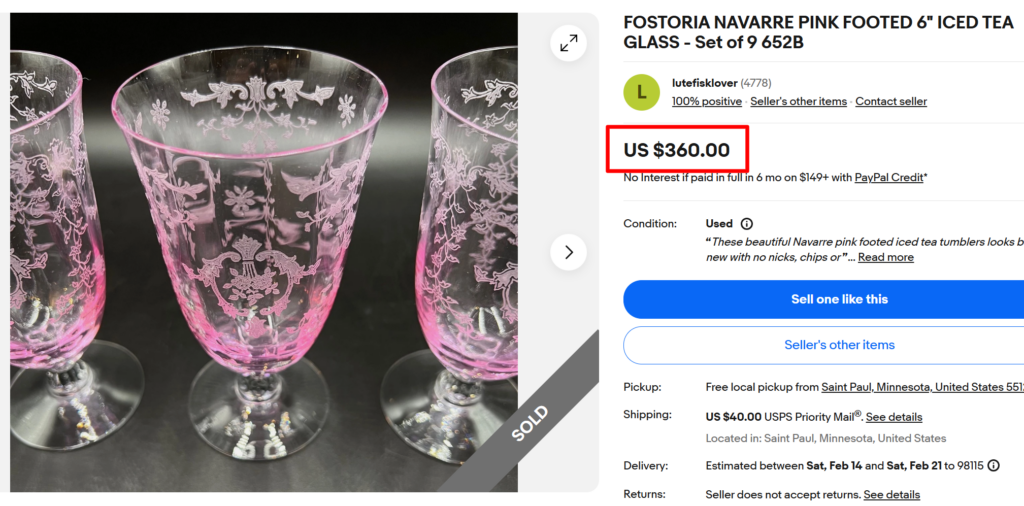
Pink-footed Navarre pieces like these are rarer than the blue versions and tend to be more valuable. The glasses feature the original Fostoria mark, indicating early production. Large sets with minimal wear are quite scarce and far more desirable.
Good to know: Fostoria sold the Navarre pattern to Lenox in 1983, so later pieces often carry a Lenox mark, while earlier originals have a Fostoria script mark.
3. Wedding Ring Pattern
Fostoria designed this mid-century modern pattern with brides in mind. The design appeared on different types of glasses, with a ¼-inch platinum band on the rims, resembling a wedding ring.
Unlike silver, platinum did not tarnish, making the pieces long-lasting enough to be passed down through generations.
| Average Price Range | $1 to $12 (Single pieces) $12 to $70 (Small or large sets) |
| Manufacturing Period of Pattern | 1936 to 1982 |
| Status | Discontinued |
| Pattern Details | Acid-etched floral decoration |
| Notable Pieces | Glasses, pitchers, ice buckets, bowls, trays, bells, dishes, candelabras, etc. |
Clear Wedding Ring Goblet Set
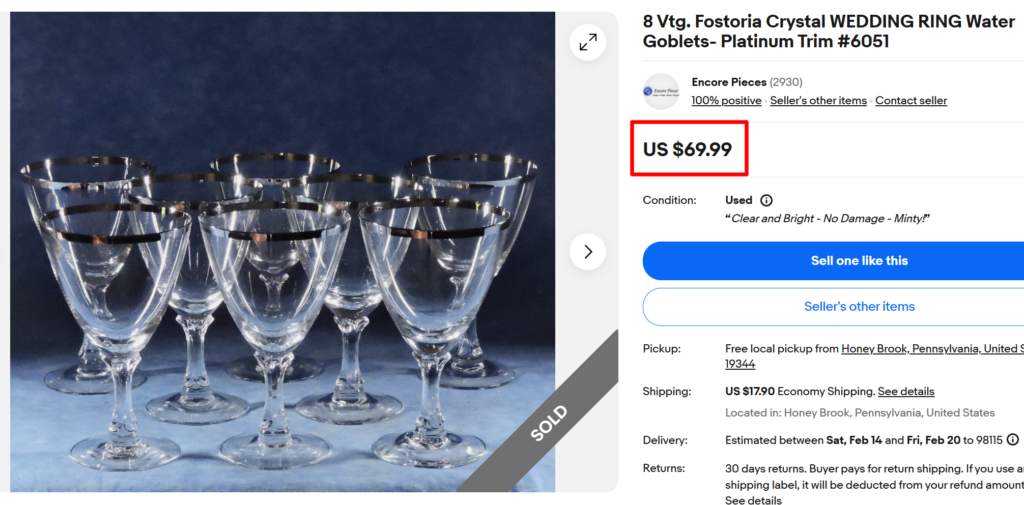
These champagne goblets are a classic example of Fostoria pieces found at American weddings, used as elegant serveware or even gifts! The stem on each piece is a clear giveaway of authenticity, with three subtle grooves rising into petal-like forms to hold the bowl.
4. Coin Pattern
The Coin pattern is bold and heavy, unlike Fostoria’s softer etched designs. It uses a series of embossed coin-like circles (usually frosted) with decorative images in relief. While Fostoria wasn’t the first one to make this pattern, they did popularize it in the middle and upper classes.
Good to know: Post-Lancaster Colony versions left the coins unfrosted, but many have been artificially frosted to mimic early pieces.
| Average Price Range | $2-$15 (Singles), $15-$40 (small sets), $40-$300 (full sets, pedestals, lamps) |
| Manufacturing Period of Pattern | 1957 to 1982 |
| Status | Discontinued |
| Pattern Details | Frosted coin medallions embossed |
| Notable Pieces | Cigarette holders, glasses, dishes, candestick, shakers, cake stands, lamp |
Emerald Coin Cake Stand
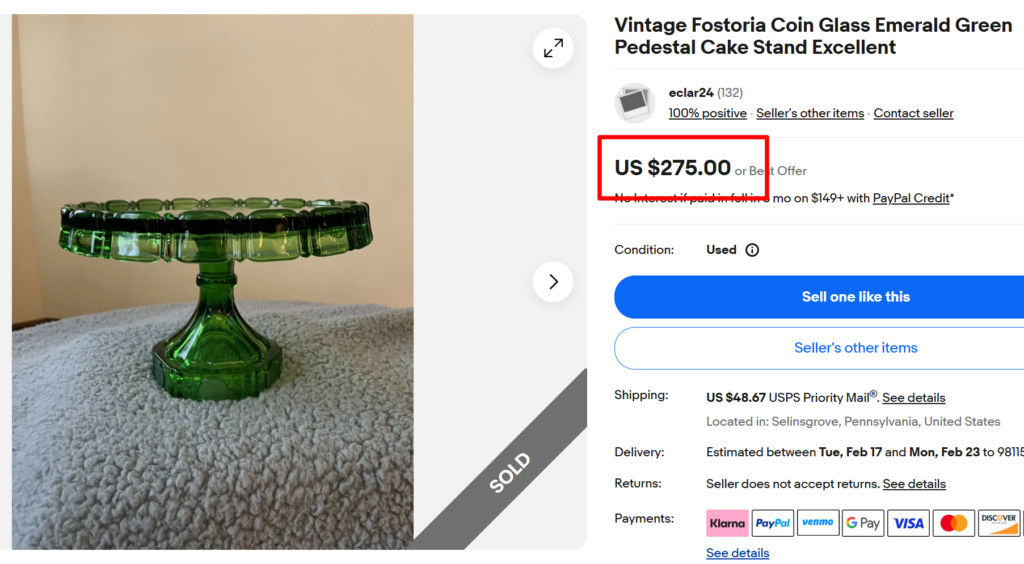
Coin pedestal cake stands like this instantly evoke a colonial-era nostalgia, a time when historic motifs showed up everywhere. The pattern was produced in amber, blue, crystal, olive green, and red, making emerald versions like this one rarer and more valuable.
5. Chintz Pattern
Chintz is one of Fostoria’s most recognizable and longest-lived patterns. Etched with intertwined roses, thorny vines, and pointed leaves, it gives a noticeably spiky look. The pattern almost exclusively appears on Baroque shapes and only in clear crystal, never in colored glass.
| Average Price Range | $1-$10 (small, singles), $10-$150 (large pieces, sets) |
| Manufacturing Period of Pattern | 1940s to early-1950s |
| Status | Discontinued |
| Pattern Details | An ‘all-over’ pattern of spiky vines with roses & thorns |
| Notable Pieces | Pedestals, dishes, bowls, trays, cruets, shakers, sugar-creamer sets, goblets |
Clear Chintz Crystal Goblet Set
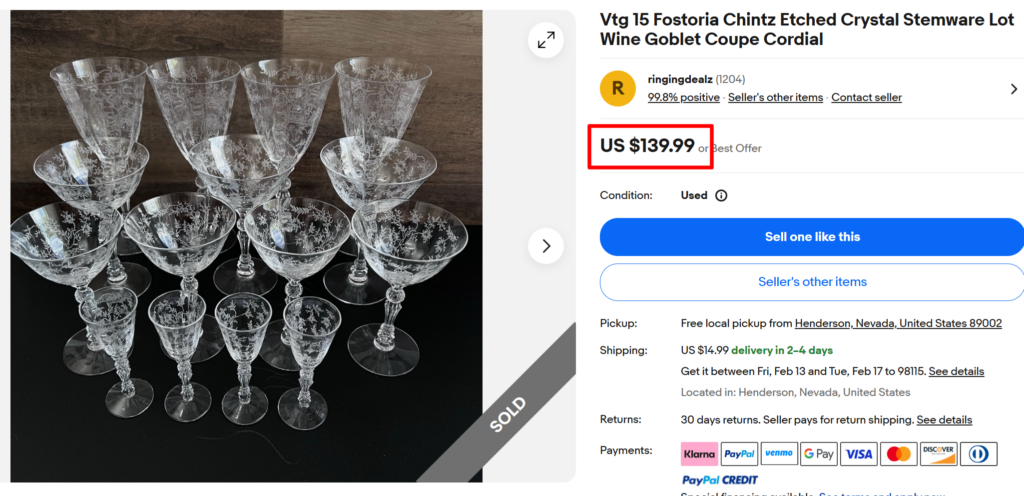
This set of crystal goblets, cordials, and coupes is a classic example of how the Greenbriar stemware was paired with the Chintz pattern. The grooved stem is accented with small ball details near the bowl and the foot, making it look decorative and improving the grip.
6. Fairfax Pattern
Fairfax pieces may seem plain, but a closer look shows subtle ribbing evenly spaced around the glassware. These ribs give the glassware an optic effect. The Fairfax pattern is usually seen in clear, blue azure, pink, and amber colors.
Collector’s Note: Fairfax is often mistaken for Lafayette, but Fairfax has straighter, angular ribs, while Lafayette features scalloped rims and ribbon-bow style handles.
| Average Price Range | $5-$40 (small/large singles, small sets) $40-$120 (large sets) |
| Manufacturing Period of Pattern | 1927 to 1944 |
| Status | Discontinued |
| Pattern Details | Subtle vertical ribs |
| Notable Pieces | Sugar creamer sets, plates, goblets, nappy, shakers, trays, pedestals, etc. |
Azure Blue Fairfax Goblets
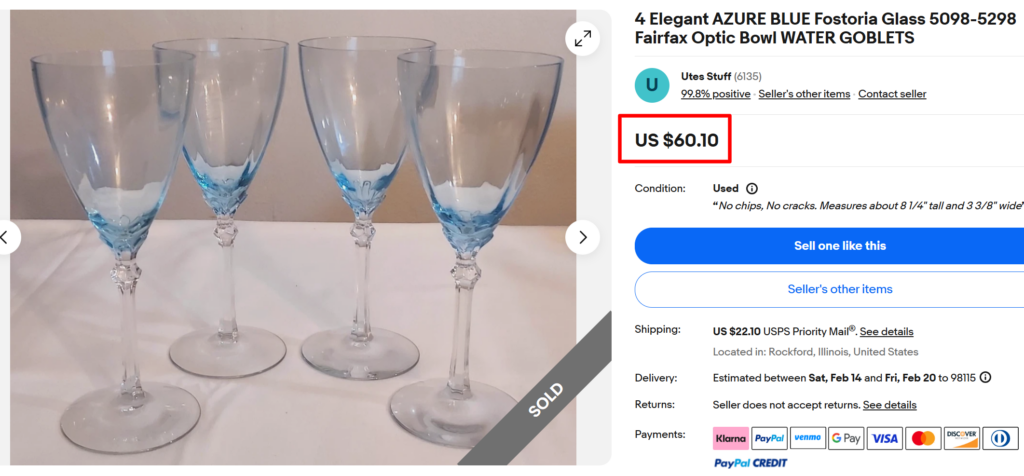
These blue optic goblets showcase the authentic Fairfax stemware. The stems have distinctive six-sided stems, each topped with a knop and petal-like extensions that gently clasp the bowl. The clean lines and architectural look of Fairfax make it perfect for both modern and traditional settings.
7. Century Pattern
Originally produced as a plain crystal, “Century” pieces are easily recognizable by their smooth, gently curved forms. Fostoria also paired the Century blanks with etches like “Bouquet” and “Heather,” which are quite rare and valuable today.
Century glassware was also produced with cut patterns like Bridal Wreath and Sprite.
| Average Price Range | $4-$20 (single pieces, small sets) $20-$150 (large sets & pieces) |
| Manufacturing Period of Pattern | 1949/50 to 1982 |
| Status | Discontinued |
| Pattern Details | Etched or plain pieces with wavy rims |
| Notable Pieces | Bowls & plates, dishes, pedestals, stemware, pitchers, shakers, vases |
Clear Century Pitcher with Washington Etching
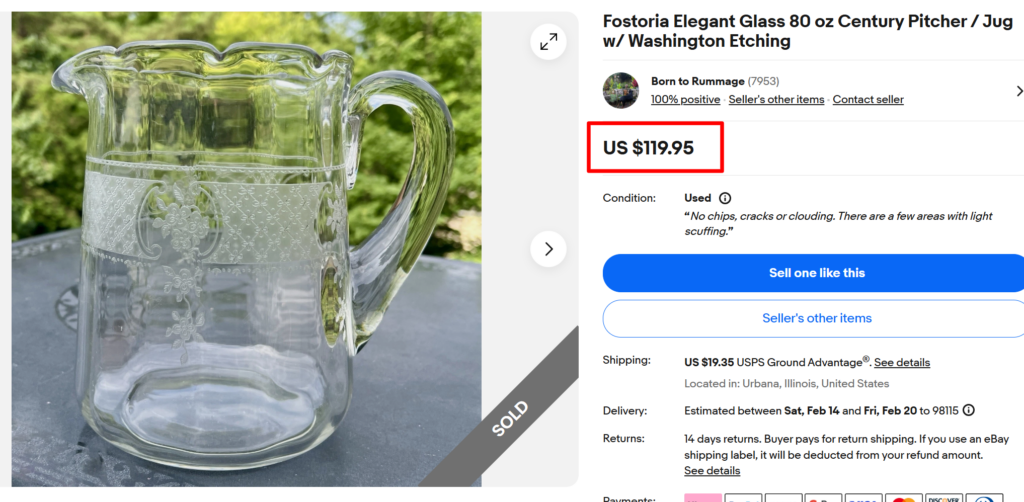
This elegant pitcher features the Century pattern, identifiable with a smooth, gently curved ‘C’ shaped rim. What makes it worth almost $120 is the rare combination of a “Century” rim with the detailed Washington etching of florals, garlands, and ribbons!
8. Romance Pattern
Fostoria’s “Romance” etch is a delicate pattern of bouquets with small flowers and leaves, gently tied with a ribbon or bow. These posies are linked together with another ribbon, connecting the etching across the glass. Interestingly, Fostoria made the Romance design only in clear crystal.
| Average Price Range | $10-$40 (singles, small sets) $40-$200+ (large & rare pieces, sets) |
| Manufacturing Period of Pattern | 1942 to 1971 |
| Status | Discontinued |
| Pattern Details | Ribbons tied up in bows around flowers |
| Notable Pieces | Pitchers, vases, dinnerware pieces, cake stands, etc. |
Fostoria Romance Footed Pitcher
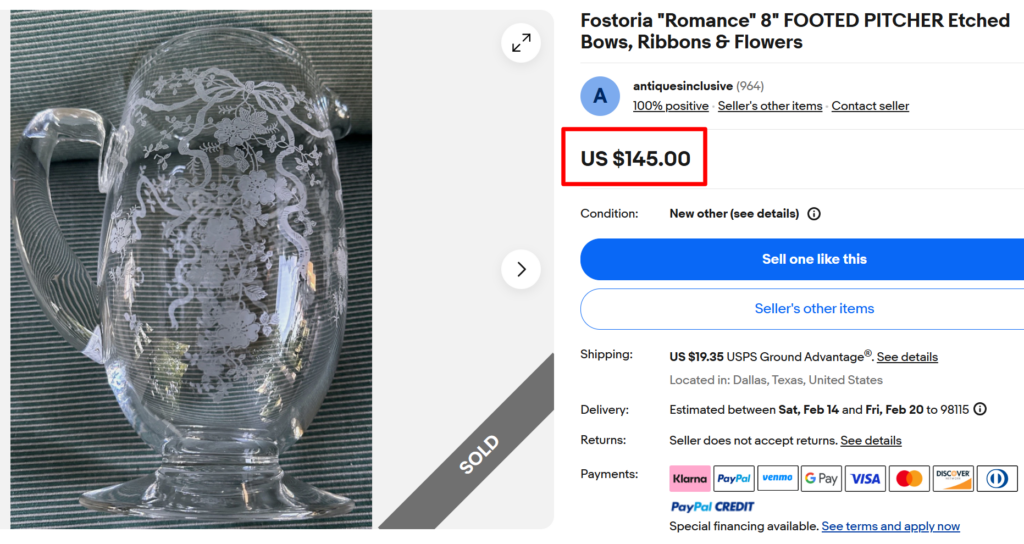
This large-footed pitcher clearly shows the design’s intricate etched motifs, like ribbons, bows, and flowers. Such large and rare pieces in pristine condition are quite a deal. Large stemware sets are also valuable.
How to Identify Authentic Fostoria Glass?
That moment of hesitation while looking at old glassware in a vintage shop is common: “Is this really Fostoria?” The following factors can help you identify the real pieces:
1. Stamps and Labels
In its early years, from the late 1800s to the early 1900s, Fostoria barely marked its glassware. Later in the 1950s, with a focus on branding, the company began using paper labels with the “Fostoria” signature in script or block.
The labels might also show pattern names or item numbers. Since these paper labels were easily lost, pieces with the original label are rare and highly valuable.
In the 1970s and 1980s, Fostoria began adding acid-etched marks (“Fostoria”) to certain patterns, especially Navarre. So, these marks are not consistent on all items from this era.
In a nutshell, many Fostoria pieces may lack a mark or label. That’s why it’s better to identify the glassware by patterns, etching, and style.
2. Glass Quality and Features
The high lead content in Fostoria glassware gives it a distinctive sparkle and clarity, while keeping it lightweight. When you hold it to the light, authentic pieces should give a bright and lively sparkle.
Fostoria maintained high production standards; hence, any dull patch on the piece can indicate it’s a reproduction or a fake. You may still find small bubbles and straw marks in Fostoria’s early productions, but natural glassmaking flaws have clear distinctions!
3. Patterns and Shapes
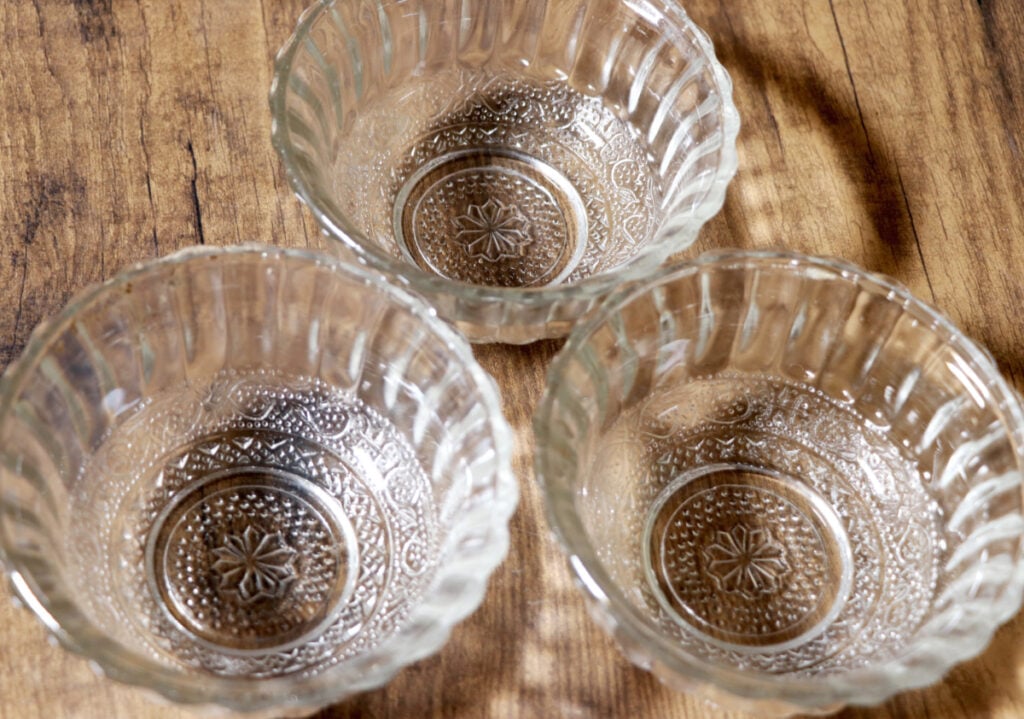
With a century-long legacy, Fostoria produced glassware in a wide range of shapes and finely etched patterns. “American,” “Chintz,” “Romance,” and “June” are among the most collectible patterns today.
When you’re considering a piece, it’s always smart to compare the etching with documented Fostoria reference photos from trusted vintage guides.
Similarly, Fostoria was especially known for its stemware, and certain stem styles make identification easier. The “Waterfall” stem, for instance, with its ridged, tiered look, was sold both plain and etched, while the similar “Sceptre” blank usually had decoration.
Some shapes are giveaways, too, like the “Sonata” forms, which appear on candleholders and handled bowls, often paired with the “Romance” pattern. The modernist “Contour” shape (with its uneven, asymmetrical-shaped glassware) is also a unique style.
4. Decoration and Colors
Along with fine etching, Fostoria elevated its glassware with distinct molded decorations. One standout example is the “fleur-de-lis” motif, commonly found on Baroque-shaped plates and bowls. This motif is a strong indicator of authentic Fostoria and makes the piece highly collectible.
Cut patterns also offer clear clues. Delicate cuts like “Nosegay” (often seen on creamers) feel refined and subtle, while bolder cuts such as “Holly” are deeper and more pronounced.
Color plays a big role in identification and value, too; colored Fostoria usually commands higher prices than clear crystal. Some popular, collector favorite combinations are:
- Avocado green in “Virginia,”
- Turquoise blue in “Rhapsody”
- Topaz yellow in “June”
- Emerald Green in “Coin”
What Makes Vintage Fostoria Glass Valuable?
Several factors come together to determine the real value of any vintage Fostoria glass item. Here’s a quick breakdown:
- Rarity & Age: One of the biggest value drivers in vintage Fostoria glassware is rarity. Short-run colors, experimental shades, unusual forms, and the earliest pieces command the higher prices. Depression-era glass is also desirable.
- Completeness: Fostoria sets consistently outperform single pieces in value and demand. Complete or nearly-complete sets are functional and desirable, while singles are usually treated as fillers, unless in rare colors or forms.
- Condition: Condition still matters just as much. Even the rarest pattern loses its value if it’s chipped, cracked, or heavily scratched. However, light wear is expected with age. For instance, “Wedding Ring” pieces usually have soft fading on platinum rims.
- Usability: Functionality plays a big role; large, uneven forms from “Contour” or “Seascape” lines are beautiful but less practical to store, which can limit prices.
- Popularity: The value depends heavily on the market demand as well. Patterns such as “American” and “Navarre” are consistently more sought-after than others simply because collectors love them.
Note: This article is intended for informational, educational, and entertainment purposes only. Some images are illustrative and may not represent actual brands, products, or related entities. All trademarks, product names, brand logos, packaging, and other intellectual property referenced remain the exclusive property of their respective owners. Any brand mentions or references are provided solely for descriptive and educational context and do not imply any formal or commercial association.