Most people walk into an estate sale and head straight for the furniture, the artwork, or the jewelry case. The kitchen gets picked over last, if at all. So the kitchen cabinets hold a lot of collectibles.

Families kept the everyday dishes, the tins, the flatware, and the “grandma’s old baking bowl” in those cabinets for decades. And nobody thought any of it was special, so nobody moved it, sold it, or broke it. Which means the rare pieces are still sitting there when you show up.
Here are 14 items of estate sale finds worth opening every cabinet, drawer, and pantry shelf for.
14 Items to Look for in Kitchen Cabinets at an Estate Sale
1
Fine China (Noritake, Herend, Limoges, Royal Doulton, etc)
Typically sells for $30 to $150 singles, (rare sets, figurines & plaques $100 to $4,000)
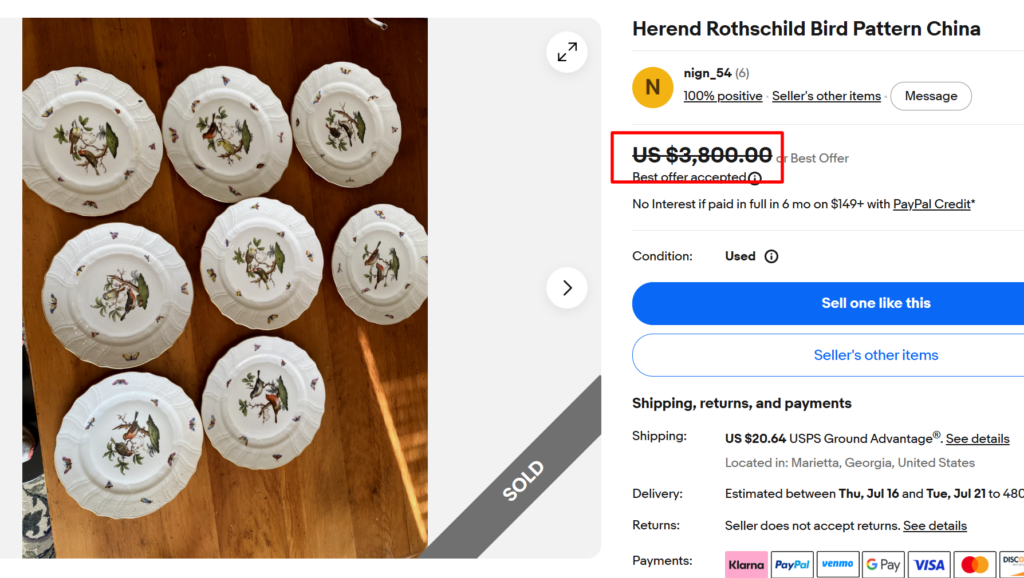
Full dinner services rarely sell for what people expect, so most buyers skip china entirely. This is a mistake, considering the value of each piece by reputable brands such as Royal Doulton, Wedgwood, Spode, and Noritake may be substantial.
Inspect the back stamping on each and every plate and cup. The older the marking and the more it is hand-painted, the higher its value.
Vintage figurines and hand-painted plaques can also fetch $100 to $500, depending on condition, brand, and rarity.
2
Sterling Silver Flatware
Typically sells for $25 to $80 per piece (full sets $400 to $2,000+)
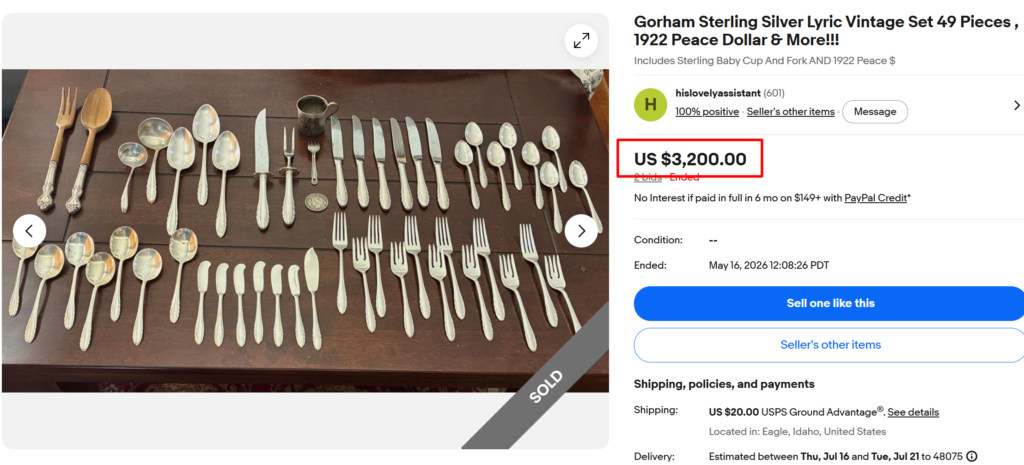
Open every utensil drawer and check the backs of the handles. Sterling pieces are stamped “STERLING” or “.925,” and families routinely mixed one or two inherited sterling forks into the daily silverware and forgot they were there.
Even single orphan pieces sell by weight alone, and full patterned sets from Gorham or Reed & Barton reach into the hundreds and thousands.
3
Vintage Pyrex Mixing Bowls, Casseroles, and Refrigerator Sets
Typically sells for $40 to $300 (rare patterns $800 to $5,000+)
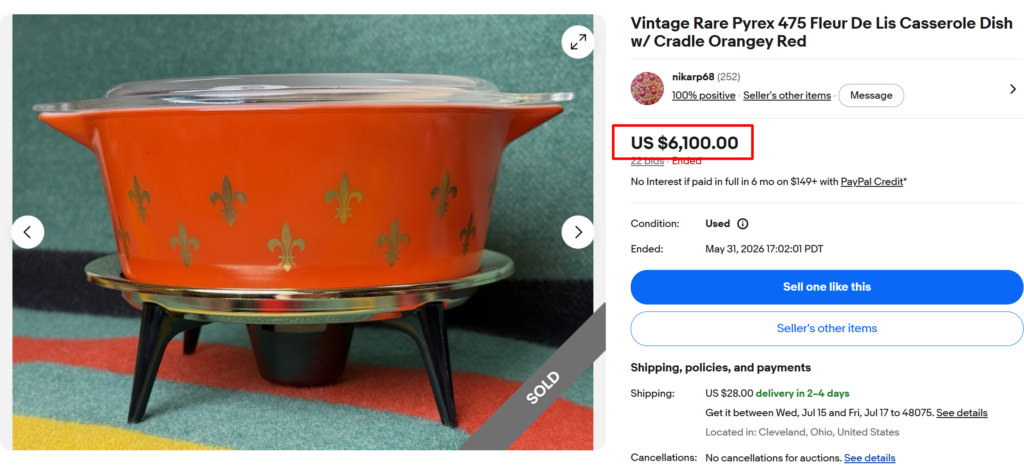
Pyrex is the first thing to grab and flip over. The name is stamped or molded right into the base, and the pattern tells you almost everything about value.
Common patterns like Butterprint or Snowflake move steadily around $60 to $200. Rare promotional patterns can fetch up to four figures, with Lucky in Love (opalware) being the famous example.
4
Fire-King Jadeite and Milk Glass Dinnerware
Typically sells for $20 to $75 per piece (rare pieces $200 to $1,500)
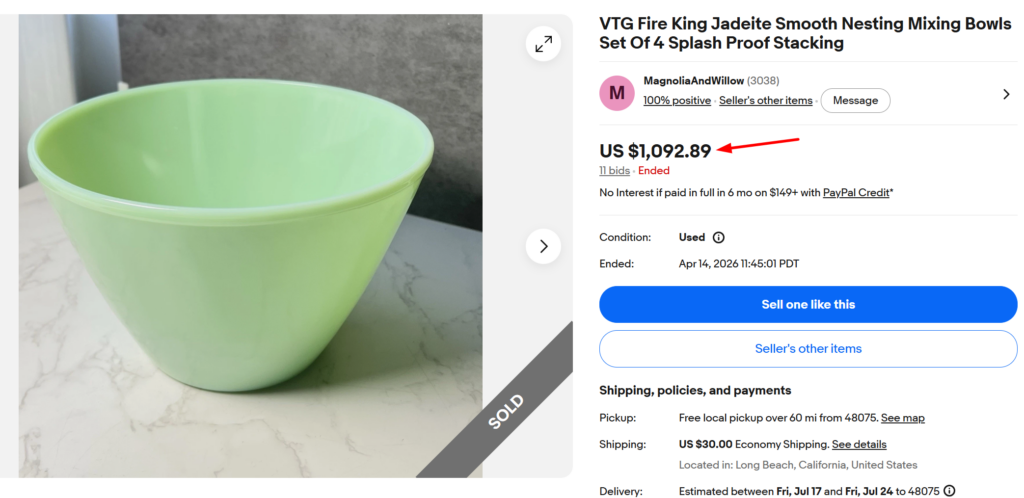
Fire-King Jadeite is that opaque jade-green glass Anchor Hocking made from the 1940s through the 1970s, marked with an anchor over an H on the base. It has never really gone out of fashion.
Among the Jadeite pieces, everyday Jane Ray plates and cups can resell for $20 to $60, while rarer serving pieces like the flanged soup bowl push past $400.
5
Tea Cups and Coffee Mugs
Typically sells for $15 to $75 per mug (rare advertising mugs $100 to $500+)
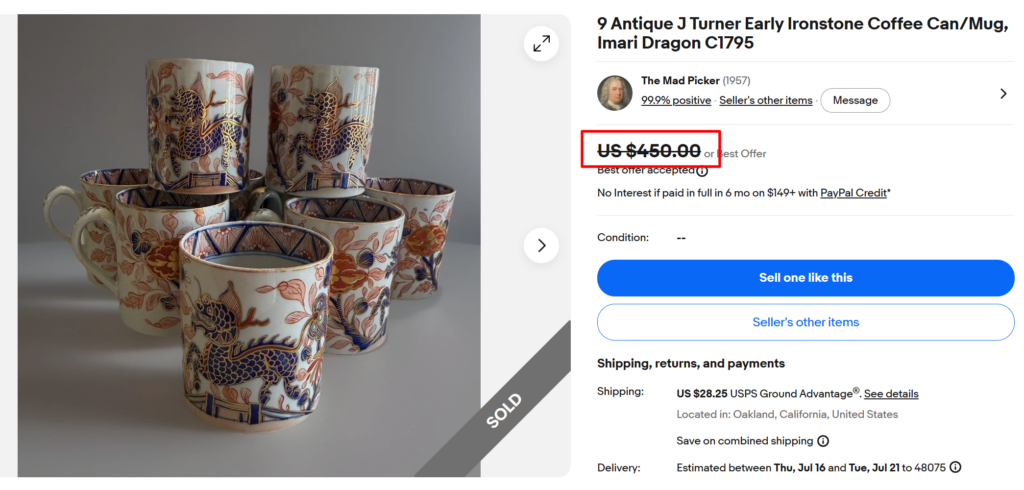
Coffee mugs get piled into thrift bins and estate sale kitchens by the dozen, which is exactly why the good ones survive unnoticed. If you see them properly displayed in a kitchen cabinet, pay more attention to the brand and patterns.
Fire-King advertising and character mugs are the top targets, along with Fire-King Jadeite mugs and hand-painted studio pottery and antique stoneware pieces.
6
Vintage Drinking Glasses (Simon Pearce, Libbey, Federal Glass)
Typically sells for $10 to $40 per glass (rare patterns & sets $150 to $600)
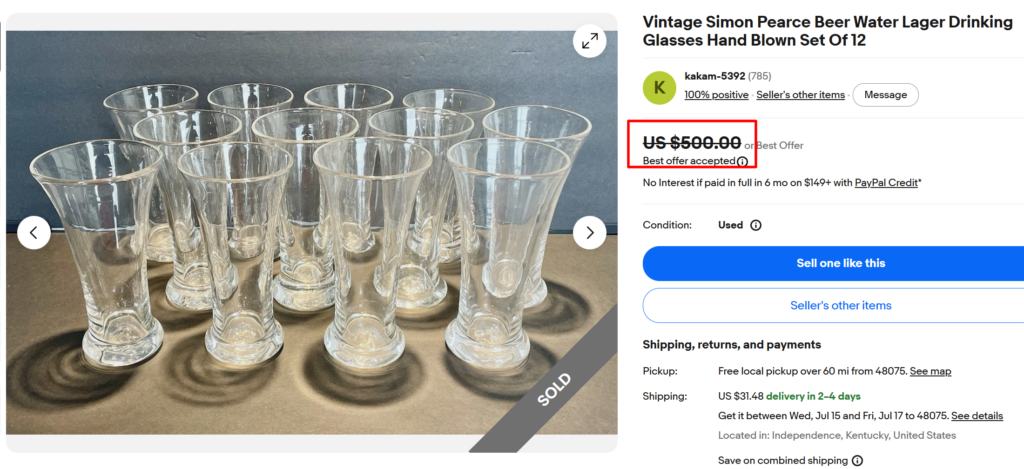
Tumblers, highballs, juice glasses, and other barware by Libbey, Anchor Hocking, Federal Glass, and Hazel-Atlas from the mid-century period have decent resale value. Check out designs featuring 22 karat gold patterns, frosted glassware, cartoon and cereal themed glasses, and cocktail sets.
7
Depression Glass
Typically sells for $15 to $80 per piece (rare patterns, colors $150 to $800)
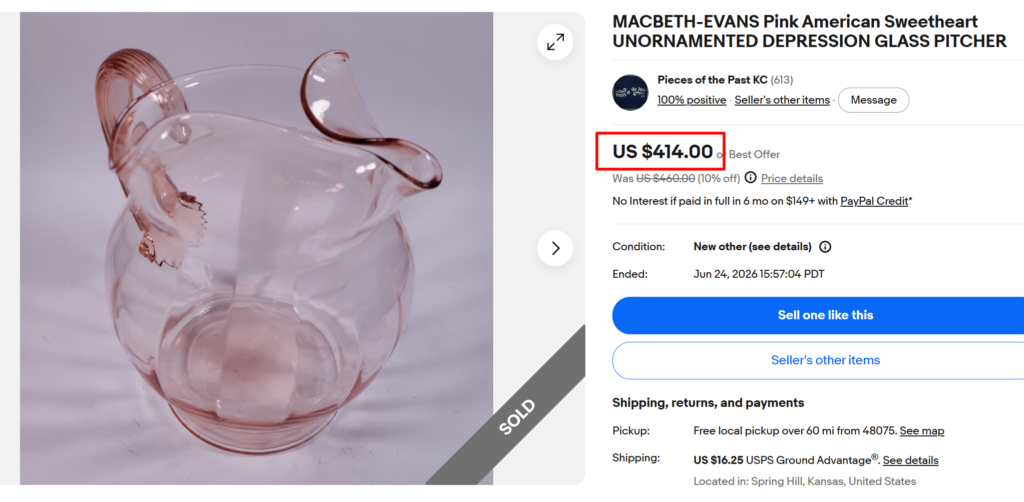
Depression glass is machine-pressed colored glass from the late 1920s through the 1940s, often given away free with groceries or gas.
At most estate sales, it hides in the back of cabinets because it looks like ordinary colored glass to the untrained eye. Pink, cobalt blue, and green pieces in patterns like Cherry Blossom or Mayfair regularly sell for $50 to $300.
8
Vintage Cookie Jars (Figural & Advertising Designs)
Typically sells for $30 to $150 common; (rare designs $300 to $800)
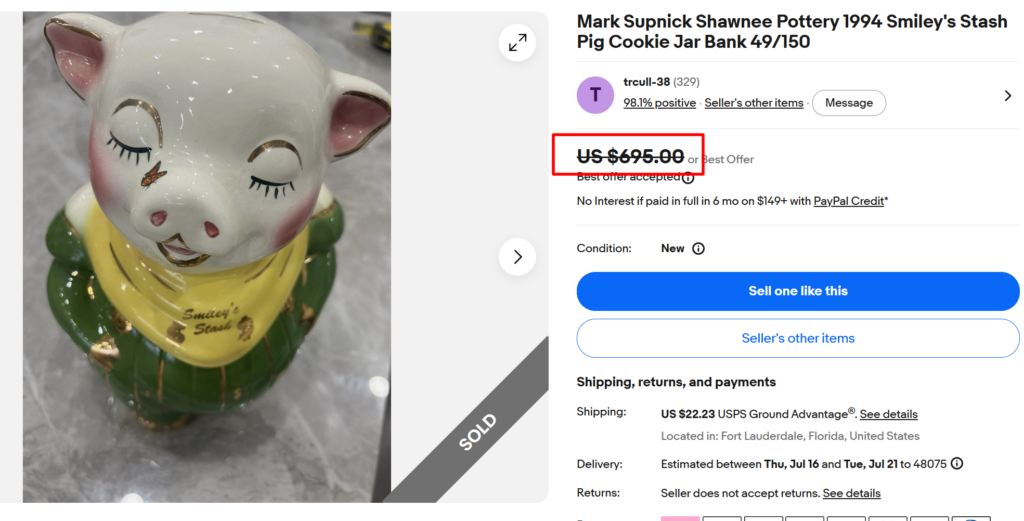
Cookie jars sit in the corners of the cabinets. Don’t overlook them.
Cookie jars made by McCoy, Hull, Shawnee, and Brush Pottery during the 1940s through the 1960s are those sought after. Jars that are in the shape of animals or characters get the most attention among collectors.
Although common cookie jars are priced between $30-$80, rare figurals with great original painted decorations have been known to sell at up to $800.
9
Vintage Salt and Pepper Shaker Sets
Typically sells for $10 to $40 per pair (rare sets $100 to $800)
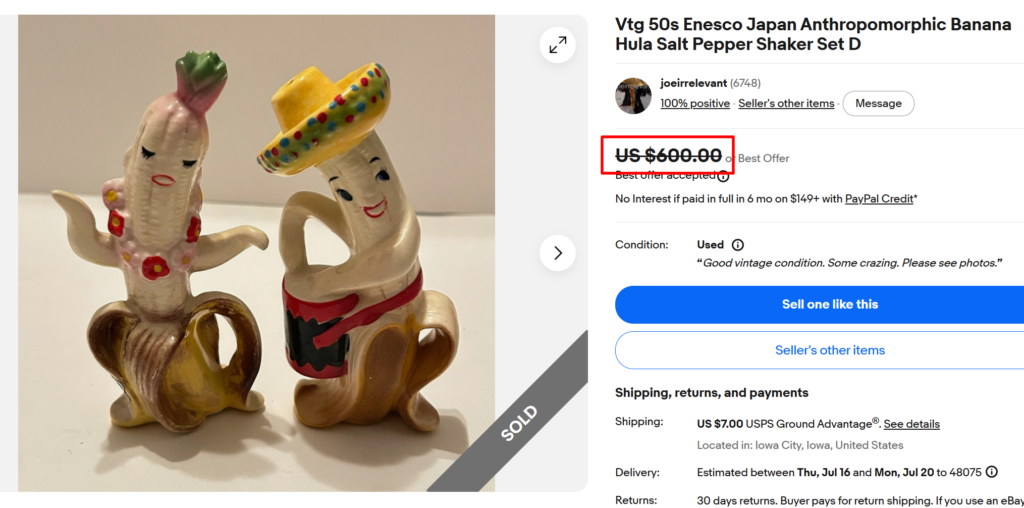
Novelty and souvenir shakers from the 1940s through the 1960s have a small but persistent collector base, so these pieces sell well. Rare ceramic figurines shaped like animals, fruit, appliances, or roadside attraction souvenirs are what you should look for. Also, make sure that both pieces of the pair are present and intact.
10
Vintage Advertising Tins, Canisters, and Spice Tins
Typically sells for $25 to $100 common, (rare tins $200 to $1,500+)
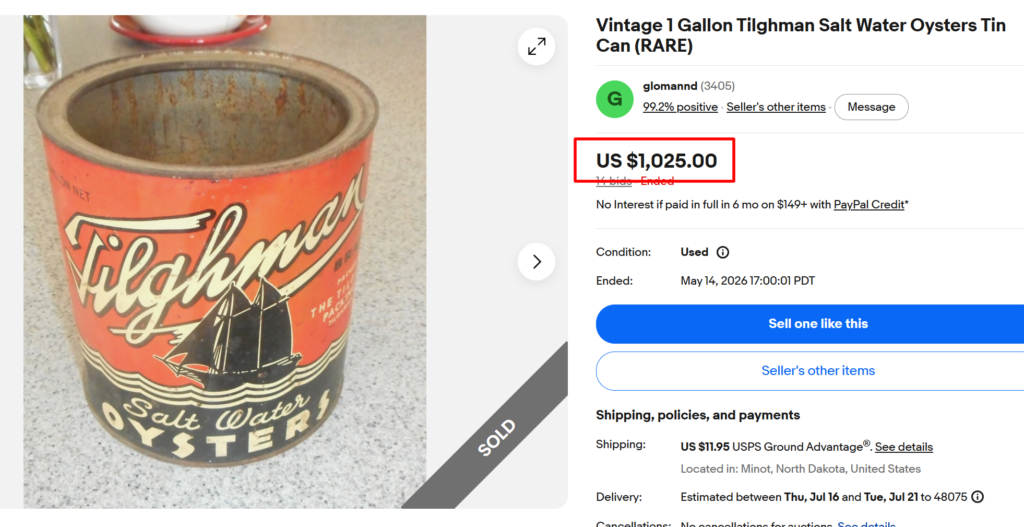
Old coffee, cocoa, spice, and tobacco-branded tins were designed to sit on kitchen shelves, so they often survived in cabinets long after the product was gone. The lithographed graphics are what collectors buy.
Condition is everything. Bright, unrusted tins from the 1920s and 1930s regularly pull $75 to $400 for the graphics alone.
11
Vintage Tupperware (Specific Colors)
Typically sells for $15 to $50 (complete Millionaire & Pastel sets $60 to $150)
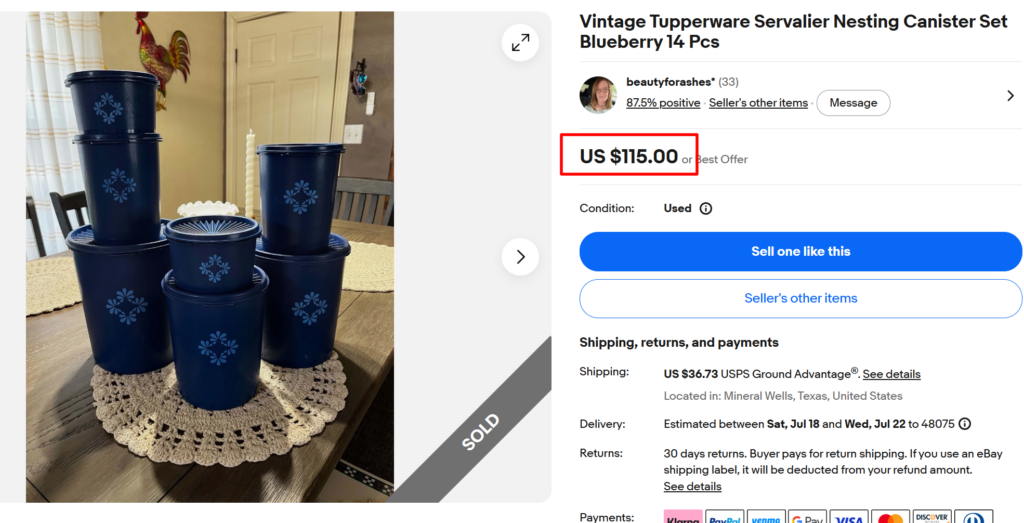
Most Tupperware is worth nothing. But early Millionaire Line pieces from the 1960s in harvest gold, avocado, and specific pastel shades have a small collector base that pays for complete sealed sets. Prices stay modest at $20 to $75, but the pieces are usually free or nearly free at estate sales.
12
Heavy Copper Cookware and Serving Pieces
Typically sells for $80 to $250 per piece (French utensils $300 to $1,000+)
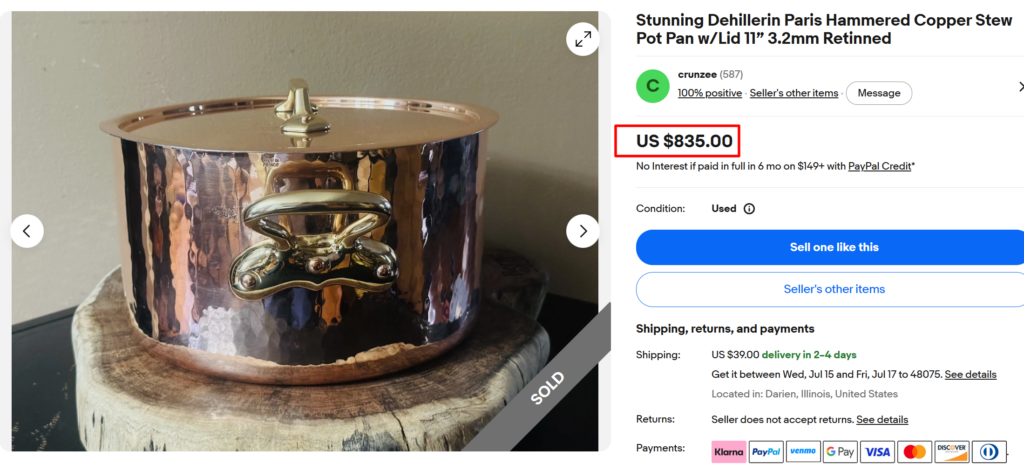
Do not underestimate that copper cookware. Pick it up, first; the weight alone tells you it is not modern decorative copper. Besides, old French copper is thick, lined with tin or silver, and usually stamped with the maker’s name and the metal weight on the side. A single antique French saucepan sells for $150 to $400, and larger jam pans regularly clear $300 to $500.
13
Antique Stoneware Crocks, Mixing Bowls, and Butter Churns
Typically sells for $50 to $200 (cobalt-decor $400 to $2,000+)
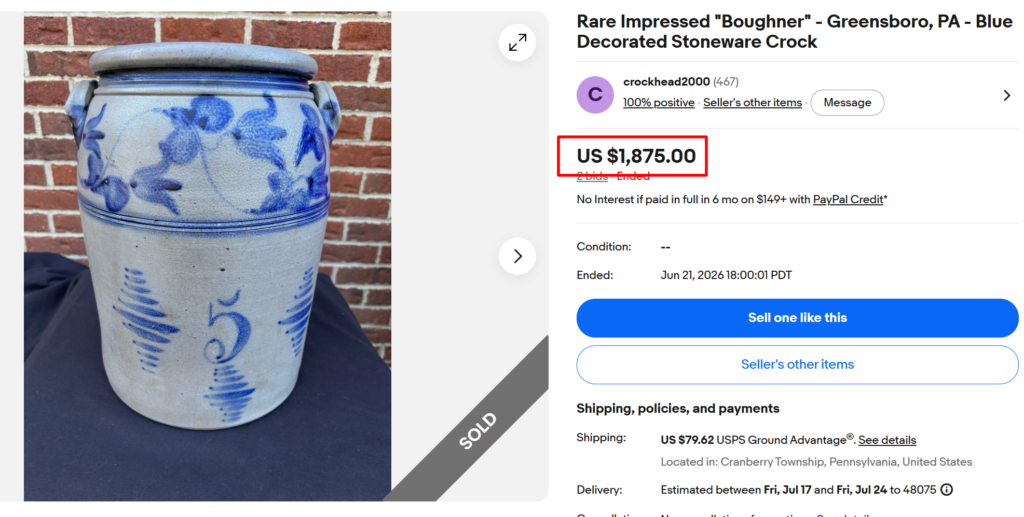
Salt-glazed stoneware decorated with cobalt blue is one to keep an eye out for. You’ll see the name of the manufacturer, such as Red Wing or Western Stoneware, on the bottom, and on the front, you will find a gallon number indicating capacity.
Even plain crocks can resell for $30 to $100 today, while those with cobalt birds, flowers, or advertising can fetch up to $2,000 in good condition.
14
Antique Cast Iron (Griswold, Wagner, and Favorite Piqua)
Typically sells for $40 to $150 (rare skillets $300 to $1,000+)
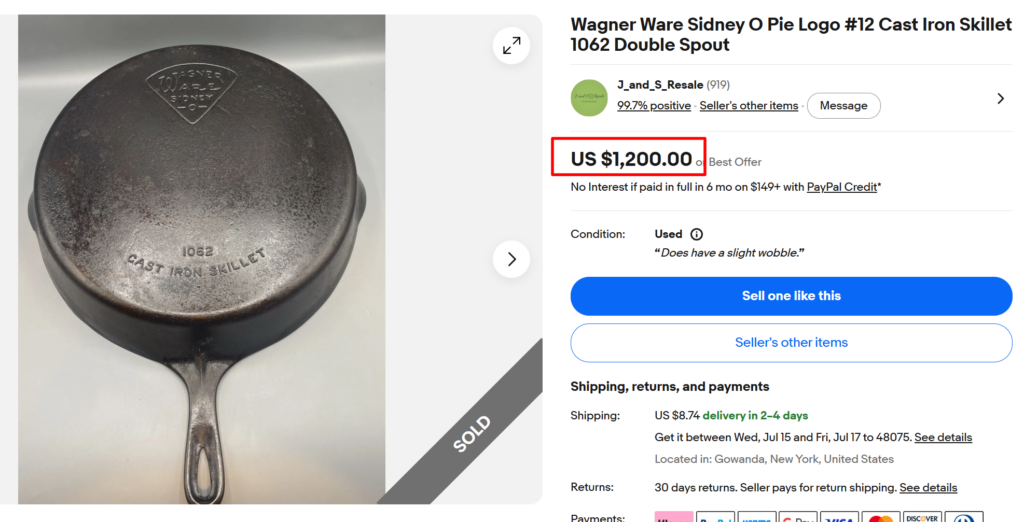
Cast iron is heavy, usually caked in grime, and easy to walk past because it all looks the same at a glance. That’s why you must flip the pieces over to see the brand name.
For example, Griswold pieces carry a raised cross-and-circle logo with “ERIE, PA” and a pattern number. The large-block logo era is the sweet spot, with No. 8 skillets pulling $300 to $400.
Wagner Ware and Favorite Piqua skillets and utensils in rare variations can also sell for hundreds to a thousand dollars or more.
How to Spot These at an Estate Sale?
It’s simple. Open every cabinet in the kitchen, not just the uppers. Check inside stacked bowls and pots, because small valuables like sterling flatware and figural shakers get tucked there.
Pull open every drawer, including the deep pantry ones. Photograph any marks on the base with your phone before you buy, so you can check comps on the spot.
Bring a small flashlight for cabinet interiors and a jeweler’s loupe for backstamps. It sounds like overkill until the first time you spot a hallmark you would have otherwise missed.
Note: This article is intended for informational, educational, and entertainment purposes only. Some images are illustrative and may not represent actual brands, products, or related entities. All trademarks, product names, brand logos, packaging, and other intellectual property referenced remain the exclusive property of their respective owners. Any brand mentions or references are provided solely for descriptive and educational context and do not imply any formal or commercial association.